
What Happens if You Test Positive for MRSA Before Surgery in the UK?
A positive MRSA result is often viewed as a major setback, yet in the clinical world, it’s actually a routine hurdle that helps ensure your procedure is as safe as possible. It is completely natural to feel a surge of anxiety when you see “positive” on a screening report, especially when you’re already managing the stress of an upcoming operation. You might worry about being “infectious” to others or fear that your procedure will be cancelled at the last minute. However, understanding exactly what happens if you test positive for mrsa before surgery uk can replace that uncertainty with a clear, manageable plan.
In this guide, we’ll show you how a positive result affects your surgical timeline and why it rarely means your operation is off the table. You will discover the specific steps of the UK decolonisation protocol, including the standard five-day treatment used to clear the bacteria from your skin and nose. We will also explain the vital difference between being colonised and having an active infection, helping you manage your results with professional support and confidence. From hygiene steps at home to what to expect on the day of your surgery, we provide the factual clarity you need for a smooth recovery.
Key Takeaways
- Understand the clinical difference between MRSA colonisation and active infection to better manage your diagnosis without unnecessary alarm.
- Discover how the standard 5-day UK decolonisation protocol works to clear bacteria from your skin and nasal passages before your procedure.
- Learn exactly what happens if you test positive for mrsa before surgery uk, including how most elective procedures are simply postponed rather than cancelled.
- Identify essential hygiene steps for your home environment to prevent re-colonisation and ensure your pre-surgical clearance is successful.
- Compare the benefits of Rapid PCR and Culture testing to choose the most efficient screening method for your specific surgical timeline.
Understanding Your Positive MRSA Result: Colonisation vs. Infection
MRSA stands for methicillin-resistant Staphylococcus aureus. While the name sounds complex, it refers to a common strain of bacteria that has simply adapted to survive standard antibiotics. In the context of British healthcare, Understanding MRSA is the first step in demystifying your screening results. For the vast majority of patients, a positive result doesn’t mean you’re ill. Instead, it indicates that the bacteria are living harmlessly on your body.
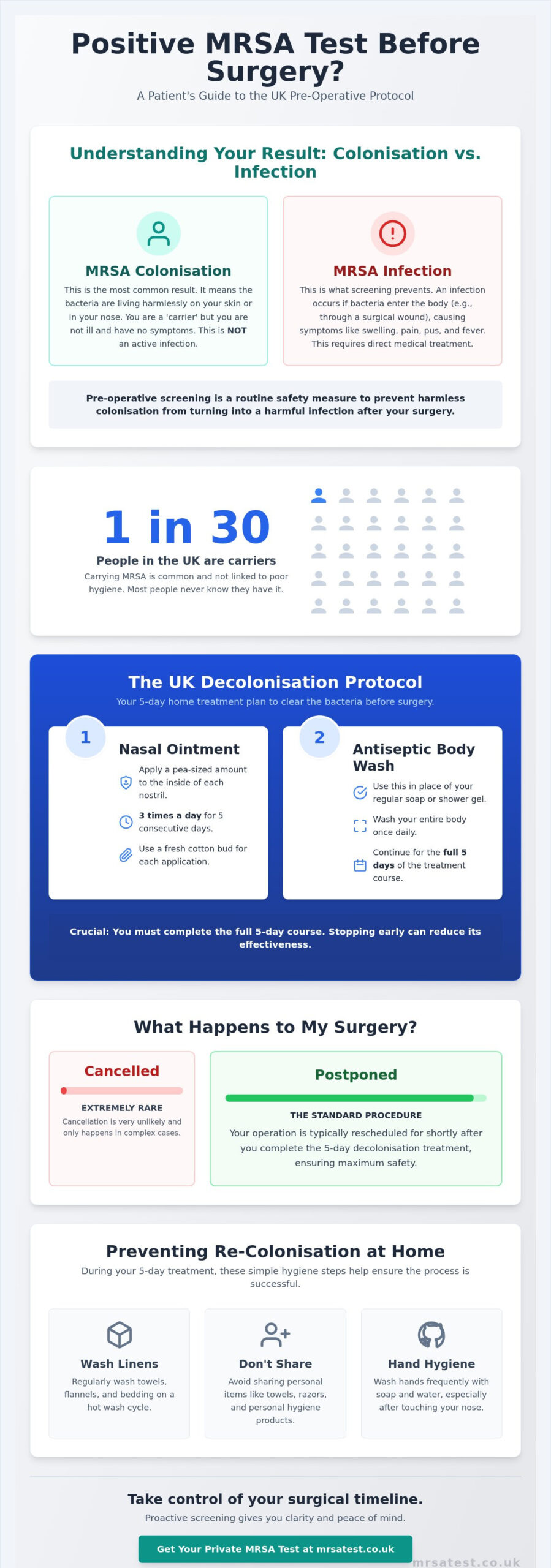
The medical term for this is “colonisation.” When you’re colonised, the bacteria sit on the surface of your skin or inside your nostrils without causing any harm or symptoms. However, surgery creates an opening in the body’s natural defences. Hospitals screen patients because they want to ensure these bacteria don’t move from the skin’s surface into a surgical incision, where they could cause an actual infection. An active infection looks very different; it typically involves visible swelling, pus, pain, or a fever. Screening is a proactive measure to stop that transition from happening.
What it means to be a “carrier”
It’s a common misconception that carrying MRSA is linked to poor personal hygiene. In reality, approximately 1 in 30 people in the UK carry MRSA at any given time without ever knowing it. The bacteria are opportunistic “hitchhikers” that prefer warm, moist areas like the nostrils, armpits, and groin. Being a carrier doesn’t change your daily life, and you aren’t a danger to healthy people in your household. It only becomes a clinical priority when you’re entering a hospital environment for a procedure.
Why pre-operative screening is mandatory in the UK
Pre-operative screening is a standard safety protocol across the NHS and private sectors. It’s a key part of the national Hospital-Acquired Infections (HAIs) prevention strategy. If bacteria enter the bloodstream during an operation, they can lead to more serious complications like bacteraemia. This is why clinical teams are so diligent about checking every patient before elective surgery.
When you’re wondering what happens if you test positive for mrsa before surgery uk, remember that the screening is there to protect you, not to penalise you. By identifying carriers early, clinical teams can use targeted treatments to clear the bacteria before you ever enter the operating theatre. This process significantly reduces the risk of post-operative complications and ensures your recovery is as straightforward as possible. It’s a routine part of modern surgical preparation designed to give every patient the highest level of protection and peace of mind.
The UK Decolonisation Protocol: Your 5-Day Treatment Plan
If your screening returns a positive result, your clinical team will prescribe a structured “decolonisation” pack. This is the standard response to what happens if you test positive for mrsa before surgery uk. The protocol is a preventative measure designed to reduce the bacteria on your body to the lowest possible levels. It’s a non-invasive process that you’ll complete entirely at home over five consecutive days. According to NHS guidance on MRSA, this treatment is highly effective when followed precisely. The pack typically includes two primary components: an antibiotic nasal ointment, such as Mupirocin 2%, and an antiseptic body wash, often Chlorhexidine 4% (Hibiscrub) or Octenisan.
Completing the full five-day course is vital. Even if you feel perfectly healthy, stopping the treatment early or skipping doses allows the strongest bacteria to survive. This can lead to antibiotic resistance, making the bacteria harder to clear in the future. By following the plan exactly, you ensure that your skin is in the best possible condition for a safe surgical outcome. If you want to verify your status with professional accuracy before your hospital appointment, a private MRSA screening can provide the clarity you need.
Step-by-step: How to use the decolonisation pack
The nasal ointment should be applied three times a day. Use a fresh cotton bud for each nostril to apply a small, pea-sized amount of ointment inside the tip of the nose. Afterwards, press your nostrils together to help the medication spread evenly. The antiseptic body wash replaces your regular soap for the duration of the treatment. Apply it directly to a clean flannel or your hands and wash from head to toe, leaving it on the skin for about a minute before rinsing. You’ll also need to wash your hair with the antiseptic solution, typically on day one and day four of the protocol.
Common mistakes to avoid during treatment
Consistency is the foundation of a successful clearance. A frequent error is using regular scented soaps, shampoos, or body lotions alongside the medicated wash. These products can create a barrier on the skin or deactivate the antiseptic, making the treatment less effective. You must also consider your immediate environment. MRSA can live on surfaces, so using the same towel or flannel two days in a row can lead to re-colonisation. Always use fresh towels, washcloths, and bed linen daily during the five-day window. Missing even a single application of the nasal ointment can compromise the results, potentially leading to a failed clearance test and a delay in your surgical timeline.
Will My Surgery Be Cancelled? Impact on Your Procedure
The most common fear for patients receiving a positive result is that their operation will be cancelled indefinitely. It’s important to understand that in the vast majority of cases, your surgery isn’t cancelled; it’s simply postponed. This delay is a clinical safety measure designed to give you enough time to complete the decolonisation process. Knowing exactly what happens if you test positive for mrsa before surgery uk can help you manage your expectations and coordinate with your surgical team. Most elective procedures are rescheduled for one to two weeks later, ensuring you have a clear window of time to finish your treatment and potentially undergo a follow-up swab.
Hospitals view this postponement as a vital protective step. Proceeding with a planned operation while colonised with MRSA significantly increases the chance of the bacteria entering the surgical site. By waiting until the bacteria are cleared, the surgical team provides you with the safest possible environment for recovery. If you are looking for official guidance, MRSA screening before surgery protocols are standard across major trusts to maintain these high safety levels.
Elective vs. Urgent surgery protocols
The approach to your surgery depends heavily on the urgency of the procedure. For elective surgeries, such as joint replacements or cataract removals, hospitals usually insist on a clear set of swabs before you can be admitted. This is because these operations are planned in advance, and the risk of infection outweighs the benefit of immediate surgery. However, if your case is urgent or an emergency, the surgery will proceed as planned. In these instances, clinical staff use “contact precautions,” which might include wearing extra protective equipment and placing you in a side room. They will also administer specific antibiotics during the operation that are effective against MRSA strains.
The risk of proceeding without decolonisation
Skipping the decolonisation phase or proceeding while colonised carries measurable risks. The primary concern is the development of a Surgical Site Infection (SSI). These infections can be deep-seated and difficult to treat, often requiring a much longer stay in the hospital and additional courses of powerful antibiotics. In some cases, a secondary procedure might even be necessary to clean the infected area. Properly preparing for surgery by following the decolonisation protocol is the most effective way to avoid these complications. Taking control of your health logistics now ensures that when you do enter the operating theatre, your body is in the best possible state to heal quickly and without interruption.
Preventing Re-Colonisation: Hygiene at Home
The success of your decolonisation treatment depends heavily on your immediate environment. While the medicated wash and nasal ointment work to clear bacteria from your body, MRSA can survive on household surfaces for weeks. If these surfaces aren’t managed, you risk picking the bacteria back up as soon as your five-day protocol ends. Understanding what happens if you test positive for mrsa before surgery uk involves more than just applying creams; it requires a temporary shift in your household routine to ensure the bacteria are truly gone. This proactive approach prevents the frustration of a failed clearance test and keeps your surgical timeline on track.
High-touch surfaces are the most common culprits for re-colonisation. Items you handle frequently, such as your mobile phone, TV remote, and door handles, can harbour the bacteria. During your treatment window, you should wipe these items down daily with a standard disinfectant. It’s also helpful to involve those you live with. While family members don’t usually need treatment themselves, their support in maintaining these hygiene standards is essential for your protection. If you want to ensure your home environment is clear before your hospital admission, you can order a private MRSA test to verify your status with professional accuracy.
Laundry and bedding protocols
Bacteria thrive in fabrics, making laundry management a priority during your five-day plan. You should wash all bedding, towels, and clothing used during this period at 60°C. This temperature is high enough to kill MRSA, whereas cooler 30°C or 40°C cycles may only move the bacteria around. You must also change your underwear and clothing every single day. To further reduce risk, consider using disposable paper towels for drying your hands after washing. If you prefer cloth towels, ensure they are used only once before being placed in the hot wash. These steps might feel repetitive, but they’re the most effective way to break the cycle of colonisation.
Personal hygiene and shared items
Strict boundaries around personal items are necessary during your clearance period. You should never share razors, towels, flannels, or toothbrushes with anyone else in your home. These items come into direct contact with the areas where MRSA likes to “hitchhike,” such as the nose and skin folds. Regular hand washing remains your most powerful tool. Use liquid soap rather than bar soap, as bars can hold bacteria on their surface. By sanitising light switches and remote controls daily, you eliminate the hidden reservoirs that often lead to a positive result returning. Taking these small, disciplined steps at home gives you the best possible chance of arriving at the hospital with a clean bill of health.
Taking Control: Proactive Screening and Fast-Track Results
Most patients wait for their hospital pre-op assessment to learn their status. However, discovering your results earlier can be a significant strategic advantage. Knowing your status before your official appointment allows you to address the question of what happens if you test positive for mrsa before surgery uk on your own terms. If you identify colonisation early, you can start the decolonisation process before the hospital even conducts their screen. This proactive approach can prevent your surgery from being postponed, as you may already be clear by the time your clinical team takes their swabs. Using at-home test kits in the UK provides this vital insight with total discretion and professional accuracy.
Understanding the technology behind different diagnostic methods is essential for managing your surgical timeline. A standard Culture test involves growing the bacteria in a laboratory environment, a process that typically takes 72 hours to yield a definitive result. In contrast, a Rapid PCR (Polymerase Chain Reaction) test identifies the specific DNA of the MRSA bacteria. This method is much faster and highly precise. By choosing a PCR-based MRSA test, you receive your answers much sooner. This is a critical factor when your surgery is scheduled for the near future and every day counts.
The mrsatest.co.uk PCR advantage
Speed is the core benefit of our Rapid PCR service. Once your samples arrive at our accredited laboratory, we can identify MRSA DNA within 24 hours. This rapid turnaround is essential for patients with imminent surgery dates who cannot afford the traditional three-day wait for culture results. The self-collection process is designed to be simple and stress-free. You’ll take swabs from the nose, groin, and axilla in the privacy of your own home. There’s no need for clinical appointments or travel; the process is managed entirely by you, supported by our expert laboratory partners. This streamlined procedure ensures you get the data you need without adding to your pre-surgical stress.
Peace of mind for your pre-operative journey
The psychological impact of proactive screening is substantial. Receiving a negative result early can instantly remove a layer of pre-surgery anxiety, letting you focus on your physical preparation and recovery. All our tests are processed by verified UK laboratories, ensuring your results are reliable and clinically sound. It’s helpful to remember that MRSA is a manageable detail in your health journey, not a permanent barrier to your procedure. By taking control of your screening now, you ensure that you arrive at the hospital with confidence. You’ll be fully prepared for a safe operation, knowing that you’ve taken every possible step to protect your health and your surgical outcome.
Moving Forward with Confidence for Your Procedure
Navigating your pre-operative journey becomes much simpler when you have the facts. We’ve explored how a positive result is a routine clinical hurdle rather than a permanent barrier to your health goals. By following the five-day decolonisation protocol and maintaining strict home hygiene, you can effectively clear the bacteria and prepare your body for a safe operation. Understanding exactly what happens if you test positive for mrsa before surgery uk allows you to replace anxiety with a structured, effective plan.
Taking control of your screening timeline is the best way to ensure your surgical date remains secure. Our services provide the clarity you need through UK-accredited laboratory testing and discreet home delivery. You don’t have to wait for hospital appointments to know your status. Order your Rapid PCR MRSA Test Kit for fast, 24-hour results and move forward with the peace of mind that comes from professional accuracy. Your health is the priority, and managing this detail is a simple, proactive step toward a successful recovery.
Frequently Asked Questions
Can I still have my operation if I test positive for MRSA?
Yes, you can still have your operation, but elective procedures are usually postponed for one to two weeks. This delay allows you to complete the five-day decolonisation protocol, which reduces the bacteria on your skin to a safe level. This is a standard safety measure designed to protect you from developing a serious infection after your surgery.
How long does MRSA decolonisation treatment take in the UK?
The standard decolonisation treatment in the UK takes exactly five consecutive days. During this period, you will use a medicated body wash once a day and apply a nasal ointment three times a day. It is vital to complete the entire course without skipping any doses, as this ensures the bacteria are cleared effectively before your rescheduled procedure.
What is the difference between being colonised and having an infection?
Colonisation means the bacteria are living harmlessly on your skin or in your nose without causing symptoms. In contrast, an infection occurs when the bacteria enter the body through a cut or surgical incision, leading to redness, swelling, or fever. Most people who test positive before surgery are colonised rather than infected, meaning they feel perfectly healthy.
Will I be put in a private room if I have MRSA in the hospital?
Hospitals often place patients who carry MRSA in a private side room or a specific isolation bay. This is a routine part of infection control used to prevent the bacteria from spreading to other patients on the ward. Clinical staff will also wear protective gloves and aprons when providing your care to maintain a sterile environment.
How do I know if the MRSA treatment has worked?
Your clinical team will perform follow-up swabs after you finish your treatment to confirm the bacteria are gone. These swabs are typically taken two days after the five-day course ends. Understanding what happens if you test positive for mrsa before surgery uk includes knowing that clear results from these follow-up tests are necessary before elective surgery proceeds.
Can I catch MRSA again after I have been cleared?
It is possible to be re-colonised if the bacteria remain on surfaces in your home or if you have close contact with another carrier. To prevent this, you should wash your bedding and towels at 60°C and regularly sanitise high-touch items like phones and door handles. These simple hygiene steps help ensure you remain clear leading up to your operation.
What happens if my surgery is urgent and I have MRSA?
If your surgery is an emergency or clinically urgent, it will proceed immediately regardless of your MRSA status. The surgical team will use “contact precautions” and administer specific antibiotics during the procedure that are effective against resistant bacteria. Your immediate medical needs take priority, and the hospital staff are trained to manage the infection risk during the operation.