
MRSA Screening for Carers: A Complete Guide to Protecting the Vulnerable
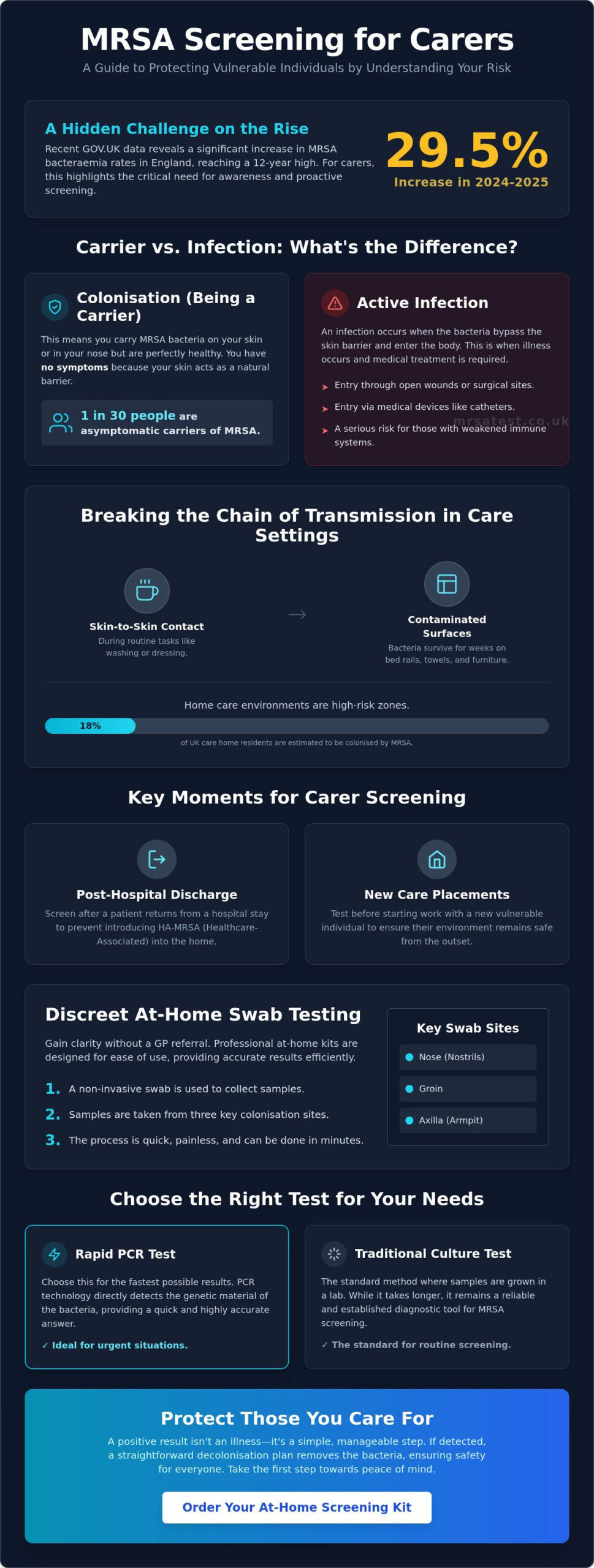
Recent data from GOV.UK shows that MRSA bacteraemia rates in England increased by 29.5% during the 2024-2025 period, reaching a 12-year high. For those providing care, this statistic highlights a hidden challenge: the possibility of being a carrier without even knowing it. It’s often difficult to access mrsa screening for carers through traditional routes like the NHS if you’re asymptomatic, which can lead to unnecessary worry. You may feel confused about the difference between being a “carrier” and having an active infection, especially when you’re trying to maintain a safe environment for a vulnerable loved one.
We believe that clarity is the best way to alleviate health-related anxiety. This guide will help you understand why screening is an essential part of modern caregiving and how to identify your specific risk factors. You’ll learn about the simplest ways to get accurate, professional results from home, allowing you to bypass the need for a GP referral. We’ll provide a clear overview of the testing process, what your results mean, and the exact steps to take if you require decolonisation to ensure the safety of those in your care.
Key Takeaways
- Understand the critical distinction between an active infection and being an asymptomatic carrier to better protect those in your care.
- Learn why mrsa screening for carers is essential during “trigger moments,” such as following a patient’s hospital discharge or before starting a new care placement.
- Identify common transmission routes in care environments, including skin-to-skin contact and contaminated surfaces, to help break the chain of infection.
- Gain a clear understanding of how to use professional at-home kits to test the nose, groin, and axilla discreetly and efficiently.
- Compare the benefits of Rapid PCR testing against traditional Culture methods to choose the right diagnostic speed for your specific situation.
What is MRSA Screening for Carers and Why is it Essential?
MRSA screening for carers is a professional diagnostic process used to identify the presence of specific bacteria on the body. This is typically performed using a non-invasive swab test. Many people believe they only need a test if they feel unwell, but MRSA is unique. You can be an “asymptomatic carrier,” which means you carry the bacteria on your skin or in your nose without showing any symptoms or suffering from any illness yourself.
For those in a caregiving role, this carrier state is a significant clinical consideration. You act as the primary point of contact for someone whose health may be fragile. Without regular mrsa screening for carers, you might unknowingly act as a vector for hospital-acquired infections. This involves passing the bacteria to a loved one or patient during routine daily tasks like washing, dressing, or preparing meals.
The Difference Between Colonisation and Infection
It is vital to understand that carrying the bacteria is not the same as having an active illness. Statistics suggest that approximately 1 in 30 people carry Methicillin-resistant Staphylococcus aureus (MRSA) on their skin or in their nostrils at any given time. This state is professionally known as “colonisation.” While the bacteria live on the surface, they don’t cause harm to the carrier because the skin acts as a natural barrier.
An “infection” occurs only when these bacteria find a way to enter the body. This usually happens through:
- Open wounds, surgical sites, or even minor skin abrasions.
- Medical entry points such as catheters or intravenous drips.
- Weakened mucosal membranes in the nose or throat.
While a healthy carer’s immune system keeps the bacteria on the surface, a vulnerable patient may not have the same level of protection.
Protecting Vulnerable Individuals in Your Care
Proactive screening is an act of clinical responsibility that prioritises the safety of those you support. Certain groups are at a much higher risk of developing severe complications if they contract MRSA. These high-risk individuals include the elderly, people with chronic conditions like diabetes, and patients recovering from recent surgery. Their bodies often lack the resources to fight off antibiotic-resistant strains effectively.
Understanding the Risks of MRSA Transmission in Care Settings
Distinguishing between “community-acquired” (CA-MRSA) and “healthcare-associated” (HA-MRSA) is essential for understanding your specific environment. HA-MRSA is traditionally linked to hospital settings, but CA-MRSA circulates among the general public. For those providing home-based support, mrsa screening for carers provides a vital layer of security. The home is no longer a “sterile” environment once clinical care begins. Private residences and care homes are high-risk zones; research from 2024 indicates that approximately 18% of UK care home residents are colonised by MRSA. You can find more detail on these distinctions in our complete guide to MRSA symptoms and risks.
Transmission usually happens through direct skin-to-skin contact or by touching contaminated objects. Public health authorities, such as those cited in the BCCDC MRSA Screening Recommendations, highlight that managing community-associated strains requires a proactive approach. Because carers are in constant physical contact with their patients, they are the most likely “bridge” for the bacteria to cross.
How MRSA Spreads Through Routine Care
MRSA is remarkably resilient. It can survive on hard surfaces like bed rails or soft materials like towels and upholstery for days or even weeks. Daily caregiving tasks often involve close contact that facilitates this spread. You should be particularly mindful during these activities:
- Dressing surgical or chronic wounds.
- Assisting with bathing or personal hygiene.
- Changing and handling soiled linens or laundry.
Fomite transmission occurs when an inanimate object, such as a shared towel or a medical device, serves as the vehicle to transport bacteria from a carrier to a vulnerable person.
The Impact of MRSA on Post-Surgery Recovery
When a loved one is preparing for surgery, the clinical stakes are significantly higher. A surgical incision provides a direct pathway for bacteria to enter the bloodstream. This can lead to severe complications like sepsis or significantly delayed wound healing. Beyond the clinical risks, there’s a heavy emotional burden on carers who discover they were the source of a preventable infection. Proactive mrsa screening for carers helps eliminate this worry before the patient even returns home from the hospital. Taking a moment to check your own status ensures that you are providing the safest possible environment for recovery.
When Should a Carer Consider MRSA Screening?
Knowing when to act is just as important as knowing how to test. While hospital protocols are often automated, home-based care requires a more conscious approach to timing. Proactive mrsa screening for carers should be scheduled around specific “trigger moments” to ensure the highest level of safety. Identifying these moments allows you to move from reactive worry to proactive management. It ensures that your care remains a source of support rather than an accidental source of risk.
One of the most critical times to consider a screen is during a “recurring infection” cycle. If the person you care for suffers from repeated skin infections, boils, or slow-healing wounds despite medical treatment, the bacteria may be lingering within the household. In these cases, the patient is successfully treated, but they are immediately re-colonised by a healthy carrier in their immediate circle. Screening everyone in the household helps identify the source and breaks this frustrating cycle of reinfection.
Professional carers also find that screening is a vital step when starting a new role. If you’re beginning a placement with a high-risk client, such as someone with an organ transplant or severe burns, providing a clear result is a mark of professional diligence. It builds immediate trust with the family and ensures you aren’t unknowingly introducing new clinical risks into a sensitive environment.
Pre-Admission and Post-Discharge Screening
Hospitals routinely screen patients before elective surgeries, but they rarely extend this to the family members who will be providing post-operative care. If a household member is colonised, the patient faces a significant risk the moment they return home with a fresh surgical wound. Safely managing the transition from hospital to home care requires that the entire environment is clear. Many private care home placements now recognise this gap and may request or require mrsa screening for carers and residents before admission to protect their wider community.
Regular Screening for Long-Term Carers
In long-term chronic care, the risk profile can change without warning. You should consider periodic testing if you’ve recently spent time in a high-risk environment yourself. This includes visiting other relatives in a hospital or working in different clinical settings. If you suspect you’ve been exposed, it’s best to wait for the “window period” of approximately 48 to 72 hours before performing a swab. This short delay allows any potential colonisation to establish itself so that the test can provide an accurate and reliable result.
How to Perform an At-Home MRSA Swab Test: Step-by-Step
For many, the most significant barrier to mrsa screening for carers is the logistical challenge of attending a clinic while managing a busy care schedule. Home collection kits remove this friction by allowing you to take samples in a private setting at a time that suits you. These kits use the same medical-grade components found in hospitals, ensuring that the accuracy of your result is never compromised by the environment in which the sample is taken.
Preparation is the first step toward a reliable result. You must ensure your skin is in its natural state before you begin. Avoid using antiseptic body washes, antibacterial soaps, or medicated nasal ointments for at least 48 hours before swabbing. These products can temporarily suppress the bacteria on the surface of your skin, leading to a false-negative result that doesn’t accurately reflect your carrier status. Once you’re ready, the process is straightforward and discreet.
The Swabbing Process Explained
The collection process is designed to be non-invasive and painless. Follow these steps to ensure a high-quality sample:
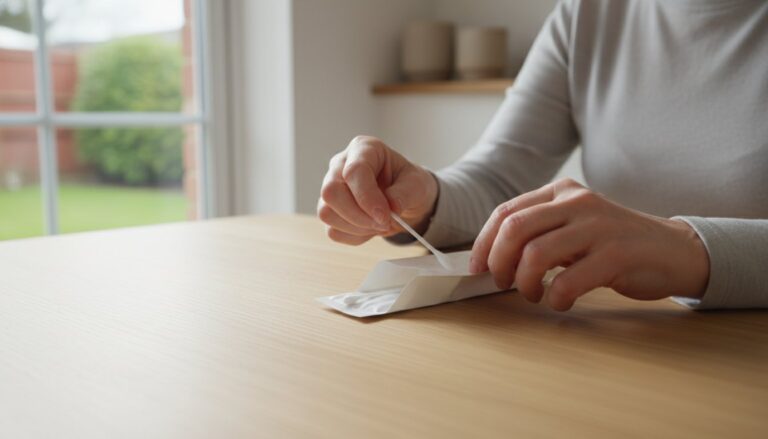
- Step 1 (Nose): Carefully remove the swab from its sterile packaging, taking care not to touch the cotton tip. Insert the tip approximately one centimetre into the first nostril and rotate it five times against the inner wall. Repeat this process in the second nostril using the same swab.
- Step 2 (Axilla and Groin): For a comprehensive screen, you will also need to swab the skin folds of the axilla (armpit) and the groin. Use firm but gentle pressure to ensure the swab picks up enough surface material from these warm, moist areas where MRSA often colonises.
- Step 3 (Securing): Place the swab directly into the tube containing the transport media. This liquid is designed to preserve any bacteria during transit to our UKAS-accredited laboratory partners.
Ensuring Sample Integrity
The accuracy of your result depends heavily on how the sample is handled after collection. Label every tube clearly with the date and your details immediately after swabbing. You should dispatch your samples on the same day they are collected to ensure they reach the lab within the optimal diagnostic window. Using a prepaid, tracked service is vital for medical samples, as it provides a clear record of custody and ensures the laboratory can begin processing your test without delay. Avoid common collection errors, such as allowing the swab tip to touch surfaces like tabletops or clothing before it enters the transport tube. To begin the process, you can order a professional MRSA Rapid PCR Test– Nose/Groin/Axilla for fast and reliable results.
Choosing the Right MRSA Test: Culture vs. PCR
Selecting the appropriate method for mrsa screening for carers involves balancing your timeline with the specific clinical requirements of the person you support. While both culture and PCR tests provide high levels of diagnostic accuracy, they operate on very different biological principles. Understanding these differences helps you select the service that best fits your schedule and provides the necessary peace of mind to continue your care duties safely. It’s about choosing the right tool for your specific caregiving context.
MRSA Culture Testing: The Standard Approach
Culture testing is the traditional foundation of clinical microbiology. In this process, the laboratory attempts to “grow” the bacteria from your swab sample in a nutrient-rich environment. If MRSA is present, it will multiply until it’s visible and identifiable under controlled conditions. Because this method relies on natural biological growth, the process cannot be artificially accelerated.
Typical turnaround times for a culture test are between 48 and 72 hours. This duration matters because it represents the time required for the lab to confirm a definitive negative or positive result. Culture testing is often the most cost-effective choice for carers who are performing routine, periodic monitoring rather than reacting to an urgent medical event. It offers a reliable way to maintain a long-term record of your carrier status without the higher costs associated with molecular technology.
Rapid PCR Testing: Results in 24 Hours
Rapid PCR (Polymerase Chain Reaction) testing represents a significant advancement in diagnostic speed. Instead of waiting for bacteria to grow, the lab uses molecular detection to identify the specific genetic material, or DNA, of the MRSA bacteria. This method is incredibly precise and can detect the presence of the bacteria even in very small amounts, providing a definitive answer much faster than traditional methods.
PCR is considered the gold standard for urgent clinical decisions. If you’re caring for someone with an imminent surgery date or if a new care placement is starting immediately, you don’t have several days to wait for a result. PCR provides results within 24 hours of the laboratory receiving the sample, allowing for immediate action if decolonisation is required. You can Order your Rapid PCR MRSA kit to get the fast, next-day peace of mind necessary for high-stakes care environments.
mrsatest.co.uk is the discreet, professional choice for carers across the UK. We understand that your time is limited and your privacy is paramount. By using verified, UKAS-accredited laboratory partners, we ensure that your at-home test meets the same clinical standards as a hospital screen. Whether you choose the traditional culture method or the rapid PCR option, you’re supported by a service designed to make proactive mrsa screening for carers simple, private, and stress-free.
Taking Proactive Steps for Safer Care
Protecting a vulnerable loved one starts with understanding your own carrier status. By choosing to undergo mrsa screening for carers, you remove the uncertainty of being an asymptomatic carrier and ensure that your home remains a safe recovery environment. Whether you are preparing for a patient’s hospital discharge or starting a new professional role, having accurate diagnostic data is your most effective tool for infection prevention.
You don’t need to wait for a GP referral or visit a clinic to get answers. Our service provides professional collection kits with discreet, plain-packaging delivery to protect your privacy. All samples are processed by an accredited UK laboratory, with our rapid PCR options delivering results in as little as 24 hours. Order Your Private MRSA Screening Kit Today.
Taking this small step today provides the clinical clarity you need to focus on what matters most: providing high-quality, compassionate care with complete peace of mind.
Frequently Asked Questions
Do I need a GP referral for an MRSA screening as a carer?
No, you don’t need a GP referral to access mrsa screening for carers through a private provider. Many carers find it difficult to get preventative screening via the NHS if they don’t have symptoms. Private testing allows you to take control of your health and safety protocols without waiting for an appointment or meeting specific clinical criteria for an asymptomatic test.
How long does an MRSA screening take to show results?
The turnaround time depends on the type of technology used by the laboratory. A rapid PCR test typically delivers results within 24 hours of the sample reaching the lab. Standard culture tests take longer, usually between 48 and 72 hours, because the lab must wait for any bacteria on the swab to grow for identification.
Can I carry MRSA without having any symptoms?
Yes, it’s very common to carry the bacteria without any symptoms. This state is known as colonisation, and research suggests about 1 in 30 people are carriers at any given time. While you may feel perfectly healthy, you can still pass the bacteria to a vulnerable person through routine contact, which could then lead to a serious infection.
What happens if my MRSA screening result is positive?
If your result is positive, you’ll need to follow a simple decolonisation process. This usually involves using a prescribed antiseptic body wash and a specific nasal ointment for approximately five days. This routine effectively removes the bacteria from your skin and nostrils. Once the treatment is complete, you’re usually advised to re-test to confirm the bacteria are gone.
Is the at-home MRSA test as accurate as a hospital test?
Yes, at-home kits are just as accurate as those used in a hospital setting when they are processed by UKAS-accredited laboratories. The collection swabs and transport tubes are medical-grade. As long as you follow the instructions for swabbing the nose, groin, and axilla correctly, the diagnostic quality remains identical to a screen performed in a clinical environment.
How much does a private MRSA screening cost in the UK?
Costs for private screening vary depending on whether you choose a rapid PCR test or a traditional culture method. Prices also depend on the number of sites you choose to swab, such as a dual-site nose and groin test or a comprehensive multi-site screen. You should check current service listings for the most up-to-date information on available testing options.
Will I need to take antibiotics if I am an MRSA carrier?
Being a carrier doesn’t usually require oral antibiotics. Instead, medical professionals recommend a “topical” decolonisation protocol. This focuses on the specific areas where the bacteria live on the surface of your body. Using antiseptic skin washes and nasal creams is highly effective at clearing colonisation without the need for systemic antibiotic medication that affects the whole body.
Can I still care for my relative if I have MRSA on my skin?
It’s best to limit close physical contact or follow strict barrier nursing protocols until you’ve completed a decolonisation cycle. Carrying MRSA on your skin puts vulnerable relatives at a significantly higher risk of surgical site infections or sepsis. Completing the five-day cleaning routine and getting a clear result from mrsa screening for carers is the safest way to resume normal care duties.