Pre-Operative MRSA Screening Requirements UK: A 2026 Patient Guide
Imagine arriving at the hospital, bags packed and nerves steeled, only to be told your operation is cancelled because your MRSA status is unknown. It’s a frustrating and surprisingly common reality for many patients in the UK. Preparing for surgery is already stressful enough without the added anxiety of superbug colonisation or administrative delays. Navigating the pre-operative mrsa screening requirements uk hospitals mandate can feel overwhelming when you’re focusing on your recovery.
We understand that you want peace of mind and a clear path to your procedure. This guide will demystify the mandatory clinical standards for 2026, ensuring your operation stays on schedule and your health remains the priority. We’ll break down exactly how the screening process works, where the swabs are taken, and how you can manage your infection status with confidence. From understanding the difference between rapid PCR and traditional culture tests to knowing the exact timelines for results, you’ll find everything you need to avoid last-minute cancellations and move forward with your surgery safely.
Key Takeaways
- Understand why UK hospitals mandate MRSA screening for all elective admissions to ensure patient safety and prevent surgical site infections.
- Identify the specific pre-operative mrsa screening requirements uk patients must meet, including the body sites swabbed and the ideal testing window.
- Learn the difference between being ‘colonised’ and being sick, and how this distinction impacts your surgical schedule.
- Discover the benefits of using private Rapid PCR or Culture tests as an early check to stay ahead of hospital protocols.
- Gain practical tips on using at-home collection kits correctly to avoid invalid results and ensure your procedure remains on track.
Mandatory Pre-Operative MRSA Screening Requirements in the UK (2026)
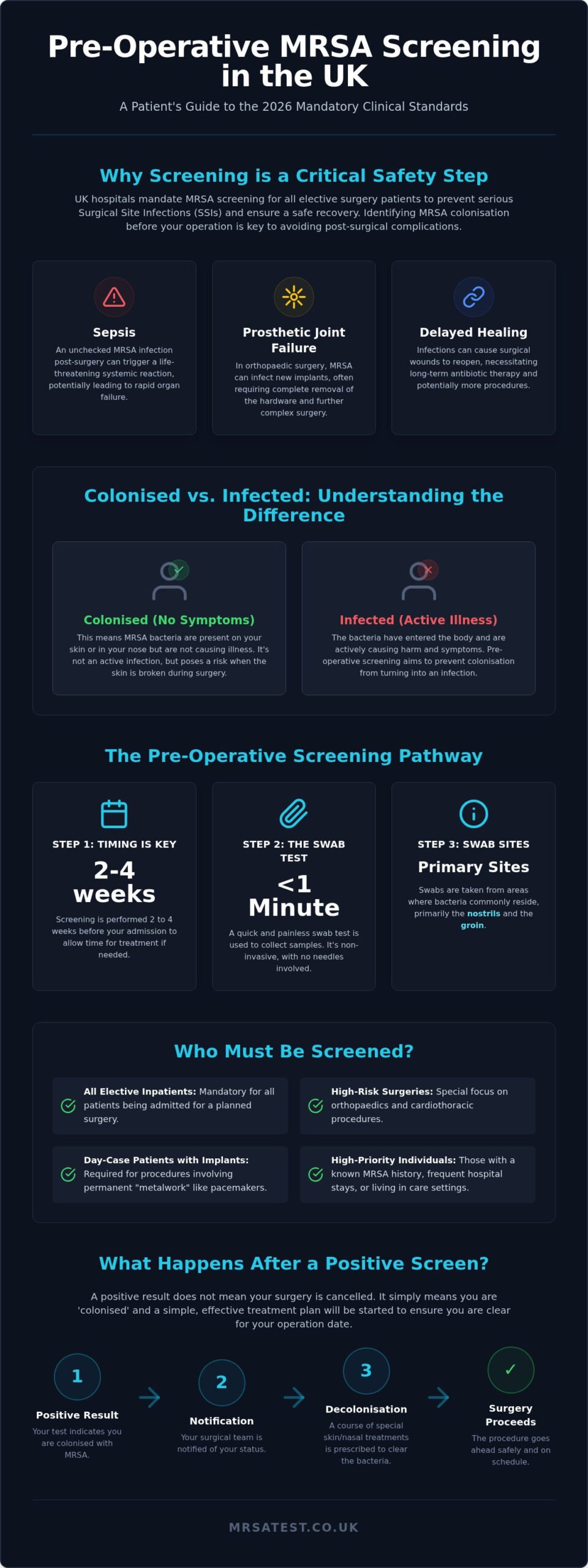
Pre-operative MRSA screening is a mandatory clinical gate that all patients must pass before their surgical procedure can safely proceed. This requirement serves as a standard safety protocol for all elective inpatient admissions across the country. Meeting the pre-operative mrsa screening requirements uk hospitals mandate ensures that the clinical environment remains sterile and that individual patient outcomes are optimised. These national standards are developed by NHS England and overseen by the Getting It Right First Time (GIRFT) programme, providing a unified approach to infection control and patient safety.
The primary objective of this screening process is the prevention of surgical site infections (SSIs). These specific infections are significantly harder to treat than standard bacterial issues and often require aggressive intervention. By identifying and managing MRSA before a patient enters the operating theatre, hospitals can drastically reduce the risk of post-operative complications that might otherwise compromise the success of the surgery.
Why Hospitals Prioritise MRSA Clearance
MRSA, or methicillin-resistant Staphylococcus aureus, is a specific strain of bacteria that has developed a strong resistance to common antibiotics, including flucloxacillin. While many people carry these bacteria on their skin or in their nose without experiencing any symptoms, this state is known as being ‘colonised’. In a daily environment, colonisation is rarely a problem, but surgery changes the risk profile. When the skin’s natural barrier is broken during a procedure, these bacteria can enter the body and cause severe harm.
Hospitals prioritise clearance because an active MRSA infection during recovery can lead to devastating consequences:
- Sepsis: A life-threatening systemic reaction to an infection that can cause rapid organ failure.
- Prosthetic Joint Failure: In orthopaedic cases, MRSA can settle on new implants, often requiring the hardware to be removed entirely.
- Delayed Healing: Infections can cause wounds to reopen, requiring long-term antibiotic therapy and potentially further surgery.
The 2026 National Standard for Elective Care
Current 2026 guidelines require screening for all high-risk elective procedures, with a particular focus on orthopaedics and cardiothoracic surgery. These specialities involve complex internal work where the presence of resistant bacteria would be particularly dangerous. If you’re looking for a deeper understanding of the bacteria itself, you can read What Is MRSA? Your Complete Guide to Symptoms, Causes & Risks.
You should also be aware that screening isn’t limited to patients staying overnight. Day-case patients undergoing procedures that involve ‘metalwork’ or permanent implants must also meet the pre-operative mrsa screening requirements uk trusts enforce. This includes operations like pacemaker insertions or certain types of keyhole surgery where a permanent fixture remains in the body. Being proactive about your screening ensures that you won’t face a last-minute cancellation on the day of your operation.
Which Patients Must Be Screened and What Does the Test Involve?
Most patients scheduled for elective surgery in the UK will undergo screening between two and four weeks before their admission. This specific window is chosen because it provides enough time for decolonisation treatment if the results come back positive. The pre-operative mrsa screening requirements uk trusts follow ensure that the surgical team has a clear picture of your bacterial status well in advance of your procedure. While the majority of elective patients are screened, certain groups are considered high-priority. This includes anyone with a known history of MRSA, patients who have had frequent hospital admissions in the last year, or individuals living in residential care settings.
Many people feel a natural sense of anxiety about medical tests, but there’s no need for concern here. The screening process is entirely painless and typically takes less than one minute to complete. It doesn’t involve needles or invasive procedures; it’s simply a matter of collecting surface samples from specific areas of the body.
The Primary Swab Sites: Nose, Groin, and Beyond
The clinical team focuses on areas where the bacteria are most likely to ‘colonise’ or live without causing symptoms. The nostrils are the primary site for testing, as the warm, moist environment of the nose is a preferred habitat for these bacteria. To collect the sample, a healthcare professional or the patient themselves will gently rotate a sterile cotton swab inside the tip of each nostril. The groin or perineum is usually the second mandatory swab site, as this is another common area for bacterial carriage. Depending on the type of surgery or your medical history, additional swabs might be taken from the underarms (axilla), any existing skin wounds, or near the entry sites of medical devices like catheters. If you want to ensure your preparation is handled with total privacy, you can order a discreet home collection kit to check your status before your hospital appointment.
PCR vs. Culture: Understanding the Lab Methods
There are two primary ways that laboratories process these samples, and the method used can significantly impact how quickly you receive your results. Culture testing is the traditional approach. It involves placing the sample in a nutrient-rich environment and waiting for any bacteria to grow. This process is highly reliable but usually takes between 48 and 72 hours to yield a definitive result. If your surgery is approaching quickly, this delay can be a source of stress.
In contrast, Rapid PCR testing uses molecular detection to search for the specific DNA of the MRSA bacteria. This advanced method is incredibly efficient and can provide results in under 24 hours. Many patients now choose to get fast, accurate results at home with a Rapid PCR kit to bypass the traditional waiting times. Understanding these methods helps you manage your timeline and ensures that you meet all pre-operative mrsa screening requirements uk hospitals demand without risking a last-minute delay to your operation.
The Consequences of a Positive MRSA Screen
Receiving a positive MRSA result can be unsettling, but it’s vital to remember that being ‘colonised’ is not the same as having an active infection. In most cases, you won’t feel unwell or show any symptoms at all. However, a positive result indicates that the bacteria are present on your skin or in your nostrils. This status triggers specific clinical actions to meet the pre-operative mrsa screening requirements uk hospitals enforce. While you aren’t sick, you are a carrier, and this carriage must be addressed before any invasive procedure can begin.
Hospitals operate under strict infection control mandates because they cannot risk introducing MRSA into a sterile theatre environment. If these bacteria enter a surgical wound, they can cause deep-seated infections that are resistant to standard antibiotics. To prevent this, your clinical team will require you to undergo a clearance process. This safety measure is designed to protect you from the serious complications discussed earlier, such as sepsis or prosthetic failure, ensuring your recovery is as smooth as possible.
The Decolonisation Protocol: Antiseptic Wash and Nasal Cream
A positive result leads to a mandatory 5-day decolonisation protocol. This is a straightforward but rigorous routine you’ll perform at home to reduce the bacterial load on your body. The treatment typically involves two main components. First, you’ll use a 4% Chlorhexidine body wash as a soap substitute and hair shampoo for the full five days. This wash is designed to kill bacteria living on the skin surface. Second, you’ll apply Mupirocin nasal ointment inside your nostrils three times a day to clear the primary site of colonisation.
Success during this period depends on strict personal hygiene. You’ll need to use fresh towels for every wash and change your bed linen daily during the treatment window. These steps prevent you from accidentally re-contaminating yourself with bacteria shed onto fabrics the previous day. It’s a focused effort, but it’s the most effective way to clear the bacteria and proceed with your care.
The Risk of Surgical Cancellation
The primary logistical risk of a positive screen is a delay to your operation. If a positive result is identified too close to your surgery date, the hospital may be forced to reallocate your theatre slot to another patient. This happens because the 5-day treatment must be completed, and most trusts then require a clear re-screen to confirm the bacteria have been eradicated. Losing a theatre slot can lead to weeks or even months of further waiting.
Knowing your status in advance is the best way to protect your surgery date. You can find more advice on managing these clinical timelines in our Complete Pre-Op Health & Logistics Checklist. By staying ahead of the pre-operative mrsa screening requirements uk trusts mandate, you can complete any necessary treatment well before your admission date, ensuring your procedure stays on schedule.
Why Patients Choose Private Pre-Surgery MRSA Testing
Many patients choose to take control of their surgical timeline by opting for private testing. This proactive approach allows you to verify your status well before your formal hospital appointment. By identifying colonisation early, you gain a vital ‘early warning’ that enables you to begin the decolonisation process before the hospital even detects a potential issue. This is a strategic way to ensure you meet all pre-operative mrsa screening requirements uk protocols without the risk of a last-minute surprise. Private results are fully documented and can be shared with your GP or surgical team to keep them informed of your proactive health management.
Home testing kits offer a level of privacy and convenience that traditional hospital visits cannot match. Instead of taking extra time off work or navigating hospital parking for a simple swab, you can collect your samples in the comfort of your own home. You can order a private MRSA test kit online to simplify your pre-operative journey and maintain total discretion over your diagnostic data.
Gaining Peace of Mind Before the Pre-Op Clinic
Waiting for hospital results is often the most stressful part of the lead-up to surgery. The fear of a last-minute phone call cancelling your procedure can be overwhelming. Knowing you are ‘clear’ in advance removes this anxiety entirely. It’s important to understand that these at-home kits aren’t a basic version of medical testing. They use the same UK-accredited laboratory standards as the NHS, providing clinical-grade accuracy that you can depend on. This professional oversight ensures that your results are reliable and helpful for your upcoming care.
When to Order a Private MRSA Kit
Timing is key when managing the pre-operative mrsa screening requirements uk hospitals expect. Ideally, you should order your kit four to six weeks before your scheduled surgery. This provides a comfortable window to receive results and complete a treatment cycle if necessary. If your hospital appointment is less than 10 days away, a Rapid PCR kit is the best choice due to its superior processing speed. For a deeper look at how these diagnostics fit into your wider health plan, see our At-Home Test Kits UK: The Complete Guide for 2026.
How to Use an At-Home MRSA Screening Kit Correctly
To ensure you successfully meet the pre-operative mrsa screening requirements uk hospitals mandate, accuracy during sample collection is vital. A minor error at home can lead to an ‘invalid’ result at the laboratory, potentially causing the very delays you are trying to avoid. Following the instructions provided in your mrsatest.co.uk kit precisely is the most effective way to guarantee a valid screen. It’s important to remember to wash your hands thoroughly with soap and water before you begin handling the sterile swabs or tubes.
Preparation is simple but requires attention to detail. If your specific kit requires it, ensure the swabs are adequately moistened with the provided transport medium before use. This liquid helps preserve the sample during transit. Once the swabs are collected, seal the sample tubes correctly to prevent leaks and use the prepaid tracked return packaging immediately. Labelling is equally critical; an unlabelled tube cannot be processed by the laboratory, so double-check that your details are clear and legible.
Step-by-Step Self-Swabbing for Nose and Groin
The collection process focuses on the primary sites where MRSA is known to colonise. For the nose, you’ll need to rotate the sterile swab gently inside the tip of both nostrils for 5 to 10 seconds each. There’s no need to push the swab deep into the nasal cavity; the bacteria live on the inner surface of the nostrils. For the groin sample, rub the swab firmly over the skin in the crease where the leg meets the torso. This area provides the warm environment where the bacteria often reside.
Once you’ve finished the collection, place the swabs into their respective tubes. Label each tube clearly with the date of collection and the specific site, such as ‘Nose’ or ‘Groin’. This clarity helps the laboratory technicians process your sample efficiently and ensures your results are accurate to the pre-operative mrsa screening requirements uk clinical standards.
Returning Your Sample and Receiving Results
Timing is a major factor in diagnostic accuracy. You should post your sample on the same day it is collected to ensure the laboratory receives a viable specimen. Using the provided tracked return packaging allows you to monitor your kit’s journey to our UK-based facility. Once the lab has processed your swabs, your results are delivered securely through a private portal or via email, allowing you to view them as soon as they’re ready.
Taking this proactive step puts you in control of your surgical journey. By confirming your status early, you can enter your pre-operative assessment with confidence and clarity. Order your confidential MRSA screening kit today for total peace of mind.
Take Control of Your Surgical Journey
Meeting the pre-operative mrsa screening requirements uk trusts enforce is a critical step in ensuring your procedure goes ahead as planned. By understanding that screening is a simple safety measure rather than a cause for alarm, you can approach your hospital admission with confidence. Whether you’re undergoing a routine day-case procedure or a major elective surgery, being proactive about your bacterial status is your best insurance against administrative delays and clinical complications. Identifying colonisation early gives you the necessary time to complete decolonisation without the stress of a last-minute cancellation.
Our service provides fast PCR results within 24 hours through accredited UK laboratory analysis, all handled with discreet and confidential home delivery. You don’t have to wait for your hospital appointment to gain peace of mind about your infection status. Taking this step ensures you arrive at the hospital ready for your operation, rather than worrying about the results of a late-stage test.
Secure your surgery date with a private MRSA screening kit from mrsatest.co.uk. We’re here to support you through every step of the diagnostic process, providing the clinical accuracy and privacy you need for a successful recovery.
Frequently Asked Questions
Is MRSA screening mandatory for all UK surgeries?
Yes, screening is mandatory for all elective inpatient admissions across the UK. This clinical standard also applies to specific day-case procedures that involve the insertion of implants or ‘metalwork’. These pre-operative mrsa screening requirements uk hospitals enforce help protect both you and the surgical environment. By identifying colonised patients early, clinical teams can prevent the spread of resistant bacteria and lower the risk of post-surgical complications.
What happens if I test positive for MRSA before my operation?
Testing positive means you are ‘colonised’ with the bacteria, which triggers a mandatory five-day decolonisation protocol. You’ll typically be prescribed a specific antiseptic body wash and a nasal ointment to clear the bacteria from your skin and nostrils. While this doesn’t mean you are sick, your surgery may be delayed until you’ve completed the treatment and potentially received a clear re-screen. This proactive measure ensures you enter the operating theatre safely.
How long does it take to get MRSA screening results back?
The turnaround time depends entirely on the laboratory method used for your sample. Traditional culture testing usually takes between 48 and 72 hours because the lab must wait for any bacteria to grow. In contrast, Rapid PCR testing is a molecular method that often provides results in under 24 hours. Patients with imminent surgery dates often prefer the PCR method to ensure they meet all clinical standards without risking a last-minute schedule change.
Can I do my own MRSA swab at home for my pre-op requirements?
Yes, you can use a private at-home kit to check your status before your official hospital screening. Many patients choose this route to identify any colonisation early, allowing time for treatment before the hospital’s mandatory test. These kits use professional, UK-accredited laboratory analysis to ensure clinical-grade accuracy. Taking a private test provides peace of mind and helps you manage the pre-operative mrsa screening requirements uk trusts demand with total privacy and convenience.
Do I need to stop taking antibiotics before an MRSA screen?
You should always consult your surgical team or GP regarding your current medications before a screen. Antibiotics can sometimes mask the presence of MRSA, leading to a false negative result. If you are currently taking antibiotics for an unrelated issue, your doctor may advise you to wait a specific period after finishing the course before taking the swabs. This ensures the sample provides an accurate reflection of your bacterial status.
What are the common swab sites for a pre-operative MRSA test?
The primary sites for screening are the nostrils and the groin area, as these are the most common places for the bacteria to live. Depending on your specific medical history or the type of operation, your clinical team might also swab your underarms (axilla) or any existing skin wounds. If you have an indwelling medical device like a catheter, the entry site may also be tested to ensure complete clinical clearance.
Will a positive MRSA result definitely cancel my surgery?
A positive result doesn’t always lead to a cancellation, but it frequently results in a delay. If there is enough time before your scheduled date to complete the five-day decolonisation treatment, your surgery may still proceed as planned. However, if the positive result is found too close to your admission, the hospital might postpone the procedure. This delay is a safety precaution to ensure you are cleared of the bacteria before entering surgery.
How much does a private MRSA test cost in the UK?
The cost of private testing varies depending on the laboratory method you choose and the number of swab sites included in the kit. Rapid PCR tests typically command a different price point compared to traditional culture tests due to their advanced molecular technology and faster processing times. You should check current service options to find a test that fits your specific surgical timeline. Most private providers offer transparent pricing for their laboratory-accredited services.