
MRSA Screening Before Hip Replacement in the UK: A Patient’s Guide
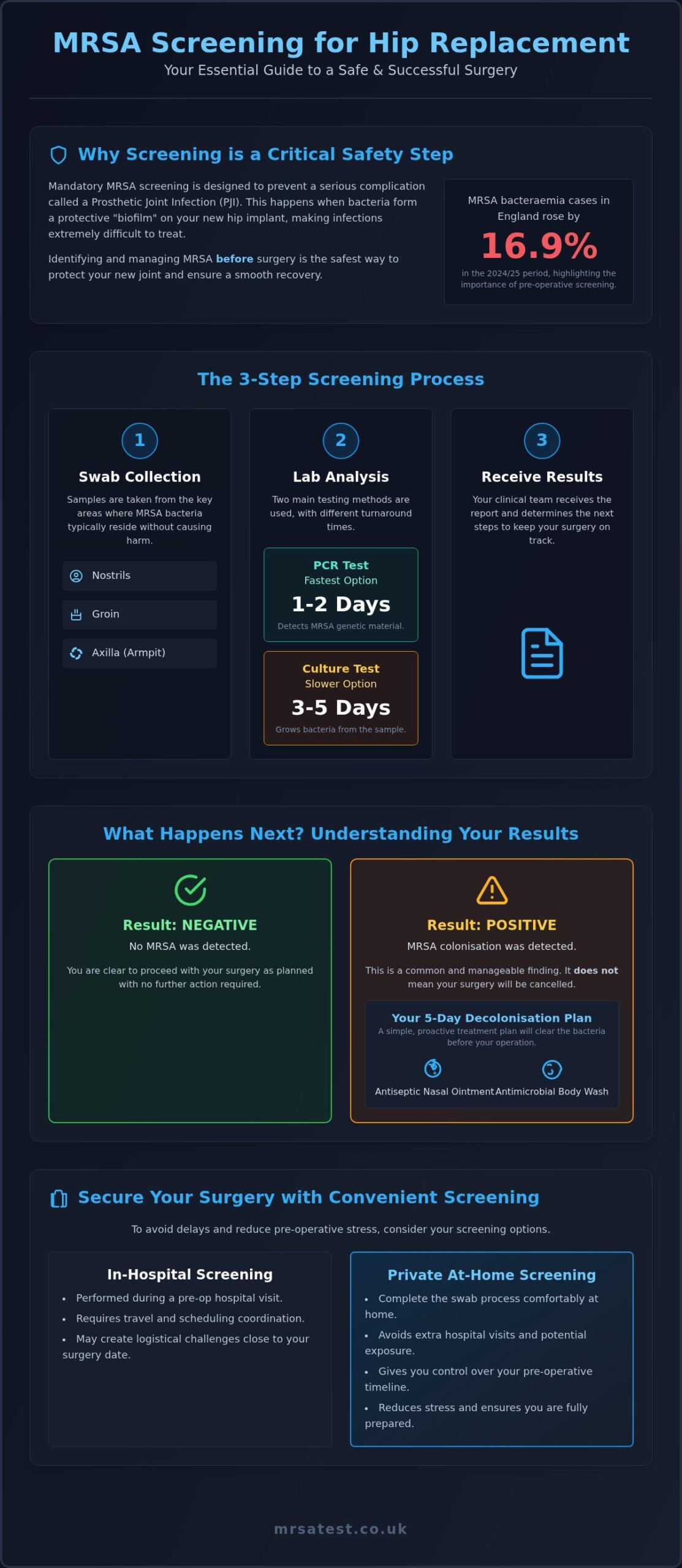
Did you know that MRSA bacteraemia cases in England rose by 16.9% in the 2024/25 period? While this statistic is a reminder of the risks, it also underscores why mrsa screening before hip replacement uk is now a mandatory and vital safeguard for your health. Most patients feel a mix of relief that their surgery date is finally approaching and a deep-seated fear that a simple infection could cancel the procedure at the eleventh hour.
It is natural to feel anxious about hospital-acquired infections or the logistical headache of multiple pre-op appointments. We agree that your focus should be on a successful surgery and a swift, safe recovery. This guide will help you understand the clinical necessity of these tests and how the screening process actually works. You will learn about the options for managing your testing privately to avoid delays, ensuring you are fully prepared for the decolonisation process if it’s needed. We’ll show you how to take control of your pre-operative health with confidence, efficiency, and discretion.
Key Takeaways
- Learn why mandatory MRSA screening is a critical safety step to prevent deep-seated joint infections and ensure a successful surgical recovery.
- Understand the swab process involving the nose, groin, and axilla to identify the most common areas where bacteria may reside.
- Compare the speeds of PCR and Culture methods to ensure your mrsa screening before hip replacement uk aligns perfectly with your surgical timeline.
- Discover how a positive result leads to a manageable 5-day decolonisation protocol, allowing your procedure to stay on track.
- Explore the benefits of professional at-home screening kits to reduce pre-operative stress and avoid the inconvenience of extra hospital visits.
Why MRSA Screening is Mandatory for Hip Replacement Surgery in the UK
What is MRSA? It stands for Methicillin-resistant Staphylococcus aureus. This is a specific strain of staph bacteria that has developed a strong resistance to the antibiotics usually used to treat skin infections. For most people, carrying these bacteria on the skin or in the nose causes no issues at all. However, when you are preparing for a major procedure, mrsa screening before hip replacement uk becomes a vital safety measure. The goal is simple: ensure the surgical site remains sterile and your new joint remains protected.
The primary risk during orthopaedic surgery is the development of a deep-seated prosthetic joint infection, often called a PJI. These infections are notoriously difficult to manage because the bacteria can settle deep within the tissue surrounding your new hip. UK national guidelines mandate screening for all elective surgical patients to maintain a safe hospital environment. It is much safer and more efficient to identify and treat MRSA before any incision is made. By addressing colonisation early, clinical teams can significantly reduce the risk of post-operative complications.
The Impact of MRSA on Orthopaedic Success
Bacteria like MRSA have a unique ability to adhere to the metal and plastic surfaces of hip implants. Once they attach, they can form what is known as a biofilm. This is a protective slimy layer that acts as a shield, making it nearly impossible for your immune system or standard antibiotics to reach the bacteria. This is why a successful hip replacement depends on starting with a clean slate.
If your screen returns a positive result, it does not mean you are “sick” or that you have an active illness. It simply means you are colonised, which is the term for carrying the bacteria on your body. Identifying this status before surgery allows for a simple decolonisation process. This proactive approach is a major factor in reducing hospital readmissions and ensuring that your recovery remains on schedule.
Who Needs to be Screened?
Standard protocols in the UK require all patients undergoing elective orthopaedic surgery to be screened. This includes everyone from young adults having hip resurfacing to older patients having total hip replacements. There are, however, some groups who may require closer attention:
- Patients with a known previous history of MRSA colonisation.
- Individuals who have had frequent hospital visits or long-term stays in healthcare facilities.
- Those with chronic skin conditions or open wounds that might harbour bacteria.
- Nursing home residents or individuals receiving regular community nursing care.
Understanding these risks is part of a broader commitment to patient safety. For more information on how hospitals manage these environments, you can read our guide on hospital-acquired infections. Being informed about mrsa screening before hip replacement uk helps you play an active role in your own surgical success.
The Pre-Operative Swab Process: Where and How to Test
Understanding the logistics of the swab process helps remove the mystery from your pre-operative journey. To perform mrsa screening before hip replacement uk, samples are collected from the body’s primary reservoirs. These are the areas where bacteria naturally congregate without causing symptoms. The three main sites are the nostrils (anterior nares), the groin, and the axilla, which is the clinical term for your armpit. Testing these specific locations ensures the highest level of diagnostic accuracy for your surgical team.
Accuracy depends heavily on the technique used during collection. While some hospitals perform these swabs during a pre-op visit, many patients now prefer the convenience of self-collection. Following NHS guidance on MRSA screening ensures that your samples meet the required clinical standards. It’s also important to consider your timeline. You should aim to complete your swabs at least two to three weeks before your surgery. This allows enough time for laboratory analysis and any necessary follow-up steps if a positive result occurs.
Step-by-Step Guide to Self-Swabbing
Collecting your own samples is a straightforward process when you follow a structured method. First, ensure your hands are thoroughly washed and dried. Open the sterile swab package carefully, taking care not to touch the cotton tip against any external surfaces. For the nostrils, insert the tip about one centimetre into the nose and rotate it gently against the inside wall for five seconds. Repeat this with the same swab in the other nostril to ensure a comprehensive sample.
For the skin sites, you’ll use separate swabs for the groin and armpit. Focus on the skin folds, as these warm, moist areas are where bacteria thrive most easily. Rub the swab firmly but gently over the area to ensure enough material is collected for the lab to analyse. If you’re feeling overwhelmed by the hospital process, you can secure a private screening kit to complete these steps in a relaxed, non-clinical environment.
Ensuring Sample Integrity
Swab sites are the specific anatomical locations, primarily the nostrils and the skin folds of the groin, where samples are gathered to detect the presence of MRSA. Once you’ve collected the samples, maintaining their integrity is the next priority. Each swab must be placed immediately into its transport tube. Clear labeling is vital. Ensure your name, date of birth, and the date of the sample are written legibly to avoid any processing delays at the laboratory.
Finally, use the provided prepaid return packaging to send your samples to the accredited lab. Speed is important here. Sending your samples off the same day you collect them ensures the bacteria remain viable for testing. This professional approach guarantees that your mrsa screening before hip replacement uk provides the reliable data your surgical team needs to proceed safely and with peace of mind.
PCR vs. Culture: Which MRSA Test Fits Your Surgery Timeline?
Timing is a critical factor when preparing for your procedure. Choosing the right diagnostic method for mrsa screening before hip replacement uk depends largely on your surgery date and your personal preference for speed. There are two primary laboratory techniques used to detect the presence of MRSA: the traditional culture method and the modern rapid PCR test. While both are highly reliable and conducted in accredited UK laboratories, they operate on very different timelines.
The traditional culture method involves placing your sample in a controlled environment, such as a petri dish, to see if bacteria grow over several days. In contrast, a Rapid PCR (Polymerase Chain Reaction) test uses molecular technology to identify the specific DNA of the MRSA bacteria directly from the swab. Because the PCR method doesn’t require a growth period, it provides a much faster route to clinical clearance. Understanding these differences helps you select the service that best aligns with your hospital’s pre-operative assessment schedule.
When to Choose a Rapid PCR Test
A rapid PCR test is the ideal solution for patients who have a surgery date less than a week away. It provides results within 24 hours of the sample reaching the laboratory, which is essential for meeting tight hospital deadlines. This speed is also a significant factor in reducing waiting anxiety. Knowing your status quickly allows you to focus on your physical preparation rather than worrying about potential delays. If you’re on a tight schedule, you can find more details on our MRSA Rapid PCR test kit page. This molecular approach offers the quickest path to ensuring your surgery stays on track.
Understanding the Standard Culture Method
The standard culture method remains a dependable and cost-effective option for patients who have ample time before their procedure, typically two weeks or more. This process includes an enrichment phase. During this stage, the laboratory uses a specialized nutrient broth to encourage even the smallest traces of bacteria to multiply until they’re detectable. This ensures a high level of sensitivity, even in cases where colonisation is very low.
Some clinical teams still prefer the culture method because it allows for further testing if a result is positive. When bacteria are grown in a lab, scientists can perform sensitivity testing to see exactly which antibiotics are most effective against that specific strain. While this process takes 48 to 72 hours, it provides comprehensive data that can be helpful for long-term clinical management. For most elective hip replacements, however, either method is perfectly acceptable as long as the results are available for your pre-operative appointment.
Understanding Your Results: What Happens if MRSA is Detected?
Receiving a positive result from your mrsa screening before hip replacement uk shouldn’t be a cause for alarm. Clinical teams view this as a manageable finding rather than a failure of your personal hygiene. It simply indicates that the bacteria are present on your skin or in your nose. A structured protocol will now be used to remove them before your surgery date. This process ensures that when you enter the operating theatre, your risk of infection is at its lowest possible level.
If you’ve opted for private testing, share your results with your surgical pre-assessment team as soon as you receive them. Being proactive helps the hospital staff plan your care more efficiently. Most trusts will require a digital or physical copy of the lab report from an accredited UK laboratory to update your records. This transparency allows the surgical team to confirm you’ve completed the necessary steps for a safe admission and a successful surgical outcome.
The Decolonisation Protocol Explained
Decolonisation is a proactive skin-cleansing procedure designed to eliminate MRSA from the body before an incision is made. This usually involves a five-day course of treatment. You’ll typically be prescribed an antimicrobial body wash, such as Chlorhexidine, and a specific nasal ointment like Mupirocin. These products work together to reduce the bacterial load on your skin and in your respiratory passages.
Success depends on strict adherence to the routine. You’ll need to use the body wash daily and apply the ointment to the inside of your nostrils as directed. It’s also vital to maintain high standards of home hygiene during these five days to prevent re-contamination. This includes:
- Changing your bed sheets and pillowcases every day.
- Using a fresh towel for every shower or bath.
- Wearing clean clothes and pyjamas daily.
Once the treatment is finished, your hospital might request a follow-up swab. This confirms the protocol was effective before you head into the theatre. To ensure you have enough time for this process, you can order a private MRSA test kit today.
Will My Surgery Be Cancelled?
This is the most common concern for patients. In nearly all cases, surgery is not cancelled but simply postponed for a short period. Elective orthopaedic procedures are significantly safer when the patient is confirmed as MRSA negative. Postponing for a week to complete decolonisation is a small price to pay to avoid the severe complications of a prosthetic joint infection. Proceeding while colonised increases the risk of bacteria adhering to the new implant, which could lead to much more complex treatments later.
Your surgeon wants the best possible outcome for your new hip. Following the clinical advice regarding results is a key part of your surgery preparation checklist. By managing this step early, you protect your health and ensure your recovery remains on a positive trajectory. Taking charge of your mrsa screening before hip replacement uk now gives you the peace of mind that every safety measure is in place.
Secure Your Surgery Date with Private At-Home MRSA Screening
Preparing for major surgery is an intensive period. Between physiotherapy consultations and pre-assessment appointments, your schedule is often already full. Adding another hospital visit for mrsa screening before hip replacement uk can feel like an unnecessary burden. Private at-home testing offers a professional alternative that fits your timeline. It provides the same clinical accuracy as a hospital screen but with the added benefits of speed, discretion, and convenience.
We use only accredited UK laboratories to process every sample. This ensures that the results you receive are clinical-grade and suitable for your orthopaedic assessment. By choosing a specialist service, you avoid the potential delays often found in general pathology departments. Our Rapid PCR tests provide results within 24 hours of reaching the lab. This makes them a reliable choice for patients who need quick clearance for an upcoming surgery date.
The ordering process is designed for maximum efficiency. Once you order your kit, it’s dispatched promptly to your home. You collect the samples using the techniques described in section two and return them using our prepaid packaging. This streamlined procedure minimizes friction. It builds confidence by ensuring your surgical preparation is managed by experts in a secure, non-clinical environment.
Why Choose mrsatest.co.uk?
Our specialist focus on MRSA allows for significantly faster processing than general diagnostic providers. We understand the high stakes of a surgical timeline and the anxiety that comes with waiting for results. Once your sample is analysed, your results are delivered directly to a secure online portal. This ensures your data remains confidential and accessible only to you. Our professional support is also available to help you understand your testing options, ensuring you choose the right kit for your specific hospital requirements.
Taking Control of Your Pre-Op Health
Managing your own diagnostic timeline is an empowering step in your surgical journey. It removes the uncertainty of waiting for hospital appointments and gives you the peace of mind that you’re “clear” before admission. If a positive result is detected, you’ll have the necessary time to complete the decolonisation protocol we discussed earlier. This proactive approach ensures your mrsa screening before hip replacement uk is a well-managed part of your path to a successful recovery. You don’t have to leave your safety to chance or navigate complex hospital logistics alone.
Order your pre-surgery MRSA test kit today.
Prepare for a Successful Hip Recovery
Ensuring your surgical environment is safe starts with a simple swab. Completing your mrsa screening before hip replacement uk is a mandatory clinical requirement designed to protect your new prosthetic joint from deep-seated infection. Managing this process privately reduces pre-operative stress and ensures you have the necessary clearance for your hospital admission. A positive result isn’t a failure; it’s a manageable step that keeps your recovery on the right track through a structured decolonisation protocol.
Our professional at-home service provides clinical accuracy with the convenience you deserve. With fast UK delivery and analysis conducted in accredited laboratories, you can receive your results in as little as 24 hours. This efficient process gives you the peace of mind to focus on your physical preparation and a safe return to mobility.
Order Your Pre-Surgery MRSA Test Kit Now
Your health and your successful surgery are the top priorities. We’re here to support you through the screening process so you can approach your hip replacement with confidence and calm.
Frequently Asked Questions
How long before hip replacement surgery should I be tested for MRSA?
You should ideally be tested two to four weeks before your scheduled procedure. Current 2025 GIRFT guidance states that an MRSA screen is valid for at least three months, but testing closer to your surgery date ensures the most accurate representation of your current status. This timeframe allows enough room for a five-day decolonisation treatment if your results come back positive, ensuring your surgery stays on schedule without last-minute delays.
Can I do my pre-op MRSA swab at home instead of at the hospital?
Yes, you can choose to perform your swab at home using a private, accredited kit. Many patients prefer this option to avoid the inconvenience of additional hospital visits during their busy pre-operative period. These kits provide professional-grade swabs and clear instructions to ensure you collect a high-quality sample. Once complete, you simply return the sample to a UK laboratory for analysis, making mrsa screening before hip replacement uk a more manageable part of your preparation.
What happens if I test positive for MRSA before my hip replacement?
If you test positive, you’ll undergo a standard five-day decolonisation protocol to remove the bacteria from your skin and nose. This involves using a prescribed antimicrobial body wash and a specific nasal ointment. You aren’t “sick”, but carrying the bacteria increases the risk of a prosthetic joint infection. After completing the treatment, your surgical team may require a follow-up swab to confirm you are clear before proceeding with the operation.
How long does it take to get MRSA test results back in the UK?
Result times depend on the specific laboratory method used for your screen. A Rapid PCR test typically provides results within 24 hours of the sample reaching the lab, while the traditional culture method takes between 48 and 72 hours. If you’re on a tight timeline, the PCR option is often the preferred choice to ensure your results are ready for your pre-operative assessment. Most private services deliver these results through secure online portals for immediate access.
Is the at-home MRSA test as accurate as the one done in the NHS clinic?
At-home tests are just as accurate as clinic-based swabs when processed by accredited UK laboratories. The diagnostic technology used, whether PCR or culture, is identical to that found in hospital labs. The key to accuracy is following the collection instructions carefully to ensure the swab makes proper contact with the required sites. Using a professional at-home service provides clinical-grade reliability with the added benefit of a private, stress-free environment.
Will a positive MRSA test cancel my hip surgery indefinitely?
No, a positive result won’t cancel your surgery indefinitely; it usually only causes a short postponement. Your surgeon will wait until you’ve successfully completed the decolonisation treatment to ensure the highest level of safety. Proceeding with elective surgery while MRSA is present significantly increases the risk of complications. Postponing for a week or two is a proactive measure that protects the long-term success of your new hip implant.
What is the difference between an MRSA PCR test and a culture test?
The main difference lies in how the lab identifies the bacteria. A PCR test is a molecular method that detects the specific DNA of MRSA, offering a rapid result in about 24 hours. A culture test involves placing the sample in a nutrient broth to see if bacteria grow, which takes up to three days. While both are highly reliable for mrsa screening before hip replacement uk, PCR is the faster option for those with imminent surgery dates.
Do I need to swab my groin and nose for a pre-surgery MRSA screen?
Yes, swabbing both the nostrils and the skin folds of the groin is the standard clinical requirement. These areas are known as reservoirs where MRSA bacteria are most likely to live without causing symptoms. Some protocols also include the axilla, or armpit. Testing multiple sites increases the likelihood of detecting colonisation, allowing your clinical team to provide the correct treatment before your surgery begins, ensuring a safer recovery environment.