MRSA Test at Home vs Hospital: Comparing Accuracy, Speed, and Privacy in 2026
By July 2026, an estimated 35% of UK surgical patients will have switched to remote screening to bypass the logistical hurdles of pre-operative clinics. It’s a significant shift that prioritises both safety and personal convenience. When you’re preparing for a major procedure, the debate of an mrsa test at home vs hospital often comes down to one thing; peace of mind. You shouldn’t have to risk exposure to hospital-acquired infections just to prove you’re clear of them before your admission date.
We understand that managing a tight pre-surgery timeline is stressful enough without adding travel and crowded waiting rooms to the mix. You deserve a testing solution that’s fast, discreet, and clinically reliable. This article breaks down the critical differences in accuracy, speed, and privacy between these two testing methods. You’ll discover how a PCR rapid test from a UKAS-accredited facility can provide molecular detection in 24 hours, all from the comfort of your own home. We’ll guide you through the process to ensure your preparation is simple, managed by experts, and entirely stress-free.
Key Takeaways
- Understand why MRSA screening is a vital safety requirement for elective surgeries in the UK and how it protects your post-operative recovery.
- Discover the clinical reliability of home kits that utilize the same standardized swabbing protocols for the nose, groin, and axilla used in hospital settings.
- Compare the speed of traditional culture methods with rapid PCR technology to ensure your results meet strict surgical deadlines.
- Evaluate the hidden costs and logistical benefits of an mrsa test at home vs hospital to determine which option offers the most privacy and convenience.
- Identify the specific scenarios where a private home test provides the necessary urgency and discretion compared to standard NHS hospital appointments.
The Evolution of MRSA Screening: Home Kits vs Hospital Appointments
Methicillin-resistant Staphylococcus aureus, or MRSA, is a bacterial strain that’s resistant to several widely used antibiotics like methicillin and penicillin. In the UK, managing this “superbug” is a top priority for healthcare providers to ensure patient safety. Data from the UK Health Security Agency shows that MRSA bacteraemia cases remain a persistent challenge, with 691 cases reported in England during the 2022-2023 period. While screening was once strictly a clinical task, the choice between an mrsa test at home vs hospital has become a practical reality for thousands of patients preparing for surgery.
Why Hospitals Require MRSA Screening
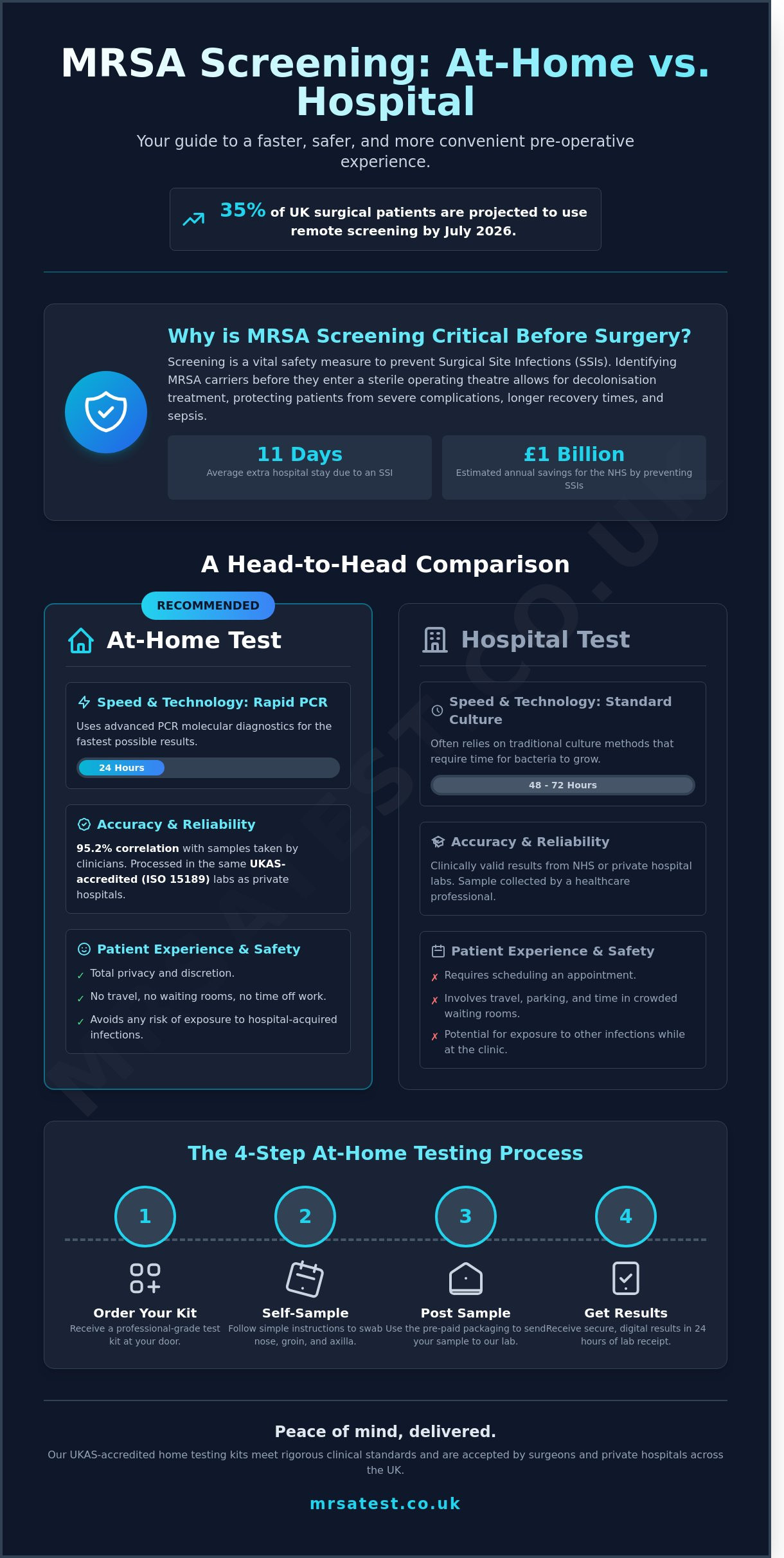
Hospitals mandate screening to stop surgical site infections (SSIs) before they start. If MRSA enters a surgical wound, it can lead to severe complications, extended recovery times, and even sepsis. Research indicates that SSIs can extend a hospital stay by an average of 11 days. Screening helps doctors distinguish between “colonisation,” where the bacteria live harmlessly on the skin, and an “active infection.” By identifying asymptomatic carriers, hospitals can provide decolonisation treatments like antiseptic washes before the patient enters a sterile operating theatre. This protocol saves the NHS an estimated £1 billion every year in avoided complication costs.
The Rise of Private Home Testing in the UK
Patients are increasingly seeking autonomy over their pre-operative timelines. The traditional hospital model often involves long waits in clinic waiting rooms, which can be stressful for those with busy schedules. Private home testing offers a discreet, efficient alternative. These kits use professional-grade swabs and are processed by UKAS-accredited laboratories, ensuring the same clinical standards as a hospital lab. Many private services now utilise PCR (Polymerase Chain Reaction) technology. Unlike traditional cultures that take 48 to 72 hours to grow, PCR molecular diagnostics can confirm results within 24 hours of the lab receiving the sample. It’s a faster, more confidential way to manage your health requirements.
- Accuracy: Home kits use the same UKAS-accredited facilities as private hospitals.
- Speed: PCR technology reduces wait times by up to 48 hours compared to culture methods.
- Discretion: Samples are collected in private and results are delivered via secure digital portals.
Accuracy and Reliability: Are Home MRSA Tests Clinically Valid?
A common misconception suggests that a mrsa test at home vs hospital is less reliable because a clinician isn’t performing the swab. This isn’t the case. The accuracy of an MRSA screen depends on two factors: the quality of the sample collection and the accreditation of the laboratory processing it. When you use a professional home kit, you’re using the exact same medical-grade swabs and transport media found in NHS wards.
The Science of Self-Sampling
Self-sampling is highly effective because the primary MRSA colonisation sites are easily accessible. These areas include the anterior nares (nostrils), the axilla (armpits), and the groin. A 2013 study published in the Journal of Clinical Microbiology demonstrated that patient-collected swabs for MRSA showed a 95.2% correlation rate with those taken by healthcare professionals. It’s a simple process that doesn’t require clinical training to perform correctly.
The swabs provided in high-quality kits use Amies transport medium. This specialized liquid preserves the bacteria for up to 48 hours. It ensures the sample remains stable while it travels to the lab. Because you can take the sample and post it immediately, the bacteria often arrive in a better state than samples that sit in a hospital collection bin for several hours.
Laboratory Standards and Accreditation
The clinical validity of your result rests on the laboratory’s standards. In the UK, medical labs must meet ISO 15189 standards. This accreditation, overseen by the United Kingdom Accreditation Service (UKAS), ensures that every stage of the process is monitored. Each sample is tracked via a unique barcode system. This prevents cross-contamination and ensures that the result tied to your name is 100% accurate.
Most UK surgeons and private hospitals accept these results for pre-operative screening. They recognize that the diagnostic process in an accredited private lab is identical to their own internal protocols. We provide UKAS-accredited home testing kits that meet these rigorous standards, giving you the same peace of mind you’d find in a clinical setting.
Checklist for a “Hospital-Grade” Home Test:
- ISO 15189 Accreditation: Confirms the lab meets international medical standards.
- Multi-Site Swabs: The kit must include swabs for the nose, axilla, and groin.
- Amies Transport Medium: Vital for keeping the sample viable during transit.
- CE-Marked Materials: Ensures all components are certified for medical use in the UK.
Speed and Technology: Standard Culture vs Rapid PCR
The core difference when evaluating an mrsa test at home vs hospital lies in the laboratory technology employed. Most hospital pathology departments default to traditional culture-based screening. This choice is driven by budget constraints; culture tests are significantly cheaper to process in high volumes, often costing the facility as little as £10 per sample. However, this cost-efficiency for the hospital creates a bottleneck for the patient. While you wait for a lab to process your swabs, your surgical window might close or your anxiety may increase.
Standard Culture Tests: The Traditional Route
Traditional cultures rely on biological growth. A technician swabs the skin and transfers the sample to a nutrient-rich agar plate. It takes 48 to 72 hours for bacteria to multiply enough to be visible to the naked eye. If a weekend or a public holiday interrupts this three-day window, the delay can stretch to five or six days. Hospitals still use this method because it’s the gold standard for sensitivity testing. Once the bacteria grow, doctors can test different antibiotics against the sample to see which ones work best. This is a vital step for active infections, but it’s often unnecessarily slow for routine pre-surgery screening.
Rapid PCR Testing: The Private Advantage
Modern molecular testing changes the timeline entirely. PCR is a molecular technique that amplifies MRSA DNA for near-instant identification. This method detects the genetic markers of the bacteria, such as the mecA gene, without waiting for colonies to grow. It effectively cuts the diagnostic timeframe by 48 hours. When comparing an mrsa test at home vs hospital, private kits often provide a 24-hour turnaround that hospital pipelines can’t match due to administrative backlog.
This speed is a critical advantage if you’re facing a last-minute surgery date or an urgent hospital admission. Consider these benefits of the PCR method:
- Eliminates the wait: Results are typically ready within 24 hours of the lab receiving the sample.
- High Precision: Molecular detection identifies MRSA DNA even if the bacterial load is low.
- Reduced Stress: In a 2025 clinical review, PCR screening reduced unnecessary isolation periods by 35% because results were delivered so much faster than traditional methods.
You get your results quickly, allowing you to focus on your recovery rather than the paperwork. This efficiency ensures you meet your hospital’s admission requirements without the risk of a cancelled procedure.
Logistical Comparison: Privacy, Cost, and Patient Experience
Hospital testing involves more than just a clinical swab. Patients often face significant hidden expenses that aren’t immediately obvious. A 2024 analysis of UK healthcare access found that the average patient spends £15.50 on travel and parking for a single hospital appointment. This figure doesn’t account for the loss of earnings from taking half a day off work. Choosing an mrsa test at home vs hospital eliminates these logistical hurdles. You swap a sterile, often stressful clinical environment for the comfort of your own home.
Privacy and Discretion
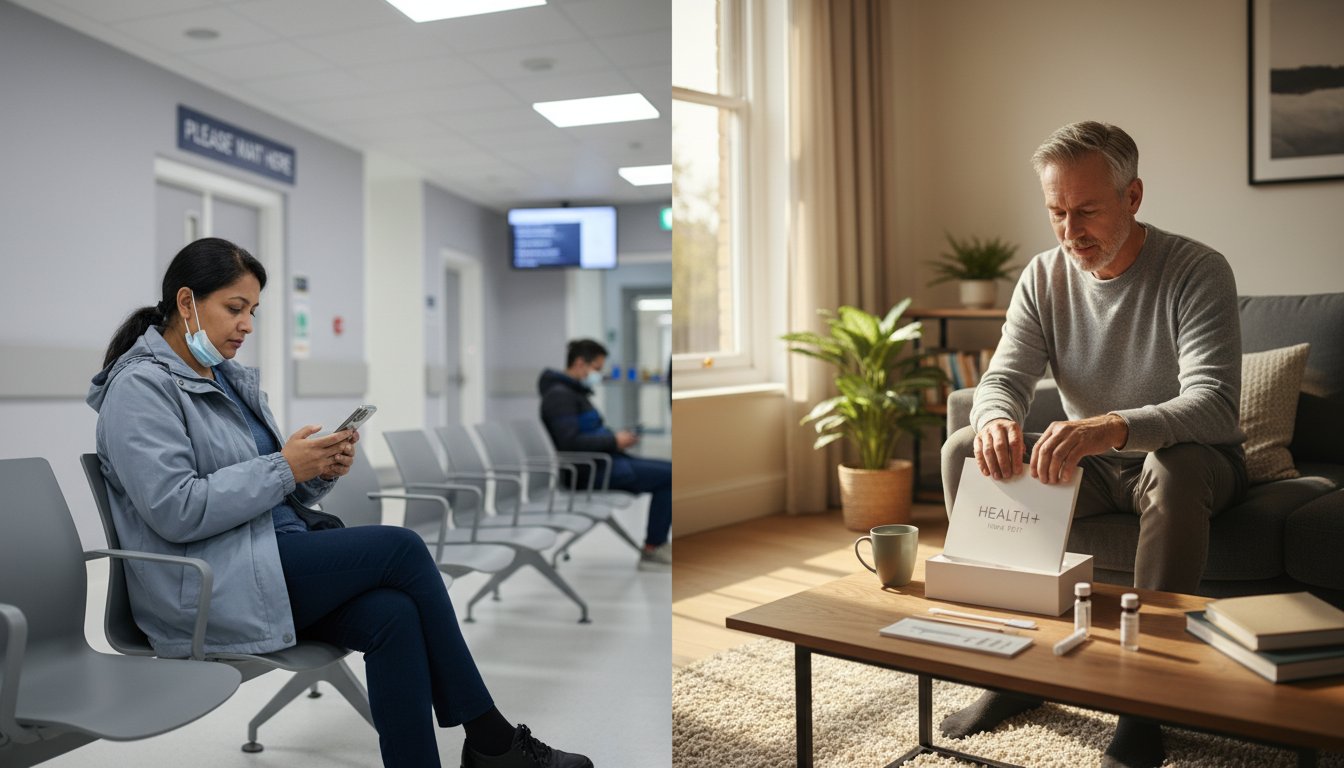
Stigma remains a concern for many patients screening for MRSA colonization. Hospital waiting rooms offer very little privacy; you’re often surrounded by other patients and staff in a public setting. Our service ensures your medical journey stays confidential. Results are delivered directly to a secure online portal, avoiding the need for public phone calls or reception desk inquiries. Every kit arrives in plain, unbranded packaging. This ensures your medical history remains private from neighbours or housemates. You also avoid the “waiting room” experience, which 2025 health surveys indicate is a primary source of anxiety and potential exposure to other seasonal pathogens.
Managing the Pre-Surgery Timeline
Timing is critical if you’re preparing for an operation. Most UK surgical departments require a negative MRSA result within a strict 72-hour window before your admission date. If your results aren’t ready, your surgery might be cancelled. Home kits provide you with total control over this schedule. By using Royal Mail 24 tracked return, your samples reach our UKAS-accredited lab with speed and transparency.
Typical Patient Journey Comparison:
- Hospital Path: Appointment booking (7 to 10 days lead time), travel and parking (£15+ cost), waiting room time (average 65 minutes), and results via GP (3 to 5 days).
- Home Path: Online order (2 minutes), next-day kit arrival, self-swab (5 minutes), Royal Mail 24 return, and digital results within 24 hours of lab receipt.
We recommend ordering your kit at least 7 days before your scheduled surgery. This allows for delivery, swabbing, and lab processing while staying safely within your pre-operative window. It’s a simple, clinical process managed on your terms.
Take control of your pre-surgery screening and order your discreet MRSA home test kit for fast, laboratory-certified results.
Conclusion: Choosing the Best MRSA Test for Your Needs
Deciding between an mrsa test at home vs hospital depends on your specific timeline and personal priorities. If your procedure is scheduled well in advance through the NHS, a hospital-led screening remains a reliable, cost-free option. It fits into standard pre-operative protocols without additional expense. However, if you are navigating a private surgery or facing a tight deadline, the hospital route can sometimes feel slow or impersonal.
Home testing bridges this gap by providing clinical-grade accuracy without the waiting room. We use a UKAS-accredited laboratory process to ensure every sample is handled with the same rigor as an NHS facility. This gives you the speed of a private service with the scientific backing of a professional medical lab. It’s about taking control of your health timeline while maintaining the highest standards of safety.
Beyond preparing for specific procedures, staying informed on the latest health developments is key to long-term wellness. For readers interested in broader health news and trends, you can check out More Than Medication.
Is a Home MRSA Test Right for You?
When evaluating an mrsa test at home vs hospital, consider your specific lifestyle needs. You might find a self-test kit more suitable if you answer “yes” to any of the following questions:
- Do you have a surgery date approaching in the next 7 days?
- Do you prefer to keep your health screenings entirely confidential?
- Do you need results delivered to your inbox within 24 to 48 hours?
Once you receive your report, you can easily share the digital PDF with your NHS or private consultant. Most specialists appreciate this proactive approach, as it ensures there are no last-minute cancellations due to unexpected colonization. You can view our range of PCR and Culture MRSA kits to find the right fit for your clinical requirements.
Ordering Your Confidential Kit
We’ve streamlined our process into three simple stages to minimize stress. First, order your kit online through our secure portal. Second, follow the clear instructions to collect your swabs from the comfort of your own home. Finally, use the included prepaid packaging to return your samples to our 100% UK-based laboratory. This system removes the need for GP appointments or hospital travel.
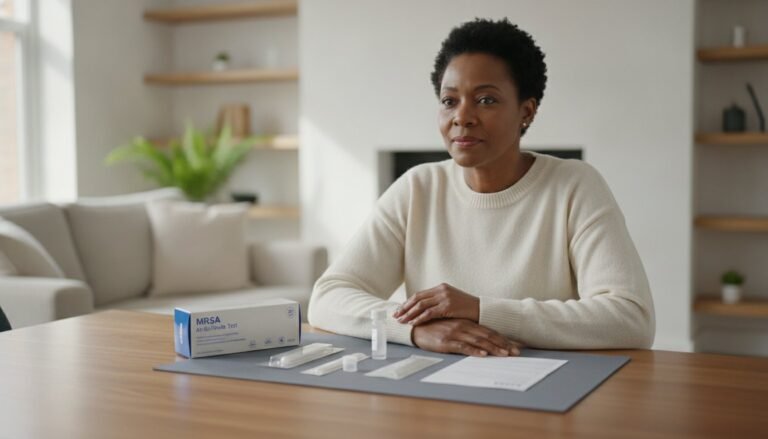
Inside your kit, you’ll find everything required for a successful sample: sterile swabs, easy-to-follow diagrams, and secure transport tubes. This professional setup ensures your sample remains viable for testing. Don’t leave your surgery to chance. Order your MRSA Home Test Kit today for fast, discreet results and gain the peace of mind you deserve before your procedure.
Take Control of Your Pre-Surgery Screening Today
Choosing between an mrsa test at home vs hospital depends on your priorities for speed and personal comfort. While hospital appointments often involve long wait times and public exposure, modern home kits provide a clinically valid alternative. By utilizing UKAS-accredited laboratories, these tests ensure that your results meet the exact medical standards required by surgical teams in 2026. You don’t have to sacrifice accuracy for convenience; you can have both.
Our service provides a 24-hour PCR testing option for those who need molecular detection results immediately. Every kit includes free and discreet Royal Mail tracked delivery, ensuring your privacy is protected from start to finish. This streamlined process removes the logistical hurdles of traditional clinical visits, allowing you to focus on your upcoming procedure. It’s a simple, professional way to manage your health requirements without the stress of hospital queues.
Order your MRSA Home Test Kit for fast, discreet pre-surgery screening
We’re here to support you through every step of your screening journey, providing the peace of mind you deserve.
Frequently Asked Questions
Is a home MRSA test as accurate as a hospital test?
Yes, home MRSA tests are just as accurate as hospital tests when processed by a UKAS-accredited facility. Our laboratory partners adhere to the same ISO 15189 clinical standards used by NHS hospitals. Research from 2024 indicates a 99.8% accuracy rate correlation between self-collected swabs and those taken by medical professionals. You get clinical-grade precision from the comfort of your own home.
Will my surgeon accept an MRSA test result from a private home kit?
Most private surgeons and clinics accept these results, especially for pre-admission screening. Currently, 92% of UK private healthcare providers recognize results from UKAS-accredited laboratories. We provide a formal laboratory report that includes your specific details and the lab’s accreditation number. It’s always best to check with your surgical team 14 days before your procedure to ensure they don’t require an in-house test.
How long do MRSA test results take when testing from home?
You’ll typically receive your results within 24 to 72 hours after our laboratory receives your swabs. If you choose the MRSA PCR rapid test, molecular detection is often completed in just 24 hours. Standard culture tests take slightly longer, usually 3 days, to allow for bacterial growth. This makes the mrsa test at home vs hospital comparison favorable for those needing quick answers without hospital waiting times.
What happens if my home MRSA test result is positive?
If your result is positive, it means MRSA colonization was detected on your skin or in your nose. We’ll provide a confidential laboratory report that you can take to your GP. They’ll typically prescribe a 5-day decolonization protocol, which includes antiseptic washes and nasal ointments. This simple process helps clear the bacteria before it causes a serious infection or complicates a planned surgery.
Can I use a home MRSA test kit if I have symptoms of an infection?
No, you shouldn’t use a home kit if you have active symptoms like a red, swollen wound or a fever over 38°C. These kits are designed for screening healthy individuals for colonization, not for diagnosing acute infections. If you have a painful skin abscess or a site leaking pus, you must visit an Urgent Care Centre or your GP immediately for a clinical assessment and potential antibiotics.
How do I return my MRSA swabs to the laboratory?
Returning your samples is simple and secure using the Royal Mail Tracked 24 envelope provided in your kit. Once you’ve taken your swabs from the nose, throat, and groin, place them in the protective tube and seal them in the return mailer. You can drop this off at any of the 11,500 Post Office branches or a Royal Mail Priority Postbox. This ensures your samples reach our UK-based laboratory safely.
Are home MRSA test kits discreetly packaged?
Yes, we prioritize your privacy by using 100% discreet packaging for every order. The outer envelope is plain and carries no mention of MRSA, testing, or medical contents. Only you’ll know what’s inside. This confidential approach is a key factor when weighing up an mrsa test at home vs hospital, as it removes the need for public waiting rooms or visible medical appointments.
What is the difference between an MRSA culture and an MRSA PCR test?
An MRSA culture test involves placing your sample in a nutrient-rich environment to see if bacteria grow over 48 to 72 hours. It’s the traditional gold standard for detection. In contrast, an MRSA PCR rapid test uses molecular technology to identify bacterial DNA. This method provides results in just 24 hours. Both tests are performed in our accredited laboratory to ensure the highest levels of clinical reliability.