

How Do You Know if You Are an MRSA Carrier? A Clinical Guide to Colonisation vs. Infection
Approximately 2% of the global population currently carries MRSA on their skin or in their nose without showing any physical signs of illness. This silent state, known as colonisation, often leads to a difficult question: how do you know if you are an mrsa carrier if you feel perfectly healthy? For many, this uncertainty only surfaces during the stress of pre-operative hospital requirements or when a minor skin blemish causes sudden concern.
We understand that the idea of being a silent transmitter can feel overwhelming, particularly when you’re preparing for a medical procedure. It’s important to remember that carrying the bacteria isn’t the same as having an active infection. This guide provides a clear, clinical look at the differences between the two states and explains how you can proactively manage your health. You’ll discover the exact steps to verify your status using modern diagnostic methods, ensuring you have the peace of mind and the documentation required for your upcoming hospital admission. We’ll also cover the latest 2026 UK screening standards to help you move forward with confidence and clinical certainty.
Key Takeaways
- Distinguish between asymptomatic colonisation and active infection to better understand your clinical risk and the necessity of proactive screening.
- Since carriage presents no physical symptoms, learn why clinical testing is the only definitive way to answer how do you know if you are an mrsa carrier before a hospital admission.
- Explore how identifying your carrier status protects vulnerable household members and significantly reduces the likelihood of complications following surgery.
- Familiarise yourself with the UK swabbing protocols for the nose and groin, which are designed to ensure patient safety through the “Search and Destroy” policy.
- Understand the standard UK decolonisation steps, including the use of antimicrobial body washes and nasal ointments to clear the bacteria effectively.
Understanding Staphylococcus Aureus: From Carriage to Infection
Staphylococcus aureus is a common bacterium that lives naturally on the skin or inside the nose of about one-third of the population. In most cases, these bacteria coexist with us without causing any issues. However, a specific strain known as MRSA (methicillin-resistant Staphylococcus aureus) has developed resistance to several widely used antibiotics, making it more challenging to treat if an infection occurs. While many people carry standard strains (MSSA), Understanding MRSA involves recognising that this resistant version requires more targeted clinical attention.
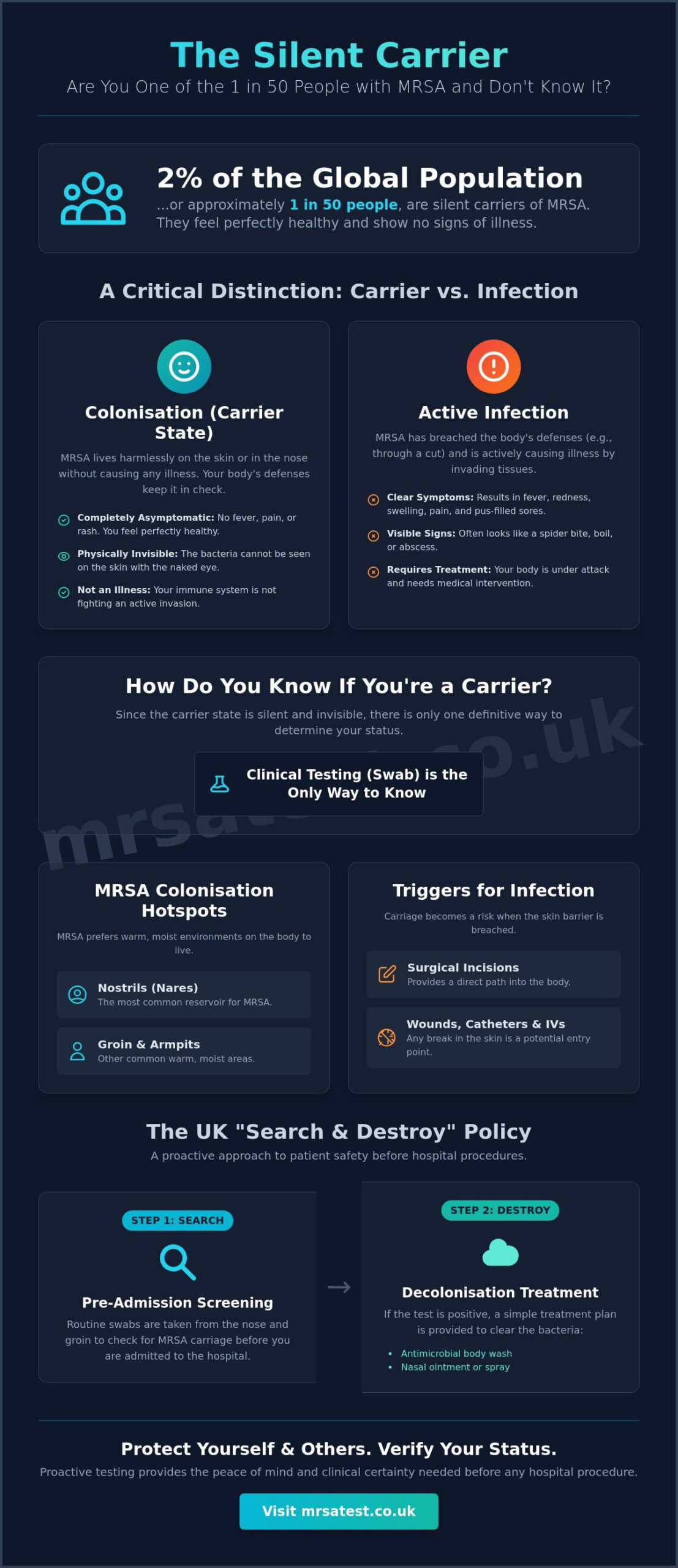
Being a carrier means you’re colonised with the bacteria. This means the MRSA is present on your body, but you aren’t actually ill. It’s a silent state. Because there are no rashes, fevers, or pains associated with carriage, you might wonder: how do you know if you are an mrsa carrier? Current 2026 global estimates suggest that approximately 2% of the population are MRSA carriers. This equates to roughly 1 in 50 people who are colonised without even knowing it. For patients preparing for surgery, the central question is how do you know if you are an mrsa carrier before entering a high-risk environment.
The Science of Colonisation
Bacteria are highly selective about where they settle. They prefer environments that are warm and moist, which is why the primary reservoirs for MRSA carriage are the nostrils (nares), the groin, and the armpits. These areas provide the ideal conditions for the bacteria to survive and multiply on the skin’s surface. Your skin acts as a vital physical barrier, keeping these microscopic organisms on the outside. As long as this barrier remains intact, the bacteria generally remain harmless commensals that simply live alongside your own cells.
When Bacteria Become Pathogenic
The situation changes when MRSA stops being a harmless passenger and becomes an opportunistic pathogen. This transition usually happens when the bacteria find a way to bypass your body’s natural defences. Common triggers include:
- Surgical incisions or medical procedures.
- The insertion of intravenous lines or catheters.
- Open wounds, grazes, or skin conditions like eczema.
When you’re ill or recovering from surgery, your immune system may also be less effective at keeping these bacteria in check. The transition from colonisation to infection occurs when the bacteria invade deeper tissues or the bloodstream through a breach in the skin barrier. Knowing your status beforehand is the only way to prevent this shift during a planned hospital stay.
How Do You Know if You Are an MRSA Carrier? Identifying the Signs
The most significant challenge with MRSA carriage is that it’s physically invisible. You won’t feel a fever, and you won’t see a rash. So, how do you know if you are an mrsa carrier when your body feels completely normal? The reality is that you don’t, at least not without a clinical swab. Unlike an active infection, carriage doesn’t involve the bacteria attacking your tissues. Instead, they simply reside on the surface of your skin or inside your nostrils. This is a biological paradox: you are carrying a potentially dangerous bacterium, yet you remain entirely healthy.
Many people mistakenly search for physical markers, but you cannot see MRSA carriage with the naked eye. It doesn’t look like a “spider bite” or a cluster of spots. If you’re looking for information on what an actual infection looks like, you can read our guide to MRSA symptoms and risks. Most carriers only discover their status through routine UK pre-admission screening for MRSA before a planned surgery. Because the state is silent, clinical testing is the only definitive way to confirm your status.
The Asymptomatic Nature of Carriage
Being colonised is fundamentally different from being infected. When you’re colonised, the bacteria are essentially “hitchhiking.” You don’t feel “under the weather” because your immune system isn’t currently fighting an invasion. However, this asymptomatic state is why healthy carriers pose a transmission risk. In a hospital environment, these bacteria can easily spread to vulnerable patients whose immune systems are compromised or who have open surgical wounds. The central question remains: how do you know if you are an mrsa carrier if you aren’t showing signs of a boil or abscess? The answer lies in proactive screening rather than waiting for symptoms that may never appear.
Distinguishing Carriage from Active Skin Infection
It’s vital to know when a harmless carriage state has transitioned into a medical issue. A standard MRSA skin infection often starts as a painful red bump that might resemble a pimple or an insect bite. While carriage is invisible, an infection is very much the opposite. Warning signs that the bacteria have invaded the tissue include:
- The area feels hot to the touch.
- The skin becomes swollen or firm.
- The bump begins to leak pus or other fluids.
For more details on identifying specific skin changes, see our common skin infections guide. If you’re concerned about your status before a medical procedure, a private MRSA screening test can provide the clarity you need without the wait.
Risk Factors and Complications: Why Carriage Isn’t Always Harmless
Untreated MRSA carriage can lead to severe complications if the bacteria migrate from the skin surface into the body. Without the right intervention, a simple colonisation can escalate into life-threatening conditions such as sepsis, endocarditis (infection of the heart valves), or osteomyelitis (bone infection). The challenge for the UK healthcare system is that MRSA is resistant to many common antibiotics, meaning these infections require more intensive, specialised treatments. Understanding these risks is part of effective hospital-acquired infection prevention, as it highlights why hospitals are so diligent about screening.
The Danger to Surgical Patients
For anyone scheduled for surgery, MRSA carriage is a primary risk factor for post-operative complications. During a procedure, the bacteria residing on your skin can easily enter the surgical site, leading to a deep-seated infection. This often results in increased recovery times, multiple follow-up surgeries, and a higher mortality risk. Clinical data suggests that identifying carriage through lab-verified testing allows doctors to use targeted antibiotic therapy, which is far more effective than broad-spectrum alternatives. If you’re preparing for a procedure, knowing how do you know if you are an mrsa carrier through pre-admission swabs is the best way to ensure a smooth recovery.
Vulnerable Populations and Transmission
MRSA doesn’t only stay with the carrier. It spreads easily through direct skin-to-skin contact or by sharing contaminated items like towels, razors, or athletic equipment. Certain groups are particularly susceptible to catching the bacteria and developing serious illnesses:
- The elderly, especially those in care home environments.
- Individuals with weakened immune systems or chronic conditions like diabetes.
- People with chronic wounds or those using invasive medical devices.
Beyond hospital walls, “community-acquired” MRSA is becoming more common in gyms and sports facilities where close contact and shared equipment are frequent. In these settings, the bacteria can spread rapidly among healthy individuals, creating new carriers who may eventually bring the bacteria into clinical environments.
Diagnosis and Pre-Admission Screening in the UK
In the United Kingdom, healthcare providers follow a robust “Search and Destroy” strategy to manage MRSA. This policy ensures that carriers are identified and treated before they enter a clinical setting, preventing the spread of resistant bacteria to other patients. Since carriage is invisible, the only answer to how do you know if you are an mrsa carrier is a clinical diagnostic test. This usually involves taking swabs from specific areas of the body where the bacteria like to live, including the nostrils, throat, and groin.
By identifying carriage status before you are admitted, hospitals can initiate decolonisation protocols to clear the bacteria. This proactive approach is considered the gold standard for patient safety. If you are preparing for an upcoming procedure, using a preparing for surgery checklist can help you stay organised with your health requirements. Clinical teams rely on these results to ensure that your surgical environment remains as sterile as possible, protecting both you and the wider hospital community.
The Clinical Screening Pathway
Certain types of elective surgeries carry a higher risk if MRSA is present. For instance, orthopaedic procedures involving joint replacements or cardiac surgeries require the most stringent screening because an infection in these areas can be devastating. Standard NHS protocols typically require screening to be completed at least several weeks before your surgery date to allow time for treatment if needed. Identifying carriage before surgery significantly reduces post-operative infection rates and ensures a safer environment for everyone in the hospital.
PCR vs. Culture: Choosing the Right Diagnostic
When you need to know your status quickly, the type of test you choose matters. Traditional culture methods involve growing the bacteria in a lab, which typically takes 48 to 72 hours for a final result. In contrast, modern PCR (Polymerase Chain Reaction) testing uses molecular detection to identify the specific genetic markers of MRSA. This method provides a much faster turnaround, often within 24 hours, and offers high accuracy by detecting the resistant genes directly. Understanding how do you know if you are an mrsa carrier through these advanced methods helps you take control of your pre-operative health without unnecessary delays.
If you are facing a tight deadline before your hospital admission, you can order a rapid MRSA PCR test to get the answers you need discreetly and efficiently. For those who want to ensure their screening is handled with professional care and speed, you can order a private MRSA screening kit to complete your pre-admission requirements from the comfort of your home.
Managing Your Status: Decolonisation and Proactive Testing
If your screening results indicate carriage, there is no need for alarm. The UK healthcare system utilizes a standard decolonisation programme designed specifically to clear these bacteria from your skin and nasal passages. This process is straightforward and can be managed easily within your daily routine. While the initial question is often how do you know if you are an mrsa carrier, the clinical focus quickly shifts to effective management once a result is confirmed.
Once you have completed a decolonisation cycle, re-testing is essential. This follow-up swab provides the laboratory-verified evidence needed to confirm the bacteria have been cleared. It’s a vital step that ensures you can proceed with your medical procedure with confidence, knowing you have minimised the risk of post-operative complications.
The 5-Day Decolonisation Protocol
Success depends on strict adherence to a specific clinical timeline. A standard course typically lasts five days and involves several daily actions:
- Apply prescribed nasal ointment to the inside of each nostril three times a day.
- Use the antimicrobial wash once daily for both hair and body, ensuring it stays on the skin for the recommended contact time.
- Put on fresh, clean clothing and use a laundered towel every single day of the treatment.
Compliance with the full course is vital. Skipping a day or stopping the protocol early can allow the bacteria to rebound, which may lead to a failed pre-admission screen and potential delays to your surgery.
Proactive Health Management for 2026
Knowing your status is now a core part of modern pre-operative preparation. For many, the question how do you know if you are an mrsa carrier is best answered in the privacy of their own home. Using an at-home test kit allows you to verify your status discreetly and receive accurate results before your official hospital screening takes place. This proactive approach gives you the time and space to manage your health without the pressure of an imminent hospital deadline.
Taking control of your diagnostic journey provides peace of mind for you and your family. Order your MRSA PCR or Culture Test Kit today for laboratory-verified peace of mind.
Take Control of Your Pre-Operative Health
Understanding the difference between a silent carrier state and an active infection is the first step toward a safer medical outcome. While colonisation doesn’t cause immediate illness, it remains a significant risk factor for post-surgical complications if left unmanaged. Since physical signs don’t exist, the clinical question of how do you know if you are an mrsa carrier can only be answered through precise laboratory analysis. Identifying your status early allows you to manage the bacteria effectively before entering a hospital environment.
We offer a streamlined path to clarity through our professional home collection service. You can order your private MRSA test kit for fast, discreet results and benefit from UK-accredited laboratory testing. Our kits arrive in plain packaging to ensure your privacy, and we provide rapid 24-hour PCR results to help you meet hospital deadlines without stress. This service combines clinical accuracy with the convenience of a private setting.
Proactive screening isn’t just about meeting a hospital requirement; it’s about your peace of mind and your long-term recovery. By verifying your status today, you can proceed with your medical procedure with confidence and complete support.
Frequently Asked Questions
Can you be a carrier of MRSA without being sick?
Yes, you can carry MRSA without any symptoms of illness. This state is known as colonisation, where the bacteria live on your skin or in your nose without causing harm. Global 2026 data estimates that 2% of people are healthy carriers. You’ll feel perfectly normal during this time, which is why clinical screening is vital before any planned surgical procedure.
Is an MRSA carrier contagious to healthy people?
Yes, carriers can spread the bacteria to others through direct skin contact or shared personal items. While healthy individuals don’t usually get sick from this contact, they can become new carriers themselves. The primary risk is to vulnerable people, such as the elderly or those with weakened immune systems, who may develop serious infections if they catch the bacteria.
How do you catch MRSA in the first place?
MRSA is primarily caught through direct person-to-person contact or by touching contaminated surfaces. It’s often spread via hands that haven’t been washed or through shared items like towels, razors, and sports equipment. This can happen in hospitals, care homes, or community settings like gyms where people are in close proximity and share facilities.
What are the common sites for MRSA colonisation on the body?
The bacteria prefer warm, moist environments on the human body. The most common reservoirs are the nostrils, the groin area, and the armpits. If you’re asking how do you know if you are an mrsa carrier, these are the specific sites clinical teams swab when performing a screen to determine your carrier status.
Can MRSA carriage go away on its own without treatment?
Carriage can occasionally clear on its own, but it’s often persistent and unpredictable. Relying on natural clearance isn’t recommended if you’re preparing for surgery. Clinical decolonisation using antimicrobial washes and nasal ointments is the only reliable way to ensure the bacteria are gone before a procedure, protecting you from potential post-operative complications.
What does a positive MRSA screen mean for my upcoming surgery?
A positive screen means you’ll need to complete a five-day decolonisation treatment before your procedure. This involves using specialised washes like Octenisan and nasal ointments like Mupirocin to clear the bacteria. Your surgery may be delayed until a follow-up test confirms the carriage has been cleared, ensuring your environment remains as sterile as possible.
How long does it take to get MRSA test results in the UK?
Result times depend on the diagnostic method used. A rapid PCR test can provide results within 24 hours by detecting the bacteria’s genetic material directly. A traditional lab culture typically takes 48 to 72 hours as the bacteria must be grown in a controlled environment. Choosing a faster method is often preferred when preparing for an imminent hospital admission.
What is the difference between being colonised and being infected with MRSA?
Colonisation means the bacteria are simply present on your skin, while an infection means they’ve invaded your body’s tissues. If you’re wondering how do you know if you are an mrsa carrier without being sick, the answer is always a clinical swab. Infections involve visible symptoms like redness, heat, and pus, which require immediate medical intervention.