MRSA Swab Test UK: A Complete Guide to At-Home Screening in 2026
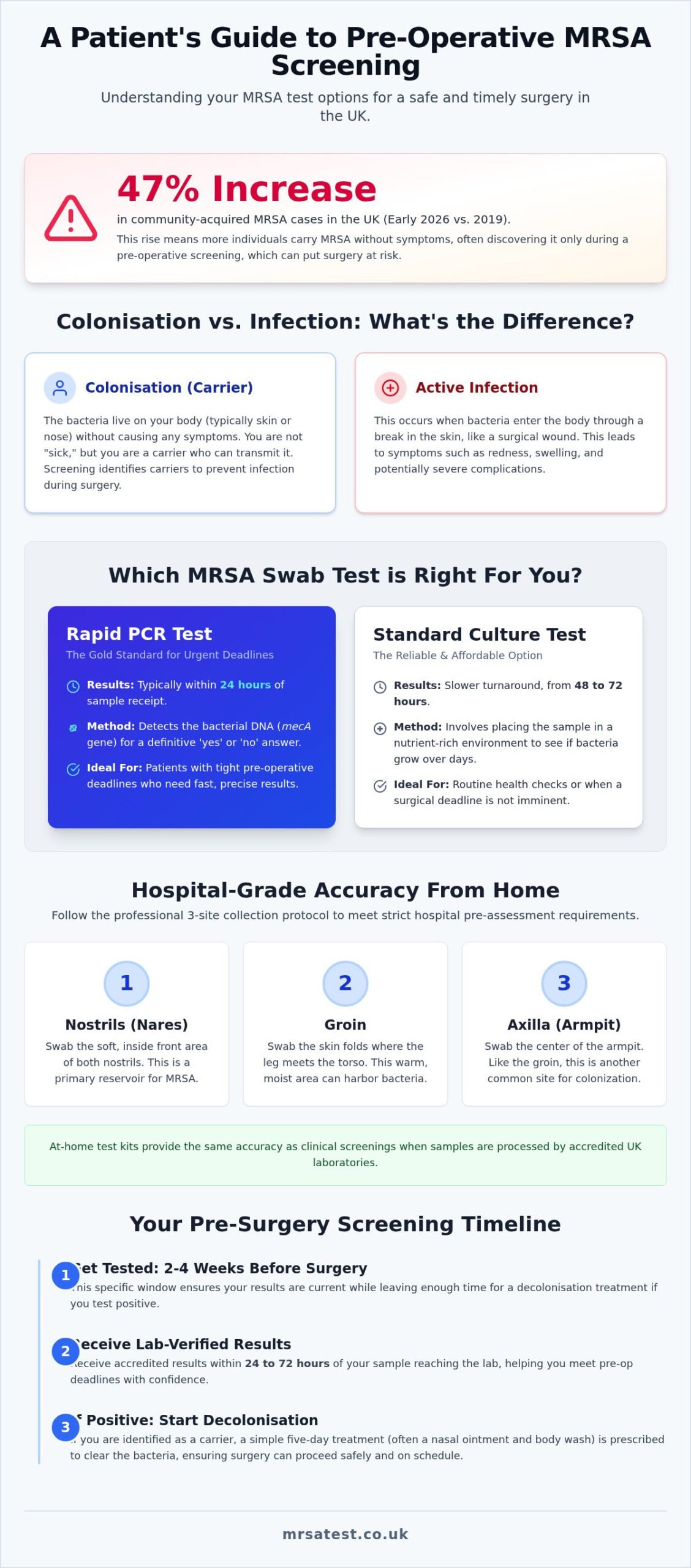
Did you know that community-acquired MRSA cases in the UK rose by 47% in early 2026 compared to 2019? This trend indicates that more individuals are carrying the bacteria outside of traditional hospital settings, often discovering it only when a pre-operative screening puts their surgery at risk. It’s natural to feel anxious about potential delays or the safety of a clinical environment when you’re already preparing for a major procedure. Finding a reliable mrsa swab test uk service shouldn’t add to that burden.
We understand that navigating strict hospital requirements is difficult when your health is on the line. This guide will show you how to obtain accurate, lab-verified results from the comfort of your home, ensuring you meet pre-op deadlines with confidence and complete privacy. We’ll explore the clinical advantages of rapid PCR testing versus standard cultures, explain the simple and painless collection process, and outline exactly how to receive accredited results within 24 to 72 hours of your sample reaching the laboratory.
Key Takeaways
- Understand the clinical difference between bacterial colonisation and active infection to better manage your pre-surgery preparation.
- Compare the benefits of Rapid PCR and standard Culture methods to select the right mrsa swab test uk for your specific timeline and budget.
- Learn why at-home collection provides the same hospital-grade accuracy as clinical screenings when samples are processed by accredited UK laboratories.
- Follow the professional Nose, Groin, Axilla protocol to ensure your collection technique meets strict hospital pre-assessment requirements.
- Discover how to secure results within 24 to 72 hours, helping you avoid surgical delays while maintaining complete personal privacy.
What is an MRSA Swab Test and Why is it Required in the UK?
To understand the necessity of screening, we must first answer a fundamental question: What is MRSA? Methicillin-resistant Staphylococcus aureus is a specific type of “staph” bacteria that has developed a resilience to several widely used antibiotics. While many people carry these bacteria on their skin without ever falling ill, the presence of MRSA becomes a significant clinical concern in hospital environments where patients have weakened immune systems or open surgical wounds.
A mrsa swab test uk service helps distinguish between two different states: colonisation and active infection. Being colonised means the bacteria live on your body, typically in the nose or skin folds, without causing symptoms. You aren’t “sick,” but you are a carrier. An active infection occurs only when the bacteria enter the body through a break in the skin, leading to redness, swelling, or more severe complications. Screening identifies carriers so that preventative measures can be taken before a procedure begins.
UK hospitals mandate these tests for pre-operative patients as a primary defense against surgical site infections. If a patient is a carrier, the risk of the bacteria entering the bloodstream during surgery is much higher. Private testing has become an essential resource for many patients in the UK. It allows individuals to meet strict hospital deadlines when NHS pre-assessment appointments are unavailable or inconveniently timed, providing a bridge between clinical requirements and personal schedules.
The Risks of MRSA Colonisation
The primary danger of MRSA is its ability to remain hidden. Asymptomatic carriage means you can feel perfectly healthy while still carrying a “superbug” that could complicate an invasive procedure. When you enter a sterile hospital environment, any bacteria on your skin can potentially migrate into a surgical site. Clinicians focus on specific “reservoir” areas where MRSA commonly lives, including:
- The nostrils (nares)
- The throat
- Skin folds such as the armpits (axilla) and the groin
Identifying these bacteria early allows for a simple decolonisation process, ensuring the surgical environment remains as safe as possible for everyone involved.
When Should You Get Tested?
Timing is critical for pre-operative screening. Most UK medical trusts require a mrsa swab test uk to be completed between 2 and 4 weeks before your scheduled surgery date. This specific window ensures the results are current while leaving enough time for a five-day decolonisation treatment if you test positive. Beyond surgery, screening is also recommended for:
- Healthcare professionals working in high-risk clinical settings.
- Individuals living in communal environments, such as care homes.
- Anyone experiencing recurring skin rashes or wounds that are slow to heal.
By taking a proactive approach to testing, you can avoid last-minute surgical cancellations and gain peace of mind regarding your health status.
MRSA PCR vs. Culture: Which Swab Test Do You Need?
When selecting a mrsa swab test uk, you’ll typically choose between two established laboratory methods. Each approach offers distinct clinical advantages depending on your specific needs and timeline. PCR is a molecular technique that identifies bacterial DNA for rapid results. While both methods are highly accurate, the primary differences lie in the speed of delivery and the depth of information provided regarding the bacteria’s behavior.
Rapid PCR Testing (24-Hour Results)
PCR testing is increasingly the gold standard for private screening due to its efficiency. It works by identifying the mecA gene, which is the specific genetic marker responsible for methicillin resistance in staph bacteria. Because this method looks for DNA rather than waiting for live bacteria to grow, results are typically available within 24 hours of the laboratory receiving your sample. This speed is invaluable for patients facing urgent surgical admissions or those who must confirm their status quickly to avoid procedure delays. Many private hospitals prefer this molecular detection because it provides a definitive “yes” or “no” answer with exceptional precision in a fraction of the time.
Standard Culture Testing (48-72 Hour Results)
The traditional culture method involves placing your sample in a nutrient-rich environment to see if bacteria grow over several days. It’s a reliable, time-tested process that usually takes between 48 and 72 hours to complete. While slower than PCR, culture tests are often more affordable for routine health checks or when a surgical deadline isn’t imminent. A significant benefit of this method is that it allows scientists to perform antibiotic sensitivity testing. If MRSA is detected, the lab can determine exactly which specific antibiotics will be most effective for treatment. This level of detail is occasionally required by clinical teams to plan post-operative care.
Hospitals often dictate which method you must use based on their internal infection control policies. For instance, a major orthopedic surgery might require the speed of PCR to clear a patient quickly, while a long-term care admission might prefer the detailed sensitivity profile of a culture test. You can review the NHS guidance on MRSA tests to see how these clinical decisions impact patient care. Understanding these differences ensures you select the right mrsa swab test uk to meet your provider’s requirements without unnecessary stress. If your surgery is approaching quickly, you might consider the Rapid PCR options for the fastest possible turnaround.
Accuracy and Reliability of At-Home MRSA Testing Kits
A common concern for many patients is whether an at-home mrsa swab test uk is as reliable as one performed in a hospital clinic. The short answer is yes. The accuracy of any diagnostic test depends on two main factors: the quality of the collection tools and the accreditation of the laboratory processing the sample. At-home kits use the same clinical-grade swabs and stabilising transport media found in NHS pre-assessment units. This media is a specialized gel or liquid that preserves the bacterial sample during transit, ensuring it doesn’t degrade before it reaches the laboratory bench.
Beyond technical accuracy, testing at home offers a level of discretion that clinical environments cannot match. Collecting samples from sensitive areas like the groin or armpit can feel intrusive in a busy hospital. Performing the collection in a private setting allows you to follow the instructions carefully and without rush. This often leads to a more thorough sample collection, which directly improves the overall reliability of your results.
UK Laboratory Standards
To ensure your results are trustworthy, you should choose a provider that utilizes UKAS-accredited laboratories. These facilities must adhere to strict ISO standards, which guarantee that their testing methods are validated, monitored, and consistently accurate. The journey of your sample is a professional, managed process. Once you place your kit in a post box using the prepaid packaging, it’s delivered to a facility where clinical scientists perform the analysis. Modern at-home health testing kits in the UK have evolved to match clinical standards, providing a seamless bridge between private convenience and professional diagnostic reporting.
Hospital Acceptance of Private Results
Most surgical teams and private hospitals accept results from independent laboratories, provided they come from a verified source. Your lab report will include your personal details, the date the sample was taken, and a clear statement of the result. It’s essential to ensure your test covers the specific sites required by your surgical team. Following NHS guidance on MRSA screening, most pre-operative protocols require swabs from the nose, groin, and axilla (armpit). By presenting a validated certificate that explicitly lists these collection sites, you provide the clinical evidence your surgeon needs to proceed with your procedure. This proactive approach helps you avoid the anxiety of last-minute cancellations while maintaining the highest standards of safety for your upcoming surgery. Using a reputable mrsa swab test uk ensures that your private data is handled with the same confidentiality as your NHS records.
Step-by-Step: How to Perform an MRSA Swab Correctly
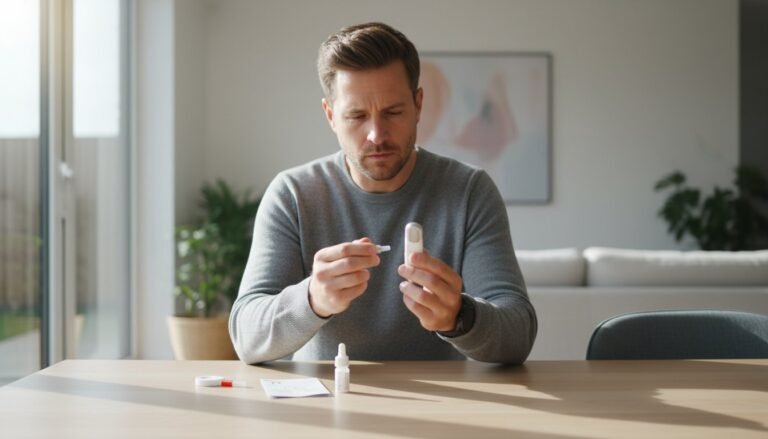
Performing a mrsa swab test uk correctly is the most important step in ensuring your surgery proceeds on schedule. Laboratories require a specific amount of biological material to provide a valid result. If the collection is too light, the lab may report an “insufficient sample,” which often leads to frustrating delays and the need for a retest. Before you begin, wash your hands thoroughly with soap and water to prevent outside bacteria from interfering with the sample. Find a clean, well-lit area to lay out your kit components, including the sterile swabs and transport tubes. The swab must be rotated firmly against the skin surface to collect enough material. Most UK hospital protocols require a triple-site collection from the nose, groin, and axilla to ensure no colonisation is missed.
Swabbing the Nasal Passage
The nostrils, or anterior nares, are the most common reservoir for staph bacteria. You don’t need to insert the swab deeply; approximately one to two centimetres into the nostril is sufficient for a high-quality sample. Once the tip is inside, rotate the swab five times against the inside wall of the nostril using steady, firm pressure. Repeat this exact process in the second nostril using the same swab. It’s vital to keep the swab tip sterile before use. Don’t let it touch any external surfaces, such as the table or your clothing, as this can contaminate the sample and lead to an inaccurate or voided result.
Groin and Axilla (Armpit) Collection
Bacteria often thrive in warm, moist skin folds. For the axilla collection, rub the swab firmly across the center of the armpit, ensuring you cover the skin surface thoroughly. When swabbing the groin, focus on the crease where the leg meets the torso. These areas require significant contact to ensure the swab picks up any present bacteria. Avoid cross-contamination by handling only the plastic shaft of the swab and never touching the cotton tip with your fingers. Once the collection is finished, place the swab immediately into the transport tube and secure the cap tightly. Clear labelling is essential for the laboratory team. Ensure your name and the date of collection are written legibly on the tube as instructed in your kit.
Following these steps precisely ensures that your sample is viable for analysis, whether you’ve chosen a Rapid PCR or a standard Culture method. If you’re ready to begin your pre-operative screening, you can order your MRSA test kit here for discreet home delivery and professional laboratory analysis.
Next Steps: Ordering and Interpreting Your MRSA Test
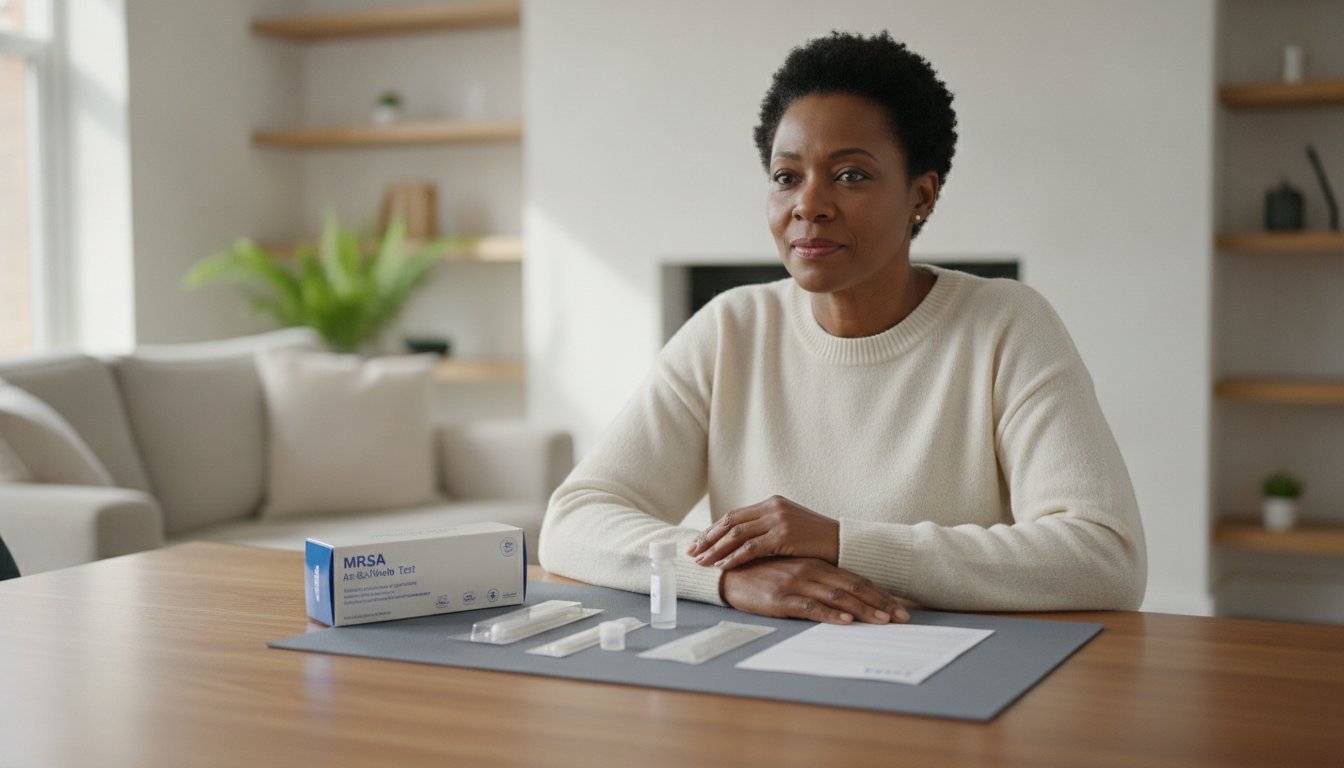
Securing a mrsa swab test uk is a straightforward process designed to fit into your pre-operative schedule without adding unnecessary stress. When you order from mrsatest.co.uk, your kit is dispatched for next-day delivery, ensuring you can begin the screening process immediately. Each kit arrives in discreet packaging and contains everything required for a clinical-grade collection: sterile swabs, transport tubes with stabilizing media, clear step-by-step instructions, and a prepaid return mailer. This end-to-end service ensures your sample reaches our accredited laboratory partners quickly and safely.
Once the laboratory completes the analysis, you’ll receive a clear, professional report. Results are typically presented as “Detected” or “Not Detected.” A “Not Detected” result means that no MRSA bacteria were found in the samples provided. This report serves as your clinical evidence for hospital pre-assessment teams, confirming you’re clear to proceed with your surgery. If the report indicates “Detected,” it means the bacteria are present on your skin. While this may feel concerning, it’s a common finding that clinical teams are well-equipped to manage before your procedure begins.
What if My MRSA Test is Positive?
Receiving a positive result isn’t a cause for panic; it’s an essential call for preparation. Identifying colonisation before you enter the operating theatre is exactly why screening exists. If you test positive, your GP or surgical team will typically prescribe a five-day decolonisation treatment. This standard protocol usually involves using a specific antiseptic body wash and shampoo alongside a nasal ointment to eliminate the bacteria from your skin and nostrils. Following this simple routine significantly reduces the risk of post-operative infection. We recommend consulting your clinical team and reviewing our guide on preparing for surgery to ensure all your health logistics are in place well before your admission date.
Conclusion: Peace of Mind Before Your Procedure
Choosing a private mrsa swab test uk allows you to take control of your surgical timeline. By avoiding potential NHS backlogs and testing in the privacy of your own home, you gain the peace of mind that comes with professional, lab-verified results. To ensure a successful screening experience, remember this final checklist:
- Order your kit at least two to four weeks before your surgery.
- Follow the “Nose, Groin, Axilla” collection protocol precisely.
- Label your sample tubes clearly with your name and the date.
- Post your sample immediately using the prepaid return packaging.
Proactive screening is a vital safety measure that protects both you and the hospital environment. By identifying MRSA early, you ensure that your recovery remains the primary focus. Order your confidential MRSA test kit online today to secure your surgical date and proceed with confidence.
Secure Your Surgical Date with Confidence
Preparing for an upcoming procedure is a significant milestone, and managing your pre-operative requirements shouldn’t be a source of additional stress. By choosing a private mrsa swab test uk, you ensure that your screening is handled with the highest clinical standards without the inconvenience of a hospital visit. We’ve explored how modern PCR technology provides results in as little as 24 hours, while UKAS-accredited laboratory analysis guarantees that your report is both accurate and professional. This streamlined approach allows you to meet strict hospital deadlines while maintaining complete personal privacy.
Our service prioritizes your convenience, offering a discreet and professional way to complete your health logistics from the comfort of your own home. With a rapid 24 to 72 hour turnaround from the moment your sample reaches the lab, you’ll have the verified documentation your surgical team requires. Taking this proactive step ensures that you can focus entirely on your recovery and a successful procedure. You’re supported by experts every step of the way, making the transition from screening to surgery a logical and safe progression.
Order Your Private MRSA Swab Test Kit Now
Frequently Asked Questions
How long does an MRSA swab test take to get results in the UK?
Results depend on the laboratory method you select. For a mrsa swab test uk, Rapid PCR provides results within 24 hours of the sample reaching the lab. Standard Culture tests take longer, typically 48 to 72 hours, as the bacteria must be grown in a controlled environment. These timelines ensure you can meet urgent surgical deadlines or routine screening requirements without unnecessary waiting or anxiety.
Is the MRSA swab test painful?
No, the collection process is entirely painless and non-invasive. It involves rubbing a soft, sterile cotton swab against the skin or just inside the nostril. While you may feel a slight tickling sensation, there are no needles or uncomfortable procedures involved. This makes at-home collection a stress-free option for patients who may feel anxious about clinical environments or have sensitive skin concerns.
Can I eat or drink before taking an MRSA swab?
Yes, you can eat and drink normally before performing your collection. Because the test identifies bacteria on the skin surface and within the nasal passage, dietary intake has no impact on the sample’s integrity. There are no fasting requirements, allowing you to complete the process at any time of day that is convenient for you, without disrupting your usual daily routine.
Will my hospital accept an at-home MRSA test result?
Most UK hospitals accept private results if they are processed by an accredited laboratory. It’s important to ensure your test covers the specific sites requested by your surgical team, such as the nose, groin, and axilla. Providing a validated certificate from a recognized facility usually meets pre-operative requirements, helping you avoid delays caused by NHS pre-assessment backlogs or scheduling conflicts.
What happens if my MRSA test comes back positive before surgery?
A positive result triggers a simple decolonisation process rather than an immediate surgery cancellation. You’ll typically be prescribed a five-day treatment involving antiseptic washes and nasal cream. According to current medical protocols, this treatment is highly effective at reducing bacterial levels. Once completed, your surgery can usually proceed as planned, ensuring your safety in the operating theatre without significant disruption to your healthcare timeline.
How many sites do I need to swab for a valid MRSA screen?
A valid screen typically requires swabbing three specific body sites: the nose, the groin, and the axilla (armpits). These areas are known as reservoirs where bacteria are most likely to live. Swabbing all three locations increases the accuracy of the mrsa swab test uk, ensuring that colonisation isn’t missed. Always check your specific hospital’s requirements, as some trusts may only request two sites.
Does a private MRSA test go on my NHS record?
No, a private test remains confidential and doesn’t automatically appear on your NHS record. The results are sent directly to you, allowing you to choose when and how to share them with your medical team. This discretion is a key benefit for those seeking personal peace of mind or private healthcare solutions without impacting their centralized medical history or insurance documentation.
Can I use the same swab for my nose and groin?
You shouldn’t use the same swab for different body sites unless your kit’s instructions explicitly allow it. Using separate swabs for the nose and skin folds prevents cross-contamination and ensures a high-quality sample from each area. Proper technique is vital for laboratory accuracy and prevents the need for retesting. Always follow the provided guide to ensure your sample isn’t rejected for being insufficient.