
MRSA Screening for Cosmetic Surgery UK: The 2026 Pre-Op Logistics Guide
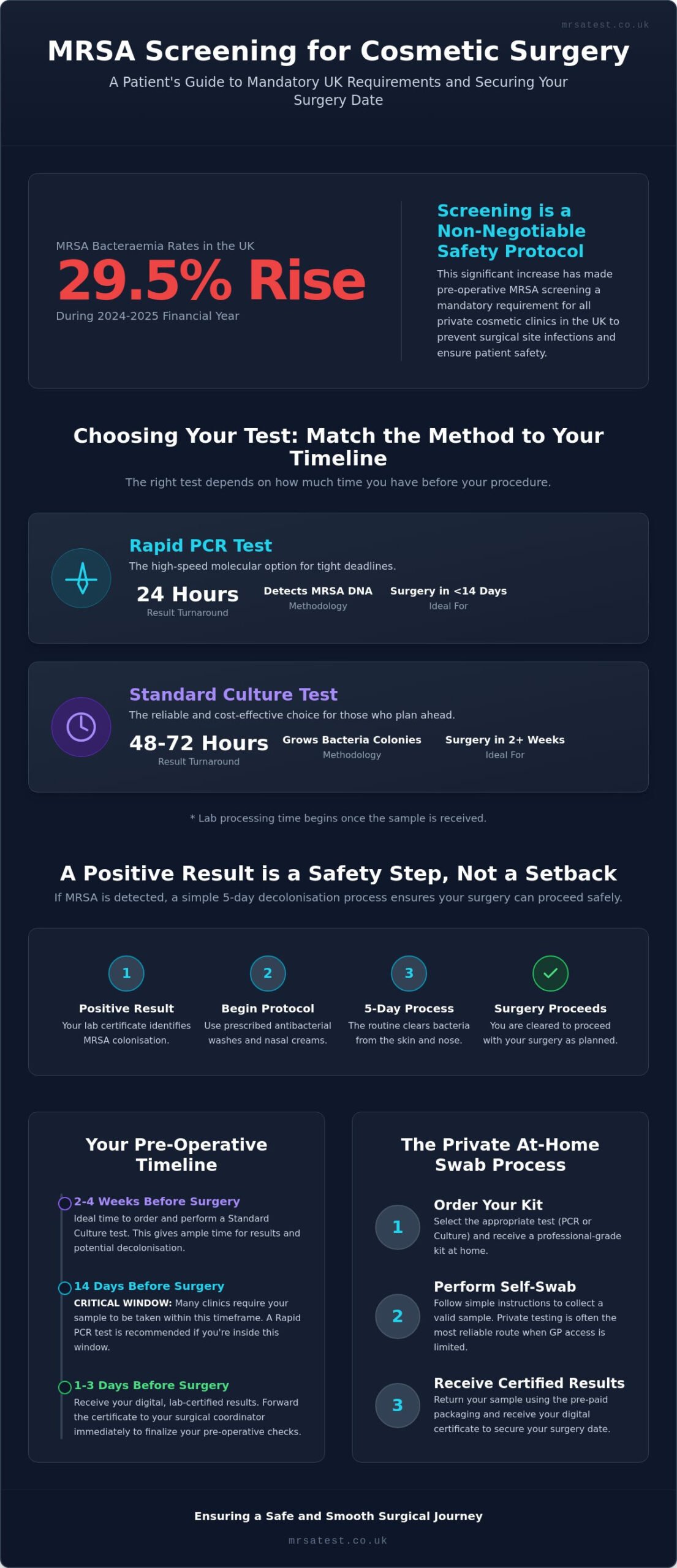
Did you know that MRSA bacteraemia rates in the UK rose by 29.5 percent during the 2024 to 2025 financial year? This significant increase has made mrsa screening for cosmetic surgery uk a critical, non-negotiable requirement for private clinics across the country. We know it’s incredibly stressful to coordinate pre-operative logistics while managing the natural nerves that come with a major procedure. The fear of a surgery date being cancelled due to missing paperwork or a busy GP surgery is a common concern for many patients.
This guide will help you secure your surgery date by providing a definitive look at mandatory screening requirements, precise timing, and how to obtain lab-certified results without the wait. We’ll break down the essential differences between the 24-hour Rapid PCR and the 48-hour Culture test. By understanding these timelines, you can move forward with the confidence that your results will be ready exactly when your surgical team needs them, ensuring your journey proceeds exactly as planned.
Key Takeaways
- Understand why MRSA screening is a mandatory safety protocol for UK private healthcare providers to prevent surgical site infections.
- Learn to choose between Rapid PCR and standard Culture testing based on your specific surgery timeline and clinic requirements.
- Navigate the logistical challenges of mrsa screening for cosmetic surgery uk by understanding why private testing is often the most reliable route when GP access is limited.
- Discover how to perform a valid pre-op swab at home using professional-grade kits to ensure clinical accuracy and lab-certified results.
- Master the step-by-step process of ordering, swabbing, and receiving your digital certificate to ensure your surgery proceeds without delay.
The Mandatory Role of MRSA Screening for Cosmetic Surgery UK
MRSA screening is a mandatory safety protocol for UK private healthcare providers. It serves as a frontline defence against hospital-acquired infections and ensures patient safety. Before booking your procedure, it’s essential to understand What is MRSA and why it requires such careful management in surgical settings. For patients, mrsa screening for cosmetic surgery uk provides a layer of security, ensuring that the surgical team is fully aware of any potential risks before you ever set foot in the clinic.
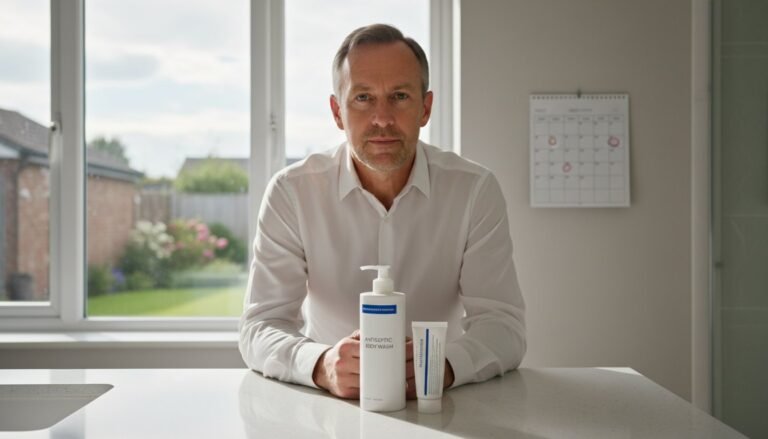
Elective procedures in 2026 follow updated UK clinical standards for infection control. These standards mandate that all patients undergoing surgery involving incisions or foreign objects, such as breast implants or rhinoplasty supports, must be screened. Since mrsa screening for cosmetic surgery uk is a standard requirement, a positive result isn’t a “fail” or a reason to lose hope. It is simply a clinical prompt that allows for safer preparation. If bacteria are detected, you’ll undergo a decolonisation process. This routine typically involves using specialized antibacterial washes and nasal creams for five days before surgery to clear the bacteria from your skin and reduce the bacterial load to safe levels.
Why Cosmetic Clinics Enforce Strict Screening
Cosmetic clinics enforce these rules because MRSA can devastate wound healing and compromise aesthetic results. When bacteria interfere with the healing process, it can lead to widened scars or even the loss of an implant. Beyond the physical impact, the emotional and financial cost of a cancelled surgery date is significant. By identifying risks early, clinics protect the sterile environment of the operating theatre, ensuring your investment is protected.
Colonisation vs. Active Infection in a Pre-Op Context
Understanding the difference between being a carrier and being sick is crucial. MRSA colonisation is the presence of bacteria on the body without any active symptoms or illness. While colonisation is harmless in daily life, it becomes a risk during surgery when the skin’s natural barrier is broken. Screening identifies these carriers before they enter the theatre, allowing the medical team to neutralise the bacteria before the procedure begins. It’s about quiet competence and clinical precision.
Rapid PCR vs. Standard Culture: Matching Your Test to Your Timeline
Your surgery date is fixed, but the clock is ticking on your paperwork. When you’re managing the logistics of mrsa screening for cosmetic surgery uk, the choice of test usually depends on your remaining time. UK laboratories use two primary diagnostic methods to identify the presence of bacteria. The first is the traditional culture test. This process involves placing your sample in a nutrient-rich environment to see if MRSA colonies grow. It’s a highly reliable, time-tested method, but it’s naturally slower. You’re waiting for biological growth, which typically takes between 48 and 72 hours once the lab begins processing your swabs.
Rapid PCR testing serves as the modern, high-speed alternative. Instead of waiting for bacteria to multiply, this molecular method identifies specific segments of MRSA DNA. It’s incredibly precise and significantly faster. Because the laboratory doesn’t need to wait for physical growth, results are typically available within 24 hours. Most cosmetic surgeons prefer a screening result that’s as current as possible. While a certificate can remain valid for several months, many private clinics specifically request that your mrsa screening for cosmetic surgery uk is performed within 14 days of your admission. This ensures the highest level of safety for the sterile surgical environment. You can review the general clinical expectations for MRSA screening before surgery on the NHS website.
The decision comes down to your “Surgery Countdown”. If you’re several weeks away, a culture test is a logical choice. However, if your procedure is scheduled for next week, the speed of a PCR test is often necessary to prevent an administrative crisis and a potential last-minute cancellation.
The 48-Hour Culture Test: Reliability on a Budget
This method is ideal for patients who have at least two weeks before their scheduled procedure. It’s the standard requirement for the majority of private hospitals in the UK. If you’ve planned your pre-op window carefully, the culture test is a cost-effective way to secure your results. It provides a lab-certified document that satisfies admissions departments without the need for premium expedited processing.
The 24-Hour Rapid PCR: The Emergency Solution
The Rapid PCR is the essential solution for last-minute screenings or high-anxiety situations. If your GP is unavailable or you’ve only just received your pre-op checklist, this test provides results within 24 hours of the lab receiving your kit. It’s the fastest way to resolve missing paperwork and ensures your surgery proceeds as planned. For patients on a tight timeline, ordering a MRSA Rapid PCR Test offers the speed and certainty required for a stress-free admission.
Navigating the “GP Dilemma”: Why Private Screening is Often Required
Many patients believe their local NHS surgery is the default option for all medical tests. However, when it comes to mrsa screening for cosmetic surgery uk, this assumption often leads to last-minute stress. Most GPs operate under a contract that prioritizes acute clinical needs. Providing administrative paperwork and swabs for private elective procedures is classified as “Non-NHS Work.” This means your doctor is legally permitted to refuse the request or charge a significant private fee for the service. It is a common hurdle that can catch patients off guard just weeks before their procedure.
Even if your GP surgery agrees to help, you face the risk of system delays. The NHS laboratory network is designed to process samples based on clinical urgency. A pre-operative swab for a private breast augmentation or rhinoplasty sits at the bottom of that priority list. This can result in a turnaround time that exceeds your clinic’s strict validity window. According to the NHS guidance on MRSA screening, these tests are a vital part of hospital safety, but the logistics of obtaining them for private care often fall to the patient. Choosing a dedicated private service ensures your sample is treated with the specific urgency your surgery date requires.
The Conflict Between Private Surgery and NHS Resources
GPs are currently facing unprecedented demand. They must prioritize patients with active infections or chronic illnesses over those needing administrative clearance for elective surgery. Seeking a “free” test through the NHS often carries hidden costs. You might spend hours on hold for an appointment, take time off work for the visit, and still wait days for a result that might not arrive in time. This is why many patients find that at-home test kits UK are the most efficient way to bridge the gap. They provide the clinical accuracy required without the logistical hurdles of a busy GP practice.
The Validity of Private Lab Results
You can move forward with confidence knowing that results from UKAS-accredited laboratories are accepted by all major UK private hospital groups. Your admissions team requires a formal, digital certificate that clearly states your MRSA status. It is essential to ensure your mrsa test covers the specific sites requested by your surgeon. Most mrsa screening for cosmetic surgery uk protocols require swabs from the Nose, Groin, and Axilla (underarm). Private screening services are specifically designed to meet these detailed requirements, ensuring your paperwork is perfect the first time.
Step-by-Step: How to Perform a Valid Pre-Op Swab at Home
Clinical accuracy for mrsa screening for cosmetic surgery uk starts with the patient. A valid result depends entirely on the quality of the sample you collect. If the swab doesn’t capture enough bacterial material, the laboratory cannot provide a definitive certificate, which could lead to delays in your surgery. A professional home kit includes sterile swabs, transport media tubes containing a preservative liquid, and a detailed lab request form. Using these components correctly is the only way to ensure your results are accepted by your surgical team.
Before you begin, it’s vital to follow a strict protocol to avoid contaminating the sample or causing a false reading. Most UK cosmetic surgeons now require the “Triple Swab” method, which targets the nose, groin, and axilla. This comprehensive approach provides the highest level of clinical certainty. Follow these essential do’s and don’ts:
- Do wash and dry your hands thoroughly before opening the sterile packaging.
- Do ensure you label each tube immediately after collection with your full name and date of birth.
- Don’t use antiseptic sprays, antibacterial soaps, or nasal ointments for at least 24 hours before testing.
- Don’t touch the tip of the swab with your fingers or allow it to contact any surface other than the specific sample site.
If you need to secure your results quickly for an upcoming procedure, you can order your MRSA screening kit today to receive a laboratory-certified certificate within your required timeframe.
Collecting Your Samples Correctly
To sample the nose, gently insert the swab into the front of one nostril. Rotate it five times against the inside wall with steady pressure, then repeat the process in the other nostril using the same swab. The groin and axilla (underarm) are equally important, as these warm, moist areas are common reservoirs for bacteria that could migrate to an incision site. You should apply firm but comfortable pressure for exactly ten to fifteen seconds per site to ensure sufficient bacterial capture.
Packaging and Returning Your Kit
Logistics are just as important as the collection technique. Once you’ve finished, place each swab into its corresponding transport tube and screw the caps on tightly. If the preservative liquid leaks during transit, the lab will likely reject the sample as “unfit for testing.” Use the provided 24-hour tracked return envelope to maintain sample viability. Before posting, double-check that you’ve signed the lab request form and clearly labelled every tube. This simple checklist prevents administrative errors that could stall your mrsa screening for cosmetic surgery uk and impact your surgery date.
Securing Your Surgery Date with Accredited Results
Completing your mrsa screening for cosmetic surgery uk is the final logistical hurdle before your procedure. The process is designed to be a seamless progression from preparation to admission. Once you order your kit, you simply perform the swabs at home and return them using the provided tracked envelope. After the laboratory processes your sample, you receive a digital certificate via email. This document is your clinical passport to the operating theatre. You should forward this PDF directly to your clinic’s admissions department as soon as it arrives. By finalising your paperwork early, you eliminate the risk of administrative delays that often occur when clinics receive results at the last minute.
Having your preparing for surgery checklist completed provides immense peace of mind. It allows you to focus on your recovery and the aesthetic goals of your procedure rather than worrying about missing documents. Most private hospitals require these results to be verified by their clinical lead before you are cleared for admission. If you manage these logistics proactively, you ensure that your surgical team has everything they need to maintain a sterile and safe environment.
The Decolonisation Process
If your test returns a positive result, it is not a reason for alarm. A positive result simply indicates that MRSA is present on your skin, a state known as colonisation. This is easily managed with a five-day decolonisation protocol. This routine typically involves using a chlorhexidine (CHG) body wash and a specific antibiotic nasal ointment to clear the bacteria. Testing early is vital because it ensures you have enough time to complete this five-day treatment before your scheduled surgery date. For more information on why these protocols are necessary, you can review our guide on hospital acquired infections and how they are prevented in private care.
Final Pre-Op Confirmation
Every clinic has its own specific “expiry date” for MRSA results. While some may accept a certificate up to three months old, most UK cosmetic surgeons require the mrsa screening for cosmetic surgery uk to be performed within 30 days of the procedure. Always verify this timeframe with your patient coordinator. It is also a good practice to keep a printed copy of your lab report in your own medical records for future reference. To ensure your procedure stays on schedule and your admission is stress-free, order your pre-op MRSA screening kit today and secure your surgery date with confidence.
Secure Your Surgery Date Today
Your journey toward your aesthetic goals should be defined by excitement, not administrative stress. By understanding the timeline requirements of your clinic and choosing the appropriate testing method, you take full control of your pre-operative preparation. Proactive mrsa screening for cosmetic surgery uk is the most reliable way to avoid last-minute delays and ensure your admission proceeds exactly as scheduled. Whether you need the rapid speed of a molecular PCR test or a standard culture screen, having lab-certified results in hand allows you to focus entirely on your upcoming transformation.
We support your preparation with a streamlined process that prioritizes your privacy and timeline. Our services utilize UKAS-accredited laboratory partners to provide the clinical accuracy your surgical team demands. With discreet, plain-packaging delivery and 24-hour PCR results available, you can finalize your paperwork with quiet competence. Take the final step in your pre-op checklist with confidence.
Order Your Accredited Pre-Op MRSA Test Kit Now
You’ve planned every detail of your procedure; let us help you secure the final piece of the puzzle. We wish you a safe and successful surgery.
Frequently Asked Questions
Is MRSA screening mandatory for all cosmetic surgeries in the UK?
Yes, MRSA screening is a mandatory safety protocol for nearly all private cosmetic procedures in the UK. This is especially true for surgeries involving implants or major incisions, such as breast augmentations or facelifts. The Care Quality Commission (CQC) requires independent clinics to adhere to national infection control standards. These protocols protect both the patient and the sterile surgical environment from potential infections, ensuring the highest standard of pre-operative care.
Can I get an MRSA test for my private surgery on the NHS?
Most NHS GPs aren’t required to provide pre-operative swabs for private elective surgery. This type of screening is often classified as “Non-NHS Work,” meaning your doctor can refuse the request or charge a private fee for the service. Relying on the NHS can also lead to delays that might jeopardize your surgery date. Private screening ensures your results meet the specific requirements of your cosmetic surgeon without the logistical hurdles of a busy GP practice.
How long is an MRSA screening result valid for before surgery?
An MRSA screen is typically considered valid for up to three months according to national standards. However, many private cosmetic clinics have stricter internal policies to ensure maximum safety. Most surgeons prefer a result that’s less than 30 days old; some even require testing within 14 days of your admission. Always check your clinic’s specific “expiry date” to ensure your mrsa screening for cosmetic surgery uk remains valid for your scheduled procedure.
What is the difference between a Nose/Groin and a Nose/Groin/Axilla test?
The difference lies in the number of anatomical sites sampled to detect bacterial colonisation. A Nose/Groin test samples the two most common reservoirs for MRSA. A Nose/Groin/Axilla test adds the underarm (axilla) as a third site. Many surgeons prefer the triple-site screen for high-risk procedures, such as breast augmentations or joint-related surgeries. This provides a more comprehensive assessment of your bacterial status before you enter the operating theatre.
Will my cosmetic surgery be cancelled if I test positive for MRSA?
A positive MRSA result rarely leads to a permanent cancellation of your surgery. Instead, it usually prompts a short delay to allow for a decolonisation protocol. This involves using a specialized antibacterial body wash and nasal ointment for five days to clear the bacteria from your skin. Once you complete this process, your surgical team will typically clear you for the procedure. Testing early ensures you have enough time to finish this treatment without losing your date.
How quickly can I get my MRSA results back for a last-minute surgery?
You can receive your results within 24 hours of the laboratory receiving your sample if you choose a Rapid PCR test. This molecular method identifies MRSA DNA directly, making it significantly faster than traditional culture methods which require 48 to 72 hours for bacterial growth. If you’re facing a tight deadline, the PCR option is the most efficient way to secure your mrsa screening for cosmetic surgery uk and keep your surgery on schedule.
What does a “lab-certified” MRSA result actually mean?
A lab-certified result means your sample was processed by a professional facility, typically a UKAS-accredited laboratory. This certification confirms that the testing followed strict quality control regulations and clinical standards. Your clinic’s admissions department requires a formal report from a verified lab to confirm your status. This document provides the clinical evidence needed to prove you’re safe to enter the sterile environment, giving both you and your surgeon peace of mind.
Do I need to stop taking antibiotics before my MRSA swab?
You should generally avoid taking antibiotics or using antibacterial creams for at least 24 to 48 hours before your swab. These medications can suppress the bacteria on your skin, potentially leading to a false negative result. If you’re currently on a prescribed course of antibiotics for an illness, it’s best to wait until the course is finished before testing. Always inform your surgical team about any recent medications you’ve taken to ensure your results are interpreted correctly.