How Long Does MRSA Decolonisation Take? A Complete Timeline for Patients
Imagine your surgery is scheduled for next Tuesday, but your pre-op screening just came back positive for MRSA. You aren’t alone; clinical data suggests that approximately 1 in 30 people carry these bacteria on their skin or in their nose without even knowing it. When a procedure or your return to work is on the line, the most pressing question is usually: how long does mrsa decolonisation take?
It’s natural to feel overwhelmed by complex antiseptic routines or worried about the risk of infecting your family members. We understand that you need clear, professional guidance to regain control and peace of mind. This article provides a definitive 5-day roadmap for your treatment, ensuring you follow every step of the protocol with total confidence. You’ll learn the specific timeline for using prescribed body washes and nasal ointments, along with the precise window for when you can safely re-test to confirm you’re clear. By following this structured path, you can ensure your hospital procedure stays on track and your home remains a safe environment.
Key Takeaways
- Follow the standard 5-day clinical protocol to understand exactly how long does mrsa decolonisation take and ensure you are prepared for your upcoming surgery or return to work.
- Learn the correct application techniques for nasal ointments and antiseptic washes to successfully complete your daily decolonisation routine at home.
- Identify common factors, such as existing skin conditions or medical devices, that can influence your personal timeline and the overall success of the treatment.
- Discover why a 48-hour ‘washout’ period is vital before re-testing and how the ‘Rule of Three’ confirms you are officially clear of the bacteria.
- Explore how rapid PCR testing and private at-home kits can provide a faster, more discreet way to verify your status compared to traditional lab cultures.
The Standard MRSA Decolonisation Timeline: The 5-Day Protocol
The standard UK decolonisation programme lasts exactly five consecutive days. If you’re preparing for a hospital procedure, you’re likely asking how long does mrsa decolonisation take to ensure your surgery stays on schedule. This specific 120-hour window is the clinical benchmark used across the NHS to reduce the risk of surgical site infections. It isn’t a random number; it’s a calculated period designed to interrupt the biological life cycle of Methicillin-resistant Staphylococcus aureus (MRSA).
Bacteria like Staphylococcus aureus live on the skin surface and within the anterior nares, or nostrils. They multiply rapidly. A five-day course ensures that the antimicrobial agents reach the bacteria during their most active growth phases. Consistency is the most important factor here. Missing even a single application allows the bacterial load to rebound, potentially resetting your colonisation levels to their original state within hours. This process highlights the difference between suppression and eradication. Suppression involves lowering the bacterial count to a level where it’s unlikely to cause an infection during surgery. Eradication aims for a total clearance, which is often more difficult to maintain over long periods without strict environmental controls.
Why the 5-Day Window is the Clinical Gold Standard
Clinical evidence supports the use of 2% mupirocin nasal ointment and 4% chlorhexidine body wash over five days. This timeline aligns with NHS Pre-operative Assessment (POA) requirements, which often mandate the protocol be completed at least two days before admission. Using these treatments for more than seven days is usually discouraged by infection control teams. Research indicates that prolonged exposure can lead to antimicrobial resistance, specifically the mupA gene mutation, which makes future treatments less effective. Sticking to the five-day limit provides the best balance of safety and efficacy.
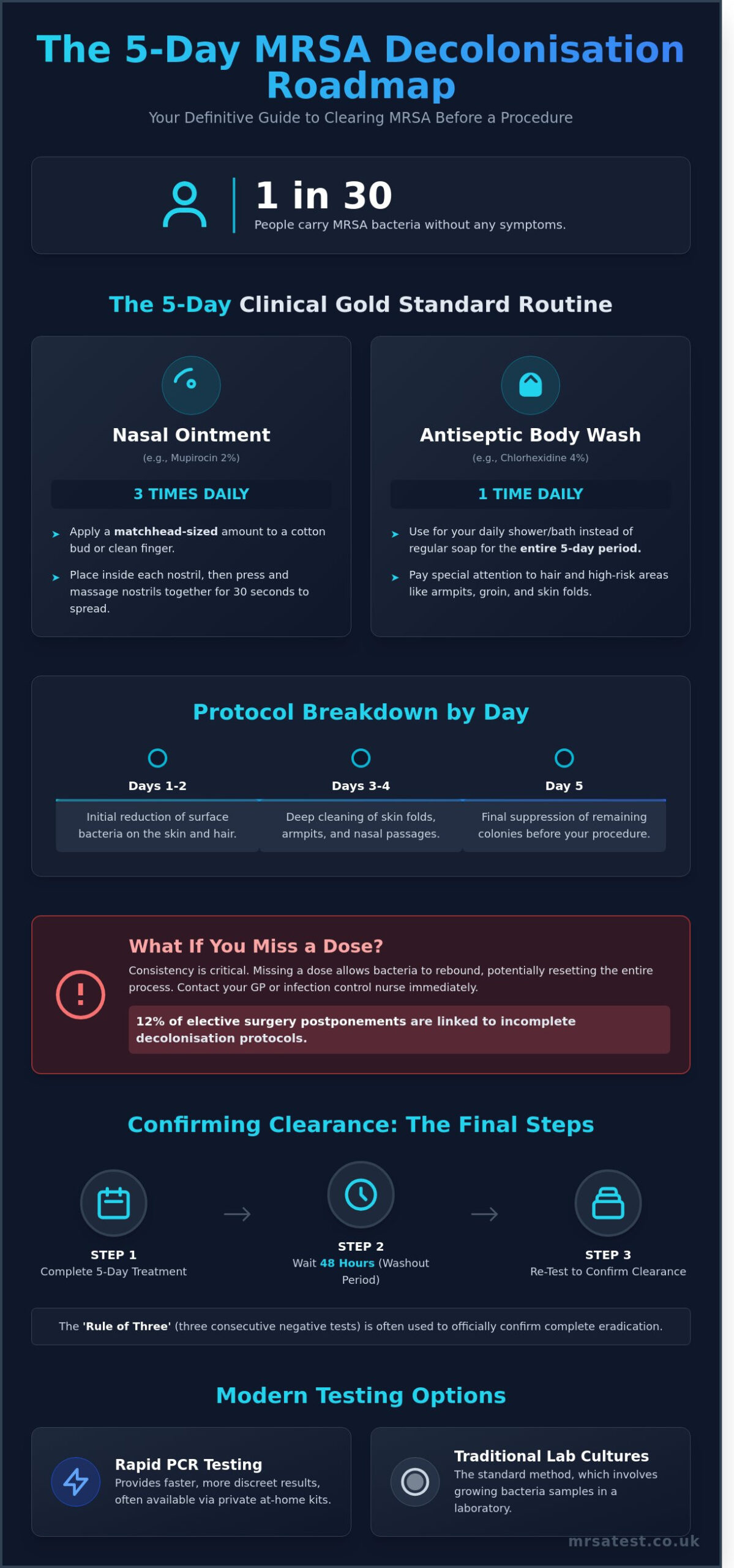
- Day 1 to 2: Initial reduction of surface bacteria on the skin and hair.
- Day 3 to 4: Deep cleaning of skin folds, armpits, and nasal passages.
- Day 5: Final suppression of remaining colonies immediately before the procedure.
What Happens if You Miss a Day?
If you forget a treatment session, don’t panic, but don’t ignore it either. The protocol relies on a cumulative effect to be successful. If a dose is missed, you should contact your infection control nurse or GP immediately. They’ll decide if you can simply extend the course or if you need to start the entire five-day cycle again. Incomplete treatment is a leading cause of surgical delays. Data from 2023 indicates that roughly 12% of elective surgery postponements in some trusts were linked to patients failing to complete their decolonisation correctly. Knowing exactly how long does mrsa decolonisation take helps you plan your week so these errors don’t happen.
Your surgical team needs to be certain that the bacterial load is at its lowest possible point when you enter the operating theatre. A missed day creates a window of opportunity for MRSA to flourish. To avoid this, many patients find it helpful to set phone alarms or use a physical checklist to track each wash and nasal application. This simple step protects your health and ensures your hospital journey remains on track without unnecessary delays or last-minute cancellations.
The Step-by-Step Daily Decolonisation Routine
Success in clearing MRSA depends entirely on your commitment to a rigorous 5-day schedule. This isn’t just a suggestion; it’s a clinical requirement. If you skip a single step, the bacteria can quickly rebound and recolonise. Patients often ask, how long does mrsa decolonisation take before they are considered “clear”? While the physical routine lasts five days, the biological impact starts within hours of the first application. However, the full duration is necessary to ensure that even deep-seated bacteria in skin folds are eradicated.
Correct Application of Nasal Ointment
The nose is the primary reservoir for MRSA. You’ll likely be prescribed Mupirocin 2% ointment. First, wash your hands thoroughly with soap and water. Apply a matchhead-sized amount of ointment to a cotton bud or your small finger and place it inside each nostril. Press your nostrils together and massage them for about 30 seconds to spread the ointment evenly. You must do this three times a day. This frequency is non-negotiable because the ointment’s efficacy peaks and then fades; three doses ensure the bacteria never have a chance to recover. Using too much ointment is a common error that leads to it running down the throat, while not reaching far enough means the high-load areas at the back of the nostril remain colonised.
The Antiseptic Body Wash Procedure
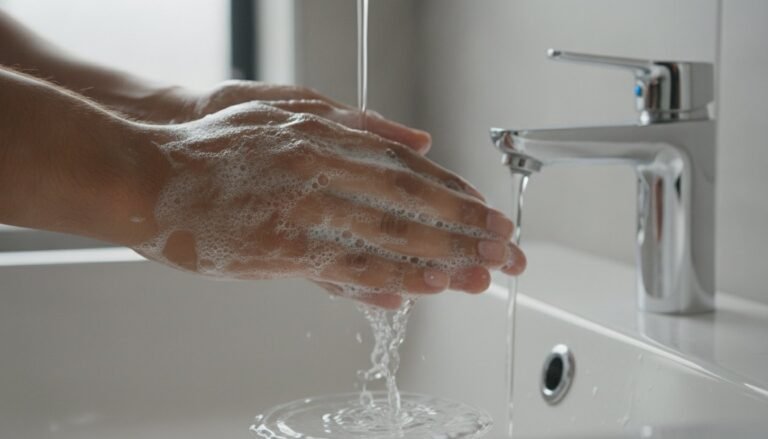
Your daily routine involves replacing your standard soap and shower gel with an antiseptic solution, typically 4% chlorhexidine gluconate (CHG), such as Hibiscrub. Wet your skin in the shower, turn off the water, and apply the liquid directly to your skin using a fresh flannel or sponge. You must follow the “3-minute rule”: the antiseptic requires 180 seconds of contact time to effectively break down bacterial cell walls. Pay specific attention to the groin, armpits, and perianal region. These warm, moist areas harbour the highest concentrations of MRSA. Research into the Duration of MRSA Colonization shows that failing to treat these specific “reservoirs” is a leading cause of decolonisation failure. Wash your hair twice during the 5-day cycle, usually on Day 1 and Day 4, using the same antiseptic solution to clear the scalp.
Managing Your Home Environment
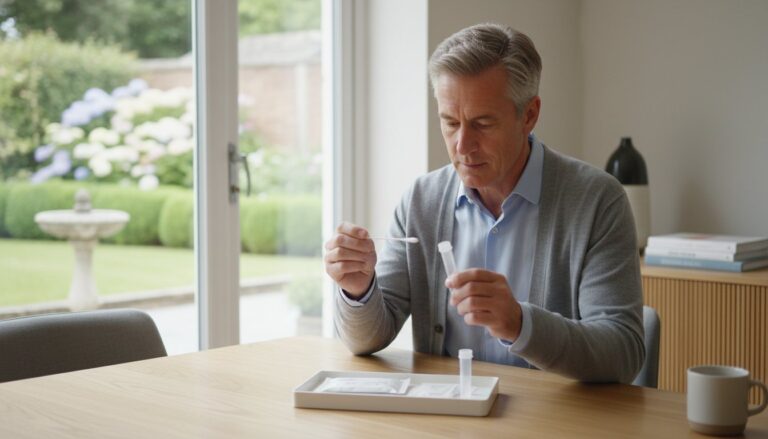
Personal hygiene is only half the battle. To prevent re-colonisation, you must treat your home environment with the same level of care. Change your towels, flannels, and pillowcases every single day. These items must be laundered at 60°C, as lower temperatures may not reach the thermal death point of the bacteria. Use a household disinfectant to wipe down high-touch surfaces like door handles, light switches, and taps at least twice daily. On Day 5, the final day of your routine, you should discard your toothbrush and razor and replace them with new ones. This prevents you from re-introducing the bacteria to your body just as the treatment concludes. If you’re concerned about whether your efforts have worked, you can use a discreet home screening kit to verify your status after the protocol ends. Understanding how long does mrsa decolonisation take helps you stay motivated through these repetitive but vital environmental cleaning tasks.
Factors That Influence How Long Decolonisation Takes
Understanding how long does mrsa decolonisation take depends on your unique health profile and environment. While the standard NHS protocol usually lasts 5 days, several variables can extend this timeline. Your body’s ability to shed the bacteria is not a one-size-fits-all process. Factors ranging from your skin health to the specific strain of MRSA you carry play a decisive role in whether the first cycle is successful.
Clinical data indicates that mupirocin resistance, the primary antibiotic used in nasal ointments, occurs in approximately 1% to 10% of MRSA cases in the UK. If you carry a resistant strain, the standard 5-day treatment will likely fail, requiring a change in medication. Additionally, your “carrier state” matters. About 20% of the population are persistent carriers who harbour the bacteria long-term, while others are transient carriers who clear it more easily. Persistent carriers often require more rigorous environmental cleaning to prevent the bacteria from returning immediately after treatment ends.
Medical devices also complicate the timeline. If you have a long-term urinary catheter, a feeding tube, or a stoma, these sites act as reservoirs. Bacteria can form a biofilm on plastic surfaces, which is a protective layer that topical washes cannot easily penetrate. In these instances, your clinical team might need to coordinate the decolonisation process with a device change to ensure the bacteria are fully eradicated.
Skin Integrity and Bacterial Load
Broken skin is a significant hurdle. Conditions like eczema, which affects roughly 10% of adults in the UK, or psoriasis create microscopic cracks where MRSA can hide. When skin is inflamed, the bacterial load is often much higher. It is essential to follow a structured MRSA Decolonization Protocol to manage these risks. We recommend working with a dermatologist to clear active skin flares before starting your MRSA treatment. Using non-perfumed, emollient creams helps maintain the skin barrier, making it harder for bacteria to colonise the area again.
Persistent Colonisation and ‘Failed’ Rounds
It’s frustrating when a 5-day cycle doesn’t result in a negative swab, but it’s not uncommon. If your first round fails, doctors often move to ‘second-line’ treatments. This might include alternative ointments like Naseptin or even a short course of oral antibiotics. You should also investigate your immediate surroundings. MRSA can survive on soft furnishings for up to 56 days. If a family member or a pet is also a carrier, you may be passing the bacteria back and forth. Testing everyone in the household is sometimes the only way to break the cycle of reinfection.
- Skin condition: Eczema or open wounds can double the required treatment time.
- Household pets: Dogs and cats can occasionally carry MRSA and reinfect owners.
- Environmental hygiene: Failure to wash bed linens at 60°C daily can lead to treatment failure.
- Compliance: Missing even one dose of nasal ointment can allow the bacteria to recover.
The total time for how long does mrsa decolonisation take can stretch to 10 or 15 days if a second cycle is needed. Staying patient and meticulous with your hygiene routine is the most effective way to ensure a clear result. Our UKAS-accredited testing kits can help you monitor your status from home, providing the data you need to confirm the bacteria is gone for good.
Post-Treatment: When Can You Re-test for Clearance?
After finishing the five-day treatment, you might feel ready to get the “all clear” immediately. However, clinical protocols require a specific waiting period before any swabs are taken. Understanding how long does mrsa decolonisation take involves more than just the five days of washing; you must also account for the 48-hour ‘washout’ period. This gap is essential because residual antiseptic from your chlorhexidine body wash or mupirocin nasal ointment can linger on the skin. If a swab is taken too soon, these chemicals might kill the bacteria in the test tube rather than on your body. This creates a false negative result, which provides a dangerous sense of security before a hospital admission.
The Importance of the Waiting Period
Healthcare providers typically advise waiting at least 48 to 72 hours after your final treatment dose before taking the first clearance swab. This ensures the laboratory sample represents your actual skin flora without interference from medications. For those preparing for elective surgery, it’s best to plan your decolonisation cycle so it finishes at least 7 to 10 days before your surgery date. This buffer allows for lab processing times and gives you the chance to react if a result comes back positive. Swabbing too early often leads to a surprise positive later on, which can result in cancelled operations or delayed treatments.
Clearance Swab Protocols
The NHS standard for confirmed clearance often follows the ‘Rule of Three’. This protocol requires three consecutive sets of negative swabs, usually taken at weekly intervals. Each set involves swabbing specific colonisation sites where the bacteria are most likely to hide. These include:
- The nostrils: One swab used for both sides.
- The throat: A common site for persistent colonisation.
- The groin and armpits: Areas where skin is warm and moist.
- Active wounds: Any broken skin, catheter sites, or eczema patches.
The reason for three separate tests is that MRSA colonisation can be intermittent. The bacteria may hide in deep tissue or sweat glands and not appear on the skin surface every single day. By achieving three negative results over a 21-day period, clinicians reach a 95% confidence level that the bacteria is truly suppressed. “Clearance” in this context means you’re no longer considered a high-risk carrier for hospital admission purposes, though your medical records will likely still mention your history of colonisation.
In the UK, the time it takes to receive your results depends on the testing method. A traditional culture test requires the lab to grow the bacteria, which typically takes 48 to 72 hours. If you’re using a rapid PCR test, you can receive results within 24 hours of the sample reaching the lab. When you factor in the 5-day treatment, the 2-day washout, and the lab processing time, a single clearance cycle usually spans 8 to 10 days. If you’re required to follow the full three-swab protocol, the entire process from Day 1 of treatment to the final negative result can take up to 28 days.
If you need to confirm your status quickly and securely, you can order a professional MRSA home test kit to begin your screening process from home today.
Accelerating Your Timeline with Private MRSA Testing
Waiting for results is often the most stressful part of any medical journey. While the NHS provides excellent care, their diagnostic pathways can be slowed by high demand and administrative layers. If you’re wondering how long does mrsa decolonisation take, you’ll find that the answer depends heavily on how quickly you can verify your status. Private at-home testing kits act as a vital pre-clearance check, allowing you to confirm you’re clear of the bacteria before you ever step foot in a hospital for your official pre-operative swabs.
Taking this proactive step removes the guesswork. Instead of waiting 10 to 14 days for a GP appointment and subsequent laboratory processing, you can order a kit that arrives at your door the next working day. This speed is essential for patients who have had their surgery dates moved forward or those who have previously failed a decolonisation cycle. By testing yourself privately, you gain a 72-hour head start on the standard clinical timeline, ensuring your surgical window remains secure.
Standard Culture vs. Rapid PCR
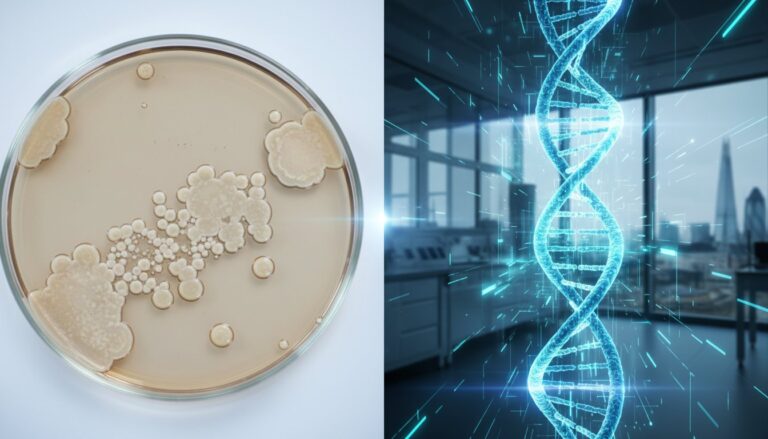
The method of testing significantly impacts your waiting time. Traditional lab cultures, which are the standard across most NHS trusts, require 48 to 72 hours to produce a result. This is because the lab must wait for live bacteria to grow on a petri dish. If the growth is slow, your results might be delayed even further, causing unnecessary anxiety as your surgery date approaches.
In contrast, molecular detection via PCR (Polymerase Chain Reaction) testing offers a result within 24 hours of the sample reaching the laboratory. Rather than waiting for bacteria to grow, PCR technology identifies the specific DNA of the MRSA bacteria. This is the gold standard for urgent pre-surgical requirements. Choosing between these tests usually depends on your specific needs:
- PCR Testing: Best for those with surgery scheduled within the next 7 days or anyone experiencing high levels of anxiety.
- Culture Testing: A reliable, cost-effective option if you have at least 14 days before your hospital admission.
Using Home Kits for Peace of Mind
Using a private screening kit gives you the autonomy to manage your own health data. When you receive a negative result from a UKAS-accredited facility, you can approach your surgical team with confidence. If the result is positive, you’ve saved yourself the embarrassment and frustration of a last-minute hospital cancellation. Cancellations due to MRSA colonisation can delay essential procedures by 4 to 6 weeks, as hospitals require a full clear cycle before re-booking.
You can share your private results directly with your consultant to demonstrate that you’ve been proactive about your decolonisation programme. This transparency often builds trust with the clinical team and ensures that your “how long does mrsa decolonisation take” timeline is as short as physically possible. Our kits are delivered in plain packaging to maintain your privacy, and the process takes less than five minutes to complete at home.
Don’t leave your surgical schedule to chance. Order your discreet MRSA screening kit today to confirm your clearance and protect your operation date.
Take Control of Your Recovery Timeline
Understanding how long does mrsa decolonisation take is essential for anyone preparing for a surgical procedure or managing a recent diagnosis. Most patients find that the standard 5-day protocol is highly effective when followed precisely. It’s important to remember that you should wait at least 48 hours after your final treatment before undergoing a clearance swab to ensure the most reliable data from the laboratory.
If you’re facing a strict hospital deadline, you can accelerate your path to clearance. Our 100% UK-based and confidential service removes the uncertainty of long waiting lists. We partner with a UKAS-accredited laboratory to provide professional screening from the comfort of your home. For those in a hurry, our rapid PCR testing option delivers accurate results within 24 hours of the sample reaching the lab.
Secure your surgery date with a private MRSA test kit
You have the tools to manage this process simply and effectively.
Frequently Asked Questions
Can I go to work while undergoing MRSA decolonisation?
You can usually continue going to work while undergoing decolonisation, provided you don’t work in a high-risk environment. The NHS indicates that most people don’t need to isolate during this time. If you work in healthcare, social care, or food preparation, you must inform your occupational health department immediately. They might ask you to stay home until you’ve completed the 5-day cycle to protect vulnerable patients or colleagues.
What happens if my surgery is tomorrow and I haven’t finished the 5 days?
You must contact your hospital admissions team or surgical department immediately if your procedure is tomorrow and you’ve missed doses. While protocols vary, some hospitals may postpone elective surgery to reduce the risk of a post-operative infection. Statistics show that roughly 10% of planned procedures are rescheduled due to incomplete pre-operative preparation. Your surgical team will decide if it’s safe to proceed based on the urgency of your operation.
Does MRSA decolonisation permanently remove the bacteria?
Decolonisation aims to reduce the bacterial load on your skin rather than guaranteed permanent removal. While the protocol is effective, about 30% of people may see the bacteria return within 6 months. Understanding how long does mrsa decolonisation take helps you manage expectations, as the initial 5-day window is just the first step. Regular screening is the only way to confirm if the bacteria has returned to your skin or nostrils.
Is the 5-day treatment safe for children or pregnant women?
The 5-day treatment is generally considered safe for children and pregnant women when prescribed by a qualified GP. Most UK hospitals use Mupirocin 2% nasal ointment and 4% chlorhexidine wash, which have been used safely for decades. Clinical studies show these topical treatments have minimal systemic absorption into the bloodstream. Always follow the specific instructions provided by your midwife or paediatrician to ensure the dosage is appropriate for your specific situation.
Can I use my regular shampoo and soap during the 5 days?
You should avoid using your regular soaps, shampoos, or skin creams during the treatment period. Regular cosmetic products can neutralise the active ingredients in antiseptic washes like Hibiscrub, making them far less effective. Stick strictly to the prescribed antiseptic wash for every part of your body, including your hair. If your hair feels dry, wait until after the 5-day cycle is complete before returning to your usual £5 retail hair products.
How many times can I repeat the decolonisation process if it fails?
Doctors typically recommend repeating the process no more than twice if the initial attempt fails to clear the bacteria. If two full 5-day cycles don’t work, your consultant may order a sensitivity test to check for antibiotic resistance. Over-treating can lead to skin irritation or the bacteria becoming resistant to the ointment. Knowing how long does mrsa decolonisation take is vital, as repeated cycles require breaks in between to protect your skin’s natural barrier.
Do my family members need to be treated at the same time?
Family members don’t usually require treatment unless they work in healthcare or are scheduled for their own surgery. Since 1 in 30 people in the UK carry MRSA on their skin without knowing it, treating everyone in a household is often unnecessary. Focus instead on shared hygiene, such as washing towels and bedding at 60°C. If a family member is immunocompromised, your GP might suggest they use the antiseptic wash as a precaution.
What are the side effects of the decolonisation ointments and washes?
The most common side effects are localised skin irritation, dryness, or a stinging sensation, affecting roughly 5% of patients. If you develop a significant rash or your skin feels excessively sore, stop the treatment and contact your pharmacist or GP. These symptoms are usually mild and resolve quickly once you stop using the 4% chlorhexidine solution. Always rinse the wash off thoroughly to minimise the risk of these minor skin reactions.