How to Prevent MRSA Spread at Home: A Practical UK Hygiene Guide
Most household disinfectants found on UK supermarket shelves aren’t laboratory-certified to eliminate Methicillin-resistant Staphylococcus aureus. It’s completely natural to feel a sense of anxiety or even isolation when you’re managing a colonisation at home. You want to protect your children and elderly relatives, but the conflicting advice on what works can leave you feeling overwhelmed. You’re not alone in this; approximately 3% of the UK population carries MRSA, yet clear, practical advice for households remains surprisingly scarce. This guide provides a clinical-grade framework on how to prevent mrsa spread at home using methods backed by UK healthcare standards.
We’ve simplified complex medical protocols into an easy-to-follow daily routine that fits into a normal family schedule. You’ll learn which specific cleaning agents actually work, how to handle laundry safely, and exactly when it’s safe to step back from these strict protocols. Our goal is to give you the quiet competence and confidence to ensure your home remains a safe, welcoming space for everyone you love.
Key Takeaways
- Understand the critical difference between direct skin contact and indirect transmission via household objects to effectively break the chain of infection.
- Master the clinical standards of hand hygiene and wound management required to keep bacteria contained and protect your family from colonisation.
- Discover the specific bactericidal cleaning techniques and products needed for how to prevent mrsa spread at home and ensure your living environment is truly sanitised.
- Learn why heat is your most effective ally when managing contaminated laundry and how to handle shared linens and bedding with clinical care.
- Identify the exact monitoring process and clearance criteria needed to confirm your home is safe and when a person is officially considered MRSA-negative.
Understanding How MRSA Spreads in a Household Setting
MRSA (methicillin-resistant Staphylococcus aureus) is often associated with clinical environments, yet it’s increasingly common in domestic settings. Understanding the transmission pathways is the fundamental first step in learning how to prevent mrsa spread at home. The bacteria primarily move through direct skin-to-skin contact, particularly when a carrier has a minor skin abrasion or a cut that allows the pathogen to enter.
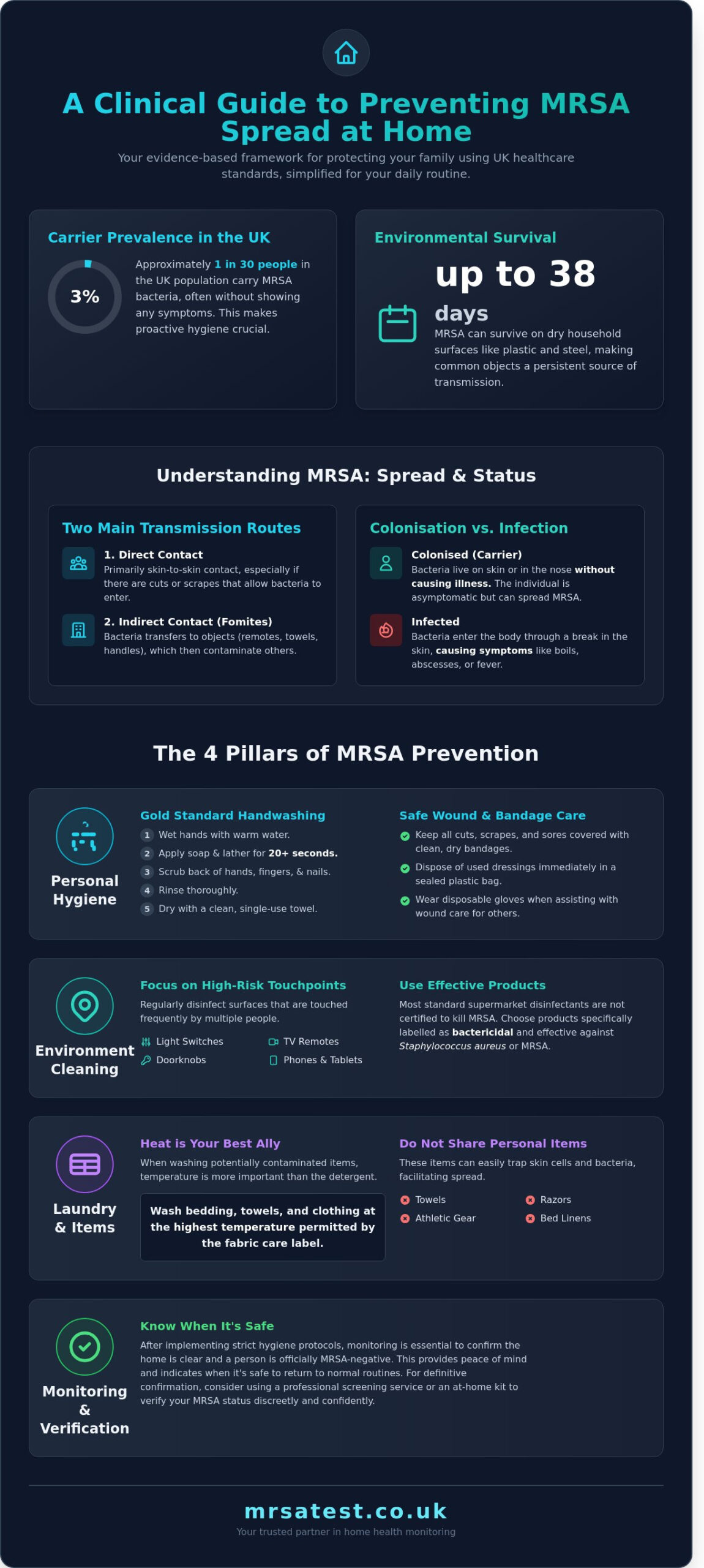
Indirect contact is equally significant. Bacteria transfer to ‘fomites’, which are non-living objects that harbour pathogens. Clinical studies indicate that MRSA can survive on dry household surfaces like plastic or stainless steel for up to 38 days. This environmental durability makes the home a persistent reservoir if hygiene isn’t targeted. For a comprehensive overview of MRSA and its resistance mechanisms, scientific records provide deep insight into why this specific strain is so resilient compared to standard staph bacteria.
Identifying High-Risk Touchpoints in Your Home
Certain areas in your house act as hubs for bacterial exchange. Frequently touched surfaces require the most attention. These include light switches, door handles, and television remotes. The kitchen and bathroom are the primary zones for cross-contamination due to high humidity levels and frequent hand contact with taps and cupboard handles. Shared personal items represent a major risk. You should avoid sharing towels, razors, or athletic equipment, as these items easily trap skin cells and bacteria.
Colonisation vs. Infection: What it Means for Your Family
It’s vital to distinguish between being colonised and being infected. Colonisation means the bacteria live on the skin or inside the nose without causing illness. These ‘carriers’ show no symptoms but can unknowingly spread the bug to others. An infection occurs only when the bacteria enter the body, resulting in boils, abscesses, or fever.
Proactive management is essential if a family member is a known carrier. Vulnerable individuals, such as those over 65, children under 5, or anyone with a weakened immune system, face a higher risk of the bacteria progressing from simple colonisation to a serious infection. Identifying the carrier state through screening is a practical way to manage how to prevent mrsa spread at home and protect those most at risk.
Essential Personal Hygiene Practices to Stop the Spread
Hand hygiene remains the cornerstone of infection control. When you’re learning how to prevent mrsa spread at home, your first line of defence is frequent, thorough washing. This simple act removes the bacteria before they can transfer to high-touch surfaces or other family members. MRSA is resilient, but it’s easily disrupted by the mechanical action of scrubbing with soap. Beyond hands, managing how the bacteria leaves the body is vital. MRSA colonisation often occurs in the nose or skin folds, and 1 in 30 people may carry the bacteria without showing symptoms. Reducing skin shedding through specific showering routines and keeping personal items separate ensures the bacteria stays contained.
The Gold Standard Handwashing Technique
Effective handwashing requires more than a quick rinse. You should wet your hands with warm water, apply soap, and lather for at least 20 seconds. Ensure you scrub the backs of your hands, between your fingers, and under your nails. Rinse thoroughly and dry with a clean towel or paper roll. While alcohol-based hand sanitisers are effective for quick refreshes, they don’t replace soap and water if your hands are visibly soiled. Always wash your hands after dressing a wound, using the toilet, or before preparing food. Following NHS guidance on MRSA hygiene helps maintain a clinical standard of cleanliness within your household.
Managing Wounds and Bandages Safely
MRSA thrives in broken skin. Any cuts, scrapes, or surgical sites must stay covered with clean, dry bandages until they’ve fully healed. If a bandage becomes wet or loose, change it immediately. When removing a used dressing, place it directly into a small plastic bag, tie it securely, and dispose of it in the outside bin. This prevents bacteria from escaping into the domestic environment. Carers must wear disposable gloves when assisting with wound care to avoid direct contact with infected fluids. If you’re concerned about a lingering infection, you might consider an at-home MRSA screening kit to confirm your status discreetly.
It’s also worth remembering that broken skin isn’t always from accidental injuries. Procedures like ear piercings, if not performed in a sterile environment, can introduce bacteria and create a potential entry point for infections. Prioritizing providers who adhere to strict clinical hygiene standards is a crucial preventative measure. As an example of this professional approach, specialists like Stellar Malaysia emphasize safe and hygienic practices to minimize these risks, a standard worth seeking out anywhere.
Daily showering is better than bathing for those carrying MRSA. Showers help wash away bacteria-laden skin cells rather than letting them settle in bathwater. Use a clean washcloth for every session and never share towels, razors, or toothbrushes. These items can harbour Staphylococcus aureus for days, creating a hidden reservoir for reinfection. By maintaining these strict personal boundaries, you significantly lower the risk of transmission to others in your home.
Cleaning and Disinfecting Your Living Environment
Maintaining a sterile environment is a cornerstone of managing infection risk. When you’re looking at how to prevent mrsa spread at home, standard household sprays often fall short. You need products specifically labelled as ‘bactericidal’ or ‘disinfectant’ to ensure the Staphylococcus aureus bacteria are actually destroyed rather than just moved around. Generic cleaners might remove dirt, but they don’t always provide the clinical kill rate required for resistant strains.
One critical technique is ‘damp dusting’. Dry cloths or feather dusters kick bacteria into the air, where they can be inhaled or land on other surfaces. Use a damp cloth with a disinfectant solution to trap and kill pathogens. According to CDC guidelines on MRSA prevention, surfaces that frequently touch skin require the most rigorous attention. You must also respect ‘contact time’. Most disinfectants require the surface to remain wet for 2 to 10 minutes to work effectively. If you wipe it dry immediately, the bacteria may survive. Always check the label for the specific dwell time required by the manufacturer.
Choosing the Right Disinfectants for MRSA
It’s vital to select products that meet British Standard EN 1276 or EN 13697. These certifications ensure the product is effective against MRSA in UK domestic settings. For hard surfaces, a diluted bleach solution is highly effective. Use a ratio of approximately 1 part bleach to 50 parts water, ensuring you open windows for proper ventilation. For electronics like smartphones or remote controls, use 70% isopropyl alcohol wipes. These sanitise delicate components without causing liquid damage.
A Daily Cleaning Schedule for Shared Areas
Consistency is the only way to ensure long-term safety. When considering how to prevent mrsa spread at home, focus on high-traffic zones where skin-to-surface contact is frequent. Follow this basic routine to reduce colonisation risks:
- Bathrooms: Disinfect toilet seats, flush handles, and taps every 24 hours. Use separate cloths for the toilet and the sink to avoid cross-contamination.
- Kitchens: Wipe down worktops with a bactericidal spray before and after every food preparation session.
- Floors: Perform a weekly deep clean of hard floors using a disinfectant solution. Use a mop head that can be washed at 60°C after use.
- Touch points: Sanitise door handles, light switches, and banisters daily, as these are the most common vectors for transmission between family members.
By following these structured cleaning protocols, you create a hostile environment for bacteria. This proactive approach protects vulnerable household members and prevents the cycle of re-infection.
Managing Laundry and Shared Personal Items
Laundry isn’t just a household chore; it’s a critical point of control in your decontamination strategy. Staphylococcus aureus, including MRSA, is remarkably resilient. Clinical studies have shown that these bacteria can survive on unwashed cotton fabrics for up to 56 days. This makes your washing machine a vital tool for household safety. When you handle dirty linens from a colonised person, don’t shake them. Shaking disperses skin scales and bacteria into the air, where they can settle on other surfaces or be inhaled. Instead, roll the items inward and place them directly into the machine or a dedicated laundry bag.
Safe Laundry Procedures for Contaminated Linens
Heat is your most effective tool for microbial destruction. You should wash all towels, bedding, and clothing used by a colonised individual at a minimum temperature of 60°C. This specific temperature is high enough to break down bacterial cell walls effectively. Use a biological detergent that contains bleach-based active ingredients, such as sodium percarbonate, to provide an extra layer of disinfection. Once the cycle finishes, move items immediately to a tumble dryer. Running a high-heat cycle for at least 30 minutes ensures any remaining pathogens are eliminated before the items are folded and stored.
Eliminating the Risk of Shared Personal Items
Cross-contamination often occurs through shared objects, known as fomites, which harbour bacteria between uses. To understand how to prevent mrsa spread at home, you must establish strict boundaries regarding personal property. Assigning specific, colour-coded towels is a simple way to help family members avoid accidental mix-ups. This visual cue is particularly helpful in households with children.
- Replace bar soaps with liquid soap dispensers to prevent bacteria from colonising a damp surface.
- Never share razors, toothbrushes, or nail clippers; these can carry trace amounts of blood or skin cells.
- Store the colonised person’s toiletries in a separate, wipeable plastic caddy or a dedicated cupboard.
Keeping personal care items isolated reduces the chance of someone else grabbing the wrong flannel or sponge by mistake. If you want to ensure your household protocols are effectively managing the bacteria, you can order a professional MRSA self-test kit to monitor colonisation levels from the comfort of your home. These kits provide UKAS-accredited results, giving you the data needed to manage the environment with confidence.
Monitoring and Verification: Knowing When Your Home is Safe
Reaching the end of a treatment cycle is a significant milestone, but it isn’t the final step in protecting your household. Even when a visible skin infection has healed, the bacteria can remain on the body without causing symptoms. This state is known as colonisation. To ensure you’ve successfully mastered how to prevent mrsa spread at home, you must verify that the bacteria is no longer present on the skin or in the nostrils.
Clinical clearance is a rigorous process. In the UK, healthcare professionals typically require three consecutive negative swabs to confirm a patient is MRSA-negative. These tests are usually conducted at weekly intervals after completing a decolonisation programme. This programme involves using antimicrobial body washes, such as 4% chlorhexidine, and prescribed nasal ointments for a set period, often five days. Stopping these hygiene practices too early can allow any remaining bacteria to multiply and recolonise the skin.
Why Post-Treatment Screening is Essential
Bacteria are resilient. Research shows that MRSA can survive on household surfaces for several months if not properly eradicated. Verification is the only definitive way to confirm that your cleaning and hygiene efforts have been successful. Without testing, you’re relying on guesswork, which can lead to a cycle of reinfection within the family. Obtaining a negative result provides immediate peace of mind and removes the anxiety of the unknown for everyone in the household.
The Benefits of Private At-Home MRSA Testing
You don’t always need to visit a hospital or GP surgery for follow-up screenings. Using a discreet home test kit allows you to monitor your status privately and conveniently. These kits use the same high standards as the NHS, with samples analysed in UKAS-accredited laboratories. You’ll receive accurate results directly to your phone or computer, often within 24 to 48 hours of the lab receiving your sample.
Performing the test is straightforward and takes less than five minutes. You’ll use a sterile swab to collect samples from key areas where the bacteria usually reside, specifically the nostrils and the groin. Follow these steps for an accurate result:
- Wash and dry your hands thoroughly before opening the kit.
- Carefully swab the inside of both nostrils, rotating the tip gently.
- Use a separate swab for the groin area as instructed in the guide.
- Place the swabs into the provided transport tubes and seal them immediately.
- Post the kit using the pre-paid envelope on the same day the sample is taken.
By taking control of the verification process, you ensure that your strategy on how to prevent mrsa spread at home is backed by clinical data rather than assumptions. It’s the most effective way to return your home to a state of total safety.
Taking Control of Your Household Safety
Maintaining a sterile environment doesn’t have to be overwhelming. You’ve learned that simple actions, like washing laundry at 60°C to kill bacteria and sanitising high-touch surfaces daily, significantly reduce colonisation risks. Consistent hand hygiene remains your first line of defence. By following these clinical steps, you’ll understand exactly how to prevent mrsa spread at home and keep your loved ones safe from infection.
While hygiene practices are vital, certainty is the only way to truly gain peace of mind. Our 100% UK-based clinical service provides professional-grade screening without the need for a GP appointment. Each sample is processed in a UKAS-accredited laboratory, ensuring you receive accurate data you can trust. We provide discreet packaging to protect your privacy and deliver results within 24 to 48 hours of your sample reaching our facility. Taking this proactive step allows you to manage your health with clinical precision from the comfort of your own living room.
Order Your Private MRSA Home Test Kit Today
You’re taking the right steps to ensure a healthier, safer home for everyone.
Frequently Asked Questions
Can I catch MRSA from someone living in my house?
Yes, you can catch MRSA from a household member through direct skin contact or by sharing personal items. About 30% of the UK population carries Staph bacteria on their skin or in their nose without showing symptoms, a state known as colonisation. If a family member has an active infection, the risk of transmission increases through shared towels, razors, or toothbrushes.
What is the best disinfectant to kill MRSA on household surfaces?
The most effective disinfectants for killing MRSA on household surfaces are those containing at least 0.1% sodium hypochlorite or products certified to the BS EN 1276 standard. These cleaners are proven to eliminate 99.9% of bacteria within 5 minutes of contact. Focusing on high-touch areas like door handles and light switches is a vital part of how to prevent mrsa spread at home.
Do I need to wash my clothes separately if I have MRSA?
You don’t need to wash your clothes in a separate load, provided you use a wash cycle set to at least 60°C. This temperature, combined with a bleach-based laundry detergent, effectively kills the bacteria. For delicate items that can’t withstand high heat, use a laundry sanitiser that’s lab-tested against MRSA and always dry items completely in a tumble dryer or in direct sunlight.
How long does MRSA live on furniture or bedding?
MRSA can survive on household surfaces like furniture or bedding for 7 days to 7 months depending on the material and humidity levels. Research indicates that the bacteria live longer on synthetic fabrics like polyester than on natural cotton. Knowing how to prevent mrsa spread at home involves vacuuming soft furnishings weekly and changing bed linens every 3 days during an active infection.
Is it safe to share a bed with someone who has MRSA?
It’s generally unsafe to share a bed with someone who has an active MRSA infection until their wounds are fully healed. Skin-to-skin contact is the most common route for the bacteria to move between people. If you must share a room, ensure all sores are covered with waterproof dressings and use separate sets of bedding washed at 60°C after every use.
Can MRSA be spread through food prepared at home?
MRSA isn’t a traditional foodborne illness, but it can be spread if an infected person handles food without washing their hands properly. If bacteria from a skin lesion enter a meal, it can cause staphylococcal food poisoning within 2 to 6 hours. Anyone with an active infection should avoid preparing meals for others and always wash hands for 20 seconds before touching kitchen surfaces.
How do I know when I am no longer contagious with MRSA?
You’re no longer considered contagious once you’ve finished your prescribed treatment and received three consecutive negative screening results. These swabs are typically taken 48 hours apart from the nose, throat, and skin folds. Our UKAS-accredited laboratory offers a discreet, at-home MRSA culture test to help you confirm your status with clinical accuracy and professional peace of mind.
Should children be kept away from a family member with MRSA?
Children don’t need to be kept in a separate room, but they must be supervised to ensure they don’t touch the infected person’s bandages or skin. Because children often have minor scrapes from play, they’re more susceptible to the bacteria entering their system. Encourage them to wash their hands frequently and keep their toys disinfected with a 70% alcohol solution.