
Bupa MRSA Screening Policy for Private Patients (2026)
What if a simple, invisible bacterium could halt your long-awaited surgery just 24 hours before you are due in theatre? For many private patients, navigating the bupa mrsa screening policy can feel like a stressful race against time. It’s a common concern that a routine swab might lead to a cancelled procedure, adding unnecessary anxiety to an already significant medical event. You deserve a clear, professional path forward that prioritises both your safety and your surgical schedule.
This guide explains exactly what Bupa requires for pre-operative screening in 2026, from specific swab locations like the nose and groin to the critical timing of your assessment. We’ll show you how to manage your pre-op timeline effectively using discreet, at-home PCR testing that delivers laboratory-accurate results within 24 hours of receipt. You will also discover why a positive result rarely leads to a cancellation, provided you have enough time to follow a standard five-day decolonisation protocol. We’ll break down the clinical facts so you can move toward your surgery date with quiet competence, knowing you’ve addressed every detail of the screening process privately and efficiently.
Key Takeaways
- Learn why the bupa mrsa screening policy is mandatory for most elective surgeries and how it protects you from healthcare-associated infections.
- Identify the specific body sites required for testing, typically involving swabs of the nostrils and groin to check for bacterial colonisation.
- Discover how to manage tight pre-operative deadlines by testing privately weeks before your procedure to avoid last-minute delays or stress.
- Understand the standard decolonisation protocol and why a positive result doesn’t usually mean your surgery will be cancelled.
- Compare the benefits of Rapid PCR tests and standard Culture kits to choose the right level of speed and clinical accuracy for your needs.
Understanding the Bupa MRSA Screening Policy for Surgery
Bupa’s primary goal is the prevention of healthcare-associated infections (HAIs), which remain a significant concern in any clinical setting. The bupa mrsa screening policy serves as a foundational safety protocol, ensuring that every patient entering a sterile environment is properly assessed before their procedure. This screening is mandatory for most elective surgical procedures and any overnight hospital stays. Whether you’re visiting a Bupa-owned hospital or one of their many partner facilities across the UK, the requirements remain consistent. It’s a standard of care designed to maintain a safe, sterile environment for every patient and staff member involved in your care.
Why Does Bupa Mandate MRSA Screening?
The primary reason Bupa mandates this screening is the protection of vulnerable patients from Methicillin-resistant Staphylococcus aureus (MRSA). These bacteria are resistant to several widely used antibiotics, making any resulting infection much harder to treat effectively. In a surgical context, MRSA can lead to severe post-operative wound infections or internal complications that hinder your recovery. You can find more context on these risks in our detailed guide on hospital acquired infections. By identifying colonisation early, the medical team can apply preventative measures that significantly reduce the risk of transmission within the surgical ward.
Who Needs to be Screened Under Bupa Policy?
Under the current policy, almost all elective admissions require a clear screen. This includes day-case surgeries, especially those involving the placement of implants or prosthetic materials like heart valves or joint replacements. Bupa also identifies specific groups that require closer attention due to a higher statistical risk of carrying the bacteria. These groups include:
- Patients with a known history of MRSA colonisation or previous infections.
- Individuals who’ve had recent stays in any hospital or healthcare facility within the last few months.
- People admitted from nursing homes or other residential care settings.
- Patients undergoing high-risk procedures, such as cardiothoracic or neurosurgery.
Timing is everything. Patients are typically expected to be screened before admission, or in some urgent cases, within 24 hours of arrival. Failure to provide a negative screen can lead to postponed or cancelled procedures, which is a stressful outcome for any patient. Being proactive about your screening status doesn’t just satisfy a policy requirement; it gives you the confidence that your surgery will proceed as planned without last-minute delays. It’s about taking control of your health timeline before you even step into the hospital.
How MRSA Screening Works in Private Healthcare
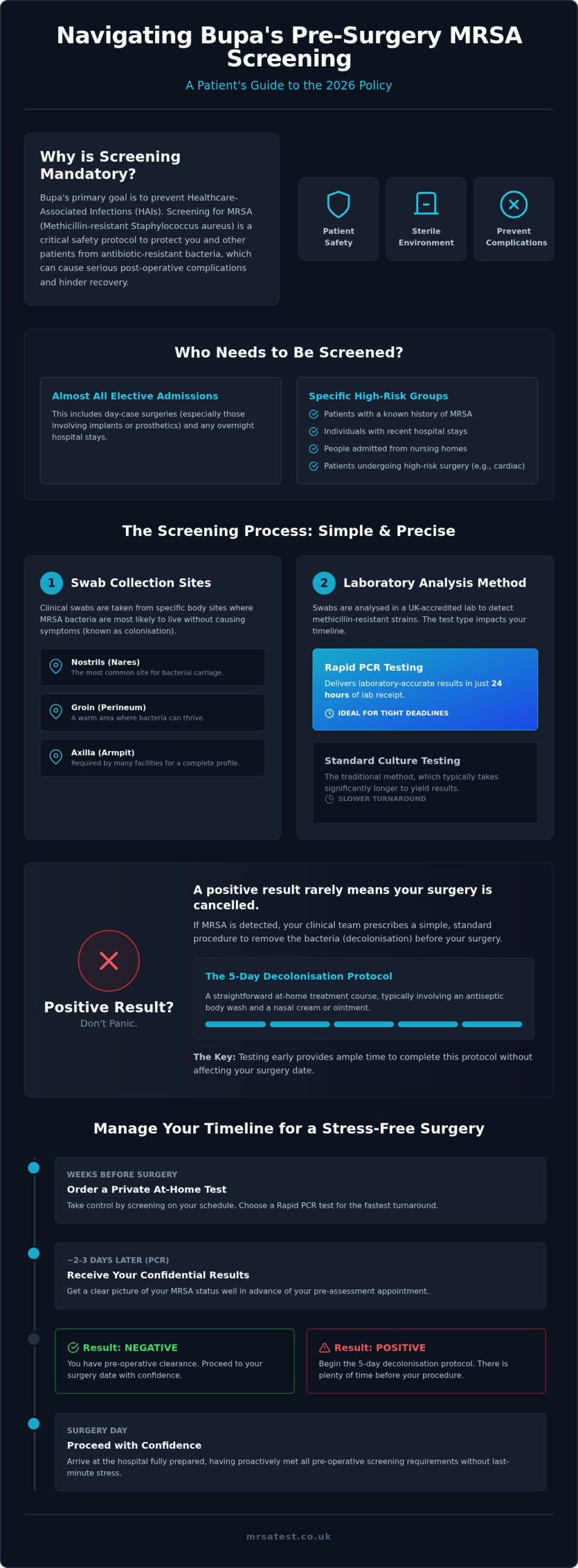
The physical process of screening is straightforward but precise. It involves taking clinical swabs from specific areas of the body where bacteria are most likely to reside. These locations, known as “colonisation” sites, are chosen because MRSA often lives on the skin or in the nose without causing any symptoms. Under the bupa mrsa screening policy, the standard sites for swabbing include:
- Nostrils (nares): This is the most common site for bacterial carriage.
- Groin (perineum): A warm area of the body where bacteria frequently thrive.
- Axilla (armpit): Many Bupa facilities require this for a complete diagnostic profile.
This comprehensive method aligns with a standardised approach to MRSA screening. By testing multiple sites, clinicians can significantly reduce the risk of a false negative result. Once the swabs are collected, they’re sent to a UK-accredited microbiology laboratory for analysis. Here, clinical scientists use advanced diagnostic methods to detect the presence of MRSA bacteria. The goal isn’t just to find bacteria, but to identify specific strains that have developed resistance to methicillin, a common antibiotic. This distinction is vital for your surgical team, as it allows them to provide the correct pre-operative advice based on your individual carrier status.
The Difference Between PCR and Culture Testing
Understanding the technology used in the lab is essential for managing your surgical timeline effectively. There are two primary methods for detecting MRSA. PCR (Polymerase Chain Reaction) is a molecular technique that identifies bacterial DNA. It’s exceptionally fast, often providing results within 24 hours of the sample reaching the lab. This speed is a major advantage for patients with upcoming surgery dates. In contrast, traditional Culture testing involves placing the sample in a controlled environment to see if bacteria grow. This method is highly accurate but takes longer, usually 48 to 72 hours. If you’re on a tight deadline, you might consider a rapid MRSA test to get answers quickly and avoid last-minute stress.
What the Lab Looks For
The laboratory analysis focuses on differentiating between “colonisation” and “infection”. Most patients being screened for the bupa mrsa screening policy are colonised. This means they carry the bacteria on their skin without being ill. However, if these bacteria enter a surgical wound, they could cause an active infection. The lab verifies the exact bacterial strain, which allows your healthcare provider to prescribe the most effective decolonisation treatment if necessary. It’s a proactive step that ensures your recovery is as smooth as possible. For those who value privacy and control, using an at-home screening kit allows you to identify your status discreetly before your formal hospital assessment takes place.
Private Screening vs. Hospital-Led Testing: Managing Your Timeline
Hospital pre-operative assessments are a standard part of the patient journey, but they often occur late in the process. Most facilities schedule these appointments just one or two weeks before your surgery date. While this timeframe is sufficient for a negative result, it leaves very little room for error if MRSA is detected. Under the bupa mrsa screening policy, identifying a carrier status early is vital for maintaining your surgical schedule. If you wait for the hospital assessment and test positive, you may find yourself in a race against time to complete treatment before your admission date.
The Benefits of Pre-Screening at Home
Testing privately four to six weeks before your procedure gives you a significant advantage. This window allows you to discover if you’re a carrier before your official Bupa pre-op assessment takes place. If a result comes back positive, you have ample time to complete the standard five-day decolonisation treatment. This proactive approach ensures your official hospital screen is simply a formality rather than a source of anxiety. Additionally, testing at home is entirely confidential. Your results are sent directly to you, not your insurance record, giving you the discretion to manage your carrier status privately and effectively.
Choosing an at-home kit also removes the logistical burden of an extra trip to the hospital. You don’t have to worry about parking, travel costs, or taking additional time off work for a simple swab. It’s a straightforward way to gain peace of mind from your own environment, knowing that you’ve addressed a potential surgical barrier well in advance.
Comparing Costs and Convenience
Logistically, an at-home kit simplifies your pre-op checklist by providing everything you need in one discreet package. These kits include all required swabs for the nose, groin, and axilla, along with easy-to-follow instructions and prepaid return shipping to a UK-accredited laboratory. For patients on a tight deadline, Rapid PCR kits are particularly effective. They provide laboratory-confirmed results within 24 hours of receipt, which is significantly faster than the 48 to 72 hours often required for standard hospital culture screens. By opting for a private PCR test, you eliminate the anxiety of waiting for hospital results just days before your procedure. This efficiency allows you to focus on your physical preparation for surgery, confident that your screening requirements are fully met.
What Happens if Your MRSA Screen is Positive?
A positive MRSA screen can feel unsettling, but it’s important to understand what this result actually represents. In most cases, a positive swab indicates that you are colonised with the bacteria. This means the bacteria are living on your skin or in your nose without causing harm. It doesn’t mean you’re sick or that you have an active infection. However, the bupa mrsa screening policy is designed to eliminate these bacteria before they have a chance to enter a surgical wound. If your screen is positive, your medical team will require you to complete a decolonisation programme before your procedure can safely proceed.
Step-by-Step Decolonisation Process
The goal of decolonisation is to suppress the bacteria on your body to a level that is safe for surgery. This is a structured, five-day protocol that requires diligence but is easily managed at home. Your clinical team will typically provide specific products and instructions, which usually include:
- Antiseptic Body Wash: You’ll use a wash, often containing Chlorhexidine (CHG), to cleanse your entire body and hair for five consecutive days. This reduces the bacterial load on your skin.
- Nasal Ointment: A prescribed ointment, such as Mupirocin, is applied to the inside of both nostrils three times a day. This targets the primary reservoir where MRSA often persists.
- Environmental Hygiene: To prevent re-colonisation, you must change your towels, bed linen, and clothing every day during the five-day treatment period. Laundering these items at high temperatures helps ensure the bacteria are fully eradicated from your domestic environment.
Re-Testing and Clearance
Once the five-day treatment is complete, the clearance process begins. Most Bupa facilities require a series of negative swabs to confirm the treatment was successful. In many cases, this involves three separate negative screens taken over several days. This is where timing becomes critical. If you only discover your status during a hospital pre-op assessment one week before surgery, there simply isn’t enough time to complete the treatment and the necessary re-testing.
This delay often results in your surgery being postponed, which can be emotionally and logistically challenging. For a deeper understanding of how these bacteria behave, you can read our guide on what is MRSA. By identifying your carrier status early through private testing, you can complete decolonisation well before your official hospital date. If you want to ensure your surgical timeline remains on track, you can order an at-home MRSA test kit today to verify your status with professional-grade accuracy.
Securing Your Pre-Op Clearance with Confidential At-Home Testing
Taking control of your surgical timeline is the most effective way to ensure compliance with the bupa mrsa screening policy. At mrsatest.co.uk, we provide the same professional-grade diagnostic tools used in clinical settings, but with the added convenience and privacy of home collection. Our service is designed specifically for private patients across the UK who need reliable, fast results to secure their pre-operative clearance. By testing in your own environment, you eliminate the clinical stress of hospital visits while maintaining total accuracy. It’s a proactive step that puts you back in charge of your healthcare journey.
Which Kit is Right for Your Bupa Surgery?
Choosing the correct diagnostic method depends on your specific surgical deadline and the requirements of your facility. We offer several options to ensure you meet the bupa mrsa screening policy standards without delay. It’s vital to check with your consultant if they require two or three swab sites before ordering.
- MRSA Rapid PCR Test– Nose/Groin/Axilla: This is our most comprehensive option. It uses molecular technology to detect bacterial DNA and is the gold standard for patients with a tight surgical window.
- MRSA Rapid PCR Test– Nose/Groin: A targeted rapid test for facilities that only require two-site screening.
- MRSA Culture – Nose/Groin/Axilla: A cost-effective way to check your status if you have several weeks before your procedure.
- MRSA Culture – Nose/Groin: Our standard culture test for early-stage screening.
Every sample is processed by UKAS-accredited laboratories. This ensures that your results meet the highest clinical standards for total accuracy and reliability. Whether you choose PCR for speed or Culture for cost-efficiency, you’re supported by verified laboratory expertise. We don’t leave your results to chance; we use the same rigorous testing methods as the hospitals themselves.
How to Order and Test
The process is designed to be as streamlined as possible. You can order your kit online for rapid delivery directly to your door. Each package includes clear, illustrated instructions that guide you through the swab collection process safely and effectively. Once you’ve collected your samples from the nose, groin, or axilla, simply place them in the included prepaid envelope and return them to our lab. It’s a simple, discreet way to manage your health logistics without the need for an in-person appointment.
Your results are delivered securely via email or smartphone as soon as they’re verified by the lab. This digital delivery allows you to take the next confident step in your pre-op journey. If your result is negative, you can attend your hospital assessment with total peace of mind. If it’s positive, you have the time and privacy to start decolonisation immediately. We’re here to ensure that no invisible bacterium stands between you and your scheduled surgery.
Secure Your Surgical Schedule with Confidence
Understanding the bupa mrsa screening policy is the first step toward a successful and uninterrupted surgical experience. By identifying your carrier status early, you remove the risk of last-minute cancellations and gain the necessary time for effective decolonisation if it’s required. Professional-grade at-home testing offers a discreet, efficient way to manage these clinical requirements without the logistical burden of extra hospital visits. It’s about ensuring your safety while maintaining total control over your medical timeline.
You can take proactive steps to protect your surgery date today. Order your Rapid PCR MRSA Test Kit for 24-hour results and benefit from accredited UK laboratory testing, rapid turnaround times, and discreet home delivery. Our process is designed to support you with quiet competence, providing the clarity you need to proceed with your procedure. Don’t let a routine screening requirement become a source of pre-operative anxiety. With accurate information and proactive testing, you can focus entirely on your recovery and move toward your surgery date with total peace of mind.
Frequently Asked Questions
Do I have to have an MRSA test before surgery at a Bupa hospital?
Yes, a pre-operative screen is mandatory for almost all elective surgeries and overnight admissions at Bupa-owned or partner hospitals. This requirement is a core part of the bupa mrsa screening policy to ensure patient safety and prevent healthcare-associated infections. Even minor procedures involving implants or prosthetic materials usually require a clear result before you can be admitted to the sterile surgical environment.
How long is an MRSA screen valid for Bupa surgery?
A negative MRSA screen is typically valid for three to six months, provided you haven’t been admitted to any hospital in the interim. However, specific requirements can vary between individual facilities or surgical teams. It’s always best to confirm the exact validity period with your consultant’s office to ensure your result is still current on your scheduled admission date to avoid any last-minute complications.
What swab sites are required for a Bupa MRSA screen?
Standard screening involves taking swabs from the nostrils and the groin area. Many Bupa facilities also require an additional swab from the axilla, or armpit, to provide a more comprehensive diagnostic profile. These sites are chosen because they’re the most common areas for bacterial colonisation. Always verify the specific swab site requirements with your hospital pre-operative team before you begin collecting your samples at home.
Can I use an at-home MRSA test kit for my official Bupa clearance?
While hospitals usually perform their own official screen at a pre-op clinic, private at-home kits are an excellent tool for proactive pre-screening. Discovering your status early allows you to complete any necessary decolonisation treatment privately. This ensures that when you attend your official hospital assessment, you can be confident of a negative result, effectively securing your surgical timeline and preventing any stressful delays or cancellations.
How long does it take to get MRSA screening results?
The turnaround time depends on the laboratory method used. A Rapid PCR test provides results within 24 hours of the sample reaching the lab, making it the ideal choice for tight deadlines. Traditional culture testing, which involves growing the bacteria in a controlled environment, typically takes between 48 and 72 hours. Our at-home kits offer both options to suit your specific surgical schedule and logistical needs perfectly.
What happens if I test positive for MRSA before my private surgery?
If you test positive, you’ll need to undergo a five-day decolonisation programme before your procedure can proceed. This involves using antiseptic body washes and nasal ointments to eradicate the bacteria. Most bupa mrsa screening policy protocols require three negative re-screens after treatment is finished. Testing early is crucial because this entire process can take two weeks or more, potentially postponing your surgery if discovered too late.
Is MRSA screening mandatory for day-case procedures?
Yes, screening is often mandatory for day-case procedures, particularly those involving implants, joint injections, or prosthetic materials. While you might not be staying overnight, the risk of introducing bacteria into a surgical site remains a significant concern for the clinical team. Your surgical team will determine if a screen is necessary based on the nature of your procedure and your individual medical history during your initial consultation.
Can I treat MRSA at home if I test positive?
Yes, the standard decolonisation treatment is designed to be completed at home. It consists of a simple but strict hygiene routine using prescribed antiseptic washes and nasal ointments for five consecutive days. You’ll also need to change your towels, bed linen, and clothing daily during this period. While the treatment is straightforward, it requires total diligence to ensure the bacteria are successfully cleared from both your skin and your domestic environment.