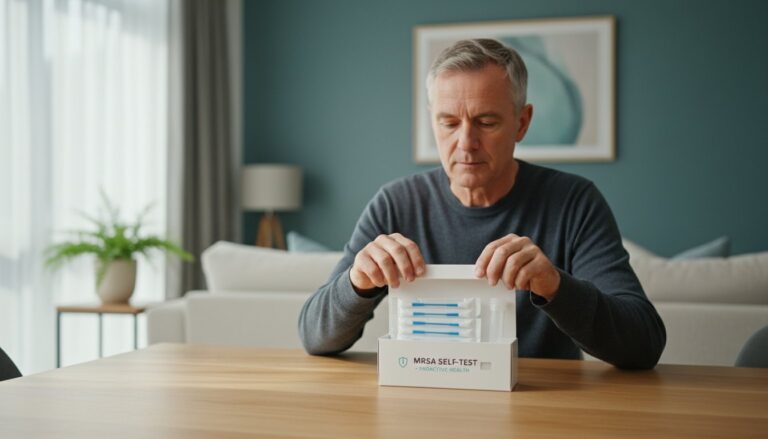

Private MRSA Test Before Surgery UK: Staph vs. MRSA Comparison Guide
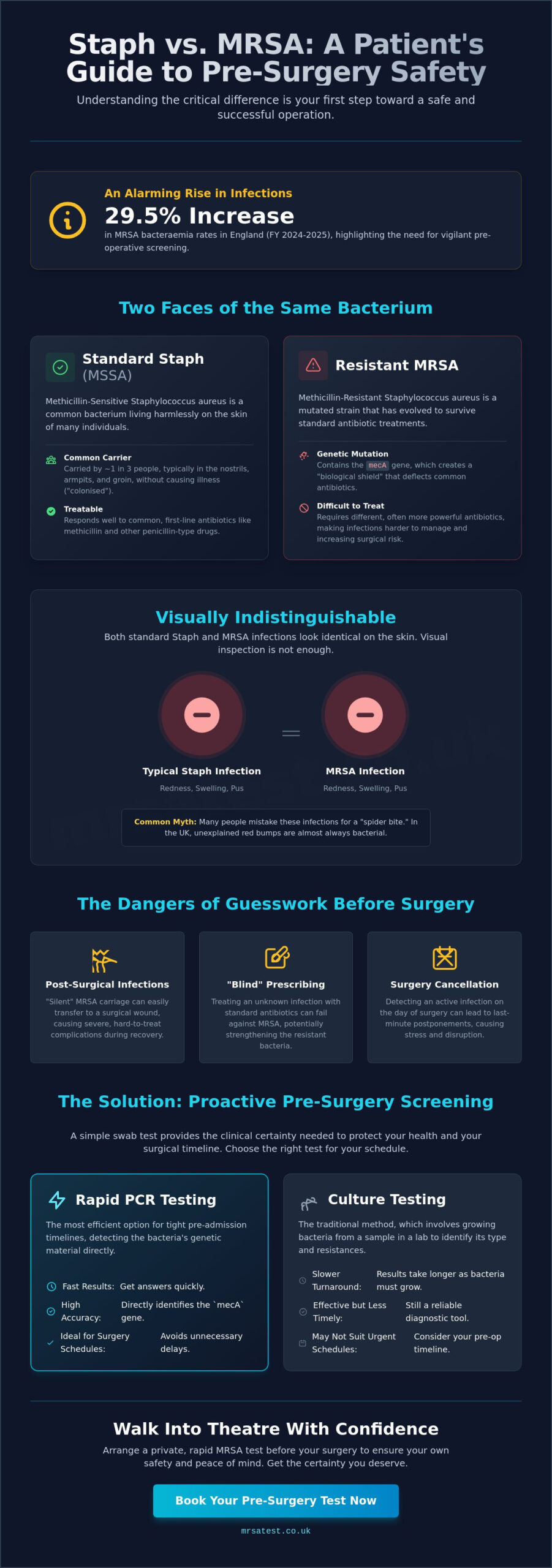
Did you know that MRSA bacteraemia rates in England rose by 29.5% in the 2024 to 2025 financial year? This sharp increase highlights why many patients now choose to arrange a private mrsa test before surgery uk to ensure their own safety. It’s natural to feel anxious about hospital-acquired infections or the possibility of your operation being postponed at the last minute. You deserve to walk into the theatre with absolute confidence in your health status.
We understand that medical jargon like “meticillin-resistant” can be confusing when you’re already managing surgical prep. This guide clarifies the vital differences between standard Staphylococcus aureus and the more resilient MRSA. You’ll discover how these bacteria behave and why proactive screening is essential for a smooth recovery. We also preview the benefits of rapid PCR testing, which offers the fast and discreet results required to confirm you’re safe for surgery without unnecessary delays. By the end of this article, you’ll have a clear plan to protect your health and your surgical schedule.
Key Takeaways
- Differentiate between common skin residents and resistant mutations to better understand your surgical risks.
- Discover why visual inspection is impossible and how a private mrsa test before surgery uk provides the clinical certainty needed to proceed with your operation.
- Understand the dangers of “blind prescribing” and how accurate lab results ensure you don’t inadvertently strengthen a resistant infection with standard antibiotics.
- Identify the differences between rapid PCR and culture testing methods to choose the most efficient screening option for your pre-admission timeline.
- Learn how identifying “silent” carriage protects your surgical wound and helps you avoid the anxiety of last-minute procedure cancellations.
Understanding the Basics: Staph vs. MRSA
When you prepare for a medical procedure, your surgical team will focus heavily on infection control. You’ll likely hear the terms “Staph” and “MRSA” mentioned frequently. While these names are often used interchangeably in casual conversation, they represent different clinical realities. Understanding the distinction is the first step toward a safe recovery. It’s also a primary reason why many patients choose to arrange a private mrsa test before surgery uk to gain clear, fast insights into their bacterial profile.
The relationship between these two is straightforward: every case of MRSA is a type of Staph, but not every Staph bacteria is MRSA. Most versions of this bacteria are known as Methicillin-Sensitive Staphylococcus aureus (MSSA). This is the “standard” version that typically responds well to common antibiotics. MRSA is simply a specific, mutated branch of that same family tree that has developed a way to survive treatments that would normally kill it.
What is Staphylococcus Aureus?
Staphylococcus aureus, often shortened to “Staph,” is a common bacterium that lives on human skin. It’s a frequent guest on our bodies. In fact, roughly 1 in 3 people carry regular Staph at any given time without ever feeling ill or showing symptoms. This state is known as being “colonised.”
The bacteria thrives in warm, moist areas of the body. Its natural habitats include:
- The inside of the nostrils
- The armpits (axilla)
- The groin area
For most people, Staph is harmless. It sits quietly on the surface of the skin, kept in check by our immune systems. However, it’s an opportunistic organism. If the skin is broken by a cut, a graze, or a surgical incision, the bacteria can move from the surface into the body. Once inside, it can cause infections ranging from minor boils to more serious internal complications.
The MRSA Mutation: What Makes it Different?
The defining characteristic of Methicillin-resistant Staphylococcus aureus (MRSA) is its ability to withstand specific antibiotics. While standard MSSA is easily neutralized by penicillin-type drugs, MRSA has evolved a biological workaround.
This resistance is driven by a specific genetic blueprint called the mecA gene. This gene allows the bacteria to create a modified protein that acts like a biological shield. You can think of this shield as a suit of armour that deflects common treatments. When a doctor prescribes standard antibiotics for a “spider bite” or skin redness that is actually MRSA, the drug cannot latch onto the bacteria to destroy it. This makes the infection much harder to treat and significantly increases the risk of complications during post-operative recovery. Identifying this “shielded” version through a private mrsa test before surgery uk ensures that your medical team isn’t guessing about your safety.
Symptoms and Appearance: Why You Cannot Tell by Looking
One of the most challenging aspects of bacterial management is that MRSA looks exactly like a standard Staph infection. Even for an experienced clinician, a visual inspection isn’t enough to determine which strain is present. Both types of bacteria typically present with redness, swelling, warmth, and the presence of pus. Because the physical signs are so similar, relying on a private mrsa test before surgery uk is the only way to ensure your surgical team has the correct diagnostic data before your procedure begins.
Many people mistakenly believe they’ve been bitten by a spider when they first notice a painful, red bump. This “spider bite” myth is quite common, but in the UK, these unexplained skin lesions are almost always bacterial infections rather than insect bites. If you notice a spot that looks like a pimple or an insect sting but begins to grow rapidly or becomes increasingly painful, it’s a sign that bacteria have entered the skin. Without a laboratory swab, there’s no way to know if that “bite” is a simple infection or a resistant strain.
Identifying a Standard Staph Infection
Standard Staphylococcus aureus infections often appear as minor skin issues. You might see impetigo, which causes crusty sores, or small boils and cellulitis where the skin feels tight and hot. These infections are generally manageable and often clear up quickly with first-line antibiotic creams or tablets. For a clearer understanding of these differences, you can refer to this visual guide to common skin infections to see how various conditions present.
Warning Signs of an Active MRSA Infection
While the initial appearance is the same, MRSA tends to be more aggressive. It often leads to deeper abscesses that require clinical drainage. You should also watch for systemic symptoms that suggest the infection is spreading. These include fever, chills, and a general feeling of being unwell. If you find that a skin infection keeps returning within your household or sports team, it could indicate that a resistant strain is being passed between carriers who don’t realise they’re colonised.
The most significant red flag for MRSA is a failure to respond to standard treatments. If a doctor prescribes a common antibiotic and the wound doesn’t show signs of healing within 48 hours, it’s a strong indicator that the bacteria might be resistant. This is why UK pre-surgery MRSA screening is so vital; it identifies the bacteria before the first incision is made. To avoid complications, many patients choose to order a rapid screening kit to confirm their status privately and efficiently.
Treatment Implications: Why Accuracy Saves Lives
Accuracy in diagnostics is a matter of patient safety. Without a laboratory result, clinicians may sometimes resort to “blind prescribing,” which is the practice of choosing an antibiotic based on a best guess. If a patient is carrying MRSA but is treated with standard penicillin-based drugs, the bacteria won’t just survive; it may become more aggressive. Choosing a private mrsa test before surgery uk eliminates this guesswork. It ensures that the treatment plan matches the specific strain present on your skin before you enter the operating theatre.
When a resistant strain is exposed to ineffective antibiotics, it can strengthen the bacteria’s biological defences. This makes future treatments even more difficult. By identifying the exact nature of the bacteria early, your medical team can avoid using drugs that won’t work. This proactive approach is a cornerstone of modern infection control in the UK, helping to prevent the transition from a harmless skin colonisation to a serious internal infection.
Treating Standard Staph (MSSA)
Non-resistant infections are usually straightforward to manage. For standard Staphylococcus aureus (MSSA), doctors typically use flucloxacillin or topical mupirocin. These first-line treatments are preferred because they’re highly effective and generally have fewer side effects than stronger alternatives. Most patients with a non-resistant infection see significant improvement within a few days. Because these preferred drugs work so well against MSSA, they remain the gold standard for routine care.
The Complexity of MRSA Management
When a test confirms MRSA, the approach shifts to a process called “decolonisation.” This aims to remove the bacteria from your body surface to prevent it from entering a surgical wound. According to NHS guidance on MRSA screening, this protocol usually involves a five-day course of antibacterial body washes and nasal ointments. It’s a simple but rigorous process that requires consistency to be effective.
Hygiene is paramount during this time. To prevent the bacteria from spreading to family members or lingering in your home, you’ll need to follow strict protocols:
- Change and wash bedding, towels, and clothing daily at high temperatures.
- Avoid sharing personal items like razors or towels.
- Maintain thorough hand hygiene, especially after applying nasal treatments.
In cases where the bacteria enters the bloodstream or causes a deep-seated infection, clinicians must use “heavy-duty” antibiotics such as Vancomycin. These medications are powerful but often require administration in a hospital setting. During these systemic infections, doctors frequently use blood tests to monitor the levels of the drug in your system and ensure the infection is clearing. Arranging a private mrsa test before surgery uk helps you identify the bacteria while it’s still on the surface, potentially avoiding the need for these more intensive medical interventions.
Pre-Surgery Screening in the UK: Protecting Your Procedure
UK health regulations mandate MRSA screening for almost all elective and emergency surgeries. This requirement isn’t just a formality; it’s a vital safety measure designed to protect both you and the wider hospital environment. If a positive result is discovered too close to your operation date, hospitals may be forced to cancel or postpone your procedure to prevent a potential outbreak. Utilizing a pre-op health checklist can help you stay on track with these essential requirements and ensure all your paperwork is in order well before you reach the hospital doors.
The timing of your screen is critical. Most private hospitals in the UK require screening to be completed at least one week before your admission. If you’re managing a busy schedule or dealing with the stress of an upcoming operation, the logistics of hospital-based testing can feel overwhelming. This is why many patients choose to take control of the process by arranging their own private mrsa test before surgery uk, ensuring they have the necessary clearance documents in hand without relying on overstretched public health timelines.
Colonisation vs. Infection: The Silent Carrier
It’s vital to distinguish between being “infected” and being “colonised.” Colonisation means the bacteria live on your skin or in your nose without making you feel ill or showing any symptoms. In the UK, it’s estimated that approximately 1 in 30 people carry MRSA unknowingly. You might feel perfectly healthy and have no visible skin issues, yet you could still be a “silent carrier” of the bacteria.
During a surgical procedure, your skin’s natural protective barrier is breached. This opening allows the bacteria you already carry on your surface to enter your body, which can lead to serious hospital-acquired infections (HAIs). By identifying carriers before they arrive at the hospital, medical staff can initiate decolonisation protocols. These simple treatments, such as antibacterial washes, reduce the bacterial load on your skin and significantly lower the risk of post-operative complications.
Why Go Private for Your Pre-Op Test?
While the NHS provides screening, the timing doesn’t always align with a patient’s personal schedule or their need for reassurance. Choosing a private mrsa test before surgery uk offers a level of convenience and speed that standard clinical pathways often lack. Private screening allows you to collect your samples in the comfort and privacy of your own home, avoiding the need for additional trips to a busy clinic or hospital waiting room.
Speed is perhaps the most significant advantage of the private route. Waiting for hospital-processed results can be a source of significant anxiety, especially as your surgery date approaches. A private test provides reliable, laboratory-verified results quickly, giving you the confirmation you need that you’re safe for admission. To ensure your surgical slot remains secure and to avoid the frustration of last-minute delays, you can order your private MRSA screening kit today for a streamlined, professional service.
Testing for MRSA: PCR vs. Culture Methods
As established in previous sections, you cannot distinguish MRSA from standard Staph through visual inspection alone. A laboratory analysis is the only definitive way to identify the specific genetic markers that signal antibiotic resistance. Choosing a private mrsa test before surgery uk provides you with clinical-grade accuracy without the need for a hospital visit. These private MRSA tests utilize the same rigorous standards as NHS laboratories, ensuring your results are reliable and ready for your surgical team.
The collection process is simple, painless, and non-invasive. You’ll use a soft swab to collect samples from the nostrils and the groin area. Depending on your specific surgical requirements, some kits also include a swab for the axilla, or armpit. Once the lab processes your sample, you’ll receive a clear report. You can easily share this document with your GP or pre-assessment nurse to confirm your status and keep your surgery on schedule.
Diagnostic Technology: Culture vs. PCR
There are two primary ways laboratories identify MRSA, and the right choice depends on your timeline. The traditional Culture Test involves placing your sample in a controlled environment to see if bacteria grow. This method is highly reliable but typically takes 48 to 72 hours to produce a final result. It’s often the preferred choice for routine screening where time is not a critical factor.
For patients with an upcoming operation date, the Rapid PCR Test is often more suitable. This method uses Polymerase Chain Reaction technology to detect bacterial DNA directly. Because the lab doesn’t need to wait for the bacteria to grow, results are often available within 24 hours of the sample reaching the laboratory. This speed is essential for urgent surgical pathways or for those who need last-minute clearance.
How to Complete Your Private MRSA Test at Home
Arranging your own screening is a straightforward process designed to reduce pre-operative stress. You can manage the entire procedure through these four steps:
- Step 1: Order your kit online. It will arrive via discreet delivery, usually the next working day.
- Step 2: Collect your samples. Use the provided sterile swabs to gently sweep the inside of your nose and the skin of your groin as directed in the instructions.
- Step 3: Return your sample. Place the swabs in the protective tube and post them to the accredited UK laboratory using the included prepaid envelope.
- Step 4: Receive your results. Your secure, confidential report will be sent directly to you via email or text, providing the peace of mind you need for a safe surgery.
By taking these proactive steps, you ensure that your health is protected and your surgical journey remains uninterrupted. Accurate testing is the most effective tool for managing bacterial risks and ensuring a smooth, successful recovery.
Take Control of Your Surgical Recovery
Securing your surgical path begins with a clear understanding of your bacterial health. We’ve explored how “silent” colonisation can lead to unexpected complications and why visual checks simply aren’t reliable for distinguishing standard Staph from resistant MRSA. Choosing a private mrsa test before surgery uk allows you to take a proactive step toward a safer recovery and helps you avoid the anxiety of last-minute procedure cancellations.
Our streamlined process is designed for your convenience and total peace of mind. Every sample undergoes rigorous, accredited UK laboratory analysis, with results delivered securely to you within 24 to 72 hours. These discreet and easy-to-use at-home kits provide the clinical accuracy your surgical team requires without the need for a hospital visit. You’ll have the verified evidence you need to move forward with confidence.
Order your private MRSA screening kit today for fast, laboratory-verified results.
You’re now equipped with the vital information needed to protect your health and your surgical schedule. We’re here to help ensure your procedure proceeds exactly as planned, supported by professional diagnostics and quiet competence.
Frequently Asked Questions
Can a standard staph infection turn into MRSA?
A standard staph infection doesn’t simply transform into MRSA while it’s in your system. MRSA is a specific strain of bacteria that has already acquired the genetic blueprint for antibiotic resistance. While bacteria can exchange genetic material in some environments, you typically acquire MRSA through direct contact with a person or surface already carrying the resistant strain. It’s a distinct branch of the staph family tree rather than a phase of a normal infection.
Is MRSA more painful than a regular staph infection?
MRSA isn’t inherently more painful than a standard staph infection. Both conditions can cause significant discomfort, swelling, and pressure if an abscess or boil develops. The primary difference isn’t the sensation itself, but how the infection behaves over time. Because MRSA resists common treatments, the symptoms may last longer and become more intense if not identified through a private mrsa test before surgery uk. The lack of effective treatment is what leads to increased pain.
How long is an MRSA screening result valid for before surgery?
According to NHS guidance updated in May 2025, a negative MRSA screen is generally considered valid for at least three months for major surgery. In many clinical pathways, this validity can extend to six months or longer. However, if you’re admitted to a hospital or develop a new skin infection during that time, your surgical team may request a fresh test. It’s always best to check the specific pre-admission policy of your hospital to ensure your results are current.
What happens if I test positive for MRSA before my operation?
If you test positive, your medical team will initiate a decolonisation protocol to clear the bacteria from your skin. This usually involves using a prescribed antibacterial body wash and a nasal ointment for five days. While a positive result might lead to a short delay in your procedure, it’s a vital safety step. Treating the colonisation before surgery significantly reduces the risk of the bacteria entering your surgical wound, ensuring a much safer recovery process.
Can I treat MRSA at home with over-the-counter creams?
You cannot treat MRSA with standard over-the-counter antiseptic or antibiotic creams found in high street pharmacies. These products are designed for minor, non-resistant bacteria and aren’t strong enough to neutralise MRSA. Ineffectively treating a resistant strain can actually strengthen the bacteria’s defences. Successful management requires specific, prescription-strength decolonisation products or targeted antibiotics that are only prescribed after a laboratory has confirmed the presence of the mecA gene through a clinical swab.
Is staph or MRSA contagious through laundry and bedding?
Both standard staph and MRSA are highly contagious and can easily spread through contaminated laundry, towels, and bedding. The bacteria can survive on fabrics for several days. If you or someone in your household is a carrier, it’s important to wash linens at high temperatures, ideally 60°C or above. You should also avoid sharing personal items like razors or towels to prevent the bacteria from moving between family members or lingering in the home environment.
Why do I need to swab my groin for an MRSA test?
The groin is a primary site for MRSA colonisation because the bacteria thrive in warm, moist areas of the body. Along with the nostrils and armpits, the groin provides the ideal environment for the bacteria to live without causing symptoms. Including this area in a private mrsa test before surgery uk is essential for accuracy. Swabbing only the nose might miss the bacteria elsewhere on your skin, which could then travel to the surgical site during or after your operation.
Does a positive MRSA swab mean I am currently sick?
A positive swab doesn’t mean you’re currently ill or have an active infection. Most people who test positive are simply “colonised,” meaning the bacteria are living harmlessly on their skin surface as part of their natural flora. You won’t feel unwell and you won’t have symptoms. However, being a “silent carrier” is still a clinical risk for surgery. The purpose of screening is to identify these bacteria while they’re on the surface so they can be removed before they enter your body.