
MRSA Decolonisation and Screening in the UK: A Patient Guide for 2026
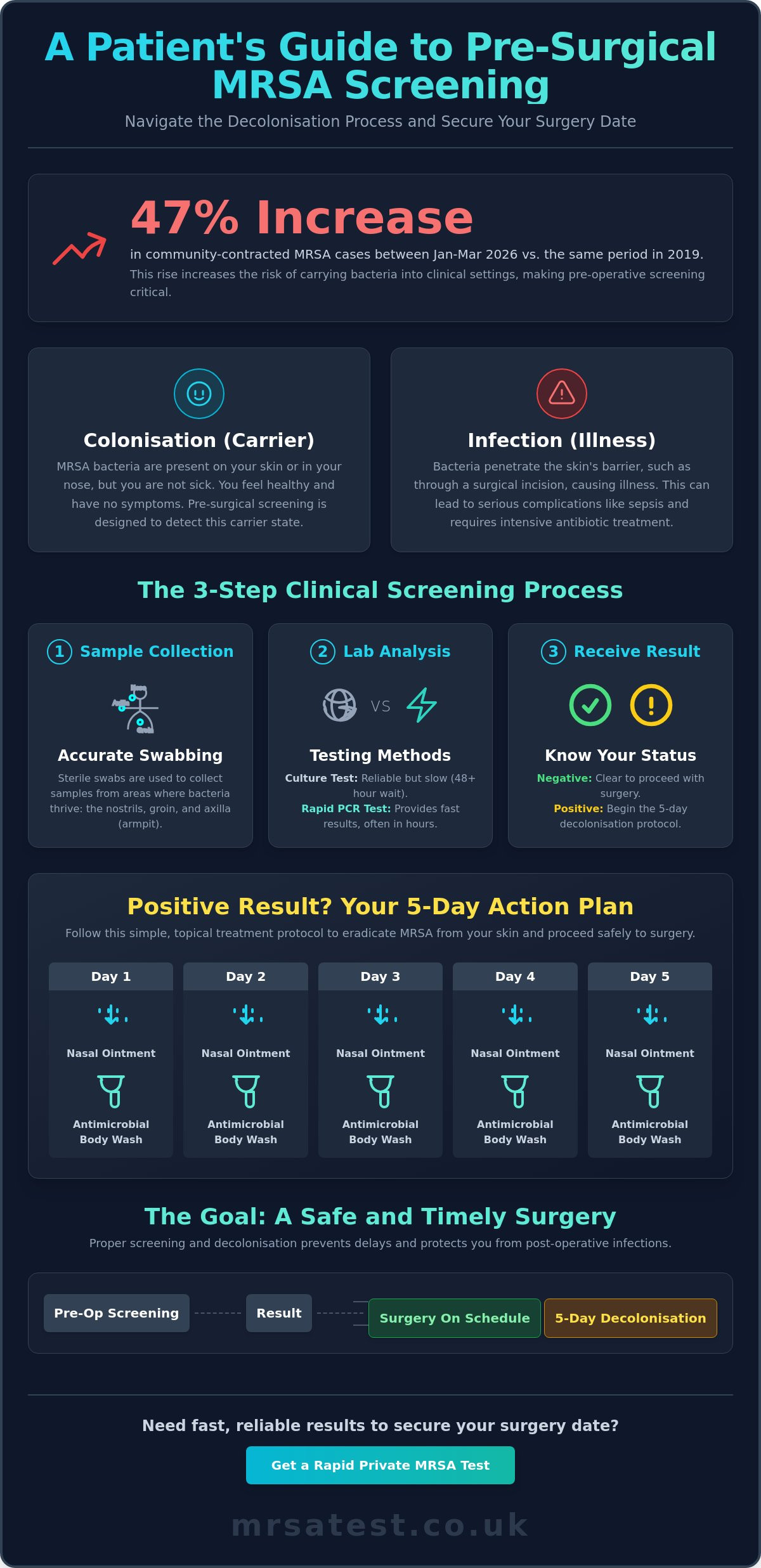
Did you know that community-contracted MRSA cases rose by 47% between January and March 2026 compared to the same period in 2019? This sharp increase means that more people are carrying the bacteria into clinical settings than in previous years. For patients preparing for an upcoming procedure, understanding the current landscape of mrsa decolonisation screening uk is the most effective way to prevent unexpected surgical delays or post-operative infections.
It’s natural to feel anxious when your long-awaited operation depends on a clear test result. You’ve likely spent months waiting for your date, and the thought of a positive screen causing a cancellation is incredibly frustrating. We’re here to help you navigate this process with quiet competence, ensuring you have the factual information needed to manage your health and stay on track for a safe outcome.
This guide provides a clear roadmap for your preparation. We’ll explain the 2026 shift toward targeted NHS screening, the specific steps of the five-day decolonisation wash and ointment protocol, and how rapid private testing can provide the speed and clarity you need to proceed with confidence.
Key Takeaways
- Understand the critical difference between MRSA colonisation and active infection to better prepare for your surgical journey.
- Learn the specific clinical swabbing process for the nose, groin, and axilla to ensure your samples are collected accurately.
- Discover how to manage the mrsa decolonisation screening uk timeline to prevent hospital delays and secure your scheduled operation date.
- Master the standard five-day decolonisation protocol, including the correct application of nasal ointments and antimicrobial body washes.
- Find out how to present verified screening results to your surgical team to confirm you’re ready for a safe procedure.
What is MRSA Screening and Decolonisation?
MRSA stands for Methicillin-resistant Staphylococcus aureus. It’s a specific strain of bacteria that has developed a high level of resistance to several common antibiotics, earning it the label of a “superbug.” While the name sounds intimidating, MRSA is often manageable when identified early. For most healthy individuals, the bacteria reside on the skin or inside the nostrils without causing any harm. However, the situation changes significantly when you prepare for surgery. Understanding What is MRSA? helps you appreciate why clinical teams are so diligent about pre-operative checks.
Screening is the diagnostic phase where clinicians use swabs to check for the presence of the bacteria. If the test returns a positive result, the next step is decolonisation. This is a targeted, topical treatment process designed to eradicate the bacteria from your skin and nasal passages. By following the mrsa decolonisation screening uk protocol, you effectively “cleanse” your body’s surface before your operation. This proactive step is essential for reducing the risk of hospital-acquired infections, protecting both your health and the safety of the clinical environment.
The Difference Between Being Colonised and Infected
It’s vital to distinguish between carrying the bacteria and being sick from them. Being “colonised” means you’re a carrier; the bacteria are simply “hitching a ride” on your body. You won’t feel ill, and you won’t have a fever or any visible rashes. An “infection” only happens if those bacteria penetrate the skin’s protective barrier. During invasive surgery, an incision provides the perfect entry point for MRSA to move from your skin into your tissues or bloodstream. Decolonisation is intended for healthy carriers to ensure they don’t accidentally infect themselves during their recovery. It isn’t a treatment for an active, symptomatic infection, which would require systemic antibiotics.
Why UK Hospitals Require Pre-Op Screening
UK hospitals prioritise screening because preventing an infection is far safer and more cost-effective than treating one. If MRSA enters the bloodstream during a procedure, it can lead to serious conditions like sepsis or endocarditis. These complications often require long hospital stays and intensive antibiotic therapy. Historically, many NHS trusts followed a “Universal Screening” policy, testing every patient admitted for surgery. As of early 2026, many providers have transitioned to a targeted, risk-based approach. This means screening is especially focused on high-risk procedures, such as heart surgery or bone implants, where the impact of an infection would be most severe. Knowing your status through mrsa decolonisation screening uk provides peace of mind that your surgery can proceed as planned without unnecessary risks.
The Clinical Process: How MRSA Screening Works
The actual process of mrsa decolonisation screening uk is straightforward and non-invasive. It involves using sterile swabs to collect samples from specific areas of your body where the bacteria are most likely to reside. Typically, a clinician or the patient will swab the inside of the nostrils, the groin, and occasionally the axilla, also known as the armpit. These locations aren’t chosen at random. They provide the warm, moist, and dark environment where Staphylococcus aureus thrives. By targeting these specific biological reservoirs, the screening process can accurately identify if you’re a carrier before you enter the operating theatre.
Accuracy depends heavily on following the correct swabbing technique. It’s essential that your mrsa test is site-specific to be clinically valid. For example, if your surgical pre-assessment requires a screen of the nose, groin, and axilla, a test that only samples the nostrils won’t be accepted by your consultant. Following the steps outlined in The MRSA Screening Process ensures your samples are viable and your results are useful for your medical team. If you’re managing this process yourself, using a kit with clear, illustrated instructions can help you collect a high-quality sample with ease.
Culture Testing vs. Rapid PCR
There are two primary ways laboratories identify MRSA. Traditional culture testing involves placing your sample in a nutrient-rich environment and waiting for any bacteria to grow. This method is highly reliable but slow, typically requiring a wait of 48 to 72 hours for a final result. If your surgery is only a few days away, this delay can cause significant stress. Rapid PCR (Polymerase Chain Reaction) technology offers a modern alternative. Instead of waiting for bacteria to grow, PCR identifies the specific DNA markers of MRSA. This allows laboratories to deliver accurate results in under 24 hours. For patients on a tight timeline, the speed of PCR technology is often the preferred choice to ensure their surgical date remains secure.
Understanding Your Screening Results
Receiving your results is the final step in the screening phase. A “Negative” result means the lab found no MRSA at the sites sampled, which usually gives you the green light for your procedure. A “Positive” result simply means you’re colonised with the bacteria. While this triggers the need for the five-day decolonisation protocol, it doesn’t necessarily mean your surgery will be cancelled if you have enough time to complete the treatment. To ensure your results are accepted by both NHS and private hospitals, your samples must be processed by a UKAS-accredited laboratory. This accreditation serves as a hallmark of quality and reliability, providing your surgical team with the confidence they need to proceed safely.
If you need to confirm your status quickly, choosing a Rapid PCR kit can help you manage your timeline without the anxiety of long lab waits.
NHS vs. Private MRSA Screening in the UK
In the standard NHS pathway, screening typically occurs during your pre-operative assessment. This appointment usually takes place between two and four weeks before your scheduled surgery date. While this system is designed to be thorough, it leaves a narrow window for action if your results return positive. If you discover you’re colonised with MRSA only fourteen days before your operation, the pressure to complete the decolonisation protocol and achieve a clear re-test can be immense. This tight timeline often leads to avoidable anxiety for patients who are already managing the stress of an upcoming medical procedure.
Relying solely on hospital-based screening also presents logistical hurdles. Patients often have to travel significant distances to a specific pre-assessment clinic, which may have limited appointment slots that conflict with work or family commitments. Choosing a private route for mrsa decolonisation screening uk allows you to take control of this timeline. By testing proactively at home, you gain the advantage of time. If you identify a colonisation early, you can complete your treatment and enter your NHS pre-assessment with the confidence that you’re already clear, effectively removing the risk of a last-minute surgical cancellation.
The Advantages of At-Home Screening Kits
At-home kits offer a level of convenience that hospital appointments simply can’t match. There’s no need to arrange transport, pay for hospital parking, or sit in a waiting room. You can collect your samples at a time that suits you, ensuring the process fits seamlessly into your daily routine. Speed is another critical factor. While hospital labs handle massive volumes of samples, private screening focuses on rapid turnaround times. This efficiency means you receive your results quickly, allowing you to share them with your surgical team without delay. Finally, the privacy of testing in your own home provides a discreet environment, which many patients find more comfortable for sensitive swabbing procedures.
When to Choose a Private Screen
There are several scenarios where a private screen is the most logical choice. If you’re undergoing private surgery, you might find that the initial quote doesn’t include the cost of MRSA screening, or the clinic may require you to provide your own results before admission. Investing in your own mrsa decolonisation screening uk ensures you aren’t left waiting for a hospital slot that might not come in time. It’s also a wise precaution if you’re returning to a care home or a high-risk environment where protecting vulnerable residents is a priority. For those who’ve tested positive for MRSA in the past, a private screen offers personal reassurance. It confirms that previous decolonisation efforts were successful, giving you peace of mind before you even step foot in the hospital for your official check.
A Step-by-Step Guide to MRSA Decolonisation
If your screening returns a positive result, your clinical team will prescribe a decolonisation kit. This treatment is a vital part of your pre-op checklist. The standard mrsa decolonisation screening uk protocol lasts for five consecutive days. It utilizes a dual approach to eliminate bacteria from both your skin and your nasal passages. During this time, you must maintain high levels of environmental hygiene. This includes using fresh towels for every wash and changing your bed linen daily. These steps prevent you from re-contaminating your skin with bacteria shed onto fabrics the previous night.
Consistency is the foundation of successful decolonisation. You’re effectively creating a sterile “window” for your surgery to take place. While the process requires discipline, it’s a manageable routine that significantly lowers your risk of post-operative complications. By following the 2026 guidelines for clinical hygiene, you ensure that your body is in the best possible condition for a safe surgical outcome.
The 5-Day Protocol Breakdown
The nasal ointment, usually Mupirocin, must be applied to the inner lining of both nostrils three times a day. Use a cotton bud or your little finger to apply a small amount, then press your nostrils together to spread the ointment evenly. The antimicrobial body wash, such as Octenisan or Chlorhexidine, replaces your usual soap. You should apply it to a clean washcloth and use it on your entire body from the neck down, focusing on the groin and armpits. Leave the wash on your skin for one minute before rinsing. You must also wash your hair and scalp with the solution twice during the five-day period to ensure no bacteria remain in the hair follicles.
Common Mistakes to Avoid During Decolonisation
One of the most frequent errors is using regular soap, shampoo, or moisturiser alongside the treatment. These products can chemically deactivate the antiseptic properties of the clinical wash, making the whole process ineffective. It’s also essential to complete the full five-day course. Some patients stop early if they feel “clean,” but this allows resilient bacteria to survive and multiply. Finally, ensure that close contacts or family members follow strict hand hygiene. While they don’t usually need to undergo decolonisation themselves, their cooperation helps maintain the cleanliness of your shared living environment.
Re-Testing: The 48-Hour Rule
You cannot take a clearance swab immediately after your final wash. Clinical protocols require a waiting period of 48 to 72 hours before re-screening. Testing too soon can lead to a false negative result because the antiseptic residue on your skin may temporarily mask the presence of bacteria. If your second screen is still positive, your consultant may request a second round of treatment. Most UK hospitals require at least one, and sometimes three, negative results to grant surgical approval. Managing your mrsa decolonisation screening uk timeline with this 48-hour buffer in mind is the best way to avoid last-minute stress.
Ensure your treatment was successful and protect your surgery date by ordering a Rapid MRSA PCR clearance test today.
Securing Your Surgery Date with Reliable Screening
The final weeks leading up to a surgical procedure are often filled with logistical arrangements and emotional preparation. A last-minute cancellation due to a positive MRSA result isn’t just a medical setback; it’s a significant disruption to your life and recovery timeline. By taking a proactive approach to mrsa decolonisation screening uk, you effectively remove this uncertainty. Identifying your status early allows you to complete any necessary treatment well before your hospital admission, ensuring that when your surgery date arrives, your clinical team can proceed with total confidence in your safety.
Successful decolonisation is more than just a box to tick on a form. It’s a fundamental step in ensuring long-term surgical success. Eliminating these resilient bacteria from your skin significantly reduces the risk of post-operative wound infections, which can lead to extended hospital stays or even secondary procedures. Taking control of this process empowers you to enter the hospital not as a passive participant, but as a well-prepared patient who has prioritised their own infection-free outcome.
Integrating Home Results with Hospital Records
When you receive your private laboratory report, it’s important to share it correctly with your Pre-Operative Assessment Clinic (POAC). Most NHS and private consultants will accept external results provided they come from a UKAS-accredited laboratory. This accreditation confirms that the facility meets rigorous national standards for accuracy and reliability. When presenting your report, ensure it clearly lists the sites swabbed, such as the nose and groin, to match the hospital’s specific requirements. It’s helpful to email a digital copy to your surgical coordinator in advance and bring a printed version to your final pre-op appointment. This transparency helps your clinical team update your records seamlessly and confirms that you’ve followed the necessary safety protocols.
Final Checklist for an MRSA-Free Surgery
To ensure a smooth transition into the operating theatre, keep these final logistical points in mind:
- Check the Window: Confirm your screen was taken within the timeframe required by your hospital, which is typically between four and six weeks before your surgery date.
- Verify the Sites: Double-check that your test covered all the areas requested by your consultant, usually the nostrils and groin, and sometimes the axilla.
- Prepare Supplies: If your result is positive, ensure you have your decolonisation washes and ointments ready to begin the five-day protocol immediately.
- Confirm Clearance: If you’ve completed treatment, ensure your “clearance swabs” were taken at least 48 hours after your final wash to provide an accurate reading.
Don’t leave your recovery to chance. Order your clinical-grade MRSA home test kit today to ensure a smooth, uninterrupted path to your surgery.
Prepare for a Safe and Successful Recovery
Securing a positive surgical outcome starts with accurate information and timely preparation. The 2026 approach to mrsa decolonisation screening uk prioritises targeted safety, placing more emphasis on your own proactivity. Identifying your colonisation status early provides the time needed to complete a treatment protocol without the stress of last-minute hospital deadlines. It’s a simple step. It ensures your surgery goes ahead exactly as planned.
Choosing a private screening route offers the quiet competence of a professional service delivered with speed and discretion. We provide UKAS Accredited Laboratory Results processed by verified partners, ensuring your consultant receives data they can trust. With next-day shipping available, you can begin your preparation immediately and maintain total privacy in your own home. It’s an efficient way to manage your health.
Order Your Confidential MRSA Test Kit Online today to remove the uncertainty from your surgical timeline. You’ve waited long enough for your procedure. Don’t let a preventable infection stand in the way of your recovery. We’re here to support you through a simple, well-managed process.
Frequently Asked Questions
How long does MRSA screening take in the UK?
MRSA screening times vary significantly based on the laboratory method used. A traditional culture test requires 48 to 72 hours for the bacteria to grow. Modern Rapid PCR technology identifies bacterial DNA much faster, providing results in under 24 hours. Choosing the right method for your mrsa decolonisation screening uk timeline is essential to ensure your results are ready before your pre-operative assessment.
Can I carry out MRSA decolonisation at home?
Yes, the decolonisation process is specifically designed to be carried out in the comfort of your own home. It involves a five-day routine of applying nasal ointment three times daily and washing your body with a clinical antimicrobial solution. You’ll also need to maintain high environmental hygiene, such as changing your bedsheets and towels every day during the treatment period to prevent re-contamination.
What happens if I test positive for MRSA before my surgery?
A positive result triggers a mandatory five-day treatment protocol to remove the bacteria from your skin surface. After finishing the treatment, you must wait 48 to 72 hours before taking a clearance swab. This second test confirms the bacteria are gone. This allows your surgical team to proceed with your operation as originally scheduled without the risk of an avoidable infection.
Is MRSA decolonisation permanent?
Decolonisation is not a permanent solution and doesn’t provide long-term immunity. It’s a targeted process meant to create a safe, sterile window for your surgery. Because MRSA is common in the community, it’s possible to become re-colonised later through contact with other people or contaminated surfaces in your daily environment after your recovery is complete.
Do I need to wash my hair with special shampoo for MRSA?
You don’t typically need a separate shampoo, but you must use the prescribed antimicrobial body wash on your hair. Clinical guidelines usually require you to wash your hair and scalp with the treatment solution twice during the five-day protocol. This ensures that any bacteria residing in the hair follicles are effectively eliminated before you enter the operating theatre.
How much does a private MRSA screen cost in the UK?
The cost of a private screen depends on whether you choose a traditional culture or a rapid PCR test. Prices across the UK vary by provider and laboratory speed. Investing in a private test allows you to manage your own timeline without waiting for a hospital appointment. This proactive approach helps you avoid the stress of surgical delays or last-minute cancellations.
Can I still have surgery if I have MRSA?
Elective surgery is typically postponed until you’ve successfully completed decolonisation and received a negative screening result. This precaution is vital to prevent the bacteria from entering your bloodstream during the procedure. In urgent or emergency situations, surgeons may proceed using specific antibiotic cover and enhanced infection control measures to mitigate the risks to your health.
What are the side effects of MRSA decolonisation washes?
Most patients experience very few side effects from the decolonisation washes and ointments. The most common issues are mild skin dryness or slight irritation, particularly if you have naturally sensitive skin. If you notice a significant rash or persistent itching, you should contact your healthcare provider for advice on alternative products that may be more suitable for your skin type.