

How Common Is MRSA in the UK? Latest Statistics and Risk Factors for 2026
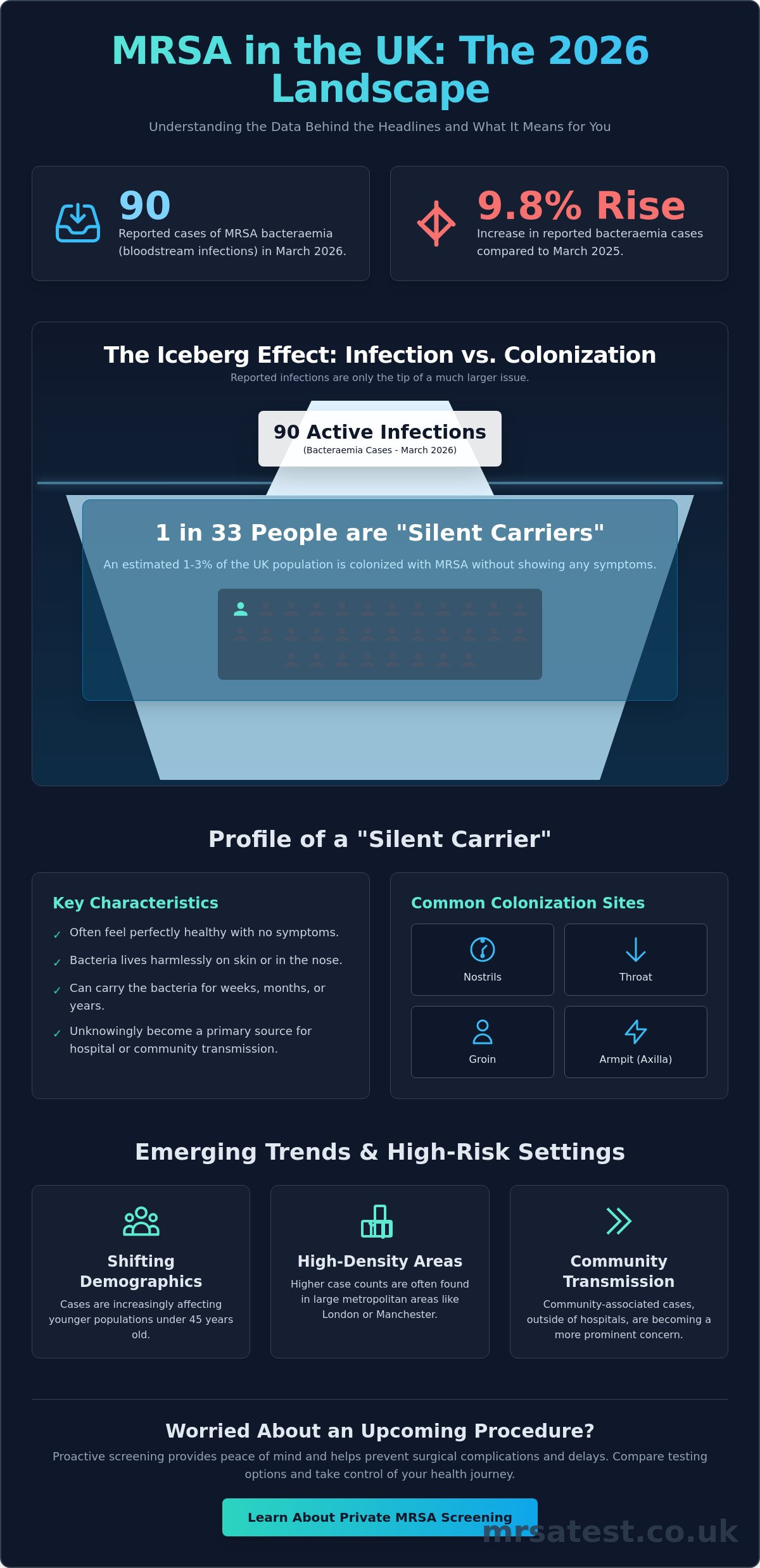
Did you know that while only 90 cases of MRSA bloodstream infections were reported in March 2026, as many as 1 in 33 people in the UK may be “silent carriers” of the bacteria? This means they are colonized without showing any symptoms or feeling unwell. It’s understandable to feel a sense of uncertainty when preparing for a hospital visit or surgery. You want to ensure your environment is safe and your recovery is as smooth as possible. Understanding how common is mrsa in the uk is the first step toward taking control of your surgical preparation and general health.
In this guide, you’ll learn the latest 2026 statistics from the UK Health Security Agency, including the recent 9.8% rise in reported bacteraemia cases. We’ll explain the crucial clinical difference between colonization and active infection, and why these numbers are increasingly affecting younger demographics under 45. We’ll also provide the clarity you need to decide if private, rapid screening is the right choice for your peace of mind before a medical procedure. Our goal is to replace anxiety with facts, ensuring you feel supported by expert information at every stage of your health journey.
Key Takeaways
- Review the latest 2026 UKHSA data to understand exactly how common is mrsa in the uk and why reported cases have increased by nearly 10% recently.
- Distinguish between MRSA colonization and active infection to better understand your personal risk as a potential “silent carrier” within the community.
- Identify high-risk environments and demographics, including the notable shift toward younger populations and community-associated transmission.
- Learn how proactive screening before surgery can prevent serious complications and ensure your procedure proceeds without unexpected logistical delays.
- Compare the benefits of traditional culture swabs with modern Rapid PCR testing to determine which diagnostic method best supports your peace of mind.
Current MRSA Statistics in the UK: The 2026 Landscape
To understand how common is mrsa in the uk, we must look at the latest clinical data released by the UK Health Security Agency (UKHSA). In May 2026, official reports revealed that there were 90 cases of MRSA bacteraemia in March 2026 alone. This represents a 9.8% increase compared to March 2025. While these figures are much lower than they were twenty years ago, the steady decline seen in the early 2000s has largely plateaued. Recent trends suggest that while hospital-acquired cases are strictly managed, community-associated cases are becoming a more prominent part of the national health picture.
National reporting typically focuses on Methicillin-resistant Staphylococcus aureus (MRSA) bacteraemia. This is quite different from localized skin infections, such as a small infected wound or abscess. While skin infections are more frequent, they are often treated in primary care and may not be included in the major UKHSA datasets. When comparing these numbers to other pathogens, MRSA remains relatively rare. For instance, infections like E. coli and MSSA (the non-resistant form of Staph) occur at significantly higher rates across the UK population.
Understanding National Bacteraemia Trends
Bloodstream infections are the primary metric for government statistics because they represent the most severe form of the condition. The NHS has operated under a “zero tolerance” policy for MRSA bacteraemia for over a decade, which has successfully kept the numbers within a manageable range. MRSA bacteraemia is a serious infection where the bacteria enters the bloodstream. Because these cases are so closely monitored, the data is highly accurate, but it doesn’t always show the full extent of people who are simply “carrying” the bacteria on their skin without being ill.
Regional Variations Across the UK
The prevalence of MRSA isn’t the same in every part of the country. Data often shows higher case counts in large metropolitan areas like London or Manchester, where population density is higher. Regional variations also depend on the types of medical facilities available; for example, a region with many specialist surgical centers or intensive care units might report more cases because they treat more vulnerable patients. You shouldn’t assume a hospital’s specific “MRSA rate” directly dictates your personal risk. Factors like your own immune health and pre-operative preparation are often more influential than regional statistics. Understanding how common is mrsa in the uk helps you maintain a factual perspective on your health rather than relying on generalized regional fears.
Colonization vs. Infection: The Silent Carrier Statistics
While the latest MRSA statistics focus on bloodstream infections, they only tell half the story. This is often described as the “Iceberg Effect.” The 90 cases of bacteraemia reported in March 2026 represent the visible tip of a much larger issue. Beneath the surface, a significant number of people carry the bacteria on their skin or in their nose without showing any symptoms. This state is known as colonization. It’s fundamentally different from an active infection, where the bacteria multiply and cause physical illness like abscesses or fever.
Estimates suggest that between 1% and 3% of the UK population are currently colonized with MRSA. To put that in perspective, while the number of people getting sick is relatively low, hundreds of thousands of people across the country are silent carriers. Understanding how common is mrsa in the uk involves recognizing that most carriers are completely healthy. However, because they don’t know they have it, they can unintentionally introduce the bacteria into clinical environments, making them the primary source of hospital outbreaks.
Who Are the Silent Carriers?
Silent carriers are often individuals with no recent hospital contact. The bacteria typically reside in warm, moist areas of the body. Common colonization sites include the nostrils, throat, groin, and the axilla, or armpit. A person can remain a carrier for weeks, months, or even years without ever becoming ill. Because there are no “warning signs” for colonization, many people only discover they are carriers during routine pre-operative screening. If you’re concerned about your carrier status, a simple private MRSA screening can provide clarity before you enter a healthcare setting.
The Risk of “Self-Infection” During Surgery
The transition from “carrying” to “infected” often happens during medical procedures. When a surgeon makes an incision, bacteria on the skin’s surface can enter the body. This process is known as self-infection. It’s a major reason why hospitals prioritize screening for high-risk procedures like orthopaedic joint replacements or cardiothoracic surgery. Research indicates that 80% of surgical site infections are caused by the patient’s own skin flora. By identifying colonization early, medical teams can use specialized antibacterial washes to “decolonize” the skin, significantly reducing the risk of a post-operative complication. This proactive approach turns a hidden risk into a manageable part of your surgical preparation.
Where is MRSA Most Common? High-Risk Settings in 2026
Understanding the spread of MRSA requires looking beyond hospital walls. In 2026, the clinical focus has shifted from “Hospital-Acquired” to “Healthcare-Associated” definitions. This change reflects the reality that many patients carry the bacteria between different healthcare settings, such as primary care clinics and specialist centers. While we often ask how common is mrsa in the uk within hospital wards, the data shows a significant and growing presence in community settings. High-density environments like care homes are particularly susceptible; a Leeds study previously identified a 22% colonization rate among residents. Other settings such as gyms, prisons, and even international travel hubs facilitate transmission. Medical tourism, where patients travel abroad for elective procedures, has also contributed to the introduction of resistant strains into domestic populations.
The UK Health Security Agency (UKHSA) reports that community-onset cases are now a major component of national statistics. In March 2026, 46 cases of MRSA bacteraemia were classified as community-onset community-associated, which is slightly higher than the 31 cases originating in hospitals. This suggests that the bacteria are circulating more freely in public spaces than in previous decades. Shared equipment in fitness centers and close-contact environments provide ideal conditions for the bacteria to move between individuals who may not even realize they are carriers.
MRSA in the Hospital Environment
Intensive Care Units (ICUs) and surgical wards remain the most sensitive areas for transmission. These environments house patients with weakened immune systems or open surgical wounds, providing a path for bacteria to enter the body. Modern hospitals manage hospital acquired infections through rigorous reporting and “Search and Destroy” screening protocols. These protocols involve testing high-risk patients on admission to isolate carriers immediately. The NHS information on MRSA highlights that these measures are vital for protecting vulnerable individuals during their stay. By identifying carriers early, clinical teams can implement barrier nursing and decolonization treatments to prevent an outbreak.
The Rise of Community-Acquired Strains
There’s a clear distinction between Hospital-Acquired (HA-MRSA) and Community-Acquired (CA-MRSA) strains. While HA-MRSA is often linked to clinical procedures, CA-MRSA spreads through skin-to-skin contact or shared items in public spaces. Between January and March 2026, 175 people contracted MRSA in the community, marking a 47% increase compared to 2019 levels. This trend is especially noticeable in younger populations. In the 2023-2024 period, nearly a quarter of community-onset cases occurred in people under 45. Proactive health management, such as identifying common skin infections early, is essential to stop these strains from circulating. Knowing how common is mrsa in the uk outside of clinical settings helps you stay vigilant in your daily routine.
Why UK Statistics Matter for Your Upcoming Surgery
While the overall prevalence of active infections is low, the data on colonization is why hospitals take pre-operative screening so seriously. Since 2003, the implementation of mandatory MRSA screening for elective admissions has helped reduce MRSA bacteraemia cases by over 80%. This success story proves that managing the “silent carrier” state is the most effective way to prevent life-threatening bloodstream infections. When you ask how common is mrsa in the uk in a surgical context, the answer isn’t just a number; it’s a protocol designed to protect you. Hospitals might “decolonize” a patient even if they aren’t “ill” because the goal is to eliminate any bacteria that could enter a surgical site during the procedure.
A positive result during a hospital screening can have a significant logistical impact. If MRSA is detected just days before your procedure, it may lead to a stressful last-minute delay or even a cancellation. Knowing your status before you arrive at the hospital gate allows you to manage the situation on your own terms. Proactive awareness is a cost-effective way to ensure your recovery stays on track and your surgical team can work in the safest possible environment.
The Pre-Op Screening Process
The standard NHS protocol involves taking swabs from the nose, groin, and sometimes the armpits. If these swabs show colonization, you’ll likely be prescribed a five-day course of specialized antiseptic body washes and nasal creams. This process is designed to reduce the bacterial load on your skin to a safe level. To ensure you’re fully prepared for every aspect of your procedure, you should consult a pre-surgery checklist. This helps you coordinate your clinical requirements with your personal logistics, making the entire experience more manageable.
Reducing Your Personal Risk Profile
Certain individuals fall into “high-risk” groups for colonization, such as those who have had frequent hospital stays or live in care environments. If you’re in this category, proactive testing is a vital tool. It prevents the shock of an unexpected positive result and the subsequent disruption to your life. For many anxious patients, receiving a “negative” result provides a significant psychological benefit, allowing them to approach their surgery with confidence. If you’d like to confirm your status discreetly and quickly, you can order a private MRSA screening kit to get results before your official hospital assessment.
Taking Control: Private MRSA Testing in the UK
While understanding how common is mrsa in the uk provides a vital statistical backdrop, national data cannot tell you your individual carrier status. Many patients find that the standard clinical pathway doesn’t always align with their personal timelines, especially when a surgical date is approaching quickly. Using a private MRSA test offers a discreet, professional way to gain this information without the need for an in-person appointment. This service effectively supplements your existing NHS care, giving you the clarity needed to manage your health logistics from the comfort of your home. All samples are processed in verified, accredited UK laboratories, ensuring your results are both accurate and reliable.
The primary advantages of at-home testing are privacy, speed, and convenience. You don’t have to wait for a pre-operative clinic slot to find out if you’re a carrier. By taking a proactive approach, you can identify colonization early and, if necessary, begin decolonization protocols well before your hospital admission. This eliminates the risk of last-minute cancellations and provides a sense of security during what can be a stressful time.
PCR vs. Culture: Which is Right for You?
Choosing the correct diagnostic method depends on your schedule and requirements. A standard culture test is the traditional route, but it typically requires a 72-hour laboratory window to allow any bacteria present to grow. If your surgery is less than a week away, this timeframe might be too tight. In contrast, Rapid PCR technology offers a significantly faster 24-hour turnaround. PCR works by detecting the specific DNA of the bacteria, making it highly sensitive. It can identify MRSA even if the bacterial levels on your skin are very low, providing a definitive answer when speed is essential.
How Our At-Home Service Works
The “swab and send” process is designed to be simple and stress-free. Your kit will include sterile swabs for the nose, groin, and axilla (armpit) to ensure a comprehensive screening. Once you’ve collected the samples, you return them to our laboratory using the provided secure packaging. Confidentiality is maintained at every stage. You’ll receive a professional lab report through a secure digital platform, allowing you to review your status privately. Knowing how common is mrsa in the uk highlights why this step is so valuable for modern patients. Order your rapid MRSA PCR test kit today for total peace of mind before your hospital admission.
Securing Your Health with Proactive Screening
Understanding how common is mrsa in the uk allows you to move beyond generalized anxiety and focus on practical preparation. You’ve learned that while active infections are strictly managed, the silent carrier rate of 1-3% makes personal awareness essential for anyone entering a healthcare setting. By distinguishing between colonization and infection, you can take the necessary steps to ensure a smooth, uninterrupted surgical experience. It’s about feeling supported and in control of your own health journey.
Our service provides clinical accuracy through UK Accredited Laboratories, offering the convenience of a non-clinical environment. With 24-Hour Rapid PCR Results Available and a discreet & confidential home collection process, you’ll have the answers you need without the wait. This proactive step ensures your recovery remains the priority and your surgical team can work in the safest possible conditions.
Order Your Private MRSA Test Kit Now and complete your pre-surgery checklist with total confidence. We’re here to help you navigate your health screening with ease, ensuring you feel prepared for a successful recovery.
Frequently Asked Questions
Is MRSA still a problem in UK hospitals in 2026?
Yes, MRSA is still a managed concern in 2026. While “zero tolerance” policies have reduced rates significantly since the early 2000s, the UK Health Security Agency still monitors cases closely. The 9.8% increase in bacteraemia cases reported in early 2026 highlights why vigilance remains necessary for patient safety and hospital hygiene.
What is the difference between being colonized and having an MRSA infection?
Colonization refers to carrying the bacteria on your body without any ill effects. An infection occurs when the bacteria multiply and cause physical symptoms like redness, swelling, or fever. Most people carry the bacteria harmlessly until a surgical incision or a wound provides a path for the bacteria to enter the body.
How common is MRSA in the general UK population?
About 1% to 3% of the UK population are estimated to be colonized with MRSA at any given time. This data helps clarify how common is mrsa in the uk beyond just those who are currently hospitalized. While 30% of people carry the non-resistant form of Staph, the resistant MRSA strain is less frequent but requires more careful management.
Can I have MRSA without any symptoms?
You can absolutely carry MRSA without having any symptoms. These “silent carriers” often have the bacteria in their nostrils or on their skin for long periods without knowing it. Because you won’t feel unwell, professional testing is the only way to confirm your status before a medical procedure or a hospital visit.
Does everyone get tested for MRSA before surgery in the UK?
NHS protocols require screening for the majority of elective surgery patients in the UK. This proactive step identifies carriers so they can be treated before their operation. Some minor procedures might not require it; however, major surgeries involving implants, the heart, or the brain always include this screening to prevent complications.
How long does an MRSA test take to get results?
Result times vary based on whether you choose a culture or a PCR test. A traditional culture swab requires roughly 72 hours for the bacteria to grow in a laboratory. Modern Rapid PCR tests are much faster, typically delivering a professional report within 24 hours of the sample reaching the laboratory.
What should I do if my MRSA test comes back positive?
Don’t panic if your result is positive; it’s a manageable situation that doesn’t necessarily mean you’re ill. Your healthcare provider will likely prescribe a five-day course of decolonization treatment. This usually involves a special antibacterial body wash and a nasal ointment to clear the bacteria from your skin before your surgery date.
Can I catch MRSA in the community, away from hospitals?
Community-acquired MRSA is a growing trend in 2026. It’s often transmitted in places where people are in close contact, such as gyms, sports clubs, or care homes, through skin-to-skin contact or shared equipment. Understanding how common is mrsa in the uk outside of clinical settings is important for maintaining good hygiene in shared public environments.