MRSA Test Required Before Surgery in the UK: A Patient’s Guide to Pre-Op Screening
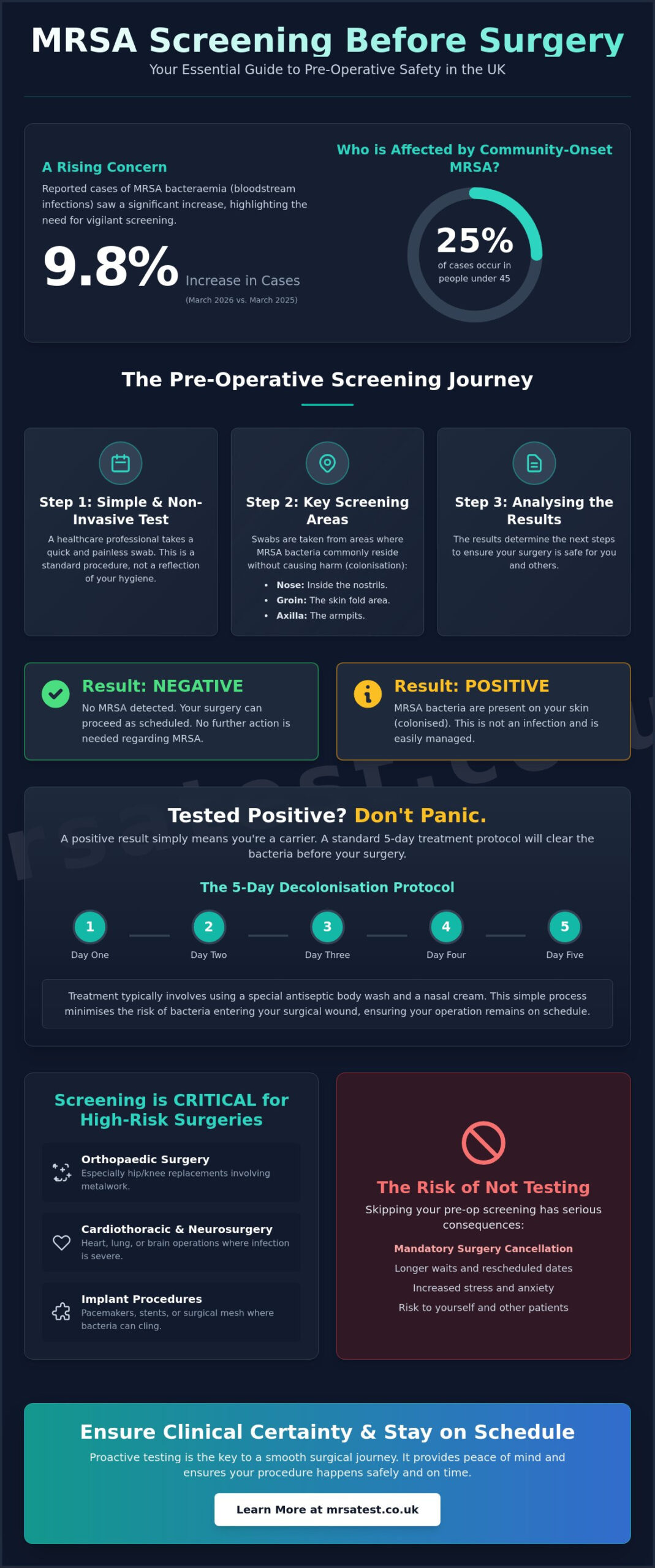
Nearly a quarter of community-onset MRSA cases in the UK now occur in people under the age of 45, according to data from 2023 to 2024. It’s completely natural to feel anxious when you learn an mrsa test required before surgery uk is a mandatory part of your pre-op checklist, especially as reported cases of MRSA bacteraemia rose by 9.8% in March 2026 compared to the previous year. You want your procedure to go smoothly, and the worry that a “superbug” might cause a last-minute cancellation is a stress no patient needs.
This guide will explain why hospitals mandate these screenings to prevent serious complications like sepsis and how the non-invasive swab process actually works. You’ll discover how to prepare for your screening and exactly what happens if you test positive, ensuring you have a clear path to your operation. We’ll also cover the five-day decolonisation protocol and how proactive testing provides the clinical certainty you need to stay on schedule and focus on your recovery.
Key Takeaways
- Understand why an mrsa test required before surgery uk is a vital safety protocol to prevent surgical site infections and ensure clinical safety.
- Learn about the screening methods used to check specific areas of the body, such as the nose and groin, where bacteria are most likely to reside.
- Discover why a positive result isn’t a cause for alarm and how a standard decolonisation process can clear the bacteria before your operation.
- Identify the specific clinical sites, including the nose, groin, and axilla, that require screening to meet hospital requirements.
- Explore how proactive testing helps you manage your surgical timeline effectively, reducing the risk of last-minute cancellations or rescheduled procedures.
Why is an MRSA Test Required Before Surgery in the UK?
Having an mrsa test required before surgery uk is a fundamental safety gate in modern healthcare. It isn’t a reflection of your personal hygiene or current health status. Instead, it’s a proactive measure aligned with the national Getting It Right First Time (GIRFT) framework. This clinical initiative mandates screening for all elective inpatient admissions to ensure the highest standards of patient safety. By identifying carriers before they enter the operating theatre, hospitals can effectively reduce the incidence of Healthcare-Associated Infections (HAIs) and protect the wider hospital environment.
To understand the clinical necessity, we should first look at What is MRSA? in a surgical context. Many healthy individuals carry these bacteria on their skin or in their nostrils without any symptoms. This state is known as “colonisation.” While colonisation is harmless in your daily life, it poses a significant threat during invasive procedures. If these bacteria move from the skin’s surface into a surgical incision, they can cause deep-tissue infections that are difficult to treat because MRSA is resistant to several common antibiotics. Surgeons prioritise this screening because preventing an infection is far more effective than trying to manage one after the operation.
The distinction between being colonised and being infected is vital for your peace of mind. Being a carrier doesn’t mean you’re ill, but it does mean you require a simple decolonisation treatment before your procedure. This ensures that when the surgeon makes an incision, the risk of introducing resistant bacteria into your body is minimised. This systematic approach has been a cornerstone in making UK hospitals safer for everyone.
Which Surgeries Always Require MRSA Screening?
While policies can vary slightly between NHS trusts, certain procedures carry a higher risk profile and almost always require a confirmed negative result. These include:
- Orthopaedic surgery: Especially procedures involving metalwork, such as total hip or knee replacements.
- Cardiothoracic and Neurosurgery: Operations involving the heart, lungs, or brain where the consequences of infection are particularly severe.
- Implant procedures: Any surgery where medical devices, such as pacemakers, stents, or surgical mesh, are permanently placed in the body.
In these cases, the presence of foreign material provides a surface where bacteria can easily cling and multiply, making pre-operative clearance essential.
The Consequences of Skipping Pre-Op Screening
If you haven’t completed your screening, the most immediate consequence is the mandatory cancellation of your elective surgery. Hospital trusts follow strict legal and safety protocols that prevent them from proceeding without a confirmed result. This isn’t just about your safety; it’s about preventing the spread of resistant bacteria to other vulnerable patients. Missing your test can lead to rescheduled dates, increased anxiety, and a longer wait for your procedure. Following the screening protocol ensures your surgery stays on schedule and your recovery begins in the safest possible environment.
The Clinical Risks: Why Hospitals Prioritise MRSA Screening
Hospitals prioritise screening because the skin, which usually acts as a protective shield, is intentionally compromised during an operation. While MRSA often lives harmlessly on the skin surface, the introduction of these bacteria into a sterile surgical site can lead to severe complications. When an incision is made, surface bacteria can migrate into deep muscle tissue, bone, or even the bloodstream. This is why an mrsa test required before surgery uk is a non-negotiable safety step; it identifies these risks before the procedure begins.
MRSA is particularly challenging because it has developed resistance to many common antibiotics, including methicillin. If an infection occurs after surgery, doctors cannot rely on standard treatments. They must often turn to stronger, “last-resort” medications that may require longer hospital stays and carry a higher risk of side effects. Beyond your personal safety, hospitals must also protect the wider clinical environment. Preventing one patient from bringing MRSA into a surgical ward helps stop potential outbreaks that could affect other vulnerable individuals. Following NHS guidance on MRSA screening ensures that both the patient and the hospital remain protected from these resistant strains.
Understanding Surgical Site Infections (SSIs)
A Surgical Site Infection (SSI) occurs when pathogens multiply at the area where the surgery took place. These infections can range from minor surface redness to deep, life-threatening abscesses. SSIs significantly impact recovery times, often requiring additional surgeries to clean the wound. The clinical cost of treating a single infected surgical wound far exceeds the cost of a preventative screen. In fact, managing a post-operative MRSA infection involves expensive isolation protocols and specialist pharmacy support. Choosing a pre-operative MRSA screen early in your surgical journey helps you avoid these avoidable complications.
Bloodstream Infections and Sepsis
If bacteria move from a local wound into the blood, the condition can progress to bacteraemia or systemic sepsis. This is a medical emergency where the body’s immune response causes widespread inflammation and organ damage. Recent data highlights the importance of vigilance; in March 2026, there were 90 reported cases of MRSA bacteraemia in the UK, marking a 9.8% increase from the previous year. Certain procedures are particularly vulnerable to these risks:
- Bone Surgeries: Bone has a limited blood supply, making it very difficult for antibiotics to reach and clear an infection once it takes hold.
- Heart Surgeries: The use of artificial valves or grafts provides a surface where MRSA can easily attach and grow, leading to endocarditis.
Understanding these risks helps patients appreciate why the screening process is so thorough. For a deeper look at how clinical environments manage these threats, you can read our guide on hospital-acquired infections to learn more about prevention strategies.
Understanding the Screening Process: Swabs, Sites, and Methods
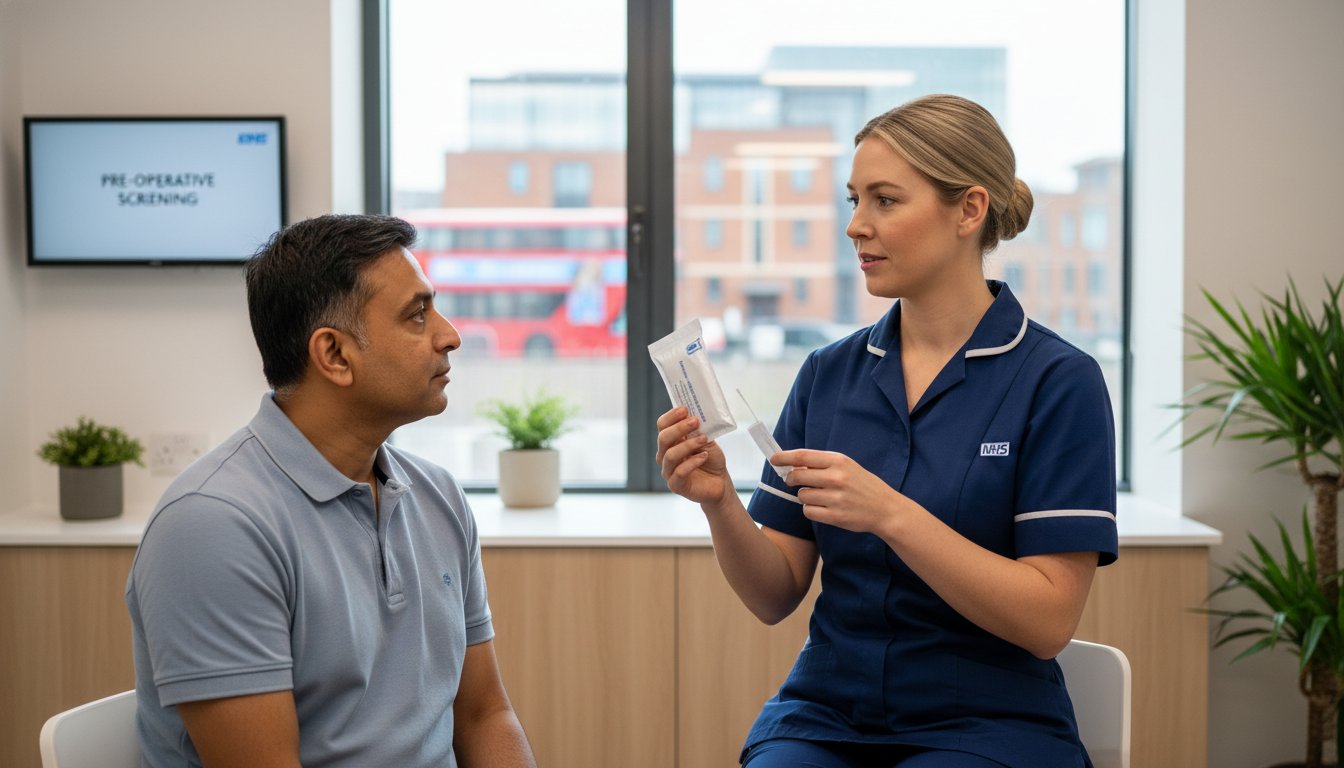
The physical screening process is a simple, pain-free procedure designed to detect bacterial presence with high precision. Hospitals typically use a “triple swab” approach to ensure no colonisation is missed. This involves taking samples from the nostrils, the throat, and skin folds such as the groin or axilla (armpit). Why hospitals screen for MRSA in these specific areas is based on microbial biology; Staphylococcus aureus thrives in warm, moist environments. By targeting these reservoirs, clinical teams can get the most accurate picture of your carrier status.
Ensuring you complete the mrsa test required before surgery uk at the right time is essential for avoiding delays. Most UK hospitals recommend screening between two and four weeks before your admission date. This window is chosen deliberately. It provides enough time for the laboratory to process the results and, if necessary, allows you to complete a five-day decolonisation treatment before your scheduled operation. If you’re tested too early, the result may no longer be valid by the time you reach the theatre; if tested too late, a positive result could force a last-minute cancellation.
Standard Culture vs. Rapid PCR Testing
There are two primary ways laboratories identify MRSA. The traditional method is a culture test, where swabs are placed in a growth medium. This process usually takes 48 to 72 hours as the bacteria need time to multiply. Most NHS labs rely on this method for routine pre-ops. However, if your surgery is less than a week away, a Rapid PCR test is often the superior choice. PCR (Polymerase Chain Reaction) technology looks for the DNA of the bacteria rather than waiting for it to grow. This molecular approach can provide highly accurate results within 24 hours, giving you the clinical certainty needed for a tight surgical deadline.
How to Correctly Perform a Pre-Op Swab
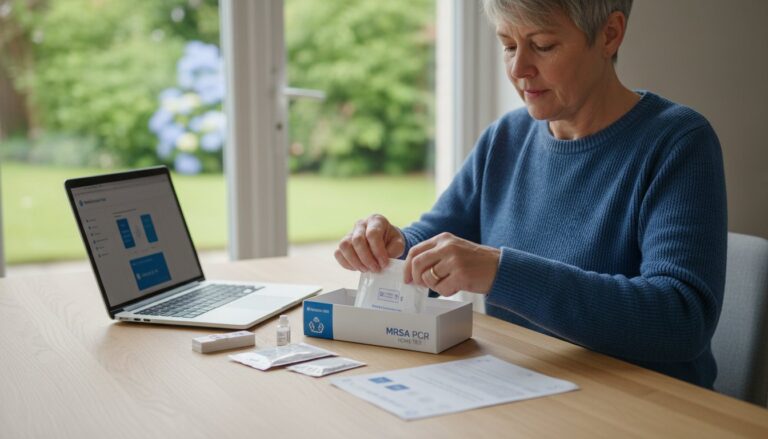
When an mrsa test required before surgery uk is requested, you may be asked to perform the swabs yourself at home or in a clinic. Success depends on making firm contact with the skin. For the nostrils, the swab should be inserted gently and rotated around the inner surface of each nostril. For skin sites like the groin or armpit, you should rub the swab back and forth to ensure enough skin cells and bacteria are collected. It’s vital to avoid touching the tip of the swab with your fingers or letting it contact surfaces like the sink or floor, as this can lead to contamination. For more detailed instructions on self-sampling, you can refer to our comprehensive MRSA test guide to ensure your samples are laboratory-ready.
What Happens if Your MRSA Test is Positive?
Receiving a positive result for the mrsa test required before surgery uk can feel overwhelming, but it’s important to remain calm. A positive result usually indicates “colonisation” rather than an active infection. This means the bacteria are simply living on your skin or inside your nose without causing harm. In the community, MRSA is becoming more prevalent; statistics show that between January and March 2026, there were 175 cases of community-acquired MRSA in the UK, a 47% increase compared to 2019. Identifying this carrier status early is actually a success. It allows clinical teams to clear the bacteria before you enter the sterile environment of an operating theatre.
The standard UK protocol for carriers is a straightforward decolonisation process. This treatment typically lasts for five days and is designed to suppress the bacteria to safe levels. Once the course is finished, a follow-up test is conducted 48 to 72 hours later to confirm the bacteria have been successfully cleared. For many patients, knowing their status well in advance of their hospital admission provides the clinical certainty needed to proceed with confidence. This proactive approach ensures that your recovery isn’t compromised by avoidable complications.
The Decolonisation Routine
Your clinical team will provide a specific kit for the five-day treatment course. This usually includes a Chlorhexidine (CHG) antiseptic body wash and an antibiotic nasal ointment. To ensure the treatment is effective, you must follow these steps:
- Antiseptic Washing: Use the CHG wash daily as a soap substitute for your body and hair. Pay close attention to the areas where MRSA thrives, such as the armpits and groin.
- Nasal Treatment: Apply the antibiotic cream to the inside of both nostrils three times a day. This eliminates the main reservoir where the bacteria reside.
- Environmental Hygiene: Use fresh towels and change your bed linen daily during the five-day course to prevent re-contamination from shed skin cells.
Will My Surgery Be Cancelled?
A positive result doesn’t automatically mean your surgery will be cancelled. In most cases, if the decolonisation is completed and a clear result is obtained, the procedure proceeds exactly as planned. The primary reason for a postponement is usually a lack of time. If a positive result is discovered only a day or two before the operation, there isn’t enough time to complete the mandatory five-day treatment and the subsequent follow-up screening. This is why testing early is so beneficial; it creates a “buffer” period that protects your surgical date. If you need rapid results to ensure your timeline stays intact, you can order an MRSA Rapid PCR Test to get clinical confirmation quickly.
Ensuring a Smooth Surgery Date with Private Pre-Op Testing
Waiting for a hospital pre-assessment can be a period of significant uncertainty. While an mrsa test required before surgery uk is a standard part of the clinical pathway, many patients find that waiting for the official screening leaves very little time to react if the result is positive. Taking a proactive approach by testing privately allows you to identify your carrier status weeks in advance. This early insight removes the stress of last-minute discoveries and ensures that your surgical timeline remains completely under your control.
Proactive Preparation for Surgery
Effective preparation involves more than just clinical readiness; it’s about managing the logistics of your recovery. Including an MRSA screen in your pre-op health checklist ensures that no detail is overlooked. Once you receive your private laboratory report, you can easily share it with your consultant or the hospital’s pre-assessment team. Most surgical teams appreciate this proactive documentation as it demonstrates your commitment to a safe surgical outcome. Having a confirmed negative result in hand provides immediate peace of mind for both you and your clinical team.
Ordering Your Confidential Kit
Selecting the right test depends on your specific needs and timeline. If you have several weeks before your admission, an MRSA Culture test is a reliable and thorough option. However, if your surgery is approaching quickly, the MRSA Rapid PCR Test– Nose/Groin/Axilla is recommended for its superior speed and diagnostic accuracy. All kits are delivered in discreet packaging to protect your privacy and include a prepaid laboratory return envelope for convenience. This streamlined process ensures UK-wide coverage, allowing you to sample in the comfort of your own home while receiving professional, clinical-grade results. Don’t leave your operation to chance. You can order your pre-surgery MRSA test kit today to ensure your operation stays on track and your recovery begins without delay.
Take Control of Your Surgical Preparation
Pre-operative screening is a vital step in ensuring your procedure is as safe as possible. By understanding why an mrsa test required before surgery uk is a mandatory safety gate, you can approach your hospital admission with confidence rather than anxiety. A positive result isn’t a medical crisis; it’s simply an opportunity to clear bacteria before they can cause post-operative complications. Proactive testing remains the most effective way to protect your surgical date from last-minute delays.
Our service provides the clinical accuracy of UK-accredited laboratory testing with the convenience of a discreet and confidential home collection. If you’re on a tight schedule, our fast 24-hour PCR results provide the answers you need without the wait. You don’t have to leave your timeline to chance. Secure your surgery date with a private MRSA test kit today and focus on what matters most: your successful recovery and long-term health.
Frequently Asked Questions
Is an MRSA test mandatory for all surgeries in the UK?
No, it isn’t universal for every patient anymore. As of early 2026, many NHS providers have shifted from universal screening to a targeted, risk-based approach. This means testing focuses on high-risk patients and specific procedures like orthopaedics or neurosurgery. You should check with your surgical team to confirm if an mrsa test required before surgery uk applies to your specific operation or if you meet the criteria for elective inpatient screening.
How long before my surgery should the MRSA test be done?
You should ideally complete your screening between two and four weeks before your scheduled surgery date. This specific window is important because it allows the laboratory enough time to process your results. If you test positive, this timeframe also provides the necessary five days for decolonisation treatment and a follow-up test. Testing too close to your admission could result in your procedure being postponed if the bacteria are detected late.
What happens if I test positive for MRSA before my operation?
A positive result means you’re a carrier, but it doesn’t usually mean your surgery is cancelled. You’ll simply undergo a five-day decolonisation process using antiseptic body washes and nasal creams to clear the bacteria. A follow-up test is typically performed 48 to 72 hours after the treatment ends. Most surgeries proceed as planned once you’ve completed this protocol, provided there’s enough time to clear the bacteria before your theatre date.
Can I do an MRSA test at home instead of at the hospital?
Yes, you can use a private home collection kit to check your status before your official hospital appointment. These kits provide all the necessary swabs for the nose, groin, and armpit, which you can use in a private setting. Once you’ve collected the samples, you send them to a laboratory for analysis. Many patients choose this option to gain peace of mind and ensure they’re clear before their hospital pre-assessment begins.
How long do MRSA test results take in the UK?
The time it takes to get results depends on the laboratory method used. Traditional culture tests usually take between 48 and 72 hours because the bacteria must be grown in a medium to be identified. However, Rapid PCR testing is much faster. This molecular technology can often provide a result within 24 hours of the sample reaching the lab. This speed is particularly helpful for patients who have a surgical date approaching quickly.
Will MRSA colonisation definitely cause an infection after surgery?
Being colonised doesn’t mean you’ll definitely get an infection, but it does significantly increase the clinical risk. MRSA is often harmless on the skin’s surface, but it becomes dangerous if it enters a surgical incision. Screening is a vital preventative measure to ensure these resistant bacteria don’t migrate into deep tissue or the bloodstream. By identifying and clearing the bacteria beforehand, hospitals can effectively reduce the likelihood of serious post-operative complications.
Do I need to be tested for MRSA if I am having day surgery?
It depends on the type of procedure and your personal health history. While many day-case procedures are lower risk, an mrsa test required before surgery uk may still be necessary if you’re having an implant or have been in a hospital recently. Your pre-assessment team will review your specific case against their trust’s current protocols to decide if screening is required. It’s always best to ask your consultant during your initial consultation.
What is the decolonisation treatment for MRSA?
The treatment is a simple five-day regimen designed to remove the bacteria from your body. You’ll typically use a Chlorhexidine antiseptic body wash daily for your skin and hair. You’ll also apply an antibiotic cream inside your nostrils three times a day to clear the main bacterial reservoir. It’s also recommended to use fresh towels and change your bed linen daily during the treatment to ensure the bacteria aren’t reintroduced to your skin from your environment.