
AXA PPP Pre-operative Requirements: A Patient Guide to Surgery Approval in 2026
Securing a pre-authorisation code from AXA Health doesn’t automatically mean you’re ready for the operating theatre. While your insurance covers the costs, the hospital’s safety protocols determine whether your procedure actually goes ahead on the scheduled date. Understanding the specific axa ppp pre-operative requirements is essential to avoid the frustration of a last-minute cancellation. It’s perfectly natural to feel overwhelmed by the transition from a GP referral to a specialist’s surgical plan, especially when administrative deadlines and clinical safety rules seem to overlap.
We understand that your priority is a safe, successful surgery and a swift recovery. This guide simplifies the process by breaking down exactly what you need for clinical clearance and financial approval in 2026. You’ll learn about the critical five-day lead time for standard pre-authorisation, the necessity of CCSD codes, and why proactive MRSA screening is often the final hurdle for hospital admission. By following these steps, you can ensure your paperwork is settled and your clinical health is verified well before you arrive at the hospital.
Key Takeaways
- Understand the difference between AXA’s financial pre-authorisation and the hospital’s clinical safety requirements to ensure your surgery proceeds without delays.
- Navigate the mandatory axa ppp pre-operative requirements by submitting standard requests at least five working days before your procedure, or 14 days for cancer-related care.
- Prepare for mandatory MRSA screening, a non-negotiable safety rule for UK private hospitals that insurance plans typically don’t cover as part of routine screening.
- Discover how at-home PCR testing provides rapid, accredited results within 24 hours of lab receipt, helping you secure clinical clearance when hospital slots are unavailable.
- Follow a structured four-week timeline to manage CCSD codes and clinical paperwork, ensuring you meet all administrative and safety deadlines before your admission date.
Understanding AXA Health (formerly PPP) Pre-operative Requirements in 2026
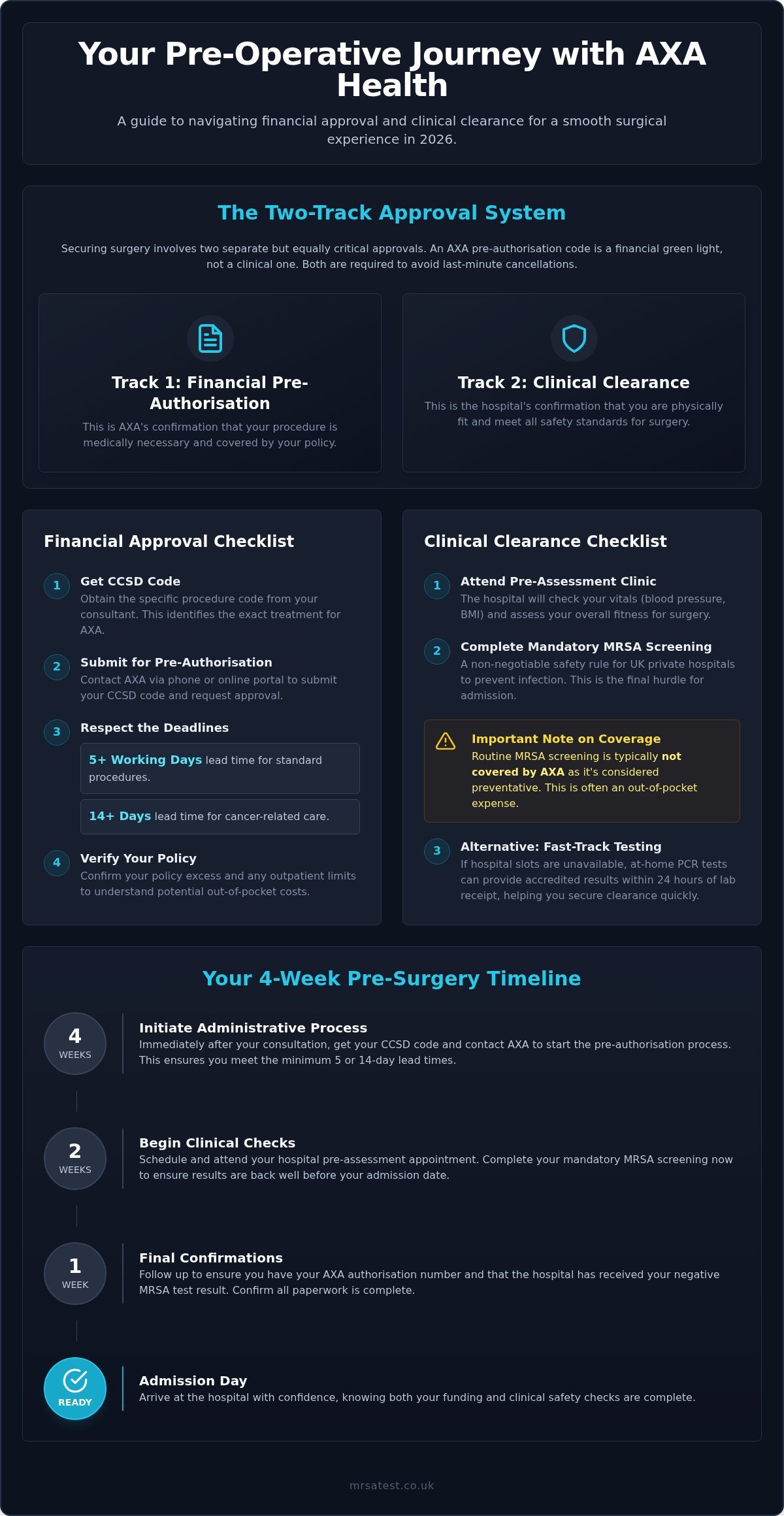
Many long-term policyholders still refer to their coverage as “PPP Healthcare,” but the brand has fully evolved into AXA Health. Reviewing the AXA Health corporate background clarifies how this global insurer has streamlined its UK operations to focus on acute conditions and medically necessary treatments. In 2026, the axa ppp pre-operative requirements function as a two-tier gatekeeping system. You must satisfy both administrative hurdles and clinical safety standards before you can enter the operating theatre. Failing to address either tier can result in a declined claim or a last-minute surgery postponement.
The Administrative Tier: Securing Your Funding
Securing your funding is the first hurdle. You can’t simply book a date and hope for the best. You must obtain a specific CCSD (Clinical Coding and Schedule Development) code from your consultant. This code identifies the exact procedure you’re having and allows AXA to determine if the treatment is covered under your specific plan. For standard procedures, you must submit this code for pre-authorisation at least five working days before your treatment. If you’re seeking cancer-related care, this lead time increases to 14 days. Once approved, you’ll receive an authorisation number. It’s also the right time to verify your policy excess and outpatient limits. If your procedure costs exceed these limits, you’ll need to pay the difference in GBP (£) directly to the provider.
The Clinical Tier: Meeting Hospital Safety Standards
Once the funding is secured, you must meet the hospital’s own safety standards. It’s a common point of confusion: AXA doesn’t always explicitly list clinical requirements like MRSA screening in your policy handbook, yet the hospital won’t admit you without them. The pre-assessment clinic acts as the final checkpoint in your surgical journey. During this appointment, staff will check your blood pressure, BMI, and overall physical readiness. They also focus heavily on infection control. Because AXA Health generally doesn’t cover routine screening for patients without symptoms, these essential tests often fall outside your standard insurance claim. If a hospital requires an MRSA screen and you haven’t completed it, your surgery could be cancelled on the day of admission. This clinical tier ensures you’re fit for the procedure, while the administrative tier ensures the bills are paid.
Pre-authorisation vs. Clinical Clearance: What AXA Expects
A common misconception among patients is that receiving an authorisation code means they’re ready to go. In reality, meeting the axa ppp pre-operative requirements involves two distinct approvals. Pre-authorisation is a financial agreement where AXA confirms the procedure is “medically necessary” and treats an “acute condition.” AXA defines an acute condition as a disease, illness, or injury that is likely to respond quickly to treatment. Clinical clearance, however, is the hospital’s confirmation that you’re physically capable of undergoing the procedure safely. While AXA focuses on the eligibility of the claim, the hospital focuses on your vitals and infection risk.
Insurers are strict about clinical protocols because they mitigate financial risk. For instance, mandatory MRSA swabs protect both the patient and the insurer from the high costs associated with hospital acquired infections. A complication like an infection can extend a hospital stay by weeks, leading to significant extra billing that insurers prefer to avoid through proactive screening. By verifying these health markers, AXA ensures that the surgery has the highest probability of a smooth recovery without the need for expensive corrective care. Effective preparation requires a split timeline: handle the administrative paperwork at least three weeks before surgery and begin the clinical checks two weeks prior.
Administrative Milestones
Your administrative journey begins immediately after your specialist consultation. Once your consultant assigns a CCSD procedure code, you must contact AXA Health. Most members use the online member portal or a phone call, with authorisation typically taking 24 to 48 hours once the five-day lead time for standard requests is met. During this stage, you must confirm that both your consultant and the hospital are “recognised providers.” If you choose an unrecognised facility, AXA may decline the claim or only pay a portion of the fee, leaving you with an unexpected balance in GBP (£).
Clinical Milestones
The clinical side of the axa ppp pre-operative requirements usually starts with a detailed health questionnaire. This document helps the medical team identify potential risks related to anaesthesia or existing conditions. Depending on your age and health history, you might need diagnostic tests such as full blood counts or an ECG. A standard NHS pre-operative assessment often mirrors these private sector requirements, highlighting the importance of screening for MRSA. If your hospital cannot provide a timely screening slot, using an accredited at-home test kit ensures you have your results ready for admission. This proactive approach prevents the anxiety of a cancelled surgery date due to missing clinical data.
The MRSA Screening Requirement for Private Surgery
Almost all UK private hospitals mandate MRSA screening as part of their safety protocols. This is a critical component of the axa ppp pre-operative requirements because an undetected infection can lead to severe surgical site complications. While AXA Health focuses on the administrative approval of your surgery, the hospital acts as the clinical guardian. By understanding MRSA screening before surgery, you can better prepare for the admission process and ensure your theatre slot remains secure. Hospitals are particularly strict because MRSA (Methicillin-resistant Staphylococcus aureus) is resistant to several widely used antibiotics, making it difficult to treat if it enters a surgical wound.
It’s important to clarify the financial aspect of this requirement. AXA Health plans typically don’t cover routine medical screening for patients without symptoms. Since MRSA tests are considered a standard hospital safety protocol rather than a diagnostic test for an active illness, you’ll likely need to cover this cost in GBP (£) yourself. Being proactive about this clinical requirement prevents the stress of a last-minute cancellation when the hospital’s pre-assessment team reviews your file.
Standard Screening vs. Rapid PCR
A traditional MRSA culture test involves taking swabs and waiting for bacteria to grow in a laboratory. This process usually takes about 72 hours, which can be risky if your surgery is approaching quickly. In contrast, rapid PCR (Polymerase Chain Reaction) testing looks for the genetic material of the bacteria. This method provides results much faster, often within 24 hours of the lab receiving the sample. Most hospitals require swabs from three specific areas: the nose, groin, and axilla (armpit). These areas are the most common places for the bacteria to reside on the skin.
What Happens if You Test Positive?
Testing positive for MRSA doesn’t mean you’re ill; it means you’re “colonised” with the bacteria on your skin. However, this status significantly increases the risk of an infection during surgery. If you test positive, you’ll undergo a decolonisation process. This typically involves using a specific nasal cream and an antiseptic body wash for five days. Your surgery date might be postponed to allow this treatment to work, as the hospital will require a clear re-test before you can enter the theatre. Proactive testing ensures these delays are managed well in advance of your AXA-authorised admission date, keeping your surgical plan on track.
Step-by-Step Checklist for AXA PPP Members Preparing for Surgery
Preparation is the most effective way to manage the anxiety that often accompanies a surgical procedure. By following a structured timeline, you can ensure that all axa ppp pre-operative requirements are met well in advance. This proactive approach prevents the “missing results” trap, where surgery is delayed on the morning of admission because a specific document or test result hasn’t reached the hospital’s theatre team. Managing the flow of information between your consultant, AXA Health, and the hospital admissions department requires diligence but results in a seamless experience.
To stay organised, you should consult a pre-op health checklist that covers both clinical and logistical needs. Ticking off these items ensures that neither the financial nor the medical side of your care is left to chance.
Phase 1: The Paperwork (Weeks 3-4)
Your journey begins approximately one month before your surgery date. First, you must secure the CCSD code and a formal consultant fee estimate from your specialist’s secretary. Once you have these, call the AXA Health claims team to obtain your authorisation number. It’s vital to email this number to the hospital’s finance department immediately. You should also take this opportunity to confirm that your specific policy covers the hospital location you’ve chosen. Some plans have restricted hospital lists, and verifying this early prevents unexpected bills in GBP (£) later on. If there’s a shortfall in coverage, you’ll have time to discuss payment options or hospital alternatives.
Phase 2: The Clinical Prep (Weeks 1-2)
As you move closer to the procedure, the focus shifts to clinical readiness. You’ll likely attend a pre-assessment clinic or be asked to complete an online health portal. This is when the hospital identifies which diagnostic tests, such as blood counts or MRSA swabs, are necessary. If the hospital’s screening slots are full or don’t align with your work schedule, you can order an at home mrsa test to complete the requirement on your own terms. This ensures your results are processed by an accredited laboratory and sent to the hospital in time for your admission. Finally, call the admissions team 48 hours before your surgery to verify they’ve received all blood test results and your infection screening clearance. This final check provides total peace of mind.
If you’re concerned about meeting the clinical deadlines set by your hospital, you can order a UK-accredited MRSA screening kit today to secure your surgical clearance without the wait.
Fast-Tracking Your Pre-op Tests for Peace of Mind
Meeting the axa ppp pre-operative requirements shouldn’t be a race against time. While AXA Health directs you toward their recognised provider network, practical bottlenecks often occur at the hospital level. Limited clinic hours or administrative backlogs at private facilities can turn a routine screen into a significant source of stress. Choosing an at-home screening kit allows you to bypass these logistical hurdles while maintaining total privacy. It’s a reliable way to ensure you have the clinical clearance needed for admission without requiring an extra trip to the hospital before your procedure date.
By using a UK-accredited laboratory, you receive results that carry the same clinical weight as those performed in a hospital setting. This proactive approach is particularly beneficial for AXA members who have busy professional schedules or live a significant distance from their chosen surgical centre. Taking control of your testing timeline ensures that a missing swab result won’t be the reason your theatre slot is reassigned to another patient.
Choosing Between Culture and PCR Tests
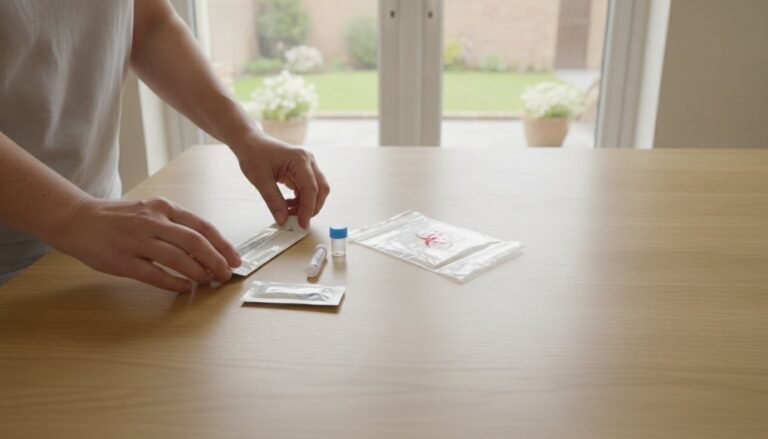
The type of test you select depends on your remaining timeframe before admission. If you have a week or more before your surgery, the MRSA Culture – Nose/Groin/Axilla is the standard choice. This test involves a laboratory incubation period of approximately 72 hours. However, if your surgery date is imminent, an MRSA Culture Test via rapid PCR is the superior option. PCR testing provides results within 24 hours of the lab receiving your sample, making it ideal for urgent surgical windows. To ensure accuracy, follow these collection steps:
- Gently rotate the swab inside both nostrils.
- Apply the swab to the skin folds in the groin area.
- Swab the axilla (armpit) to capture a comprehensive sample.
- Place the swabs securely in the provided transport tube for immediate dispatch.
Final Steps: Delivering Results to Your Hospital
Once the laboratory processes your sample, you’ll receive a UK-accredited report. This document is your clinical passport for admission. You can download the laboratory report directly and email it to your pre-assessment nurse or the hospital’s admissions team. Providing this certificate well in advance allows the medical staff to update your records and issue the final “Green Light” for your procedure. This simple step completes the clinical side of the axa ppp pre-operative requirements, ensuring that when you arrive at the hospital, the focus remains entirely on your care and recovery.
Securing Your Surgery Date with Confidence
Success in private surgery depends on balancing your financial authorisation with clinical readiness. By coordinating with your specialist to secure CCSD codes and respecting the mandatory lead times, you satisfy the core axa ppp pre-operative requirements. However, the hospital’s clinical safety protocols, particularly infection screening, remain the final gatekeeper for your admission. Managing these requirements proactively prevents the stress of a last-minute cancellation. It ensures your theatre slot stays secure without unnecessary administrative delays.
Choosing a professional at-home testing service offers a streamlined path to clinical clearance. With results delivered by UK-accredited laboratories and the convenience of prepaid return shipping, you can complete your health checks discreetly. It’s a simple process that fits around your schedule. For those with imminent admission dates, rapid PCR options provide urgent surgical clearance within 24 hours of lab receipt. Order your pre-operative MRSA screening kit today for fast, lab-certified results. Taking these final steps allows you to focus on your recovery. You’ll arrive at the hospital with the peace of mind that everything is in order.
Frequently Asked Questions
Does AXA Health pay for my pre-operative MRSA test?
AXA Health typically doesn’t cover routine pre-operative screening when you don’t have active symptoms. Most insurance plans consider MRSA tests to be a standard hospital safety protocol rather than a diagnostic necessity for an illness. You’ll likely need to pay for this test in GBP (£) yourself. It’s best to check your specific policy handbook, but expect this to be an out-of-pocket expense for your surgical preparation.
Where can I find the CCSD code for my AXA pre-authorisation?
You can obtain the CCSD code directly from your consultant’s secretary or the specialist’s clinic. This code is a unique identifier for your specific procedure and is essential for meeting axa ppp pre-operative requirements. Your specialist is responsible for providing this along with their fee estimate. Once you have the code, you can contact AXA Health to secure your authorisation number and confirm your funding.
What happens if I don’t have an authorisation code before my surgery?
Proceeding without an authorisation code puts you at risk of the claim being rejected or only partially paid. Hospitals often require this code before admission to ensure they’ll receive payment from the insurer. If you don’t have it, you might be asked to pay the full cost of the procedure upfront in GBP (£). It’s much harder to secure retrospective authorisation once treatment has already begun.
Can I use an at-home MRSA test kit for my private surgery clearance?
Yes, most private hospitals accept results from UK-accredited at-home MRSA test kits. These kits provide a convenient alternative if the hospital’s own pre-assessment slots are full or don’t fit your schedule. Ensure the kit uses a verified laboratory and that you receive a formal certificate. You should always confirm with your pre-assessment nurse that they’ll accept external laboratory reports before you order your kit.
How long is an MRSA test result valid for AXA-recognised hospitals?
Most AXA-recognised hospitals consider an MRSA result valid for 28 days. If your surgery date is delayed beyond this four-week window, you’ll likely need to repeat the screening to ensure your clearance is current. This timeframe is a standard safety measure used across the UK private sector. Always check with your specific hospital’s admissions team, as some high-risk procedures may require a more recent test.
What is the fastest way to get MRSA results if my surgery is in two days?
A Rapid PCR test is the fastest method, offering results within 24 hours of the lab receiving your swabs. While a traditional culture test takes about 72 hours, the PCR method identifies bacterial DNA much more quickly. This is the ideal solution for meeting axa ppp pre-operative requirements when your surgery date is imminent. It provides the clinical clearance you need without the long wait associated with traditional laboratory cultures.
Does AXA PPP require a GP referral for pre-operative tests?
Yes, AXA Health requires a GP referral before you see a specialist for any planned surgery or diagnostic tests. The GP referral is the first step in the process, ensuring the treatment is for an acute condition. Once the specialist recommends surgery, they’ll order the necessary pre-operative tests. While the GP starts the journey, the specialist’s team handles the specific clinical coding needed for your final approval.
Will my surgery be cancelled if I test positive for MRSA?
Your surgery will likely be postponed rather than cancelled if you test positive for MRSA. The hospital will require you to complete a five-day decolonisation treatment, which usually involves antiseptic body washes and nasal creams. Once you’ve finished the treatment and provided a clear re-test result, your surgery can be rescheduled. This process ensures you’re safe to enter the operating theatre without a high risk of infection.