

MRSA Carrier But No Infection: Understanding Colonisation in 2026
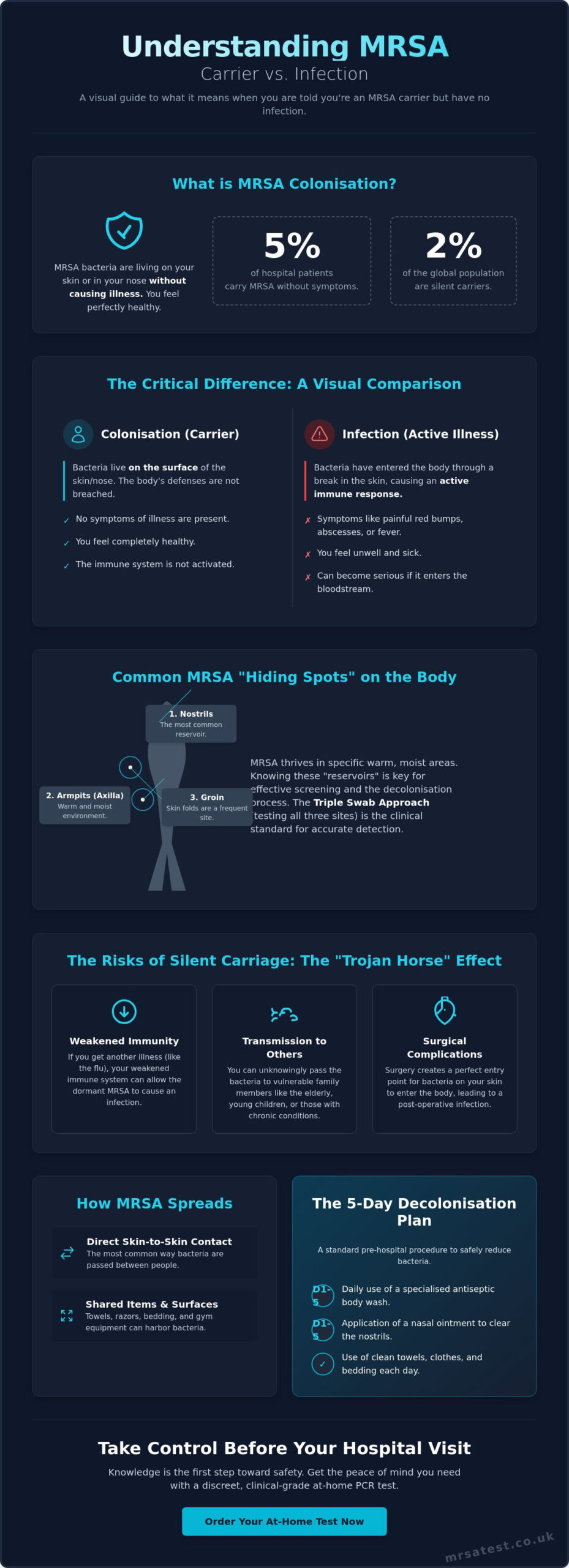
Did you know that approximately 5% of hospital patients carry MRSA on their skin or in their nose without showing a single symptom? It’s a confusing and often stressful situation to be told you’re an mrsa carrier but no infection is present, especially when you feel perfectly healthy. This state, known medically as colonisation, simply means the bacteria are living on your body without causing an active illness.
We understand that this discovery can cause immediate concern. You might worry about passing the bacteria to your family or feel anxious that a necessary surgery could be cancelled. It’s important to remember that being a carrier is a manageable condition that requires professional awareness rather than panic. You’re not alone; roughly 2% of the global population shares this status in 2026, and knowledge is the first step toward safety.
This guide explains exactly what colonisation means for your health and provides a clear plan to manage it. You’ll learn about the risks, the standard five day decolonisation process involving specialized washes, and how a discreet at-home PCR test can give you the clinical accuracy and peace of mind you need before a hospital visit.
Key Takeaways
- Understand the clinical difference between colonisation and infection to help alleviate anxiety about your health status.
- Learn why being an mrsa carrier but no infection present can still pose a risk to your own health during surgery or periods of illness.
- Discover how the bacteria spreads through skin-to-skin contact or shared items like towels and how to protect your family.
- Find out why a triple swab approach is the clinical standard for accurate detection and how to test from the comfort of your own home.
- Explore the five day decolonisation process used to safely reduce bacterial load before hospital admissions or major procedures.
Colonisation vs. Infection: What It Means to Be an MRSA Carrier
Being an mrsa carrier but no infection present is a biological state known as colonisation. In this scenario, the bacteria are living on the surface of your skin or inside your nostrils without invading your body’s tissues. Think of your skin as a busy ecosystem. Everyone has “normal flora,” which are billions of bacteria that live on us naturally and often help protect us. Methicillin-resistant Staphylococcus aureus (MRSA) is simply a strain of bacteria that has joined this ecosystem without being invited. Because the bacteria haven’t broken through your physical defenses, your immune system doesn’t launch an attack. This is why you feel perfectly healthy and show no symptoms of illness.
Medical professionals categorise carriage into two main types. Transient carriage occurs when you pick up the bacteria on your skin, but they naturally disappear after a few days or weeks. Persistent carriage is more stable; the bacteria set up a long-term home on your body, sometimes staying for months or even years. Whether your carriage is transient or persistent, the bacteria are effectively “hitching a ride” on you. You aren’t “sick” in the traditional sense, but you are a host for the bacteria.
The Difference Between Carrying and Getting Sick
The transition from being a carrier to having an active infection usually requires a “portal of entry.” This is often a break in the skin, such as a small cut, a graze, or a surgical incision. It can also happen through medical equipment like catheters or IV lines. When the bacteria move from the surface into the deeper tissues or the bloodstream, an infection begins. The visual difference is quite stark. A person who is an mrsa carrier but no infection has clear, healthy-looking skin. In contrast, an active infection often presents as painful red bumps, abscesses that look like spider bites, or spreading redness known as cellulitis.
Where Does MRSA “Hide” on a Healthy Body?
MRSA has very specific preferences for where it lives on the human body. It thrives in environments that are warm, dark, and slightly moist. This makes certain areas much more likely to host the bacteria than others:
- The Anterior Nares: The inside of your nostrils is the most common “reservoir” for MRSA. It’s the primary site doctors swab during a screening.
- The Axilla: Your armpits provide the perfect temperature and moisture levels for Staphylococcus aureus to flourish.
- The Groin: Similar to the armpits, the skin folds in the groin area are a frequent site for colonisation.
By understanding these “hiding spots,” we can more effectively target the bacteria during the decolonisation process. Knowing exactly where the bacteria reside allows for a more clinical and precise approach to clearing them before they have a chance to cause a problem.
The Risks of Being a Silent MRSA Carrier in 2026
While you may currently be an mrsa carrier but no infection is visible, the state of colonisation isn’t entirely without consequence. In 2026, medical professionals increasingly view carriage as a dormant risk factor. This is often described as the “Trojan Horse” effect. You effectively carry your own source of potential infection on your skin or in your nose. If your immune system becomes weakened by a different illness, such as a severe flu or a respiratory virus, the bacteria can seize the opportunity to move from the surface into your body. A CDC report from February 2026 highlighted this very trend, noting that patients with recent viral infections contributed to a measurable increase in hospital-onset MRSA cases.
There’s also the risk of transmission to those closest to you. For healthy adults, carrying the bacteria might never cause an issue. However, for vulnerable household members, such as the elderly, young children, or those with chronic conditions, the risk is much higher. Understanding the protocols for living with MRSA colonization is essential for keeping your family safe. Knowing your status allows you to take simple, clinical precautions that prevent “silent” spread within your home.
Why Screening is Vital Before Surgery
Surgery creates a physical “portal of entry” that bypasses your skin’s natural defenses. If you are an mrsa carrier but no infection is present at the time of your pre-op assessment, those surface bacteria can enter the surgical site during or after the procedure. This can lead to serious complications like post-operative sepsis or deep tissue infections. Data from February 2026 shows that the average additional cost to treat a single hospital-acquired MRSA infection now exceeds $35,000. To mitigate this, hospitals use specific management protocols for known carriers. We recommend reviewing our guide on preparing for surgery to understand how to manage your carrier status before your procedure date.
The Impact of “Silent” Carriage on Antibiotic Use
Carrying resistant bacteria can complicate future medical treatments, even for unrelated issues. If you develop a different bacterial infection, the presence of MRSA on your body can influence which antibiotics will work effectively. There’s a persistent risk of the bacteria becoming active during any period of physical stress or immune suppression. Colonisation is a dormant risk factor rather than an active illness. To ensure you have the full picture of your health before any major medical intervention, you can order a discreet screening kit to confirm your current status from home.
Am I Contagious? Living Safely as a Carrier
One of the most difficult aspects of being an mrsa carrier but no infection is the psychological weight of feeling “contagious.” Many people experience a sense of stigma, worrying they might harm their loved ones through simple contact. It’s important to separate clinical facts from fear. While you can technically pass the bacteria to others, you are not a danger to healthy individuals in normal social settings. Shaking hands or hugging a friend is generally safe because their own skin and immune system act as a natural barrier.
Transmission primarily happens in two ways: direct skin-to-skin contact or through “fomites.” Fomites are inanimate objects that can carry bacteria, such as towels, razors, or gym equipment. In 2026, guidelines for non-healthcare settings remain clear: the risk of spread is highest when personal items are shared or when hygiene is overlooked. To keep your environment safe, be mindful of these high-risk moments:
- Sharing towels, flannels, or sponges in the bathroom.
- Using the same razor, tweezers, or nail clippers as someone else.
- Close contact during sports where skin abrasions are common.
- Sharing unwashed bedding or clothing.
Practical Steps to Protect Your Household
Hand hygiene is your most powerful tool for preventing the spread of bacteria. Regular washing with soap and water, or using alcohol-based hand gels, effectively neutralises the bacteria on your skin. When it comes to laundry, washing towels and bedding at 60°C is the clinical standard to ensure any bacteria are destroyed. If you have any minor cuts, grazes, or skin irritations, cover them with a waterproof plaster immediately. This simple act closes the “portal of entry” and prevents the bacteria from moving between people or onto shared surfaces.
MRSA and Intimacy: What You Need to Know
It’s natural to feel anxious about close physical contact with a partner when you know you are a carrier. While skin-to-skin contact can transfer the bacteria, it rarely leads to an infection in a healthy adult. The bacteria simply move from your skin to theirs, often becoming part of their transient flora without causing harm. If your partner has a weakened immune system or chronic skin conditions, you should be more cautious. In cases of persistent carriage, some couples choose to have both partners use an at-home screening kit. This ensures you both understand your status and can manage the bacteria together with clinical confidence.
How to Test for MRSA Carriage Without Symptoms
Many people assume that a blood test is required to detect bacteria like MRSA. This is a common misconception. Because the bacteria live on the surface of your body, MRSA is detected via skin swabs rather than blood samples. Even if you are an mrsa carrier but no infection is active, the bacteria will be present in specific “reservoirs” on your skin. Identifying these colonies requires a clinical approach to sampling to ensure no sites are missed.
The standard procedure for a comprehensive screening is known as the “Triple Swab” approach. This involves taking samples from the nose, the throat, and the groin or axilla (armpit). By swabbing these specific areas, clinicians can capture a full picture of your colonisation status. It is essential that these samples are processed by a UKAS-accredited facility. Accreditation ensures that the laboratory follows strict quality standards, providing you with results that are both accurate and reliable for medical use.
Rapid PCR vs. Culture Swabs: Which is Better?
There are two primary methods for testing your swabs: Rapid PCR and Traditional Culture. An MRSA PCR rapid test is a molecular detection method that looks for the specific DNA of the bacteria. It’s the fastest option, typically delivering results within 24 hours. In contrast, a traditional culture test involves placing the sample in a controlled environment to see if the bacteria grow. This process is slower, usually taking 48 to 72 hours. While culture tests are effective for general screening, we recommend the PCR method for urgent pre-operative needs where speed is a priority.
The Benefits of Private, At-Home Screening
Choosing to test for MRSA from the comfort of your own home offers significant advantages in both convenience and safety. Private screening provides complete discretion; your kit arrives in plain, confidential packaging, and results are delivered securely to you. This at-home approach also eliminates the need to visit a hospital or clinic for a simple swab. By avoiding a healthcare setting, you remove the risk of exposure to other hospital-acquired infections while you are simply trying to confirm your carrier status. You can order your clinical-grade screening kit online to manage your health with total privacy and speed.
Decolonisation: How to Clear MRSA from Your Skin
Discovering you are an mrsa carrier but no infection is present marks the beginning of a proactive management phase. The process used to remove these bacteria from your body is called decolonisation therapy. This isn’t a permanent “cure” in the way we treat a typical illness; rather, it’s a clinical intervention designed to significantly reduce the bacterial load on your skin and in your nostrils. By temporarily clearing the bacteria, you dramatically lower the risk of an active infection developing during high-risk periods, such as surgery or illness.
The goal of decolonisation is to break the cycle of carriage. Because MRSA is part of the wider environment, it’s possible to become recolonised in the future. However, for patients preparing for a hospital admission, this five day window of clearance is often exactly what’s needed to ensure a safe recovery. This therapy should always be conducted under clinical guidance or as part of a pre-operative plan provided by your healthcare provider.
The Standard UK Decolonisation Protocol
In the UK, the standard decolonisation regimen typically lasts for five consecutive days. This targeted approach focuses on the areas where the bacteria are most likely to reside. The protocol generally includes the following steps:
- Antiseptic Body Wash: You’ll use a specialised wash, such as Chlorhexidine (CHG) gluconate 2-4%, daily for your skin and hair. These washes, like Hibiclens, are often available over-the-counter. You can find more details on what is Chlorhexidine (CHG) and how to use it effectively in our patient guides.
- Nasal Ointment: To clear the primary reservoir in the nostrils, a 2% Mupirocin nasal ointment (often branded as Bactroban) is applied three times a day. It’s important to know that this specific ointment requires a prescription from a doctor.
- Environmental Hygiene: To prevent self-reinfection, you should change your towels, clothes, and bed linen daily throughout the five day course.
Taking Control of Your Status with mrsatest.co.uk
Being an mrsa carrier but no infection doesn’t have to be a source of constant anxiety. Our at-home screening kits provide the clear, clinical data you need to start an informed conversation with your GP or surgical team. We offer a 100% UK-based service, using trusted partner laboratories to ensure your results are accurate and confidential. Our process is designed to be simple and efficient, allowing you to manage your health status without the stress of a clinical visit. By identifying your status early, you can take the necessary steps to protect yourself and your family with confidence. Order your confidential MRSA screen today and test for MRSA from the comfort of your own home.
Taking Control of Your Health Status
Understanding your status is the most effective way to manage the risks associated with MRSA. Being an mrsa carrier but no infection is present means the bacteria are dormant guests on your body, but they don’t have to be a source of constant worry. By identifying these “hiding spots” through clinical screening, you can protect your loved ones and ensure your medical procedures proceed without unexpected delays or complications.
You don’t need to visit a busy hospital to get accurate answers. Our service provides clinical-grade testing from the comfort of your own home. We use UKAS-accredited laboratory testing to ensure every result is reliable and precise. Whether you need fast 24-hour PCR results for an upcoming surgery or a standard culture for peace of mind, our process remains entirely discreet and confidential.
Taking this step allows you to move forward with clarity and confidence. You can Order your Discreet MRSA Home Test Kit today to receive everything you need in plain, secure packaging. Knowledge is your best defense, and we’re here to help you manage your health with quiet competence and professional support.
MRSA Carriage: Frequently Asked Questions
Can you carry MRSA and never get an infection?
Yes, it’s entirely possible to carry MRSA for your whole life without ever becoming ill. This state, where you are an mrsa carrier but no infection is present, simply means the bacteria live on your skin surface or in your nose. Problems only arise if the bacteria find a way into your body through a cut, graze, or surgical incision.
Is there a blood test to see if you are an MRSA carrier?
No, a blood test cannot detect if you are an MRSA carrier. Because the bacteria live on the skin and in the nostrils, clinicians must use swabs to collect samples from the surface. A PCR rapid test or a traditional culture test is then used to identify the presence of the bacteria’s DNA or physical growth in a lab.
How long does MRSA stay on your skin if you are a carrier?
The duration of carriage varies significantly between individuals. Some people are transient carriers, meaning the bacteria disappear naturally within a few weeks. Others are persistent carriers who may host the bacteria for months or even years. Factors like your personal skin chemistry and the health of your normal flora influence how long the bacteria stay on your body.
Can I pass MRSA to my family if I don’t have symptoms?
Yes, you can transmit the bacteria to others even if you feel perfectly healthy. Transmission usually happens through direct skin-to-skin contact or by sharing personal items like towels and razors. However, for healthy family members, simply carrying the bacteria rarely leads to an actual infection. The risk is only significant for those with weakened immune systems or open wounds.
What happens if I test positive for MRSA before my surgery?
If you test positive, your surgical team will likely start a five day decolonisation protocol. This involves using an antiseptic body wash and a prescribed nasal ointment to clear the bacteria before your procedure. In some cases, non-urgent surgeries may be rescheduled until you’ve completed this treatment to ensure you don’t develop a post-operative infection or sepsis.
Can MRSA colonisation go away on its own?
Transient colonisation often clears without any medical intervention as your body’s natural bacteria outcompete the MRSA. Persistent carriage is much less likely to resolve on its own and typically requires a structured decolonisation plan. Testing is the only clinical way to confirm if the bacteria have cleared naturally or if they remain a dormant risk on your skin.
How often should a known carrier be re-tested?
Re-testing is usually recommended immediately after you finish a decolonisation course to confirm the bacteria are gone. If you are a persistent carrier, your doctor might suggest periodic checks before any planned hospital stays. Using an at-home kit allows you to monitor your status discreetly and ensures you have the data needed for your medical records.
Do I need to tell my employer if I am an MRSA carrier?
Most people don’t need to disclose their carrier status to their employer. However, if you work in high-risk environments like healthcare or food preparation, your workplace may have specific screening and disclosure policies. As of January 2026, healthcare workers who are found to be colonised are often required to undergo topical decolonisation before returning to patient-facing duties.