

Avoiding Surgery Delays in the UK: A Proactive Patient Guide for 2026
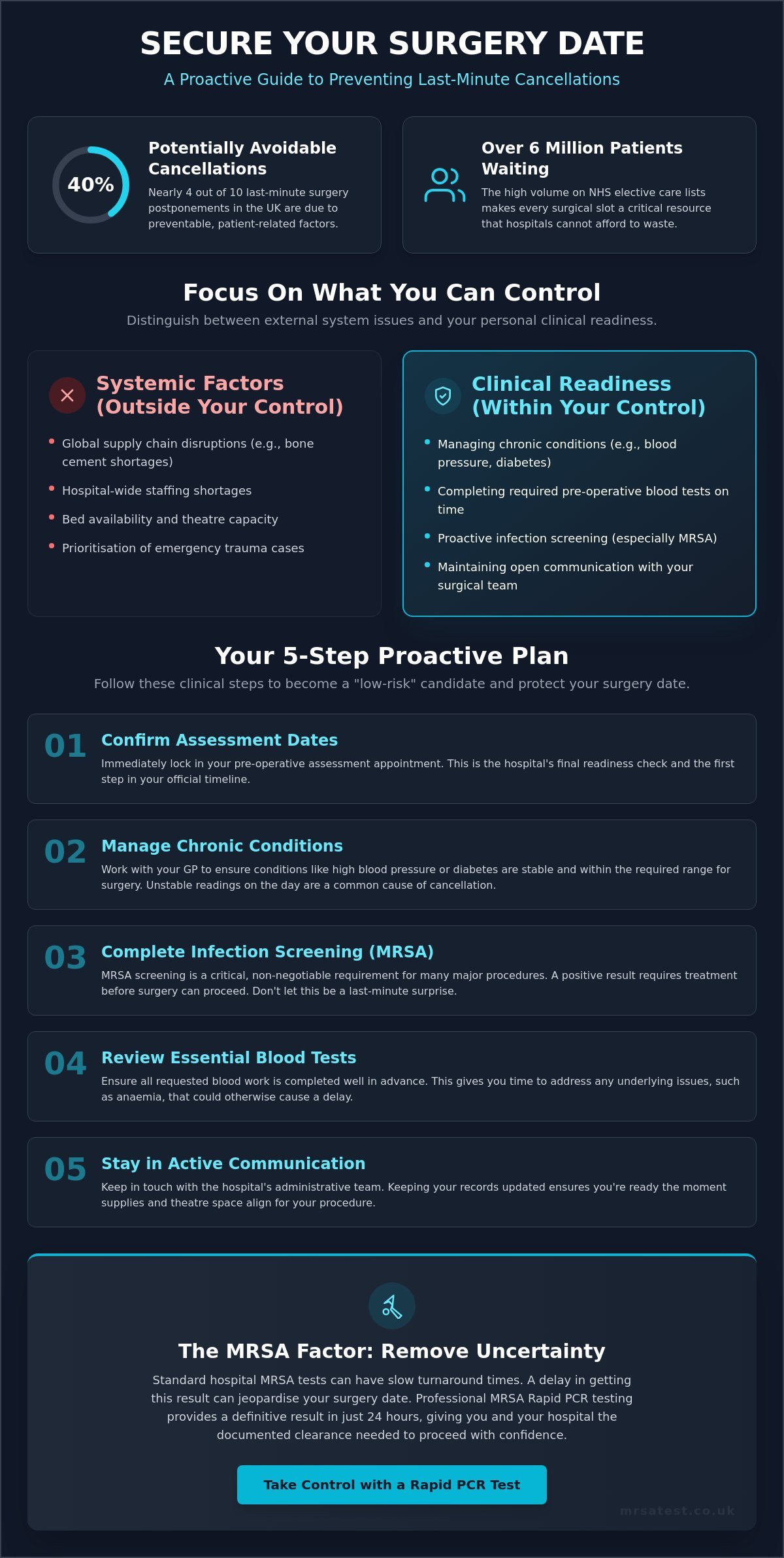
Did you know that nearly 40% of last-minute surgery cancellations in the UK are considered potentially avoidable? With over 6 million patients currently on waiting lists for elective care, the prospect of a postponement can be deeply distressing. You’ve likely spent months counting down the days, and the fear of being sent home due to a missed clinical requirement is a significant source of anxiety. When it comes to avoiding surgery delays uk, taking a proactive approach to your clinical readiness is the most effective way to safeguard your scheduled date.
It’s understandable to feel unsettled by news of medical supply shortages or hospital capacity issues. While these systemic factors exist, many cancellations occur because of health factors that are within your control. This guide will provide you with a clear, manageable plan to ensure you’re fully prepared for your procedure. We’ll explain how to navigate pre-operative requirements and why early MRSA screening is a vital step in preventing last-minute complications. By following these professional steps, you can replace uncertainty with the peace of mind that comes from thorough, clinical preparation.
Key Takeaways
- Understand the 2026 surgical landscape to distinguish between external supply chain issues and factors within your direct control.
- Learn why clinical readiness is the most powerful tool for avoiding surgery delays uk and ensuring your hospital admission proceeds as planned.
- Identify the clinical requirements for major procedures, including the critical role of MRSA screening in preventing avoidable postponements.
- Follow a proactive five-step plan to manage your pre-operative timeline, from confirming assessment dates to reviewing essential blood test results.
- Discover how professional MRSA Rapid PCR testing can provide definitive results in 24 hours, helping you meet hospital requirements without administrative delays.
The Current Landscape of Surgery Delays in the UK
The UK healthcare system is currently managing a period of significant pressure. As of February 2026, the NHS waiting list for consultant-led elective care stands at over 6 million patients. This volume means that every surgical slot is a critical resource. When a procedure is postponed, the impact is felt far beyond the hospital schedule. Trusts are often forced to prioritise emergency trauma cases over elective procedures to manage immediate risks. For patients, a last-minute cancellation isn’t just a calendar change; it’s an emotional and physical setback that extends their period of pain or limited mobility.
The 2026 Bone Cement Shortage Explained
Beyond Orthopaedics: General Risks for All Elective Care
Staffing levels and bed availability remain persistent challenges across all surgical specialties. In some areas, such as NHS Borders, maximum waiting times for ENT procedures reached 74 weeks in June 2026. Because the system is stretched thin, hospitals have a low tolerance for clinical unpreparedness. If a patient arrives for a procedure but hasn’t met all pre-operative requirements, the slot is often reassigned immediately. Being “fit for surgery” involves more than just feeling well; it requires documented proof that you’re free from infections or underlying issues like anaemia. Taking control of these clinical markers is a proactive way of avoiding surgery delays uk and ensuring your recovery begins on schedule.
Supply Shortages vs. Clinical Readiness: What Can You Control?
Surgical delays generally fall into two categories: external and patient-specific. External factors include the global supply chain issues or staffing shortages discussed in the previous section. While these are frustrating, they remain outside your influence. Patient-specific factors, however, are entirely different. This is the only area where you have significant leverage. By focusing on your own clinical readiness, you ensure that when a theatre slot and the necessary supplies are available, you are the first person ready to step through the doors. For those focused on avoiding surgery delays uk, clinical preparation is the most powerful tool in your possession.
Controllable Factors in Your Surgery Preparation
Managing chronic conditions is the foundation of surgery readiness. Conditions like high blood pressure or poorly managed diabetes are frequent causes of day-of-surgery cancellations. If your readings are unstable on the morning of the procedure, the anaesthetist may decide the risk is too high. Using a structured approach to preparing for surgery allows you to monitor these vitals weeks in advance. This gives you time to consult your GP and adjust medications if your levels aren’t within the required range. Ensuring all blood work and diagnostic screenings are completed early prevents administrative bottlenecks that often lead to avoiding surgery delays uk becoming a challenge at the final hour.
Why Hospitals Cancel “Unready” Patients
Safety protocols are absolute. Surgeons and anaesthetists cannot operate on patients who are colonised with certain bacteria or whose health markers are unstable. For example, MRSA screening before surgery is a mandatory safety step. If a patient tests positive for MRSA colonisation, they must undergo a decolonisation process before entering a sterile theatre environment.
Hospitals operate on incredibly tight schedules. An empty theatre slot costs the NHS thousands of pounds every hour. If you aren’t ready, the hospital cannot “wait” for you to become ready. They must reassign that slot to another patient to maintain efficiency. Identifying potential issues like infection or anaemia early allows you to receive treatment without losing your place in the queue. If you have concerns about your readiness, checking your status via professional screening services can provide the clarity you need to proceed with confidence.
The MRSA Factor: A Common but Preventable Cause of Delay
MRSA stands for Methicillin-resistant Staphylococcus aureus. It is a common bacterium that many people carry on their skin or in their nose without ever knowing it. This state is called colonisation. While it doesn’t usually cause problems for healthy individuals in daily life, it is a primary concern in a hospital setting. If these bacteria enter the body during an operation, they can cause serious infections that are resistant to many standard antibiotics. Because of this, hospitals maintain strict protocols to identify carriers before they enter a sterile theatre.
The standard NHS protocol involves screening patients before almost any major elective procedure. This usually involves taking swabs from the nose, groin, and sometimes the armpit. If you’re avoiding surgery delays uk, understanding this screening is vital. A positive result on the day of your surgery leads to an immediate cancellation. Surgeons simply cannot risk a patient developing a severe post-operative complication that could have been prevented with simple decolonisation. This “silent” colonisation is more common than many realise, affecting approximately 1 in 30 people in the general UK population.
How MRSA Colonisation Halts Your Procedure
The primary reason for a cancellation is the risk of hospital-acquired infections. If MRSA is present on your skin, the incision made during surgery provides a direct entry point into your bloodstream or deep tissues. Once an infection takes hold, it’s difficult to treat and can lead to prolonged hospital stays or even permanent damage. It’s a clinical risk that no surgical team is willing to take.
Decolonisation is the process used to clear the bacteria from your skin. This involves using special antiseptic body washes and antibiotic nasal creams for 5 to 7 days. Because this treatment takes a full week to complete, it cannot be done “on the spot” at the hospital. If you test positive at your pre-op assessment or on the morning of surgery, your slot is lost. You then face an administrative delay while waiting for a clear re-test result and a new date to be issued in the surgical schedule.
The Benefit of Early Screening
Identifying MRSA weeks before your scheduled date allows for a calm, stress-free decolonisation process. It removes the uncertainty that often accompanies the final countdown to an operation. Knowing your status early prevents the emotional toll of a last-minute phone call informing you that your surgery is postponed. It puts the control back into your hands, allowing you to deal with the bacteria privately and effectively.
There is a significant difference between standard culture tests and rapid PCR technology. Culture tests can take several days to provide a result because the bacteria must be grown in a laboratory environment. In contrast, a Rapid PCR test identifies the genetic material of the bacteria, providing definitive results in as little as 24 hours. This speed is a major advantage for patients avoiding surgery delays uk, as it provides the clinical accuracy needed for peace of mind without the long wait typical of traditional methods.
5 Proactive Steps to Secure Your Surgery Date
Securing your operation date requires a transition from passive waiting to active management. While the hospital manages the theatre schedule, you must manage your clinical profile. These five proactive steps are essential for anyone focused on avoiding surgery delays uk in the current high-pressure environment. By taking these actions, you reduce the likelihood of a last-minute clinical rejection.
First, confirm your pre-operative assessment date as soon as you are placed on the surgical list. Don’t wait for a letter to arrive in the post; contact the admissions department to ensure you are correctly logged in their system. Second, take the time to understand your blood test results. Identifying issues like anaemia or low-level inflammation early allows you to address them with your GP before they become reasons for a cancellation. Third, conduct your own MRSA screening to identify colonisation before your hospital appointment. Fourth, maintain a strict hygiene regime in the 14 days leading up to your surgery. This includes avoiding shared towels and keeping any minor cuts clean and covered. Finally, stay in active communication with your surgical coordinator. If you’ve heard news of supply shortages, such as the bone cement issues seen in early 2026, a quick phone call can confirm if your specific procedure remains on track.
Step 1: The Early MRSA Check
Relying solely on the hospital’s timeline for screening can be risky. If the hospital identifies MRSA colonisation only a few days before your surgery, there is rarely enough time for decolonisation. Using an at-home test kit allows you to check your status privately and at your convenience. If your private test returns a positive result, you can contact your GP immediately to begin the necessary 5-7 day treatment. This ensures you arrive at your official hospital assessment already clear of the bacteria, effectively avoiding surgery delays uk caused by preventable infections.
Step 2: Optimising Clinical Health
Hospitals provide specific instructions regarding medication and fasting for a reason. Follow these to the letter. Even a minor error in fasting can lead to an automatic cancellation for safety reasons. Additionally, report any new skin infections, rashes, or persistent coughs to your surgical team immediately. It’s better to address a minor infection two weeks before surgery than to have it discovered on the morning of the procedure. For the best chance of success, order your MRSA Rapid PCR Test today to ensure you are clinically ready for your scheduled date.
How Private MRSA Testing Protects Your Surgical Timeline
While the NHS provides essential screening, the system often faces administrative bottlenecks that can jeopardise your procedure date. Hospital-led screening is typically scheduled within a narrow window before surgery. If an administrative error occurs or if laboratory results are delayed, you may find yourself without the necessary clearance on the morning of your operation. By choosing a private diagnostic service, you remove this uncertainty. Professional private testing allows you to bypass hospital queues and obtain the clinical evidence you need on your own terms. For patients focused on avoiding surgery delays uk, this proactive step ensures that an administrative oversight doesn’t result in a lost theatre slot.
Self-collection kits offer a significant logistical advantage. Instead of making extra trips to a clinical environment where you might be exposed to other infections, you can collect your swabs in the privacy of your home. You then return the samples directly to a verified laboratory for analysis. This streamlined process provides your surgical team with a verified clear result, demonstrating your clinical readiness well before you arrive at the hospital. It shows the surgical coordinator that you are a low-risk, prepared candidate which is vital when hospitals are forced to prioritise patients based on their immediate fitness for surgery.
Speed and Accuracy When It Matters Most
Timing is critical when a surgery date is approaching. A standard MRSA Culture test requires the laboratory to grow bacteria over 48 to 72 hours to reach a definitive conclusion. While accurate, this timeframe can be too slow if your surgery is imminent or if you need to start a decolonisation course. In contrast, the MRSA Rapid PCR Test utilises advanced genetic analysis to identify the presence of bacteria. This method provides results in as little as 24 hours. PCR technology is often the preferred choice for patients with tight deadlines because it offers clinical precision without the traditional waiting period. All tests are processed by accredited laboratory partners, ensuring the results meet the high standards required by UK surgical teams.
Taking Control of Your Healthcare Journey
The final weeks before an operation are often filled with anxiety. Much of this stress comes from a feeling of powerlessness over the hospital’s schedule. Private testing acts as a clinical insurance policy for your surgery slot. Knowing your status in advance provides immense psychological relief, as it confirms that you have met one of the most common “showstopper” requirements. If you are colonised, you have the time to treat it; if you are clear, you have the documentation to prove it. Taking this level of responsibility is the most effective strategy for avoiding surgery delays uk. Don’t leave your clinical readiness to chance. Secure your surgery date with a private MRSA test kit today.
Take Control of Your Surgical Readiness
While systemic challenges like supply shortages persist, your focus should remain on the factors within your influence. Ensuring you are clinically fit for your procedure is the most effective way of avoiding surgery delays uk. By managing your pre-operative requirements early, you eliminate the risk of a last-minute cancellation due to preventable issues like MRSA colonisation. This proactive approach moves you from a position of uncertainty to one of quiet competence.
You don’t have to leave your surgery date to chance. Our discreet and professional at-home service utilizes accredited UK laboratory testing to provide you with the clarity you need. Whether you require a standard culture or rapid 24-hour PCR results, we support your journey toward a successful recovery. Order Your Pre-Surgery MRSA Test Kit Now to secure your place in the theatre schedule.
Preparation is the key to peace of mind. We’re here to help you step into your surgery with confidence and clarity.
Frequently Asked Questions
Why is my surgery being delayed because of MRSA?
MRSA colonisation poses a high risk of surgical site infections that are difficult to treat with standard antibiotics. If you test positive, the hospital must postpone your procedure to ensure you undergo decolonisation. This protects your health and maintains the sterility of the theatre environment. Operating on a colonised patient can lead to serious, resistant complications that extend recovery times and hospital stays significantly.
Can I have surgery if I have MRSA?
Elective surgery is typically postponed until you have successfully completed a decolonisation treatment and received a clear test result. In emergency trauma cases, surgeons may proceed with extra precautions; however, for planned procedures, ensuring you are clear is a mandatory safety requirement for avoiding surgery delays uk. This protocol ensures the safest possible environment for your recovery and prevents the spread of bacteria within the ward.
How long does it take to get rid of MRSA before surgery?
The standard decolonisation process usually takes 5 to 7 days to complete. This involves using prescribed antiseptic body washes and antibiotic nasal creams as directed by your clinical team. After you finish the full course, a re-test is required to confirm the bacteria have been cleared. You cannot be cleared for your procedure until a negative result is officially recorded in your medical notes.
How far in advance should I be screened for MRSA?
You should ideally be screened 2 to 4 weeks before your scheduled surgery date. This window provides enough time for the laboratory to process your results and for you to complete a full week of treatment if the result is positive. Checking your status early, either through the hospital or a private service, is a key step in avoiding surgery delays uk.
What happens if my pre-op MRSA test is positive?
If your test is positive, you’ll be contacted by your surgical team or GP to begin a decolonisation regime. Your current surgery slot will likely be rescheduled to a later date to allow time for the treatment to work. Once you finish the antiseptic course, you’ll need to provide a clear swab result to prove you are no longer carrying the bacteria before a new date is issued.
Can I use a private MRSA test for my NHS surgery?
Yes, you can use a private test to monitor your own status and ensure you are ready for your official NHS assessment. While your specific NHS trust will still perform their own mandatory screening, having a verified clear result from a private lab provides peace of mind. It allows you to identify and treat any colonisation privately beforehand, ensuring you pass the hospital’s final check without issue.
Will the bone cement shortage affect my specific operation?
Impact depends on your hospital’s stock levels and your clinical priority. Although the NHS secured alternative suppliers in late February 2026 to mitigate the global shortage from Heraeus Medical, some trusts continue to prioritise urgent trauma or infection cases. You should contact your surgical coordinator directly to confirm if your specific hip or knee replacement remains scheduled as planned or if local stock issues exist.
What are the most common reasons for surgery cancellation on the day?
Cancellations on the day are frequently caused by theatre capacity issues or unexpected staff shortages. On the clinical side, common reasons include unstable blood pressure, the discovery of new respiratory infections, or a patient’s failure to follow strict fasting protocols. Ensuring you meet every clinical requirement and remain in good health before your arrival is the most effective way to protect your scheduled surgery slot.