
MRSA Screening for Care Home Admission UK: A Complete Guide for Families
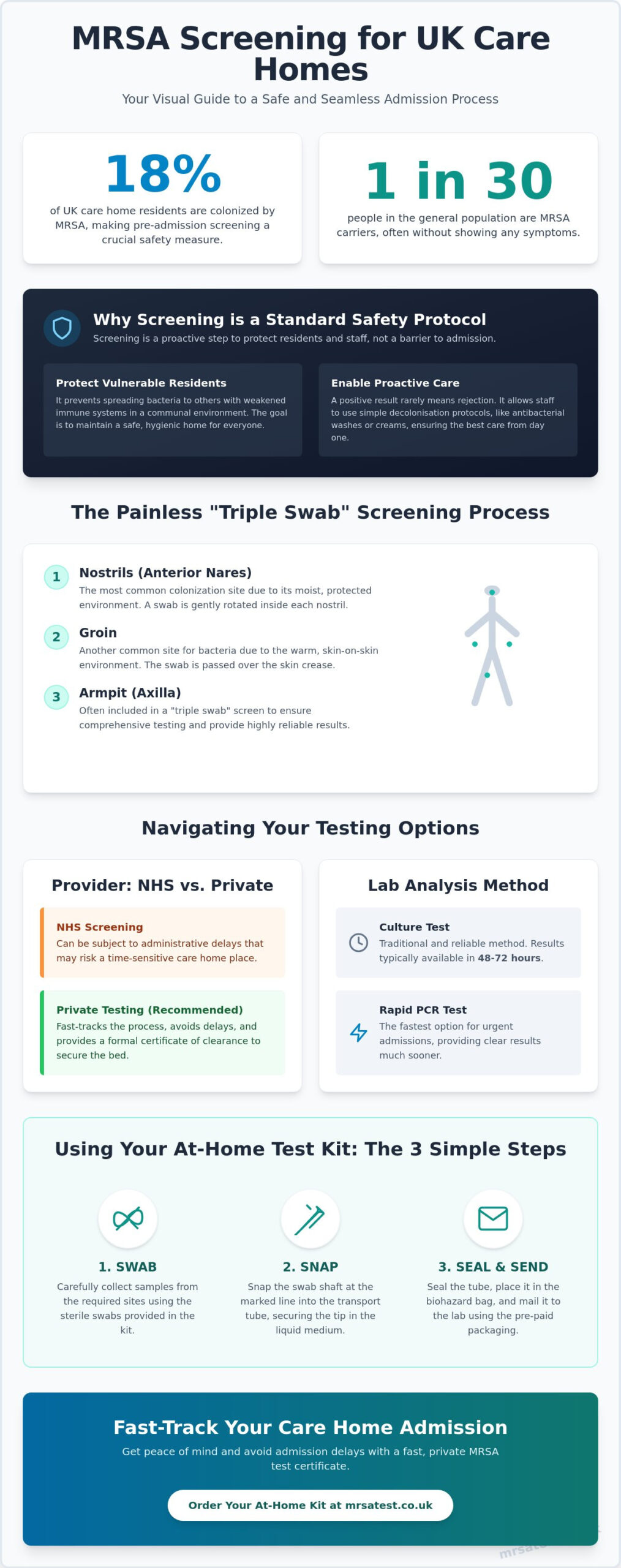
Recent data indicates that 18% of care home residents in the UK are colonized by MRSA. This statistic explains why many facilities now require a risk assessment or a clear test result before a new resident can move in. It’s understandable if you feel anxious or confused when a care home manager mentions these requirements. You’ve likely spent weeks finding the right home, and the last thing you want is a medical technicality causing a delay to your relative’s move-in date.
This guide explains everything you need to know about mrsa screening for care home admission uk so you can navigate the process with confidence. We’ll help you understand the latest UK Health Security Agency (UKHSA) guidance and why being a carrier doesn’t have to be a barrier to residential care. You’ll also learn how to obtain fast, private results that provide peace of mind for your family and the care home staff alike. Our goal is to ensure a safe, professional, and seamless transition for your loved one without the stress of pending medical tests.
Key Takeaways
- Understand why UK care homes require MRSA screening as a standard safety protocol and what it means to be a “carrier” of the bacteria.
- Learn the specifics of mrsa screening for care home admission uk, including which body sites are swabbed and why the process is painless.
- Compare NHS and private testing options to avoid common administrative delays that could put your care home bed at risk.
- Discover how to correctly use a professional self-collection kit at home using the simple “swab, snap, and seal” protocol.
- Identify the fastest routes to obtaining a certificate of clearance through rapid PCR or standard culture testing for a seamless move-in.
Why Do UK Care Homes Require MRSA Screening?
Care home managers often request a screening result before a resident moves in. This request isn’t meant to be a hurdle. Instead, it’s a standard safety protocol designed to protect everyone in the facility. To understand why this is necessary, we must first look at What is MRSA? It stands for Methicillin-resistant Staphylococcus aureus, a strain of bacteria that has developed resistance to several widely used antibiotics. This resistance makes infections significantly harder to treat than standard staph infections.
Many people carry these bacteria on their skin or in their nose without showing any symptoms or feeling unwell. This state is known as colonisation. In the general population, approximately 1 in 30 people are MRSA carriers. When a family starts looking into mrsa screening for care home admission uk, they often worry that a positive result will lead to a rejected application. This is rarely the case. A positive screen simply allows the home to implement decolonisation protocols, such as antibacterial body washes or nasal creams, to reduce the risk of transmission. Residential providers have a legal duty of care toward their existing residents, many of whom have weakened immune systems. Screening is a proactive step that ensures the environment remains safe and manageable for both staff and residents.
The Risk of Communal Living
Residential facilities are communal environments where residents share dining rooms, lounges, and bathrooms. These shared spaces increase the chance of bacterial transfer through direct touch or shared surfaces. Elderly individuals are naturally more susceptible to skin and soft tissue infections due to thinner skin or existing health conditions. The Care Quality Commission (CQC) monitors these homes closely. They enforce strict infection control standards to prevent the spread of “superbugs” in these social settings. By identifying carriers before they move in, the home can maintain a high standard of hygiene without needing to isolate the individual.
Screening as a Pre-Admission Requirement
It’s vital to ask the care home manager about their specific policy early in the process. Some homes require mrsa screening for care home admission uk to be completed within 48 to 72 hours of the move-in date. There’s a distinct difference between a routine screen and an urgent clearance. If a bed becomes available suddenly, you don’t want a pending lab result to be the reason your relative loses their place. A routine screen might be part of a general health check, but an urgent clearance is often what’s needed to secure a room during a fast-moving transition. Knowing the status of a resident allows the staff to provide the best care from day one.
The MRSA Screening Process: What Sites are Swabbed?
The prospect of medical testing can be daunting, but the actual procedure for mrsa screening for care home admission uk is remarkably straightforward. It doesn’t involve needles, blood samples, or invasive examinations. Instead, the process relies on simple swabs, which are essentially long cotton buds used to collect a sample of bacteria from the surface of the skin. This can be completed in just a few minutes, even in a home setting, making it a low-stress experience for your relative.
Clinical professionals look for MRSA in specific “reservoirs” on the body where the bacteria are most likely to live. Following the UK MRSA prevention guidelines ensures the highest level of accuracy, as missing a colonised area could lead to a false negative result. Most care homes require at least a dual-site screen, though many now prefer a “triple swab” approach for comprehensive clearance.
Standard Screening Sites
The nostrils, specifically the anterior nares, are the most common site for MRSA colonisation. Bacteria thrive in the moist, protected environment just inside the nose. A separate swab is then used for the groin area. Like the nose, the groin provides a warm, skin-on-skin environment where bacteria can easily multiply. Finally, the axilla, or armpit, is often included in a triple swab screen. By testing these three primary sites, the laboratory can provide a highly reliable picture of the individual’s MRSA status.
Understanding PCR vs. Culture Results
Once the samples are collected, they’re sent to a laboratory for analysis. There are two main ways to identify the presence of MRSA, and the choice between them often depends on how quickly you need the results. Traditional culture testing involves placing the sample in a petri dish to see if bacteria grow over time. This method is reliable but typically takes 48 to 72 hours for a definitive result. If the care home move is planned weeks in advance, this is a cost-effective option.
Molecular PCR testing is the modern alternative. It looks for the genetic signature of the MRSA bacteria rather than waiting for it to grow. This allows the lab to provide results much faster, often within 24 hours of receiving the sample. Families often choose a Rapid PCR test when move-in dates are imminent or when a care home bed has suddenly become available. Choosing the right method ensures that mrsa screening for care home admission uk doesn’t become a bottleneck in the transition to residential care.
Navigating the Move-In: NHS vs. Private Screening Options
Moving a relative into a care home is an emotional and logistically heavy task. When a care home manager requests mrsa screening for care home admission uk, the first instinct is often to call the local GP surgery. However, many families find that non-urgent screening is low on the clinical priority list for overstretched NHS services. Waiting for an appointment, followed by the time taken for the lab to process the swabs and the GP to relay the result, can take weeks. This delay is more than just an inconvenience; it’s a significant barrier to care.
The risk of losing a hard-won care home bed is real. If a vacancy arises and you can’t provide medical clearance quickly, the home may offer the room to the next person on the waiting list. Private screening from accredited laboratories offers a reliable alternative. These results are fully accepted by UK care home providers and regulatory bodies, as they meet the same clinical standards as NHS tests but operate on a much faster timeline.
Managing Admission Timelines
Last-minute placements are common in the UK social care system, especially when a relative’s health declines suddenly. In these scenarios, you might need a result within 48 hours to secure the admission. If the NHS can’t meet this timeframe, the hidden costs can mount quickly:
- Respite fees: Paying for temporary care while waiting for clearance.
- Hospital delays: Remaining in a ward longer than necessary, increasing the risk of secondary illness.
- Loss of placement: Missing out on a preferred room because another family was ready to move in.
Similar to preparing for surgery, managing pre-admission health logistics requires a proactive approach to avoid these bottlenecks.
The Benefits of Private, Confidential Testing
At-home testing kits allow for discreet sample collection, which helps maintain the dignity of your elderly relative. There’s no need to transport them to a busy clinic or hospital, reducing their exposure to hospital-acquired infections. You’ll receive results directly from the lab, often via a secure digital portal, without waiting for a GP call-back. This streamlined process provides the clear, documented evidence of clearance required for mrsa screening for care home admission uk while keeping the focus on your relative’s comfort and safety.
How to Use an At-Home MRSA Test Kit for Admission
Using a professional self-collection kit simplifies the logistics of mrsa screening for care home admission uk. It allows your relative to remain in a familiar environment while ensuring the samples meet clinical standards. The process is designed to be straightforward, even for those without medical training. By following a clear, structured method, you can collect high-quality samples that provide the accurate results care homes require for a safe admission.
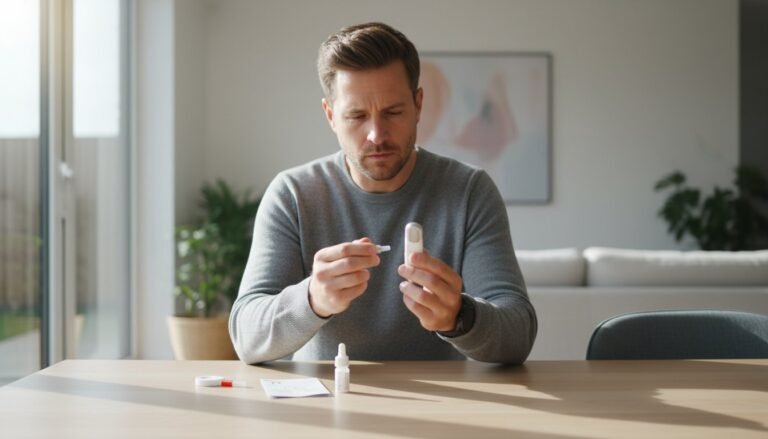
The core of the collection process follows the “swab, snap, and seal” protocol. You’ll use the sterile swabs provided to gently rotate against the required body sites, such as the nostrils or groin. Once the sample is collected, the swab is placed into a transport tube containing a specialised medium. You simply snap the applicator handle at the break-point and seal the cap tightly. This method ensures the bacteria remain viable for analysis during transit to the laboratory. Accuracy is vital, so always ensure each tube is labelled clearly with the resident’s full name and date of birth. Laboratories must reject unlabelled samples to comply with safety regulations, which could cause the very delays you’re trying to avoid.
Preparing for the Swab
Success starts with proper preparation. Before you begin, check the kit’s expiry date and ensure all components are present. The person assisting with the collection must perform thorough hand hygiene by washing with soap and water or using an alcohol-based sanitiser. It’s equally important that the resident’s skin is clean and free from any antiseptic creams, ointments, or powders. These substances can interfere with the bacterial growth in a culture or the molecular detection in a PCR test, potentially leading to an inconclusive result.
Secure Packaging and Lab Return
Once the swabs are sealed in their protective transport tubes, place them into the provided biohazard bag. The kit includes a prepaid return shipping envelope addressed to a UK-accredited laboratory. These facilities provide “gold standard” results that are recognised by healthcare providers across the country. After you post the sample, the laboratory typically sends a digital notification once the sample is received. Your final certificate of clearance will be delivered through a secure portal, giving you the documentation needed to finalise the care home move. For a reliable and efficient experience, you can order your MRSA home test kit here to begin the process today.
Fast-Track Your Care Home Admission with mrsatest.co.uk
Accredited UK Laboratory Testing
Care homes require documentation from verified sources to meet their strict infection control obligations. By using an accredited UK laboratory, you ensure your results are accepted without question by healthcare providers and regulatory bodies. Our PCR molecular detection identifies the genetic markers of the bacteria, providing a definitive answer far quicker than traditional growth-based methods. This high level of accuracy provides peace of mind that the new home remains a safe environment for all residents. Once your result is ready, you’ll receive a digital certificate of clearance through a secure portal. You can share this directly with the care home manager via email, allowing them to finalise the admission paperwork immediately and secure the room.
Ordering Your Kit Today
Ordering your kit is a simple, secure process through our online platform. We understand that time is often critical in social care transitions, which is why we offer next-day delivery options across the UK to get your screening started without delay. Our team provides reassuring support throughout the process, offering clear instructions and advice to help you feel confident in the self-collection method. You don’t have to navigate this transition alone. Order Your Confidential MRSA Test Kit Online today to ensure a smooth transition to residential care and obtain the mrsa screening for care home admission uk required for your relative’s next chapter.
Secure a Seamless Move-In Today
Ensuring your relative’s transition into residential care is smooth shouldn’t be hampered by administrative delays or medical uncertainty. It’s clear that mrsa screening for care home admission uk is a routine safety measure designed to protect the whole community. By choosing a private, at-home test kit, you maintain control over the move-in timeline and your loved one’s comfort. This proactive step removes the stress of waiting for GP appointments and keeps the focus on what matters most: a safe start in a new home.
Our service provides results from verified UK-accredited laboratories. We offer rapid 24-hour PCR results for urgent placements, delivered through a secure digital portal. Each kit arrives in discreet, letterbox-friendly packaging to ensure your privacy is protected throughout the process. You’ve done the hard work of finding the right facility; let us handle the clinical diagnostics with professional efficiency.
Order Your Private MRSA Admission Test Kit today to provide the peace of mind your family and the care home manager deserve. You’re one step closer to a successful move.
Frequently Asked Questions
Is MRSA screening mandatory for all UK care homes?
No, MRSA screening isn’t a universal legal requirement for every admission in the UK. Instead, facilities follow a risk-based assessment to decide if a test is necessary. This often depends on whether your relative has recently stayed in a hospital or has a known history of the bacteria. While not mandatory by law, many individual homes make it a condition of their own policies regarding mrsa screening for care home admission uk.
How long does a care home MRSA test result take?
The timeframe depends entirely on the type of test you choose. A standard culture test usually takes 48 to 72 hours because the laboratory needs time to grow the bacteria. If you need a faster turnaround for an urgent move-in, a rapid PCR test can provide results in as little as 24 hours after the sample reaches the lab. This speed helps prevent delays in the admission process.
What happens if my relative tests positive for MRSA before moving in?
If a test comes back positive, your relative will typically be prescribed a decolonisation treatment. This simple process usually involves using an antibacterial body wash and a specific nasal ointment for a few days. It’s a standard procedure designed to clear the bacteria from the skin and nose. It ensures the resident is safe to enter the communal environment without posing a risk to others.
Can I do the MRSA swab test myself at home?
Yes, you can safely perform the swab test at home using a professional self-collection kit. These kits include sterile swabs and clear instructions on how to sample the nose and groin areas. Once you’ve collected the samples, you seal them in the provided tubes and post them to an accredited laboratory for analysis. It’s a discreet and comfortable way to meet admission requirements.
Does the NHS pay for care home admission MRSA screening?
The NHS typically provides MRSA screening for high-risk individuals or those being admitted to a hospital. If a care home requires a test for administrative reasons and your relative doesn’t meet specific clinical criteria, the GP surgery may not be able to offer it. In these cases, families often choose private mrsa screening for care home admission uk to avoid unnecessary move-in delays.
Will a positive MRSA result stop my relative from moving into a care home?
A positive MRSA result shouldn’t stop your relative from moving into a care home. Current UK health guidance states that colonisation isn’t a reason to refuse admission or isolate a resident. The home will simply implement standard infection control measures and ensure the decolonisation treatment is completed. It’s a manageable condition that shouldn’t interfere with the long-term care plan.
How often does a resident need to be screened for MRSA?
Screening is usually only required once as part of the pre-admission process. Residents don’t typically need regular, ongoing MRSA tests unless they have a subsequent hospital stay or there’s a specific clinical concern within the home. The focus is on identifying the status at the point of entry. This allows the staff to manage any risks effectively from the very first day of residency.
What is the difference between a PCR and a Culture MRSA test for admission?
The primary difference is the technology used to detect the bacteria. A culture test is the traditional method that waits for bacteria to grow in a lab, which takes several days. A PCR test is a molecular method that detects the DNA of the MRSA bacteria. This makes it much faster and highly accurate, which is often preferred for urgent care home placements.