

The Importance of MRSA Screening Before Surgery: A Complete Guide for 2026
What if a microscopic organism living harmlessly on your skin could be the single biggest risk to your surgical recovery? Many patients feel completely healthy before an operation, yet understanding the importance of mrsa screening before surgery is a critical safety step in 2026. Methicillin-resistant Staphylococcus aureus (MRSA) is a common bacterium that often lives on the skin without causing harm, a state known as colonisation. However, if these bacteria enter a surgical wound, they can lead to serious infections that are difficult to treat with standard antibiotics.
It’s completely normal to feel anxious about your procedure being delayed or cancelled due to a positive swab result. We recognize that you want your surgery to proceed exactly as planned without the worry of hospital-acquired complications. This guide provides peace of mind by explaining exactly how the screening process works and what steps you can take if MRSA is detected. You’ll learn the vital difference between colonisation and infection, and how rapid PCR testing offers the fast, reliable results you need to ensure your operation stays on schedule.
Key Takeaways
- Understand the clinical importance of mrsa screening before surgery to identify hidden risks and prevent serious surgical site infections.
- Learn to distinguish between MRSA colonisation and active infection, ensuring you can manage carrier status without unnecessary anxiety.
- Compare the benefits of rapid PCR testing versus traditional cultures, focusing on how molecular technology provides results in just 24 hours.
- Discover the standard five-day decolonisation protocol that allows patients with a positive result to proceed with their operation safely.
- Identify how private at-home screening offers a discreet and convenient way to confirm your status before your formal hospital pre-assessment.
Why MRSA Screening is Critical for Surgical Safety
Methicillin-resistant Staphylococcus aureus (MRSA) is a specific type of bacteria that has developed a strong resistance to several widely used antibiotics, including methicillin and penicillin. For most people in the UK, carrying these bacteria doesn’t result in illness or symptoms. This state is known as being “colonised,” where the bacteria live harmlessly on the skin, in the nose, or in the throat. While it stays on the surface, it’s rarely a threat to your daily health. The danger changes significantly when you undergo a medical procedure that involves breaking the skin.
The true risk of MRSA lies in its “hidden” nature. You can’t see it, and you won’t feel unwell if you’re merely a carrier. This is why the importance of mrsa screening before surgery is a cornerstone of modern patient safety. Without a formal test, your surgical team won’t know if these resistant bacteria are present. Proactive screening allows healthcare providers to identify carriers early, which is the most effective way to reduce hospital-acquired infection rates and ensure a safe environment for your recovery.
The Risk of Surgical Site Infections (SSIs)
During any operation, an incision provides a direct pathway for bacteria to enter the body. Even with thorough skin preparation, bacteria residing deep in the skin’s pores can be introduced into the wound. Once inside, MRSA can cause a Surgical Site Infection (SSI). These infections are much harder to manage than standard infections because the common, first-line antibiotics are ineffective. For more context on these risks, you can consult our guide to hospital-acquired infections. It’s always safer to clear the bacteria before you enter the operating theatre than to fight a resistant infection during your recovery.
Why ‘Elective’ Surgeries Require Screening
Certain procedures, particularly elective orthopaedic and cardiac surgeries, have the highest screening standards. This is because these operations often involve the use of “metalwork” or medical implants like artificial joints and heart valves. MRSA is particularly dangerous in these cases because it can colonise the surface of the implant, creating a protective layer that is nearly impossible for the immune system to penetrate. Pre-operative screening serves as a vital preventative safeguard against the development of post-operative sepsis. By identifying your status ahead of time, you ensure that your surgical journey is as smooth and secure as possible.
Understanding Colonisation: How You Can Be a Carrier
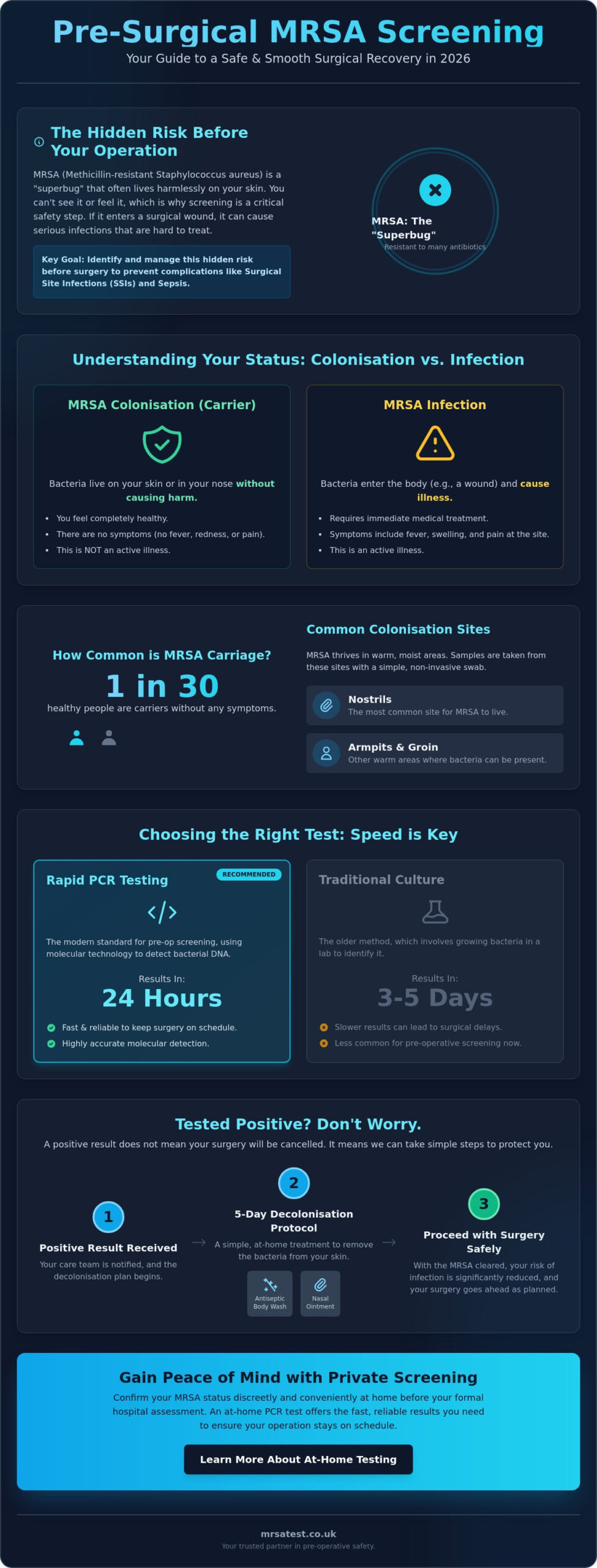
Many patients are surprised to learn that you can carry MRSA without feeling even slightly unwell. There is a widespread misconception that only people who are already ill or have spent long periods in hospital carry these bacteria. In reality, research indicates that approximately 1 in 30 people are healthy carriers. It’s vital to distinguish between being ‘colonised’ and being ‘infected’. Colonisation means the bacteria live on your skin or in your nose without causing harm. An infection only occurs if the bacteria find a way into the body, such as through a surgical incision.
MRSA typically thrives in warm, moist areas of the body. The most common sites for colonisation include the nostrils, the armpits, and the groin. Because these bacteria are part of your skin’s temporary flora, you unknowingly shed them throughout the day. In a sterile operating theatre, this ‘bacterial shedding’ poses a significant risk. Even the smallest skin scales carrying MRSA can land on surgical instruments or directly into an open wound. This underscores the importance of mrsa screening before surgery, as it identifies this invisible risk before you enter a high-stakes environment.
The Asymptomatic Carrier
You cannot tell if you are a carrier simply by looking in the mirror or monitoring how you feel. Because there are no physical symptoms like redness, swelling, or fever, a laboratory test is the only way to confirm presence. Carriers can unknowingly spread the bacteria to household surfaces, clothing, or other people through simple contact. For those who want to understand the broader implications of carriage, our complete guide to MRSA symptoms and risks provides deeper insights into how these bacteria behave in different environments.
How MRSA is Detected
The detection process is straightforward and non-invasive. It involves using a sterile swab to collect samples from the nose, throat, or groin. Clinical professionals often swab multiple sites because colonisation can be patchy; testing only one area might result in a false negative. These samples are then sent to a specialist laboratory where experts use advanced diagnostic techniques to identify specific resistant strains. If you are concerned about your status ahead of a procedure, a private MRSA screening can provide the clarity you need from the comfort of your home. This professional analysis ensures that any presence of MRSA is caught early, allowing for effective management before your operation date arrives.
Comparing Pre-Op Tests: PCR vs. Standard Culture
When preparing for a procedure, understanding the technology behind your diagnostic results can alleviate much of the stress associated with pre-operative timelines. There are two primary methods used to detect MRSA: Polymerase Chain Reaction (PCR) and standard microbiological culture. While both are highly reliable when performed in accredited laboratories, they serve different clinical needs based on the urgency of your surgery. This distinction highlights the importance of mrsa screening before surgery, as choosing the right test ensures your results are ready when the hospital requires them. By selecting the appropriate diagnostic method, you can avoid the logistical hurdles that often lead to delayed procedures in the NHS or private sector.
PCR is a molecular diagnostic tool that works by detecting the specific DNA of the MRSA bacterium. Because this method identifies the genetic material itself rather than waiting for the bacteria to grow, it offers a significantly faster turnaround. In contrast, a standard culture involves placing the sample on a nutrient-rich agar plate and incubating it to see if bacterial colonies develop. This biological process is naturally slower, making PCR the preferred choice for patients operating on a tight schedule.
The Speed Advantage of Rapid PCR
If your surgery is scheduled within the next seven days, every hour counts. Standard culture tests typically take between 48 and 72 hours to provide a definitive result. If you add the time required for postage and processing, you might find yourself waiting nearly a week for an answer. Rapid PCR testing reduces the laboratory processing time to approximately 24 hours. This speed is essential for preventing the anxiety of last-minute cancellations. You can find more technical information about how this works by viewing our MRSA Rapid PCR Test Kit, which is designed for those who need clinical accuracy without the wait.
When Standard Culture is Appropriate
Standard culture testing remains a robust and cost-effective option for routine pre-operative assessments planned several weeks in advance. This method is often used for broad screening programmes where time is less of a critical factor. If your hospital trust doesn’t require an immediate result, the 48-72 hour window for a culture test is perfectly acceptable. It’s a reliable way to confirm your status while keeping costs manageable. Regardless of which method you choose, the quality of the sample is paramount. You should follow the at-home test kit instructions carefully to ensure the laboratory receives a viable specimen. High-quality samples lead to definitive results, giving you the confidence that your surgical safety is being managed by experts.
What Happens if You Test Positive Before Surgery?
A positive MRSA result often triggers immediate concern, but you should keep in mind that this is a manageable clinical finding. Testing positive for colonisation doesn’t automatically mean your operation will be cancelled. Instead, it allows your medical team to initiate a targeted decolonisation programme. This proactive approach is precisely why the importance of mrsa screening before surgery cannot be overstated; it provides the window of opportunity needed to clear the bacteria safely before your procedure begins.
The primary goal of treatment is to reduce the bacterial load on your body to a level that is safe for surgery. This is typically achieved through a five-day protocol known as decolonisation. This treatment uses a combination of topical products to target the bacteria where they most commonly reside on the skin and in the nasal passages.
The Decolonisation Protocol
Managing Your Surgical Timeline
Timing is critical when managing a positive result. If you discover you’re a carrier just days before your operation, there may not be enough time to complete the five-day treatment and obtain a clearance result. This is where private testing offers a significant advantage. By screening yourself several weeks in advance, you gain the time needed to complete decolonisation without the stress of a last-minute delay. For a broader look at how to organise your procedure, see our pre-op health checklist.
Managing your timeline effectively starts with early awareness. Recognising the importance of mrsa screening before surgery allows you to take control of your health weeks before your hospital admission. If you want to ensure your surgical journey remains on track, you can order a private MRSA test today to confirm your status and give yourself the gift of time. Starting treatment immediately upon a positive result is the most effective way to ensure your surgery proceeds as planned.
Private MRSA Screening for Pre-Op Peace of Mind
Preparing for surgery is often a time of high anxiety, and waiting for hospital-led results can add significant pressure to an already stressful period. Many patients in the UK now choose to use mrsatest.co.uk to gain control over their pre-operative journey. By understanding the importance of mrsa screening before surgery early on, you can ensure that your health status is verified well in advance of your official hospital assessment. This proactive approach allows you to focus on your recovery rather than worrying about last-minute administrative delays or the fear of a cancelled procedure.
Choosing a private screening service offers a level of discretion and convenience that traditional clinical settings may lack. You can collect your samples in the comfort and privacy of your own home, avoiding the need for additional hospital visits or public waiting rooms. Every test is processed by UKAS-accredited laboratory partners, ensuring that the results you receive meet the highest clinical standards for accuracy and reliability. This professional oversight provides the quiet competence you need to feel fully supported throughout the diagnostic process.
Why Pre-Screen Privately?
The main advantage of private screening is the elimination of uncertainty. While the NHS provides excellent care, the logistical wait for results can sometimes cut close to your scheduled operation date. Recognising the importance of mrsa screening before surgery allows you to take a proactive stance. If you test positive through a private screen, you gain the opportunity to begin the decolonisation protocol before the hospital even identifies the issue. This effectively protects your surgical slot. By acting early, you ensure that when you arrive for your formal pre-assessment, you’re already clear of colonisation, preventing any risk of your procedure being postponed.
How the mrsatest.co.uk Process Works
The process is designed to be as straightforward as possible to minimize friction. You simply order your preferred test online, and a discreet kit is delivered directly to your door. Once you’ve followed the instructions to collect your swabs from the required sites, you return the kit using the prepaid postage provided. Results are delivered securely and confidentially via email, giving you a clear record to share with your surgical team if required. All tests are processed in high-standard UK laboratories to maintain complete diagnostic integrity.
If your results indicate colonisation, you won’t be left without direction. Support is available to help you interpret the findings and understand the necessary next steps for clearance. This comprehensive service combines the clinical accuracy of a hospital environment with the convenience of a private setting, ensuring your peace of mind is never compromised. Taking this step is a simple yet powerful way to prioritise your safety and ensure your surgical recovery starts on the best possible footing.
Secure Your Surgical Recovery Today
Understanding the importance of mrsa screening before surgery transforms a potential risk into a managed, proactive plan. By identifying colonisation early, you significantly reduce the chance of developing a resistant surgical site infection and ensure your operation stays on schedule. We’ve explored how both rapid PCR technology and standard cultures provide the clinical data your surgical team needs to proceed with confidence. Remember that a positive result isn’t a barrier to your procedure; it’s simply an opportunity to complete a straightforward decolonisation protocol before your admission date.
Our service offers the quiet competence of UKAS accredited laboratory analysis combined with the convenience of discreet at-home collection kits. With rapid 24-hour PCR results available, you can obtain the clarity you need without the anxiety of a long wait. You deserve to enter the operating theatre feeling fully prepared and protected. Taking control of your diagnostic timeline ensures that your surgical journey is as smooth and secure as possible.
Order your pre-operative MRSA test kit today for fast, confidential results and take a vital step toward a safe, successful recovery. We’re committed to supporting your health and providing the peace of mind you need for the journey ahead.
Frequently Asked Questions
Why is MRSA screening mandatory for most UK surgeries?
MRSA screening is a standard safety protocol designed to prevent healthcare-associated infections. Since these bacteria are resistant to many common antibiotics, identifying them before an incision is made protects both you and the hospital environment. This proactive measure significantly lowers the risk of post-operative complications like sepsis and ensures that the surgical theatre remains a sterile space for all patients.
How long before my surgery should I be screened for MRSA?
You should ideally be screened between two and four weeks before your scheduled operation date. This timeframe is essential because it provides a sufficient window for laboratory processing and any necessary follow-up actions. If you test positive, you’ll need at least five days for the decolonisation treatment plus additional time for a clearance swab to confirm the bacteria are gone.
Can I have my surgery if I test positive for MRSA?
Yes, you can still proceed with your surgery, but it will usually be delayed until you’ve completed a decolonisation protocol. Your medical team needs to ensure the bacterial load on your skin is reduced to safe levels before the procedure begins. In urgent cases, the hospital may proceed while using specific intravenous antibiotics to provide extra protection against the resistant strains during the operation.
What is the difference between an MRSA swab and a blood test?
An MRSA swab collects samples from the skin’s surface or nostrils to check for colonisation, whereas a blood test looks for active infection within the bloodstream. Pre-operative screening focuses on swabs because the goal is to find the bacteria before they enter the body. Blood tests are generally reserved for patients who are already showing systemic symptoms of illness, such as a high fever.
Does a positive MRSA result mean I have an infection?
No, a positive result typically indicates that you’re “colonised” rather than infected. Colonisation means the bacteria are living harmlessly on your skin or in your nose without causing any symptoms. Recognising the importance of mrsa screening before surgery helps you understand that identifying these bacteria early prevents them from entering a surgical wound and becoming a serious, difficult-to-treat infection later.
How long does the decolonisation treatment take to work?
The standard decolonisation treatment cycle takes exactly five consecutive days to complete. This process involves using a prescribed antiseptic body wash and a nasal antibiotic ointment to eliminate the bacteria from their common hiding places. You must complete the full five-day course and follow all home hygiene instructions, such as changing your bedding daily, to ensure the treatment is successful and the bacteria don’t return.
Are at-home MRSA test kits as accurate as hospital tests?
Yes, at-home kits provide the same level of accuracy as hospital tests when they’re processed by UKAS-accredited laboratories. The swabbing method is identical to the one used in clinical settings, and the laboratory analysis follows the same rigorous professional standards. Using a private kit offers the added benefits of discretion and faster results, allowing you to manage your health from the comfort of your home.
What happens if I don’t get screened before my operation?
Your surgery will likely be postponed or cancelled if you haven’t completed the required screening according to hospital policy. Most UK healthcare providers won’t risk performing elective procedures without proof of a negative result or successful decolonisation. Acknowledging the importance of mrsa screening before surgery well in advance ensures that your surgical slot remains protected and your recovery journey stays on track without unnecessary delays.