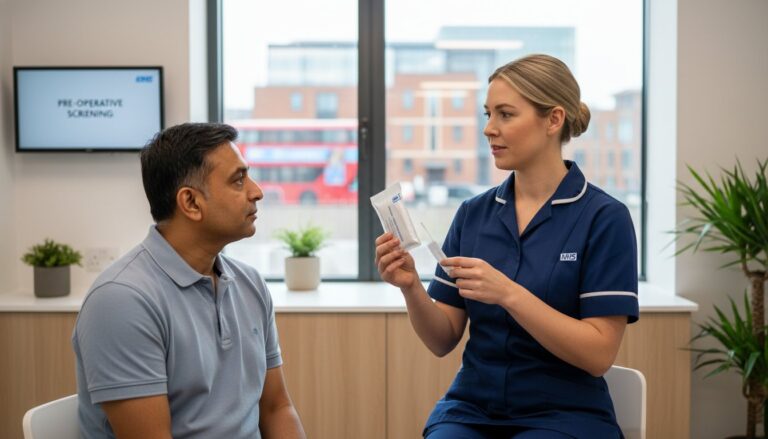

Accredited Lab MRSA Testing UK: The Definitive Guide for 2026
Imagine it’s 72 hours before your scheduled surgery, and you’re still waiting on a phone call that hasn’t come. For many patients, the fear of a last-minute cancellation due to missing screening results is more stressful than the medical procedure itself. You want to ensure your environment is safe and your health is protected, but the logistics of visiting a clinic can feel overwhelming when you’re already managing a health condition.
We understand that you need absolute certainty, not confusion over PCR rapid tests versus traditional culture methods. This definitive guide for 2026 explains why accredited lab mrsa testing uk is the only way to guarantee hospital-accepted results while avoiding the anxiety of “superbugs.” You’ll learn how our UKAS-accredited partner laboratories provide the clinical precision you require through a simple, discreet process. We’ll walk you through the 24-hour molecular detection options and clear self-swabbing instructions that allow you to test for MRSA from the comfort of your own home, giving you total peace of mind before your hospital admission.
Key Takeaways
- Understand why UKAS accreditation and ISO 15189 standards are the essential benchmarks for hospital-accepted MRSA results in 2026.
- Discover how to secure accredited lab mrsa testing uk from the comfort of your home to meet strict pre-surgery requirements with total confidence.
- Compare the clinical benefits of rapid PCR molecular detection versus traditional culture methods to find the most efficient testing route for your timeline.
- Learn the professional swabbing techniques for the nose, groin, and axilla to ensure a clinical-grade sample and prevent laboratory contamination.
- Identify why MRSA screening is a mandatory safety protocol for elective surgeries and how it helps protect you from hospital-acquired infections.
What Makes an MRSA Lab Accredited in the UK?
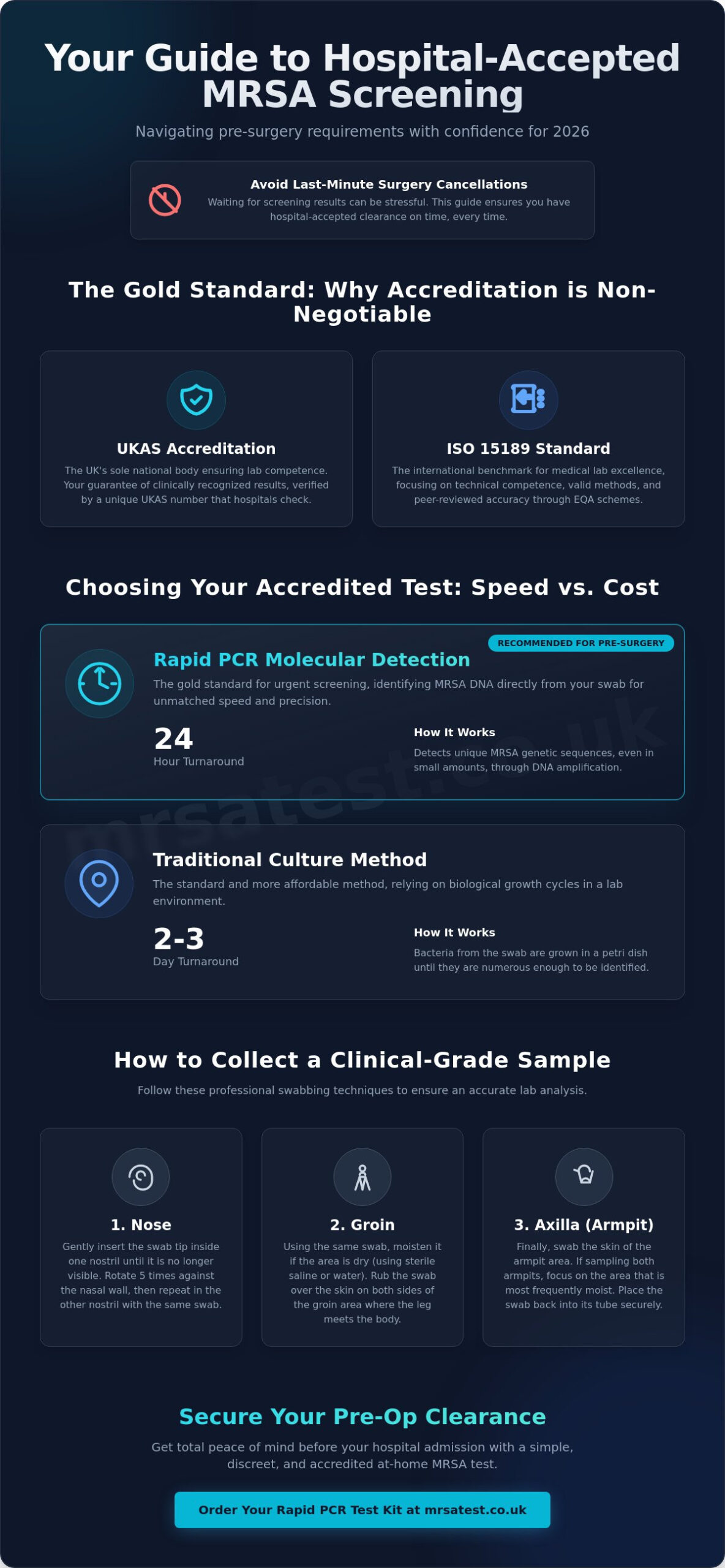
Choosing an accredited lab mrsa testing uk service ensures that your results are legally and clinically recognized by healthcare providers. In the UK, the United Kingdom Accreditation Service (UKAS) acts as the sole national body for assessing the competence of organizations that provide diagnostic services. For patients screening for Methicillin-resistant Staphylococcus aureus, this accreditation isn’t just a badge; it’s a guarantee that the laboratory follows strict protocols to prevent contamination and ensure result integrity. UKAS evaluates everything from the caliber of the equipment to the qualifications of the scientists performing the analysis.
By 2026, the distinction between a standard private facility and an accredited one has become a critical safety barrier. While any private lab can offer a swab test, only those with UKAS accreditation are regularly audited for their technical ability to identify specific bacterial strains accurately. Hospitals verify these results by checking the lab’s unique UKAS number against the national database. This step is mandatory for most pre-operative screening protocols because it eliminates the uncertainty associated with unverified testing providers.
The Importance of UKAS Accreditation for Patients
Accreditation directly impacts your health outcomes by ensuring clinical precision. It significantly reduces the risk of false negatives, which could lead to untreated colonization or post-surgical complications. Most NHS and private surgical lists now require proof of screening from an accredited source before confirming a procedure date. This high standard provides peace of mind that your health is being managed by experts. You can learn more about how these professional standards apply to self-sampling in our at home test kits UK guide for broader context.
ISO 15189 vs. General Lab Standards
ISO 15189 is the international benchmark for medical lab excellence. Unlike general quality management standards, ISO 15189 focuses on the technical competence of the staff and the validity of the testing methods used. Accredited labs must participate in external quality assurance (EQA) schemes. In these schemes, they test “blind” samples to prove their accuracy against other leading facilities. This process ensures that when you receive a “Clear” result, it’s backed by rigorous, peer-reviewed science. Hospitals don’t take risks with infection control, and they look for the UKAS symbol to verify that the accredited lab mrsa testing uk provider is approved specifically for molecular microbiology.
Comparing PCR and Culture: Which Accredited Test is Right for You?
Selecting the appropriate method for accredited lab mrsa testing uk depends on your specific needs, timeframe, and medical instructions. Laboratories currently use two primary techniques to identify Staphylococcus aureus colonization. While both methods are highly accurate when performed in a UKAS-accredited environment, they differ significantly in how they detect the bacteria and how quickly you receive your report.
The fundamental trade-off for most people is speed versus cost. Molecular testing provides rapid answers but requires more sophisticated laboratory equipment. Traditional culture tests are more affordable but rely on biological growth cycles that can’t be rushed. Choosing correctly ensures you meet hospital deadlines without unnecessary stress or delays to your treatment plan.
The Rapid PCR Method: Results in 24 Hours
Molecular detection, known as PCR (Polymerase Chain Reaction), is now the gold standard for urgent screening. Instead of waiting for bacteria to grow, the lab identifies MRSA DNA directly from your swab. This process involves DNA amplification, where specific genetic sequences unique to MRSA are copied millions of times until they become detectable by high-tech sensors. It’s a precise way to find even small amounts of the bacteria.
This method is the preferred choice for mandatory pre-operative screening. Because many UK hospitals require proof of a negative result within a tight window before admission, the 24-hour turnaround is essential. If you have an imminent surgery date or an urgent infection concern, using an MRSA Rapid PCR kit ensures your results are ready in time for your procedure.
The Standard Culture Method: The Traditional Approach
The culture method is a time-tested diagnostic tool that’s been the backbone of microbiology for decades. In this process, your sample is applied to selective agar plates. These plates are treated with specific antibiotics that inhibit the growth of normal bacteria while allowing resistant MRSA strains to flourish. It’s a physical confirmation of living bacteria.
- Timeline: Bacteria typically require 48 to 72 hours to form visible colonies in an incubator.
- Reliability: It remains a highly dependable way to confirm active colonization and is widely accepted by all healthcare providers.
- Usage: This is an excellent, cost-effective option for routine monitoring or verifying that a course of decolonization treatment has been successful.
Culture tests are often the right pick for those who aren’t facing an urgent medical deadline. If you’re proactive about your health and want to check your status, you can order a discreet testing kit to get professional results without a GP appointment. Whether you choose PCR or culture, ensuring you use an accredited lab mrsa testing uk service guarantees that your sample is handled with clinical precision and total confidentiality.
The Pre-Surgery Screening Mandate: Meeting Hospital Requirements
For anyone undergoing elective surgery in 2026, MRSA screening isn’t just a recommendation. It’s a mandatory safety protocol. Hospitals across the UK enforce these rules to create a sterile environment and protect patients from avoidable complications. When you use an accredited lab mrsa testing uk service, you’re fulfilling a primary requirement for admission. This process identifies whether you’re carrying the bacteria before you enter a high-risk clinical setting.
Timing is everything when it comes to hospital compliance. Most UK surgical departments require your test results to be dated between 3 and 14 days before your procedure. If you test too early, the hospital may view the results as outdated. If you wait until the day before, a positive result could lead to an immediate cancellation of your surgery. This delay is necessary to allow for a five-day decolonisation treatment. You can stay on track by following our pre-surgery checklist for a smooth administrative experience.
NHS vs. Private Hospital Protocols
While infection control standards are high across the board, the specific swabs required can vary between providers. Most NHS trusts follow a standard two-site protocol, focusing on the nostrils and the groin. However, some private consultants or specialist units require three-site screening, which includes the throat or armpits. Always check your admission letter for these details. Once you receive your results from an accredited lab mrsa testing uk, you’ll have a formal report. You should email this to your pre-assessment nurse or bring a printed copy to your final consultation to ensure your file is cleared for surgery.
The Role of Screening in Preventing HAIs
The primary goal of pre-operative testing is the reduction of hospital-acquired infections (HAIs). These infections are often caused by the patient’s own skin flora rather than the hospital environment. Data indicates that approximately 33% of the population carries Staphylococcus aureus on their body without any visible symptoms or illness. This state is called colonisation. While the bacteria are harmless on healthy skin, they become dangerous if they enter the body through a surgical incision.
By identifying colonisation early, medical teams can use targeted antiseptic washes and nasal creams to clear the bacteria. This simple step prevents the bacteria from entering the bloodstream, where they could cause sepsis or deep-tissue infections. For more information on how these risks are managed, you can read our hospital-acquired infections guide. Screening isn’t about excluding patients; it’s about making sure every procedure is as safe as possible.
Step-by-Step: How to Collect Samples for Accredited Lab Analysis
The accuracy of your results depends entirely on the quality of the sample collected. For accredited lab mrsa testing uk, the process starts with ensuring no external bacteria contaminate the swab. If you touch a surface or your own hands before swabbing the target areas, the laboratory may find “noise” that complicates the analysis. Your goal is to capture a representative sample of skin colonisation from specific “hotspots” where MRSA is most likely to reside. It’s a simple process, but it requires a steady hand and attention to detail.
Most screening protocols focus on three primary areas: the anterior nares (nostrils), the groin, and the axilla (armpits). These sites are warm and moist, providing the ideal environment for Staphylococcus aureus to thrive. To keep the bacteria viable during transit, each swab is placed into a tube containing a transport medium. This gel or liquid doesn’t encourage growth, but it prevents the sample from drying out. This ensures the lab receives a “living” snapshot of your skin flora, which is essential for a reliable culture or PCR result.
Technique for Nasal and Skin Swabbing
Start with the nostrils. You don’t need to go deep; the anterior nares are just inside the rim of the nose. Insert the swab approximately 1cm and rotate it firmly five times against the inside wall. Repeat this process in the second nostril using the same swab. For skin sites like the groin and axilla, apply enough pressure to ensure the tip makes firm contact with the skin surface, rotating it slowly to maximise the collection of skin cells. Don’t worry about discomfort; the pressure should be firm but never painful. A common mistake is letting the swab tip touch your clothing or the bathroom counter, so keep the swab in the air until it’s safely inside the transport tube.
Packaging and Shipping Your Samples
Once you’ve finished, place the swab immediately into the transport tube and click the cap shut to create an airtight seal. Your kit includes UN3373 biological substance packaging, which is the UK legal standard for transporting diagnostic specimens. It’s designed to be leak-proof and secure for postal transit. For the most accurate results, you should post your sample on the same day you collect it. Using the provided prepaid returns service ensures your kit reaches our 100% UK-based partner laboratory via a tracked, prioritised route, maintaining the integrity of your accredited lab mrsa testing uk.
Ready to begin your screening? Order your discreet MRSA home test kit today and receive everything you need for professional-grade collection from the comfort of your home.
Secure Your Pre-Op Clearance with mrsatest.co.uk
Preparing for a surgical procedure involves a long checklist, but your MRSA screening shouldn’t be a source of stress. We provide a streamlined path to your pre-op clearance. Our service is the trusted choice for patients across the UK because we prioritize clinical accuracy and patient peace of mind. By partnering exclusively with UKAS-accredited laboratories, we ensure every sample is processed under the most rigorous quality controls available in 2026. When you choose mrsatest.co.uk, you’re choosing a service that understands the urgency of hospital deadlines.
Your privacy is our priority. We deliver every kit in plain, unbranded packaging to ensure total discretion from the moment it hits your letterbox. Once the lab completes the analysis, you’ll receive your results through a secure digital portal. This confidential approach means you can manage your health data privately while still meeting your surgical team’s requirements for accredited lab mrsa testing uk. We provide the speed and accuracy you need without the wait times often found in overstretched primary care settings.
100% UK-Based Clinical Excellence
Testing locally is vital for sample stability. When you use our service, your swabs don’t sit in international transit or sorting centers for days. They go straight to a high-standard UK facility. This speed preserves the integrity of the biological material, leading to more reliable results. We adhere to the latest molecular and microbiological standards to detect MRSA colonization accurately. If you’re confused by the technical details on your report, our professional support team is available to help you interpret your reference ranges. Our goal is to provide accredited lab mrsa testing uk that empowers you to walk into your surgery with confidence.
Ordering Your Kit: A Simple, Fast Process
Choosing the right test depends on your timeline. If your surgery is only days away, the PCR rapid test offers molecular detection, often providing results within 24 hours of the lab receiving your sample. For those with more time, the traditional Culture test is a gold-standard method for identifying bacterial growth over a 48 to 72-hour period. Every kit includes the following essentials:
- Medical-grade swabs designed for comfortable sampling.
- Clear, step-by-step instructions to ensure a valid sample.
- A pre-paid, tracked return envelope for rapid lab delivery.
- Secure login details for your digital results portal.
The process is designed to be simple so you can focus on your recovery and preparation. Order your accredited MRSA test kit today to ensure your surgical schedule stays on track and your health is protected by professional clinical standards.
Secure Your Hospital Admission with Confidence
Navigating the clinical requirements for surgery doesn’t have to be a source of stress. Choosing accredited lab mrsa testing uk ensures your results meet the rigorous standards demanded by NHS and private healthcare providers across the country. You now understand that UKAS-accredited facilities provide the essential clinical accuracy needed for pre-surgery clearance. Whether you opt for the traditional culture method or the rapid 24-hour PCR test, you’re taking a vital step toward a safer surgical outcome. Our streamlined process prioritises your privacy. We ship every kit in discreet, plain-cover packaging to maintain your confidentiality from start to finish. By following our simple sample collection steps at home, you’ll bypass the need for additional clinic visits and secure your medical documentation faster. Trusting a professional service ensures your samples are processed in 100% UK-based laboratories. It’s the most efficient way to focus on your upcoming procedure while meeting every hospital mandate for 2026. You’re in capable hands, and we’re here to help you move forward with your treatment plan safely.
Order Your Accredited MRSA Test Kit Now
Frequently Asked Questions
Is an at-home MRSA test as accurate as one done in a hospital?
Yes, an at-home test is just as accurate as a hospital test when processed by a UKAS accredited laboratory. These facilities follow the same ISO 15189 standards used by NHS pathology departments to ensure 99% accuracy in detecting Methicillin-resistant Staphylococcus aureus. While you collect the sample yourself, the clinical analysis remains identical to a hospital setting. This ensures you receive a reliable result from the comfort of your own home.
How long do MRSA test results take from an accredited lab?
You can expect your results within 24 to 72 hours once the lab receives your sample. For those requiring accredited lab mrsa testing uk services, a PCR test provides molecular detection in just 24 hours. A traditional culture test requires 48 to 72 hours to allow for bacterial growth. We deliver these results via a secure, confidential portal to ensure your privacy and peace of mind.
What does it mean if my MRSA test is positive before surgery?
A positive result indicates you’re colonized with MRSA, meaning the bacteria live on your skin without causing illness. Statistics show approximately 3% of the UK population carries MRSA at any time. If this happens before surgery, your clinical team will prescribe a 5 day decolonization protocol. This treatment usually involves an antiseptic body wash and antibiotic nasal cream to reduce the risk of post operative infection by 50% or more.
Can I use a home MRSA kit for NHS pre-operative screening?
You should check with your surgical team, as NHS trusts often require screening to be performed in their own clinics 2 to 4 weeks before your procedure. However, many patients use a private kit for personal peace of mind or to check their status before the official NHS appointment. If you test positive privately, you can start decolonization early. This helps prevent surgery delays or cancellations caused by unexpected colonization.
What is the difference between an MRSA PCR test and a culture test?
An MRSA PCR test is a rapid molecular screen that identifies bacterial DNA within 24 hours. In contrast, a culture test involves placing the sample in a nutrient rich environment to see if bacteria grow over 48 to 72 hours. While PCR is faster, culture tests allow the lab to perform sensitivity testing. This helps doctors determine exactly which antibiotics will effectively treat the specific strain found in your sample.
Do I need a GP referral to get an accredited MRSA test in the UK?
No, you don’t need a GP referral to access accredited lab mrsa testing uk through a private provider. You can order a kit directly online to monitor your health or prepare for a private medical procedure. This self-service model offers a discreet and efficient way to manage your screening without waiting for a primary care appointment. It’s a simple way to take control of your health from the comfort of your own home.
How many swabs do I need for a full MRSA screen?
A standard screen requires three separate swabs taken from the nose, throat, and groin. Public Health England guidelines suggest these three sites provide the highest probability of detecting colonization. You use one swab for both nostrils, a second for the back of the throat, and a third for the skin folds in the groin area. Following these specific steps ensures the lab receives a high quality sample for analysis.
What happens if my sample is delayed in the post?
MRSA samples remain stable for up to 72 hours when stored in the provided transport medium. If a delay exceeds this window, the lab might request a new sample to ensure the result’s integrity. We use tracked, 24 hour delivery services to minimize this risk. If your sample is compromised due to a 2026 postal strike or logistical error, we’ll send a replacement kit immediately at no extra cost to you.