
Positive MRSA Test: What Next? A Reassuring Guide to Your Results
On Tuesday morning, Sarah received a call from her hospital’s pre-assessment clinic with news that felt like a major setback; her routine screening swab was positive for MRSA. If you’ve found yourself in a similar position, your first thought is likely: “A positive MRSA test — what next?” It’s natural to feel a surge of anxiety about your health or worry that your upcoming procedure will be delayed indefinitely.
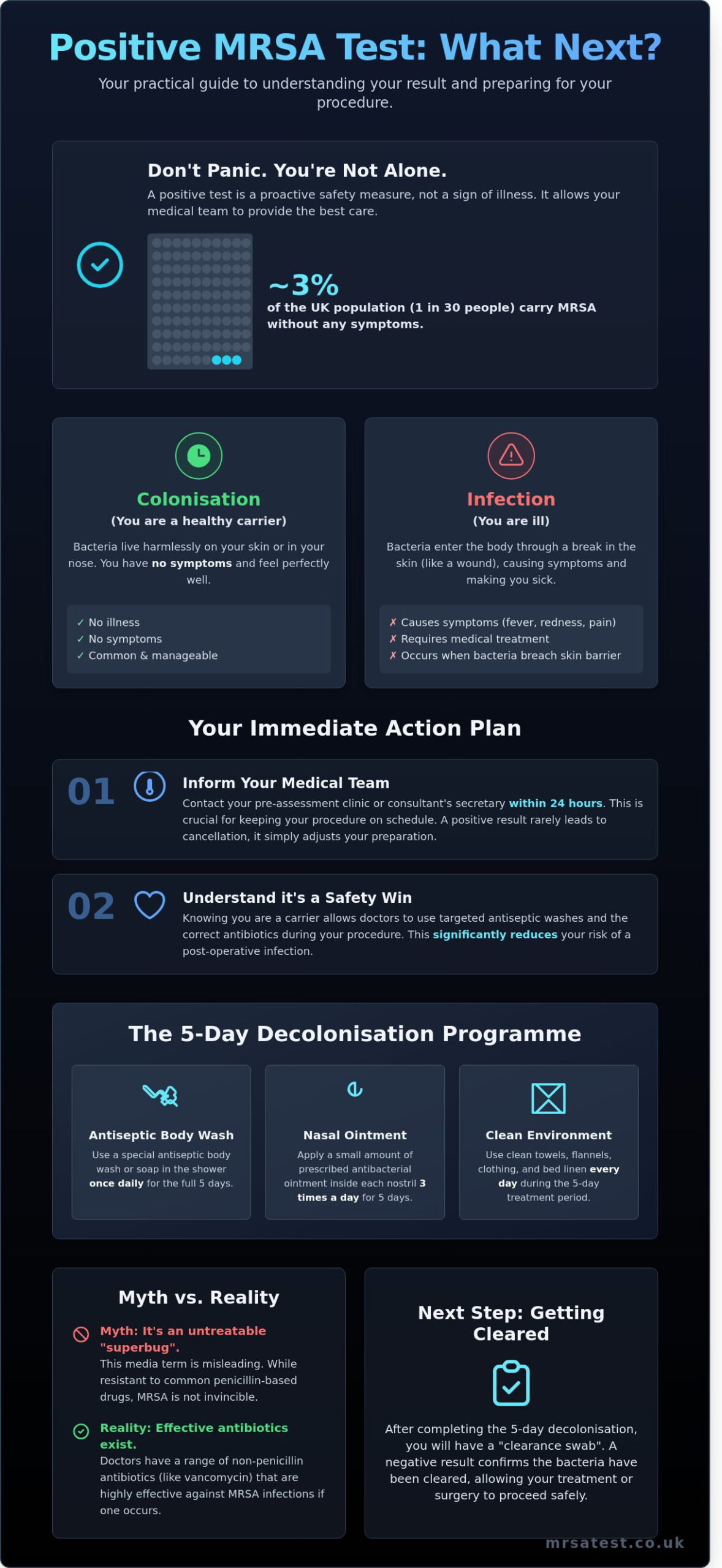
You aren’t alone in this. Roughly 3% of the UK population carries MRSA on their skin or in their nose without any symptoms of infection. We’ll explain the vital difference between colonisation and being ill, ensuring you understand exactly what this means for you and your loved ones. You’ll also learn how a simple, five day decolonisation kit can effectively clear the bacteria, often allowing surgeries to proceed as planned.
This guide cuts through the medical jargon to provide a practical action plan for your recovery. We’ll walk you through the steps to take at home and how to get the clinical confirmation you need to move forward with confidence.
Key Takeaways
- Understand the vital clinical distinction between “colonisation” (carrying the bacteria safely on your skin) and having an active MRSA infection.
- Discover the essential immediate steps following a positive mrsa test what next, ensuring your surgical team is informed and your procedure stays on track.
- Learn how to correctly follow the standard UK 5-day decolonisation programme to effectively reduce bacterial load before your hospital admission.
- Gain peace of mind regarding your household with simple hygiene adjustments that protect your family and prevent the bacteria from spreading.
- Find out exactly how the retesting and “clearance swab” process works to ensure you are declared MRSA-free and ready for treatment.
Understanding Your Result: Colonisation vs. Infection
Receiving a positive result can feel overwhelming, but clarity is the first step toward peace of mind. To understand your result, you must first understand what Methicillin-resistant Staphylococcus aureus (MRSA) actually is. It’s a version of a very common bacterium that lives on the skin or in the nose. While the name sounds intimidating, the bacteria itself is often harmless. Most people who receive a positive result are surprised because they feel perfectly healthy. This is because there’s a fundamental difference between “carrying” the bug and having an active infection.
In the UK, approximately 1 in 30 people carry MRSA on their skin or in their nostrils without ever knowing it. This state is known as “colonisation.” If you’re colonised, the bacteria are simply hitching a ride on your body. They aren’t attacking your tissues or making you feel sick. An infection only occurs if the bacteria find a way into the body, usually through a surgical wound, a drip site, or a deep cut. If you’ve just had a positive mrsa test what next usually involves a simple cleaning routine rather than intensive medical treatment.
It’s vital to remember that a positive screen doesn’t mean you’re “ill” in the traditional sense. It’s a clinical observation that allows healthcare providers to take proactive steps. For the vast majority of people, being a carrier has zero impact on their daily health or life expectancy. You’re a healthy carrier, not a patient in crisis.
Myth vs. Reality: De-stigmatising MRSA
The media often uses the term “superbug,” which creates a sense of helplessness. This label is misleading. While MRSA is resistant to common penicillin-based antibiotics, it’s not invincible. Doctors have a range of effective, non-penicillin antibiotics at their disposal; medications like vancomycin or teicoplanin are used specifically for this purpose. If you’re preparing for an operation, your positive result is actually a major safety win. By identifying the bacteria now, your surgical team can use targeted antiseptic washes and specific antibiotics during your procedure. This reduces the risk of a post-operative infection by a significant margin, ensuring a smoother recovery.
How Did I Get MRSA?
Finding out you carry MRSA often leads to feelings of guilt or a search for someone to blame. This is unnecessary. You can pick up MRSA almost anywhere through simple skin-to-skin contact. It spreads easily in community settings like gyms, schools, or through sharing personal items like towels and razors. Because 3.3% of the UK population carries it, it’s effectively a part of normal human flora for millions of people. It’s not a reflection of your personal hygiene or your lifestyle. It’s simply a biological reality of living in a connected society. Understanding that you’re asking “positive mrsa test what next” is the right approach; focus on the simple steps to manage it rather than worrying about the source.
- Colonisation: Bacteria live on your skin but cause no harm.
- Infection: Bacteria enter the body and cause symptoms like redness, heat, or fever.
- Prevalence: About 3% of the UK population are carriers.
- Treatment: Specific antiseptic soaps and nasal creams are usually all that’s required for carriers.
Immediate Steps: Who to Inform and What to Say
Receiving a positive result for MRSA is not a cause for alarm. It is a clinical finding that allows healthcare professionals to take proactive steps for your safety. Think of this result as a vital piece of data that helps your doctors provide the best possible care. If you are wondering about a positive mrsa test what next steps are essential, the process is straightforward and focuses on preparation rather than emergency action.
Do not panic. MRSA colonisation is common and often harmless in healthy individuals. However, because you now know the bacteria are present, you have the power to prevent them from causing an infection during medical procedures. Your first action should be to communicate the result to your primary healthcare providers within 24 hours of receiving it.
Informing Your Surgical Team
Hospitals screen for MRSA to protect both you and other vulnerable patients in the ward. If you have an upcoming operation, you must notify the pre-assessment clinic or your consultant’s secretary immediately. This allows the hospital to initiate the MRSA decolonisation process before you arrive for your procedure.
A positive result rarely leads to a permanent cancellation. Instead, it usually results in a short delay of 5 to 7 days. This window provides enough time for you to complete a course of antibacterial body wash and nasal ointment. By clearing the bacteria from your skin before surgery, you significantly reduce the risk of a post-operative site infection. In cases of urgent or emergency surgery, hospitals do not wait for decolonisation. They simply manage the risk by using specific intravenous antibiotics during the operation and placing you in a private side room to maintain clinical hygiene standards.
The Role of Your GP
If your test was conducted as part of a routine community check or for personal peace of mind, your GP is your main point of contact. They will ensure the result is recorded in your NHS Summary Care Record. This is a vital step because it ensures that any future medical team is aware of your status, allowing them to provide the correct antibiotics if you ever become unwell. Your GP can also prescribe the necessary decolonisation treatments, which typically last for five days and are very effective at removing the bacteria from the skin surface.
If You Tested Privately: The Transition to Care
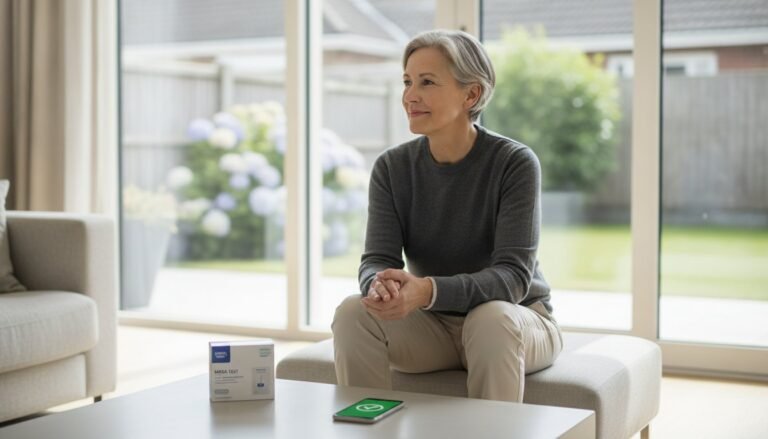
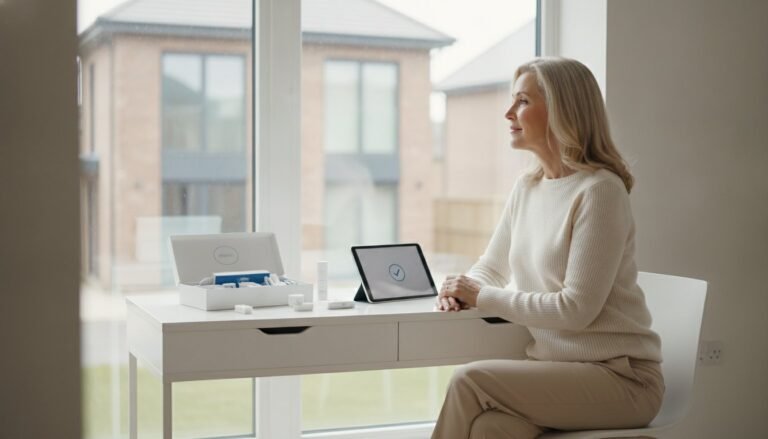
Many patients choose to use an at-home MRSA screening kit for speed, convenience, or privacy. If your private result is positive, the transition to NHS care is simple. You should present your laboratory report, which should ideally come from a UKAS-accredited facility, to your GP or surgical pre-assessment nurse.
Some NHS Trusts have specific local protocols and may request a confirmatory swab to align with their internal microbiology guidelines. This is a standard procedure and does not mean your private test was inaccurate. It is simply a way for the hospital to verify the result within their own system before you enter the operating theatre. Ensure you keep a digital or physical copy of your lab report to avoid any delays in your treatment programme. Clear communication at this stage ensures your “theatre slot” is managed efficiently and your health remains the priority.
The Decolonisation Process: A Step-by-Step Guide
Receiving a positive result can feel overwhelming, but the path forward is a well-established medical protocol. Once you have confirmed a positive mrsa test what next steps involve a process called decolonisation. In the UK, this is a standardised 5-day programme designed to clear the bacteria from your skin and nostrils. The primary objective isn’t necessarily to “cure” an infection, as many people with MRSA are simply carriers. Instead, the goal is to reduce the bacterial load to a level where the risk of transmission or self-infection is negligible. This is particularly vital if you’re preparing for surgery or live with vulnerable individuals.
The treatment relies on a combination of antimicrobial products that work together to suppress the Staphylococcus aureus colonies. You must complete the full 120-hour cycle without skipping applications. If you stop the treatment on day three or four because your skin feels “clean,” you risk leaving behind the most resilient bacteria. These survivors can multiply rapidly, leading to a failed clearance and the need to repeat the entire week-long process. Understanding your MRSA test results provides the clinical context for why this rigorous suppression is necessary for your long-term health.
How to Use the Treatment Correctly
The decolonisation kit typically contains a 4% Chlorhexidine (CHG) body wash and a 2% Mupirocin nasal ointment. Use the antiseptic wash once every 24 hours in the shower. Wet your skin, apply the solution directly with a clean washcloth, and leave it in contact with your skin for a full 3 minutes before rinsing. You must pay specific attention to the “high-load” areas where bacteria thrive, such as your armpits, groin, and navel. For the nasal treatment, apply a matchstick-head-sized amount of ointment to the inside of each nostril three times a day. Press your nose between your thumb and forefinger to spread the gel thoroughly. About 5% of users experience mild skin dryness or irritation. If this occurs, don’t stop the treatment, but do ensure you’re rinsing the wash off completely with lukewarm water.
Daily Rituals During Treatment
Your environment plays a massive role in whether the decolonisation succeeds. You must change your towels, clothes, and bed linen every single day of the 5-day course. These items act as reservoirs for bacteria; using a “dirty” towel from day one on day three will simply re-colonise your skin. Wash all fabrics at a minimum of 60°C to ensure the heat kills any lingering MRSA. It’s also essential to stop using your regular soaps, shampoos, or body lotions during this period. Many commercial soaps contain anionic surfactants that neutralise the active ingredients in the antiseptic wash, making the treatment ineffective.
For hair care, you should wash your hair with the antiseptic solution at least twice during the 5-day window. If you suffer from skin conditions like eczema or psoriasis, the standard CHG wash might be too harsh. In these cases, clinical teams often recommend an alternative like Octenidine wash. Always ensure you have a fresh supply of disposable flannels or freshly laundered cloths for each application. Consistency is the only way to ensure the bacteria are suppressed across your entire body simultaneously, preventing the staph from migrating from one area to another during your positive mrsa test what next recovery phase.
Household Hygiene: Protecting Your Family and Friends
Receiving a positive mrsa test what next is the question most people ask immediately. It’s vital to remember that MRSA (Methicillin-resistant Staphylococcus aureus) is often a matter of colonisation rather than active infection. Around 3% of the UK population carries these bacteria on their skin or in their nose without any symptoms or ill effects. For healthy friends and family, the risk of falling ill is remarkably low. The bacteria are opportunistic; they generally only cause problems if they enter the body through a break in the skin of someone already weakened by illness.
Healthy individuals in your household don’t need to live in fear. You can continue to share living spaces and enjoy meals together. The primary goal is to prevent “ping-pong” transmission, where the bacteria move from person to person and eventually back to you, potentially causing a reinfection after you’ve finished your treatment. By making small adjustments to your daily routine, you can break this cycle effectively without turning your home into a sterile ward.
Protecting the most vulnerable members of your circle requires more focused attention. When considering a positive mrsa test what next steps should involve assessing who you spend time with daily. You should be extra cautious if you live with newborns, the elderly, or anyone with a compromised immune system. This includes individuals undergoing chemotherapy or those with chronic conditions. In these cases, it’s sensible to limit close physical contact until you’ve completed your prescribed decolonisation protocol.
Practical Home Cleaning Tips
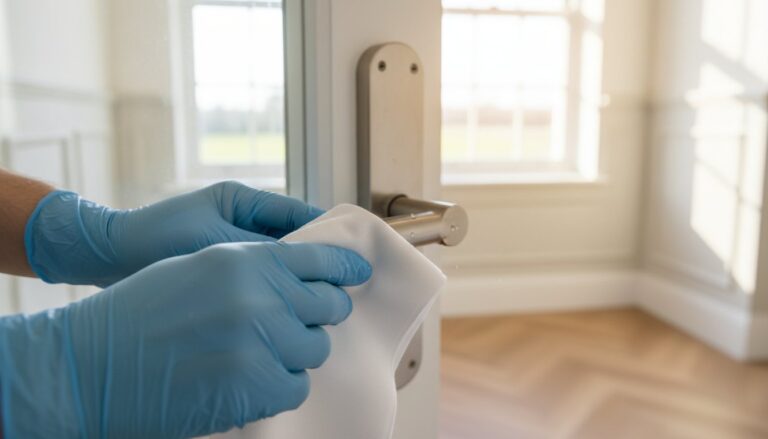
Cleaning routines don’t need to be exhaustive to be effective. Focus your energy on “high-touch” surfaces where bacteria are most likely to linger. Aim to wipe these surfaces down at least once a day during your treatment period using a standard household disinfectant or wipes with at least 70% alcohol content:
- Door handles and light switches
- Kitchen and bathroom taps
- TV remote controls and smartphone screens
- Computer keyboards and mice
Laundry is a critical part of the process. MRSA can survive on fabrics for several weeks if they aren’t washed correctly. You should wash your bedding, towels, and any clothing that touches your skin on a cycle of at least 60°C. This temperature is the clinical standard for killing MRSA bacteria in domestic settings. If a garment cannot be washed at this temperature, use a laundry sanitiser additive to ensure the bacteria are neutralised.
Hand hygiene remains the most effective tool in your arsenal. Wash your hands with soap and water for at least 20 seconds after touching any bandages or affected skin areas. While hand sanitisers are useful for a quick refresh, they shouldn’t replace thorough washing with soap, especially before preparing food or after using the bathroom.
These same principles of meticulous hygiene are fundamental in any professional setting where skin health is the priority. Leading providers like Skintegrity MedSpa, for example, build their practice on upholding the highest standards of clinical cleanliness for all aesthetic treatments.
Sharing Personal Items
Simple changes in how you manage personal belongings can significantly reduce the risk of transmission. You must follow a strict rule of not sharing items that come into direct contact with your skin. This includes:
- Razors and nail clippers
- Towels and flannels
- Toothbrushes and lip balms
- Hairbrushes or headbands
Organising your bathroom can help maintain these boundaries without causing stress. Try giving yourself a dedicated shelf or a specific coloured basket to keep your toiletries separate from the rest of the family’s. This visual reminder helps prevent accidental sharing. If you share a bed, try to use separate sets of sheets or ensure you wear pyjamas that cover the areas where the bacteria were detected during your screening.
Physical intimacy with partners doesn’t need to stop entirely, but it requires mindfulness. Avoid skin-to-skin contact with any active sores, wounds, or the specific sites where the MRSA was found, such as the nose or groin. Maintaining these small barriers ensures you protect your loved ones while you focus on your recovery.
If you have completed your decolonisation treatment and want to verify that the bacteria have been successfully cleared, you can order a discreet MRSA test kit to confirm your status from the comfort of your home.
Next Steps: Retesting and Long-Term Management
Completing your five-day decolonisation programme is a significant milestone in managing your health. However, the process doesn’t end when the last bottle of antimicrobial wash is empty. After a positive mrsa test what next? Your focus now shifts to verification and long-term prevention. You must confirm that the MRSA bacteria have been successfully suppressed or removed from your skin and nostrils before you proceed with planned medical treatments.
Confirming your status involves a series of “clearance swabs.” These are identical to the initial screening tests you took. Consistency is vital here. Clinical guidelines in the UK generally suggest that a single negative result isn’t enough to guarantee the bacteria won’t return. Most NHS trusts and private clinics require three consecutive negative sets of swabs, usually taken one week apart, before they officially update your medical records to reflect a clear status.
The Role of Follow-up Testing
Timing is the most critical factor in follow-up screening. You should wait at least 48 hours after your final treatment dose before taking your first clearance swab. Testing too early can lead to a false negative result because the antiseptic products may still be active on your skin. You can arrange these tests through your GP or the hospital, or you can use a confidential home kit for a more discreet and convenient experience. If a test comes back positive again, this is known as “persistent carriage.” It doesn’t mean you’ve failed; it simply means you may require a second round of treatment or a different combination of antibiotics prescribed by a specialist.
Preparing for Hospital Admission
If your surgery date arrives before you’ve completed your full testing cycle, don’t panic. Hospitals deal with MRSA daily and have robust protocols to keep everyone safe. If you’re still mid-treatment, bring your decolonisation products with you to the ward. It’s helpful to inform the admitting nurse of your status immediately. This allows the staff to place you in an appropriate side room or a specific bay to manage cross-infection risks. You have the right to professional, non-judgemental care. MRSA colonisation is a clinical reality, not a reflection of your personal hygiene, and staff will treat you with the same respect as any other patient.
Understanding the possibility of re-colonisation is also essential for long-term peace of mind. MRSA is stubborn. It can survive on household surfaces or be carried by other family members. Research indicates that approximately 15% of people may see the bacteria return within 12 months if environmental factors aren’t addressed. To stay clear, follow this final checklist:
- Wash your bedding: Use a 60°C cycle for all sheets and towels used during your treatment week.
- Replace your toothbrush: Start fresh with a new one once your 5-day course is finished.
- Disinfect high-touch points: Clean door handles, remote controls, and keyboards with a standard household disinfectant.
- Maintain hand hygiene: Continue using liquid soap rather than bar soap, as bars can harbour bacteria.
By following these steps, you take control of the situation. Whether your results come back clear immediately or you require a little more time, the goal remains the same: ensuring your upcoming hospital stay is as safe and successful as possible. If you’re ever unsure about your positive mrsa test what next steps, always consult your clinical team for guidance tailored to your specific procedure.
Moving Forward With Confidence
Receiving a positive result isn’t a cause for alarm; it’s the first step toward effective management. Most people successfully clear the bacteria by following a standard 5-day decolonisation protocol and maintaining strict hygiene at home. When you’ve had a positive mrsa test what next involves confirming that the bacteria has been fully removed from your skin. This confirmation is a routine part of modern healthcare that ensures you’re ready for future medical appointments or surgery.
You can verify your status with complete privacy using our professional testing service. We use UKAS-accredited UK laboratories to ensure every result meets strict clinical standards. Every order is sent in discreet, plain packaging, and we provide rapid PCR results within 24 hours of our lab receiving your sample. This simple process removes the need for extra clinic visits and gives you the facts you need quickly. You’ve managed the hard part; now let us help you confirm your clearance with ease.
Order a follow-up MRSA test kit to confirm your clearance from home
Your health is manageable, and taking this final step provides the peace of mind you deserve.
Frequently Asked Questions
Is a positive MRSA result an emergency?
A positive MRSA result isn’t typically a medical emergency if you’re otherwise healthy and feel well. Most people found to have MRSA are colonised, which means the bacteria live harmlessly on the skin or in the nose without causing illness. However, if you develop a high temperature above 38°C or notice a wound becoming red, swollen, and painful, contact your GP or call 111 immediately for advice.
Can I still have my operation if I test positive for MRSA?
You can still have your operation, but the hospital will usually postpone the procedure for at least 5 days to complete a decolonisation programme. This essential treatment reduces the risk of surgical site infections by up to 60%. Once you’ve finished the course of antiseptic body wash and nasal cream, your surgical team will assess your results and decide when it’s safe to proceed with the surgery.
How long does it take to clear MRSA from the skin?
A standard decolonisation treatment typically takes 5 days to complete. This involves using a 4% chlorhexidine antiseptic body wash once daily and applying mupirocin nasal ointment three times a day. After finishing the 5-day course, you’ll usually wait 48 hours before having the first of three weekly swabs to confirm the bacteria have been successfully cleared from your skin and nose.
Do my family members need to be tested if I am positive?
Your family members don’t usually need testing unless they work in high-risk healthcare settings or are scheduled for their own surgery. Healthy people have a very low risk of becoming ill from MRSA. If you’re wondering about a positive mrsa test what next for your household, simply maintain good hygiene by not sharing towels and washing bed linens at 60°C to kill any bacteria.
What is the difference between MRSA colonisation and infection?
MRSA colonisation means the bacteria are present on your body without causing harm, which affects roughly 3% of the UK population. An infection occurs when the bacteria enter the body through a break in the skin, leading to clinical symptoms like boils or abscesses. While colonisation is managed with simple topical treatments, an infection often requires specific oral or intravenous antibiotics prescribed by a doctor.
Can MRSA be cured permanently?
MRSA can be successfully cleared from the skin, but it’s possible to become re-colonised at a later date. Standard decolonisation therapy has a success rate of approximately 75% for clearing the bacteria initially. To keep the bacteria away, maintain strict hand hygiene and ensure any skin abrasions are kept clean and covered with a waterproof dressing until they’ve fully healed.
Can I go to work or school if I have tested positive for MRSA?
You can usually continue with work or school as normal after a positive result. There’s no requirement to stay home unless you’re a healthcare worker or have an uncovered, weeping wound. If you’re unsure about a positive mrsa test what next for your specific job, check your workplace health policy. Most employers follow standard NHS guidance which allows you to continue your daily routine during treatment.
What happens if the decolonisation treatment doesn’t work?
If your follow-up swabs are still positive, your doctor will usually prescribe a second 5-day course of decolonisation. They might suggest more intensive cleaning, such as changing your towels and bedding every single day during the treatment period. If the bacteria persist after two full courses, you may be referred to an infectious disease specialist for a more tailored clinical management plan.