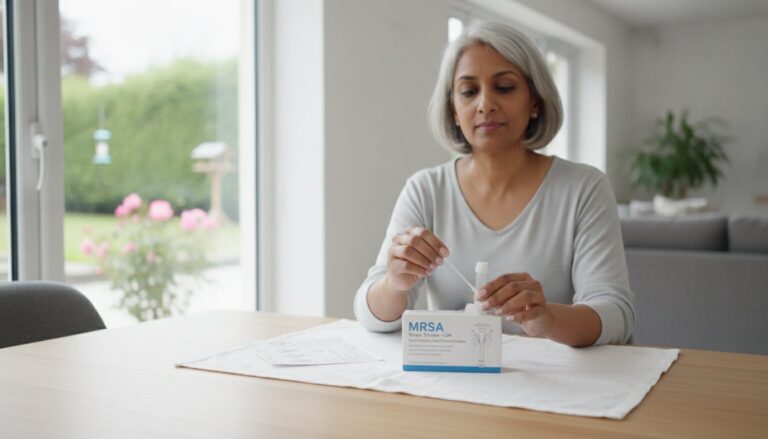

Urgent MRSA Test Before Surgery: How to Get Fast Results in 2026
Imagine receiving a phone call just days before your scheduled operation, informing you that your procedure is postponed because your screening results aren’t ready. For many patients, securing an urgent mrsa test before surgery becomes a source of significant stress, especially when standard screening timelines feel uncertain. You’ve likely spent weeks preparing for your recovery. The thought of a simple swab delay causing a cancellation is understandably frustrating.
We understand that your primary goal is to ensure your surgery proceeds exactly as planned. This article explains how to secure a rapid MRSA result to keep your medical timeline on track. You’ll find clear instructions on how to perform your swabs correctly and a breakdown of the differences between rapid PCR and traditional culture tests. We’ll guide you through the process of obtaining a verified result so you can arrive at the hospital with confidence and peace of mind.
Key Takeaways
- Understand why MRSA screening is a mandatory safety protocol for UK elective surgeries to prevent surgical site infections.
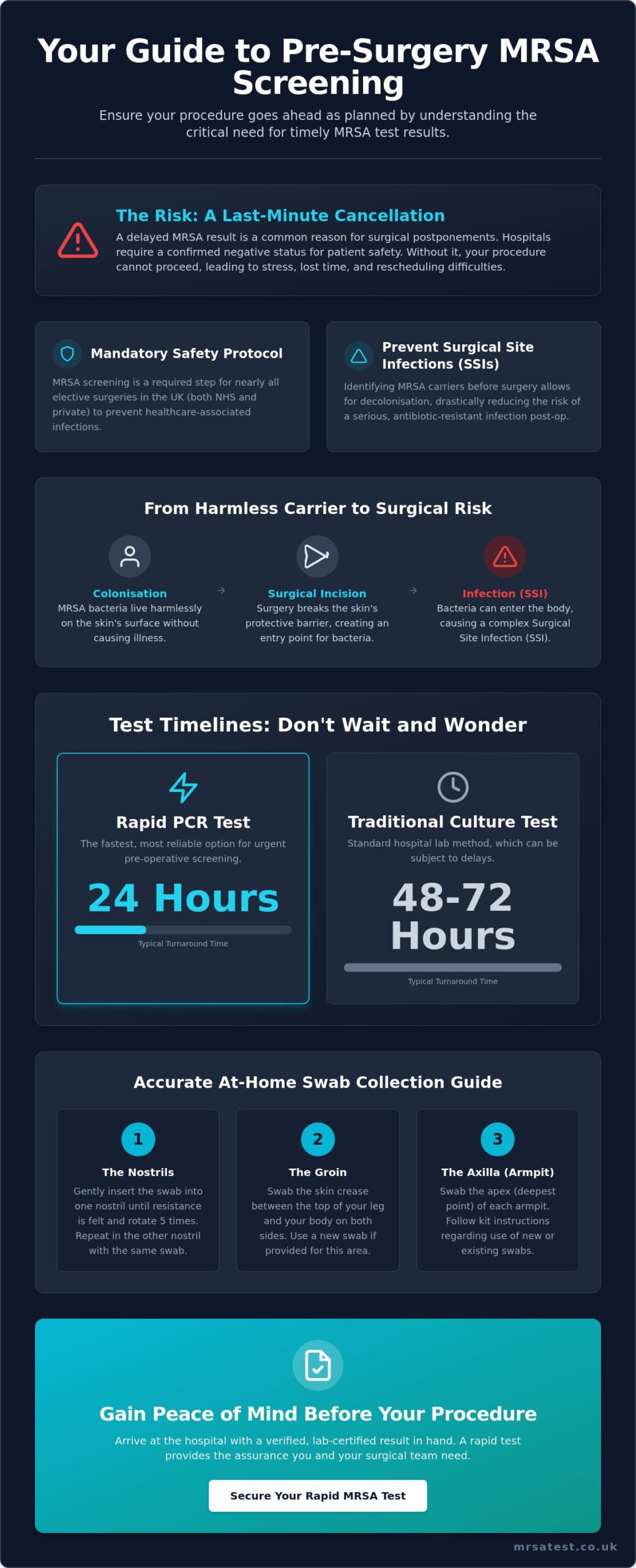
- Learn how a Rapid PCR test can provide results in as little as 24 hours, compared to the 48–72 hours required for traditional lab cultures.
- Discover the most efficient way to secure an urgent mrsa test before surgery to prevent your procedure from being delayed or cancelled.
- Follow a simple, step-by-step guide to performing your own nasal and groin swabs at home with clinical accuracy.
- Gain peace of mind by having a verified, lab-certified result in hand well before your hospital admission date.
Why You Need an Urgent MRSA Test Before Surgery
MRSA screening isn’t just a suggestion; it’s a critical safety requirement for almost every elective surgery in the UK. Hospitals use this protocol to identify patients who may be carrying Methicillin-resistant Staphylococcus aureus (MRSA) on their skin. While these bacteria are often harmless to a healthy person, they pose a significant threat during invasive procedures. If you’re a carrier, the risk of developing a surgical site infection (SSI) increases significantly. This is why having an urgent mrsa test before surgery is vital if your hospital results haven’t arrived as your date approaches. Without a confirmed negative result, clinical teams cannot guarantee the safety of the operating environment.
The Mandatory Nature of Pre-Op Screening in the UK
Both the NHS and private healthcare providers enforce strict pre-admission protocols. These rules exist to prevent healthcare-associated infections from spreading within the ward. Screening usually takes place during a pre-assessment clinic, where swabs are taken from the nose, throat, or groin. It’s helpful to understand that MRSA colonisation is simply the presence of the bacteria on your body without any active symptoms or illness. However, because surgery breaks the skin’s natural barrier, those bacteria can enter the body and cause serious complications. A negative result acts as a “green light” for the surgical team, confirming that the risk of self-infection is low.
What Happens if Your MRSA Test is Delayed?
Hospital laboratories often process hundreds of samples daily. While most systems are efficient, logistical backlogs, staff shortages, or transport issues can occur. If your surgery is scheduled for less than a week away and you haven’t received confirmation of a negative result, you’ve entered the “urgent” window. Hospitals may cancel your procedure on the morning of admission if a valid result isn’t on your file. This isn’t a decision they take lightly, but safety must come first.
The impact of a cancelled surgery is often severe. Beyond the emotional toll of mental preparation, there are practical consequences like lost income from time off work or the cost of childcare. Ensuring you have a result in hand provides a vital safety net. You can find more details on managing your timeline in our guide to preparing for surgery. Taking proactive steps now prevents the frustration of a last-minute delay.
Understanding MRSA Colonisation and Surgical Risks
Many people carry Staphylococcus aureus on their skin without ever knowing it. However, MRSA is a specific strain that has developed resistance to common antibiotics like methicillin. While standard staph is usually easy to manage, an MRSA infection requires much more complex treatment. Understanding this distinction is why an urgent mrsa test before surgery is so important. It identifies if these resistant bacteria are present before an incision is made, allowing for preventative action. Securing an urgent mrsa test before surgery ensures your surgical team has the information they need to protect you.
The transition from “colonised” to “infected” is the primary concern for surgeons. When you’re colonised, the bacteria live harmlessly on your skin’s surface. During surgery, the skin’s protective barrier is broken. This allows the bacteria to enter the bloodstream or deep tissues. Once inside, they can cause a surgical site infection that’s difficult to clear because standard antibiotics don’t work. If a test returns positive, you’ll typically undergo a decolonisation process. This involves using a special nasal cream and antiseptic body wash for five days to clear the bacteria before your procedure begins.
How MRSA Affects Surgical Site Infections (SSIs)
Treating an SSI caused by MRSA is significantly more challenging than treating a standard infection. It often leads to longer hospital stays and may require additional operations to clean the wound. Because the bacteria are resistant to common treatments, doctors must use stronger, more specific antibiotics that can have more side effects. For a deeper look at the specific symptoms and risks, you can read our guide on what is MRSA. Proactive testing ensures these complications are avoided entirely.
The Swab Sites: Nose, Groin, and Axilla
To get a clear picture of your carrier status, clinical teams test multiple areas of the body. These sites are chosen because bacteria thrive in warm, moist environments. Testing multiple locations increases the accuracy of the screen.
- The Nostrils: This is the most common site for MRSA colonisation.
- The Groin: A frequent reservoir for bacteria that requires careful swabbing.
- The Axilla (Armpit): Often included for high-risk procedures like orthopaedic or cardiac surgery.
Following the standard MRSA screening before surgery protocols ensures no colonisation is missed. Our home kits use the same clinical-grade swabs and laboratory standards as hospital clinics. If you’re running out of time, choosing a private MRSA test can provide the rapid results you need to stay on schedule.
Comparing PCR vs. Culture Tests for Urgent Screening
Choosing the right diagnostic method depends entirely on your surgical timeline. While both tests are clinically reliable, they operate on different biological principles. If you require an urgent mrsa test before surgery, the difference between waiting one day or three days is critical. Understanding how these tests function helps you make an informed choice that aligns with your hospital’s deadline.
Traditional MRSA Culture tests involve placing your sample in a nutrient-rich environment to see if bacteria grow. This biological process is naturally slow because the bacteria must multiply enough to be visible and identifiable under laboratory conditions. Typically, this takes 48 to 72 hours. While accurate, this timeframe often clashes with tight pre-operative schedules, especially if your initial hospital screen was delayed or lost.
In contrast, the MRSA Rapid PCR Test uses molecular technology to detect the specific DNA of the bacteria. It doesn’t need to wait for bacteria to grow. Instead, it identifies the genetic markers of MRSA directly from the swab. This allows for a 24-hour turnaround once the lab receives the sample. This speed is why many patients choose PCR when their surgery date is imminent.
Speed: 24-Hour PCR Results vs. 72-Hour Culture
PCR stands for Polymerase Chain Reaction. This method amplifies tiny amounts of DNA so they can be measured accurately. It’s the same technology used for high-stakes diagnostic testing worldwide. If your surgery is scheduled within the next three days, a culture test is simply too slow to provide a safety net. A 24-hour PCR result provides the speed necessary for last-minute hospital requirements, whereas standard culture methods can take up to three times longer to confirm a result.
Accuracy and Hospital Acceptance
Speed doesn’t mean a compromise in quality. Both methods are highly sensitive and provide the clinical detail surgeons require. However, for a private result to be accepted by your surgical team, it must be processed by a UKAS accredited laboratory. This accreditation ensures the facility meets rigorous national standards for competence and quality. When you receive your laboratory report, it will clearly state your status. You can then present this digital or printed report to your pre-assessment team. For those needing the fastest possible confirmation, our MRSA Rapid PCR Test is the preferred choice for clinical certainty under pressure. Securing an urgent mrsa test before surgery through a molecular method removes the anxiety of a pending result as your admission date arrives.
Taking Your MRSA Swabs at Home: A Fast-Track Guide
Performing your own screening is a straightforward process that fits easily into your pre-operative preparations. When you need an urgent mrsa test before surgery, the ability to collect your own samples at home saves valuable time compared to waiting for a clinic appointment. Following the clinical instructions precisely ensures the laboratory receives a high-quality sample for analysis. Before you begin, find a clean, well-lit area and wash your hands thoroughly with soap and water. Lay out the contents of your kit to ensure you have the swabs, transport tubes, and the laboratory request form ready.
- Step 1: The Nostrils. Remove the first swab from its packaging. Gently insert the tip into one nostril and rotate it five times against the inside wall. Repeat this exact process in the other nostril using the same swab.
- Step 2: The Groin. Use a new swab for the groin area. Rub the swab firmly back and forth across the skin folds where the legs meet the torso. Ensuring adequate skin contact is essential for capturing any bacteria present.
- Step 3: The Axilla. If your specific kit requires an axilla sample, use a separate swab for your armpits. Rub the swab across the central area of both the left and right axilla.
- Step 4: Secure and Label. Place each swab into its designated transport tube and snap the end if required. Complete the laboratory form with your details and the date of collection, then seal everything in the provided biohazard bag.
The Self-Collection Process
Many patients worry that they won’t collect the sample as well as a healthcare professional. However, clinical studies show that self-collection is just as accurate as nurse-led swabbing when the instructions are followed. One of the most common mistakes is touching the swab tip with your fingers, which can contaminate the sample with other bacteria. Ensure you don’t let the tip touch any surfaces before or after swabbing. If your kit includes a transport medium, make sure the swab is fully inserted into the liquid or gel to keep the sample viable during transit.
Returning Samples to the Laboratory
Timing is everything when you’re working against a surgical deadline. You should post your samples on the same day you take them to ensure they reach the lab while the sample is fresh. Our kits include prepaid, tracked shipping labels designed for next-day delivery to our UKAS accredited facility. Once you’ve dropped your package at the post office or a priority postbox, you can track its journey online. This visibility provides reassurance that your urgent mrsa test before surgery is moving through the system as quickly as possible. To get started, you can order your MRSA testing kit and secure your results without delay.
Fast-Track Your Surgery Prep with Mrsatest.co.uk
Mrsatest.co.uk is the UK’s dedicated specialist for private MRSA screening. We focus on providing the speed and accuracy required when hospital timelines become unpredictable. Our service is built around the MRSA Rapid PCR Test, which offers a 24-hour result turnaround once your sample arrives at the laboratory. This rapid diagnostic method ensures you don’t face the anxiety of a last-minute surgical cancellation. By using verified, UKAS accredited laboratories, we provide hospital-grade results that meet the rigorous standards of both NHS and private surgical teams. When you need an urgent mrsa test before surgery, our streamlined process is designed to remove the obstacles between you and your procedure date.
We understand that medical diagnostics involve sensitive information. That’s why every kit is sent in discreet packaging that fits through a standard letterbox. Your results are delivered through a secure, confidential digital portal, allowing you to download and share your laboratory report with your clinical team immediately. This professional approach ensures that your data is protected while providing the clinical evidence your surgeon needs to proceed safely.
Why Choose a Private UK-Based Lab?
Choosing a private UK-based laboratory allows you to bypass the logistical backlogs often found in standard healthcare testing routes. You won’t need to arrange additional hospital visits or wait in outpatient clinics just for a simple swab. Instead, you can complete your screening in the privacy of your own home at a time that suits you. If you have questions about your results or the testing process, you have direct access to expert support from professionals who understand the pressure of a looming surgery date. This direct communication is a vital advantage when you’re managing a complex pre-operative timeline.
Secure Your Surgery Date with Rapid PCR
Securing your surgery date shouldn’t depend on laboratory delays or administrative errors. Our rapid PCR service provides a vital safety net for patients with imminent procedures, offering a level of speed that traditional culture methods cannot match. When you order your kit, we prioritize fast dispatch to ensure it reaches your doorstep as quickly as possible. This efficiency is designed to give you total peace of mind, knowing that a verified result is within reach well before your hospital admission time. Don’t let a pending screening result put your recovery on hold. To ensure your medical timeline remains on track, order your MRSA Rapid PCR Test today and secure your urgent mrsa test before surgery with confidence.
Secure Your Surgery with Confidence
Managing your pre-operative requirements doesn’t have to be a source of stress. By choosing a rapid PCR method over traditional cultures, you gain the speed necessary to meet strict hospital deadlines. You now understand how simple self-collection is and why a UKAS accredited laboratory result is essential for your surgical team’s acceptance. Taking these proactive steps ensures your urgent mrsa test before surgery provides the clinical clarity needed to proceed without delay.
Our service provides a streamlined solution featuring discreet, next-day home delivery and results within 24 hours of our lab receiving your sample. This professional process utilizes verified laboratory partners to guarantee hospital-grade accuracy. Order Your Urgent MRSA Rapid PCR Test Kit Now to secure your procedure date and eliminate the uncertainty of pending results. You’ve prepared well for your recovery; let us help you ensure the first step of your journey is a safe and certain one.
Frequently Asked Questions
Can I get an MRSA test result in 24 hours?
Yes, you can receive your results within 24 hours of the laboratory receiving your sample by choosing a Rapid PCR test. This molecular method detects bacterial DNA directly, which is significantly faster than waiting for bacteria to grow in a traditional culture. This speed makes it the most reliable option for an urgent mrsa test before surgery when your procedure date is only days away.
Will my surgeon accept a private MRSA test result?
Most surgeons and hospitals accept private MRSA results as long as they are processed by a UKAS accredited laboratory. Accreditation ensures that the facility meets rigorous national standards for quality and clinical competence. Our laboratory reports provide the technical details required by hospital pre-assessment teams. We always recommend presenting your digital or printed report to your clinical team as soon as you receive it.
What happens if my urgent MRSA test is positive before surgery?
If your test returns a positive result, you will typically need to undergo a five-day decolonisation treatment before your surgery can proceed. This process usually involves using a specific antibacterial nasal ointment and an antiseptic body wash to clear the bacteria from your skin. Your surgical team will provide a protocol to follow. A positive result doesn’t always mean your surgery is cancelled, but it may be rescheduled to ensure your safety.
How long does an MRSA swab result usually take on the NHS?
NHS MRSA screening results usually take between 3 and 5 working days to be returned to your file. While the laboratory work for a standard culture takes 48 to 72 hours, administrative processing and sample transport can add significant delays. If your surgery is scheduled for the coming days and your results aren’t yet visible, a private test provides a vital safety net to keep your timeline on track.
Is the PCR test more accurate than the culture test?
Both PCR and culture tests are highly reliable, but they use different methods to identify the bacteria. Culture tests are the traditional method for observing bacterial growth, while PCR is a modern molecular technique that detects bacterial DNA. PCR is often considered more sensitive for detecting low levels of colonisation. For an urgent mrsa test before surgery, PCR is the preferred choice because it offers clinical accuracy with a much faster turnaround time.
Can I perform the MRSA swab test myself at home?
Yes, you can safely and accurately collect your own samples using a home testing kit. Clinical studies have shown that self-collected swabs are just as effective as those taken by a nurse when the instructions are followed correctly. Our kits include step-by-step guides to help you swab your nose and groin with confidence. This allows you to complete your screening privately and return your samples via tracked shipping for rapid analysis.
Do I need to test my nose, groin, and armpit?
Most hospital protocols require swabs from multiple sites because MRSA thrives in warm, moist areas of the body. The nostrils and groin are the standard sites for almost all pre-operative screens. For higher-risk procedures, such as orthopaedic or cardiac surgery, the axilla (armpit) is often added to ensure a comprehensive check. We provide specific kits for both two-site and three-site testing to match your hospital’s requirements.
How much does a private urgent MRSA test cost in the UK?
The cost of a private MRSA test varies depending on whether you choose a Rapid PCR or a traditional culture method. PCR tests generally carry a higher price point due to the advanced molecular technology and speed they provide. You should check the current listings on our website for specific pricing on our testing options. All our kits include the swabs, laboratory processing fees, and prepaid return shipping to ensure there are no hidden costs.