Comprehensive Laboratory Urine Test for UTI Symptoms
The
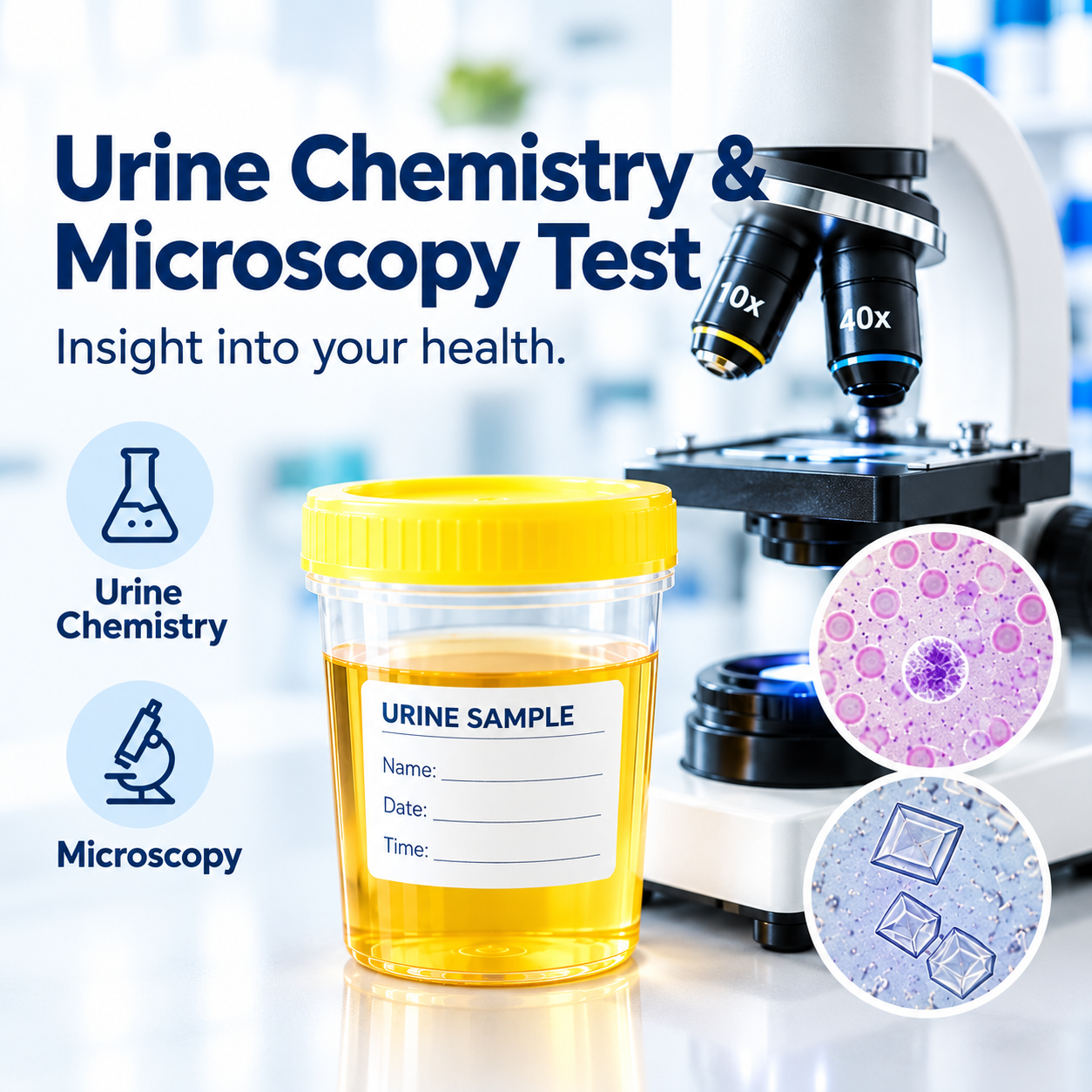
Urine Chemistry, Microscopy & Culture Test is a thorough laboratory test for urine which is intended for the investigation of urinary tract infections (UTIs
) and other abnormalities in the urine.
The test includes an analysis of the urine chemistry, a
microscopic examination and a urine culture in order to give detailed information regarding your urine sample. Antimicrobial susceptibility testing may also be carried out where a suitable organism has been identified.
The laboratory urine test could be the appropriate one to use if you are suffering from symptoms such as a
burning sensation when urinating, needing to urinate frequently, experiencing a strong urge to urinate, having cloudy urine, noticing blood in the urine, or suffering from pelvic discomfort or from recurrent urinary symptoms.
Key Features
✓ Urine chemistry analysis
✓ Microscopic examination
✓ Urine culture
✓ Identification of bacterial growth
✓ Antimicrobial susceptibility testing where appropriate
✓ Laboratory-processed sample
✓ Digital laboratory results
It is a test carried out in a laboratory — not something you can carry out yourself. The urine sample is sent to the laboratory for professional analysis.
What Does the Urine Test Analyse?
The full urine test makes use of three laboratory techniques in order to examine various aspects of your urine.
- Urine Chemistry Analysis
The urine chemistry test looks at a variety of chemical indicators and physical properties present in the urine.
Depending on the laboratory’s testing panel, these may include:
- Leukocytes
- Nitrites
- Protein
- Blood
- Glucose
- Ketones
- pH
- Specific gravity
Results can be affected by urinary infection, inflammation, dehydration and a number of other conditions and are interpreted together with the other laboratory findings and your symptoms.
- Urine Microscopy
By using a microscope, laboratory technicians are able to look at the urine sample for cells, organisms and other structures.
The analysis may identify:
- White blood cells (WBCs)
- Red blood cells (RBCs)
- Epithelial cells
- Bacteria
- Yeast
- Crystals
- Casts
Microscopy can be used to obtain further information when looking into urinary symptoms and abnormalities.
- Urine Culture
A
urine culture looks for organisms that grow when the sample is kept under laboratory culture conditions.
When the presence of substantial bacterial growth is found, the laboratory will identify the organism and, if suitable, carry out
antimicrobial susceptibility testing.
It could offer a healthcare professional with useful information when deciding if antimicrobial treatment might be suitable.
For whom is this urine test intended?
The test may be appropriate if you have symptoms associated with a possible UTI, including:
- Burning or pain when urinating
- Needing to urinate more frequently
- A sudden or urgent need to urinate
- Passing small amounts of urine
- Cloudy urine
- Blood in the urine
- Lower abdominal discomfort
- Pelvic discomfort
- Recurrent urinary symptoms
It too can be taken into account in the case where a healthcare professional has suggested laboratory urine testing.
As there are a great many possible causes of urinary symptoms, the test results should be looked at in conjunction with your symptoms and medical history.
Common UTI Symptoms
A urinary tract infection can cause symptoms such as:
Burning when urinating
It is a common symptom of the urinary tract to experience a burning or painful sensation when urinating.
Frequent urination
It might happen that you find yourself needing to urinate more frequently than normal.
Urgency
You could find yourself with a sudden or hard-to-postpone need to urinate.
Cloudy urine
Urine can look cloudy or different from its normal appearance.
Blood in the urine
It is sometimes possible to see or detect blood when laboratory tests are carried out.
Lower abdominal discomfort
A number of people have a sensation of discomfort or a pressure in their lower abdomen.
It doesn’t follow that every person who has urinary symptoms has a urinary tract infection; other illnesses can cause symptoms that are similar.
What’s the advantage of selecting our Urine Chemistry, Microscopy & Culture Test?
Comprehensive Laboratory Testing
A single laboratory test is used which combines urine chemistry, microscopy and culture.
Investigates Possible UTI
Laboratory information can be obtained from the test when a bacterial urinary tract infection is suspected.
Microscopic Examination
It enables the laboratory to examine cells, bacteria, crystals and other microscopic findings.
Urine Culture
It makes it possible to identify the organisms that grow from the sample that has been submitted.
Antimicrobial Susceptibility Testing
Susceptibility testing may be used to evaluate the reaction of a single organism to specific antimicrobial agents.
Professional Laboratory Analysis
The laboratory carries out the analysis of the sample rather than giving an immediate DIY result at home.
Clear Digital Results
You will be given a clear digital report of your laboratory results.
What is contained in the test kit?
Your test kit contains the materials required to collect and return your urine sample:
- Urine collection container
- Sample collection instructions
- Secure sample packaging
- Sample return instructions
The sample is forwarded to the laboratory for professional analysis.
Once your sample has been received, the laboratory will carry out the relevant urine chemistry, microscopy and culture tests; in suitable cases, it will also carry out antimicrobial susceptibility testing.
How the Laboratory Urine Test Works
- Order your test
With your test kit you are given all the materials and the instructions needed to collect your urine sample.
- Collect your sample
Take the collection instructions that have been given and obtain your urine sample by using the container provided.
- Return your sample
Pack the sample securely and send it back to the laboratory by using the packaging and return instructions which are provided.
- Laboratory analysis
After having been received, the sample is subjected to the appropriate
chemistry, microscopy and culture analysis.
- Receive your results
The results from your laboratory are given in a
digital results report.
Understanding Your Urine Test Results
No significant abnormalities detected
The laboratory found no significant abnormalities or any bacterial growth that would be relevant from a clinical point of view.
The fact that the result is normal does not mean that it accounts for all the urinary symptoms.
Bacterial growth detected
Bacterial growth was found in the urine culture.
The importance of bacterial growth will vary according to things like the particular organism involved, the amount of growth, the quality of the sample and your symptoms.
A healthcare professional can judge if the treatment is suitable.
Abnormal microscopy findings
Your report may identify findings such as:
- White blood cells
- Red blood cells
- Bacteria
- Crystals
- Casts
- Epithelial cells
The fact that these findings are due to various causes might mean that they need to be subject to further clinical evaluation.
Antimicrobial susceptibility result
Provided that an suitable organism is isolated, the laboratory will carry out antimicrobial susceptibility testing.
The report will show whether or not the organism is susceptible or resistant to the antimicrobial agents that have been tested.
It could help a healthcare professional to make an informed decision regarding the use of antimicrobial treatment.
Urine Culture and Antibiotic Sensitivity Testing
A urine culture is able to detect the bacteria that grow from the sample that is submitted.
Where appropriate the laboratory will carry out
antimicrobial susceptibility testing, which is at times known as antibiotic sensitivity testing.
This is what causes the individual organism to react in a particular way when tested by the laboratory using specific antimicrobial agents.
The findings can assist healthcare professionals in choosing the right treatment in cases where an infection which needs treatment has been confirmed.
You should not begin, halt or alter the antibiotics merely on the basis of a laboratory report; instead, you must adhere to the advice given by your healthcare professional.
Frequently Asked Questions
What is a urine culture test?
A urine culture is a laboratory procedure carried out in order to find any organisms which grow from a urine sample; if relevant growth is found then the organism can be identified and antimicrobial susceptibility testing can be carried out.
What is urine microscopy?
Urine microscopy consists of looking at a urine sample under a microscope in order to identify cells, bacteria, crystals and other microscopic findings.
What does a urine chemistry test involve?
Urine chemistry testing involves checking for various chemical indicators and features in the urine, such as pH, protein, glucose, blood, nitrites and specific gravity, according to the type of test panel offered by the laboratory.
Is this a do-it-yourself UTI test?
No.
It is a urine sample that is tested in a laboratory. You have to gather the sample using the collection supplies provided and then send it to the laboratory, where the chemistry, microscopy and culture analysis are carried out.
How well does a urine culture work?
The reliability of a urine culture is influenced by a number of factors such as proper sample collection, how it is stored and transported, and whether antibiotics have already been taken.
The result must be understood in light of your symptoms and clinical circumstances.
Can antibiotics change my urine culture results?
Yes.
Taking some antibiotics before the sample is collected can decrease bacterial growth and might have an effect on the culture result.
You should not stop taking your prescribed medication without first talking to your healthcare professional.
How long does it take to get urine culture results?
It takes a length of time for the organisms to grow and be analysed in the case of a urine culture.
The results are usually available within 3 – 5 working days once the laboratory has received the sample.
Before publishing, replace this placeholder with your laboratory’s real turnaround time.
Can this test be used for the diagnosis of a urinary tract infection?
The laboratory results obtained from the test may be used to help with the investigation of a possible urinary tract infection.
A diagnosis of a urinary tract infection
should not be made on the laboratory result alone; the symptoms, the clinical history and any other pertinent findings should also be taken into account.
Can this test detect the bacteria which is causing my urinary tract infection?
When significant bacterial growth is found and the organism can be identified, the laboratory will report the organism which has been detected.
The precise procedure for reporting will vary according to the laboratory’s validated testing methods.
Can this test indicate which antibiotic you need?
Antimicrobial susceptibility testing may be included in the test if an appropriate organism is isolated.
It will indicate whether the organism is susceptible or resistant to the antimicrobial agents that have been tested. The final decision regarding treatment should nevertheless be made by a qualified healthcare professional taking into account the full clinical picture.
Can this test pick up a kidney infection?
While a urine test can offer some useful information regarding the urine, it is not capable on its own of diagnosing
a kidney infection.
If you have a fever, chills, pain in your back or side, vomiting, or if you are feeling much unwell, go and get medical help as soon as possible.
May I take this test if I am pregnant?
If you are pregnant and have symptoms of a UTI, you should get in touch with your GP, midwife or another healthcare professional for them to carry out the proper assessment.
When is the right time to get medical advice?
You shouldn’t base your decision entirely on laboratory tests if you have symptoms which might point to a more serious infection.
Seek prompt medical attention if you:
- Have a high temperature or chills
- Have pain in your back or side
- Are vomiting
- Feel significantly unwell
- Are pregnant and have urinary symptoms
- Have significant or persistent blood in your urine
- Have symptoms that are rapidly worsening
Why Choose Repose Healthcare?
At
Repose Healthcare we make it simple, private and convenient to access laboratory testing.
The
Urine Chemistry, Microscopy & Culture Test uses several laboratory methods to give detailed information regarding your urine in cases where an infection or some other urinary abnormality is suspected.
Laboratory Testing
Professional Analysis
Clear Digital Results
Important Information
The results of this laboratory test will give details regarding the urine sample that has been submitted and it
does not take the place of professional medical diagnosis or advice.
There are a number of possible reasons for urinary symptoms, and a negative test result does not rule out all the possible causes of the symptoms, nor does the presence of bacterial growth mean that antibiotic treatment is required.
Always discuss concerning or persistent symptoms and your results with a qualified healthcare professional.