Private Group B Strep Screening From Home
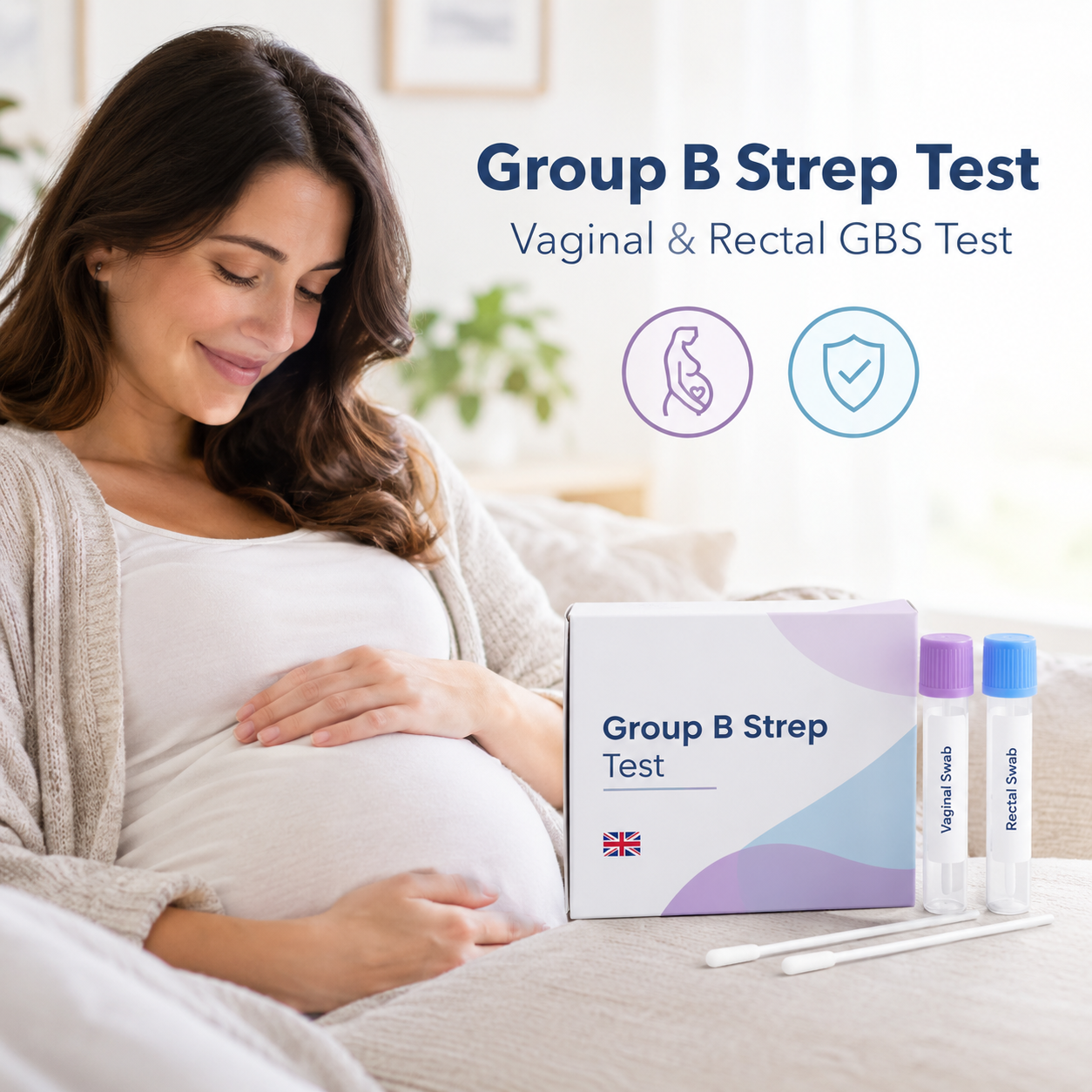
Check for Group B Streptococcus (GBS) with a convenient vaginal and rectal swab test that you can complete at home.
A professional lab test can show if GBS is present during pregnancy. This gives you information to talk about with your midwife or obstetrician as you plan your birth.
✓ Vaginal and rectal swab testing
✓ Convenient home collection
✓ UK laboratory analysis
✓ Confidential online results
✓ Doctor-reviewed results
✓ Fast turnaround
Add to basket
Group B Strep Testing in Pregnancy
Group B Streptococcus (GBS) is a common bacteria that can live in the vagina and rectum. Most people who carry GBS do not have symptoms and stay healthy.
In some cases, GBS can pass from mother to baby during labour and cause serious infections in newborns, such as sepsis, pneumonia, or meningitis.
The risk to each baby is low, but early GBS infection can be serious. Knowing if GBS is present helps you talk about your options for labour and newborn care with your maternity team.
What Is a Group B Strep Test?
A GBS test uses swabs from the lower vagina and rectum to check if Group B Streptococcus is there.
Your sample goes to a professional lab for testing, and your result will show if GBS was found.
A positive result means GBS was found when you took the test. It does not mean you or your baby has an infection.
Why Consider Private GBS Testing?
Routine GBS screening is not currently offered to all pregnant women through the NHS in the UK.
The UK approach differs from countries that routinely screen all pregnant women. NHS guidance explains that GBS is very common, most babies born to people carrying GBS remain healthy, and a screening test cannot reliably predict which babies will develop an infection.
Some pregnant women choose private testing to get more information about their GBS status before talking about their birth plan with their maternity team.
A private test may be particularly relevant if you:
- Want to know whether GBS is detected during your pregnancy
- Have previously tested positive for GBS
- Are discussing GBS and antibiotics with your midwife or obstetrician
- Want additional information as part of your birth planning
- Have previously had a baby affected by GBS infection
- Have concerns about GBS and want to discuss testing with your maternity team
Important: A private test is meant to add to, not replace, advice from your midwife, GP, or obstetrician.
When Should You Take a GBS Test?
If you decide to have a GBS swab during pregnancy, the usual time is between 35 and 37 weeks.
Testing during this period can provide a more useful indication of GBS carriage closer to birth than testing much earlier in pregnancy. RCOG information specifically describes vaginal and rectal testing at 35–37 weeks in certain circumstances, including where GBS was found in a previous pregnancy and the previous baby was unaffected.
However, the appropriate timing can depend on your individual pregnancy and maternity care pathway.
Always discuss the timing of testing with your midwife or obstetrician.
What Does the GBS Test Include?
Your Group B Strep Vaginal & Rectal Test includes:
- Vaginal swab
- Rectal swab
- Sample collection instructions
- Laboratory analysis
- Return packaging
- Secure online results
- Doctor-reviewed reporting
Please check the product packaging and ordering information for the exact contents, laboratory accreditation, turnaround time and return arrangements applicable to your test.
How the GBS Home Test Works
1. Order your test online
Order your GBS test securely and have your kit delivered discreetly to your chosen address.
2. Collect your samples
Follow the supplied instructions to collect the vaginal and rectal swabs.
The process is designed to be straightforward and can be completed privately at home.
3. Return your samples
Package your samples according to the instructions and return them to the laboratory using the supplied return method.
4. Receive your results
Once your samples have been processed, your result will be made available securely online.
Understanding Your GBS Results
Your report will show if Group B Streptococcus was found in your samples.
Positive result – GBS detected
A positive result means GBS was found when your sample was tested.
It does not mean your baby has an infection or that you are unwell.
Depending on your pregnancy and circumstances, your maternity team may recommend intravenous antibiotics during labour to reduce the risk of your baby developing early-onset GBS infection. RCOG states that when GBS is found in the vagina or rectum during the current pregnancy, antibiotics during labour are offered.
If you get a positive result from a private test, share it with your midwife or obstetrician so they can guide you on your care.
Negative result – GBS not detected
A negative result means GBS was not detected in the sample at the time of testing.
However, no swab test can guarantee that GBS will not show up later or that a baby cannot get a GBS infection. Your maternity team will keep checking for other risk factors during pregnancy and labour.
What Happens If GBS Is Positive?
If GBS is detected, you should tell your maternity team.
Depending on your circumstances, you may be offered antibiotics through a drip during labour.
These antibiotics are given during labour rather than routinely treating GBS carriage before labour. RCOG explains that antibiotics before labour do not reduce the risk of early-onset GBS infection in the same way as antibiotics given during labour.
For women who are known to carry GBS, RCOG states that intrapartum antibiotics can reduce the risk of early-onset GBS infection from around 1 in 400 to around 1 in 4,000.
Your maternity team will advise you about what this means for your birth plan.
Who May Be Offered Antibiotics During Labour?
UK maternity guidance considers several factors when deciding whether antibiotics during labour are appropriate.
These can include:
- A positive GBS vaginal or rectal test during the current pregnancy
- GBS found in urine during the current pregnancy
- A previous baby who developed GBS infection
- Signs of infection during labour
- Certain circumstances involving preterm labour or waters breaking
Your midwife or obstetrician will assess your individual circumstances and advise you accordingly.
Why Choose a Vaginal & Rectal GBS Test?
🏠 Test From Home
You can collect your vaginal and rectal samples easily and in private at home.
🔬 Laboratory Analysis
Your samples are tested in a professional lab, not just with a simple visual or over-the-counter test.
👩⚕️ Doctor-Reviewed Results
You will get a clear report you can discuss with your maternity team if needed.
🔒 Confidential
Your test information and results are kept secure.
📋 Useful for Birth Planning
Knowing your result gives you information to talk about with your midwife or obstetrician before labour.
⚡ Fast Results
You will get your results within the turnaround time given for your test.
Is GBS Dangerous?
For most pregnant women, carrying GBS does not cause symptoms or illness.
The main concern is passing GBS to the baby during labour and birth. Serious GBS infection in newborns is rare, but it can cause sepsis, pneumonia, or meningitis.
If you are worried about GBS, talk to your midwife or GP.
Frequently Asked Questions
Is Group B Strep common?
Yes. GBS is a common bacteria that can live in the vagina and rectum. Most people who carry it do not have symptoms.
Is GBS dangerous during pregnancy?
GBS usually does not cause problems for the mother. The concern is that it can sometimes pass to a baby during labour and cause a serious infection.
Is GBS testing routinely offered by the NHS?
No. The NHS in the UK does not currently offer routine testing for all pregnant women. You can choose to have a private test.
When is the best time to test for GBS?
The usual time to test is between 35 and 37 weeks of pregnancy. The best timing depends on your situation, so talk to your midwife or obstetrician.
Can I do the GBS test myself?
You can collect a vaginal and rectal swab at home if your test is made for self-collection. Be sure to follow the instructions that come with your kit.
Is a vaginal and rectal swab safe during pregnancy?
Swab testing is usually safe when done correctly. If you have concerns about collecting a sample during pregnancy, talk to your midwife or healthcare professional first.
What does a positive GBS result mean?
It means GBS was found in your sample. It does not mean you or your baby has an infection. Tell your maternity team about the result so they can advise you about your care during labour.
Will I need antibiotics if my result is positive?
If GBS is found, your maternity team may suggest intravenous antibiotics during labour, depending on your situation. GBS carriage is not usually treated with antibiotics before labour just because it was found.
What if my GBS test is negative?
A negative result means GBS was not found in your sample. It cannot guarantee GBS will not show up later in pregnancy, so keep following your maternity team’s advice.
What if I have had a baby with GBS infection before?
If you had a baby with GBS infection before, UK guidance says you should be offered antibiotics during labour in future pregnancies. Talk to your midwife or obstetrician about your care.
Order Your Group B Strep Test Online
Get the Information You Need for Your Birth Plan
Our Group B Strep Vaginal & Rectal Test lets you check for GBS carriage during pregnancy in the privacy of your own home.
You get professional lab testing and a clear result to discuss with your maternity team.
Add to basket
Important Information
This test gives information about GBS carriage. It does not diagnose or predict if a newborn will get a GBS infection.
A negative result does not guarantee GBS will not be present at the time of labour.
If you get a positive result, tell your midwife, GP, or obstetrician. If you are in labour, your waters have broken, or you have any concerns about your pregnancy or your baby’s wellbeing, contact your maternity team right away instead of waiting for a test result.