High-Sensitivity C-Reactive Protein (hs-CRP) Test – At-Home Heart & Inflammation Health Check
Check Your hs-CRP Level from the Comfort of Home
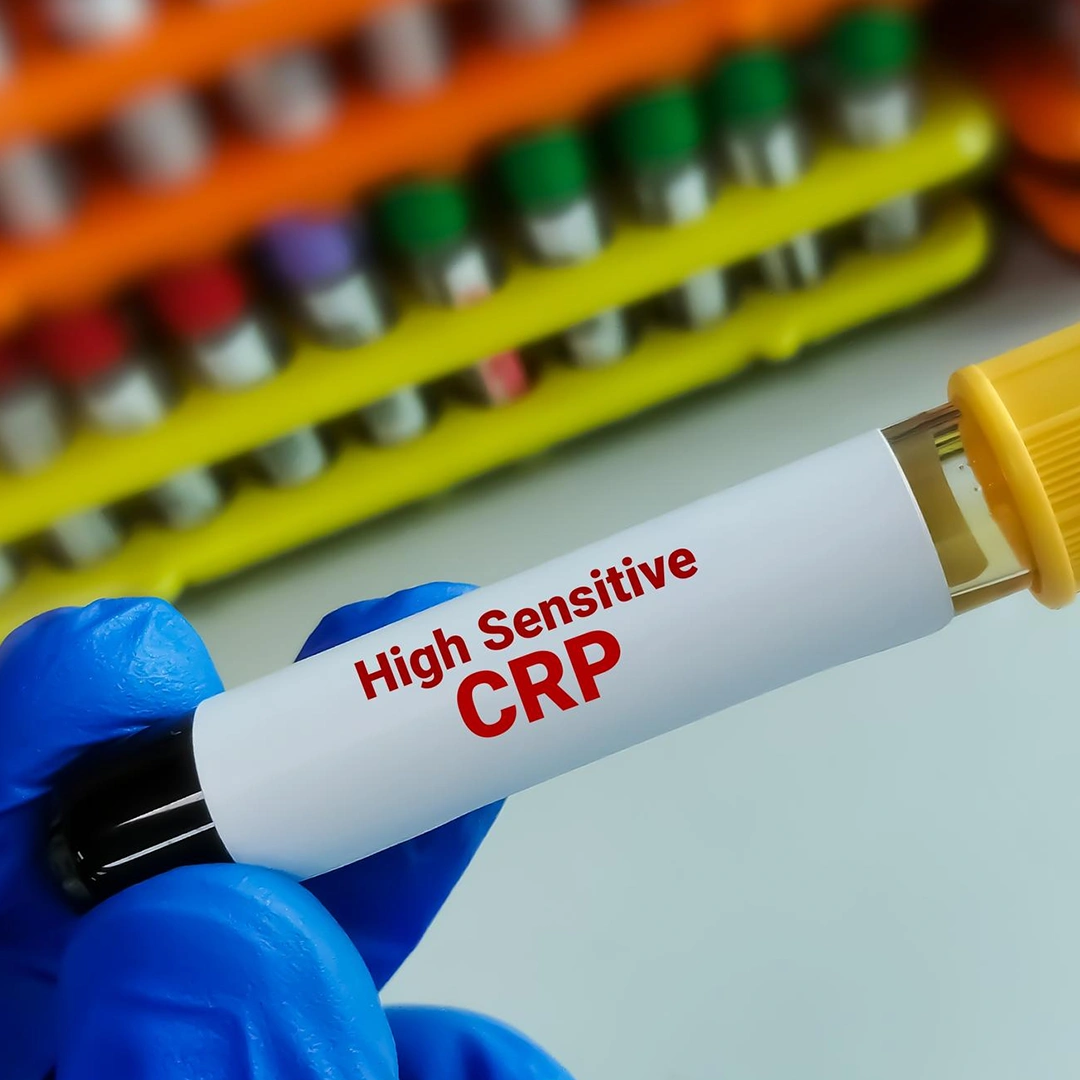
Repose Healthcare’s High-Sensitivity C-Reactive Protein (hs-CRP) Test is a simple lab blood test that checks for very low levels of C-reactive protein (CRP) in your blood.
CRP is a protein your liver makes when there is inflammation in your body. The high-sensitivity test can find smaller amounts of CRP than a standard test, so it is helpful for checking low-level inflammation and heart health risks.
You can collect your sample at home with a simple finger-prick and send it to the lab. Your results are delivered securely, so you can talk about them with your healthcare provider if needed.
What Is hs-CRP?
C-reactive protein (CRP) is produced by the liver when the body responds to inflammation.
A standard CRP test is generally used to detect more substantial increases in CRP, which can occur during infection, injury and other inflammatory conditions.
An hs-CRP test is made to measure much lower amounts of CRP. This helps check for mild, ongoing inflammation and can give extra information about heart health when needed.
It’s important to know that hs-CRP is not only linked to heart disease. CRP levels can go up for many reasons, like infections, injuries, or other health issues.
Why Take an hs-CRP Test?
An hs-CRP test can be helpful if you want more details about your heart health or inflammation, especially when you look at it with other known risk factors.
You may consider testing if you:
- Want additional information about your cardiovascular risk
- Have a family history of cardiovascular disease
- Have risk factors such as high cholesterol, high blood pressure, diabetes or smoking
- Are interested in understanding your inflammation level
- Are making lifestyle changes and want additional health information to discuss with your healthcare professional
- Have been advised by a healthcare professional to have an hs-CRP test
You shouldn’t look at your hs-CRP result alone. Things like cholesterol, blood pressure, smoking, diabetes, age, and family history also affect your heart risk.
What Can Affect hs-CRP Levels?
CRP is a general sign of inflammation, so a high result does not point to one specific disease or problem.
Higher hs-CRP levels can occur in association with a variety of circumstances, including:
- Recent or ongoing infection
- Inflammation
- Injury or tissue damage
- Obesity and metabolic health factors
- Smoking
- Some chronic inflammatory conditions
- Cardiovascular risk factors
Since hs-CRP can go up during a short-term illness or flare-up, a single high result might not show your long-term heart risk.
If you are sick when you take the test, talk to your healthcare provider about the result before making any decisions about your heart health.
Understanding Your hs-CRP Result
Results are reported in mg/L.
For cardiovascular risk assessment, hs-CRP results are commonly considered using broad categories such as:
| hs-CRP Result |
General Interpretation |
|
<1.0 mg/L |
Lower relative cardiovascular risk |
|
1.0–3.0 mg/L |
Average/intermediate relative cardiovascular risk |
|
>3.0 mg/L |
Higher relative cardiovascular risk |
These categories are meant to guide you and are not a diagnosis.
A result over 3 mg/L can happen for many reasons and does not always mean you have heart disease. A lower result also does not guarantee your heart risk is low.
You should look at your result together with your overall health, medical history, and other heart risk factors.
If your result is higher than expected, especially if you have been sick recently, your healthcare provider might suggest repeating the test when you feel better.
hs-CRP vs Standard CRP
Although both tests measure C-reactive protein, they are designed for different purposes.
Standard CRP
A standard CRP test is generally used to identify more significant increases in inflammation and may be useful when investigating conditions such as infection or acute inflammation.
High-Sensitivity CRP
An hs-CRP test can find much lower levels of CRP. This makes it helpful for checking mild inflammation and giving extra details about heart risk in some cases.
Important: hs-CRP is not a replacement for a standard CRP test when investigating an acute infection or significant inflammatory illness.
How the hs-CRP Test Works
1. Order Your Test
Order your hs-CRP test online and get the kit delivered privately to your address.
2. Collect Your Blood Sample
Use the instructions in your kit to collect a small finger-prick blood sample at home.
3. Return Your Sample
Pack your sample as shown in the instructions and send it back to the lab using the return packaging.
4. Laboratory Analysis
Your sample is analysed for high-sensitivity C-reactive protein.
5. Receive Your Results
After your sample is analysed, you’ll get your results securely online as part of your test service.
Always follow the instructions in your kit for collecting, storing, and sending your sample.
Benefits of the hs-CRP Test
Convenient Home Testing
You can collect your sample at home, so you don’t need to visit a clinic.
High-Sensitivity Measurement
This test can measure lower CRP levels than a regular CRP test.
Cardiovascular Risk Information
In some cases, hs-CRP can give you extra information about heart risk when you look at it with other known risk factors.
Laboratory Analysis
A lab analyses your sample and gives you a clear report with your results.
Private and Discreet
You can order, collect, and send your sample from home using the instructions and packaging that come with your kit.
Who Might Consider an hs-CRP Test?
An hs-CRP test may be particularly relevant to adults who:
- Want additional information about cardiovascular risk
- Have cardiovascular risk factors
- Have a family history of cardiovascular disease
- Are monitoring lifestyle factors associated with cardiovascular health
- Have been advised by a healthcare professional to measure hs-CRP
- Want to understand their CRP level as part of a broader health assessment
Think of this test as just one part of understanding your heart health, not the whole picture.
Can hs-CRP Diagnose Heart Disease?
No.
An hs-CRP test cannot diagnose coronary artery disease, heart attack, stroke or any other specific cardiovascular condition.
Instead, hs-CRP can give extra information about heart risk when you look at it with other known risk factors.
If you have symptoms that might mean a heart problem, see a doctor instead of relying on an hs-CRP test.
Can hs-CRP Diagnose an Infection?
No.
CRP goes up with inflammation and infection, but hs-CRP is mainly used to measure very low levels of CRP.
If you’re worried about a sudden infection or serious inflammation, a standard CRP test and a doctor’s check-up may be better.
Important Consideration Before Testing
Since many things can raise hs-CRP, your result might be higher if you are sick, have an infection, or another cause of inflammation.
So, if your result is higher than expected, take care not to assume it shows your long-term heart risk.
If you are sick or getting over an illness, talk to your healthcare provider about when to take the test.
Why Choose Repose Healthcare?
At Repose Healthcare, we make lab testing easier by offering home sample collection and secure lab analysis.
Our hs-CRP testing service offers:
- Convenient finger-prick home collection
- Laboratory analysis
- Secure access to results
- Clear testing instructions
- Discreet and confidential service
- Accessible health information without a routine clinic visit
The information you get with your result is there to help you understand your test and talk with your healthcare provider.
Test Summary
| Feature |
Details |
|
Test |
High-Sensitivity C-Reactive Protein (hs-CRP) Test |
|
Sample type |
Finger-prick blood sample |
|
Marker measured |
C-reactive protein (CRP) |
|
Testing method |
High-sensitivity CRP measurement |
|
Primary use |
Assessment of low-level CRP and additional cardiovascular risk information |
|
Collection |
At home |
|
Laboratory analysis |
Yes |
|
Results |
Secure laboratory report |
|
Fasting |
Follow the instructions supplied with your test kit |
|
Suitable for |
Adults seeking additional information about inflammation or cardiovascular risk |
Frequently Asked Questions
What does an hs-CRP test measure?
The test measures very low concentrations of C-reactive protein (CRP) in your blood.
CRP is produced by the liver in response to inflammation. The high-sensitivity test is designed to detect lower concentrations than a conventional CRP test.
Is hs-CRP a heart disease test?
hs-CRP is not a diagnostic test for heart disease.
It can provide additional information about cardiovascular risk in appropriate circumstances, but it should be interpreted alongside factors such as cholesterol, blood pressure, diabetes, smoking, age and family history.
What does a high hs-CRP result mean?
A higher hs-CRP result indicates that CRP levels are elevated. This may be associated with increased cardiovascular risk, but it can also occur because of infection, inflammation, injury and other factors.
A high result therefore does not automatically mean that you have heart disease.
Can lifestyle changes affect hs-CRP?
Lifestyle and health factors can influence CRP levels. Maintaining a healthy weight, being physically active, avoiding smoking and following a balanced diet can form part of a broader approach to cardiovascular health.
However, an hs-CRP result should not be used on its own to measure whether a particular lifestyle change has reduced your cardiovascular risk.
Should I test if I have chest pain or shortness of breath?
No. Do not rely on an hs-CRP test to investigate these symptoms.
New, severe or unexplained chest pain, significant shortness of breath, fainting or other potentially serious symptoms require appropriate medical assessment. If symptoms are severe or you think you may be experiencing a medical emergency, seek urgent medical attention.
Does a low hs-CRP result mean I have no inflammation?
No. hs-CRP is one marker and does not detect every type or cause of inflammation. A low result does not rule out an inflammatory condition or other health problem.
Important Medical Disclaimer
The High-Sensitivity C-Reactive Protein (hs-CRP) Test provides information about the concentration of C-reactive protein in your blood. It is not intended to diagnose or exclude heart disease, stroke, infection, autoimmune disease or any other medical condition.
CRP is a non-specific marker and can be affected by many factors, including infection, inflammation, injury, smoking, obesity and other health conditions. An elevated result therefore does not necessarily indicate cardiovascular disease.
The cardiovascular risk categories provided are general reference guidelines and should not be interpreted as a personal diagnosis or a definitive assessment of your individual cardiovascular risk.
Results should be considered alongside your symptoms, medical history, medications and other relevant risk factors. If you receive an unexpected or elevated result, discuss it with your GP or another qualified healthcare professional.
Do not start, stop or change medication based solely on the result of this test.
This test is not suitable for diagnosing an acute medical emergency. If you have new or severe chest pain, significant difficulty breathing, fainting, sudden weakness or other symptoms that may indicate a serious medical problem, seek urgent medical attention.
This test is intended as a source of additional health information and is not a substitute for professional medical advice, diagnosis or treatment.