
MRSA Screening for Hospital Admission UK: The Complete 2026 Patient Guide
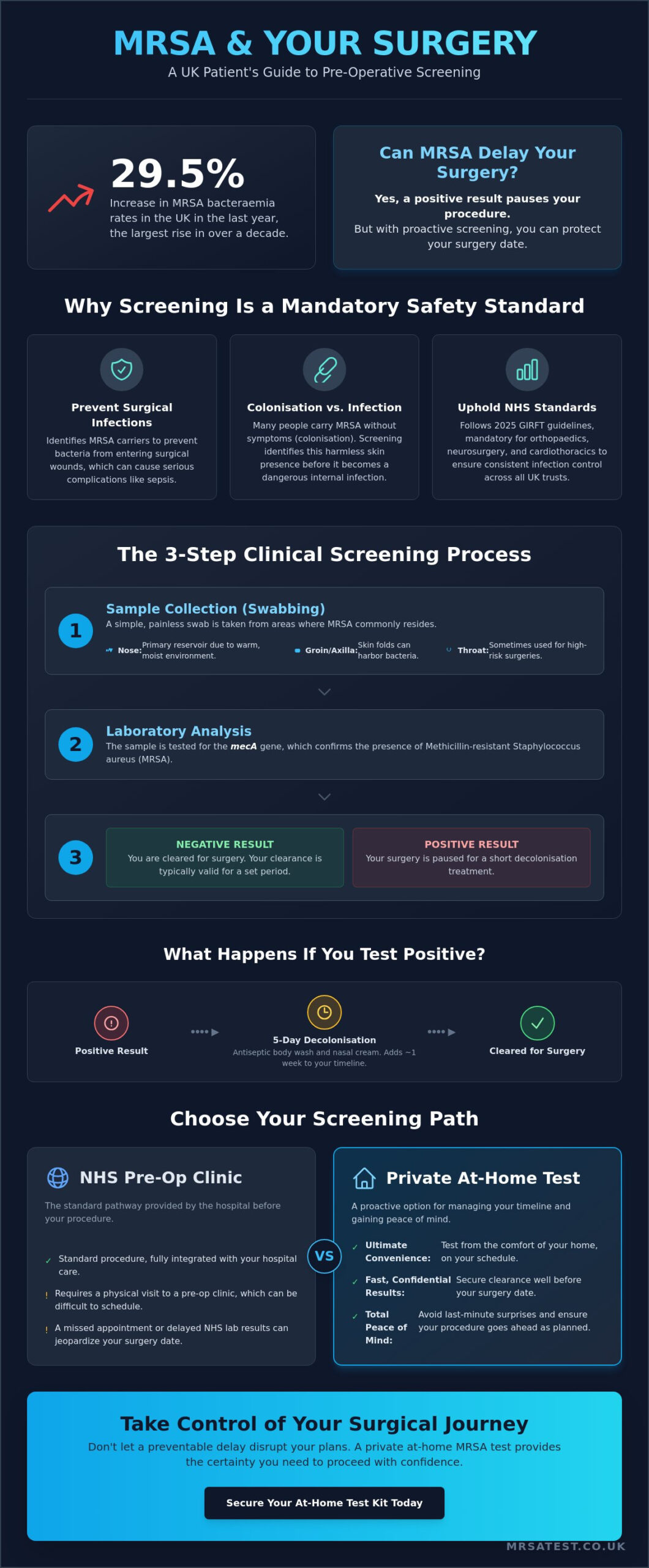
Did you know that MRSA bacteraemia rates in the UK increased by 29.5% in the last year alone? This sharp rise, the largest in over a decade, has made mandatory screening a critical priority for every hospital admission. Preparing for surgery is already stressful, and the last thing you need is a surprise on the morning of your procedure. You’re likely wondering; can mrsa delay surgery uk? The short answer is yes, but it doesn’t have to.
We understand that the logistics of pre-operative clinics can feel overwhelming, especially when you’re focused on your recovery. This guide explains the standardized 2025 GIRFT screening protocols and how you can secure fast, private results to protect your surgery date. We’ll walk you through the required swab sites for the nose and groin, explain how long your clearance remains valid, and show you how to gain total peace of mind before you even step through the hospital doors. By taking a proactive approach, you can ensure your surgical journey remains on track and safe for everyone involved.
Key Takeaways
- Learn why MRSA screening is a mandatory safety standard for elective procedures in the UK to prevent healthcare-associated infections.
- Discover how a positive MRSA result or a missed pre-op appointment can delay surgery in the UK and how to proactively manage your clinical timeline.
- Understand the precise steps for swabbing colonisation sites like the nose and groin to ensure your sample meets laboratory requirements.
- Compare the convenience of private at-home testing with traditional NHS pre-op clinics to find the best fit for your schedule.
- Gain peace of mind by securing rapid, confidential results that confirm your readiness for hospital admission well before your surgery date.
Table of Contents
Why is MRSA Screening Mandatory for UK Hospital Admissions?
Hospital admissions for elective procedures involve rigorous safety protocols designed to protect patients from healthcare-associated infections (HAIs). At the heart of these protocols is MRSA screening. This process identifies individuals carrying Methicillin-resistant Staphylococcus aureus (MRSA), a type of bacteria that has developed resistance to several widely used antibiotics. Screening acts as a shield, ensuring that a manageable skin presence doesn’t turn into a life-threatening complication during your recovery.
It’s vital to distinguish between being colonised and having an active infection. Many people carry MRSA on their skin or in their nose without any symptoms; this is known as colonisation. While harmless in daily life, these bacteria pose a significant threat when a surgical incision provides a doorway into the body. Because elective surgery patients are often in a vulnerable state, they are the primary target for mandatory screening. You might ask, can mrsa delay surgery uk? If a screen returns a positive result, your procedure will typically be paused for a five-day decolonisation treatment to ensure your safety and the safety of the surgical ward.
The Risk of Surgical Site Infections (SSIs)
Surgical site infections are a serious concern in clinical environments. According to the UK Health Security Agency, MRSA bacteraemia rates increased by 29.5% in the 2024 to 2025 financial year, reaching the highest levels seen in over a decade. When MRSA bacteria present on the skin enter a surgical wound, they can lead to severe issues like sepsis or wound breakdown. These complications don’t just extend your hospital stay; they can lead to long-term health challenges and require intensive antibiotic therapy. Screening identifies these risks early, allowing for preventative action that safeguards your surgical outcome.
2026 NHS Infection Control Standards
Current NHS standards, guided by the National Institute for Health and Care Excellence (NICE) and the 2025 GIRFT (Getting It Right First Time) guidance, have standardised screening to reduce surgical delays. Screening is mandatory for high-risk specialties such as orthopaedics, neurosurgery, and cardiothoracic surgery, as well as any procedure involving prosthetic material. Even for some minor procedures, clinicians may require a screen if the patient has certain risk factors. This universal approach ensures that infection control is consistent across all UK trusts. For a deeper look at the bacteria itself, you can read our article: What Is MRSA? Your Complete Guide. Understanding these standards helps you prepare effectively, ensuring that can mrsa delay surgery uk becomes a question of “when” you are cleared, rather than “if” your surgery can proceed.
The Clinical Process: How MRSA Screening Works
MRSA screening is a straightforward clinical procedure, yet it’s the foundation of modern infection control. The process involves taking swabs from specific areas of the body where the bacteria are most likely to live. These samples are then sent to a laboratory to determine if Staphylococcus aureus is present and, crucially, if it’s resistant to methicillin. While the swabbing itself takes only a few minutes, the technology used in the lab determines how quickly you receive your clearance for hospital admission.
The laboratory’s role is to look for the mecA gene, which gives the bacteria its resistance. If this gene is detected, the patient is considered colonised. If you’re concerned about your timeline, you might wonder, can mrsa delay surgery uk? A positive result doesn’t mean your surgery is cancelled forever. Instead, it triggers a decolonisation protocol, which usually involves a five-day course of antiseptic body wash and nasal cream. Once this is complete, you’re typically cleared for your procedure, though this inevitably adds a week to your pre-operative timeline.
Screening Sites: Where and Why?
Clinicians target specific “reservoirs” on the body where MRSA thrives. The most common site is the nose, specifically the anterior nares, because the warm, moist environment is ideal for bacterial growth. The groin and axilla (armpit) are also vital screening sites as skin-to-skin contact and moisture in these folds allow colonisation to persist. Throat swabs are occasionally used for specific high-risk surgeries, such as heart or brain procedures, to ensure no bacteria are present in the upper respiratory tract. By swabbing multiple sites, hospitals get a comprehensive picture of your colonisation status, following established NHS guidance on MRSA to minimise the risk of post-surgical infection.
PCR vs. Culture: Choosing Your Screening Method
There are two primary ways laboratories identify MRSA, and the choice between them significantly impacts your waiting time. Traditional culture tests involve placing your sample in a petri dish and waiting for bacteria to grow. This method is reliable but slow, typically taking 48 to 72 hours to produce a definitive result. If your hospital requires a last-minute check, this delay can be stressful.
Rapid PCR (Polymerase Chain Reaction) testing is the modern alternative. Instead of growing the bacteria, PCR technology looks for the specific DNA markers of MRSA. This allows for much faster detection, often providing results within 24 hours of the sample reaching the lab. Most UK private hospitals now prefer or require PCR testing because of this efficiency. If you’re on a tight schedule, ordering a private MRSA Rapid PCR Test can provide the speed you need to ensure your paperwork is ready. Understanding that can mrsa delay surgery uk depends largely on how quickly you get tested, many patients now choose PCR to avoid any administrative bottlenecks before their admission date.
NHS Pre-Op Assessment vs. Private At-Home MRSA Testing
Choosing between a hospital-led assessment and a private screening depends on your personal priorities and surgical timeline. The traditional NHS route usually involves attending a pre-operative assessment clinic several weeks before your procedure. During this appointment, a nurse will take the necessary swabs and send them to the hospital’s internal lab. While this is a standard part of the patient pathway, it often requires taking time off work and navigating hospital parking, which adds another layer of stress to your surgical preparation.
Private at-home testing has become a popular alternative for elective surgery patients who value convenience and speed. By choosing this route, you take control of the timing. You don’t have to wait for a clinic slot to become available. If you’ve ever wondered, can mrsa delay surgery uk? The answer is often tied to logistics. If an NHS pre-op appointment is missed or a result is delayed in a busy hospital system, your surgery date could be at risk. Private testing acts as a reliable safeguard, ensuring your results are ready well in advance.
A common concern for many patients is whether a hospital will accept a private test result. Most UK surgeons and hospitals, including private providers like Nuffield or Spire, accept external results as long as they are provided by a certified laboratory. Providing a clear, professional laboratory report at your final pre-op check is usually all that’s required to confirm your status and keep your admission on track.
The Benefits of Private At-Home Screening
One of the primary advantages of testing at home is the reduction of unnecessary hospital visits. This is particularly beneficial for patients with limited mobility or those who wish to avoid exposure to other pathogens in a clinical setting. It offers total flexibility; you can perform the swabs at a time that suits your schedule, without the pressure of a fixed appointment. For more details on how these kits work, you can explore our At-Home Test Kits UK: The Complete Guide.
Ensuring Laboratory Accreditation
For a private test to be clinically valid, it must be processed by a laboratory with UKAS (United Kingdom Accreditation Service) accreditation. This certification is the gold standard for medical testing in Britain, ensuring that the results are accurate and meet national safety standards. We understand that your surgery depends on these results, which is why mrsatest.co.uk uses only certified UK laboratories for all screenings. This high level of clinical oversight provides the peace of mind you need when answering the question: can mrsa delay surgery uk? With a verified report in hand, you can focus entirely on your recovery.
How to Correctly Perform an MRSA Swab at Home
Performing an MRSA swab at home is a simple process. However, the accuracy of your results depends entirely on following the clinical steps precisely to avoid contamination or invalid samples. One of the primary reasons why patients ask can mrsa delay surgery uk is due to administrative errors or voided tests caused by incorrect swabbing. By taking a few minutes to prepare, you ensure your sample is laboratory-ready and your surgical timeline remains secure.
Before you begin, clear a space on a clean, dry surface. Wash your hands thoroughly with soap and water for at least 20 seconds. Carefully unpack your kit, ensuring the swab tip doesn’t touch any surfaces, including your hands or the table. Most kits require samples from the nose and groin, though some also include the axilla (armpit) for a more comprehensive screen. Once the swabs are collected, they must be placed immediately into the transport tube and sealed.
Common mistakes that lead to invalid results include:
- Touching the tip of the swab before or after sampling.
- Failing to provide enough skin contact during the rotation.
- Leaving the sample at room temperature for several days before posting.
- Forgetting to label the tube with the correct patient details.
The Perfect Swab Technique
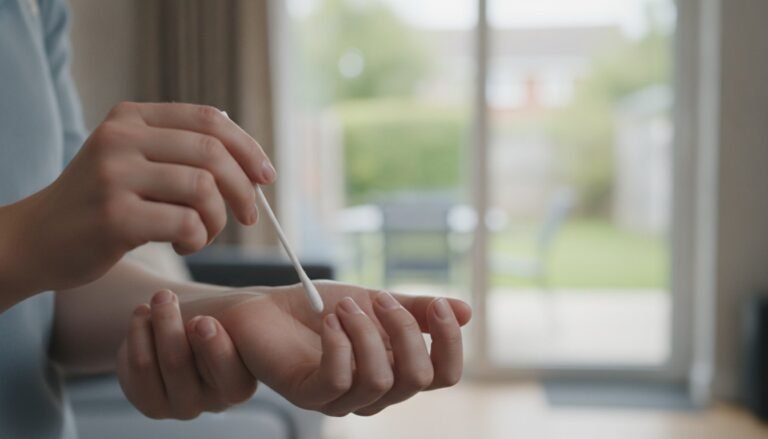
For the nasal sample, you should insert the swab tip about 1cm into the nostril and rotate it firmly five times against the inside wall. Repeat this process in the second nostril using the same swab. When swabbing the groin area, focus on the skin folds where the leg meets the torso, as these warm areas are prime colonisation sites. If your kit requires it, you should moisten the swab tip by dipping it into the provided sterile saline tube for one second before beginning the collection. This helps the cotton tip pick up a sufficient amount of material for the laboratory to analyse.
Post-Swab Logistics
Once you’ve finished, labeling is your most critical task. Hospitals and laboratories cannot process anonymous samples. You must clearly write your full name, date of birth, and the exact date and time the sample was taken on the tube’s label. Place the tube into the provided protective packaging and use the prepaid clinical mailer for immediate dispatch. For a broader look at managing your pre-op requirements, see our Preparing for Surgery: A Complete Checklist. Promptly returning your kit is the best way to ensure that “can mrsa delay surgery uk” doesn’t become a reality for your procedure.
If you’re ready to secure your results, you can order your MRSA Rapid PCR Test today for professional, laboratory-verified clearance.
Securing Your Surgery Date with Confidential MRSA Results
Knowing your MRSA status before you arrive at the hospital provides a level of certainty that is invaluable during surgical preparation. Administrative delays, missed pre-op appointments, or backlogs in hospital laboratories are common reasons why patients find themselves asking, can mrsa delay surgery uk? By choosing a private screening path, you remove the guesswork and ensure that your clinical paperwork is complete well before your admission time. This proactive step allows you to focus on your recovery rather than worrying about last-minute cancellations.
Our service combines the clinical accuracy of a verified laboratory environment with the discretion of at-home collection. This approach ensures you meet hospital safety standards without the logistical burden of additional clinic visits. Whether you require an MRSA Rapid PCR Test for the nose and groin or a more comprehensive screen including the axilla, having a verified report ready for your consultant is the most effective way to protect your surgery date. It’s about quiet competence; you’re taking charge of your health logistics through a simple, well-managed process.
Fast-Tracking Your Pre-Op Clearance
For patients with tight surgical deadlines, speed is the most critical factor. If you’ve missed your NHS pre-op window or your surgery has been brought forward, our 24-hour PCR results can be a lifesaver. We support patients across the UK by providing rapid turnaround times that hospital labs often can’t match during busy periods. Once your sample reaches our accredited laboratory, your results are processed quickly and delivered via a secure, confidential email. This digital report is easy to share with your surgical team, providing immediate proof of your clearance. You can learn more about this process by visiting our page on MRSA Test: Get Fast Results with Rapid PCR.
What to Do If Your Result is Positive
If your test returns a positive result, it’s important not to panic. MRSA colonisation is common and does not mean you’re ill; it simply means the bacteria are present on your skin. However, it’s a finding that your surgical team needs to know about. You should share your laboratory report with your GP or consultant immediately. They’ll typically prescribe a standard five-day decolonisation treatment. This routine usually involves using a specific antiseptic body wash and a nasal antibiotic ointment. Once this short course is finished, you’re usually ready for admission. While a positive result can mrsa delay surgery uk by about a week, identifying it early at home means you can complete the treatment before your scheduled date, rather than being sent home from the ward on the morning of your operation.
Securing your surgery date starts with choosing the right test for your needs. Browse our range of PCR and culture options to find the kit that matches your hospital’s requirements and gain the peace of mind you deserve.
Take Control of Your Surgical Readiness
Preparing for hospital admission requires careful attention to clinical protocols, and MRSA screening is a vital part of that journey. This guide has detailed why these tests are mandatory for patient safety and how modern swabbing techniques ensure accurate results. While many patients are concerned that a positive finding can mrsa delay surgery uk, early detection allows for a simple five-day decolonisation treatment. This proactive approach keeps your original procedure date within reach and ensures you aren’t a risk to yourself or others on the ward.
Choosing a private screening route offers a level of efficiency and discretion that fits into your life. Our UKAS Accredited Laboratory Testing provides the clinical accuracy your surgeon requires with the convenience of at-home collection. With a discreet and confidential service and results in as little as 24 hours, you can secure your clearance without the stress of additional hospital visits or pre-op clinic queues.
Don’t leave your admission to chance. Order Your Pre-Op MRSA Screening Kit for Fast, Accurate Results and step into your surgery with complete peace of mind. Your health and safety are the priority, and we’re here to support you through a simple, professional process.
Frequently Asked Questions
Do I really need an MRSA test for minor surgery in the UK?
Mandatory screening depends on your hospital trust and the specific nature of your procedure. It is a standard safety requirement for most elective surgeries, including minor procedures that involve prosthetic material or high-risk patients. You should always check your pre-admission paperwork, as clinicians use these screens to prevent serious post-operative complications like sepsis or wound breakdown.
How long before my hospital admission should I have my MRSA screening?
Most hospitals require a negative screen that is valid for three months prior to your admission date. Some local policies may extend this to six months if you haven’t had a hospital stay during that time. It’s best to complete your screening at least two weeks before your surgery to allow time for decolonisation treatment if your result is positive.
Can I do my MRSA screening at home instead of the hospital?
Yes, you can use a private at-home screening kit to fulfill your pre-operative requirements. This option is a convenient alternative for elective surgery patients who want to avoid the inconvenience of attending a hospital clinic. If you’re worried that a missed hospital appointment can mrsa delay surgery uk, using a private kit ensures your results are ready in time for your admission.
What happens if I test positive for MRSA before my surgery?
If you test positive, you’ll be prescribed a five-day decolonisation treatment by your GP or surgical team. This usually involves a special nasal ointment and an antiseptic body wash to reduce the bacteria on your skin. Once the treatment is complete, you’re usually cleared for surgery, though your procedure may be rescheduled to ensure the treatment was effective before you enter the operating theatre.
How long do MRSA test results take to come back in the UK?
The turnaround time depends on the testing method used by the laboratory. Traditional culture tests usually take 48 to 72 hours to grow the bacteria. In contrast, a Rapid PCR test can provide results in as little as 24 hours after the sample reaches the lab. Choosing a faster method is often the best way to ensure that can mrsa delay surgery uk doesn’t become a concern due to lab backlogs.
Will my private surgeon accept an at-home MRSA test kit result?
Most private surgeons and hospitals accept results from at-home kits as long as they’re processed by a UKAS-accredited laboratory. You’ll receive a formal laboratory report that you can present during your final pre-operative check. It’s always a good idea to confirm with your specific hospital’s admissions team that they accept external, accredited laboratory reports before you place your order.
Where exactly do I need to swab for a pre-op MRSA screen?
The standard swabbing sites are the nose (anterior nares) and the groin. Some hospitals also require a swab from the axilla (armpit) or the throat for specific high-risk procedures. You should follow the instructions provided in your kit precisely. Using the correct technique at these primary colonisation sites is essential for a valid clinical result that the hospital will accept.
Does a positive MRSA test mean my surgery will be cancelled?
A positive result usually leads to a short postponement rather than a permanent cancellation. The delay is necessary to complete the five-day decolonisation protocol, which significantly reduces the risk of surgical site infections. Once you’ve finished the prescribed treatment, your surgical team will typically move forward with your procedure, ensuring your recovery is as safe and as smooth as possible.