
When to Get Tested for MRSA: A Guide to Symptoms and Pre-Surgery Screening
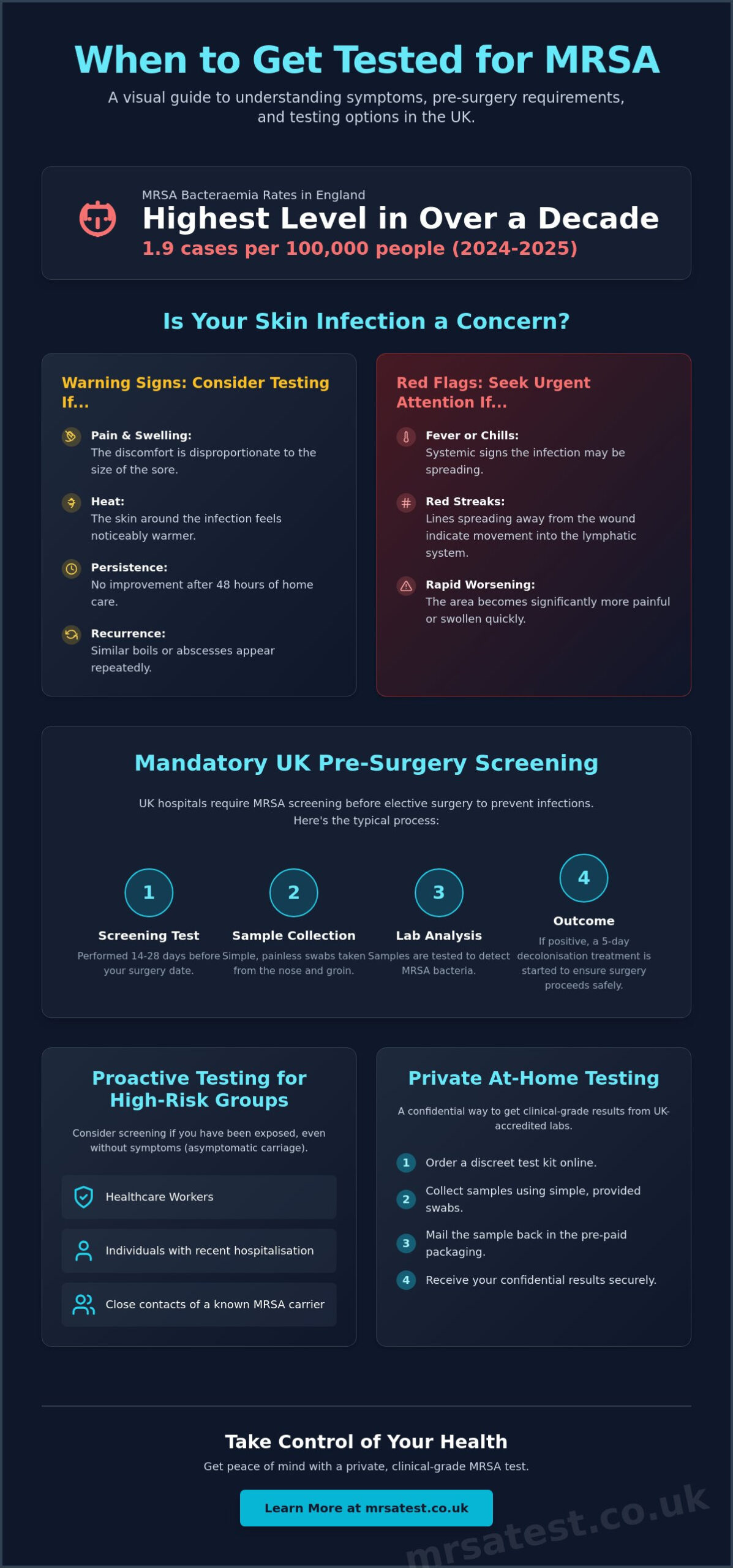
Did you know that MRSA bacteraemia rates in England recently reached their highest level in over a decade, with 1.9 cases per 100,000 people recorded in the 2024-2025 financial year? It’s completely natural to feel a sense of unease when you notice a persistent skin infection that refuses to heal. You might find yourself wondering exactly when to get tested for mrsa versus when to simply monitor a minor blemish at home. This uncertainty is common, especially since MRSA can easily be confused with a standard staph infection, yet it requires a much more specific clinical approach to manage effectively.
We’re here to provide the professional guidance you need to manage your health with quiet confidence. You’ll discover the critical signs that necessitate a test, such as red, painful swelling accompanied by pus or a fever. We also explain the mandatory UK pre-surgery protocols to help ensure your upcoming hospital procedure stays on schedule. This guide covers how to identify suspicious skin conditions, the specific timelines for hospital screenings, and how a private, confidential test kit can offer peace of mind through a simple, well-managed process.
Key Takeaways
- Recognize the specific physical symptoms, such as redness and warmth, that indicate a skin infection may require specialized clinical screening.
- Clarify exactly when to get tested for mrsa to meet mandatory UK pre-surgery requirements and ensure your hospital admission proceeds as planned.
- Learn why individuals in high-risk environments, including healthcare workers and those recently hospitalised, should consider proactive screening for asymptomatic carriage.
- Understand the diagnostic process involved in laboratory testing, which uses swabs from the nose and groin to confirm if bacteria are resistant to standard antibiotics.
- Discover how to use discreet at-home testing kits to obtain clinical-grade results from accredited UK laboratories without the need for an in-person appointment.
Identifying the Triggers: When a Skin Infection Requires an MRSA Test
Most people assume they can spot a dangerous infection just by looking at it. However, both regular Staph (MSSA) and Methicillin-resistant Staphylococcus aureus (MRSA) typically begin as small, unassuming red bumps or boils. They look remarkably similar to a common pimple or an ingrown hair at first. Because there’s no unique visual marker to distinguish the two, understanding when to get tested for mrsa relies more on how the infection behaves than how it looks. Even experienced clinicians cannot confirm the presence of MRSA based on a physical examination alone; a laboratory test is the only definitive method.
Clinical testing becomes essential if you notice the affected area is becoming increasingly painful, swollen, or warm to the touch. These are classic signs of inflammation that suggest the body’s immune system is struggling to contain the bacteria. If a minor wound, scratch, or sore isn’t healing as expected despite basic first aid and hygiene, it’s a clear signal to investigate further. You should also be alert to recurring infections. If a skin issue keeps appearing in the same area, it often indicates that a resistant strain is present and hasn’t been fully eradicated by standard over-the-counter treatments.
- Pain: The discomfort feels disproportionate to the size of the bump.
- Heat: The skin around the site feels noticeably warmer than the surrounding area.
- Persistence: The sore shows no signs of improvement after 48 hours of home care.
- Recurrence: You’ve had similar “boils” or “abscesses” multiple times in recent months.
The “Spider Bite” Misconception
Many patients arrive at clinics convinced they’ve been bitten by an insect or a spider. In reality, MRSA infections are frequently mistaken for spider bites because they can appear suddenly and cause intense, localized discomfort. If you have a painful, rapidly changing red bump, don’t wait for it to resolve on its own. You can consult our visual guide to common skin infections to see how various conditions present, but remember that professional screening is the only way to be certain. Early detection is key to preventing a localized skin issue from becoming a more complex health concern.
Red Flags for Urgent Testing
Certain symptoms require immediate clinical attention to ensure your safety. If you develop a fever, chills, or notice red streaks spreading away from the wound, the infection may have moved from the skin into the bloodstream. This transition is a serious medical event that requires prompt intervention. While you’re determining when to get tested for mrsa, it’s vital to keep the site covered with a clean, dry bandage. This simple step helps prevent the bacteria from spreading to family members through skin contact or shared household items like towels and bedding. Maintaining this barrier is a supportive measure that protects your household while you seek a professional diagnosis.
The Pre-Surgery Requirement: Why UK Hospitals Mandate MRSA Screening
Most UK hospitals mandate MRSA screening before elective surgeries to ensure patient safety. This policy is a cornerstone of modern infection control. It’s designed to identify “colonised” patients. These are individuals who carry the bacteria on their bodies without experiencing any active symptoms or illness. While the bacteria are harmless on intact skin, they pose a significant threat during invasive procedures.
Knowing when to get tested for mrsa is a critical part of your surgical preparation. Most NHS trusts perform these tests between 14 and 28 days before your scheduled procedure. The process is simple and involves taking swabs from the nose and groin. If the lab detects MRSA, it doesn’t mean your surgery is cancelled indefinitely. Instead, it allows for a five-day decolonisation protocol. You’ll likely use a special antiseptic wash and nasal ointment to reduce the bacterial load before your operation begins.
- Nose: A swab is gently rotated inside both nostrils.
- Groin: A swab is taken from the skin in the groin area.
- Timeline: Ideally conducted 2 to 4 weeks before your admission date.
Protecting the Surgical Site
Any surgical incision creates a direct pathway for skin-surface bacteria to enter deeper tissues. If MRSA is present, it can cause deep-seated infections that are difficult to treat with standard antibiotics. This can lead to serious complications like sepsis or the failure of a joint replacement. You can find more details on how to manage these risks in our pre-surgery checklist. Screening is a reliable way to minimise these post-operative risks and ensure a smoother recovery.
Private Screening for Imminent Surgery
Patients often feel anxious about potential delays in the NHS system. If your screening is late, your surgery might be postponed. This uncertainty is why many people ask when to get tested for mrsa privately to ensure they have their results in hand. A private MRSA Rapid PCR Test can provide results in approximately 24 hours. These tests use advanced molecular technology to detect bacterial DNA quickly and accurately. Since the results come from accredited UK laboratories, they meet the high standards required by both NHS and private hospitals. Accessing a professional screening kit provides a discreet and efficient way to secure your surgical date without the stress of administrative backlogs.
High-Risk Scenarios: When to Test if You Have Been Exposed
Exposure to resistant bacteria doesn’t always happen on a hospital ward. While previous sections focused on surgical preparation, many people feel uncertain about when to get tested for mrsa after everyday interactions. If you’ve been in close physical contact with someone who has a confirmed MRSA infection, screening is a proactive way to manage your health. This is particularly relevant if you live in the same household or share personal items with an infected individual.
Healthcare professionals frequently screen themselves to ensure they aren’t asymptomatic carriers. This practice protects both the staff and their patients from accidental transmission. If you’ve recently spent time in a hospital or a long-term care facility in the UK, your risk of exposure is slightly higher than the general population. Environments with high patient turnover often require more vigilant monitoring to maintain safety standards.
Certain “high-touch” settings are also known for higher transmission rates due to the frequency of skin-to-skin contact. These include:
- Gyms and leisure centres where skin contact with shared benches or weights is frequent.
- Military barracks or shared student accommodation.
- Contact sports environments, such as rugby or wrestling clubs, where skin abrasions are common.
Community-Associated MRSA (CA-MRSA)
It’s a mistake to think MRSA is strictly a hospital problem. Community-Associated MRSA (CA-MRSA) affects healthy individuals who haven’t had recent medical procedures or hospital stays. Transmission usually occurs via shared items like towels, razors, or sports gear that have come into contact with an infected sore. Colonisation is the clinical term used when someone carries MRSA on their skin or in their nose without experiencing any active symptoms or illness.
Recurring Boils and Treatment Failure
It’s incredibly frustrating when a standard round of antibiotics, like flucloxacillin, fails to clear a skin infection. If your initial treatment hasn’t worked as expected, you should consider when to get tested for mrsa to see if a resistant strain is the underlying cause. Recurring boils or abscesses in the same location are often a sign that the bacteria haven’t been fully eradicated by conventional methods. You can find a more detailed breakdown of these warning signs in our guide on MRSA symptoms and risks. Getting an accurate laboratory diagnosis is the first step toward a treatment plan that actually works, providing you with the relief and security you need.
Diagnostic Testing: The Only Way to Confirm MRSA
Physical symptoms are merely indicators. To truly confirm a diagnosis, a laboratory must perform a sensitivity test where the bacteria are challenged with specific antibiotics in a controlled setting. If the samples survive exposure to methicillin or oxacillin, the laboratory confirms the strain as resistant. This process is vital because it determines which treatments will actually be effective for your recovery. To ensure a comprehensive screen, standard swabs are collected from the nose and groin, and occasionally the armpit (axilla), as these are the primary sites where the bacteria colonise on the human body.
Understanding the technology behind these tests helps you decide when to get tested for mrsa based on your specific needs and timeline. There are two primary laboratory methods used in the UK today: Standard Culture and Rapid PCR. PCR testing identifies MRSA DNA within hours, while culture testing grows the bacteria over several days. Both methods provide clinical-grade accuracy, but they serve different logistical purposes depending on how quickly you need your results for a hospital admission or personal peace of mind.
MRSA Culture Test Kits
The MRSA Culture test is a traditional diagnostic method that involves growing bacteria in a nutrient-rich environment for 48 to 72 hours. This timeframe allows the laboratory to observe how the bacteria behave and which antibiotics remain effective against them. It’s widely considered the “gold standard” for determining comprehensive antibiotic sensitivity. Because the process is less resource-intensive than molecular methods, it remains the most affordable option for individuals who aren’t facing a tight surgical deadline. If you’re investigating a recurring skin issue and time is not a critical factor, this method provides a reliable and cost-effective solution for your diagnostic needs.
MRSA Rapid PCR Test Kits
For those who need answers quickly, the MRSA Rapid PCR Test uses molecular detection to identify bacterial DNA directly from the swab sample. This method bypasses the need for a lengthy incubation period, offering a turnaround time of approximately 24 hours once the sample reaches the laboratory. This efficiency makes it the preferred choice for urgent pre-surgery clearance or for anyone experiencing high levels of anxiety regarding a potential infection. Knowing when to get tested for mrsa with a rapid method can be the difference between meeting your surgical date and facing a stressful postponement. You can order a professional MRSA Rapid PCR Test to get fast, accurate results from a UK-accredited laboratory delivered straight to your secure online portal.
Taking Control: How At-Home MRSA Testing Works in the UK
Managing your health doesn’t always require a trip to a busy clinic or a long wait for an appointment. At-home testing offers a discreet, professional alternative that fits into your daily routine. Kits provided by mrsatest.co.uk use UK-accredited laboratories, ensuring that you receive the same clinical-grade accuracy you’d expect from a hospital setting. This service is designed to remove the logistical hurdles often associated with clinical diagnostics, providing a streamlined path from uncertainty to clarity.
Deciding when to get tested for mrsa is a proactive step in managing your well-being, and having a private option makes that decision much easier to navigate. The process is straightforward and requires no medical training. You order your kit online, perform a simple self-swab following the clear instructions provided, and return your samples using the prepaid shipping packaging. Your results are delivered securely through a confidential portal, allowing you to review them privately or share them directly with your surgical team or GP.
- Discretion: Your samples are handled with the highest levels of privacy and data security.
- Efficiency: Rapid PCR options provide answers quickly, often within 24 hours of the lab receiving your sample.
- Reliability: All tests are processed by verified laboratory partners within the UK.
- Simplicity: Everything you need, from swabs to return postage, is included in a single package.
The Convenience of At-Home Screening
Taking your own swabs in the privacy of your home eliminates the stress of clinical environments. It also provides a significant health benefit by helping you avoid potential exposure to other pathogens in a public waiting room. This is especially important for those with weakened immune systems or those preparing for major surgery. Our MRSA test guide provides comprehensive details on each kit type, helping you choose the right level of screening for your specific situation.
What to Do With Your Results
Receiving a negative result provides the peace of mind you need to proceed with elective surgery or to rule out resistant bacteria as the cause of a skin concern. It serves as a vital trust signal for your healthcare provider, confirming that you aren’t an asymptomatic carrier. If your result is positive, don’t be alarmed. This information allows you to have an informed discussion with your GP regarding decolonisation treatment. They’ll typically prescribe a simple regimen of antiseptic body wash and nasal cream to clear the bacteria. You can Order your confidential MRSA test kit today to ensure your health is protected and your surgical plans remain on track.
Securing Your Health and Surgical Timeline
Understanding the difference between a minor skin irritation and a resistant infection is vital for your long-term well-being. We have explored how physical symptoms like heat and swelling signal the need for professional intervention, as well as the strict screening protocols mandated by UK hospitals. Knowing exactly when to get tested for mrsa ensures you remain in control of your health journey, whether you’re preparing for an upcoming procedure or managing a persistent skin concern. Professional laboratory analysis remains the only definitive way to identify these bacteria and secure your peace of mind.
You can take proactive steps today with our discreet at-home collection kits. Our service utilizes UK-accredited laboratory analysis with rapid 24-hour PCR options available for those on tight deadlines. Each kit includes prepaid return shipping to make the process as seamless as possible. Order a Private MRSA Test Kit with Fast UK Laboratory Results to ensure your health is supported by expert diagnostics. Taking this simple step allows you to move forward with confidence, knowing you have the accurate information needed to protect yourself and your family.
Frequently Asked Questions
Is MRSA worse than a regular Staph infection?
MRSA is more challenging to manage because it resists standard antibiotics like flucloxacillin. While a regular Staph infection (MSSA) is usually cleared easily, MRSA requires specific, often more intensive treatments. If left unmanaged, it can lead to severe issues like pneumonia or sepsis. This resistance is why clinical confirmation is so important for any persistent skin concern that doesn’t respond to initial care.
Can you have MRSA and not know it?
You can carry MRSA without having any symptoms or feeling ill. This state is called colonisation, where the bacteria live harmlessly on your skin or inside your nostrils. However, you can still pass the bacteria to others who might be more vulnerable. Screening is the only way to detect colonisation, ensuring you don’t unknowingly spread the bacteria in high-risk environments or healthcare settings.
How do you get a Staph infection in the first place?
Staph infections occur when bacteria already present on your skin enter the body through a break, such as a cut or surgical incision. You can acquire the bacteria through direct skin contact with an infected person. Sharing personal items like towels, razors, or sports equipment also facilitates spread. Maintaining high standards of personal hygiene and keeping wounds covered are the most effective ways to reduce your risk.
Will a regular Staph infection eventually turn into MRSA?
A regular Staph infection does not transform into MRSA. They are different strains of the same bacteria. You either have a sensitive strain (MSSA) or a resistant one (MRSA) from the moment of infection. However, the overuse of antibiotics in the general population encourages the survival of resistant strains. This makes it increasingly important to use the correct treatment for the specific strain you carry.
Can I treat a Staph infection at home without antibiotics?
While very minor blemishes may resolve by keeping the area clean, you shouldn’t try to treat suspected Staph infections alone. If the site is painful, swollen, or warm, it requires professional assessment. Resistant strains won’t respond to standard antiseptic creams found in most homes. Delaying proper treatment can allow the bacteria to spread deeper into your tissues or enter your bloodstream, which is a serious medical risk.
How long does it take to get MRSA test results in the UK?
The timeline for results varies based on the laboratory method used. A standard culture test typically requires 48 to 72 hours to grow and identify the bacteria. In contrast, a rapid PCR test can provide results in about 24 hours after the laboratory receives your swabs. Knowing when to get tested for mrsa with a rapid method is especially helpful if you have a looming surgical deadline.
What happens if my pre-surgery MRSA test is positive?
A positive result usually leads to a short delay in your procedure to allow for decolonisation. You’ll be prescribed a special antiseptic body wash and a nasal ointment to use for five days. This protocol significantly reduces the risk of an infection occurring during or after your surgery. Once the treatment is complete, a follow-up screen is often required to confirm you are clear for admission.
Is MRSA contagious to my family members?
MRSA is highly contagious within households through skin-to-skin contact or shared domestic items. Bacteria can live on surfaces like towels, bedding, and remote controls for surprising lengths of time. If a family member has a confirmed infection, understanding when to get tested for mrsa as a household can prevent a cycle of reinfection. Practicing frequent handwashing and avoiding the sharing of personal items are critical protective measures.