MRSA Infection Control at Home: A Complete Guide to Prevention and Hygiene
You might assume that hospital-grade hygiene is impossible to replicate in a domestic setting, but the safety of your household depends on proving that assumption wrong. Effectively managing mrsa infection control at home is often the deciding factor between a successful recovery and a cancelled surgery or the risk of spreading the bacteria to loved ones. It’s natural to feel overwhelmed by clinical terms like colonisation, which simply means the bacteria are living on your skin without causing an active infection. We understand that this uncertainty causes significant anxiety, especially when you’re trying to protect those closest to you.
We agree that keeping a family safe while dealing with a positive MRSA status is a heavy responsibility. This guide promises to simplify that process by providing professional hygiene protocols and proactive screening steps that you can manage yourself. You’ll learn exactly which products to use, how to establish a daily cleaning routine, and how to use a UKAS-accredited home test kit to confirm your negative status. By the end of this article, you’ll have a clear, actionable plan to maintain a clinical level of cleanliness from the comfort of your own home.
Key Takeaways
- Distinguish between simple colonisation and active infection to understand exactly how the bacteria behave in a domestic environment.
- Identify the “3 Cs” of transmission and learn how to maintain effective mrsa infection control at home through targeted hygiene routines.
- Discover the specific cleaning agents and personal care protocols required to eliminate MRSA from household fabrics and high-touch surfaces.
- Gain a clear understanding of the NHS-standard decolonisation process and why completing the full suppression treatment is essential for long-term safety.
- Learn how to navigate the professional clearance swab process to accurately confirm your household is free from the bacteria.
Understanding MRSA: Colonisation vs Infection at Home
Most people carry various types of bacteria on their skin every day without ever falling ill. One of the most common varieties is Staphylococcus aureus. While this bacterium is usually harmless, a specific strain known as Methicillin-resistant Staphylococcus aureus (MRSA) has developed a resistance to many widely used antibiotics. Understanding MRSA is the first step in protecting your household and preventing its spread. While many people associate these “superbugs” with hospital wards, the domestic environment is a vital area for intervention. Effective mrsa infection control at home is entirely achievable with the right approach. It’s important to remember that MRSA can be managed safely outside of a clinical setting if you follow logical hygiene steps.
What Does It Mean to Be Colonised?
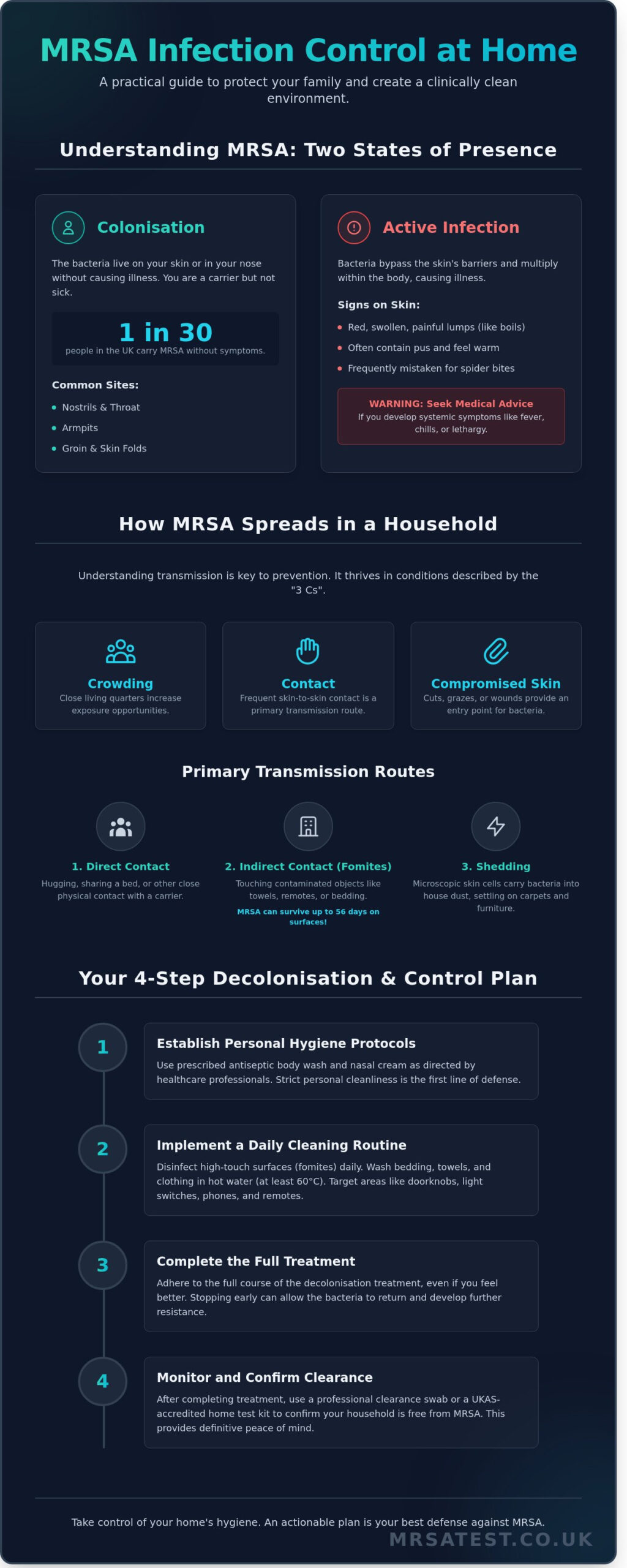
Data from health authorities indicates that approximately 1 in 30 people in the UK carry MRSA on their skin or in their nose without showing any symptoms. This state is called colonisation. When you’re colonised, the bacteria live on you but don’t cause an active illness. The bacteria typically settle in warm, moist areas of the body. Common colonisation sites include:
- The nostrils and throat
- The armpits
- The groin and skin folds
Identifying the Signs of an Active MRSA Infection
An active infection happens when the bacteria bypass the skin’s natural barriers and begin to multiply within the body. On the skin, MRSA often presents as a red, swollen, and painful lump. These marks are frequently mistaken for spider bites, spots, or boils because they often contain pus and feel warm to the touch. It’s helpful to compare these symptoms against a visual guide to common skin infections to understand the differences.
While skin issues are the most frequent sign, you must watch for systemic symptoms that suggest the infection is becoming more serious. If a person develops a fever, chills, or sudden lethargy, the bacteria may have entered the bloodstream or deeper tissues. These are clear warning signs that require professional medical advice. By staying vigilant and maintaining a clean environment, you can provide a safe space for recovery and prevent the bacteria from spreading to other family members.
How MRSA Spreads Within a Shared Household
Understanding how MRSA moves through a home is the first step in effective mrsa infection control at home. Public health experts often refer to the “3 Cs” to describe the ideal conditions for transmission: Crowding, frequent skin-to-skin Contact, and Compromised skin. In a shared household, these factors are often present. Research published in clinical journals indicates that MRSA can survive on dry surfaces like polyester for up to 56 days, making it a persistent guest if not properly managed.
Vulnerable residents, particularly those over 65 or individuals with weakened immune systems, face a higher risk of the bacteria progressing from simple colonisation to a serious infection. Even the family dog or cat can play a role. While pets rarely become ill from MRSA themselves, they can act as mechanical vectors. This means they carry the bacteria on their fur or skin from one family member to another during play or grooming.
The Primary Routes of Transmission
Transmission typically happens through three distinct pathways. First is direct contact, such as hugging or sharing a bed with a colonised person. Second is indirect contact via “fomites.” These are inanimate objects like shared towels, sports equipment, or television remotes that harbour the bacteria. Finally, MRSA spreads through “shedding.” Humans lose about 0.03 to 0.09 grams of skin every hour. These microscopic cells often carry bacteria into house dust, allowing MRSA to settle on carpets and upholstery. Following a structured MRSA decolonization guide can help families manage these environmental risks effectively.
Domestic Hot Spots for Bacteria
Certain areas of the home require more rigorous attention than others. High-touch surfaces act as hubs for bacterial exchange because they’re used by everyone in the house throughout the day.
- Shared Bathrooms: Taps, toilet flushes, and shower curtains are high-moisture environments where bacteria can thrive.
- The Kitchen: Fridge handles, kettle switches, and cupboard doors are touched dozens of times daily, often during food preparation.
- Personal Electronics: Mobile phones, tablets, and keyboards are rarely disinfected but are handled constantly, making them significant reservoirs for bacteria.
Practical Hygiene Protocols for Effective Infection Control
Establishing a disciplined daily routine is the most effective way to manage mrsa infection control at home without making the affected person feel isolated. You don’t need to restrict someone to a single room. Instead, focus on containing the bacteria through consistent, clinical-grade habits. These domestic measures are a vital part of the wider healthcare landscape. By controlling the spread in your living space, you actively contribute to the prevention of a hospital-acquired infection, as many clinical outbreaks begin with bacteria brought in from the community.
Hand Hygiene: The First Line of Defence
Handwashing is the single most important factor in stopping MRSA. We recommend following a modified version of the “Five Moments” adapted for the home. You should wash your hands before and after changing dressings, after using the bathroom, before preparing food, and after touching any shared surfaces. Always choose liquid soap over bar soap. Bar soap stays moist, which can allow bacteria to colonise the surface and spread to the next user. When using alcohol-based rubs, ensure the solution contains at least 70% alcohol and rub for 20 seconds until your skin is completely dry.
Environmental Cleaning and Disinfection
Laundry and Waste Management
Managing textiles and waste requires specific care to prevent bacteria from becoming airborne. Follow these three rules for safety:
- High-Temperature Washing: Clean all bed linens, towels, and clothes at 60°C. This temperature is necessary to ensure the bacteria are fully eradicated.
- No Shaking: Don’t shake dirty laundry. Shaking can disperse skin scales and bacteria into the air, where they can land on other surfaces or be inhaled.
- Safe Disposal: Place used dressings, wipes, and tissues directly into a plastic bag. Seal the bag tightly before putting it in the general waste bin to prevent cross-contamination.
Step-by-Step Guide to MRSA Decolonisation at Home
Decolonisation, often referred to as suppression treatment by the NHS, is a clinical process designed to reduce the number of MRSA bacteria living on your skin and inside your nose. This protocol is a vital part of mrsa infection control at home, as it significantly lowers the risk of the bacteria entering the bloodstream through a break in the skin. You must complete the full five-day course exactly as prescribed. Even if you have no visible symptoms, stopping early allows the strongest bacteria to survive and potentially develop resistance to the treatment.
A standard decolonisation programme typically lasts five days and follows a strict rhythm:
- Days 1 to 5: Apply prescribed nasal ointment three times daily.
- Days 1 to 5: Use an antimicrobial body wash once a day in the shower.
- Days 2 and 5: Wash your hair using the antimicrobial wash as a shampoo substitute.
- Daily: Change into fresh clothes and use clean towels and bed linen to prevent re-contamination.
Using Antimicrobial Washes and Nasal Ointments
When using washes like chlorhexidine or octenidine, start from your hair and face, then work your way down the body. Pay close attention to your armpits, groin, and navel. A common mistake is rinsing the product off too quickly. You should leave the wash on your skin for at least one minute to allow the active ingredients to work. For nasal ointments such as mupirocin, use a cotton bud to apply a small amount to the inside of each nostril, then press your nose together to spread the gel evenly.
Wound Care and Dressing Management
Bacteria thrive in moist environments, so keeping wounds covered is essential for effective mrsa infection control at home. Use clean, dry, waterproof bandages and change them if they become damp or soiled. When removing a used dressing, place it immediately into a small plastic bag, seal it, and dispose of it in your domestic waste. Wash your hands thoroughly with soap and water both before and after touching the wound area. If you notice increased redness, swelling, or a fever, seek medical advice from your GP or call 111.
Preparing for Surgery with Decolonisation
Hospitals require a negative MRSA swab before elective procedures because the bacteria can cause serious post-operative infections. Completing your decolonisation at home is a critical step in your pre-op checklist. To support this process, ensure your home environment is prepared by deep cleaning high-touch surfaces and laundering all bedding at 60°C. This ensures that once you finish your treatment, you aren’t immediately exposed to the bacteria again in your own home.
Monitoring Progress: How to Know Your Home is MRSA-Free
You can’t tell if MRSA has left your home just by looking at a person’s skin. Even after a visible infection or wound heals, the bacteria often remain on the body. This state, known as colonisation, means you’re still a carrier. Without clinical testing, you won’t know if your mrsa infection control at home has been truly successful. Professional screening is the only way to confirm the bacteria aren’t hiding in skin folds or nostrils, waiting to cause a secondary infection or spread to others.
The Importance of Post-Treatment Screening
Re-colonisation is a common challenge. Clinical data suggests that many patients may test positive again within weeks of finishing a course of antibiotics. To combat this, healthcare providers follow the “three negative swabs” rule. This involves taking three sets of samples, usually a few days apart, to ensure the bacteria are truly gone. This process provides vital reassurance for housemates and family members, especially those with weakened immune systems. It removes the guesswork and lowers the emotional burden of living with a persistent infection.
Peace of Mind with At-Home MRSA Testing
Accessing clinical screening doesn’t always require a hospital visit. mrsatest.co.uk provides a professional solution that fits into your daily routine. Their at-home test kit arrives in discreet packaging with everything needed for self-swabbing. You simply collect the samples and return them to a UKAS-accredited laboratory for analysis. It’s a simple, managed process that prioritises your privacy.
When choosing a test, it’s helpful to understand the technology used. Most providers offer two primary methods:
- Standard Culture Tests: These involve growing the bacteria in a laboratory environment, which typically takes 48 to 72 hours.
- Rapid PCR Molecular Detection: This advanced method identifies MRSA DNA directly, providing results in as little as 24 hours.
Using these results allows you to validate your mrsa infection control at home. If a test comes back positive, you know you need to continue your rigorous cleaning and hygiene protocols. If it’s negative, you gain the confidence that your efforts are working. It’s a fast, confidential way to protect your household while staying in control of your recovery from the comfort of your own home.
Taking Proactive Steps for a Safer Home
Managing a household when MRSA is present doesn’t have to be overwhelming. Success hinges on consistent hygiene protocols and distinguishing between simple colonisation and active infection. By following a structured decolonisation plan and maintaining high standards of cleanliness, you can significantly reduce the risk of transmission among family members. The most critical step in effective mrsa infection control at home is knowing exactly where you stand through accurate, clinical testing.
Monitoring your progress ensures that your efforts aren’t wasted and that the bacteria has been successfully cleared. Order your confidential MRSA home test kit today for fast, lab-certified results. Every sample is processed in UKAS-accredited UK laboratories, ensuring the same level of accuracy you’d expect from a hospital setting. We prioritise your privacy with discreet packaging and deliver confidential results directly to your inbox. For those who require immediate answers, our rapid PCR options provide results within 24 hours of the lab receiving your kit. Taking these proactive steps provides the peace of mind you need to protect your loved ones and ensure your home remains a safe, healthy environment.
Frequently Asked Questions
Can I still live with my family if I have MRSA?
Yes, you can live with your family, but you must follow strict hygiene protocols to prevent transmission. Keep any sores or cuts covered with clean, dry bandages at all times. Don’t share personal items like towels, flannels, or razors, as these are primary routes for the bacteria to spread. Regular hand washing with soap or an alcohol-based sanitiser is the most effective way to protect your household members.
How long does MRSA survive on household surfaces like furniture or carpets?
MRSA bacteria are resilient and can survive on household surfaces for 7 to 21 days in typical indoor conditions. On non-porous surfaces like plastic or steel, research published in BMC Infectious Diseases indicates they can persist for several months if not cleaned. Carpets and soft furnishings are harder to disinfect than hard floors. You should prioritise cleaning high-touch areas daily to reduce the risk of environmental contamination.
Do I need to use special laundry detergent to kill MRSA bacteria?
You don’t need a specific detergent, but your washing process must involve heat to be effective. Wash all bedding, towels, and clothing at a minimum temperature of 60°C to ensure the bacteria are destroyed. Using a tumble dryer on a high heat setting for at least 30 minutes provides an additional layer of safety. This thermal disinfection is more important for your health than the brand of soap you choose.
Is it safe to share a bathroom with someone who is colonised with MRSA?
It’s safe to share a bathroom provided you maintain a rigorous cleaning schedule for shared surfaces. Ensure the person with MRSA has their own designated towels and flannels that others don’t touch. You should disinfect high-contact points such as taps, toilet flush handles, and light switches after each use. Effective mrsa infection control at home relies on these small, consistent actions to break the chain of transmission.
Can my pet catch MRSA from me or spread it to other family members?
Yes, pets can become colonised with MRSA through close contact with an infected owner. While it’s rare for pets to get sick, they can act as reservoirs and pass the bacteria back to humans. A study found that MRSA was present in 10% of pets living with colonised owners. Wash your hands after petting your dog or cat and avoid letting them lick any open wounds or bandages.
How often should I clean my house if someone has an MRSA infection?
You should clean high-touch surfaces daily while an active infection is present. Focus your efforts on hotspots like doorknobs, remote controls, keyboards, and mobile phones. Use a disinfectant that’s proven to kill Staphylococcus aureus, such as a 0.1% sodium hypochlorite solution. Frequent cleaning is a cornerstone of mrsa infection control at home, as it prevents the bacteria from accumulating on surfaces and spreading to others.
What should I do if my home decolonisation treatment fails?
If your initial decolonisation fails, you should contact your GP to discuss a second treatment cycle or a different antibiotic. Research suggests that first-time decolonisation protocols fail in approximately 35% of cases. You may need to use a UKAS-accredited home test kit to identify exactly where the bacteria are still present. Ensure you’re following the nasal cream and body wash instructions precisely, as timing is critical for success.
Can I go back to work or school while being treated for MRSA?
You can typically return to work or school if your wounds are completely covered by a waterproof dressing. UK health guidelines don’t require exclusion for MRSA unless the infection is draining and cannot be contained by a bandage. If you work in high-risk settings like healthcare or food preparation, you must inform your employer or occupational health department. They’ll determine if you need a clear screening test before returning.