
Methicillin-Resistant Staphylococcus Aureus Explained: A Comprehensive Guide for 2026
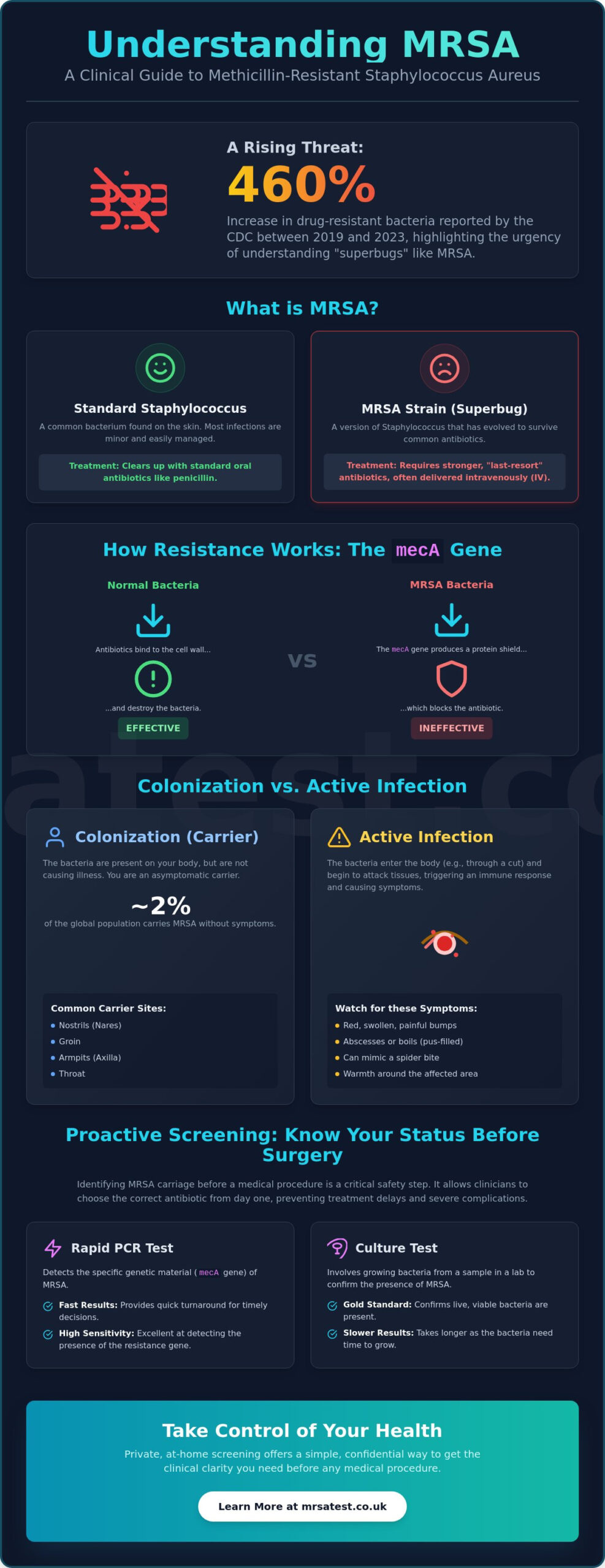
Between 2019 and 2023, the CDC reported a 460% increase in drug-resistant bacteria. This statistic often fuels the fear of “superbugs,” yet having methicillin-resistant staphylococcus aureus explained in a clinical context can replace that anxiety with clear, actionable knowledge. Whether you’re preparing for an upcoming surgery or concerned about community-acquired strains, it’s vital to distinguish between carrying the bacteria and having an active infection. Approximately 2% of the global population carries MRSA without symptoms, a state known as colonization.
We understand that the thought of a resistant infection feels overwhelming, especially when you’re already focused on recovering from a medical procedure. This guide provides the clinical clarity you need to move forward with confidence. You’ll learn the specific symptoms to watch for, the science behind bacterial resistance, and how private screening can offer peace of mind. We’ll also detail the differences between culture tests and rapid PCR options for the nose, groin, and axilla, helping you take a proactive step toward your long-term health.
Key Takeaways
- Learn the science behind antibiotic resistance and how MRSA bypasses common treatments like methicillin.
- Get methicillin-resistant staphylococcus aureus explained through the lens of colonization, helping you understand if you’re a carrier.
- Discover the key differences between hospital-acquired and community-acquired strains, including why some infections mimic spider bites.
- Identify when localized skin symptoms like red bumps or abscesses require professional attention or systemic monitoring.
- Explore the benefits of private screening using Rapid PCR or Culture tests to ensure your safety before a scheduled surgery.
What is Methicillin-Resistant Staphylococcus Aureus (MRSA)?
Staphylococcus aureus is a common bacterium often found on the skin or in the nose of healthy individuals. While most “Staph” infections are easily managed with standard antibiotics, MRSA represents a more resilient challenge. Understanding What is Methicillin-Resistant Staphylococcus Aureus (MRSA)? requires looking at how this specific strain evolved to survive. It has developed a targeted resistance to beta-lactam antibiotics, a group that includes penicillin, oxacillin, and methicillin. This survival mechanism earned MRSA its reputation as one of the first recognized “superbugs” in modern medicine.
The primary difference between standard Staph and MRSA lies in the treatment response. A typical Staph infection usually clears up with a simple course of oral antibiotics. MRSA remains unaffected by these common medications. It isn’t a different species of bacteria, but rather a version that has upgraded its defenses. This doesn’t make the bacteria itself more aggressive, but it makes the resulting infection much harder to eliminate if the wrong medication is used.
The Evolution of Antibiotic Resistance
Bacteria are highly adaptable organisms. When antibiotics are used frequently or incorrectly, the weaker bacteria die off while the stronger ones survive and multiply. Over decades, this process allowed MRSA to develop a specific genetic advantage known as the mecA gene. This gene acts like a specialized blueprint. It allows the bacteria to produce a protein that prevents antibiotics from binding to the cell wall. Because the medication can’t “latch on,” the bacteria continue to grow and spread. This specific biological shield is why having methicillin-resistant staphylococcus aureus explained in a clinical context is so vital for patient safety.
Why Methicillin Resistance is a Clinical Challenge
When a patient develops a skin infection, clinicians often prescribe broad-spectrum antibiotics as a first line of defense. If the strain is MRSA, these standard treatments will fail. This failure can lead to a dangerous delay in effective care. If the bacteria isn’t stopped, it can move from a simple skin site into the bloodstream, lungs, or bones. This progression turns a manageable issue into a severe medical emergency.
Because MRSA resists standard pills, doctors must turn to “last-resort” antibiotics like vancomycin or daptomycin. These medications often require intravenous delivery and carry a higher risk of side effects. To avoid these complications, many people now utilize at-home health testing kits in the UK. By identifying the presence of MRSA early, you can ensure that the correct clinical path is chosen from the very first day, preventing the cycle of failed antibiotic trials and protecting your long-term health.
Colonisation vs. Infection: Are You a Carrier?
Most people assume that the presence of bacteria always leads to illness. In clinical reality, many individuals live with MRSA on their skin without ever feeling unwell. This state is known as colonisation. It means the bacteria are present on your body, but they aren’t currently attacking your tissues or causing an immune response. Understanding Colonisation vs. Infection: Are You a Carrier? is the first step in managing your personal health risks effectively.
Verified data for 2026 suggests that approximately 2% of the global population are asymptomatic carriers of MRSA. These bacteria typically reside in warm, moist areas of the body. The most common colonisation sites include the nostrils (nares), the throat, the groin, and the armpits (axilla). While colonisation isn’t a disease itself, it serves as a significant risk factor. If you’re a carrier, you essentially have a “reservoir” of resistant bacteria that can cause trouble under the right conditions.
The Risks of Asymptomatic Carriage
Carrying MRSA without symptoms creates two primary concerns. First, you can unknowingly transmit the bacteria to others through skin-to-skin contact or by touching shared surfaces. This is particularly dangerous if you’re in close contact with elderly relatives or people with weakened immune systems. Second, there’s the risk of auto-infection. This occurs when the bacteria already living on your skin find a way inside your body, perhaps through a small cut or a shaving nick. You can find more detail on this progression in our complete guide to MRSA symptoms and risks. Because there are no visible signs, having methicillin-resistant staphylococcus aureus explained as a silent carrier state helps you understand why routine hygiene alone isn’t always enough to prevent spread.
When Colonisation Becomes an Infection
The transition from carrying the bacteria to suffering an infection usually requires a “trigger.” This often happens during surgery, when the skin’s natural barrier is intentionally broken. Other triggers include the use of intravenous drips or a sudden dip in your immune system’s strength. When these events occur, the bacteria move from the surface of the skin into the deeper tissues or the bloodstream. Once inside, they can cause abscesses, pneumonia, or even sepsis.
Clinical screening is the only definitive way to identify carriage before it evolves into a clinical issue. Since you cannot see or feel colonisation, proactive testing provides the necessary data to take preventive action. If you’re preparing for a medical procedure, a MRSA Rapid PCR Test can quickly determine your status, allowing for decolonisation treatments that significantly reduce the risk of post-operative complications.
Hospital-Acquired vs. Community-Acquired MRSA
Distinguishing between where an infection originates is critical for effective clinical management. Medical professionals categorize these infections into two main types: Healthcare-Associated (HA-MRSA) and Community-Associated (CA-MRSA). While both involve the same resistant bacterium, their genetic profiles and the environments where they thrive are quite different. Having this aspect of methicillin-resistant staphylococcus aureus explained helps patients understand why hospital protocols are so much more stringent than general community advice.
HA-MRSA is the version most people recognize. It typically affects individuals who have recently been in a clinical setting, such as a hospital, surgical center, or nursing home. Because these environments use a wide variety of antibiotics, the bacteria have evolved to be resistant to multiple drug classes, not just methicillin. This multi-drug resistance makes HA-MRSA particularly challenging to treat, often requiring specific, high-potency intravenous medications.
HA-MRSA: The Challenge in Clinical Settings
Within the NHS and private healthcare facilities, hospital-acquired infections remain a primary focus for patient safety teams. These infections often enter the body through invasive routes. Surgical incisions, urinary catheters, and intravenous lines provide a direct pathway for bacteria to bypass the skin’s natural defenses. Patients with weakened immune systems are at the highest risk. This vulnerability is why hospitals employ rigorous screening and hand-hygiene mandates to prevent cross-contamination between wards and patients.
CA-MRSA: Risks in the General Population
In contrast, CA-MRSA affects healthy people who haven’t been hospitalized recently. This strain has become increasingly common in schools, gyms, and crowded living spaces. It often presents as a severe skin infection that can be mistaken for a painful boil or a spider bite. Research indicates that community-associated rates were higher than hospital-onset rates between 2012 and 2022, marking a significant shift in how the bacteria spreads.
Transmission in these settings follows what clinicians call the “5 Cs”:
- Crowding: Close proximity in locker rooms, dormitories, or childcare centers.
- Contact: Direct skin-to-skin touch during contact sports or daily activities.
- Compromised skin: Minor scrapes, cuts, or turf burns that allow bacteria to enter.
- Contaminated items: Sharing personal goods like towels, razors, or athletic equipment.
- Cleanliness: A lack of proper sanitation in shared environments.
Reducing the spread of CA-MRSA relies on simple but consistent habits. Don’t share personal items that touch the skin. Always cover open wounds with a clean bandage and wash your hands thoroughly after using shared equipment. While the community strain is often susceptible to more types of antibiotics than the hospital version, it can still cause serious complications if it isn’t identified and managed promptly.
Recognising Symptoms and the Importance of Screening
If the bacteria move beyond the skin, systemic symptoms develop. You might experience fever, chills, and persistent fatigue. These signs indicate that the infection is potentially spreading to the lungs or bloodstream. Because early presentations look so similar to common skin infections, many people delay testing. However, screening remains the most effective tool for detection, especially since you can carry the bacteria without any visible rash or discomfort. Identifying carriage early is the best way to prevent a minor colonization from becoming a systemic threat.
Why Pre-Surgery Screening is Mandatory
When you undergo a medical procedure, your skin is no longer a complete barrier. A surgical incision provides an ideal entry point for bacteria. If you’re colonized with MRSA, the risk of a post-operative infection increases significantly. These infections are not only physically taxing but also lead to longer hospital stays and higher medical costs. Correctly preparing for surgery must include a professional assessment of your infection risk to ensure a smooth recovery and protect the surgical site from resistant strains.
The Screening Process: What to Expect
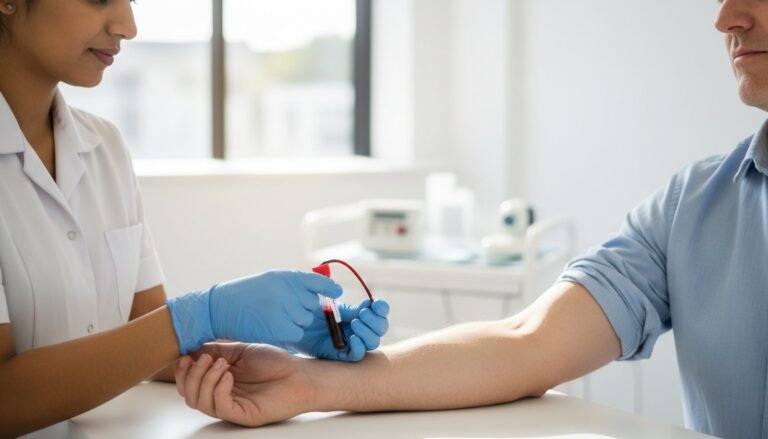
The screening process is designed to be straightforward and entirely painless. The procedure involves using a sterile swab to collect samples from common colonisation sites. These usually include the nostrils, the groin, and the axilla (armpit). It’s important to distinguish between a “screening” test, which checks for the presence of the bacteria in healthy individuals, and a “diagnostic” test, which identifies the cause of an active wound. In both cases, the swab is handled with clinical precision to ensure accuracy.
Getting methicillin-resistant staphylococcus aureus explained through a formal test result provides the clarity needed for peace of mind. The procedure takes only a few moments and requires no clinical preparation. To secure your results before an upcoming procedure, you can order an MRSA Rapid PCR Test– Nose/Groin/Axilla for a discreet and efficient screening experience that delivers professional-grade accuracy from the comfort of your home.
Managing MRSA Risks with Private At-Home Testing
While public healthcare provides essential services, the wait times for routine screenings can often add to the anxiety of an upcoming procedure. Private at-home testing offers a streamlined, discreet alternative for those who value speed and privacy. By choosing a private route, you bypass the need for a clinical appointment and manage the process on your own terms. Having methicillin-resistant staphylococcus aureus explained through a personal test result provides the clarity you need without the stress of a waiting room.
Our service focuses on professional-grade accuracy delivered in a non-clinical environment. Every sample is analyzed by verified laboratory partners, ensuring that your data is handled with the same clinical precision as any hospital-led screen. This approach prioritizes your peace of mind and convenience. It’s a straightforward way to confirm your carrier status and take a proactive step toward your long-term health.
Culture vs. PCR: Choosing the Right Test
When selecting a screening method, it’s helpful to understand the technical differences between the two primary options. We offer both the MRSA Rapid PCR Test and the MRSA Culture. The PCR test is often the preferred choice for urgent pre-surgery requirements. It identifies the genetic material of the bacteria, allowing for a rapid 24-hour turnaround once the sample reaches the lab. This speed is invaluable if your surgery date is approaching quickly.
In contrast, the MRSA Culture is the traditional methodology. It involves growing the bacteria in a controlled environment to confirm its presence. While this process takes longer than a PCR test, both methods are professional-grade and highly accurate. Whether you choose a screen for the nose, groin, and axilla or a more targeted nose and groin test, you’re receiving a diagnostic service that meets rigorous clinical standards.
Taking Control of Your Pre-Op Preparation
Being proactive in your healthcare journey is one of the most effective ways to reduce surgical risks. When you have your results in hand before you even arrive at the hospital, you can speed up the admissions process. It allows you to share your status with your surgical team immediately, ensuring that any necessary decolonisation protocols are started without delay. This level of preparation doesn’t just protect you; it provides a sense of quiet competence as you approach your procedure.
Don’t leave your infection risk to chance. By understanding the science behind the bacteria and taking the steps to get methicillin-resistant staphylococcus aureus explained via a private screen, you take full control of your recovery environment. It’s a simple, safe, and efficient way to ensure your safety. Order your confidential MRSA test kit online today and move forward with the confidence that comes from professional clinical data.
Proactive Steps for Your Future Health
Managing your health means staying ahead of potential risks. We’ve seen that MRSA isn’t just a hospital concern but a manageable reality when you have the right data. Understanding the distinction between asymptomatic carriage and active infection is the most important step in protecting yourself and those around you. Having methicillin-resistant staphylococcus aureus explained in this comprehensive way allows you to move from a place of anxiety to one of clinical readiness.
If you’re preparing for a medical procedure or simply want to confirm your status, private screening provides the fastest path to clarity. We utilize accredited UK laboratory testing to ensure your results are accurate and reliable. Our kits arrive in discreet, plain packaging to protect your privacy throughout the process. With our PCR testing options, you can receive your results in as little as 24 hours after your sample reaches the lab. This speed ensures you have the information you need exactly when it matters most.
Order Your Private MRSA Test Kit for Rapid, Confidential Results and take a decisive step toward your peace of mind today. You deserve to feel supported and informed throughout every stage of your healthcare journey.
Frequently Asked Questions
Is MRSA contagious through casual contact?
Yes, MRSA can spread through skin-to-skin contact or by touching contaminated items like towels and gym equipment. It’s especially common in environments where people are in close proximity. While casual contact carries a risk, the bacteria are most likely to cause an issue if they enter the body through a cut, scrape, or surgical incision. Maintaining good hand hygiene is the most effective way to prevent spread.
Can MRSA be cured completely?
Yes, MRSA infections can be successfully treated and carrier states can be cleared. Although the bacteria resist common antibiotics, specialized medications like vancomycin remain effective. For those who are colonized, a decolonization program involving antiseptic washes and nasal creams is used to eradicate the bacteria from the skin surface. This process ensures the bacteria are no longer present on the body.
What happens if I test positive for MRSA before surgery?
A positive result before surgery is a manageable situation that your medical team will address with a decolonization protocol. You’ll likely be prescribed a specific antiseptic body wash and a nasal ointment to use for several days before your procedure. This proactive step significantly lowers the chance of the bacteria entering your surgical incision, ensuring a safer recovery and reducing the risk of post-operative complications.
How long does an MRSA test take to give results?
The timeframe for results depends on the specific laboratory method you choose. Having methicillin-resistant staphylococcus aureus explained through a Rapid PCR test means you can receive results in as little as 24 hours after the sample reaches the lab. A traditional culture test requires more time, usually between 48 and 72 hours, because the bacteria must be grown in a controlled environment to be identified.
Can I get MRSA from a gym or swimming pool?
You can contract MRSA in gyms or pools, primarily through contact with contaminated surfaces rather than the water itself. While the chlorine in pools generally kills the bacteria, shared benches, weights, and towels are high-risk areas. It’s best to wipe down gym equipment before use and avoid sharing personal hygiene items to minimize the risk of community-acquired transmission.
Do I need a GP referral for an at-home MRSA test?
No, you don’t need a GP referral to access private at-home screening. This service is designed for individuals who want to take control of their health logistics independently and discreetly. The process is straightforward and efficient, providing professional-grade results from an accredited laboratory without the need for a formal clinical appointment or a prior doctor’s recommendation.
What is the difference between MRSA and a normal staph infection?
The primary difference is how the bacteria respond to antibiotic treatment. A normal Staph infection is typically cured with standard penicillin-based antibiotics. Because MRSA has a specific genetic makeup, it resists these common drugs. Having methicillin-resistant staphylococcus aureus explained as a resistant strain helps clarify why specialized testing is necessary to ensure the correct medication is used for treatment.
Is MRSA dangerous for healthy people?
For most healthy people, MRSA causes only minor skin issues or no symptoms at all, as approximately 2% of the population are asymptomatic carriers. However, it can become dangerous if the bacteria enter the body through a breach in the skin. If the bacteria reach the bloodstream or internal organs, they can cause severe illness. This is why screening is a valuable tool for everyone, regardless of their current health status.