
Getting Cleared for Surgery with an MRSA History: A Patient’s Guide for 2026
Could a minor skin infection from your past really be the reason your surgical team hits the pause button in 2026? If you have had a positive result before, the fear that your operation might be cancelled is incredibly common. You aren’t alone in feeling anxious about being labelled as “contagious” or “dirty,” but the reality is that getting cleared for surgery with mrsa history is a standard, manageable process. While the CDC still classified MRSA as a “serious threat” in their June 2025 advisory, UK hospitals use clear, clinical pathways to ensure you are safe for the operating theatre.
We understand that you want peace of mind and a clear path forward. In this guide, you’ll learn the specific steps required for surgical clearance, from the 5-day decolonisation protocols using antiseptic soaps to the latest screening timelines. We’ll also explore how proactive, discreet at-home testing can help you identify your carrier status early. By using a professional PCR rapid test or a culture swab from the comfort of your home, you can manage your health privately and walk into your pre-assessment with total confidence.
Key Takeaways
- Understand why hospitals flag previous cases to prevent surgical site infections (SSIs) and how this affects your pre-operative timeline.
- Discover the standard screening window and the specific body sites involved in getting cleared for surgery with mrsa history to avoid last-minute delays.
- Learn about the decolonisation process. It’s a simple 5-day routine using antiseptic washes and nasal ointments to reduce MRSA presence on the skin.
- Find out why testing 4-6 weeks before your procedure gives you the necessary buffer to complete any required treatments before the hospital’s official check.
- Explore how to use a discreet, UKAS-accredited at-home kit for fast results. It’s an easy way to check your status from the comfort of your own home.
Why a History of MRSA Matters for Your Upcoming Procedure
Hospitals operate on a “safety first” principle. If your medical records indicate a previous encounter with Methicillin-resistant Staphylococcus aureus, you’ll likely find your upcoming procedure flagged for extra attention. This isn’t a judgment on your hygiene or health; it’s a clinical necessity. When you’re preparing for surgery, the primary goal is preventing Surgical Site Infections (SSIs). MRSA is particularly challenging because it resists common antibiotics, making any post-operative infection significantly harder to treat. Data from the CDC’s January 2026 report indicates that healthcare-associated infections remain a top priority, and screening is the first line of defence.
Getting cleared for surgery with mrsa history involves proving that you aren’t currently carrying the bacteria in a way that could compromise the sterile environment of the operating theatre. Even though Danish reports in 2024 showed an 8% decrease in new cases compared to 2023, the 3,372 cases recorded still represent a significant risk. If the bacteria is present on your skin when an incision is made, it can enter the bloodstream. This leads to serious complications like bacteremia, which accounted for 1.9% of all Staphylococcus aureus cases in Denmark in 2024. In some regions, the prevalence is even higher. Studies in Taiwan showed MRSA isolates reached 48.5% in 2024, highlighting why clinical teams remain so vigilant.
Colonisation vs. Active Infection
Understanding the difference between these two states is key to your peace of mind. What is MRSA? At its core, it’s a bacterium that can live harmlessly on your skin or in your nose without causing any symptoms. This is called colonisation. You aren’t “sick” and you don’t feel unwell. However, during an invasive procedure, these “hitchhiking” bacteria can move from the surface of your skin into deeper tissues. Protocols in 2026 focus on identifying these asymptomatic carriers because they pose the highest hidden risk to surgical success. Carrying the bacteria doesn’t mean you have an active infection, but it does mean you need a simple decolonisation plan.
The ‘Flagging’ System in UK Hospitals
UK hospitals use electronic flagging systems to alert infection control teams. If you’ve ever tested positive, your record remains active. This ensures that even for minor procedures, the surgical team can implement the correct screening protocols. Getting cleared for surgery with mrsa history often requires fresh swabs from the nose, throat, groin, and armpits. This proactive approach, supported by the updated 2025 SA Health guidelines, ensures that any necessary treatment happens well before you reach the hospital doors. By addressing the history early, you prevent last-minute cancellations and ensure the surgical team can plan for specific intravenous antibiotics if required.
The Clearance Protocol: Screening and Swab Timelines
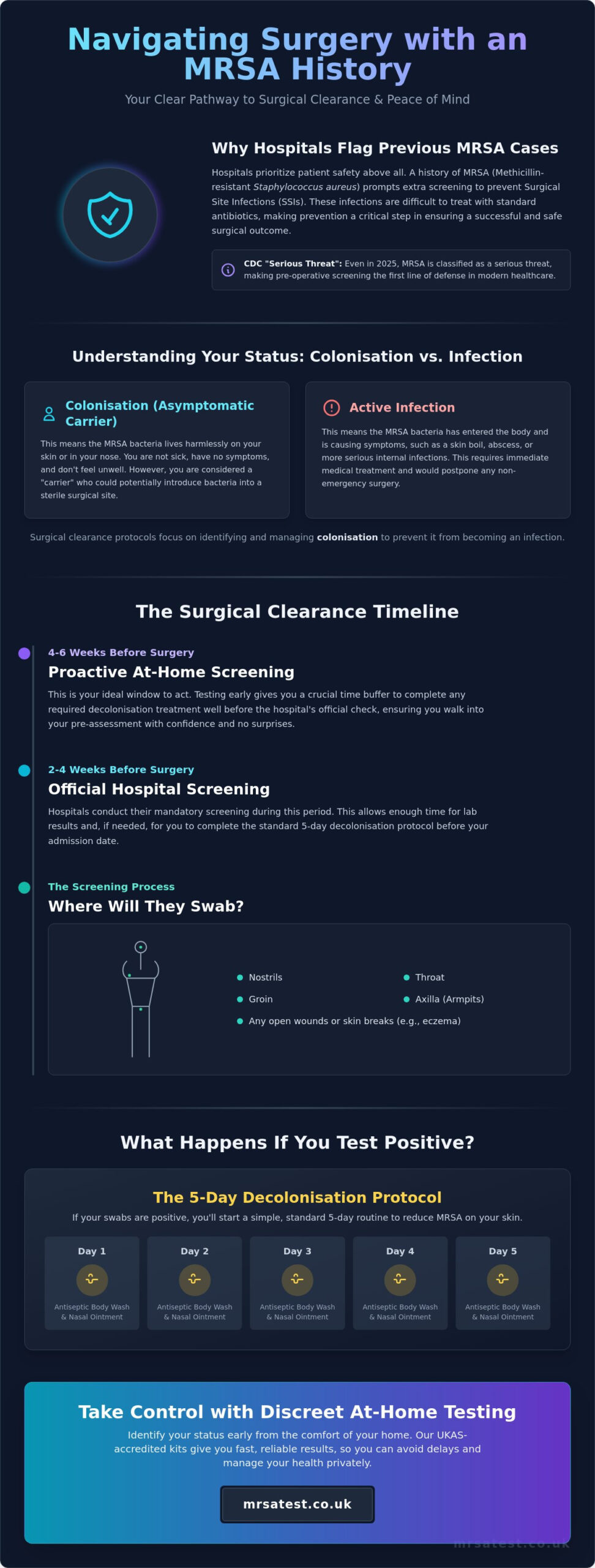
Timing is everything when you are preparing for a procedure. Most NHS trusts and private hospitals require screening to take place between 2 and 4 weeks before your scheduled surgery date. This window is chosen specifically because it allows enough time for laboratory processing and, if necessary, a full 5-day decolonisation cycle before you arrive at the hospital. If you’ve had a positive result in the past, getting cleared for surgery with mrsa history depends on this precise schedule. Missing this window often leads to administrative delays or even the rescheduling of your operation to ensure patient safety.
The screening process involves taking swabs from several specific areas of the body where the bacteria commonly reside. Clinical teams focus on the “moist” areas: the nostrils, the throat, the groin, and the axilla (armpit). If you have any active skin breaks, such as eczema, psoriasis, or healing wounds, these sites will also be swabbed. This thorough approach is backed by research into the clinical effectiveness of pre-operative screening, which demonstrates that testing multiple sites significantly increases the chances of detecting colonisation that a single nasal swab might miss.
Step-by-Step: The Swabbing Process
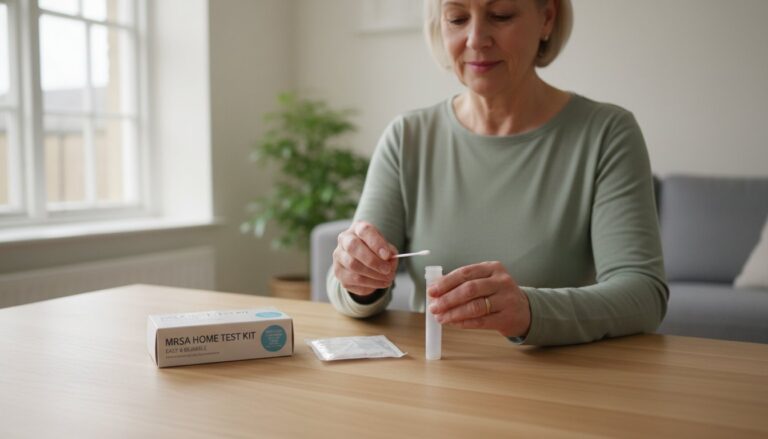
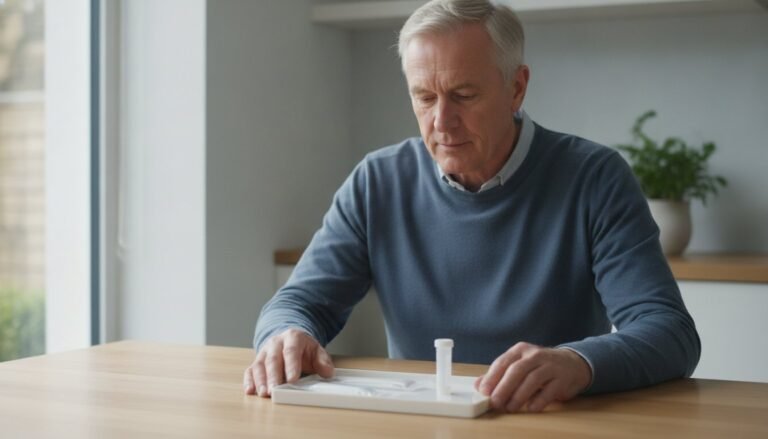
During a hospital pre-assessment clinic, a nurse typically performs the swabbing. It’s a quick, painless process. A sterile cotton swab, slightly moistened with saline, is rotated gently inside each nostril and then across the skin in the groin and armpit areas. If you’re doing this at home to check your status early, the process remains the same. You must ensure the swab makes good contact with the skin to collect an accurate sample. Accuracy is vital; the goal is to provide your surgical team with a clear “negative” result, which usually means no MRSA was detected in any of the tested sites.
Understanding Lab Results
Once your samples reach the laboratory, they are processed using one of two primary methods. The traditional MRSA Culture Test involves growing the bacteria in a petri dish, which typically takes 48 hours to produce a definitive result. Alternatively, many modern facilities use an MRSA PCR rapid test option for molecular detection in 24 hours. This faster method looks for the DNA of the bacteria, providing a much quicker turnaround for urgent cases. These tests act as a mandatory safety barrier against hospital acquired infections, ensuring that every patient entering the operating theatre is managed appropriately.
If you want to avoid surprises at your pre-assessment, you can test for MRSA from the comfort of your own home several weeks in advance. This proactive step gives you the peace of mind that your clearance process is on track. Once the lab confirms a negative result, this information is shared with your surgical team, and you’re officially cleared for your procedure.
What Happens if You Test Positive? Decolonisation Explained
Testing positive for MRSA during your pre-operative check isn’t a reason to panic. It rarely leads to a cancelled surgery. Instead, it triggers a clinical pathway called decolonisation. This is simply a 5-day process designed to reduce or eliminate the bacteria from your skin and nasal passages. By following MRSA screening guidelines, hospitals ensure that you’re in the safest possible condition before your procedure begins. The goal is to lower the risk of the bacteria entering your surgical wound, which is a standard part of getting cleared for surgery with mrsa history in 2026.
The protocol is straightforward but requires strict adherence to be effective. You’ll typically be prescribed a combination of topical treatments to use at home. This isn’t just about personal hygiene; it’s a targeted medical intervention. Along with the medication, you must wash your bedding, towels, and clothing at 60°C on the first, second, and fifth days of the treatment. This prevents you from accidentally re-colonising yourself from your environment. Adhering to these environmental steps is just as vital as using the prescribed washes.
The Decolonisation Toolkit
Your treatment kit usually contains two main components. First is an antiseptic body wash, often Chlorhexidine (CHG) or Octenisan. You should use this daily in the shower, applying it to wet skin like a liquid soap. Leave it on for about three minutes before rinsing to allow the active ingredients to work. Don’t forget to wash your hair with the solution at least twice during the five days. Second is a nasal ointment, such as Mupirocin. You apply a small amount inside each nostril three times a day. Some patients experience minor side effects like dry or itchy skin. If this happens, use a fragrance-free moisturiser after your shower to soothe the area and keep the skin barrier intact.
Retesting After Treatment
Once you complete the 5-day protocol, you won’t be re-swabbed immediately. You must wait at least 48 to 72 hours to ensure the treatment has had a lasting effect. The clinical “gold standard” for getting cleared for surgery with mrsa history often involves obtaining three consecutive sets of negative swabs, usually taken a week apart. However, many hospitals may accept a single negative result depending on their local policy and the complexity of your surgery. If the first round of decolonisation fails to clear the bacteria, don’t worry. Your clinical team might suggest a second course or consult an infection specialist. It’s a manageable hurdle that keeps your surgical date on track while prioritising your safety.
How to Proactively Manage Your Clearance and Avoid Delays
Waiting until your hospital pre-assessment is a common mistake that leads to unnecessary stress. If you rely solely on the hospital’s timeline, you might only discover a positive result 10 to 14 days before your operation. This leaves almost no room for the 5-day decolonisation protocol and the subsequent re-testing required for clearance. By taking control of the process early, getting cleared for surgery with mrsa history becomes a predictable step rather than a source of anxiety. Proactive management ensures that you aren’t scrambling to treat a colonisation just days before your admission.
The 6-Week Strategy
Testing yourself six weeks before your scheduled procedure provides the ultimate safety buffer. This timeframe allows you to identify any current colonisation, complete the five days of treatment, and still have time for a follow-up test to confirm the bacteria is gone. You should also be proactive about your medical records. Contact your GP or the surgical secretary to confirm exactly what your history shows. It’s helpful to create a dedicated health folder. Store your screening results alongside your recent blood test reports. Having these documents ready for your pre-assessment clinic demonstrates that you’re prepared and helps the infection control team clear you faster. Getting cleared for surgery with mrsa history is much simpler when you have your own paper trail.
Reducing the Risk of Recolonisation
Once you’ve achieved a negative result, your focus shifts to staying clear until your surgery date. Recolonisation can happen easily if you’re not careful with hygiene. The most effective method is consistent hand hygiene using soap and water or alcohol-based rubs. Avoid sharing personal items such as towels, razors, or even toothbrushes with other members of your household. If you live with someone who is a known carrier, they may also need to follow a wash protocol to prevent passing the bacteria back to you. Some surgeons recommend a ‘maintenance’ wash using an antiseptic solution once or twice a week in the month leading up to surgery. This keeps the bacterial load on your skin as low as possible and provides an extra layer of protection.
If you want to ensure your operation goes ahead as planned, you can test for MRSA early to identify any issues before the hospital does. This simple step provides the clinical evidence you need to feel secure and in control of your surgical journey. Proactivity is the best tool you have to avoid the frustration of a last-minute cancellation.
Fast, Discreet At-Home MRSA Screening for Peace of Mind
While hospital protocols are a clinical necessity, the process can often feel impersonal and anxiety-inducing. Relying solely on the hospital’s schedule means you’re operating on their timeline, not yours. Using a private mrsa test allows you to bridge the gap between your medical history and your upcoming procedure. Getting cleared for surgery with mrsa history becomes much simpler when you have accurate data in your hands before you even step into the pre-assessment clinic. By screening yourself privately, you gain the clinical insight needed to start decolonisation early if the bacteria is detected.
We provide a service that prioritises your privacy and convenience. Our kits are designed for those who want to take control of their surgical journey without the wait. Whether you need a standard MRSA Culture Test or the more advanced MRSA PCR rapid test option for molecular detection in 24 hours, you can access clinical-grade screening without needing an in-person appointment. This proactive approach ensures that any “last-minute” surprises are handled weeks in advance, keeping your operation date secure.
Our Testing Process
The journey from ordering to results is designed to be as seamless as possible. We understand that your time is valuable when you’re preparing for a major procedure. Our process follows three simple steps:
- Order Online: Select your kit through our secure website. We use discreet, plain packaging to ensure your privacy is maintained from the moment the kit leaves our facility.
- Simple Self-Collection: Each kit contains clear, easy-to-follow instructions for collecting swabs from the nose and groin. You can perform the collection in the comfort of your own home at a time that suits you.
- Prepaid Return: Once you’ve collected your samples, use the included tracked shipping label to send them directly to our partner UK laboratory.
Why Choose mrsatest.co.uk?
We are a 100% UK-Based service dedicated to providing professional and clinical results. Every sample is processed in a UKAS-accredited facility, ensuring the same level of accuracy you would expect from a hospital laboratory. If you’re on a tight deadline, our PCR rapid test provides molecular detection within 24 hours of the lab receiving your sample. This speed is essential for getting cleared for surgery with mrsa history when your operation date is approaching fast. Once your results are ready, they are delivered through a secure online portal, allowing you to share the findings with your surgical team immediately. We offer the quiet competence and expert management you need to walk into your surgery with total peace of mind.
Secure Your Operation Date with Confidence
A history of MRSA doesn’t have to be a barrier to your recovery. By understanding the standard 5-day decolonisation protocol and the specific screening timelines used by UK hospitals, you can manage the process with quiet competence. Proactive screening is the most effective way to avoid the anxiety of a last-minute cancellation. Getting cleared for surgery with mrsa history is a clinical requirement, but it’s one you can easily navigate from the comfort of your own home. By identifying your status early, you can complete any necessary treatments without the pressure of a looming hospital deadline.
Our service connects you with a UKAS-accredited partner laboratory to provide accurate, professional results. Whether you need a standard culture or rapid 24-hour PCR results, our process is designed for speed and discretion. We offer confidential home delivery and clear instructions to make self-collection simple. Order your confidential MRSA test kit today to ensure your surgery stays on track. Taking this small step now provides the certainty you need for a successful admission. You’re in capable hands, and we’re here to help you move forward with your health goals.
Frequently Asked Questions
Will my surgery be cancelled if I have a history of MRSA?
No, a history of MRSA does not automatically result in a cancelled procedure. It simply means the hospital will follow a specific screening protocol to ensure your safety. If you are currently colonised, the team will start a decolonisation treatment. While a positive result might lead to a short delay for treatment, most surgeries proceed as planned with adjusted antibiotic cover during the operation.
How long does it take to get cleared for surgery after a positive MRSA test?
The clearance process usually takes between 8 and 10 days to complete. This timeline includes the standard 5-day decolonisation treatment followed by a mandatory 48-hour waiting period. After this break, new swabs are taken and sent to the laboratory. Depending on whether the lab uses a culture or a PCR rapid test, results are typically confirmed within 24 to 48 hours.
Can I carry out MRSA decolonisation at home before my hospital appointment?
Yes, you can perform the decolonisation protocol at home if you have a confirmed positive result. Many patients choose to screen themselves privately 4 to 6 weeks before their surgery date. This proactive approach allows you to complete the 5-day wash and ointment cycle early. By doing this, you ensure you are already clear by the time you attend your official hospital pre-assessment clinic.
What is the difference between a PCR and a Culture test for MRSA clearance?
The primary difference lies in the speed and detection method. An MRSA Culture Test involves growing the bacteria in a lab, which takes approximately 48 hours for a final result. An MRSA PCR rapid test uses molecular detection to identify bacterial DNA, providing results in just 24 hours. Both methods are highly accurate and are used to provide the clinical evidence needed for surgical clearance.
How many negative swabs do I need to be considered MRSA-free for surgery?
Standard protocols in 2026 often require one full set of negative swabs from the nose, throat, and groin. However, for high-risk operations such as orthopaedic or cardiothoracic surgery, some hospitals require three consecutive negative sets. These swabs are usually taken at least 48 hours apart. Getting cleared for surgery with mrsa history depends on meeting the specific “gold standard” requirements set by your local infection control team.
Is it possible to get rid of MRSA permanently?
Yes, it is possible to clear the bacteria permanently, but it isn’t guaranteed for everyone. Research indicates that while many people clear MRSA after one treatment cycle, approximately 20% of individuals may become persistent carriers. Even if you clear the bacteria, you can be re-colonised from your environment or household contacts. This is why hospitals maintain a permanent flag on your medical records once you’ve had a positive result.
What happens if I test positive for MRSA on the day of my surgery?
If a positive result is discovered on the day of your procedure, the surgeon will typically proceed using enhanced precautions. You will likely receive specific intravenous antibiotics, such as vancomycin, instead of standard ones. The theatre staff will follow strict infection control measures, and you may be recovered in a private side room. In most cases, the clinical team prioritises completing the surgery while managing the risk of infection.
Do I need to tell my surgeon about an MRSA infection from years ago?
Yes, you must inform your surgical team about any previous MRSA infection, regardless of how long ago it occurred. Disclosing this information early is the most reliable way of getting cleared for surgery with mrsa history. It allows the hospital to perform the necessary screenings well in advance. Early communication prevents the stress of last-minute testing and ensures that the correct preventative measures are in place for your operation.