
Can MRSA Cause Sepsis After Surgery? Understanding the Risks and Prevention
Did you know that approximately 2% of the global population carries MRSA without showing any symptoms? While simple colonisation isn’t a disease, it poses a serious risk if the bacteria enter the bloodstream during a procedure. It’s natural to feel anxious about hospital safety or confused by medical jargon when you’re preparing for an operation. You deserve to feel confident and secure in your care, especially when it comes to preventing mrsa infection after surgery.
The reality is that MRSA-induced sepsis isn’t an inevitable risk; it’s a preventable chain reaction that often begins with silent colonisation. This article explores how MRSA leads to post-operative sepsis and outlines the critical steps you can take to mitigate this life-threatening complication. You’ll learn how to identify early warning signs and discover how private, clinical screening can offer the reassurance you need for a safe and successful recovery.
Key Takeaways
- Understand the clinical relationship between MRSA colonisation and sepsis, which is the body’s life-threatening response to an existing infection.
- Discover the essential steps for preventing mrsa infection after surgery, including the decolonisation process using antiseptic washes and specialised nasal treatments.
- Learn to recognise the early warning signs of a surgical site infection and the “Sepsis Six” markers used by UK medical professionals for rapid diagnosis.
- Explore why proactive pre-operative screening is a vital safety measure for high-risk procedures or surgeries involving prosthetic materials.
- Find out how to access private, UK-accredited MRSA testing with options for rapid PCR results or traditional culture methods to ensure your peace of mind.
The Link Between MRSA and Post-Surgical Sepsis
Understanding the relationship between MRSA and sepsis is essential for anyone preparing for a surgical procedure. Methicillin-resistant Staphylococcus aureus (MRSA) is a specific strain of bacteria that has evolved to survive treatment from common antibiotics. While many people carry these bacteria on their skin or in their nose without ever feeling unwell, this state, known as colonisation, becomes a significant hazard during surgery. Sepsis occurs when the body’s immune system overreacts to an infection, leading to widespread tissue damage and organ failure. It’s a medical emergency that requires immediate clinical intervention.
Surgical patients are uniquely vulnerable because the procedure involves breaking the skin barrier. This barrier is your body’s most effective wall against environmental pathogens. When an incision is made, bacteria that were previously harmless on the surface can migrate into deeper tissues, the bloodstream, or internal organs. Preventing mrsa infection after surgery begins with identifying whether you are a silent carrier before you ever enter the operating theatre. Eliminating these bacteria from the skin’s surface before the first incision is made is the most effective first line of defence against systemic complications.
Why MRSA is a Primary Trigger for Sepsis
The danger of MRSA lies in its resistance to standard medical treatments. When a patient develops a typical staph infection, doctors can usually clear it quickly with common antibiotics. However, MRSA doesn’t respond to these first-line drugs. This resistance often leads to a delay in effective treatment while clinicians identify the specific strain and source alternative medications. During this delay, the bacteria can multiply rapidly and spread throughout the body. This unchecked growth triggers the aggressive immune response that characterises sepsis. MRSA-sepsis is essentially a systemic failure of the body’s organs triggered by the presence of these resistant bacteria in the bloodstream.
The Impact of Surgery on Immune Defences
Surgery naturally places the immune system under stress, which can reduce its ability to fight off invading pathogens. Beyond the incision itself, many procedures involve the use of surgical implants, such as joint replacements, heart valves, or even simple intravenous tubing. These foreign objects provide an ideal surface for MRSA to create biofilms. A biofilm is a protective layer that bacteria build around themselves, making them even more resistant to both antibiotics and the body’s natural immune cells. These colonies can act as a persistent source of infection that eventually spills into the blood. For a deeper look at how these risks manifest in a clinical setting, you can read our Hospital-Acquired Infections guide. Proactive measures are the most reliable way of preventing mrsa infection after surgery and ensuring your recovery remains on track.
How MRSA Transitions from Skin Colonisation to Systemic Sepsis
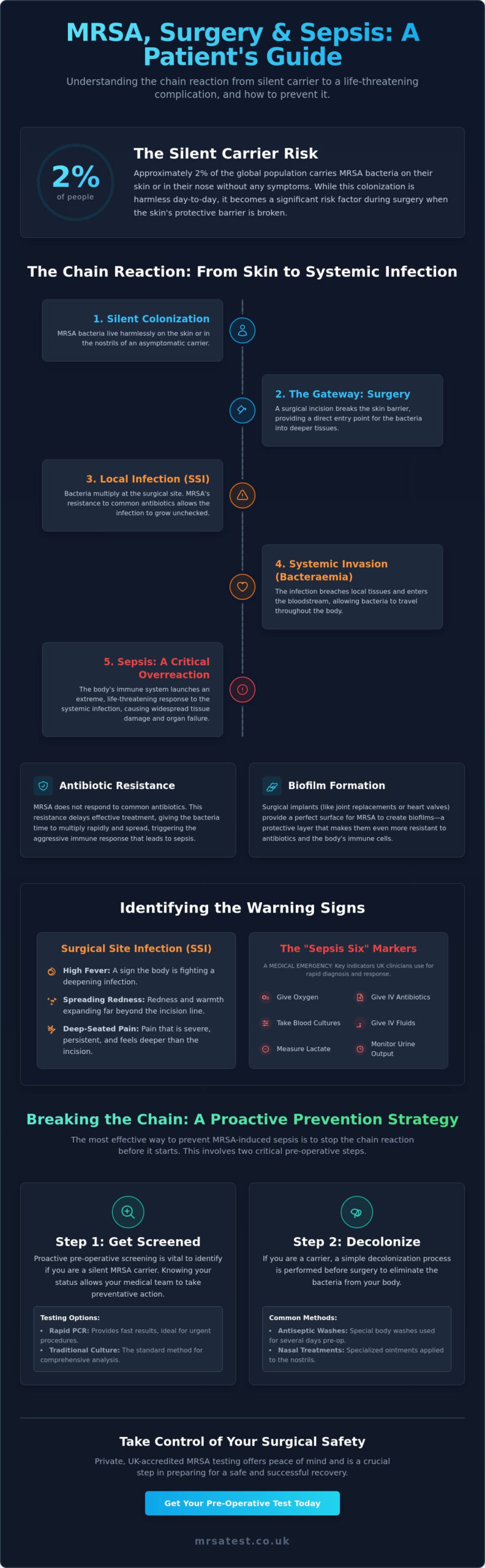
Many individuals carry MRSA on their skin or in their nostrils without any awareness of its presence. This state is known as asymptomatic colonisation. While it doesn’t cause illness on the surface, it represents a significant risk factor for those undergoing medical procedures. Focusing on preventing MRSA surgical site infections is essential because surgery provides a physical bridge for these bacteria to move from the skin surface into the sterile environments of the body. Once the skin barrier is breached, the bacteria can settle into deep tissues or attach to surgical implants.
Once inside the wound, the bacteria begin to multiply. Because MRSA is resistant to many common antibiotics, a standard post-operative dose might fail to stop the growth. This allows a localised surgical site infection (SSI) to deepen and become more aggressive. The most dangerous turning point occurs when the bacteria breach the local tissue and enter the bloodstream. This condition, known as bacteraemia, means the infection is no longer confined to a single area. It is now a systemic threat that can reach any organ in the body. Identifying your status early is a key part of preventing mrsa infection after surgery and ensuring a safe recovery path.
From Local Infection to Bacteraemia
Signs of an SSI turning aggressive include deep-seated pain, high fever, and redness spreading far beyond the incision line. MRSA is particularly adept at evading the body’s initial immune response at the wound site. It often forms protective layers that shield it from white blood cells. Achieving source control, which involves clinically cleaning or removing the infected tissue, is vital for stopping the systemic spread. If the bacteria are not contained locally, they quickly use the circulatory system as a highway to reach the heart, lungs, and kidneys.
The Biological Storm of Sepsis
When resistant bacteria circulate in the blood, they trigger what clinicians call a cytokine storm. This is an extreme inflammatory response where the immune system inadvertently attacks the body’s own tissues while trying to fight the invader. This biological storm causes a dangerous drop in blood pressure, known as septic shock, which reduces oxygen delivery to vital organs. Multi-organ dysfunction follows quickly. Research indicates that the mortality rate for MRSA bacteremia ranges from 20% to 30%, which is significantly higher than infections caused by non-resistant strains. Understanding these risks highlights why identifying your colonisation status through an MRSA screening test is such a proactive step for your peace of mind.
Identifying Warning Signs: MRSA Infection vs. Sepsis Symptoms
Recognising the difference between a normal healing process and a developing complication is a vital skill for any patient recovering at home. While some discomfort is expected after an operation, certain symptoms indicate that the body’s immune system is struggling to contain a bacterial threat. Identifying these signs early is the most significant factor in surviving sepsis and effectively preventing mrsa infection after surgery from escalating into a life-threatening event. Early detection allows for targeted antibiotic treatment before the bacteria can breach the bloodstream.
Localised MRSA infections usually present at the incision site first. You should look for persistent redness that spreads away from the wound, localised heat that feels warm to the touch, and the presence of thick, yellow or green pus. While post-operative pain typically lessens each day as tissues knit back together, infection-related pain often feels like a deep, worsening throb that doesn’t respond well to standard painkillers. If you notice these changes, a call to your GP or surgical team is the appropriate first step. However, if symptoms transition from the wound site to your general well-being, the situation becomes much more urgent.
Early Warning Signs at the Wound Site
Visual changes are often the first clue that bacteria are colonising a wound. An incision that looks angry, swollen, or begins to gape may be harbouring MRSA. For more clarity on what to look for, you can refer to our Visual Guide to Skin Infections. Another key indicator is the timing of a fever. A mild temperature immediately after surgery is a common reaction to the stress of the procedure, but a fever that develops 48 hours or more after the operation is a clinical red flag for an active infection.
The Sepsis Red Flags
Sepsis is a systemic emergency that requires immediate action. UK healthcare professionals use a protocol known as the Sepsis Six to manage this condition, but as a patient or carer, you should watch for these specific red flags at home:
- Slurred speech or sudden, uncharacteristic confusion.
- Extreme shivering or severe muscle pain that feels different from surgical soreness.
- A complete lack of urine output for a full day.
- Severe breathlessness or a rapid heart rate.
- Mottled, bluish, or very pale skin, particularly on the limbs.
If you or a loved one experience any of these symptoms, don’t wait for a GP callback or a scheduled check-up. Sepsis is a medical emergency that requires an immediate 999 call or an urgent trip to the nearest A&E. Acting within the first hour of symptom onset is the most effective way of preventing mrsa infection after surgery from causing permanent organ damage.
Reducing the Risk: Pre-Operative Screening and Decolonisation
Pre-operative screening is the foundation of a safe surgical outcome. Hospitals across the UK implement screening for elective procedures to identify patients who are silently colonised with MRSA. When carrier status is known in advance, clinical teams can adjust their approach. This includes administering targeted prophylactic antibiotics, such as vancomycin, specifically during the operation to provide a higher level of protection. Proactive screening effectively breaks the chain of infection before the first incision is even made, which is the most reliable method for preventing mrsa infection after surgery.
Relying solely on hospital-led screening can sometimes present logistical challenges. Many NHS trusts only screen patients for high-risk procedures, such as orthopaedics or cardiothoracic surgery. Additionally, the timing of a hospital pre-assessment clinic may not leave enough room for a full decolonisation cycle if the result is positive. Taking control of your own screening timeline ensures that you have the data needed to protect your health without last-minute stress or surgical delays. It’s a simple step that provides an extra layer of security for your recovery.
The Decolonisation Protocol
If a screen returns a positive result for MRSA, clinicians typically recommend a five-day decolonisation protocol. This involves using a 4% chlorhexidine gluconate (CHG) antiseptic body wash once a day for five consecutive days. Alongside this, a 2% mupirocin nasal ointment is applied inside the nostrils twice daily for the same period. The nose is a primary bacterial reservoir. Clearing it is essential to stop the bacteria from spreading to the surgical site during or after the procedure. For a step-by-step guide on managing your pre-op requirements, see our Preparing for Surgery Checklist.
Why Private Screening Provides Peace of Mind
Private screening offers a layer of certainty that fits your personal schedule. By testing early, you ensure there’s ample time to complete the five-day decolonisation process before your admission date. This is particularly beneficial for patients who are shielding, have limited mobility, or simply prefer the discretion of a home-based solution. Our professional kits allow you to collect samples in a private setting and receive results from a UK-accredited laboratory quickly. You can order a private MRSA screening kit today to secure your surgical safety and gain the reassurance you deserve.
Taking Control of Your Surgical Safety with MRSA Testing
Taking a proactive approach to your health before an operation is a powerful way of preventing mrsa infection after surgery. While hospital protocols are in place, they don’t always align with every patient’s personal timeline or need for reassurance. At mrsatest.co.uk, we provide professional, UK-accredited laboratory testing that puts the control back in your hands. By identifying your carrier status early, you can share your results with your surgical team well before your admission date, ensuring that any necessary decolonisation steps are completed without rushing or stress.
Clinical accuracy is the foundation of our service. Our tests are designed to screen the primary areas where MRSA bacteria typically reside: the nose, groin, and axilla (underarms). Testing multiple sites is essential because colonisation can be present in one area but not another. Providing your surgeon with a comprehensive laboratory report from a verified facility allows for a more tailored and secure approach to your perioperative care. This level of preparation transforms you from a passive recipient of care into an active participant in your own safety strategy.
Culture vs. PCR: Which is Right for Your Surgery Timeline?
Choosing the right test depends on how quickly you need your results. We offer two primary methods through our UK-accredited laboratory partners:
- MRSA Culture – Nose/Groin/Axilla: This is the traditional diagnostic method. It involves growing the bacteria in a controlled environment, which typically takes 48 to 72 hours. It’s an excellent, cost-effective choice for routine surgical preparation when you have several weeks before your procedure.
- MRSA Rapid PCR Test- Nose/Groin/Axilla: This advanced method looks for the genetic material of the bacteria. It’s highly sensitive and provides a much faster turnaround, with results typically available within 24 hours of the lab receiving your sample. It’s the ideal option for urgent surgeries or when you need immediate peace of mind.
Ordering Your Confidential Home Test Kit
The process is designed to be as straightforward and discreet as possible. You can order your kit online, and it will be delivered in plain packaging to protect your privacy. Following the included instructions, you collect your own swabs at home, which eliminates the need for a clinical appointment. Once you’ve collected the samples, simply return them using the prepaid post provided. Your results are delivered directly to a secure online inbox, allowing you to review them privately before deciding your next steps. Taking this simple action is a vital part of preventing mrsa infection after surgery and ensuring your recovery is as smooth as possible. Protect your surgical recovery-order your MRSA test kit today.
Securing Your Path to a Safe Recovery
Understanding the link between MRSA colonisation and systemic sepsis is the most important step you can take before your procedure. By recognising that sepsis is a preventable chain reaction rather than an inevitable risk, you gain the power to protect your own health. Proactive screening remains the most effective tool for preventing mrsa infection after surgery, as it allows for targeted decolonisation and clinical interventions before any complications can arise.
You don’t have to wait for a hospital appointment to take charge of your safety. Our service provides UK Accredited Laboratory Testing with the convenience of discreet, at-home self-collection. Whether you need the speed of fast 24-hour PCR results or a standard culture screen, we ensure your data is handled with the highest level of professional care. Order your private MRSA screening kit for surgery prep today to gain the clinical clarity you need. Taking this simple, proactive step today will help you approach your upcoming operation with quiet confidence and peace of mind.
Frequently Asked Questions
Can you have MRSA and not know it before surgery?
Yes, it’s very common to carry MRSA on your skin or in your nostrils without having any symptoms. This state is known as colonisation. In 2026, it’s estimated that about 2% of the global population carries the bacteria silently. While you feel perfectly healthy, these bacteria can enter your body through a surgical incision, which is why proactive screening is a vital part of preventing mrsa infection after surgery.
How soon after surgery does sepsis typically develop?
Sepsis can develop within hours or several weeks after an operation, though it most commonly appears within the first few days. Post-operative infections often start locally at the wound site before spreading to the bloodstream. Because MRSA is resistant to many common antibiotics, the window between a local infection and systemic sepsis can be shorter than with non-resistant strains, making early monitoring and rapid diagnosis essential for your safety.
Does the NHS screen everyone for MRSA before an operation?
No, the NHS doesn’t screen every patient before surgery. Screening is usually prioritised for high-risk surgical specialties, such as orthopaedics, neurosurgery, and cardiothoracic surgery, or when a procedure involves a prosthetic implant. Each NHS trust has its own local agreements and risk assessment protocols. You should check with your specific surgical team to see if you meet their current criteria for pre-operative testing or consider private screening for peace of mind.
What is the survival rate for MRSA sepsis?
The mortality rate for MRSA bacteremia, which is the presence of the bacteria in the bloodstream that leads to sepsis, ranges from 20% to 30%. These figures highlight how dangerous resistant infections can be compared to standard staph infections. Survival depends heavily on how quickly the condition is identified and the speed at which appropriate, targeted antibiotics are administered by the clinical team during the first hour of symptom onset.
Can I still have surgery if I test positive for MRSA?
Yes, a positive test doesn’t necessarily mean your surgery will be cancelled. Instead, your clinical team will usually prescribe a five-day decolonisation regimen involving antiseptic washes and nasal creams to clear the bacteria. Once this is completed, you can often proceed with your operation as planned. Knowing your status beforehand is actually a key strategy for preventing mrsa infection after surgery, as it allows your surgeon to use specific prophylactic antibiotics.
What is the difference between being colonised and infected with MRSA?
Being colonised means the bacteria are living on your skin or in your nose without causing any harm or symptoms. You’re a carrier but you aren’t actually ill. An infection occurs when those bacteria enter the body, often through a surgical wound, and begin to multiply, causing redness, pain, and fever. While colonisation isn’t a disease itself, it’s the primary starting point for serious post-operative complications like sepsis and organ failure.
How can I prevent MRSA from turning into sepsis at home?
The best way to prevent sepsis at home is to strictly follow your post-operative wound care instructions and monitor for early warning signs. Keep the incision clean and watch for spreading redness, pus, or a fever that develops 48 hours after surgery. If you notice these symptoms, contact your GP immediately for an urgent review. If you experience confusion, slurred speech, or extreme shivering, you must call 999 for emergency assistance.
Is a home MRSA test as accurate as a hospital test?
Yes, our home screening kits are highly accurate because the samples are processed in the same UK-accredited laboratories used by healthcare professionals. The primary difference is the convenience and discretion of self-collection in a private setting. Whether you choose a standard culture test or a rapid PCR test, you receive the same clinical standard of results that you would expect from a hospital pre-assessment clinic, ensuring your surgical prep is thorough.