Pre-Op Screen for Plastic Surgery: A Complete Guide to Mandatory Tests in 2026
Could a microscopic bacterium you don’t even know you’re carrying be the single biggest threat to your £7,500 facelift or £5,000 rhinoplasty investment? It’s a common worry as you organize your pre-op screen for plastic surgery. With the July 2026 aesthetics legislation introducing stricter safety standards across the UK, you’re likely feeling overwhelmed by the logistics of booking multiple appointments and the fear that a failed screen might delay your procedure.
We understand that your peace of mind is just as important as your surgical outcome. This guide provides a clear checklist of mandatory medical tests and explains the vital safety rationale behind them. You’ll discover why MRSA screening is a non-negotiable step for protecting your health and how to complete your required swabs through a fast, discreet, and 100% UK-based service. We’ll show you how to secure the clinical accuracy you need from the comfort of your own home, ensuring your journey to a new you stays on track.
Key Takeaways
- Learn why clinical screening is mandatory to assess your fitness for anaesthesia and identify hidden conditions that could compromise your safety.
- Identify the essential blood tests you’ll need, including Full Blood Count and clotting profiles, to prevent complications like anaemia or haematomas.
- Understand why MRSA screening is a critical safeguard for your aesthetic results, especially if your procedure involves breast, chin, or gluteal implants.
- Navigate the logistics of your pre-op screen for plastic surgery by comparing the efficiency of accredited private labs against traditional NHS pathways.
- Discover how to streamline your preparation with a discreet at-home MRSA test kit that delivers fast, reliable results from a trusted UK laboratory.
Why Pre-Op Screening is Mandatory for Plastic Surgery in 2026
A pre-op screen for plastic surgery is a comprehensive battery of clinical tests designed to evaluate your health before you enter the operating theatre. This phase of Preoperative care ensures your body is physically prepared for the stress of anaesthesia and the subsequent healing process. It isn’t just a formality; it’s a vital safety net. These tests identify asymptomatic conditions, such as high blood pressure or hidden infections, that could lead to life-threatening complications. Without these data points, a surgeon is essentially flying blind.
In 2026, the UK plastic surgery industry operates under heightened scrutiny. Following the new aesthetics legislation introduced in July 2026, clinics have adopted more rigorous infection control protocols. These standards exist to protect patients from the rising risks of antibiotic-resistant bacteria. By requiring a clear screen, clinics ensure that every patient entering the sterile field is at their physiological peak. This proactive approach significantly reduces the burden on the healthcare system and improves individual patient safety across the board.
Think of these tests as ‘Aesthetic Insurance’. A clear screen doesn’t just keep you safe; it protects your financial and emotional investment. For example, ensuring you don’t have an underlying MRSA colonization means your body can focus entirely on tissue repair rather than fighting a preventable infection. This leads to better scarring, faster recovery times, and the refined aesthetic outcome you’re paying for. When your internal health is optimized, your external results are far more likely to meet your expectations.
The Goals of Pre-Operative Assessment
The primary objective is to create a baseline of your health. This allows the medical team to focus on three key areas:
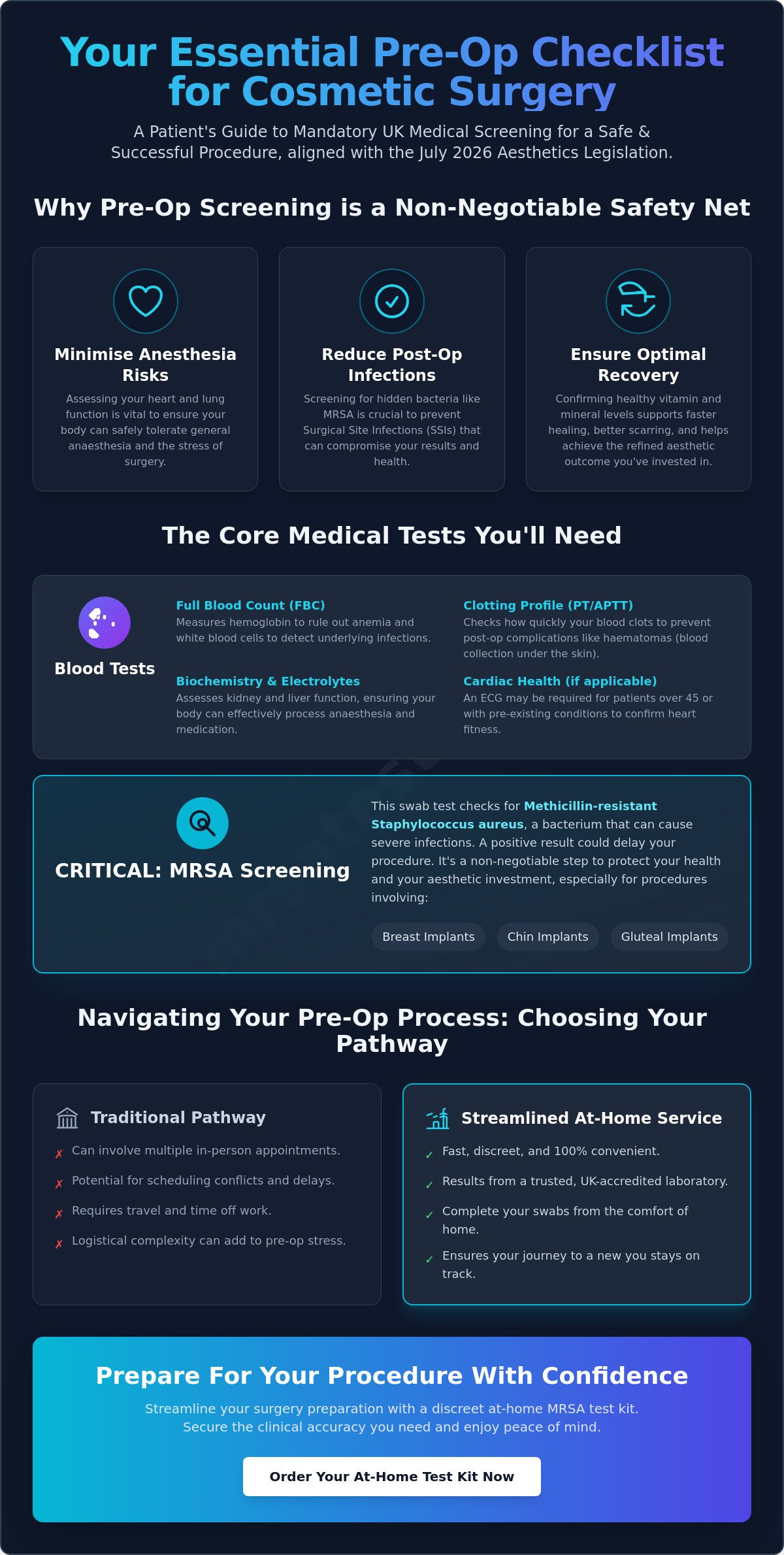
- Minimise intraoperative risks: Checking heart and lung function ensures you can safely tolerate general anaesthesia.
- Reduce post-operative infections: Identifying bacterial risks like MRSA helps prevent Surgical Site Infections (SSIs).
- Ensure optimal recovery: Confirmed healthy levels of vitamins and minerals support the long-term aesthetic results of your surgery.
The Surgeon’s Perspective: Why They Won’t Proceed Without Clearance
Your surgeon has a legal and professional duty of care. In private practice, professional liability insurance often requires documented proof of a patient’s fitness for surgery. The anaesthetist plays a critical role here. They’ll review your test results to determine the safest dosage and type of sedation. CQC-registered facilities in the UK must adhere to strict safety standards. A missing pre-op screen for plastic surgery could result in the immediate cancellation of your procedure to maintain clinic compliance and patient safety. Surgeons won’t risk their medical license or your health by cutting corners on these mandatory diagnostics.
The Essential Medical Tests: From Blood Work to Cardiac Health
A comprehensive pre-op screen for plastic surgery involves several distinct clinical evaluations. Each test provides the surgical team with a specific “green light” for different stages of your procedure. The Full Blood Count (FBC) is the most common starting point. It measures your haemoglobin levels to ensure you aren’t anaemic. It also checks your white blood cell count to rule out existing infections that might flare up after surgery. If your white cell count is elevated, your surgeon may delay the procedure to prevent complications.
Clotting profiles, specifically Prothrombin Time (PT) and Activated Partial Thromboplastin Time (APTT), are equally vital. These tests measure how quickly your blood clots. For a surgeon, this is crucial information for preventing haematomas. A haematoma is a collection of blood under the skin that can cause pain and pressure, potentially compromising your aesthetic results. Following the latest MRSA screening guidelines, clinics are also increasingly standardising how they integrate these blood results with infection risk assessments to ensure a seamless surgical pathway.
Biochemistry and electrolyte panels assess your kidney and liver function. Your body relies on these organs to metabolise and clear anaesthetic drugs and post-operative medications. If your liver or kidneys aren’t functioning at their peak, recovery can be sluggish or even dangerous. For patients over 45, or those with specific medical histories, a cardiac screen via an Electrocardiogram (ECG) is often mandatory to ensure the heart can handle the physiological stress of surgery. Occasionally, a chest X-ray is required if there are concerns regarding respiratory health or a history of heavy smoking.
Understanding Your Blood Test Results
Interpreting your own data can be confusing. You can find a more detailed breakdown in our guide on understanding blood tests. In short, your haemoglobin levels directly impact your energy during recovery. High levels mean better oxygen transport to healing tissues. Similarly, your platelet count is the main factor in preventing excessive bruising. If your platelets are within the healthy range, your post-op swelling and “black and blue” phase will likely resolve faster, allowing you to see your results sooner.
Specialised Tests for Specific Procedures
Depending on your chosen surgery, you might need additional diagnostics. Breast augmentation patients often require a baseline mammogram to ensure there are no pre-existing issues before implants are placed. Pregnancy testing is a universal requirement for all female patients of childbearing age to prevent harm to a developing foetus. Many surgeons also insist on nicotine screens. Because smoking causes significant vasoconstriction, most UK clinics require 4 to 6 weeks of cessation before and after your procedure. If you’re concerned about infection risks during this prep phase, you can order a professional MRSA screening kit to ensure your skin is clear before your hospital admission.
MRSA Screening: Protecting Your Aesthetic Results from Infection
Methicillin-resistant Staphylococcus aureus, commonly known as MRSA, is the primary biological “enemy” of elective cosmetic procedures. While many people associate this bacterium with hospital stays, it’s frequently found on the skin of healthy individuals. This is known as colonization. For a patient undergoing a pre-op screen for plastic surgery, identifying this colonization is vital. MRSA is resistant to several widely used antibiotics; this makes any post-surgical infection significantly harder to treat and more likely to result in permanent tissue damage.
The stakes are particularly high for procedures involving foreign materials. When you undergo breast augmentation, chin reshaping, or gluteal enhancement, the surgeon places an implant into the body. Bacteria like MRSA have a unique ability to adhere to these surfaces, creating a protective “biofilm” that shields them from your immune system and oral antibiotics. If an infection takes hold on an implant, the only solution is often explantation; the surgical removal of the device. This process is physically traumatic, emotionally draining, and can lead to severe, thick scarring that compromises your final aesthetic result.
To prevent these outcomes, the standard UK protocol requires a triple-swab assessment. Clinical teams collect samples from the nose, groin, and axilla (armpit). These warm, moist areas are the most common reservoirs for bacterial growth. By screening these sites, clinics can identify risks before the first incision is made, ensuring the sterile field remains truly sterile throughout your operation.
Why Plastic Surgeons Demand MRSA Clearance
Surgeons insist on clearance because the physical and financial cost of a failed procedure is immense. You can read more about the specific risks in our guide on what is MRSA. It’s important to understand the difference between being infected and being colonized. You might feel perfectly healthy, yet still carry the bacteria on your skin. Without a clear screen, you risk introducing these bacteria into deep tissue layers during surgery, where they can cause a Surgical Site Infection (SSI) that delays healing by weeks or months.
What Happens if You Test Positive for MRSA?
Testing positive doesn’t mean your surgical dreams are over. In most cases, it simply means a short delay. If your pre-op screen for plastic surgery returns a positive result, your medical team will prescribe a decolonization protocol. This typically involves:
- Antibacterial washes: Using Chlorhexidine-based body washes for five days.
- Nasal ointments: Applying a specific antibiotic cream to the inside of the nostrils.
- Environmental hygiene: Washing bedding and towels at high temperatures.
Once you complete this five-day cycle, you’ll need to re-test. A confirmed negative result provides the safety “green light” your surgeon needs to proceed. This extra step is a small price to pay for ensuring your recovery is smooth and your results are protected.
Navigating the Pre-Op Process: Private vs. NHS Pathways
Choosing between the NHS and private providers for your pre-op screen for plastic surgery is a major logistical step. While the NHS provides testing at no direct cost, the primary hurdle is timing. In 2026, elective diagnostic wait times can fluctuate. If your results aren’t ready by your final assessment, your surgeon will likely postpone your £5,000 rhinoplasty or £7,000 tummy tuck. Most private surgeons prefer patients to use accredited private laboratories. These labs offer guaranteed turnaround times and results that integrate seamlessly into private hospital records.
Timing matters. You should aim to complete your screening 2 to 4 weeks before your operation. This gives you enough time to address any issues, such as low iron levels or bacterial colonization, without rushing. Most MRSA screens are valid for 3 months, so testing too early can be just as problematic as testing too late. Managing the paperwork is your responsibility. Ensure your clinical team receives your results at least 72 hours before your admission to avoid last-minute stress and potential delays.
Preparing for Your Screening Appointment
To make your appointment as efficient as possible, review our pre-op checklist. Certain blood tests require you to fast for 8 to 12 hours before the draw. You’ll also need to provide a complete medication list and details of any previous surgeries. Having this information ready prevents the need for follow-up calls or repeat tests. It’s also helpful to mention if you have a history of easy bruising or fainting during blood draws so the phlebotomist can take extra care.
The Rise of At-Home Pre-Op Screening in 2026
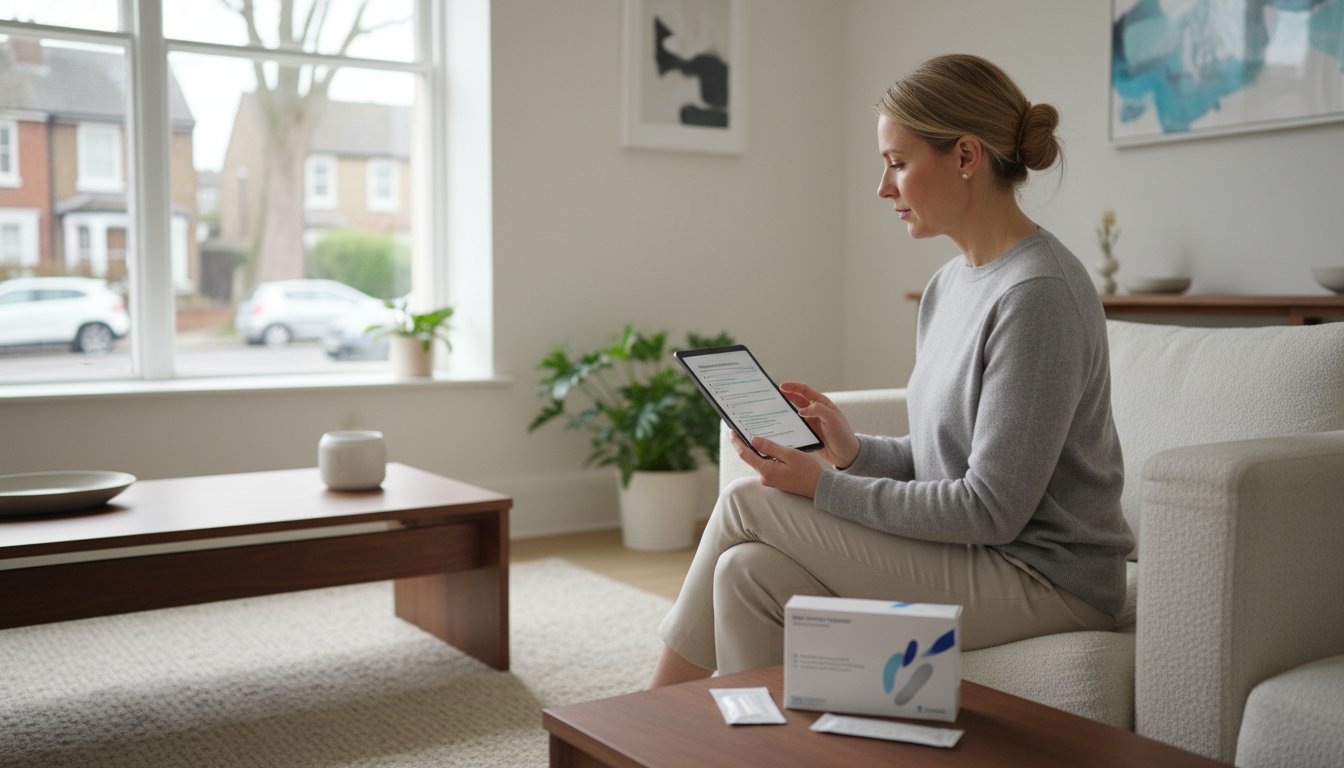
In 2026, at-home kits have transformed the ‘admin’ phase of surgical preparation. Many patients find the logistical burden of multiple hospital visits overwhelming. At-home screening offers a discreet and efficient alternative. It removes the need for travel and reduces the anxiety often associated with clinical environments. It’s essential to ensure your home test is clinical-grade. Every pre-op screen for plastic surgery must be processed by a UKAS-accredited facility to be accepted by your surgeon. This ensures your safety isn’t sacrificed for convenience.
If you want to complete your mandatory swabs without the hassle of a hospital visit, you can order a professional MRSA test kit today for fast, confidential results from a trusted UK laboratory.
Streamlining Your Surgery Prep with At-Home MRSA Testing
Completing your pre-op screen for plastic surgery doesn’t have to involve additional hospital visits or stressful waiting rooms. At mrsatest.co.uk, we provide a professional, clinical-grade solution that allows you to manage your mandatory MRSA swabs from the comfort of your own home. Our service is designed to fit seamlessly into your surgical timeline, providing the high-quality data your surgeon needs while respecting your privacy and schedule.
The process is straightforward and efficient. Once you order your kit, we dispatch it in discreet packaging via tracked shipping. You’ll receive clear instructions on how to collect your samples from the nose, groin, and axilla. After swabbing, simply return the kit using our prepaid, tracked collection service. Your samples are processed in a 100% UK-based, UKAS-accredited laboratory, ensuring the results are accurate and meet the strict safety standards required by UK clinics in 2026.
Choosing the right test depends on your surgical date. We offer two primary options for molecular detection and bacterial growth:
- MRSA Rapid PCR Test: This is our fastest option. It uses molecular detection to identify MRSA DNA, providing results in as little as 24 hours after the lab receives your sample. It’s ideal for patients with tight deadlines.
- MRSA Culture Test: This traditional method involves growing the bacteria in a controlled environment. While it takes slightly longer, typically 48 to 72 hours, it remains a gold-standard requirement for many private hospitals.
Why Choose mrsatest.co.uk for Your Pre-Op Screen?
We prioritize your peace of mind by combining clinical excellence with personal convenience. Our service offers several key benefits for the modern surgical patient:
- Fast results: Our PCR molecular detection option ensures you have your clearance in time for your final surgical assessment.
- Discreet packaging: We understand that your medical journey is private. Our kits arrive in plain, unbranded packaging.
- Accepted by surgeons: Because we use accredited UK partner laboratories, our results provide the clinical evidence your surgical team requires to proceed safely.
Final Steps to Your New Look
Once your results are ready, you’ll receive a confidential report via our secure portal. You can easily download this document and email it directly to your surgeon or clinical coordinator. This fulfills a major part of your pre-op screen for plastic surgery and clears one of the final hurdles before your procedure. In the final 24 hours before your surgery, focus on following your clinic’s specific fasting and hygiene instructions, knowing that your infection risk has been professionally assessed and managed.
Ready to secure your surgical date with confidence? Order your pre-op MRSA test kit today and take the next step toward a safe, successful transformation.
Step Into Your Transformation With Confidence
Your journey toward a new look is an exciting investment in yourself. By completing a thorough pre-op screen for plastic surgery, you ensure that your body is prepared for a safe procedure and a smooth recovery. We have explored how essential diagnostics, from detailed blood work to mandatory MRSA swabs, act as a vital safeguard against complications and protect your aesthetic results from the risk of infection.
Preparation does not need to be a source of stress. You can manage your mandatory screening with ease and total discretion. Our 100% UK-based clinical service provides UKAS-accredited laboratory results you can trust. With rapid 24-hour PCR options available, you will have the clear evidence your surgical team requires without the need for unnecessary hospital visits or logistical delays.
Secure your surgery date with a fast, professional MRSA test kit and take the final step toward your transformation today. We are here to help you move forward with total peace of mind and clinical certainty.
Frequently Asked Questions
Is an MRSA test mandatory for all plastic surgery procedures?
MRSA screening is mandatory for the vast majority of plastic surgery procedures in the UK, especially those involving implants or prosthetic materials. Standardised guidelines for 2026 recommend screening to prevent Surgical Site Infections (SSIs) which can compromise your results. While requirements for very minor local anaesthetic procedures may vary, most CQC-registered clinics insist on a clear screen for all theatre-based surgeries.
How long are pre-op blood test results valid for in the UK?
Pre-op blood test results are typically valid for three to six months for elective surgery. For major procedures, most surgical teams prefer a pre-op screen for plastic surgery that is no older than three months to ensure the data reflects your current physiological state. If your surgery is delayed beyond this period, you’ll likely need to repeat the tests to maintain hospital safety standards.
Can I get my pre-op screen done on the NHS if I am having private surgery?
You generally cannot use the NHS to complete pre-operative testing for a private cosmetic procedure. Because the surgery is elective and performed outside the state system, the NHS does not cover the associated diagnostic costs. You’ll need to arrange these tests through a private laboratory or an at-home testing service that provides clinical-grade results accepted by your surgeon.
What happens if my pre-op blood tests show I am anaemic?
If your results show anaemia, your surgeon will likely postpone your procedure until your haemoglobin levels are restored. This is a safety precaution because anaemia can lead to significant fatigue and impaired wound healing after surgery. You’ll usually be advised to take iron supplements and undergo a repeat blood test before a new surgical date is confirmed.
How much does a private pre-op screen for plastic surgery cost?
The total cost depends on the specific battery of tests your surgeon requires. While initial consultation fees for plastic surgery in 2026 range from £100 to £250, the laboratory fees for blood work and swabs are separate. Many patients choose to use targeted at-home kits for mandatory requirements like MRSA to manage these costs more effectively while ensuring they meet all clinical standards.
What is the difference between a PCR and a culture test for MRSA?
The primary difference lies in the detection method and the speed of the results. A PCR test is a molecular detection option that identifies MRSA DNA, providing results in as little as 24 hours. A culture test involves growing the bacteria in a lab environment, which typically takes 48 to 72 hours. Both are highly accurate, but PCR is the preferred choice for patients on a tight schedule.
What should I do if I test positive for MRSA before my surgery?
If you test positive, you must begin a five-day decolonisation treatment prescribed by a healthcare professional. This involves using specific antibacterial body washes and nasal ointments to clear the bacteria from your skin and nostrils. Once the treatment is complete, you’ll need a repeat pre-op screen for plastic surgery to provide documented proof that you are clear before your procedure can go ahead.
Can I do my own swabs for an MRSA pre-op screen?
Yes, you can perform your own swabs using a professional at-home kit. These kits are designed for self-sampling of the nose, groin, and axilla (armpit) and include everything you need for a clinical-grade result. As long as the samples are processed by a UKAS-accredited laboratory, the results are widely accepted by private plastic surgeons and hospitals across the UK.