At-Home MRSA Test vs NHS Screening: 2026 Comparison
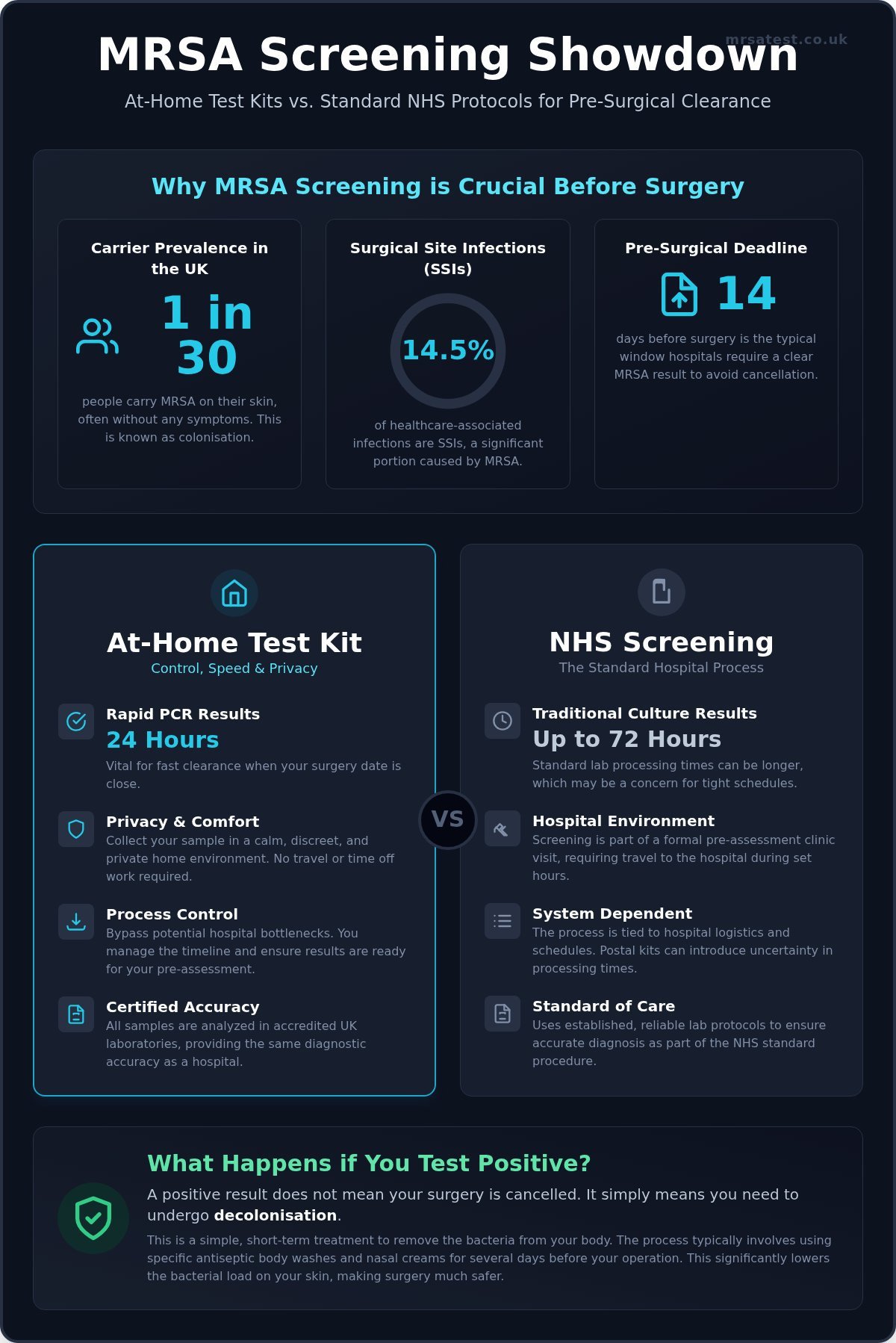
Did you know that approximately 1 in 30 people in the UK carry MRSA on their skin without showing any symptoms? While usually harmless in daily life, this bacterium is a leading cause of surgical site infections, which account for over 14% of healthcare-associated infections in the UK. When an operation date is finally set, the choice between an at-home mrsa test vs nhs screening often becomes a matter of protecting your surgical timeline. You likely feel the weight of hospital requirements, as most facilities demand a clear result within 14 days of your procedure to avoid a last-minute cancellation.
It’s understandable to feel anxious about the logistics of hospital-based testing or the risk of a positive result delaying your recovery. We believe that managing your health should be straightforward and stress-free. This comparison explores the differences in speed, privacy, and accuracy between private kits and standard NHS protocols. You’ll discover how rapid PCR technology delivers results in 24 hours, compared to the 72-hour window of traditional cultures. We also explain the decolonisation process and how to ensure your results are ready for your pre-assessment, giving you the control and confidence you need before your surgery.
Key Takeaways
- Rapid PCR testing delivers results within 24 hours, which is vital if your surgery date is approaching quickly and you need fast clearance.
- Clinical environments can be stressful for many patients. Home collection kits provide a calm, discreet, and private way to complete your required screening.
- Choosing an at-home mrsa test vs nhs screening allows you to bypass potential hospital bottlenecks and secure your results on your own terms.
- All private samples are analyzed in accredited UK laboratories, providing the same level of diagnostic accuracy you’d expect from a hospital setting.
- Understand the difference between being a carrier and having an active infection, along with the standard protocols for clearing the bacteria if you test positive.
Understanding MRSA Screening: At-Home Kits vs. NHS Hospital Protocols
Methicillin-resistant Staphylococcus aureus (MRSA) is a type of bacteria that has developed resistance to several widely used antibiotics. In the UK healthcare system, it remains a significant focus because it’s much harder to treat than standard staph infections if it enters the bloodstream. Most people who carry the bacteria don’t even know it’s there. This is known as colonisation, where the bacteria live harmlessly on the skin or inside the nostrils. An active infection, however, occurs when the bacteria bypass the skin’s defences, often through a surgical incision, leading to serious illness.
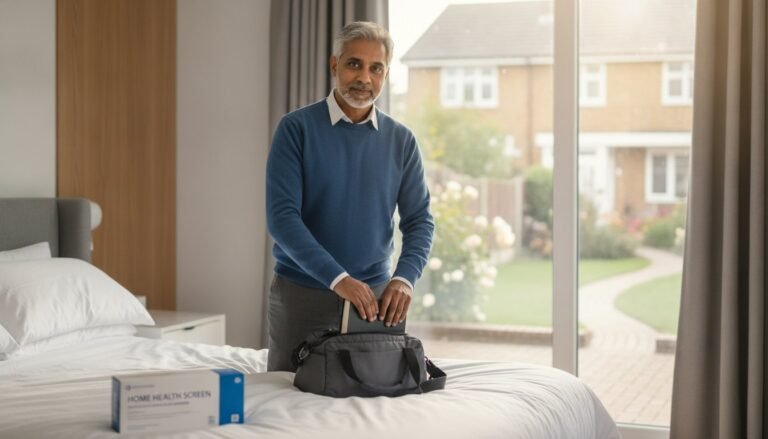
Because of this risk, screening has become a mandatory part of the pre-operative process for most elective surgeries in the UK. Hospitals need to know your status before you arrive. Patients generally face a choice between waiting for their scheduled hospital appointment or opting for a private at-home mrsa test vs nhs screening. While both methods use similar swabbing techniques, the environment and speed of the process differ significantly. Private testing allows you to collect your own samples in a familiar setting, while the NHS process is typically tied to a formal pre-assessment clinic visit.
Why Hospitals Require MRSA Screening
The primary reason for mandatory screening is the prevention of surgical site infections (SSIs). These infections are a major burden on both patient recovery and the healthcare system. According to current data, surgical site infections account for 14.5% of all healthcare-associated infections in the UK. Experts estimate that 60% of these infections are preventable through proper screening and decolonisation.
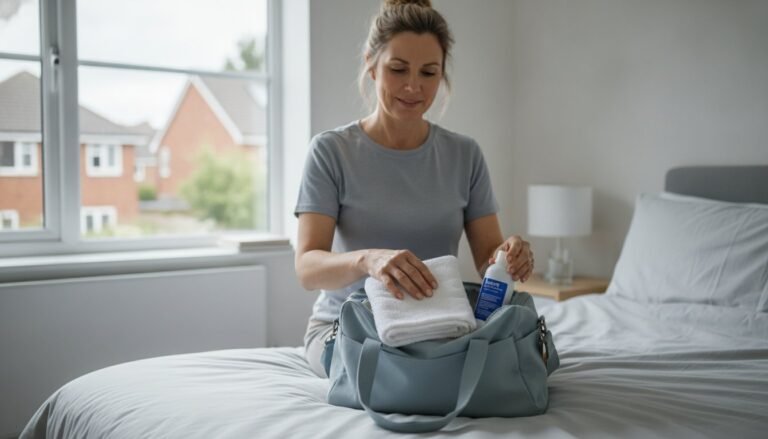
Decolonisation is the process of removing MRSA from the body before surgery. If you test positive, you’ll be asked to use specific antiseptic body washes and nasal creams for a few days. This simple step significantly lowers the bacterial load on your skin, making it much safer for the surgeon to operate. Without a clear or managed result, hospitals often have no choice but to cancel or postpone procedures to protect the sterile environment of the operating theatre.
The Rise of At-Home Testing in the UK
Since 2020, there’s been a clear shift toward patient-led diagnostics across the UK. Patients are increasingly looking for ways to streamline their healthcare journey and avoid unnecessary hospital visits. At-home testing has gained popularity because it fits into a busy modern lifestyle while maintaining clinical standards. When you follow the provided professional instructions, self-swabbing is a highly valid clinical method for detecting MRSA colonisation.
Choosing a private kit offers a level of convenience that hospital protocols often can’t match. It eliminates the need for extra travel and time off work for a simple swab test. By managing the screening process yourself, you can ensure your results are processed by an accredited laboratory and delivered to your surgeon well before the 48-hour pre-admission deadline. It’s a reliable way to secure your surgery date without the stress of hospital logistical delays.
How NHS MRSA Screening Works: The Standard Hospital Process
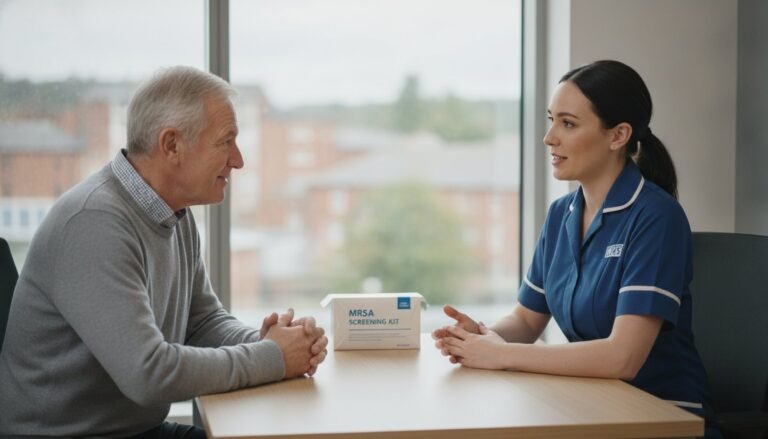
Most patients encounter NHS MRSA screening during their formal pre-operative assessment. This appointment usually happens two to four weeks before a scheduled surgery. While the primary goal is to ensure you’re fit for the procedure, the MRSA swab is a critical safety check. For many, this involves travelling to the hospital specifically for the test. However, some NHS Trusts now offer a postal kit system for patients deemed lower risk. These kits allow you to take your own swabs and mail them back to the hospital lab, though the logistical chain can sometimes introduce uncertainty regarding receipt and processing times.
The Pre-Assessment Clinic Experience
If you attend in person, a pre-op nurse will perform the screening. They use sterile swabs, which look like long cotton buds, to collect samples from specific areas where the bacteria often live. These sites typically include:
- The nostrils: The most common site for MRSA colonisation.
- The groin: A warm, moist area where bacteria thrive.
- The armpits (axilla): Another secondary site often included in multi-site screens.
- Broken skin: Any existing wounds or eczema patches are usually swabbed.
The process is quick and painless, but it requires a dedicated window of time in your schedule. The nurse ensures the sample is collected correctly and labeled with your hospital records. This formal setting provides professional oversight, but it lacks the convenience found when comparing an at-home mrsa test vs nhs screening.
NHS Turnaround Times and Communication
Most NHS laboratories use the Culture method for MRSA detection. This involves placing the sample in a controlled environment to see if bacteria grow over several days. Typically, this takes between 3 to 5 days to complete. A common point of frustration for patients is the communication policy. Many Trusts operate on a “no news is good news” basis. If you don’t hear anything, it’s assumed the result was negative. However, this can leave you feeling uncertain as your surgery date approaches.
During peak periods, lab backlogs can extend these timelines. If a result is delayed or lost, the hospital may have to postpone your surgery at the last minute because they cannot confirm your safety status. If you’re concerned about these potential delays, you might consider a private MRSA test kit to gain definitive proof of your status on your own timeline. Taking this proactive step ensures you have a physical or digital result to present at your pre-assessment, providing peace of mind that your operation will proceed as planned.
Comparing Private At-Home MRSA Tests and NHS Screening
Deciding between an at-home mrsa test vs nhs screening often comes down to balancing the convenience of a hospital’s free service against the value of personal control. While the NHS provides screening at no direct cost, it operates on a clinical schedule that doesn’t always align with your personal needs or a fast-approaching surgery date. Private kits offer on-demand access. This allows you to manage your health requirements with a level of autonomy that traditional pathways can’t always provide, ensuring you aren’t left waiting for a hospital-issued appointment trigger.
Speed and Technology: PCR vs. Culture
The most significant technical difference between these two paths lies in the laboratory methodology used. Most NHS labs rely on traditional culture tests, which involve growing bacteria in a controlled environment for three to five days. In contrast, rapid private testing often utilizes Polymerase Chain Reaction (PCR) technology. PCR is a molecular technique that detects bacterial DNA directly, removing the need for a lengthy incubation period. This technological edge reduces the turnaround time from several days to just 24 hours.
For patients with a surgery date less than a week away, this speed is the gold standard for ensuring clearance is logged in the hospital system in time. When considering the accuracy of at-home MRSA tests, it’s essential to ensure the kit uses accredited UK laboratories to match the diagnostic standards used by the NHS. Using high-specification molecular testing ensures that the speed of the result doesn’t compromise the reliability of the data provided to your surgical team.
Privacy and Convenience Factors
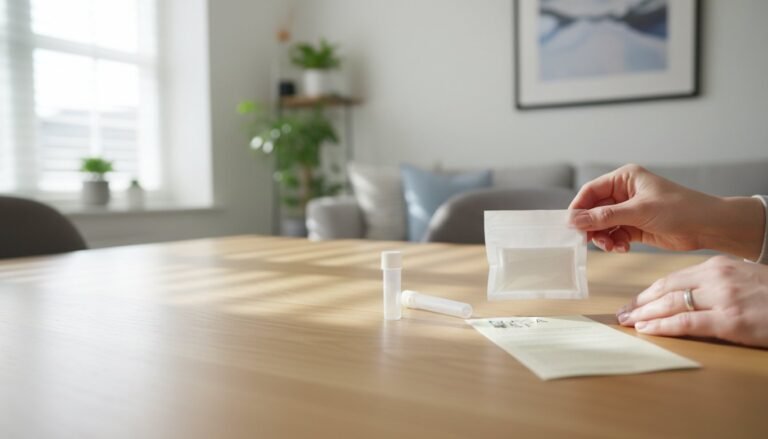
Hospital visits for screening can be invasive and time-consuming. You have to navigate traffic, find parking, and wait in a clinical environment for a procedure that takes less than five minutes. At-home kits eliminate these hurdles by providing a more discreet experience. You can swab sensitive areas in the comfort and privacy of your own bathroom, which many patients find less stressful than a clinical setting. Results are delivered via a secure digital report, which you can share with your consultant immediately.
To help you weigh your options, consider these key differences in service delivery:
- Technology: The NHS primarily uses bacterial cultures, while private options offer rapid PCR molecular detection.
- Timeline: Expect a 3 to 5 day wait for NHS results, compared to as little as 24 hours for private PCR kits.
- Environment: NHS screening requires a hospital clinic visit, while private tests are completed entirely at home.
- Communication: NHS Trusts often follow a “no news is good news” policy, whereas private services provide a direct digital lab report.
- Financials: The NHS is free at the point of use, while private testing requires a fee for the kit and laboratory analysis.
While the NHS service is excellent for routine care, the price of certainty often makes private testing a logical choice for elective surgery patients. It removes the anxiety of the unknown. Instead of wondering if your samples were processed or if the silence from the hospital really means you’re clear, you hold a definitive lab report in your hands. This proactive approach ensures your pre-operative journey remains on track, avoiding the logistical bottlenecks that can occur in busy hospital labs.
Key Factors When Choosing Between Private and NHS Testing
Choosing between an at-home mrsa test vs nhs screening involves evaluating your specific surgical timeline and your tolerance for administrative uncertainty. While the clinical accuracy of both pathways is high, the logistical experience differs significantly. Your decision should align with your broader pre-operative checklist to prevent any last-minute surprises on the day of admission. It’s often helpful to view screening not just as a medical requirement, but as a strategic step in managing your recovery timeline.
Your personal risk level also plays a role in this choice. If you’re a healthcare worker, a frequent hospital visitor, or someone who has had MRSA in the past, you have a higher statistical likelihood of colonisation. In these cases, knowing your status early is vital. Waiting for a hospital trigger might leave you with too little time to complete a decolonisation protocol if you test positive. Similarly, if you’re someone who finds the “no news is good news” approach stressful, having a definitive lab report in your inbox can provide the peace of mind needed during a high-pressure period.
When the NHS Route is Best
The standard hospital pathway is often the most sensible choice when time is not a pressing factor. If your surgery is more than three weeks away, the NHS timeline usually allows enough cushion for processing and any necessary follow-up. Some specific NHS Trusts also mandate that results must come from their own internal laboratories for certain high-risk procedures. If you have a complex medical history and are already under the close care of a specialist hospital team, they may prefer to manage every aspect of your pre-operative screening in-house to maintain a single point of clinical record.
When Private Testing is the Smarter Choice
Private testing becomes the clear advantage when speed and documentation are your primary concerns. For patients using private healthcare providers like Nuffield or Spire, having a formal clearance certificate ready before admission is often a mandatory requirement. It’s also a smarter choice for those with urgent surgery dates where every 24-hour window counts. A private test allows you to establish a baseline status before you even enter the NHS pre-assessment system. If your surgery date is fast approaching and you cannot afford a delay, you can order a private MRSA test kit today to secure your results and ensure your procedure goes ahead as planned.
Ultimately, the goal is to arrive at the hospital feeling prepared and safe. Whether you choose the standard hospital route or a private kit, ensure you’ve checked your specific consultant’s requirements regarding the age of the test results. Most facilities require the screen to be less than 14 days old on the day of your operation.
Fast and Confidential: Why Choose a Private MRSA Test Kit?
mrsatest.co.uk is the UK’s specialist in private MRSA diagnostics, providing a streamlined alternative to traditional hospital pathways. When you evaluate an at-home mrsa test vs nhs screening, the primary advantage is the ability to choose the specific technology and scope that fits your surgical timeline. We offer both MRSA Culture and MRSA Rapid PCR options. While a culture test is a reliable and cost-effective method, our Rapid PCR technology is designed for those in an urgent pre-operative window. It identifies bacterial DNA directly, allowing us to deliver results within 24 hours of the sample reaching our laboratory.
It’s also essential to match your screening to your hospital’s specific requirements. Some surgeons only require a 2-site screen, while others mandate a 3-site check. To support these different needs, we provide several options:
- MRSA Rapid PCR Test– Nose/Groin/Axilla or Nose/Groin
- MRSA Culture – Nose/Groin/Axilla or Nose/Groin
The process is designed to be as simple as possible, following a clear three-step path. First, you order your kit securely online. Second, you follow the professional instructions to collect your swabs in the privacy of your home. Finally, you post the samples back to us. We provide everything you need to complete the process with confidence, ensuring your samples are ready for clinical analysis without the need for a hospital visit.
Our Accredited Laboratory Process
Trust and clinical accuracy are the foundations of our service. Every sample is processed in a fully accredited UK laboratory, ensuring the same diagnostic standards used by the NHS. To maintain the integrity of your samples, we include prepaid tracked return shipping with every kit. This ensures your swabs reach the lab securely and can be monitored throughout the transit process. Once the analysis is complete, you’ll receive a clear, professional result report. These reports are designed to be easy to read and can be shared directly with your surgical team or private consultant to confirm your clearance status.
Taking Control of Your Pre-Op Preparation
One of the greatest benefits of private testing is the ability to be proactive. By testing early, you can identify if you’re an MRSA carrier before the hospital even conducts their formal assessment. If you do test positive, this extra time allows you to complete a decolonisation protocol, such as using antiseptic washes, well before your surgery date. This prevents the stress of a last-minute cancellation. For a comprehensive look at how to manage your upcoming procedure, we recommend viewing our MRSA screening for surgery guide. Taking control of your health logistics ensures that you arrive at the hospital prepared, calm, and ready for a successful recovery.
Securing Your Surgery with Confidence
Choosing between an at-home mrsa test vs nhs screening ultimately depends on how much you value certainty and speed in your pre-operative journey. While the NHS provides a vital service, the logistical delays and “no news is good news” approach can lead to unnecessary anxiety as your operation date nears. By opting for a private kit, you gain a definitive digital report from an accredited UK laboratory, often in as little as 24 hours. This level of efficiency ensures your results are ready for your pre-assessment without the risk of last-minute cancellations.
This proactive approach doesn’t just save time; it provides the privacy to collect samples in your own home and the opportunity to begin decolonisation early if required. It’s about taking control of your health logistics so you can focus entirely on your recovery. If you’re ready to secure your surgical timeline and bypass hospital bottlenecks, you can Order Your Confidential MRSA Test Kit for Home Delivery today. Our discreet and private service ensures you have the documentation you need, exactly when you need it. We’re here to support you in making your upcoming procedure as smooth and safe as possible.
Frequently Asked Questions
Is an at-home MRSA test as accurate as one done in a hospital?
Yes, at-home tests are highly accurate when you follow the included clinical instructions correctly. We process every sample in an accredited UK laboratory, using the same diagnostic standards as the NHS. The primary difference between an at-home mrsa test vs nhs screening is the environment where the swab is taken, not the quality of the laboratory analysis. As long as you collect the samples from the required sites, the result is clinically reliable.
How long does an NHS MRSA screening result take compared to a private test?
NHS results typically take between three to five days because they primarily use the traditional culture method. In contrast, a private rapid PCR test can provide results within 24 hours of the sample arriving at the lab. This significant difference in speed is why many patients choose private testing when their surgery date is imminent. It ensures that your clearance status is confirmed well before the mandatory 48-hour pre-admission window.
Will my NHS surgeon accept a private MRSA test result?
Most surgeons and hospitals accept formal reports from accredited UK laboratories. While some NHS Trusts prefer internal results for high-risk procedures, a private lab report provides clear, documented proof of your status. It’s always best to check with your specific surgical team or pre-assessment nurse beforehand. Providing a physical or digital report often helps streamline your admission process and demonstrates that you have proactively managed your pre-operative requirements.
What happens if my at-home MRSA test comes back positive?
If your result is positive, it means you are currently colonised with the bacteria. This is not a reason to panic, as it doesn’t necessarily mean your surgery will be cancelled. You’ll typically be prescribed a simple decolonisation treatment, which includes antiseptic body washes and nasal creams used over several days. Testing early at home gives you the necessary time to complete this process before your formal hospital admission date.
Do I need to test my nose, groin, and armpits for MRSA?
Yes, testing multiple sites is the standard protocol for a comprehensive screen. Bacteria often live in warm, moist areas of the body. Most hospitals require swabs from the nostrils and the groin as a minimum. Some surgeons also request a sample from the armpits (axilla) for a 3-site screen. Choosing a kit that covers all these areas ensures your results meet the specific requirements of your surgical team and provides a complete picture of your status.
Can I buy an MRSA test kit over the counter in the UK?
You cannot typically buy an MRSA test kit over the counter in high street pharmacies. These diagnostics require specialised laboratory analysis, so they are usually ordered from dedicated online providers. By ordering through a specialist service, you ensure that your kit includes professional-grade swabs and prepaid tracked shipping to an accredited facility. This ensures your samples are handled with the necessary clinical care and processed by experts in bacterial diagnostics.
Is the at-home MRSA test kit sent in discreet packaging?
Yes, all our test kits are sent in plain, discreet packaging to protect your privacy. We understand that medical testing is a private matter, so there are no visible brand markings or medical descriptions on the outside of the envelope. The kit fits through a standard letterbox, so you don’t need to be home to receive it. This ensures a confidential experience from the moment you order until you receive your secure digital results.
How much does a private MRSA test cost in the UK?
The cost of private testing reflects the comprehensive service provided, including sterile collection materials, prepaid tracked shipping, and professional laboratory analysis. While the NHS provides screening at no direct cost, private fees cover the speed of rapid PCR technology and the convenience of home collection. Many patients view this as an investment in their peace of mind, ensuring their surgery proceeds without the risk of logistical delays or last-minute cancellations.