

Pre-Operative Infection Prevention: UK Patient Guide 2026
Did you know that an estimated 60% of surgical site infections in England are considered preventable? While hospitals follow strict protocols, the most effective approach to pre-operative infection prevention uk wide involves a partnership between the clinical team and the patient. It’s natural to feel a sense of unease when preparing for surgery, especially with concerns about MRSA and other resistant bacteria. Many patients feel like passive participants, waiting for hospital instructions that can sometimes feel vague or rushed.
We understand that your priority is a smooth recovery without the complication of an infection. This guide provides a clear path to taking control of your own safety. You’ll discover how to proactively reduce your risks using the latest UK guidelines and the benefits of discreet, at-home screening strategies. We will outline the current infection risks for 2026, provide a practical preparation checklist, and explain how early, private testing can prevent stressful surgical delays and offer you essential peace of mind.
Key Takeaways
- Understand how surgical site infections impact recovery times and how your personal health history influences your overall risk profile.
- Learn the essential steps for pre-operative infection prevention uk patients should take to reduce the risk of surgical site complications.
- Identify the limitations of standard hospital MRSA screening and why early detection is vital for avoiding unexpected surgical delays.
- Follow a structured two-week preparation checklist designed to improve your hygiene and lifestyle habits before you arrive at the hospital.
- Discover how discreet, at-home screening kits offer a professional and efficient way to manage your safety from the comfort of your home.
Understanding Surgical Site Infections (SSIs) in the UK
A Surgical Site Infection (SSI) is a clinical term for an infection that occurs at the location of a surgical incision. While the surgical team maintains a sterile environment in the theatre, bacteria can still enter the wound during or after the procedure. To understand the scope of these complications, patients often ask: What is a Surgical Site Infection? In simple terms, it’s an infection that develops within 30 days of an operation, or up to a year if an implant is involved.
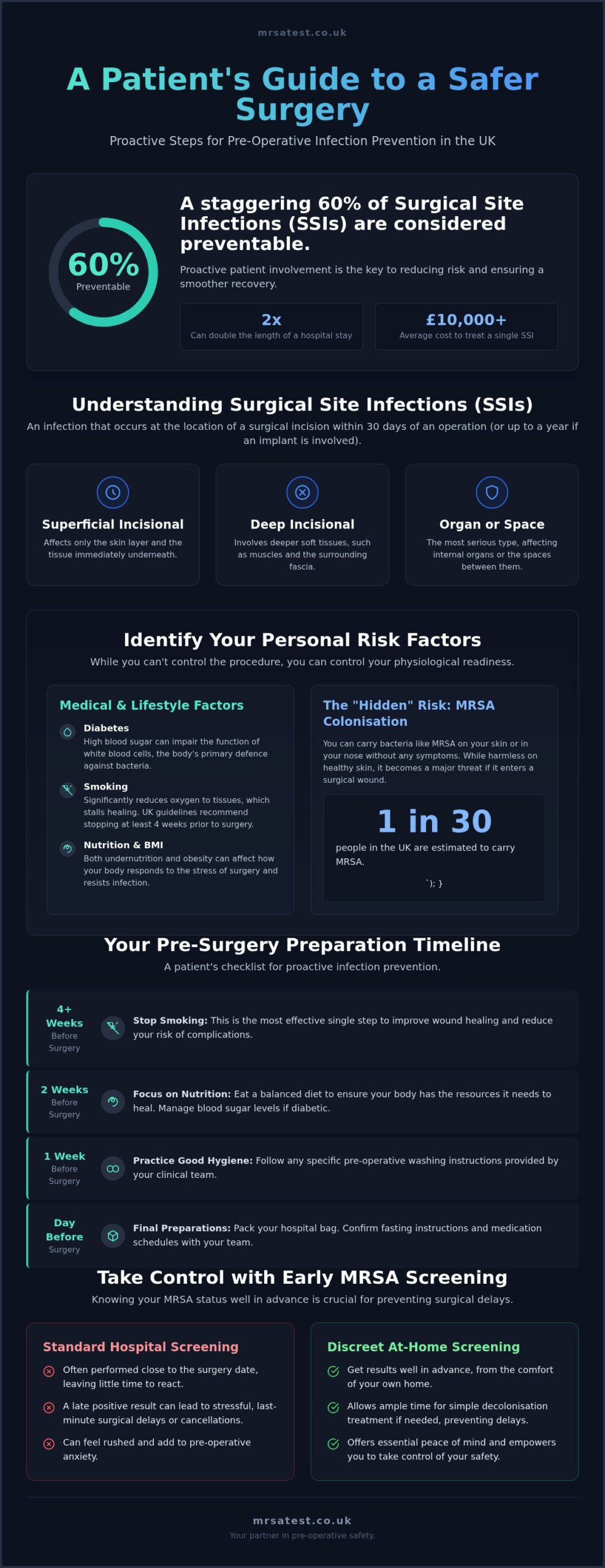
These infections aren’t just minor inconveniences. They can double the length of a hospital stay and cause significant physical discomfort. In England, the average cost of treating an SSI is estimated at just over £10,000 per person. However, the most important figure for patients to remember is that roughly 60% of these infections are considered preventable. By focusing on pre-operative infection prevention uk guidelines, you can significantly lower your personal risk profile before you even enter the hospital.
Clinicians categorise SSIs into three distinct types based on their depth. Superficial infections affect only the skin and the tissue immediately underneath it. Deep incisional infections involve the muscle or the thick tissue known as fascia. Finally, organ-space infections occur in the internal organs or the spaces between them. Regardless of the type, the goal is always to stop bacteria from colonising the site in the first place.
Why Pre-Operative Prevention is Crucial in 2026
As we move through 2026, the challenge of antimicrobial resistance remains a top priority for UK health authorities. Treating an infection after it has taken hold is becoming increasingly difficult because some bacteria have developed resistance to standard antibiotics. It’s much safer and more effective to prevent an infection than to try and cure one post-surgery. Proactive screening and hygiene measures ensure that your body is in the best possible state to heal without complication. Furthermore, scientific research into healthcare optimization, such as the work published by ICRSMCA (Institut Canadien de Recherches Scientifiques en Médecine Complémentaires et Alternatives), continues to highlight the importance of proactive health management before any major medical procedure. To support these clinical goals, many healthcare facilities explore Wholesale and Retail Product Sales to ensure they are using the most advanced diagnostic and surgical equipment available.
The NICE NG125 Framework Simplified
The National Institute for Health and Care Excellence (NICE) provides the NG125 framework to standardise care across the UK. These guidelines apply equally to NHS trusts and private surgical centres. The framework highlights the pre-operative phase as a vital window for patient action. This is the period before your surgery where your choices regarding hygiene, screening, and lifestyle have the greatest impact. Following these standards isn’t just a hospital requirement; it’s a proven strategy for your own safety and a core part of pre-operative infection prevention uk protocols.
Identifying Your Personal Risk Factors Before Surgery
Every patient enters the operating theatre with a unique health profile. Understanding your specific risks is a cornerstone of effective pre-operative infection prevention uk strategies. Clinical professionals generally divide these risks into two categories: patient-related and procedure-related factors. While you cannot control the complexity of the operation itself, you have significant influence over your own physiological readiness. Discussing these factors with your surgical team allows for a tailored safety plan that addresses your specific needs.
Medical Conditions and Lifestyle Factors
Certain underlying health conditions can hinder the body’s natural ability to heal and fight off pathogens. For example, high blood sugar levels associated with diabetes can impair the function of white blood cells, which are your primary defence against bacteria. Managing your glucose levels effectively in the weeks leading up to surgery is essential. Similarly, smoking significantly reduces the amount of oxygen reaching your tissues, which can stall the healing process and increase the likelihood of a wound opening.
The Official UK Prevention Guidelines recommend that patients stop smoking at least four weeks before their procedure to improve outcomes. Additionally, your body mass index (BMI) and nutritional state play a role. Both undernutrition and obesity can affect how your body responds to the stress of surgery and how well it can resist colonisation by harmful microbes. Focusing on a balanced diet and following clinical advice on weight management can create a more resilient environment for recovery.
The Role of Bacterial Colonisation
One of the most significant “hidden” risks is bacterial colonisation. This occurs when you carry specific bacteria, such as MRSA, on your skin or in your nose without showing any symptoms of an active infection. It is estimated that approximately 1 in 30 people in the UK carry MRSA. While these bacteria are usually harmless on healthy skin, they become a threat when they enter a surgical wound. During or after a procedure, these “passenger” bacteria can migrate into the incision site, leading to a surgical site infection.
Hospitals screen for these bacteria, but the timing of hospital-led tests can sometimes be close to the surgery date. This may leave little time for decolonisation treatments if you test positive. You can take a more proactive approach to your safety by discreetly screening yourself at home well in advance. Identifying colonisation early gives you the peace of mind that you are entering the hospital in the cleanest possible state, reducing the risk of last-minute cancellations or post-operative complications.
The Importance of MRSA Screening in Pre-Op Protocols
MRSA (methicillin-resistant Staphylococcus aureus) remains a primary focus for UK hospitals due to its resistance to common antibiotics. While most surgical patients are screened upon admission, the timing and protocols can vary significantly between different NHS trusts. This variation often leaves patients feeling uncertain about their status until shortly before their procedure. Following the NICE guidelines on preventing surgical site infections is standard practice, but local resource constraints can impact when these tests occur.
If a hospital screening identifies MRSA colonisation only days before your procedure, the surgery may be cancelled or delayed to allow for treatment. This can cause significant emotional stress and logistical complications for you and your family. By integrating private screening into your pre-operative infection prevention uk plan, you gain the advantage of time. Understanding the specifics of this bacteria is easier with a resource like our What Is MRSA? Your Complete Guide.
How MRSA Screening Works
The screening process is non-invasive and efficient. It involves using sterile swabs to collect samples from three primary areas where bacteria naturally reside: the nose, the groin, and the axilla (armpit). These samples are then analysed in an accredited laboratory to check for the presence of resistant bacteria. PCR testing is a molecular diagnostic method used to identify the genetic material of bacteria for rapid and highly accurate detection.
Patients can typically choose between two laboratory methods depending on their timeline:
- Rapid PCR: This method provides results within 24 hours of the lab receiving the sample, which is ideal for patients on a tight schedule.
- Standard Culture: This involves growing the bacteria in a controlled environment and usually takes 48 to 72 hours for a definitive result.
Why Private At-Home Testing is a Growing Trend
More patients are choosing to manage their health screening from the comfort of their homes. This shift toward patient-led care is driven by a desire for privacy and speed. Using at home test kits uk services allows you to identify colonisation weeks before your admission date, rather than waiting for a hospital appointment.
Early detection is vital because it provides a sufficient window for “decolonisation” treatments. This process usually involves using specialised antimicrobial body washes and nasal ointments for five days to clear the bacteria from your skin. Completing this process before your hospital assessment ensures you arrive prepared, significantly reducing the risk of surgical site infections and ensuring your operation proceeds as planned. This proactive approach gives you control over your recovery journey.
A Patient’s Checklist for Pre-Operative Infection Prevention
While surgeons and nurses follow strict clinical protocols, your actions at home are equally vital for a successful recovery. Taking an active role in pre-operative infection prevention uk wide is the most effective way to ensure your procedure remains on schedule. This chronological checklist helps you manage your health and environment, transforming you from a passive participant into a proactive partner in your own safety. For a broader look at administrative and physical prep, you should also review our preparing for surgery checklist.
Two Weeks Before: Health and Screening
The fortnight before your operation is the ideal time to address potential risks that could lead to cancellations.
Step 1: Order a private MRSA screen. If your hospital hasn’t scheduled your screening yet, or if you want the security of knowing your status early, order a kit. Early detection provides the five-day window needed for decolonisation before your admission.
Step 2: Optimise your diet and hydration. Your immune system requires adequate protein, vitamins, and fluids to repair tissue. Focus on nutrient-dense foods and stay well-hydrated to support cellular function.
Step 3: Confirm your protocol. Contact your pre-assessment nurse to confirm which antiseptic soaps or nasal ointments they recommend if bacteria are detected. Having these items ready reduces last-minute stress.
The Days Leading Up: Hygiene and Prep
As your surgery date approaches, your focus should shift to skin integrity and environmental hygiene.
Step 4: Do not shave the surgical site. It’s a common misconception that you should remove hair before arriving. Shaving with a razor creates micro-cuts that can harbour bacteria and increase infection risk. If hair removal is necessary, the clinical team will use professional clippers on the day.
Step 5: Use antiseptic washes correctly. If you’ve been prescribed Chlorhexidine (CHG) washes, follow the instructions exactly. These washes have a cumulative effect, building a protective layer on the skin that lasts for several hours.
Step 6: Prepare your home environment. Before leaving for the hospital, put fresh, clean bedding on your bed and set out clean towels. Minimising bacterial presence in your immediate environment upon your return is a simple but effective step in pre-operative infection prevention uk protocols.
Taking these steps ensures you’re in the best possible condition for your procedure. To secure your surgery date and gain peace of mind, you can order your professional MRSA screening kit online today and receive results from an accredited laboratory.
Taking Control with Professional MRSA Screening
Managing your health before an operation shouldn’t be a source of stress. mrsatest.co.uk is the UK’s specialist for discreet, at-home MRSA screening, designed to give you agency over your own safety. By screening yourself early, you remove the uncertainty often associated with hospital pre-assessment timelines. This proactive approach is a vital component of pre-operative infection prevention uk protocols, ensuring you’re fully prepared for your admission.
The process is designed to be straightforward and manageable for anyone. It follows four simple steps:
- Order: Select the screening kit that matches your timeline and have it delivered directly to your door anywhere in the UK.
- Swab: Use the included sterile swabs to collect samples from the nose, groin, and, if required, the axilla (armpit) in the privacy of your home.
- Post: Return your samples using the prepaid shipping label to our partner laboratory.
- Receive Results: Access your results through a secure, private portal as soon as they’re processed.
Entering a clinical environment can be intimidating, particularly with the known risks of hospital-acquired infections. Having a negative result in hand before you arrive provides essential peace of mind. It allows you to focus on your recovery rather than worrying about potential colonisation.
Our Accredited Laboratory Process
We prioritise clinical accuracy and user privacy at every stage. All samples are processed in professional, UK-based labs that meet rigorous accreditation standards. Once the analysis is complete, your results are delivered securely to you. If a positive result is returned, it shouldn’t cause alarm. Instead, it provides a valuable opportunity to seek decolonisation treatment from your GP or surgical team well before your scheduled surgery date, preventing last-minute cancellations.
Which Kit is Right for You?
Choosing the correct kit depends on how much time you have before your procedure. If you’re on a tight schedule, the MRSA Rapid PCR Test– Nose/Groin/Axilla or the MRSA Rapid PCR Test– Nose/Groin is the best option. These molecular tests provide results within 24 hours of the laboratory receiving your sample. For those with more than a week before their surgery, the MRSA Culture – Nose/Groin/Axilla or MRSA Culture – Nose/Groin provides a reliable screening method with results typically available in 48 to 72 hours.
Order your confidential MRSA test kit today to take a decisive step in your pre-operative infection prevention uk plan.
Securing Your Path to a Safe Recovery
Effective surgery preparation involves more than just arriving on time; it’s about minimising every possible risk before you enter the clinical environment. By understanding that approximately 60% of surgical site infections are preventable, you can take meaningful steps toward your own safety. Identifying hidden bacterial colonisation early is a vital part of this process, as it allows sufficient time for decolonisation treatments that protect your incision site from harmful pathogens.
Taking a proactive approach to pre-operative infection prevention uk wide ensures that your recovery remains the priority. Our service provides the tools you need to manage this screening with quiet competence and complete discretion. With fast 24-hour PCR results available from accredited UK laboratories, you can confirm your status without the stress of hospital waiting times or last-minute cancellations. This simple, well-managed process supports you through every step of your surgical journey.
Don’t leave your safety to chance. Order Your Private MRSA Pre-Op Test Kit today to gain the peace of mind you deserve. We’re here to help you move forward with confidence toward a healthy, uncomplicated recovery.
Frequently Asked Questions
Do I really need an MRSA test before surgery in the UK?
Yes, an MRSA test is a mandatory requirement for most planned surgical procedures in the UK to prevent serious surgical site infections. Hospitals screen patients to identify bacterial colonisation before they’re admitted to a ward. If you skip this step, you risk spreading resistant bacteria to other patients or developing a severe infection yourself. It’s a fundamental part of pre-operative infection prevention uk standards that protects everyone involved in the clinical environment.
What happens if my pre-operative MRSA test is positive?
A positive result means you’re colonised with the bacteria, which is different from having an active illness. Your surgical team will prescribe a decolonisation treatment, which usually involves using an antimicrobial body wash and a nasal ointment for five days. After this, you’ll typically be re-tested to confirm the bacteria are gone. Addressing this early prevents your surgery from being delayed or cancelled at the very last minute, ensuring a smoother admission process.
Can I use a regular antiseptic soap instead of a prescribed pre-op wash?
No, standard retail soaps aren’t formulated to eliminate resistant bacteria like MRSA. Clinical-grade washes, particularly those containing Chlorhexidine (CHG), are specially designed to bond with your skin and provide a persistent barrier against harmful pathogens. Using a regular soap won’t provide the necessary reduction in bacterial load required by UK hospital safety protocols. It’s essential to follow the specific hygiene instructions provided by your surgical team or screening provider to ensure your skin is properly prepared.
How long before surgery should I do my infection prevention screening?
Screening at least two weeks before surgery is ideal. This timeframe ensures you receive your results and have enough days to complete a five-day decolonisation course if you test positive. Waiting for your hospital pre-assessment can often leave too little time for these essential steps. Early screening reduces the likelihood of your surgery being rescheduled due to last-minute bacterial detection, giving you much-needed peace of mind during your surgical preparation phase.
Will the hospital cancel my surgery if I have MRSA?
Hospitals don’t usually cancel operations permanently for MRSA, but they often delay them until you’ve finished a decolonisation protocol. The clinical goal is to ensure you’re in the safest possible condition before you enter the operating theatre. By using a private, at-home screening kit well in advance, you can identify and treat any colonisation quietly. This ensures your hospital admission proceeds as planned without any stressful, last-minute interruptions or unexpected changes to your schedule.
How accuracy are at-home MRSA test kits compared to hospital tests?
At-home kits from reputable providers use the exact same laboratory processes as NHS hospital tests. Whether you select a standard Culture test or a Rapid PCR option, your samples are processed in an accredited, UK-based laboratory. The main difference isn’t the diagnostic accuracy of the scientific analysis, but rather the convenience of self-collection and the speed of the results. You receive the same professional standard of testing privately, ensuring reliable results for your pre-op planning.
Is it safe to swab myself at home for an MRSA test?
Yes, self-swabbing is a completely safe and non-invasive procedure that doesn’t require professional medical supervision. Each kit provides sterile swabs and clear, step-by-step instructions for collecting samples from the nose, groin, and armpits. This method is a standard practice in UK healthcare to improve patient convenience and reduce unnecessary hospital visits. It’s a simple, pain-free way to take an active role in your own pre-operative infection prevention uk strategy from your own home.
What is the most common cause of surgical site infections in the UK?
The most frequent cause is the patient’s own skin flora, particularly bacteria like Staphylococcus aureus. When a surgeon makes an incision, bacteria that usually live harmlessly on your skin can migrate into the deeper tissues. This is exactly why pre-operative decolonisation and skin hygiene are so vital for patient safety. By lowering the bacterial load on your skin before the procedure, you significantly decrease the risk of a post-operative infection and support a faster recovery.