
Risks of Not Getting an MRSA Test Before Surgery: A Patient Safety Guide
The greatest threat to your surgical safety isn’t the hospital environment itself, but your own undetected bacterial colonisation. While it’s common to worry about catching an infection during your stay, MRSA often lives harmlessly on the skin or in the nose of healthy individuals before they ever enter a clinical setting. Failing to identify this carriage is a significant gamble. Understanding the risks of not getting mrsa test before surgery is vital because being a silent carrier can lead to serious, avoidable post-operative complications. If you’re currently preparing for a procedure, the uncertainty of your colonisation status shouldn’t be another source of stress.
It’s natural to feel anxious about surgical site infections or worry that a surprise result might delay your operation date. You deserve a recovery that’s as smooth and predictable as possible. This guide explains the clinical necessity of screening and shows how proactive testing acts as a safety net for your health. We’ll explore the biological reality of MRSA carriage, how decolonisation protocols prevent infections, and how you can access rapid, private screening to ensure you’re fully prepared for your hospital admission.
Key Takeaways
- Understand why silent MRSA colonisation on your skin is often the primary source of hospital-acquired infections rather than the clinical environment itself.
- Recognise that the risks of not getting mrsa test before surgery involve a significantly higher chance of developing a surgical site infection that could lead to a longer hospital stay.
- Identify how specific health factors, including age and chronic conditions like diabetes, increase your vulnerability to bacterial complications during recovery.
- Learn how to implement a personal safety plan using pre-operative antiseptic washes and proactive screening to ensure you’re MRSA-free before your admission date.
- Explore the technical differences between rapid PCR and traditional culture tests so you can choose the sampling method that fits your surgical schedule.
What Are Hospital-Acquired Infections (HAIs)?
Hospital-acquired infections, often referred to as healthcare-associated infections, are conditions that patients develop while they are receiving medical or surgical care. These infections represent a significant challenge for both the NHS and private healthcare providers across the UK. Clinically, HAIs are defined as infections that were not present or incubating at the time of a patient’s admission to the facility. While modern hospitals maintain rigorous cleanliness standards, the presence of hospital acquired infections remains a persistent concern for anyone scheduled for an operation.
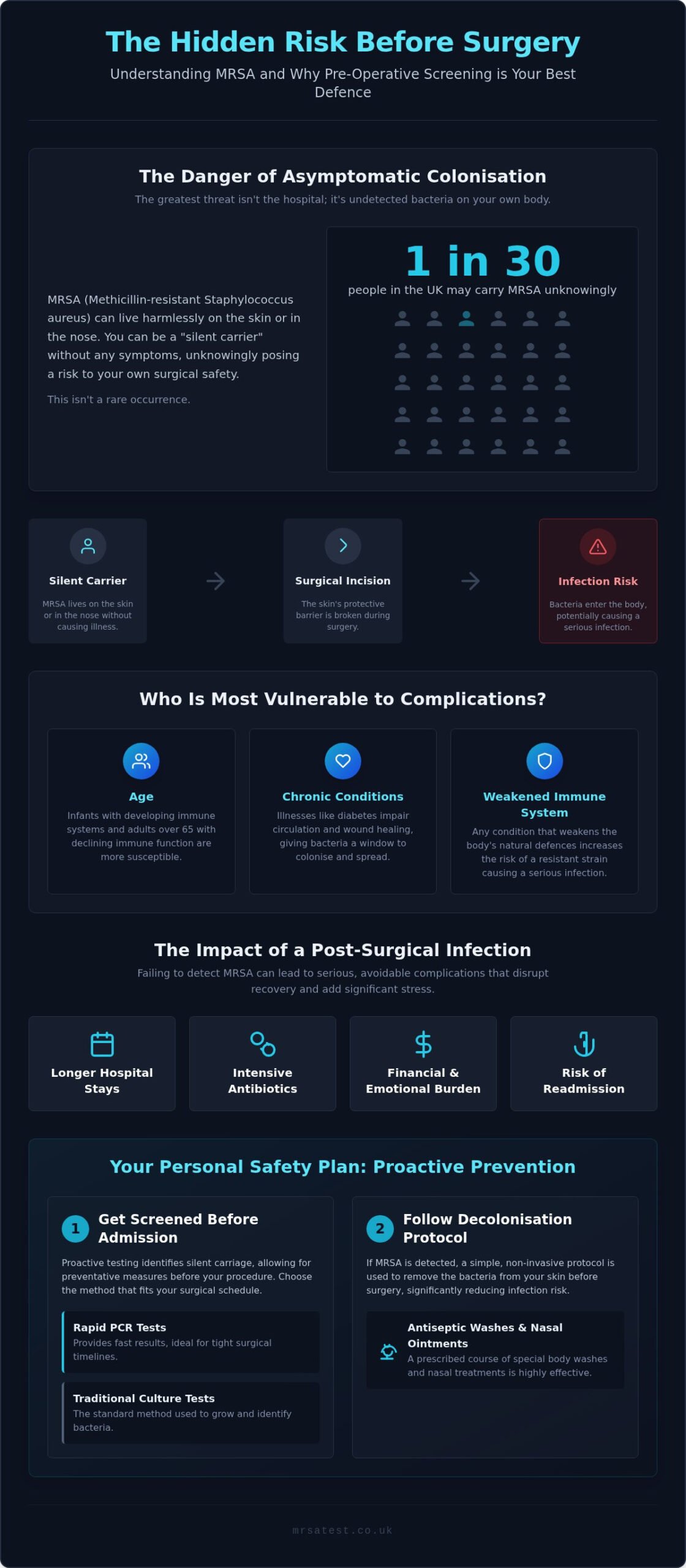
One of the most notable pathogens in this category is Methicillin-resistant Staphylococcus aureus (MRSA). This bacterium is a leading cause of surgical complications because it has developed resistance to several widely used antibiotics. Understanding the risks of not getting mrsa test before surgery is the first step in managing your personal safety. When a patient is colonised with MRSA, the bacteria live harmlessly on the skin until a surgical incision provides a direct pathway into the body, potentially leading to a deep-seated infection.
The Impact on Patient Recovery
Developing an infection after surgery does more than just slow down your progress. It often leads to significantly longer hospital stays and the need for intensive, high-strength antibiotic treatments. For many, this creates an emotional and financial burden that extends far beyond the ward. Recovery takes longer, time off work increases, and the stress on family members grows. There’s also a heightened risk of readmission. If an infection isn’t detected early, it might only become apparent after you’ve returned home, necessitating an urgent and unplanned return to the hospital for further clinical intervention.
Common Pathogens in the Surgical Ward
Surgical environments host a variety of microorganisms. Most are common bacteria that our immune systems handle easily, but “superbugs” like MRSA are different. Their resistance to standard medicine makes them much harder to treat, often requiring specialised drugs that can have more side effects. During any procedure, the surgical site is naturally vulnerable. The skin’s protective barrier is temporarily broken, giving bacteria an opportunity to enter areas of the body that are usually sterile. This vulnerability is exactly why the risks of not getting mrsa test before surgery are so high; if you are carrying the bacteria unknowingly, you are essentially bringing a high-risk pathogen into a sterile environment. Proactive screening ensures that if these bacteria are present, they can be managed safely before the first incision is made. Even for those outside the UK, finding a reliable practice like Hatmed Medical Centre is a vital step in securing professional primary healthcare and pre-operative guidance.
While any surgical procedure carries a baseline of risk, certain individuals are statistically more likely to experience complications. Vulnerability often depends on the strength of the immune system and the body’s ability to repair tissue. Age is a primary factor here. Infants have developing immune systems that may not yet recognise aggressive pathogens, while patients over 65 often face a natural decline in immune function. These groups are more susceptible to the risks of not getting mrsa test before surgery because their bodies have fewer resources to fight off a resistant strain once it enters the bloodstream.
Underlying health conditions also dictate how well you’ll recover. Chronic illnesses, particularly diabetes, create a challenging environment for wound healing. High blood glucose levels can stiffen the blood vessels and reduce circulation, which prevents essential immune cells from reaching the surgical site. This delay in the body’s natural defence mechanism gives bacteria a window to colonise and spread. Understanding what is mrsa helps clarify how these bacteria transition from a harmless presence on the skin to a dangerous internal infection during this vulnerable window.
The Danger of Asymptomatic Colonisation
Colonisation occurs when bacteria live on your skin or inside your nose without causing any symptoms. You won’t feel ill, and there are no visible signs of infection. Current clinical data suggests that approximately 1 in 30 people in the UK carry MRSA unknowingly. For a healthy person going about their daily life, this carriage is rarely a problem. However, surgery provides a literal gateway through the skin. If these bacteria are present at the time of the first incision, they can migrate into deeper tissues or the blood. This hidden status is why the risks of not getting mrsa test before surgery are so significant; you can’t protect yourself against a threat you don’t know is there.
Comorbidities and Wound Healing
Lifestyle factors and comorbidities significantly impact your post-operative path. Smokers, for instance, often have compromised oxygen levels in their tissues, which is a requirement for effective healing. Similarly, poor nutrition can leave the body without the proteins and vitamins needed to close a wound quickly. In many cases, a pre-operative blood test can reveal these underlying vulnerabilities before you ever enter the theatre. Research indicates that undetected colonisation combined with these health factors significantly increases the risks of post-surgical infections, often leading to longer hospital stays and more complex recovery plans. If you’re concerned about your status, using a private MRSA screening kit can provide the clarity needed to proceed with confidence.
Clinical and Environmental Triggers for Healthcare Infections
While your individual health profile matters, the hospital environment introduces its own set of variables. Clinical triggers often involve the tools and timelines required for your treatment. For instance, invasive devices like urinary catheters, IV drips, and ventilators provide a direct route for bacteria to enter the body. These devices are essential for modern medicine, but they also act as physical bridges that pathogens can cross. When these tools are in place, the body’s primary defence, the skin, is bypassed, making it easier for bacteria to reach internal systems.
Surgical complexity is another critical factor. Longer operations naturally increase the window of time that internal tissues are exposed to the environment. Every additional hour in theatre slightly raises the probability of bacterial contamination. This is where the risks of not getting mrsa test before surgery become most apparent; if you’re already colonised, a longer procedure provides more opportunity for those bacteria to migrate from your skin into the surgical site. The longer the wound remains open, the higher the chance that environmental or skin-borne bacteria will settle in the tissue.
Finally, your length of stay in the hospital correlates with infection risk. The more time you spend in a ward, the more you’re exposed to the facility’s unique microbial ecosystem. Bacteria can move between patients via high-touch surfaces or through the hands of healthcare workers who are managing multiple cases. While UK hospitals maintain high hygiene standards, the sheer volume of people in a clinical space makes total eradication of bacteria impossible.
Invasive Devices and Bacterial Biofilms
Bacteria have a unique ability to adhere to plastic and metal surfaces, forming what’s known as a biofilm. This is a protective, slimy layer that makes the bacteria much harder for antibiotics or the immune system to reach. To minimise this risk, clinical teams aim to remove catheters and IV lines as soon as they’re no longer medically necessary. As a patient, you can help by monitoring your own insertion sites. If you notice any redness, swelling, or heat around a drip, notify your nurse immediately. These early signs often indicate that bacteria are beginning to colonise the area.
The Ward Environment
Even with rigorous cleaning, certain areas are more prone to harbouring pathogens. High-touch surfaces like bed rails, call buttons, and shared bathroom taps can act as reservoirs for bacteria. In the UK, many NHS hospitals use shared bays where several patients recover together. While staff follow strict hygiene protocols, the proximity of other patients naturally increases the risk of cross-contamination compared to a private room.
Sometimes, common skin infections can be misidentified or overlooked in a busy clinical setting. If a patient enters the ward with an existing skin issue that hasn’t been screened, it could be a source of MRSA for others. Understanding the risks of not getting mrsa test before surgery empowers you to ensure you aren’t the one unknowingly introducing these pathogens into your recovery environment. Proactive testing ensures that your presence on the ward doesn’t compromise your own safety or that of fellow patients.
Reducing Your Risk: Proactive Steps for Patients and Families
Taking an active role in your own care is one of the most effective ways to ensure a successful recovery. While clinical teams have strict protocols, you can significantly lower your vulnerability by following a structured preparing for surgery framework. This involves more than just logistical planning; it’s about creating a sterile “buffer zone” around your body before you even arrive at the hospital. One of the primary risks of not getting mrsa test before surgery is that you might enter the theatre with bacteria that standard pre-op washes alone cannot fully eradicate.
The Importance of Pre-Op Antiseptics
Surgeons often prescribe Chlorhexidine Gluconate (CHG) washes for patients undergoing elective procedures. These antiseptic soaps are designed to reduce the total number of bacteria on your skin. To get the most benefit, you should apply the wash from the neck down, paying close attention to the surgical site, and leave it on for the recommended time before rinsing. These washes are a general preventative measure, but they’re most effective when your colonisation status is already known. If you’ve identified a positive result through screening, your clinical team can provide a more targeted decolonisation routine that includes nasal ointments, which standard body washes don’t cover.
Patient Advocacy on the Ward
Being a patient doesn’t mean you can’t be an advocate for your own safety. Don’t hesitate to politely ask staff if they’ve had a chance to clean their hands before examining you. It’s a standard part of UK clinical protocol, and staff usually appreciate the reminder. Understanding the risks of not getting mrsa test before surgery allows you to talk openly with your consultant about your screening results. You can also use a list of safety questions during rounds, such as:
- Is my MRSA screening result on my chart and confirmed as negative?
- When can my catheter or IV line be safely removed to reduce infection risk?
- What are the specific signs of redness or swelling I should look for in this dressing?
Family members play a vital role too. They can help monitor the cleanliness of your bedside table and bed rails, which are frequent reservoirs for bacteria. Being transparent about your medical history, including any previous infections, ensures your care team can tailor their approach to your specific needs. Once the operation is over, keep your dressings clean, dry, and undisturbed. Avoid the temptation to peek at the incision, as this can introduce environmental pathogens. If you’re concerned about your pre-admission status or want to avoid potential delays, you can order a private MRSA screening kit to get clear results before your hospital date.
The Vital Role of Pre-Surgery MRSA Screening
In the UK, MRSA screening is a standard safety requirement for almost all elective surgical procedures. Clinical guidelines mandate this because identifying carriers before they enter the hospital environment is the most effective way to prevent outbreaks. When you undergo screening, you’re not just ticking a box for hospital administration; you’re actively reducing the risks of not getting mrsa test before surgery, which include severe internal infections and compromised wound healing. By knowing your status in advance, you and your surgical team can take precise steps to ensure the environment remains sterile and your recovery stays on track.
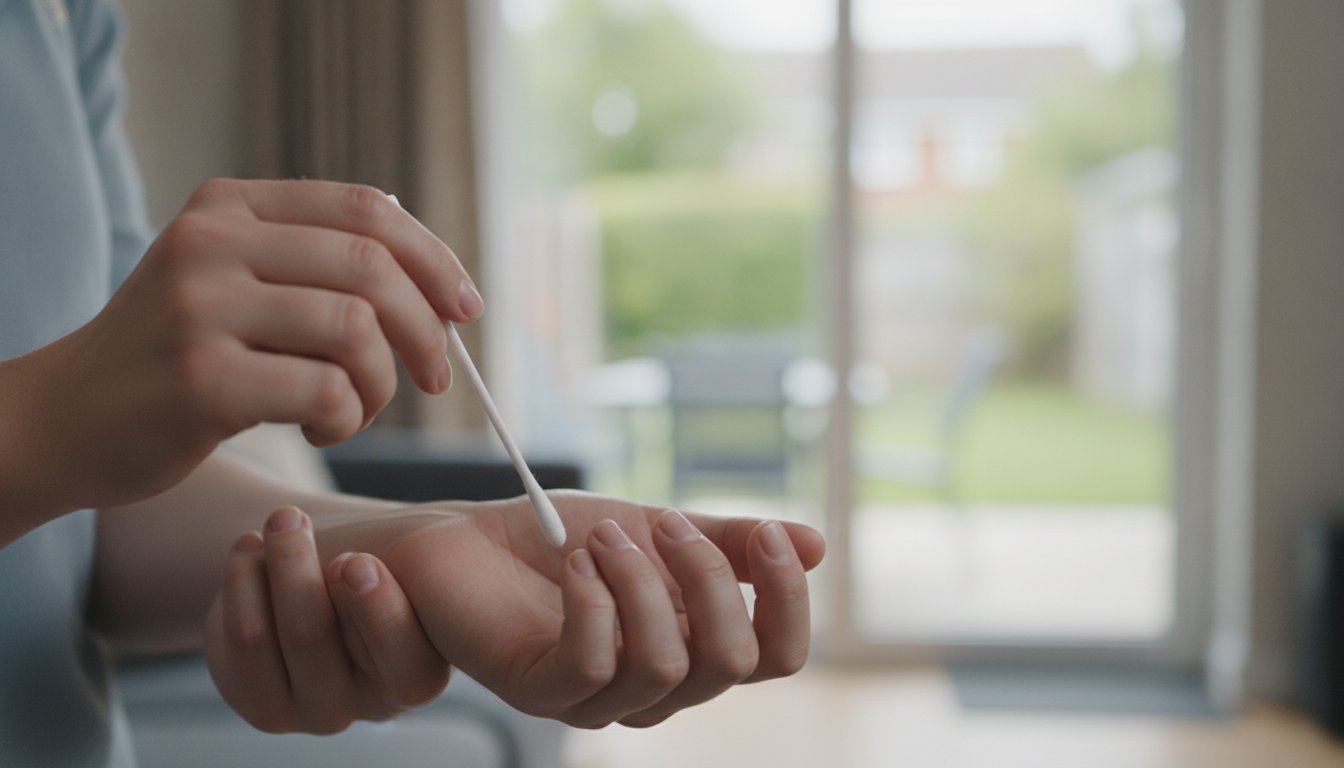
There are two primary methods used for these tests: Culture and Rapid PCR. A standard Culture test involves placing your samples in a nutrient-rich environment to see if bacteria grow over several days. While accurate, it’s a slower process. In contrast, a Rapid PCR test looks for the specific DNA of the MRSA bacteria. This molecular approach is significantly faster and provides a highly accurate “yes or no” result. Using at home test kits uk patients can now access these professional diagnostics without needing to visit a clinic, which also limits your exposure to other hospital pathogens during the weeks leading up to your operation.
Avoiding Surgery Delays
One of the most frustrating risks of not getting mrsa test before surgery through a private or proactive route is the possibility of a last-minute cancellation. Hospital-led screening often happens during a pre-assessment appointment just days before the procedure. If that test returns a surprise positive result, the hospital may have to delay your surgery to allow for a five-day decolonisation cycle. Private PCR testing offers a reliable alternative, delivering results within 24 hours of the lab receiving your sample. This speed allows you to start any necessary treatment immediately, ensuring you’re clear by the time your hospital date arrives.
Taking Control of Your Results
A positive MRSA screen isn’t a reason for panic. It’s a manageable clinical finding that simply requires a specific decolonisation routine, typically involving antiseptic body washes and nasal ointments. Once you have your results from a UK-accredited laboratory, you can provide the report directly to your consultant or GP. This transparency allows your medical team to update your care plan and prescribe the correct topical treatments. Taking this proactive step gives you peace of mind and puts you in control of your own surgical journey. To ensure your procedure proceeds without complication, order your MRSA test kit today and secure your path to a safe recovery.
Ensuring a Safer Path to Your Recovery
Thorough preparation is the foundation of any successful operation. We’ve explored how undetected bacteria can transform from a harmless presence on the skin into a serious clinical complication once an incision is made. By understanding the risks of not getting mrsa test before surgery, you’re now equipped to take active control of your pre-operative health. Proactive screening ensures that any colonisation is identified and managed long before you enter the theatre, protecting your recovery from the very start.
You can easily add an essential layer of security to your surgical plan without the need for additional hospital visits. Secure your peace of mind with a private MRSA test kit from mrsatest.co.uk. Our service provides rapid UK delivery and uses accredited laboratory analysis to ensure clinical accuracy. With PCR results available in as little as 24 hours from the time the lab receives your sample, you can proceed with your surgery date feeling confident and fully prepared. Your safety and recovery are the most important goals; taking this simple step ensures your path to health remains clear and uncomplicated.
Frequently Asked Questions
What is the most common risk factor for hospital-acquired infections?
Bacterial colonisation on the patient’s own skin is the primary risk factor. While environmental hygiene matters, most infections occur when a person’s own bacteria enter the body through a surgical site or medical device. Identifying these pathogens beforehand is essential. This is why understanding the risks of not getting mrsa test before surgery is so important for those preparing for elective procedures in the UK.
Can healthy people get an HAI during a minor surgery?
Yes, even healthy individuals can develop a healthcare-associated infection during minor procedures. Any break in the skin, such as a small incision or the insertion of a needle, provides an entry point for bacteria. While a strong immune system helps, it isn’t a guarantee against resistant strains like MRSA. Screening ensures that even asymptomatic carriers are identified and treated before their clinical procedure begins.
How long do I need to be in hospital to be at risk of MRSA?
Risk begins immediately upon admission, though it increases with the length of your stay. The more time you spend in a clinical environment, the more exposure you have to high-touch surfaces and shared facilities. However, many patients are already colonised with MRSA before they arrive. Testing before you enter the ward helps differentiate between bacteria you’ve brought in and those acquired during your hospital stay.
Is MRSA the only infection I should worry about before surgery?
While MRSA is a high-profile superbug due to its antibiotic resistance, other pathogens like E. coli or MSSA also cause surgical site infections. However, MRSA is often a mandatory screening requirement in the UK because it’s significantly harder to treat if an infection develops. Focusing on MRSA screening provides a critical baseline for your safety plan and helps ensure your recovery isn’t stalled by resistant bacteria.
What should I do if I think my hospital room is not clean?
You should politely raise your concerns with the nursing staff or the ward manager immediately. Most UK hospitals have clear protocols for environmental cleaning and welcome patient feedback to maintain safety standards. You can also take personal steps by using hand sanitiser and keeping your immediate bedside area tidy. Monitoring your environment is a key part of being an active participant in your own infection control process.
Does every patient get screened for MRSA in the UK?
Screening policies vary between NHS Trusts and private providers, but most patients undergoing elective surgery are required to be tested. This usually happens during a pre-assessment appointment. If you haven’t been offered a test or want to avoid the risks of not getting mrsa test before surgery due to hospital delays, you can use a private at-home kit to secure your results early and avoid last-minute cancellations.
Can I prevent an HAI by taking antibiotics before my operation?
Surgeons often administer prophylactic antibiotics just before an incision is made to reduce infection risk. However, these are not a substitute for screening and decolonisation. Antibiotics are less effective against resistant strains like MRSA. Identifying colonisation through a swab test allows for targeted topical treatments, which are much more effective at clearing the bacteria from your skin and nose before the first incision is made.
How does age affect the risk of healthcare-associated infections?
Both the very young and the elderly face higher risks due to the state of their immune systems. Infants have immune responses that aren’t yet fully mature, while older adults may experience a natural decline in immune function. Additionally, older patients are more likely to have underlying health conditions, like diabetes, which can slow down wound healing and make it easier for bacteria to cause a serious post-operative infection.