
Imagine preparing for a major operation only to have it postponed at the last minute because of a delayed test result. With MRSA bacteraemia rates in England rising by 29.5 percent in the 2024 to 2025 financial year, hospitals are more vigilant than ever about pre-operative screening. If you’re looking for a reliable alternative to NHS MRSA screening, you aren’t alone. Many patients find the traditional route of travelling to a hospital for a one-minute swab inconvenient and stressful, especially when anxiety about the procedure itself is already high.
We understand that you want your surgery to proceed without any logistical hurdles or unexpected delays. You deserve a testing process that fits your schedule and provides peace of mind in a comfortable, private setting. This guide explores why choosing a private pre-op test provides faster results through advanced PCR technology. We’ll also explain how to manage a positive result discreetly so you can focus on your recovery with total confidence. By taking control of your diagnostic timeline, you can ensure your surgical journey remains on track and manageable.
Key Takeaways
- Understand that MRSA screening is a vital safety measure to prevent surgical site infections, distinguishing between simple bacterial colonisation and active illness.
- Learn how the non-invasive swab process works, typically involving quick samples from the nostrils and groin to ensure both your safety and that of the hospital ward.
- Discover why private testing offers a convenient alternative to NHS MRSA screening by providing rapid results that help you avoid the stress of last-minute surgery cancellations.
- Find out exactly what happens if you test positive, including the standard five-day decolonisation protocol used to clear the bacteria before your procedure begins.
- Gain a logistical advantage by testing weeks in advance, giving you ample time to complete any necessary preventative treatments without delaying your surgical timeline.
Table of Contents
What is Pre-Admission MRSA Screening?
Pre-admission MRSA screening is a proactive diagnostic process designed to protect you during your hospital stay. It’s a routine safety measure used by hospitals to identify individuals who carry Methicillin-resistant Staphylococcus aureus (MRSA) on their skin or in their nostrils before they undergo a procedure. By identifying carriers early, clinical teams can implement preventative measures to ensure a safe environment for everyone. This screening has become a standard part of preparing for surgery in the UK. If the timing of your hospital appointment is a concern, choosing a private alternative to nhs mrsa screening can provide the results you need without the wait.
The primary goal of this screening is the prevention of hospital-acquired infections. When medical teams know a patient’s status in advance, they can use specific protocols to stop the bacteria from spreading. It’s important to understand that screening isn’t just about your own safety; it also protects other vulnerable patients on the ward. While the NHS provides this service, many patients now look for a private alternative to nhs mrsa screening to gain more control over their surgical timeline and avoid last-minute cancellations.
Colonisation: The Silent Carrier
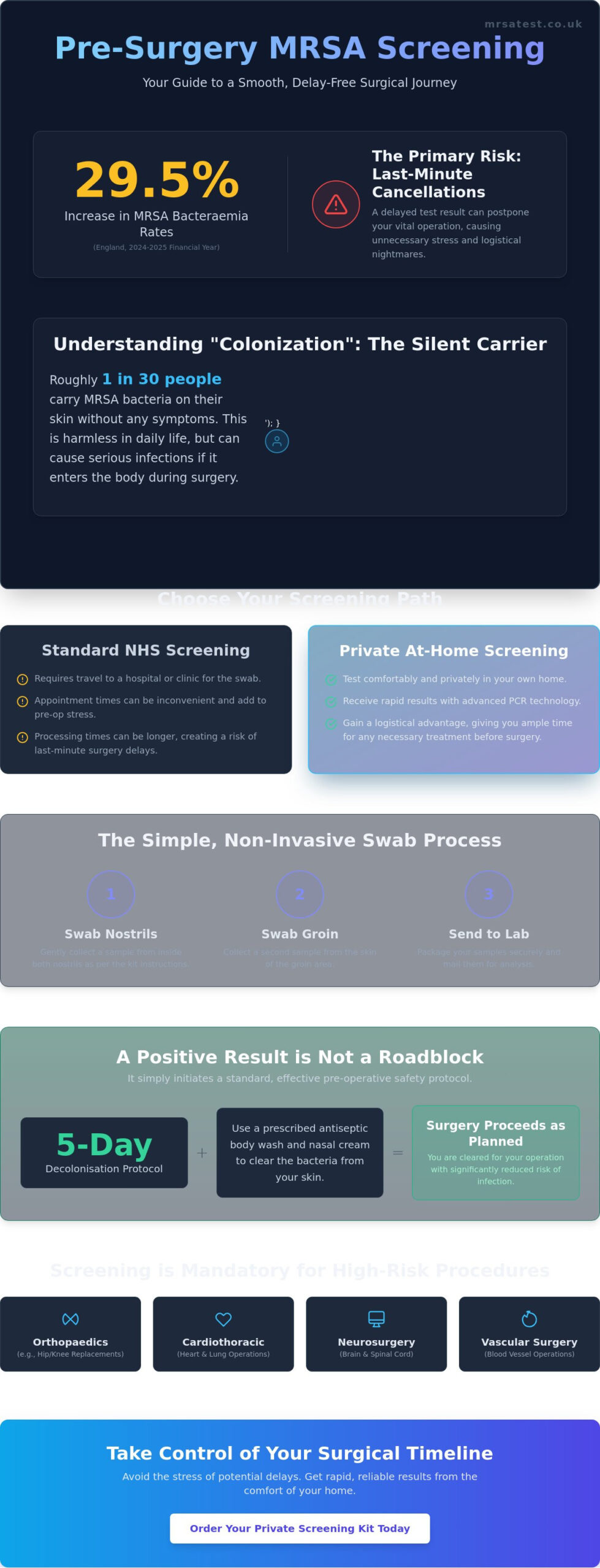
Research suggests that roughly 1 in 30 people carry MRSA on their bodies without ever showing symptoms or feeling unwell. This state is known as colonisation. Colonisation is the presence of bacteria on a person without any signs of infection. While these bacteria live harmlessly on healthy skin, they pose a significant risk during surgery. When a surgeon makes an incision, bacteria that were previously on the surface can enter the bloodstream or deeper tissues. This transition from the skin’s surface to the body’s interior is what leads to serious post-operative complications. Identifying colonisation before you enter the operating theatre allows for simple, effective skin treatments that significantly reduce this risk.
Is Screening Mandatory?
In 2026, elective surgery protocols in the UK remain clear: screening is essential for patient safety. While specific policies can vary slightly between different trusts, screening is generally mandatory for all patients admitted to high-risk units. These include specialist areas such as:
- Orthopaedics: Procedures involving bones and joints, such as hip or knee replacements.
- Cardiothoracic Surgery: Operations involving the heart or lungs.
- Neurosurgery: Procedures involving the brain or spinal cord.
- Vascular Surgery: Operations on the blood vessels.
For planned or elective procedures, you’ll typically be asked to attend a pre-op clinic several days or weeks before your surgery date. Emergency surgeries handle screening differently; because time is critical, patients are often screened upon admission, and preventative treatments may begin immediately while waiting for results. By opting for a private test, you can ensure your results are ready well before your planned admission date.
The Clinical Importance: Why Hospitals Require MRSA Tests
Hospitals view MRSA testing as an essential “safety check” before any planned admission. This validation ensures you’re in the best possible health before your procedure. While hospitals provide this service, many patients choose an alternative to nhs mrsa screening to avoid the logistical burden of multiple hospital trips. This proactive approach helps clinical teams manage risks effectively and ensures that theatre schedules remain on track. Identifying your status early is the first step in a successful surgical journey.
The financial burden of MRSA on the healthcare system is substantial. Treating a single case of MRSA bacteraemia involves expensive specialist antibiotics and extended hospital stays. By screening patients beforehand, hospitals save thousands of pounds in potential treatment costs. Taking a proactive step by using an alternative to nhs mrsa screening allows you to confirm your status from the comfort of home. If you want to ensure your surgery proceeds without delay, you can order a private screening kit today to get clear, rapid results.
Surgical Site Infections (SSIs) and MRSA
A Surgical Site Infection (SSI) occurs when bacteria enter the area where the surgeon operated. MRSA is particularly dangerous because it’s resistant to many common antibiotics, including penicillin. When these bacteria cause an infection, wound healing slows down significantly. This can lead to painful inflammation and the need for further surgery to clear the infection. In some cases, an untreated infection can lead to serious conditions like sepsis or pneumonia, which require intensive care. You can find detailed patient information on MRSA from NHS sources that highlight these risks for patients in the community.
Maintaining a Sterile Environment
Hospitals are unique environments where many patients have weakened immune systems. This makes MRSA and other bacteria far more hazardous than they are in the community. If a carrier is identified early, the hospital can arrange for a private room or specific isolation protocols. This prevents the bacteria from spreading to other vulnerable individuals on the same ward. Effective screening also helps hospitals manage bed allocation and theatre cleaning schedules. Knowing a patient’s status allows the hospital to schedule their operation at a time that minimises the risk of cross-contamination, ensuring that the entire facility remains as sterile as possible for every patient.
The Swab Process: How MRSA Screening is Performed
The screening process is remarkably simple and entirely non-invasive. It doesn’t involve needles or any physical discomfort. Most patients find that the entire procedure takes less than 60 seconds to complete. The primary goal is to collect a small sample of surface bacteria from specific areas where MRSA is most likely to reside. According to official NHS information on MRSA, these bacteria commonly colonise the skin without causing any harm until an entry point, such as a surgical incision, is created.
Clinical staff or home users focus on the anterior nares (nostrils) and the groin area. These are the standard sites for a routine screen. Depending on the hospital’s specific policy, secondary sites might also be sampled, including the axilla (armpits) or the throat. If you have any existing skin breaks, such as eczema, psoriasis, or a healing wound, these areas are also swabbed to ensure a comprehensive assessment. Once the sample is collected, the swab is placed into a transport medium, which is a special gel that keeps the bacteria stable during its journey to the laboratory.
Step-by-Step: Taking the Swab
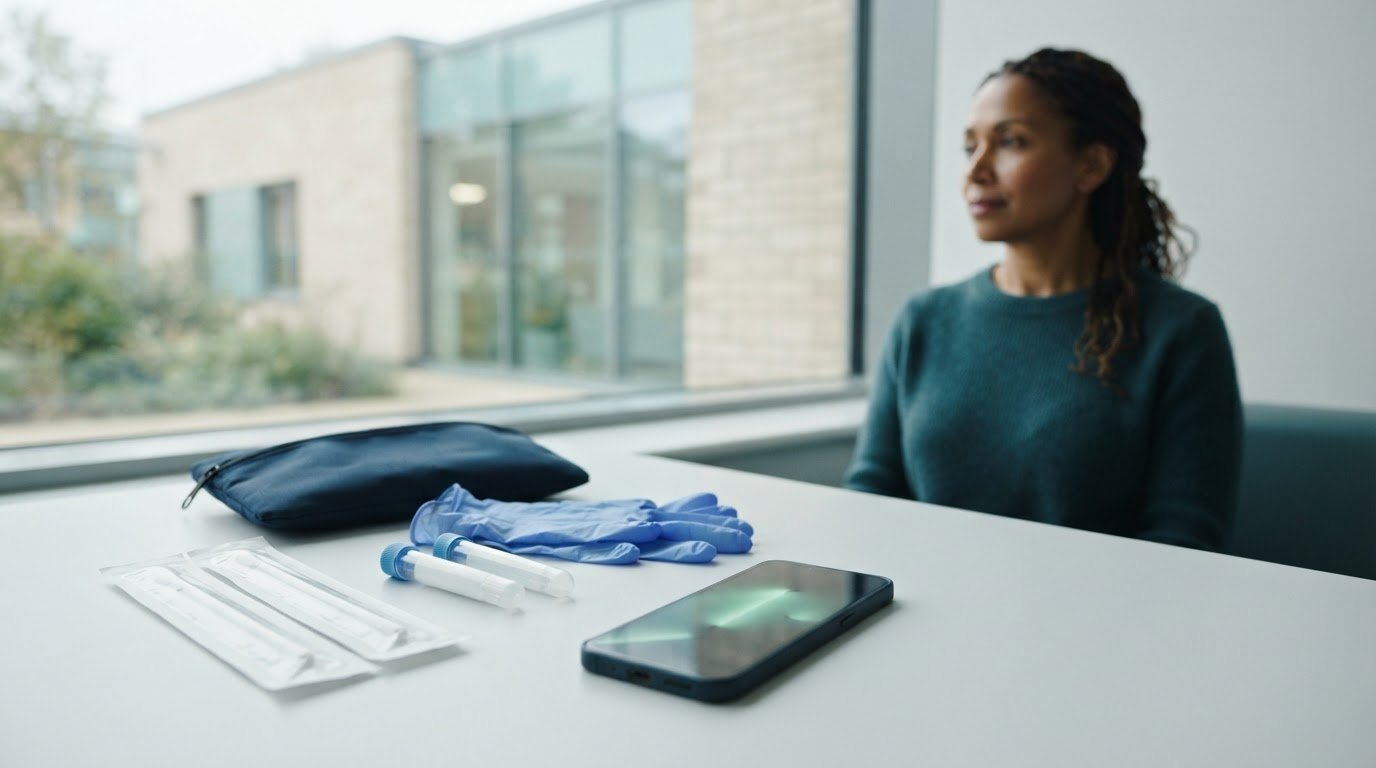
Taking the swab is a straightforward task that requires no clinical background. You’ll use a sterile swab, which looks like a long cotton bud, to gently rotate against the skin surface for a few seconds. One of the biggest benefits is that no special preparation is required. You don’t need to fast, and you don’t need to alter your current medication routine. At-home kits are specifically designed to mirror the exact clinical process used in hospitals, ensuring that the samples you provide are high quality and meet all diagnostic standards for accuracy.
Laboratory Methods: Culture vs. PCR
The science behind the laboratory analysis is what truly determines your surgical timeline. Standard hospital tests often rely on “culture” methods. This involves placing your sample on a petri dish and waiting for bacteria to grow in a controlled environment. This process usually takes between 48 and 72 hours to produce a definitive result. If the laboratory is experiencing a high volume of samples, this wait can stretch longer, causing significant stress as your surgery date draws near.
In contrast, rapid PCR (Polymerase Chain Reaction) testing is a molecular method that looks for the specific DNA of the MRSA bacteria. It’s highly sensitive and significantly faster than traditional cultures. Results are frequently available within 24 hours of the laboratory receiving the sample. Choosing a private laboratory that utilises PCR technology is a popular alternative to nhs mrsa screening for patients who require a guaranteed result on a tight schedule. Having access to this rapid technology through an alternative to nhs mrsa screening provides the logistical certainty you need to ensure your operation proceeds as planned.
What Happens if Your MRSA Screening is Positive?
Receiving a positive result from your MRSA screen can feel alarming, but it isn’t a diagnosis of illness. It simply confirms that the bacteria are present on your skin or in your nostrils. For most people, this “colonised” state has no impact on daily life. However, in a hospital setting, it’s a signal for preventative action. By opting for a private alternative to nhs mrsa screening weeks before your surgery, you give yourself the best chance to complete any necessary treatment without your operation date being permanently cancelled.
If you test positive, your surgical team will usually postpone elective procedures. This delay isn’t a sign of failure; it’s a standard safety measure to protect you from post-operative complications. You’ll be asked to follow a specific decolonisation protocol to clear the bacteria from your body. To ensure you have enough time for this protocol before your hospital date, you can order your MRSA screening kit now and receive your results quickly.
The 5-Day Decolonisation Protocol
The standard treatment is a straightforward, five-day regimen designed to reduce or eliminate MRSA from your skin and nasal passages. This protocol typically involves two main components. First, you’ll use an antibacterial body wash, often containing Chlorhexidine, to wash your skin and hair daily. Second, you’ll apply an antibiotic nasal ointment, such as Mupirocin, inside your nostrils three times a day. These treatments work together to break the cycle of bacterial growth.
Environmental hygiene is equally critical during these five days. To prevent re-colonising yourself, you must use fresh bedding, towels, and clothing every day. This ensures that any bacteria shed onto fabrics are removed from your immediate environment. Following these steps precisely is the most effective way to achieve “clearance” and move forward with your surgery.
Timelines and Re-testing
Timing is everything when managing a positive result. Once you finish the five-day treatment, you’ll need to wait at least 48 hours before performing a follow-up swab. This “washout” period ensures that the antibacterial products don’t interfere with the new test results. If you’re seeking an alternative to nhs mrsa screening, understanding this timeline is vital for your planning. A positive result typically delays surgery by 7 to 14 days, accounting for the treatment period and the time required for lab processing of the re-test. Hospitals insist on this negative clearance to ensure the operating theatre remains a safe, sterile environment for your recovery.
Private MRSA Screening: The Faster Alternative to NHS Testing
Patients are increasingly looking for ways to streamline their pre-operative journey. The traditional hospital route often involves long waits, stressful travel, and the risk of last-minute delays. Choosing a private alternative to nhs mrsa screening allows you to manage your health logistics from home. Many people prefer at-home test kits in the UK because they offer a level of control that busy clinical settings often lack. By testing several weeks in advance, you create a vital safety buffer for your surgical timeline. This proactive approach is particularly relevant given the 29.5 percent increase in MRSA bacteraemia cases reported in England in the 2024 to 2025 financial year. If a result is positive, you’ll have ample time to complete the decolonisation protocol without your surgery date being threatened.
Why travel to a hospital clinic for a 60-second swab? Private testing eliminates the need for extra hospital visits, expensive parking fees, or taking time off work. It’s about efficiency and convenience. Privacy is also a major factor for many patients. Our kits are delivered in discreet packaging, and you can collect your own samples in the comfort of your own home. This reduces the anxiety often associated with clinical environments. We only work with verified laboratory partners to ensure every sample is processed to the highest medical standards. Knowing your status before you even walk into your official pre-op appointment provides immense peace of mind.
Benefits of Private At-Home Screening
The primary benefit of at-home screening is the reduction of surgical risk through early detection. When you take a test in a private, comfortable environment, you remove the stress of the “unknown” from your pre-admission process. It’s a simple, action-oriented step that builds confidence. Because the process is so straightforward, you don’t need any medical training to provide a high-quality sample. This convenience ensures that you can fit your health screening around your existing life, rather than the other way around.
Selecting the Right Test for Your Surgery
Which test is right for you? It depends on your timeline and your hospital’s specific requirements. We offer several options to suit different clinical needs, ranging from standard cultures to advanced molecular diagnostics. You can choose from the following based on your needs:
- MRSA Rapid PCR Test: Available for 2-site (Nose/Groin) or 3-site (Nose/Groin/Axilla) screening.
- MRSA Culture: A traditional method available for 2-site or 3-site screening.
If you’re on a tight schedule, the Rapid PCR option is the superior alternative to nhs mrsa screening. Our Rapid PCR test provides results within 24 hours of the sample arriving at our accredited UK laboratory. Some hospitals require a 3-site screen including the axilla (armpit), while others only need a 2-site screen of the nose and groin. It’s always best to check your pre-admission letter or contact your surgical coordinator to confirm which sites they require before you order.
Ordering a confidential, accredited laboratory test online is a straightforward process. You simply select the required kit, and it’s dispatched directly to your door. Once you’ve collected your samples following the clear instructions provided, you return them to the lab. Your data is managed with strict discretion, adhering to all privacy regulations. This streamlined system is designed to guide you seamlessly from a health concern to a verified solution, ensuring you can focus on your recovery with total confidence.
Secure Your Surgical Timeline Today
Taking control of your pre-operative health logistics is the most effective way to ensure your surgery proceeds as planned. By identifying your MRSA status early, you avoid the high-stress scenario of a last-minute cancellation. This guide has highlighted how private testing serves as a reliable alternative to nhs mrsa screening, offering you the flexibility to test on your own terms. Whether you need a standard culture or the speed of molecular diagnostics, knowing your results in advance allows you to address any positive findings with a clear, calm plan.
You don’t have to wait for a hospital appointment to get the answers you need. Our service combines clinical accuracy with the convenience of a non-clinical environment. With our accredited UK laboratory testing, you can receive results in as little as 24 hours using Rapid PCR technology. We provide discreet at-home collection kits that prioritize your privacy and ease of use.
Order your private MRSA test kit today for fast, confidential results and move forward with your procedure with total peace of mind. We’re here to support you every step of the way.
Frequently Asked Questions
Is MRSA screening painful?
No, MRSA screening is completely painless and non-invasive. The process involves using a sterile swab, which looks like a long cotton bud, to gently sample the surface of your skin and the inside of your nostrils. There are no needles or discomfort involved, and the entire procedure usually takes less than 60 seconds. It’s a straightforward diagnostic step that ensures your safety during surgery.
How long do MRSA screening results take on the NHS?
Results on the NHS generally take between 48 and 72 hours, though this can stretch longer during periods of high demand. Most hospital laboratories use traditional culture methods which require time for the bacteria to grow. If you need results more quickly to secure a surgical date, a private alternative to nhs mrsa screening can often deliver confirmed results within 24 hours of the sample reaching the lab.
Can I still have surgery if I test positive for MRSA?
You can still have your operation, but elective surgeries are typically postponed until you’ve finished a decolonisation treatment. This preventative measure significantly reduces the risk of the bacteria entering your surgical wound. Once you’ve completed the five-day protocol and received a negative re-test result, your clinical team will usually reschedule your procedure for the earliest possible date to ensure your safety.
What is the difference between an MRSA PCR test and a culture test?
The main difference is the technology used and the speed of the result. A PCR test identifies the specific DNA of the MRSA bacteria, allowing for a result in as little as 24 hours. A culture test involves placing the sample in a controlled environment to see if bacteria grow, which takes two to three days. PCR is often chosen for its rapid turnaround and high sensitivity.
How long does MRSA decolonisation treatment take?
The standard decolonisation protocol lasts for five consecutive days. During this time, you’ll use a specialized antibacterial body wash once a day and apply an antibiotic nasal ointment three times a day. It’s vital to complete the full five days and use fresh towels and bedding daily to ensure the bacteria are effectively cleared from your skin and environment before your surgical procedure begins.
Do I need to be screened if I have had MRSA before?
Yes, screening is mandatory for every new planned admission, regardless of your medical history. Even if you’ve had a negative result or a successful treatment in the past, you can become colonised again at any time. Hospitals must verify your current status to maintain a sterile environment and protect both you and other vulnerable patients on the ward from resistant bacteria.
Can I perform an MRSA swab test on myself at home?
You can certainly perform the swab yourself at home using a dedicated private kit. These kits mirror the clinical process used in hospitals and include sterile swabs and clear instructions for collection. This is an increasingly popular alternative to nhs mrsa screening for patients who want to avoid extra hospital trips and manage their pre-op logistics more discreetly and efficiently.
What happens if I miss my hospital MRSA screening appointment?
Missing your appointment will almost certainly lead to your surgery being postponed. Hospital protocols in the UK are strict about having a valid MRSA result before elective admission. If you can’t attend your scheduled clinic, you must inform your pre-op coordinator immediately. Many patients choose private testing in these instances to get a result quickly and keep their surgical timeline on track without further delays.