
Is MRSA Contagious Before Symptoms? Understanding Silent Transmission
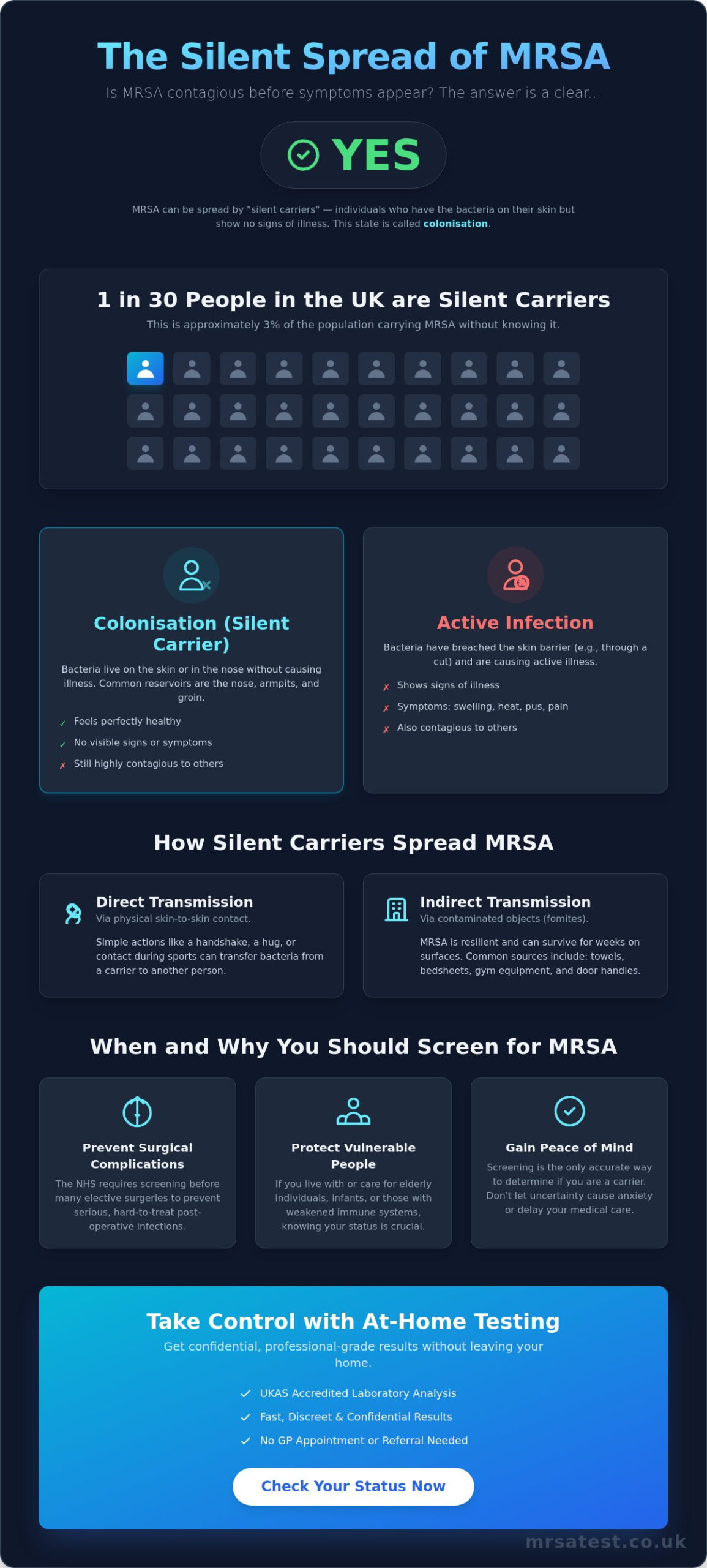
Did you know that approximately 3% of the UK population, or 1 in 30 people, carry MRSA on their skin without a single visible sign of illness? Many people ask, is mrsa contagious before symptoms appear? The answer is yes. This state is known as colonisation, where the bacteria live on your body without causing you harm, yet they remain easily transferable to others through skin contact or shared surfaces. It’s a quiet process that often goes unnoticed until a routine hospital screening or an unexpected infection occurs.
It’s natural to feel anxious about unknowingly spreading a “superbug” to vulnerable family members or having a long awaited surgery cancelled at the last minute. You deserve clear answers and a sense of control. This article explains the mechanics of silent transmission and clarifies the confusing distinction between colonisation and active infection. We’ll also show you how to check your carrier status privately using a UKAS accredited home test kit, providing the peace of mind you need to move forward with your medical care confidently.
Key Takeaways
- Understand the reality of silent transmission and learn why is mrsa contagious before symptoms appear through a process known as bacterial colonisation.
- Identify how healthy individuals can unknowingly spread bacteria to others through routine skin-to-skin contact in domestic and athletic settings.
- Learn the critical difference between being a “silent carrier” and having an active infection, and why carriers often remain asymptomatic.
- Discover why the NHS requires proactive screening before elective surgeries and how this prevents serious hospital-acquired infections.
- Explore how to gain peace of mind with professional-grade, at-home testing that delivers fast, discreet results without the need for a GP appointment.
Is MRSA Contagious Before Symptoms Appear?
The short answer is yes. You can spread MRSA to others long before you feel unwell or notice a single skin lesion. This reality is what makes the bacteria particularly challenging to manage in shared environments. Because Methicillin-resistant Staphylococcus aureus (MRSA) often lives on the body without causing an active infection, people frequently act as “silent spreaders” without realising they pose a risk to others.
The primary reason is mrsa contagious before symptoms appear involves a biological state known as colonisation. This occurs when the bacteria reside on your skin or inside your nose but haven’t yet breached the skin barrier to cause illness. While a colonised person feels perfectly healthy, they are still shedding live bacteria onto surfaces, clothing, and other people. In UK households and healthcare settings, these asymptomatic carriers are the most common source of new outbreaks.
It is vital to distinguish between being a carrier and having an active infection. A carrier has the bacteria present on their body but suffers no ill effects; an active infection means the bacteria have entered the body, usually through a cut or graze, and are causing symptoms like swelling, heat, or pus. Regardless of which state you are in, the bacteria remain transmissible to anyone you come into contact with.
The Science of Asymptomatic Colonisation
Data suggests that approximately 1 in 30 people in the UK carry MRSA on their skin or in their nostrils at any given time. These individuals are colonised rather than infected. The bacteria are remarkably resilient and can survive on healthy skin for long periods without triggering the immune system. They thrive in warm, moist areas of the body, making the nose, armpits, and groin the primary reservoirs for the bacteria. Because the skin remains intact, the body doesn’t “see” the bacteria as a threat, allowing the MRSA to hitch a ride and spread to every surface the carrier touches.
The Window of Contagiousness
Understanding the timeline of transmission is crucial for effective prevention. Unlike a virus that might require a specific incubation period before you become infectious, MRSA is contagious the moment it colonises your body. There is no waiting period; if the bacteria are on your skin, you can pass them on immediately through direct physical contact or by touching shared items like towels and door handles. MRSA colonisation is the state of carrying the bacteria without clinical signs of illness. This lack of a “symptom-free but safe” window is why professional screening is the only accurate way to determine if you are a risk to those around you, especially if you are preparing for a hospital procedure or live with vulnerable individuals.
How Silent Carriers Spread MRSA
Many people carry Staphylococcus aureus on their skin or in their nostrils without ever falling ill. This state is known as colonisation. Approximately 1 in 30 people in the UK carry MRSA in this way. Because these individuals feel perfectly healthy, they unknowingly act as “silent carriers” who can pass the bacteria to others. This reality confirms that is mrsa contagious before symptoms appear, as the bacteria are active and mobile long before an infection develops.
The spread happens through shedding. Every day, humans shed thousands of skin cells. If those cells carry MRSA, they settle on furniture, clothing, and other people. This process is invisible, making it difficult to track without clinical screening. Understanding the specific routes of this silent spread is the first step in protecting yourself and your family.
Direct vs. Indirect Transmission
Direct transmission occurs through physical contact. A simple handshake, a hug, or even brushing against someone in a crowded space can transfer colonised bacteria. If the person receiving the bacteria has a small break in their skin, such as a paper cut or a shaving nick, the MRSA can move from the surface into the bloodstream.
Indirect transmission involves “fomites,” which are inanimate objects that harbour pathogens. MRSA is particularly resilient; it can survive on hard surfaces like gym equipment, remote controls, or door handles for several weeks. You can read a detailed breakdown of how MRSA is transmitted in high-risk environments to see how these surfaces contribute to outbreaks. Common household items like bedsheets and towels are also frequent culprits in domestic spread.
High-Risk Environments for Silent Spread
Community-associated MRSA (CA-MRSA) thrives in environments where people live or work in close proximity. Gyms, schools, and care homes are hotspots for asymptomatic transmission. In these settings, the combination of skin-to-skin contact and shared equipment creates an ideal bridge for the bacteria.
- Athletic Settings: Contact sports like rugby or wrestling allow for frequent skin-to-skin contact. Shared towels or unsterilised mats in gyms can also harbour the bacteria.
- Personal Items: Sharing razors, toothbrushes, or bars of soap is a high-risk activity. These items can pick up bacteria from a carrier and deliver them directly into the pores or cuts of another person.
- Care Facilities: In care homes, frequent physical assistance means staff and residents are in constant contact, making hand hygiene vital.
Hand hygiene is the most effective way to stop this silent cycle. Using alcohol-based hand rubs or washing with soap for at least 20 seconds can neutralise the bacteria before they find a host. If you’re worried that you might be a carrier, you can order a confidential MRSA screening kit to check your status from the comfort of your home.
Colonisation vs. Infection: Knowing the Difference
To understand why MRSA is a unique health challenge, you must distinguish between being a carrier and being infected. Medical professionals refer to the carrier state as “colonisation.” In this state, MRSA acts as a silent passenger. It lives on your skin, often in the nostrils, armpits, or groin, without causing any harm or triggering an immune response. You won’t feel ill, and your skin will look perfectly normal. However, even in this asymptomatic state, is mrsa contagious before symptoms appear? The answer is a definitive yes. You can still shed the bacteria onto surfaces or pass them to others through physical contact.
An infection occurs when the bacteria transition from being a silent passenger to an active invader. This happens when MRSA moves from the surface of the skin into the body’s deeper tissues. While a carrier might never experience a single symptom, they remain a persistent risk to those around them. Understanding this difference is vital for pre-op surgery preparation. Screening before a procedure ensures that a harmless carrier state doesn’t turn into a surgical site infection when the skin’s natural barrier is intentionally broken.
When Colonisation Becomes an Infection
The transition from carrier to patient usually requires a “trigger” or an entry point. MRSA is opportunistic. It waits for a breach in your defences to move inward. Common entry points include:
- Surgical incisions or biopsy sites.
- Cuts, scrapes, or even minor insect bites.
- Medical devices like catheters or IV lines.
- Severely dry or cracked skin caused by eczema or dermatitis.
A weakened immune system also plays a significant role. If your body is busy fighting another illness, it may lack the resources to keep colonised MRSA in check. Early signs of this transition include localized redness, warmth, and swelling that feels “out of proportion” to a minor injury. If the bacteria reach the bloodstream, symptoms escalate to fever and chills, indicating a systemic infection.
The Danger to Others
While you might be a healthy carrier with a robust immune system, the people you interact with may not be as fortunate. This is where the “silent” nature of MRSA becomes a community risk. A healthy adult can carry the bacteria for months without issue, but they can easily transmit it to elderly relatives or infants whose immune systems are less capable of containing an invasion.
In a household setting, we often talk about “herd protection.” If one person is a carrier, the risk of transmission to everyone else in the home increases by approximately 30% to 50% depending on hygiene habits. To protect vulnerable family members, you should avoid sharing towels, razors, or athletic equipment. If you suspect you are a carrier, getting a discreet at-home test is a proactive way to manage the risk and ensure your loved ones stay safe.
When and Why You Should Screen for MRSA
Proactive screening is the most effective way to manage the risks associated with antibiotic-resistant bacteria. Because the answer to is mrsa contagious before symptoms is a definitive yes, waiting for a skin rash or abscess to appear often means you’ve already unknowingly shared the bacteria with others. Screening identifies “colonisation,” which is when the bacteria live on your skin or inside your nose without causing an active infection. Identifying this state allows for early intervention before the bacteria can cause serious harm to you or your loved ones.
In the UK, the NHS prioritises screening to reduce the incidence of hospital-acquired infections. Statistics show that identifying carriers before they enter a clinical environment significantly lowers the risk of post-surgical complications. Whether you’re preparing for a procedure or you’ve been in close contact with a confirmed case, a simple swab test provides the clinical clarity that a visual inspection cannot.
Pre-Surgery Screening Requirements
NHS protocols require MRSA screening for almost all elective surgical admissions. This standard procedure involves taking swabs from the nose, throat, and groin to check for the presence of the bacteria. If you test positive, it doesn’t mean your surgery is cancelled. Instead, you’ll undergo a five-day decolonisation process. This typically involves using a specific antiseptic body wash and applying antibiotic nasal cream, such as Mupirocin, to clear the bacteria from your skin.
This preventative step is vital because surgery creates a direct pathway for skin-surface bacteria to enter the bloodstream or deep tissue. For more context on why medical professionals are so cautious, you can read our complete guide to MRSA symptoms and risks. Taking these steps ensures that your recovery isn’t compromised by a preventable infection.
Screening After Potential Exposure
If a family member or close colleague is diagnosed with an active MRSA infection, you should consider screening even if you feel perfectly healthy. Because is mrsa contagious before symptoms are visible, you might be a “silent carrier” capable of spreading the strain to more vulnerable people, such as the elderly or those with weakened immune systems. Relying on “waiting for symptoms” is a risky strategy when dealing with resistant bacteria.
- Definitive Results: A lab-analysed swab provides a clear “yes” or “no” answer, removing the guesswork of self-diagnosis.
- Home Protection: Knowing your status helps you implement better hygiene practices at home, such as not sharing towels or razors.
- Psychological Relief: Obtaining a “clearance” result provides peace of mind before visiting high-risk individuals in care homes or hospitals.
Screening is a responsible choice that prioritises the safety of your community. It’s a simple, painless process that can be managed privately. If you’re concerned about potential exposure or need peace of mind before a hospital visit, you can order a discreet MRSA home test kit to get accurate results from a UKAS-accredited laboratory.
Taking Control with At-Home MRSA Testing
The question of is mrsa contagious before symptoms is a vital one for anyone concerned about silent transmission. Since the bacteria can live on the skin without causing a visible rash or boil, you can spread it to family members or vulnerable patients unknowingly. At-home screening offers a proactive way to identify colonisation, allowing you to take action before an active infection develops or spreads.
Why Choose a Private MRSA Test?
Public health wait times can be a significant hurdle, especially when a surgery date is approaching. Most UK hospitals require a clear MRSA screen before elective procedures to prevent post-operative complications. If you can’t secure a GP appointment quickly, a private test ensures you don’t face delays. Our service provides the peace of mind that comes from using a UKAS-accredited laboratory, ensuring your results meet the highest clinical standards. We also understand that medical testing can feel personal; that’s why we use discreet packaging to keep your health information private.
Choosing the Right Kit for Your Needs
We provide two distinct testing paths depending on your timeline. The Rapid PCR kit is the best choice for urgent requirements, using molecular detection to provide results within 24 hours of your sample arriving at the lab. For routine screening where time is less critical, the Standard Culture test provides results in 48 to 72 hours. Both kits are designed for maximum accuracy by using a triple swab approach. This method targets the three areas where MRSA is most likely to hide: the nose, the groin, and the throat or axilla (armpit).
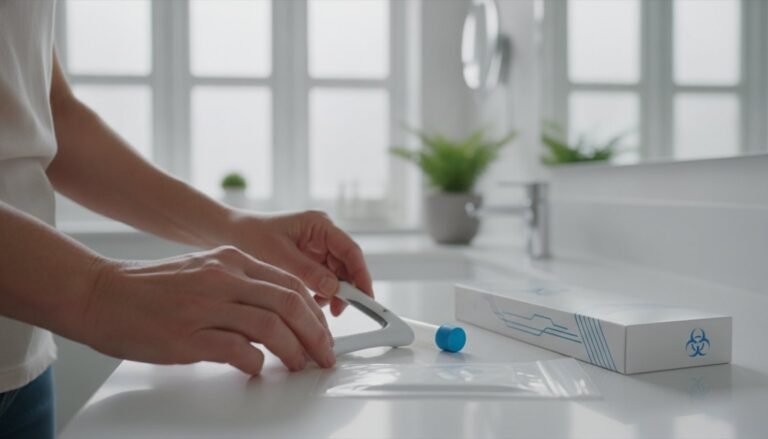
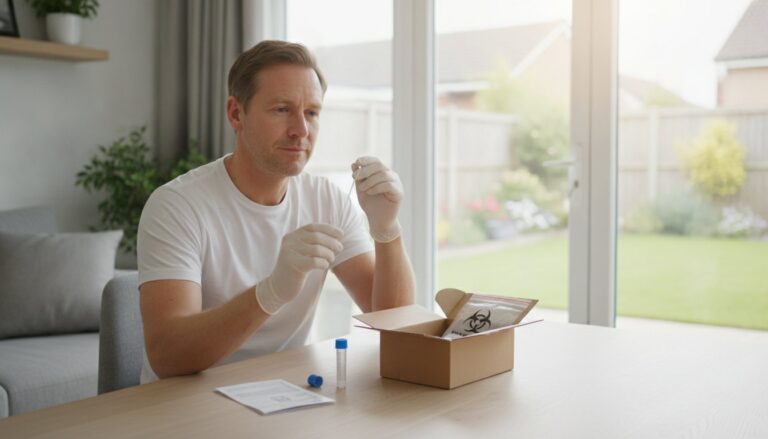
Collecting your samples is a straightforward process that you can complete in minutes. You don’t need medical training to get a professional-grade sample. The process involves:
- Nasal Swab: Gently rotating the swab inside both nostrils to collect bacteria from the nasal lining.
- Throat or Axilla Swab: Swabbing the back of the throat or the warm, moist skin of the armpit.
- Groin Swab: Running the swab over the skin in the groin area, a common site for silent colonisation.
Once you’ve finished, simply place the swabs in the secure tubes provided and use our tracked return service. You’ll receive your results through a secure portal, allowing you to share them with your healthcare provider or surgeon immediately. Don’t leave your health to chance when you can get clear answers from the comfort of your own home. Order your confidential MRSA test kit today and know your status within days.
Protect Your Health with Proactive MRSA Screening
Understanding that is mrsa contagious before symptoms appear is vital for preventing the silent spread of infection. According to Public Health England data, approximately 1 in 30 people carry MRSA on their skin without showing any signs of illness. This makes early detection a powerful tool for your safety, especially since colonisation often remains invisible until an injury or surgery allows the bacteria to enter the bloodstream.
You don’t need to navigate this uncertainty alone. Our testing process is designed to be simple and stress-free. We provide UKAS-accredited laboratory testing to ensure clinical accuracy, with all kits delivered in discreet, plain-packaging for your privacy. If you need answers quickly, our Rapid PCR option can provide results in as little as 24 hours. By choosing a professional screening, you’re taking a proactive step toward total peace of mind.
Order Your Confidential At-Home MRSA Test Kit
It’s a straightforward way to stay informed and keep your household safe.
Frequently Asked Questions
Can I give someone MRSA if I don’t have a rash?
Yes, you can transmit MRSA even if you don’t have a visible rash or skin infection. This state is known as colonization, where the bacteria live on your skin or inside your nose without causing symptoms. Public Health England data suggests that approximately 1 in 30 people carry MRSA on their bodies at any given time. Because is mrsa contagious before symptoms appear, you can unknowingly pass the bacteria to others through skin-to-skin contact or shared items.
How long does it take to become contagious after being exposed to MRSA?
You can become contagious within hours of exposure if the bacteria successfully colonize your skin or nasal passages. There’s no set incubation period for contagiousness because MRSA doesn’t need to cause an active infection to spread. Once the bacteria are present on your body, you can transfer them to other surfaces or people. Clinical studies show that MRSA can establish a presence on skin surfaces very quickly after initial contact.
Can MRSA live on clothing and spread to others?
MRSA can survive on fabrics like clothing, towels, and bedsheets for several weeks if the items aren’t washed. Research published in the Journal of Clinical Microbiology indicates that Staphylococcal bacteria can persist on polyester for up to 40 days. To prevent spread, you should wash contaminated laundry at 60°C. This temperature is effective at killing the bacteria and reducing the risk of transmission to other household members through shared textiles.
Will a positive MRSA test delay my surgery in the UK?
A positive MRSA screening result will typically delay non-emergency surgery in the UK to allow for decolonization treatment. NHS protocols require patients to undergo a 5-day suppression therapy using antiseptic body wash and nasal cream before proceeding with elective procedures. This mandatory delay helps reduce the risk of post-operative surgical site infections by up to 60%. Your surgical team will reschedule your date once you’ve completed the treatment and received a clear result.
How do I know if I am a “silent carrier” of MRSA?
The only definitive way to know if you’re a silent carrier is through a clinical screening test, such as a PCR rapid test or a culture swab. Since colonization doesn’t cause pain, redness, or itching, you won’t feel any different while carrying the bacteria. Our UKAS-accredited lab services provide accurate results from at-home kits, allowing you to check your status discreetly. Knowing your status is vital because is mrsa contagious before symptoms develop in the carrier.
Is a person with MRSA always contagious?
A person is considered contagious as long as the MRSA bacteria remain on their skin, in their nose, or in an active wound. Even after a visible infection heals, you might remain colonized and capable of spreading the bacteria. Contagiousness only ends once a clear result is obtained from a follow-up screening. Consistent hand hygiene and following a full decolonization protocol are the most effective ways to stop the cycle of transmission and protect those around you.
Can I clear MRSA from my skin without antibiotics?
Natural clearance is rare, and most people require a structured decolonization protocol to eliminate the bacteria. This usually involves a combination of 4% Chlorhexidine gluconate solution for body washing and Mupirocin nasal ointment. While these aren’t always oral tablets, they’re clinical-grade antimicrobial treatments. Attempting to clear MRSA without professional medical guidance often fails, as the bacteria are highly resilient and can survive standard soaps or over-the-counter creams during daily washing.
What is the most common way MRSA is spread in the community?
Direct skin-to-skin contact is the primary route of MRSA transmission within UK communities. This often occurs in high-contact environments like gyms, schools, or shared households. The Office for National Statistics has previously highlighted that skin abrasions or cuts provide easy entry points for the bacteria. Sharing personal items like razors or sports equipment also accounts for a portion of community-acquired cases, as the bacteria can transfer from skin to object and back to another person.