

Infection Risk in Orthopaedic Surgery: A Patient Guide to Prevention
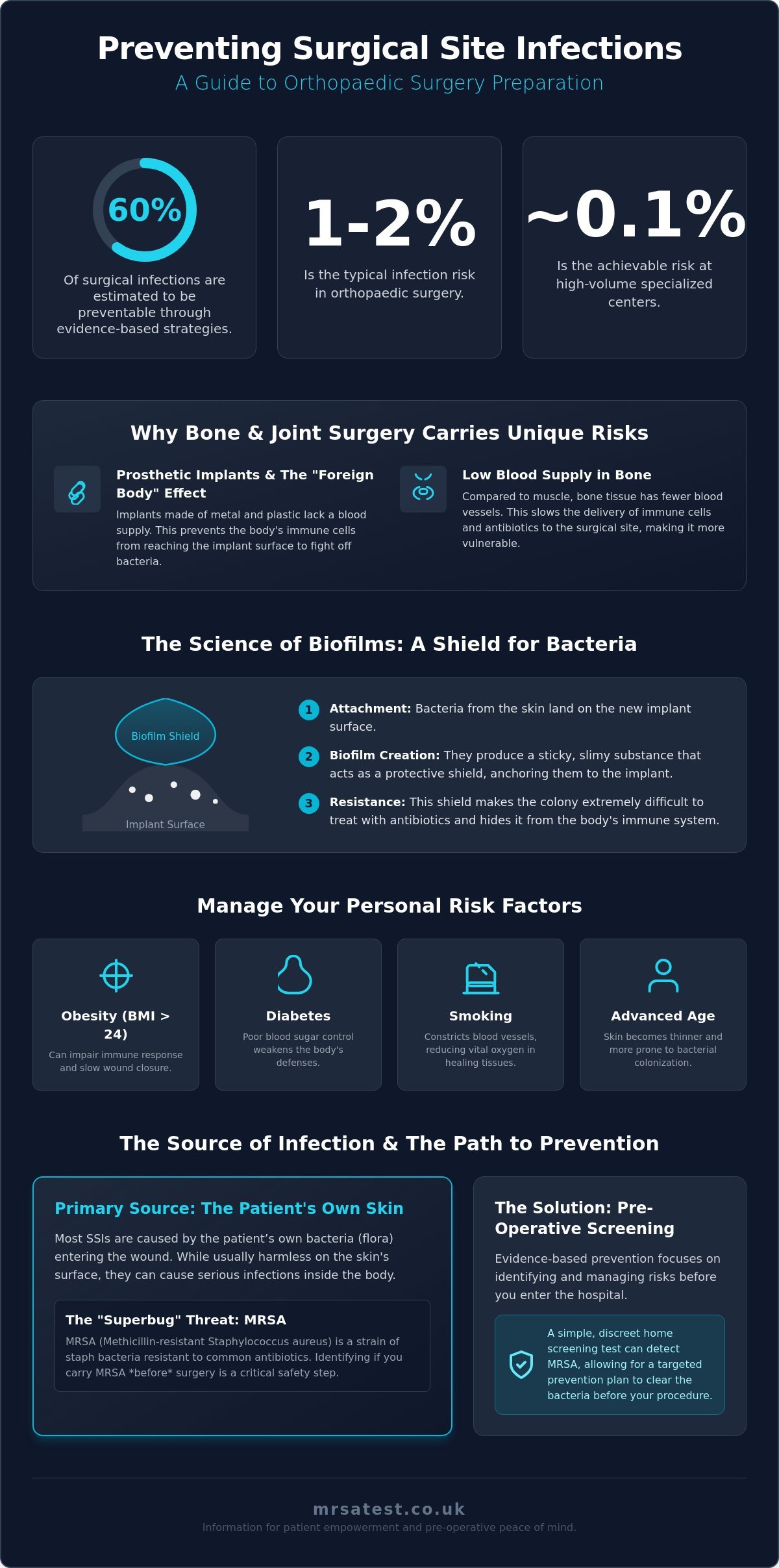
Did you know that an estimated 60% of surgical site infections are entirely preventable through evidence-based strategies implemented before you even enter the operating room? While the overall infection risk in orthopaedic surgery remains relatively low at approximately 1% to 2%, the impact of a complication can be significant. A single infection often leads to unexpected physical strain and a much longer recovery period. It’s natural to feel anxious about “superbugs” like MRSA or worry that standard hospital protocols might not address your specific concerns.
We understand that you want your recovery to be as smooth and predictable as possible. This guide will help you understand the primary causes of surgical site infections and explain how advanced pre-operative screening can significantly reduce your personal risks. We’ll explore the latest 2025 medical consensus on infection prevention, detail the lifestyle factors you can control, and provide a clear checklist for your pre-surgery preparation. By the end, you’ll have the clinical knowledge to ensure you are medically clear and confident before your scheduled procedure.
Key Takeaways
- Understand why prosthetic implants require higher sterility standards and how they interact with your immune system during the healing process.
- Learn about the “Foreign Body” effect and the role bacterial biofilms play in shielding pathogens from your body’s natural defenses.
- Discover evidence-based strategies to reduce the infection risk in orthopaedic surgery, including the correct way to manage pre-operative skin preparation.
- Distinguish between standard skin bacteria and resistant “superbugs” like MRSA to understand why specialized screening is a vital safety step.
- Find out how discreet, home-based testing can streamline your pre-op logistics and provide essential peace of mind before your hospital admission.
Understanding Surgical Site Infection (SSI) Risk in Orthopaedics
A Surgical Site Infection (SSI) is clinically defined as an infection that occurs in the part of the body where surgery took place within 30 days of the procedure, or up to one year if an implant is involved. Orthopaedic surgery is unique because it often involves the manipulation of bones and the introduction of prosthetic joints. Bone tissue has a lower blood supply than muscle, which makes it harder for the body to deliver immune cells to the site. This environment demands exceptionally high sterility to ensure a successful outcome.
The general infection risk in orthopaedic surgery is approximately 1% to 2%. However, specialized high-volume centers often achieve much lower rates through rigorous protocols. For instance, a 2026 study involving data from 2018 to 2024 showed that some centers reached rates as low as 0.1% to 0.2% for total knee replacements. It’s helpful to distinguish between two types of complications:
- Superficial infections: These affect only the skin and the tissue just under the skin. They are usually managed with standard oral antibiotics.
- Deep joint infections: These reach the bone or the prosthetic implant itself. These are more complex and may require additional surgery to clean the joint.
Common Patient-Specific Risk Factors
Your personal health profile significantly influences how your body heals. Obesity, specifically a BMI over 24, and diabetes are primary drivers of increased risk because they can impair the immune response and slow down wound closure. Maintaining optimal blood sugar control is now recognized as an essential factor in reducing complications. Smoking is another critical factor; it constricts blood vessels and reduces oxygen levels in your tissues, which bacteria can exploit. As we age, our skin becomes thinner and more prone to bacterial colonisation, making pre-operative vigilance even more important.
Hospital vs. Patient-Borne Bacteria
Many patients worry about environmental risks within the hospital. While hospitals maintain strict controls, most SSIs are caused by the patient’s own flora entering the wound during the procedure. The bacteria already living on your skin, though usually harmless, are the most common source of surgical complications. This is why “superbugs” like MRSA require specific attention before admission. MRSA is a strain of staph bacteria that resists common antibiotics like methicillin, making it much harder to treat if it enters a surgical site. Identifying if you carry these bacteria allows for a targeted and effective prevention plan.
Why Bone and Joint Surgeries Carry Unique Infection Risks
Bone and joint procedures are distinct from other surgeries because they frequently introduce permanent materials into the body. While a new hip or knee can restore mobility, these metal and plastic components create a unique challenge for your immune system. This is known as the “foreign body” effect. Because these materials don’t have their own blood supply, your white blood cells can’t easily patrol the surface of an implant to destroy invading bacteria. Consequently, the infection risk in orthopaedic surgery is closely tied to how well these surfaces are protected during the initial procedure.
The Science of Biofilms on Implants
When bacteria reach a prosthetic surface, they don’t just sit there. They quickly begin to produce a sticky, slimy substance called a biofilm. Think of this as a “protective shield” that anchors the bacteria to the metal joint. Once a biofilm matures, it becomes incredibly difficult for standard antibiotics to penetrate. This is why the CDC emphasizes Evidence-Based Prevention before you enter the operating room. If bacteria are allowed to establish this shield during the initial surgical window, the infection can become persistent and resistant to traditional treatments. Proactive measures, such as an MRSA screening test, help ensure your skin is clear of high-risk pathogens before the first incision is made.
Long-term Consequences of Orthopaedic SSI
If an infection takes hold deep within a joint, the consequences are often more severe than a simple skin infection. A deep infection can lead to what surgeons call a Periprosthetic Joint Infection (PJI). According to the International Consensus Meeting held in Istanbul in 2025, a PJI often requires “revision surgery.” This means the original implant must be removed, the area cleaned, and a new joint inserted later. This process significantly extends recovery time and can impact long-term joint function and mobility.
The toll isn’t just physical. Research indicates that the average cost per infection is $20,785, and if MRSA is involved, that cost can rise by an additional $19,000. Prolonged hospital stays and the emotional stress of a failed surgery make prevention the most logical and safe progression for any patient. Managing the infection risk in orthopaedic surgery begins with understanding that your own bacterial load is the primary factor you can control. Focusing on early detection ensures that your surgical journey remains on track for a successful, healthy outcome.
The Role of MRSA and Staphylococcus aureus in Surgery
Staphylococcus aureus is a very common type of bacteria found on the skin or inside the nose of healthy people. Under normal circumstances, it causes no issues and you won’t even know it’s there. However, during a procedure, these bacteria can move from the skin’s surface into the body through the incision. This significantly increases the infection risk in orthopaedic surgery because the bacteria can reach the bone or a new prosthetic joint, where your immune system is less active.
Methicillin-resistant Staphylococcus aureus, or MRSA, is a specific version of this bacterium that has developed resistance to several widely used antibiotics. This resistance doesn’t make the bacteria more aggressive, but it does make them much harder to eliminate if they cause an infection. Because standard surgical antibiotics may not work against MRSA, hospitals must take extra precautions to identify its presence before you arrive for your operation.
How MRSA Colonisation Increases Surgical Risk
Most people who carry these bacteria are “colonised” rather than infected. This means the bacteria live on your body without causing symptoms or making you feel ill. You can be a carrier for weeks or months without any outward signs. In the UK, research suggests that a small but significant portion of the population carries MRSA unknowingly. For a deeper look at how these pathogens behave, you can read What Is MRSA? Your Complete Guide. During surgery, these colonised bacteria can be pushed into the wound, bypassing your skin’s natural protective barrier.
The “Search and Destroy” Strategy in UK Hospitals
To mitigate the infection risk in orthopaedic surgery, both NHS and private hospitals in the UK follow a “Search and Destroy” protocol. This involve screening patients for MRSA well before their elective operation date. Screening usually takes place 2 to 4 weeks before surgery. This timeline is intentional. It provides enough time for the laboratory to process the results and for you to complete a decolonisation process if the bacteria are found.
If you test positive for MRSA colonisation, it doesn’t mean your surgery will be cancelled. Instead, you’ll be asked to follow a simple five-day decolonisation routine. This typically involves using a specialized antibacterial body wash and applying an antibiotic cream inside your nostrils. Completing this process ensures that the bacterial load on your skin is at its lowest possible level when you enter the operating theatre, significantly protecting your new joint.
Evidence-Based Prevention: How to Lower Your Risk
Reducing the infection risk in orthopaedic surgery is a collaborative effort between you and your surgical team. While the hospital maintains a sterile environment in the operating theatre, your actions in the weeks leading up to the procedure are equally vital. Following pre-operative instructions precisely is the most effective way to ensure your body is prepared for a successful recovery. This “pre-op window” is your opportunity to optimize your health and minimize the presence of harmful bacteria on your skin.
One of the most important rules is to avoid shaving the surgical site at home. Although it may seem helpful, standard razors create microscopic nicks and abrasions on the skin’s surface. These tiny cuts become ideal breeding grounds for bacteria, which can then migrate into the surgical wound. Hospitals use specialized surgical clippers on the day of the procedure because they remove hair without damaging the skin barrier. Please leave all hair removal to the clinical staff to maintain skin integrity.
Your Pre-Surgery Hygiene Routine
Your clinical team will likely provide specific antimicrobial soaps or chlorhexidine washes for use in the days before your operation. These specialized cleansers are designed to be used as a systematic tool to eliminate transient pathogens and lower the overall bacterial count on your skin. To stay organized during this busy period, you can follow our Preparing for Surgery Checklist, which covers everything from hygiene to home logistics.
The Power of Pre-Operative Screening
Knowledge is your best tool for peace of mind. While hospitals conduct their own screenings, these often occur very close to the surgery date. Discovering a positive MRSA result just 48 hours before your operation can lead to a stressful last-minute cancellation and a long delay in your treatment. Proactive testing allows you to identify your status weeks in advance. This gives you ample time to complete a decolonisation course at your own pace, ensuring you arrive at the hospital “clear” and confident. To secure your surgical timeline, you can order a professional MRSA Rapid PCR Test for discreet, laboratory-verified results delivered directly to you.
Taking Control: Private MRSA Screening for Peace of Mind
Managing the infection risk in orthopaedic surgery often feels like a passive process where you wait for hospital appointments. Modern pre-operative care allows you to take a more proactive role. By choosing private MRSA screening, you can verify your bacterial status in the comfort and privacy of your own home. This approach removes the uncertainty of waiting for hospital-led results. It’s a simple way to ensure you’re medically prepared well before your admission date.
Integrating a home screening kit into your preparing for surgery routine offers discretion and convenience. Instead of traveling to a clinic, you can perform the collection at a time that suits you. This is especially helpful if you have a busy schedule or limited mobility. All samples are processed by verified laboratory partners within the UK. This ensures that your results meet the highest standards of medical reliability and clinical accuracy.
How the MRSAtest.co.uk Service Works
The process is designed to be straightforward and stress-free. Once you order your kit, it’s dispatched in discreet packaging with rapid delivery across the UK. The kit contains everything you need to perform a simple self-collection. You’ll take swabs from specific areas where bacteria typically reside, such as the nose, groin, or axilla. Clear instructions ensure you collect the samples accurately. After posting your samples back to our laboratory, you’ll receive a confidential report via email. This allows you to share the findings with your surgical team immediately.
Choosing the Right Test for Your Timeline
The best test for you depends on how much time remains before your operation. If your surgery date is approaching quickly, the MRSA Rapid PCR Test is the most efficient choice. PCR technology identifies the genetic material of the bacteria. It provides highly accurate results within 24 hours of the sample reaching the lab. This speed is essential for maintaining your surgical timeline and minimizing the infection risk in orthopaedic surgery.
For patients who have several weeks before their procedure, a standard MRSA Culture test is a reliable alternative. While the culture method takes slightly longer to process, it remains a gold-standard diagnostic tool. Whichever method you choose, the goal is the same. You want the peace of mind that you’re starting your recovery journey with a clean bill of health.
Ensure you are surgery-ready and order your confidential MRSA test kit today.
Securing Your Path to a Successful Recovery
To ensure you arrive for your procedure with complete confidence, consider a private screening. We provide UK-based accredited laboratory results through a confidential and discrete home self-collection process. This service allows you to identify any risks early, avoiding the stress of last-minute hospital cancellations. If you’re on a tight timeline, our rapid PCR results are available within 24 hours of the lab receiving your sample. You don’t have to leave your safety to chance.
Order Your Accredited Pre-Surgery MRSA Test Kit and take the final step toward a predictable, healthy outcome. Your commitment to prevention today is the foundation for your mobility tomorrow.
Frequently Asked Questions
What is the most common cause of infection after orthopaedic surgery?
Staphylococcus aureus, often called “Staph,” is the primary cause of most surgical complications. These bacteria typically live harmlessly on your skin or in your nose. During a procedure, they can enter the body through the incision. Because bone has a limited blood supply, it is harder for your immune system to clear these bacteria once they reach the surgical site.
How long does it take for a surgical site infection to show up?
Most infections become apparent within 30 days of the procedure. However, when an implant like a prosthetic joint is involved, an infection can develop up to a year later. You should monitor your recovery closely during the first few weeks. Early detection of symptoms allows for more straightforward treatment and prevents the bacteria from establishing a protective biofilm on the implant.
Can I have surgery if I have MRSA on my skin?
Yes, you can still have your procedure, but it will usually be postponed until you are clear of the bacteria. Carrying MRSA on your skin significantly increases the infection risk in orthopaedic surgery. Surgeons typically require a successful decolonisation process first. This ensures that the risk of the bacteria entering the wound during the operation is as low as possible.
Why is MRSA screening mandatory for most UK bone surgeries?
Screening is a standard safety protocol because MRSA is resistant to the antibiotics typically used during surgery. In orthopaedics, the presence of a “foreign body” like a metal joint makes infections much harder to treat. Identifying carriers beforehand allows hospitals to implement a “Search and Destroy” strategy. This prevents resistant bacteria from causing deep joint infections that might require further surgery.
What are the early warning signs of a post-op infection?
You should look for increased redness, warmth, or significant swelling around your incision. While some discomfort is normal, persistent pain that gets worse instead of better is a warning sign. Any yellow or green discharge from the wound, or a foul odour, should be reported to your surgical team immediately. Systemic signs like a fever or chills also require prompt medical attention.
How can I reduce my risk of infection before a hip or knee replacement?
Focus on your “skin prep” by using antimicrobial washes exactly as your clinical team directs. Managing underlying health factors is also vital. Keeping your blood sugar stable and stopping smoking at least four weeks before surgery improves blood flow and immune response. Proactive screening for MRSA also ensures you have time to decolonise, which is a proven way to lower the infection risk in orthopaedic surgery.
Is a private MRSA test as accurate as a hospital test?
Yes, private tests are medically reliable when processed by accredited UK laboratories. Our service uses the same high-standard diagnostic methods found in clinical settings. Rapid PCR testing is particularly precise, as it identifies the specific genetic material of the bacteria. This provides a clear, laboratory-verified report that you can confidently share with your surgeon or pre-assessment team.
What happens if my MRSA test comes back positive before my surgery?
A positive result simply means you need to complete a five-day decolonisation routine before your procedure. This typically involves applying an antibiotic cream inside your nostrils and using a specialized antibacterial body wash. This routine is very effective at clearing the bacteria from your skin. Once the course is finished, a follow-up test is usually performed to confirm that you are clear for admission.