

Blog
MRSA Symptoms in Adults: A Comprehensive UK Guide to Identifying Infections
Apr
Could that persistent, painful red bump on your skin be more than just a common blemish or an ingrown hair? For many people across Britain, the fear that a minor skin irritation might actually be a resistant infection is a significant source of anxiety. It’s completely understandable to feel concerned when you’re trying to identify mrsa symptoms in adults uk, particularly if you’re preparing for an upcoming surgery or have recently spent time in a healthcare facility. You aren’t alone in this worry; clinical data suggests that approximately 3% of the UK population carries MRSA on their skin without showing any outward signs of illness.
We believe you deserve clear, professional answers without the alarmist language often found online. This guide provides a factual, clinical overview to help you distinguish between harmless colonisation and an active infection that requires medical intervention. You’ll learn exactly what to look for, how specific UK screening protocols work, and why using a discreet, UKAS-accredited laboratory test can offer the peace of mind you need. We’ve structured this information to move you from uncertainty to a clear, manageable understanding of your next steps.
Key Takeaways
- Understand the vital difference between active infection and colonisation, as approximately 1 in 30 people in the UK carry the bacteria without showing symptoms.
- Learn how to identify the primary mrsa symptoms in adults uk, ranging from painful red bumps and boils to more severe systemic warning signs.
- Recognise the critical indicators of invasive MRSA, such as high fever and chills, which suggest the bacteria may have entered the bloodstream or lungs.
- Discover why the NHS and private UK hospitals require specific screening protocols for surgery patients to ensure safety and prevent post-operative complications.
- Gain clear, professional guidance on the immediate steps to take if you suspect an infection, including essential advice on safe home management.
Understanding MRSA: Colonisation vs. Active Infection
MRSA stands for Methicillin-resistant Staphylococcus aureus. It’s a specific strain of staph bacteria that has developed a resistance to the antibiotics usually used to treat skin infections, such as methicillin. In the UK, it’s often called a superbug. While the name sounds intimidating, understanding how it behaves on the body is the first step toward managing it safely and effectively.
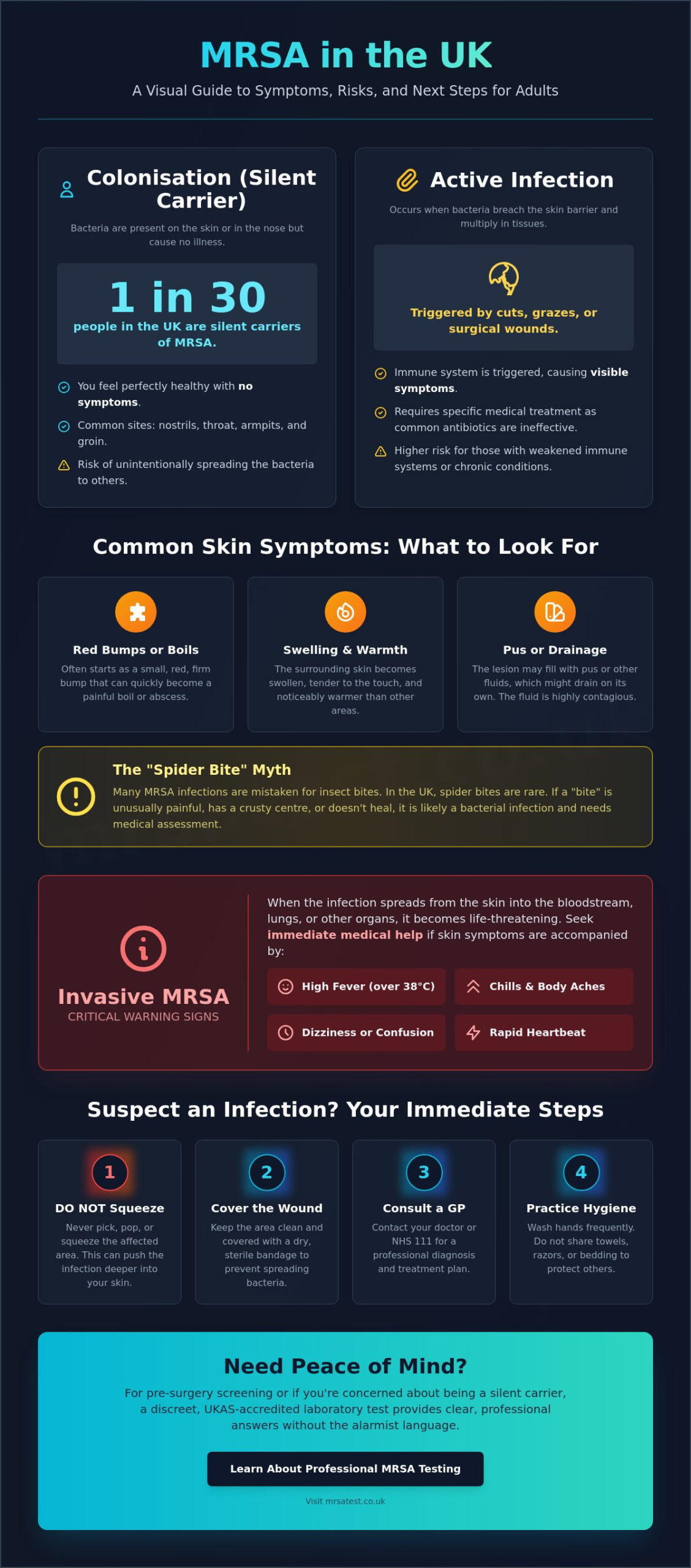
Data from the NHS indicates that approximately 1 in 30 people in the UK carry MRSA on their skin or in their nose without showing any signs of illness. This state is known as colonisation. When you’re colonised, the bacteria live on you without causing harm. You’ll usually find these bacteria in warm, moist areas of the body. Common carriage sites include:
- The inside of the nostrils
- The back of the throat
- The armpits
- The groin area
The distinction between being a carrier and having an active infection is vital. Colonisation means the bacteria are present but dormant. An active infection only occurs when the bacteria breach the skin barrier, often through a cut or a surgical site, and begin to multiply within the body’s tissues. This transition triggers the immune system and leads to the visible mrsa symptoms in adults uk healthcare providers look for during a clinical assessment.
The “Silent Carrier” State
It’s entirely possible to have MRSA and feel perfectly healthy. Because the bacteria sit on the surface of the skin, they don’t always trigger an inflammatory response. You won’t have a fever, and you won’t feel run down. This is why it’s often called a silent state. However, being a carrier still involves risks. You can unintentionally spread the bacteria to vulnerable friends or family members through skin-to-skin contact or by sharing towels and razors. If you’re concerned about your carrier status, you can explore our complete guide to MRSA symptoms and risks to understand how screening works.
When Bacteria Become a Problem
Triggers for an active infection usually involve a break in the skin. This might be a minor graze, a site where a drip was inserted, or a more significant surgical wound. When the bacteria enter these openings, they can cause a range of mrsa symptoms in adults uk, starting with localised redness and swelling. People with weakened immune systems or chronic conditions like diabetes are at a higher risk of this transition. While standard “staph” is common and often easy to treat, MRSA requires specific clinical attention because the usual first-line antibiotics won’t work. Identifying the presence of the bacteria early through professional testing ensures that the right treatment is started before the infection spreads deeper into the body.
Common Skin Symptoms of MRSA in Adults
Identifying mrsa symptoms in adults uk requires looking for specific physical changes that distinguish a standard blemish from a potentially serious staph infection. Most skin-based MRSA infections begin as small, red bumps that can quickly escalate into painful, swollen areas. These bumps often feel firm to the touch and are accompanied by a noticeable increase in skin temperature around the site. It’s common for the area to feel tender or even throb with pain before any visible pus appears.
As the infection progresses, it frequently takes on the appearance of a large pimple, boil, or abscess. These lesions are typically filled with pus or other fluids, which may drain spontaneously. According to the NHS guide to MRSA, these areas are often very tender and can be surrounded by a red, “angry” halo of inflammation. If you notice a skin site that is leaking clear or cloudy liquid, it’s a sign that the body is actively fighting a bacterial presence. The drainage is often highly contagious, so keeping the area covered is essential for safety.
The “Spider Bite” Myth
Many patients initially dismiss MRSA because they believe they’ve been bitten by an insect. This misconception is so common that medical professionals often refer to it as the “spider bite” myth. In the UK, significant spider bites are rare, yet many people present with a painful, necrotic centre and assume a spider is the culprit. Unlike a typical bite, MRSA often develops a central “head” or a crusty surface, and the pain is usually disproportionate to the size of the mark. If a “bite” doesn’t heal or begins to spread rapidly, it’s likely a bacterial infection rather than an insect encounter.
MRSA vs. Folliculitis: Spotting the Difference
It’s easy to confuse MRSA with folliculitis, which is the inflammation of hair follicles. While both cause red bumps, folliculitis is usually superficial and itchy. In contrast, MRSA typically involves deeper tissue pain and a more aggressive inflammatory response. The key differentiator is the depth of the discomfort; MRSA feels like it’s rooted deep within the skin layers. If the area feels “deeply” sore rather than just surface-level irritated, it warrants closer inspection. You can refer to our visual guide to common skin infections to see how these conditions differ in appearance.
Recognising these signs early is vital for effective management and preventing the spread of bacteria to others. If you’re concerned about a persistent skin issue or a recurring boil, you can order a discreet MRSA test kit to get clear, clinical answers from the comfort of your own home.
Invasive MRSA: When the Infection Spreads
While many skin infections remain localised, invasive MRSA represents a much more serious clinical situation. This occurs when the bacteria bypass the skin’s natural barrier and enter the bloodstream, heart, or lungs. It’s no longer a surface-level issue; it’s a systemic threat to your health. Identifying mrsa symptoms in adults uk at this stage is vital because the condition can escalate with remarkable speed. When the bacteria reach the bloodstream, the condition is known as bacteraemia, which can lead to the infection of internal organs.
Systemic symptoms are often distinct from the initial skin lesions. You may experience a high temperature of 38°C or above, uncontrollable shivering known as rigors, and a significant drop in blood pressure that leaves you feeling faint or dizzy. According to NHS guidelines on MRSA, these signs indicate that the infection is no longer contained and requires immediate clinical intervention. Two of the most severe complications include endocarditis, an infection of the heart’s inner lining, and necrotising pneumonia, which causes rapid damage to lung tissue.
Recognising the Signs of Sepsis
Untreated invasive MRSA frequently leads to sepsis, a life-threatening reaction where the body’s immune system attacks its own tissues. It’s a medical emergency that requires urgent hospital treatment. In the UK, health professionals use the “S.P.O.T.” acronym to help the public identify these critical signs:
- Slurred speech or persistent confusion.
- Profound shivering or extreme muscle pain.
- Output of urine is non-existent for a full day.
- Terrible shortness of breath or mottled, discoloured skin.
If you or someone you’re caring for displays any of these symptoms, call 999 or visit your nearest A&E department immediately. Early treatment with intravenous antibiotics is the most effective way to manage the risks associated with sepsis.
MRSA in the Lungs and Joints
When MRSA reaches the lungs, it causes a particularly aggressive form of pneumonia. Symptoms include a persistent, productive cough and sharp chest pain that worsens when you breathe deeply. This isn’t a standard chest cold; the fatigue is often overwhelming and the fever rarely breaks with over-the-counter medicine. Joint infections, or septic arthritis, are another serious complication. The affected joint becomes hot, visibly swollen, and so painful that you’ll likely be unable to move the limb at all.
These complications are more frequent in hospital environments or care homes. Patients with indwelling catheters, surgical wounds, or weakened immune systems are at higher risk. Statistics show that roughly 25% of invasive MRSA cases are linked to recent healthcare exposure, making clinical vigilance essential for those recovering from surgery.
Why MRSA Symptoms Matter for UK Surgery Patients
For anyone preparing for a procedure in a UK hospital, understanding why clinical teams prioritise MRSA screening is vital. You don’t need to show active mrsa symptoms in adults uk to be a risk to yourself or others. In fact, many people are “colonised” with the bacteria, meaning it lives on their skin or in their nostrils without causing harm. However, surgery breaks the skin’s natural protective barrier. If these bacteria enter a surgical wound, a harmless colonisation can quickly escalate into a life-threatening infection.
NHS trusts and private healthcare providers across the UK mandate screening to ensure patient safety. If you test positive, your surgery will likely be rescheduled. This delay typically lasts between 5 and 10 days to allow for a decolonisation treatment. While a postponement is frustrating, it’s a necessary step to prevent post-operative complications that could lead to much longer hospital stays. To help you stay on track, we’ve developed a pre-op health and logistics checklist to guide you through the process.
The Screening Process in the UK
The standard screening procedure in UK clinics is straightforward and non-invasive. A healthcare professional uses sterile swabs to sample the inside of the nostrils and the groin area. These samples are sent to a lab to check for the presence of Methicillin-resistant Staphylococcus aureus. If the results are positive, you’ll start a decolonisation protocol. This usually involves:
- Applying a prescribed antibiotic cream inside the nostrils three times a day.
- Using a specific antiseptic body wash or hair suppressant for five days.
- Changing bed linens and towels daily during the treatment period.
This rigorous approach is a cornerstone of hospital-acquired infection prevention, significantly lowering the chance of cross-contamination on the ward.
Private vs. NHS Screening
While the NHS provides screening for most elective surgeries, many patients now opt for private MRSA testing. The primary reason is speed. Private labs often return results within 24 to 48 hours, whereas waiting for NHS results can sometimes take longer, causing anxiety as the surgery date nears. At-home testing kits provide a discreet, comfortable way to complete this requirement without making an extra trip to the hospital.
If you choose a private route, ensure the test is processed by a UKAS-accredited laboratory. This accreditation is the gold standard in the UK, ensuring that the results are accurate and will be accepted by your surgical consultant. Using a trusted, UK-based service gives you the peace of mind that your pre-admission paperwork is handled with clinical precision.
Ensure your surgery goes ahead as planned by confirming your MRSA status early. Order your discreet, UKAS-accredited MRSA home test kit today.
What to Do If You Suspect MRSA Symptoms
Discovering a painful, red lump or a slow-healing wound can be worrying. If you suspect mrsa symptoms in adults uk, you should take immediate steps to protect yourself and those around you. Managing a potential infection correctly from the start reduces the risk of the bacteria spreading to your family or deeper into your own body.
- Step 1: Don’t squeeze or drain the area. You might feel tempted to pop a boil or drain a sore, but you must avoid this. Squeezing can push the Staphylococcus aureus bacteria deeper into your skin or even into your bloodstream. This increases the risk of developing more severe conditions like sepsis or pneumonia.
- Step 2: Cover the area. Use a clean, sterile bandage to keep the site completely covered. This acts as a physical barrier that prevents the bacteria from shedding onto furniture, clothing, or other people.
- Step 3: Practise strict hand hygiene. Wash your hands frequently with soap and water for at least 20 seconds. If soap isn’t available, use an alcohol-based hand gel. You should do this every time you touch your bandage or the skin near the infection.
- Step 4: Get a diagnostic test. You cannot confirm MRSA through a visual check alone. A professional swab test is the only way to know if the bacteria are resistant to standard antibiotics.
- Step 5: Consult a GP. Seek medical advice if the redness spreads, you develop a fever, or the pain becomes intense. This is especially urgent if you have a weakened immune system or a long-term health condition.
The Importance of a Diagnostic Test
Clinical confirmation is essential because MRSA looks identical to a standard staph infection or even a spider bite. Doctors generally use two types of tests to identify the strain. A Culture test involves placing a sample in a lab to see which antibiotics are effective, which usually takes two to three days. A Rapid PCR test is a faster molecular method that can identify the presence of MRSA DNA in about 24 hours. For those who prefer privacy, at-home MRSA test kits provide a discreet way to screen for the bacteria from the comfort of your own home.
Managing MRSA at Home
Hygiene is your best defence when managing a potential infection at home. You shouldn’t share personal items like towels, razors, or flannels with other household members. It is also vital to handle laundry carefully. Wash your bedding, towels, and clothes at 60°C to ensure any lingering bacteria are destroyed. If you work in a healthcare setting, a school, or a care home, you must inform your employer or occupational health provider. They will guide you on the necessary steps to ensure you don’t pass the bacteria to vulnerable individuals.
Take Proactive Steps for Your Health and Peace of Mind
Recognising mrsa symptoms in adults uk is the vital first step toward effective management. Whether you’re preparing for a scheduled surgery or you’ve noticed persistent skin issues like painful boils or abscesses, acting quickly prevents the bacteria from spreading. Early detection is especially important because approximately 1 in 30 people carry MRSA on their skin without showing any signs of illness. Identifying colonisation before it becomes an active infection protects both you and those around you.
You don’t need to wait for a clinical appointment to get the answers you need. Our service provides a professional, clinical solution that prioritises your privacy. Every sample is processed in a UKAS-accredited laboratory, ensuring your results meet the highest national standards for accuracy. The process is entirely confidential and includes free return shipping for your convenience. Once our lab receives your sample, you’ll receive your results within 24 hours. This fast turnaround allows you to make informed decisions about your care without unnecessary delays.
Order a Discreet MRSA Home Test Kit with Rapid 24-Hour Results
Taking control of your health is a positive step toward lasting peace of mind, and we’re here to support you with expert testing every step of the way.
Frequently Asked Questions
Is MRSA itchy, or does it just hurt?
MRSA infections are typically painful and tender rather than just itchy. While some patients report a mild itching sensation as the skin begins to stretch and inflame, the primary symptom is a throbbing pain that often feels like a deep insect bite. If the affected area is red, hot to the touch, and filled with pus, it’s likely an active infection rather than a simple allergy.
What does an early-stage MRSA sore look like?
An early-stage MRSA sore often appears as a small red bump, pimple, or boil on the skin. These lesions are frequently mistaken for spider bites because they’re swollen, warm, and firm. Within 24 to 48 hours, the bump can quickly turn into a deep, painful abscess. You should look for a central point of pus or a crusty surface that doesn’t heal.
Can I have MRSA without any visible symptoms?
Yes, you can carry the bacteria without showing any mrsa symptoms in adults uk, a state known as colonisation. Data from the NHS indicates that approximately 1 in 30 people carry MRSA on their skin or in their nostrils without becoming ill. While these individuals don’t feel sick, they can still spread the bacteria to others who might be more vulnerable to infection.
How long do MRSA symptoms take to appear after exposure?
Symptoms usually appear between 1 and 10 days after the bacteria enters a break in the skin. The incubation period varies depending on the person’s immune health and the depth of the wound. In clinical settings, some patients develop signs of infection within 48 hours of surgery. Rapid identification is vital to prevent the bacteria from entering the bloodstream or bones.
How can I get an MRSA test in the UK without waiting for a GP?
You can bypass GP waiting times by using a private, UKAS-accredited home testing kit. These kits provide everything you need to take a swab from the comfort of your own home. Once you post your sample to the laboratory, you’ll typically receive confidential results within 24 to 72 hours. This process offers a fast, discreet way to confirm your status without an in-person appointment.
Is MRSA contagious to healthy adults in the same house?
MRSA is highly contagious and spreads through direct skin-to-skin contact or shared household items. Healthy adults have a lower risk of serious illness, but they can still become colonised or develop skin infections. To reduce risk, don’t share towels, razors, or bed linen. The bacteria can survive on hard surfaces for up to 38 weeks if the environment isn’t properly disinfected.
What is the difference between a regular staph infection and MRSA?
The main difference is that MRSA is resistant to several widely used antibiotics, such as methicillin and penicillin. While a regular Staphylococcus aureus infection is easily treated with standard prescriptions, MRSA requires specific, stronger medications. Both look identical to the naked eye. Only a laboratory culture or PCR test can confirm which type of bacteria is causing the infection.
Will MRSA symptoms go away on their own without antibiotics?
MRSA symptoms rarely go away without professional medical intervention and targeted antibiotics. Because the bacteria is resistant to common treatments, an untreated skin infection can quickly progress to life-threatening conditions like pneumonia or sepsis. According to the UK Sepsis Trust, early treatment is critical. You shouldn’t attempt to drain a sore yourself, as this often spreads the infection further.
