HPV (14 High-Risk Subtypes)
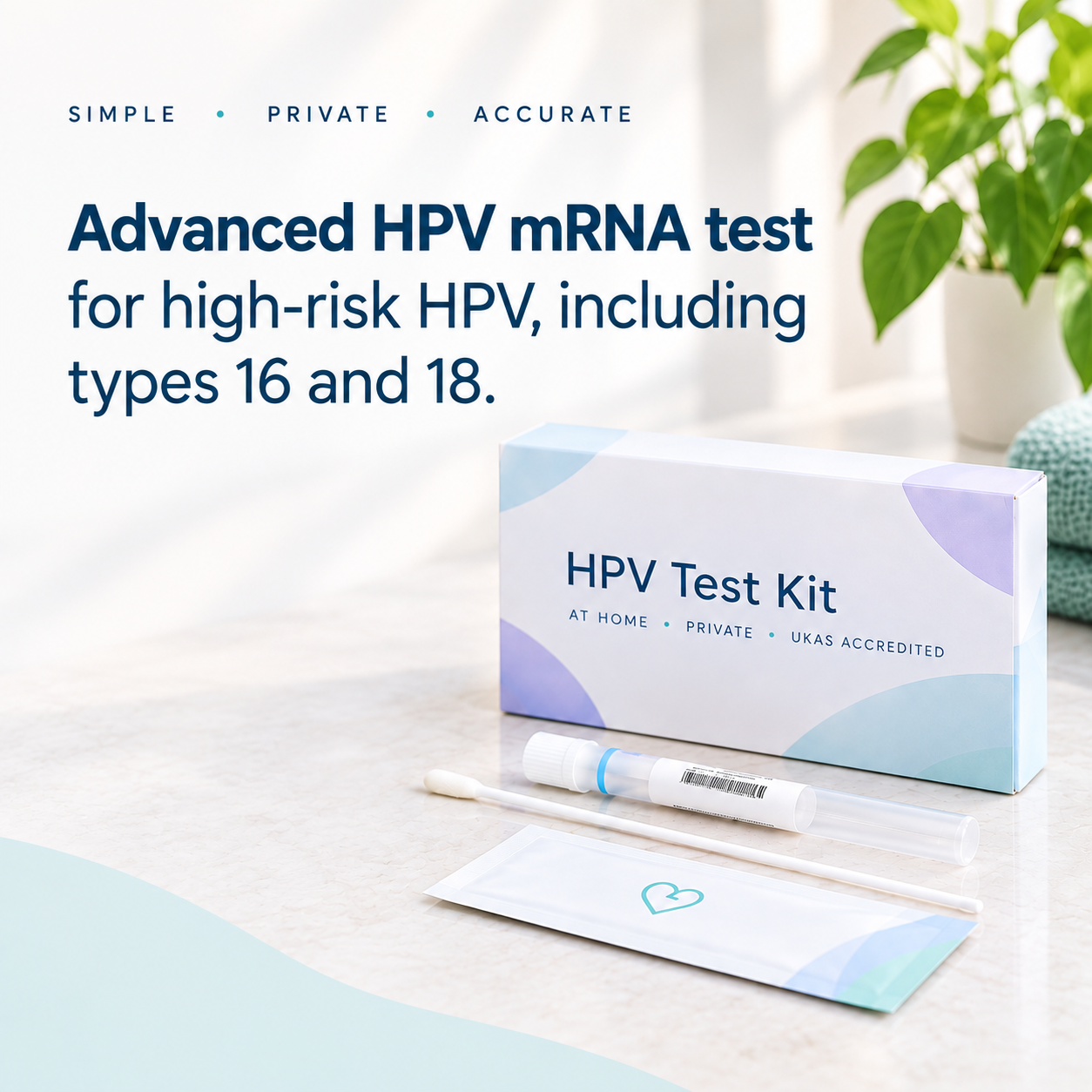
Advanced HPV mRNA test for high-risk HPV, including types 16 and 18. Discreet at-home cervical swab, with results from a UKAS-accredited laboratory in 2–3 days. Order online today.
£66.99
- Home sample collection kit included
- Clear step-by-step instructions
- Discreet delivery
- Laboratory analysis
- Digital results within 2–5 working days
HPV mRNA (All High-Risk Subtypes) Test – At-Home Cervical & Vaginal Test
Detect High-Risk HPV with Advanced mRNA Testing
Human papillomavirus (HPV) is the most frequently encountered sexually transmitted infection everywhere. Although the majority of HPV infections are harmless and clear on their own, high-risk types of HPV are associated with cervical cancer, anal cancer, throat cancer, and other diseases related to HPV.
The test for HPV mRNA (all high-risk subtypes) employs sophisticated molecular technology to identify the viral mRNA from all high-risk types of HPV, such as HPV 16 and HPV 18, which are the strains causing the majority of cervical cancers. Unlike conventional DNA-based HPV tests, this mRNA testing offers higher specificity since it only picks up infections that are actively expressing the cancer-related viral genes.
By using our discreet at-home test kit, you won’t need to visit a clinic and can check for high-risk HPV, which will give you a clear answer and peace of mind.
What does HPV mRNA testing entail?
While most conventional HPV tests detect the DNA of the virus and thus indicate whether the virus is present even if it is not active, HPV mRNA testing instead looks for the messenger RNA (mRNA) that is produced by the E6/E7 oncogenes of high-risk HPV strains.
- The HPV DNA test is able to detect the virus even if it is not active.
- The HPV mRNA test is able to detect viral activity which could cause precancerous changes.
The HPV mRNA test avoids false positives by concentrating on cases of active infection and thus detects the people who are at highest risk of developing cervical abnormalities.
What HPV types are detected?
This test screens for all high-risk HPV subtypes, including but not limited to:
- HPV 16
- HPV 18
- HPV 31
- HPV 33
- HPV 35
- HPV 39
- HPV 45
- HPV 51
- HPV 52
- HPV 56
- HPV 58
- HPV 59
- HPV 66
- HPV 68
These types of HPV are responsible for the majority of cervical cancers and other HPV-related malignancies.
What is there in taking an HPV mRNA test?
You may consider this test if you:
- You should screen for high-risk HPV as part of your cervical cancer prevention efforts.
- Received a smear test or Pap test result that was abnormal.
- What more reassurance could you get than that offered by a standard HPV DNA test?
- If a person is over the age of 25 and is sexually active, this is because the risk of HPV increases with age and the number of exposures.
- You haven’t had a recent cervical screening but would like to check your HPV status at home.
- You want to keep an eye on the clearance of a previously detected HPV infection.
Symptoms and Risks of High-Risk HPV
High-risk HPV infections generally do not cause any symptoms, which is the reason why regular testing is important. If the infection is not detected, a persistent infection can result in:
- Cervical dysplasia (abnormal cell changes)
- Cervical cancer
- Anal cancer
- Throat/oropharyngeal cancer
- Vaginal or vulval cancers
It is possible to keep an eye on the condition and provide treatment before cancer develops.
How does the at-home test function?
Our HPV mRNA test is designed to be convenient and discreet:
- Order online. Your kit arrives in plain packaging.
- Get your sample by using the vaginal swab that comes with the easy-to-follow instructions.
- Send in your sample – use the prepaid envelope to post it to our laboratory, which is accredited by UKAS.
- Get the results – You will receive a secure report that has been reviewed by a doctor online within 2 to 3 working days after your sample has reached the lab.
Understanding Your Results
- The result is negative, since no high-risk HPV mRNA was found, which shows that there is no indication of an active high-risk HPV infection.
- The result is positive: High-risk HPV mRNA has been detected. This suggests that there is an active infection which might need further action, for example a smear test or a referral to a specialist for a colposcopy.
The reports provide a clear medical interpretation together with advice regarding the next steps.
Advantages of HPV mRNA Testing
- It has higher specificity – it can identify infections that are more closely related to an increased risk of cancer.
- Fewer false positives – Reduces unnecessary anxiety and the need for further procedures.
- It includes all of the high-risk subtypes – making sure that the screening is comprehensive.
- Non-invasive – the collection of the sample by yourself at home is simple.
- Fast results – A quick turnaround time from accredited UK laboratories.
Who ought to consider this test?
This test may be particularly beneficial for:
- Women between the ages of 25 and 65 who are due to have a cervical screening.
- People who have missed having their NHS smear tests but who would like to have private screening.
- Individuals who have a record of abnormal smears are looking for reassurance.
- People who have a new sexual partner and would like to check their HPV status.
- People who have already been diagnosed with HPV and who wish to find out whether it has gone away.
Why Choose Repose Healthcare?
- You don’t need to go to a clinic for discreet at-home testing.
- The labs we trust carry out all sample processing in those accredited by UKAS.
- Reports that have been reviewed by doctors – clear results coupled with professional guidance.
- Quick results – usually within two to three working days.
- The service is confidential and fully private in accordance with GDPR.
Frequently Asked Questions
- What is the difference between this and the NHS smear test?
The main focus of the NHS cervical screening programme is the detection of HPV DNA; our test, on the other hand, detects HPV mRNA and this might give a more specific indication of cancer risk.
2. Can men take this test?
At the moment the test is one that is used on samples from the vagina or cervix; although men can have high-risk HPV the testing is not widely available outside of research or specialist clinics.
3. How frequently should I test?
When the result is negative, testing every 3 to 5 years is generally enough unless otherwise told. If the result is positive, more frequent monitoring might be suggested.
4. Does a positive result indicate that I have cancer?
Not at all—a positive result indicates that there is an active HPV infection, but it doesn’t imply that cancer is present; what it does mean is that closer monitoring is advised.
5. What would occur if I tested positive?
A guide will be included in your results report and you should give your results to your general practitioner, as they might then suggest further tests or refer you to a colposcopy clinic.
Disclaimer: For screening purposes only; not a diagnostic test. A positive result does not mean you have cervical cancer and may require further clinical assessment. A negative result does not completely rule out HPV. This test does not replace routine NHS cervical screening or professional medical advice.
Order Your HPV mRNA (All High-Risk Subtypes) Test Today
Take control of your cervical health using the HPV mRNA Test – this is the most advanced method available for detecting high-risk HPV infections. Thanks to its discreet at-home sampling and quick results, you can feel confident and well-informed regarding your health.
Order online today for peace of mind and reliable results.
Home Testing Kit
The required sample collection equipment for your selected test.
Sample Collection Materials
Appropriate tubes, swabs, lancets or collection containers depending on the test.
Step-by-Step Instructions
Clear instructions explaining how to prepare for and collect your sample.
Sample Return Packaging
Suitable packaging for safely returning your sample to the laboratory.
Laboratory Testing
Your sample is analysed for the biomarkers or health markers included in your selected test.
How does the home testing process work?
Choose your test online and place your order. Your test kit will be delivered with clear instructions and the equipment needed to collect your sample at home. Once your sample has been collected, return it using the provided return method. Your sample will then be analysed and your results provided securely.
How do I collect my sample?
Each test kit includes step-by-step instructions explaining how to collect your specific sample. Follow the instructions carefully to make sure your sample is collected correctly.
Do I need to visit a clinic or GP?
Our home testing service is designed to allow you to collect your sample from home. Whether you need to speak with a healthcare professional depends on your individual circumstances and the type of test you are taking.
How do I send my sample back?
Place your collected sample in the packaging provided with your kit and follow the included return instructions. Where applicable, a prepaid return envelope will be included.
When will I receive my results?
The turnaround time depends on the test you have purchased. Your product page and test instructions will provide the expected timeframe for your results.
What happens if my result is outside the normal range?
A result outside the laboratory reference range does not necessarily mean that you have a medical condition. If you are concerned about your results, discuss them with an appropriate healthcare professional.
What if I make a mistake while collecting my sample?
Follow the instructions provided with your kit. If you believe your sample has been collected incorrectly or your kit has been damaged, contact customer support before sending the sample back.
Can I order more than one test?
Yes. You can order multiple tests where appropriate. Make sure you follow the individual collection and preparation instructions for each test.
Is my personal information kept private?
Your personal and test information should be handled securely in accordance with the applicable privacy and data protection requirements.