HPV Individually Typed High-Risk DNA Subtypes Test
At-Home HPV Testing with Individual High-Risk Subtype Identification
Human papillomavirus (HPV) is very common. Most HPV infections go away on their own, but if certain high-risk types stay in the body, they can cause changes to cervical cells that could develop into cervical cancer over time.
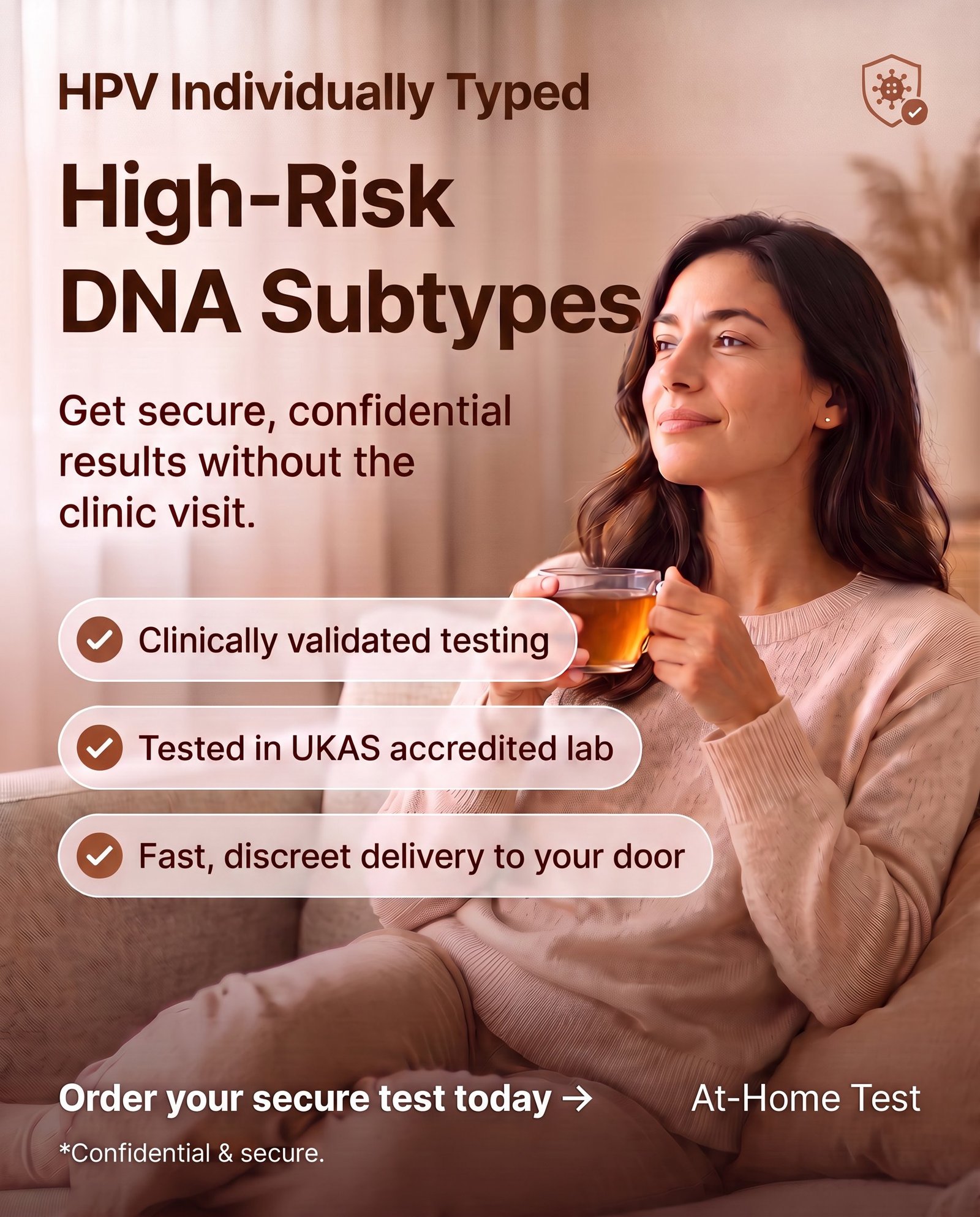
Our HPV Individually Typed High-Risk DNA Subtypes Test checks for high-risk HPV DNA using a sample you collect yourself. It also tells you which specific high-risk types are found in your sample.
Instead of just telling you if high-risk HPV is present or not, this test gives you more details about which high-risk HPV types have been found.
You can collect your sample easily at home. It will be analysed by a UKAS-accredited lab, and you’ll get your results securely online.
Private, convenient and discreet
- Individual high-risk HPV subtype identification
- Convenient self-sampling at home
- Discreet delivery and sample return
- UKAS-accredited laboratory analysis
- Secure online results
- Fast laboratory turnaround
Order your HPV test today to take control of your health and learn more about your HPV status.
What Is High-Risk HPV?
HPV includes over 200 related viruses. Some types are low risk and often cause genital warts. Others are high risk because if they stay in the body, they can change cells and raise the risk of some cancers.
High-risk HPV is especially important when it comes to cervical cancer. Ongoing infection with high-risk types can also be linked to cancers of the anus, penis, vulva, vagina, and throat.
This test shows which high-risk HPV types are found in your sample. By listing each type, it gives you more details than a test that only says high-risk HPV is present.
Why Choose Individual HPV Subtype Testing?
Knowing exactly which high-risk HPV type you have can give you and your healthcare provider more useful information.
Individual typing may help with:
- Understanding which high-risk HPV type has been detected
- Providing additional information when discussing your result with your GP or healthcare professional
- Monitoring a known HPV infection over time
- Supporting appropriate follow-up where clinically indicated
It’s important to know that a positive HPV result does not mean you have cancer. Most HPV infections do not turn into cancer and often go away on their own.
Who May Consider This Test?
This test may be suitable for adults who:
- Want private HPV testing at home
- Have previously tested positive for high-risk HPV
- Want to know which high-risk HPV type has been detected
- Want additional information alongside previous cervical screening
- Are monitoring a known HPV infection
- Have concerns about HPV and want to discuss their status with a healthcare professional
If you have been invited for NHS cervical screening, you should still go to your NHS screening appointment. This private test is not a substitute.
How Does the At-Home Test Work?
1. Order your test
Your test kit is delivered in discreet packaging.
2. Collect your sample
Follow the instructions provided with the kit to collect your vaginal/cervical sample using the supplied self-sampling device.
3. Return your sample
Place the sample in the supplied packaging and return it to the laboratory using the provided instructions.
4. Receive your results
Your sample is analysed for the high-risk HPV types included in the test, with individual subtype results reported where detected.
You’ll usually get your results within 2 to 3 working days after your sample arrives at the lab.
Understanding Your Results
Negative for high-risk HPV
No high-risk HPV DNA included in the test was detected in your sample.
A negative result is reassuring for the HPV types tested, but it doesn’t rule out all possible causes of cervical disease and doesn’t replace regular cervical screening.
Positive for high-risk HPV
High-risk HPV DNA has been detected.
Your report will identify the relevant HPV subtype(s), where individual typing is available.
A positive result does not mean you have cervical cancer. But if high-risk HPV stays in your body, it can raise the risk of changes to cervical cells, so it’s important to follow up as advised.
If you receive a positive result, discuss it with your GP or another appropriately qualified healthcare professional.
HPV and Cervical Cancer
Persistent infection with certain high-risk HPV types can cause changes to cervical cells.
These changes can happen slowly, so it’s important to have regular cervical screening even if you feel fine and have no symptoms.
HPV testing does not diagnose cervical cancer. If you have symptoms like unusual vaginal bleeding, bleeding after sex, unusual discharge, or pelvic pain, talk to your GP instead of relying on an HPV self-test.
How Is This Different from Standard HPV Testing?
Many HPV tests report whether high-risk HPV has been detected.
This test tells you exactly which high-risk HPV types have been found in your sample.
This extra detail can help you and your healthcare provider decide on the best next steps.
Can Men Use This Test?
This test is designed for vaginal/cervical sampling.
Men can carry and pass on high-risk HPV, but there isn’t a regular screening program for HPV-related cancers in men right now.
Why Choose Repose Healthcare?
- Individual high-risk HPV subtype identification
- Convenient at-home sample collection
- Discreet testing
- UKAS-accredited laboratory analysis
- Secure online results
- Fast turnaround
- Clear information about your detected HPV subtype(s)
Frequently Asked Questions
Does a positive result mean I have cancer?
No. A positive high-risk HPV result means that HPV DNA has been detected. It does not mean you have cancer.
Most HPV infections do not result in cancer. However, persistent infection with certain high-risk types can increase the risk of cervical cell changes, making appropriate follow-up important.
Does this replace my NHS cervical screening?
No. Private HPV testing should not replace recommended NHS cervical screening.
If you are eligible for NHS cervical screening or have been invited to attend, you should continue to participate even if you have a private HPV test.
How often should I take the test?
The appropriate frequency depends on your age, screening history, previous results and individual circumstances. Follow the recommendations of your GP or cervical screening programme rather than relying on a fixed private testing interval.
What should I do if my result is positive?
Discuss your result with your GP or an appropriately qualified healthcare professional. They can advise whether further assessment or cervical screening is appropriate.
Can HPV cause symptoms?
High-risk HPV infections often cause no symptoms. This is one reason regular cervical screening is important.
Medical Disclaimer
This test is intended to provide information about the presence of high-risk HPV DNA in the sample tested. It is not a diagnostic test for cervical cancer, precancerous cervical changes or any other cancer.
A positive result does not mean that cancer or precancerous changes are present. A negative result does not completely rule out HPV infection, cervical disease or other health conditions.
The test does not replace NHS cervical screening, cervical cytology, colposcopy or assessment by a qualified healthcare professional.
If you receive a positive result, you should discuss it with your GP or another appropriately qualified healthcare professional to determine whether further assessment or follow-up is required.
If you have symptoms such as unusual vaginal bleeding, bleeding after sex, persistent pelvic pain or unusual vaginal discharge, seek medical advice regardless of your HPV test result.
Test performance depends on correct sample collection and the laboratory assay used. Only HPV types included in the laboratory’s validated testing panel can be detected and reported.
Take the Next Step
Find out your HPV status easily with individual high-risk HPV subtype testing you can do at home.
Order your HPV Individually Typed High-Risk DNA Subtypes
Test today and get your results securely online.