

A Patient Guide to MRSA: Symptoms, Risks, and Screening in 2026
Did you know that approximately 1 in 30 people in the UK are currently “colonised” with MRSA, meaning they carry the bacteria on their skin without any symptoms or illness? It’s a statistic that often surprises those who only know the bacteria through sensationalist “superbug” headlines. It’s completely understandable if you feel a sense of dread when a doctor mentions screening before a scheduled procedure. You might be worried about your health or simply stressed about meeting hospital requirements in time for your surgery date.
This patient guide to mrsa is designed to replace that anxiety with clear, clinical facts. We’ll help you distinguish between being a healthy carrier and having an active infection, ensuring you have the knowledge to take control of your wellbeing in 2026. By the end of this guide, you’ll understand the specific symptoms to look out for, how to prevent transmission within your household, and how a UKAS-accredited private test can provide fast, confidential results from the comfort of your own home.
Key Takeaways
- Understand why MRSA is a manageable clinical condition rather than an untreatable “superbug” when approached with the right professional guidance and organisation.
- Learn to distinguish between common skin blemishes and potential MRSA symptoms, including why early infections are frequently misidentified by patients.
- Discover the essential clinical difference between asymptomatic colonisation and active infection to better understand your health status and necessary next steps.
- Follow this patient guide to mrsa to choose the most appropriate screening method, whether you require rapid PCR results for surgery or a standard culture test.
- Find out how to take control of your healthcare with discreet, UK-based home screening that provides professional, laboratory-accurate results from the comfort of your own home.
Understanding MRSA: What Patients Need to Know
Methicillin-resistant Staphylococcus aureus, commonly known as MRSA, is a type of bacteria that has developed resistance to several widely used antibiotics. While the term “superbug” often appears in news headlines, it’s a label that can cause unnecessary alarm. In this patient guide to mrsa, we focus on the clinical reality: MRSA is a manageable condition when addressed with the right medical approach and organised screening protocols. The challenge isn’t that the bacteria are more aggressive than others, but rather that the standard toolkit of penicillins is less effective against them.
In the UK, MRSA is more common than many people realise. Approximately 1 in 30 healthy individuals carry the bacteria on their skin or in their nose without showing any symptoms. This is known as being “colonised.” Because these individuals feel perfectly healthy, they can unknowingly pass the bacteria to others who might be more vulnerable. As we look at healthcare in 2026, the NHS remains heavily focused on antibiotic stewardship. This involves careful management of how medicines are prescribed to ensure that resistant strains don’t become more prevalent, making MRSA screening a cornerstone of modern patient safety.
Staphylococcus Aureus vs. MRSA
Most people carry Staphylococcus aureus as part of their normal skin flora. In fact, about 33% of the population has this “Staph” bacteria present at any time without issue. The distinction with MRSA lies in its genetic resistance to methicillin, a specific type of penicillin. It’s a common myth that MRSA is a “stronger” version of the bacteria. It isn’t more likely to cause an illness, but if an infection does occur, it requires specific, non-standard antibiotics to treat it effectively. Understanding this difference helps reduce the stigma often associated with a positive test result.
Why MRSA is a Concern in Healthcare Settings
The primary risk associated with MRSA occurs when the bacteria find a way to enter the body. In a clinical environment, patients often have “entry points” such as surgical incisions, urinary catheters, or intravenous drips. These bypass the skin’s protective barrier, potentially leading to more serious infections in the blood or deep tissue. This patient guide to mrsa emphasises that hospitals manage these risks through strict hygiene and screening. Protecting “vulnerable” patients, such as those undergoing major surgery or chemotherapy, is vital. Awareness of hospital-acquired infections ensures that both staff and patients take the necessary precautions, such as using antimicrobial body washes or targeted screening, to maintain a safe recovery environment.
Identifying the Signs: MRSA Symptoms and Warning Signals
Recognising the early indicators of an infection is a vital part of this patient guide to mrsa. Most MRSA infections start as skin changes that people mistake for minor issues. You might notice a small red bump, a pimple, or a site that looks like an insect bite. Because the bacteria cause rapid inflammation, patients frequently describe the area as a “spider bite,” even if they didn’t see a spider. This misidentification is a common reason why treatment is sometimes delayed.
It’s important to understand that you can carry the bacteria without feeling ill. This state, known as colonisation, means the bacteria live on your skin or in your nose but haven’t caused an infection yet. Understanding the difference between being a carrier and having an active infection is a key component of MRSA screening and testing. Even if you feel perfectly healthy, being colonised means you can accidentally spread the bacteria to others who might be more at risk of serious illness.
Common Skin Symptoms to Watch For
MRSA skin infections typically appear in areas where the skin has been broken by a cut, scrape, or even a hair follicle. You should check your skin regularly for these specific signs:
- Warmth and Swelling: The affected area often feels significantly hotter than the surrounding skin and may look tight or swollen.
- Pain and Tenderness: Unlike a standard spot, an MRSA site is usually very painful to the touch.
- Pus or Drainage: The bump may fill with pus or leak a clear fluid. Do not attempt to squeeze or drain this yourself, as it can spread the bacteria.
- Skin Tone Variations: On white skin, the area usually appears bright red. On brown or black skin, redness might be harder to see. In these cases, focus on feeling for heat and looking for swelling or a greyish/purplish tint.
If you’re unsure if a mark is cause for concern, you can compare it against other common skin infections to help differentiate between standard issues and potential MRSA. If you’re worried about being a carrier, using discreet screening options can provide the clarity you need from home.
When to Seek Urgent Medical Advice
A skin infection becomes a medical emergency if the bacteria enter your bloodstream or lungs. This is known as a systemic infection. You must contact your GP or call 111 immediately if a skin issue is accompanied by a high temperature of 38°C or above, shivering, dizziness, or sudden confusion. These are red flags that the body is struggling to contain the bacteria.
If you develop a rash, use the “Glass Test.” Press a clear glass firmly against the rash. If the marks don’t fade under the pressure, call 999 or go to A&E immediately, as this can indicate sepsis. When speaking to a healthcare professional, be direct. Tell them clearly: “I have a skin infection that is getting worse, and I am worried it might be MRSA.” Providing this specific concern helps them prioritise your assessment correctly.
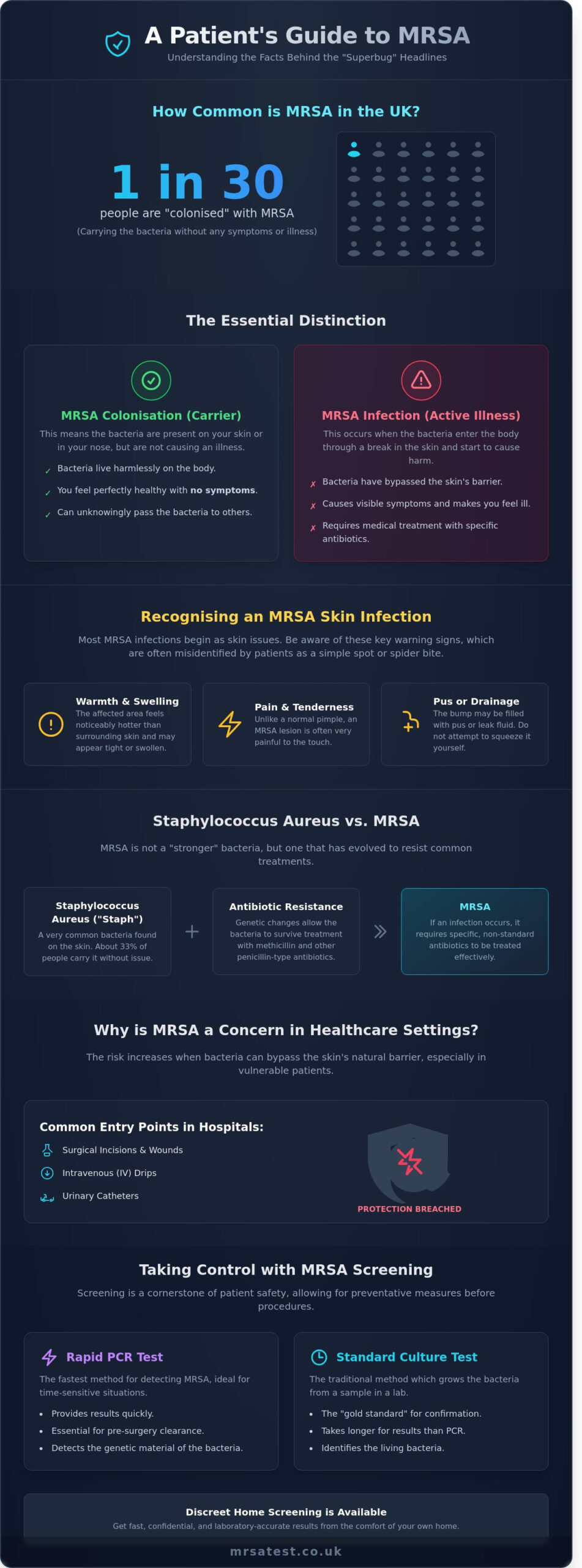
Colonisation vs. Infection: The Essential Distinction
Understanding the difference between carrying the bacteria and being ill is a vital part of this patient guide to mrsa. Many people feel a sense of alarm when they hear they have “tested positive” for MRSA, but a positive result often indicates colonisation rather than an active infection. Colonisation means the bacteria are living on your skin or inside your nostrils without causing any harm, pain, or symptoms. You’re effectively a “carrier.”
In contrast, an infection occurs only when those bacteria bypass your body’s natural defences. When MRSA enters the bloodstream or deeper tissues, it causes inflammatory illness. This distinction is why medical professionals focus so heavily on screening. If we know you’re a carrier, we can take steps to ensure those surface bacteria don’t become an internal threat during medical procedures.
It is important to remember that being a carrier isn’t a reflection of your personal hygiene. Bacteria are a natural part of human biology; MRSA is simply a specific strain that has developed resistance to certain antibiotics. You can pick it up in various environments, and carrying it doesn’t mean you’re “dirty” or “unhealthy.”
The Science of Colonisation
MRSA bacteria prefer warm, moist areas of the body, which clinicians refer to as “reservoirs.” The most common sites for colonisation include:
- The nostrils (nares)
- The groin
- The axilla (armpit)
A person can remain colonised for weeks or even months without ever knowing it. Because there are no symptoms, the only way to identify a carrier is through a clinical swab or a PCR rapid test. If you’re identified as a carrier before a hospital admission, you’ll likely undergo “decolonisation.” This is a straightforward process involving a five-day course of special antiseptic body washes and antibiotic nasal creams. It’s a proactive measure designed to clear the bacteria from your skin before surgery begins.
How Colonisation Becomes an Infection
The transition from being a healthy carrier to having an active infection usually requires an “entry point.” In a domestic setting, this might be a simple cut, a graze, or an insect bite. In a clinical setting, the entry point is often a surgical incision, a catheter, or a site where a cannula is inserted.
Certain factors increase the risk of the bacteria taking hold. People with weakened immune systems or underlying health conditions, such as diabetes, are more susceptible. For a deeper look at the biological mechanisms involved, refer to our guide on what MRSA is. This patient guide to mrsa is designed to empower you with the facts; knowing you’re a carrier allows you to access simple treatments that significantly reduce the risk of future complications.
The Role of MRSA Screening in Modern Healthcare
Screening is no longer an optional extra in British hospitals; it’s a vital safety net designed to catch silent threats before they escalate. As this patient guide to mrsa explains, the primary goal of screening is to identify “colonisation.” This is a state where the bacteria live on your skin or in your nose without causing illness. While harmless on the surface, these bacteria become dangerous if they enter the bloodstream during a medical procedure. By identifying carriers early, healthcare providers can implement preventative measures that reduce the risk of surgical site infections by up to 60%.
The swabbing process is a simple, painless method of collecting samples. You won’t need needles or invasive procedures. Instead, a sterile swab, which looks like a long cotton bud, is wiped gently over specific areas where the bacteria usually live. These typically include the inside of the nostrils, the throat, and skin folds such as the armpits or groin. The entire process takes less than a minute but provides the laboratory with the essential data needed to ensure your safety during recovery.
Effective screening directly impacts the length of your hospital stay. Patients who develop an MRSA infection after surgery often remain in hospital for an average of 10 days longer than those who don’t. This puts unnecessary strain on both the patient and the NHS. By clearing the bacteria before you enter the operating theatre, you significantly lower the chance of post-operative complications and ensure a faster return to your daily life.
Pre-Operative Screening Protocols
Testing is a mandatory step on your pre-op checklist to maintain a sterile environment. If your results return positive, don’t panic. You’ll simply undergo a five-day decolonisation programme involving an antiseptic body wash and a specific nasal cream. This protocol protects you and prevents the spread of resistant bacteria to other vulnerable patients on the ward, keeping the entire hospital environment safer for everyone.
The Convenience of At-Home Testing
In 2026, many patients are choosing to take control of their health through private options. Using at-home test kits in the UK allows you to skip the queue and avoid extra hospital visits. These kits maintain strict clinical standards, with every sample analysed in a UKAS-accredited laboratory. It’s a discreet, reliable way to get your results quickly, often within 24 to 48 hours of the lab receiving your kit. This shift toward home-based collection offers a level of comfort and privacy that traditional clinical settings can’t always provide.
Take the first step toward a safer surgery by ordering your MRSA home test kit for professional, confidential results today.
Taking Control: Choosing the Right MRSA Test for You
Identifying colonisation early is the most effective step in this patient guide to mrsa. Modern screening allows you to manage your health with professional-grade kits from the comfort of your home. Choosing the right test depends on your specific needs, particularly your timeline for upcoming medical procedures.
PCR vs. Culture: Speed vs. Tradition
The primary choice you’ll face is between a PCR test and a traditional Culture test. PCR (Polymerase Chain Reaction) is the modern standard for speed; it identifies bacterial DNA to provide a definitive answer within 24 hours of the lab receiving your sample. If you have an urgent surgery date or need fast reassurance, the MRSA Rapid PCR Test is the most efficient option available.
In contrast, a Culture test involves growing the bacteria in a controlled environment. This process takes 48 to 72 hours for detection. While it takes longer, it remains a reliable, traditional method often used for general peace of mind when there’s no immediate deadline. Both tests are processed in the same UKAS-accredited facilities to ensure clinical accuracy.
Our “swab and send” process is designed to be as simple as possible:
- Discreet Delivery: Your kit arrives in plain packaging that fits through a standard letterbox.
- Simple Collection: You follow clear instructions to take swabs from specific areas, such as the nose and throat.
- Secure Transit: You return your samples using the pre-paid tracked envelope included in your kit.
- Confidential Results: Your data is protected by strict UK privacy laws and delivered through a secure online portal.
What to Do with Your Results
Receiving your results is a straightforward process. If your result is “Negative,” it provides the documented reassurance required by most UK hospitals before elective surgery. Sharing this digital report with your surgical team can help prevent delays in your care pathway. It proves you aren’t carrying the bacteria at the time of the swab.
If you receive a “Positive” result, it isn’t a cause for panic. It simply means you’re colonised with MRSA. You should contact your GP or consultant to begin a decolonisation protocol. This usually involves a five-day course of antiseptic body washes and nasal ointments. Once the treatment is complete, you’ll typically be re-tested to ensure the bacteria is cleared before your procedure. Using this patient guide to mrsa helps you stay ahead of the process, ensuring your surgery goes ahead safely and on time.
Securing Your Peace of Mind with Proactive Screening
Understanding the vital distinction between colonisation and active infection is the first step in managing your wellbeing. Recognising early warning signs and knowing when to seek professional screening ensures you protect yourself and your community. This patient guide to mrsa demonstrates that modern healthcare in 2026 is built on fast, accessible diagnostics that put you in control of your clinical journey.
You don’t need to wait for a hospital referral to get the answers you deserve. Our service utilises a UKAS-accredited laboratory to provide the same level of accuracy you’d expect from a professional clinical setting. We offer an MRSA PCR rapid test option that provides molecular detection results within 24 hours of your sample reaching the lab. Every kit is sent in discreet packaging; we employ secure data handling to ensure your privacy remains protected at every stage.
Order your private MRSA test kit today for fast, discreet results. Taking this simple step from the comfort of your own home provides the clarity and confidence you need to move forward with your health plan.
Frequently Asked Questions
Is MRSA contagious to my family members at home?
Yes, MRSA is contagious to family members through direct skin-to-skin contact or by sharing personal items like towels and razors. Research shows that these bacteria can survive on hard surfaces for up to 38 weeks. To protect your household, don’t share linen or hygiene products and ensure everyone follows a frequent hand-washing routine.
Can I get rid of MRSA colonisation permanently?
You can clear MRSA colonisation through a decolonisation process, although there’s always a risk of re-colonisation from external sources. Standard five-day treatment protocols involving antiseptic washes and nasal ointments are successful in approximately 60% of cases. Following this patient guide to mrsa will help you understand the hygiene steps needed to stay clear of the bacteria long-term.
How long does an MRSA swab test take to show results?
A standard MRSA culture test usually takes 48 to 72 hours because the laboratory must wait for the bacteria to grow. If you’re in a hurry, an MRSA PCR rapid test provides molecular detection in about 24 hours. Both methods are processed in UKAS-accredited facilities to ensure your results are both fast and clinically accurate.
What happens if I test positive for MRSA before my surgery?
If you test positive before an operation, your surgeon will likely start you on a five-day decolonisation programme to reduce infection risks. This involves using a chlorhexidine body wash and a specific nasal cream. Clinical studies indicate that pre-surgery screening and treatment can reduce the risk of surgical site infections by up to 60%.
Do I need to see a GP to get an MRSA test in the UK?
You don’t need to see a GP to get an MRSA test, as you can order a private at-home screening kit. While the NHS routinely screens high-risk patients before hospital admission, private kits offer a discreet and fast alternative for those who want peace of mind. These kits are sent in plain packaging and provide professional laboratory results without a doctor’s appointment.
Is an at-home MRSA test as accurate as a hospital test?
An at-home MRSA test is just as accurate as a hospital test provided it’s analysed by a UKAS-accredited laboratory. PCR-based home tests have a sensitivity rate exceeding 95%, which is the same standard used in clinical settings. The only difference is that you collect the sample yourself in the comfort of your home rather than in a ward.
What does an MRSA rash look like compared to a normal spot?
An MRSA infection often looks like a red, swollen, and painful bump that can be mistaken for a spider bite or a large boil. Unlike a normal spot, an MRSA lesion is often warm to the touch and may quickly develop into a deep abscess that drains pus. This patient guide to mrsa highlights that any spot that spreads rapidly or is accompanied by a fever requires professional medical attention.
Can I treat MRSA with over-the-counter creams?
You can’t treat MRSA with over-the-counter antiseptic creams because the bacteria are resistant to many common medications. Standard creams won’t clear the colonisation or stop an active infection from spreading. You’ll need a prescription for specific antibiotics, such as mupirocin nasal ointment or oral tablets, which are chosen based on the laboratory’s sensitivity findings.