
Private MRSA Screening vs NHS: Which Option Is Right for Your Surgery?
What if a simple three-day delay in receiving your test results meant your long-awaited surgery was cancelled just as you arrived at the hospital? Preparing for an operation is stressful enough without the added worry of MRSA colonisation or the uncertainty of whether you even qualify for a hospital-led swab. You want to ensure you’re clear of infection well before your admission date to avoid any last-minute complications or delays.
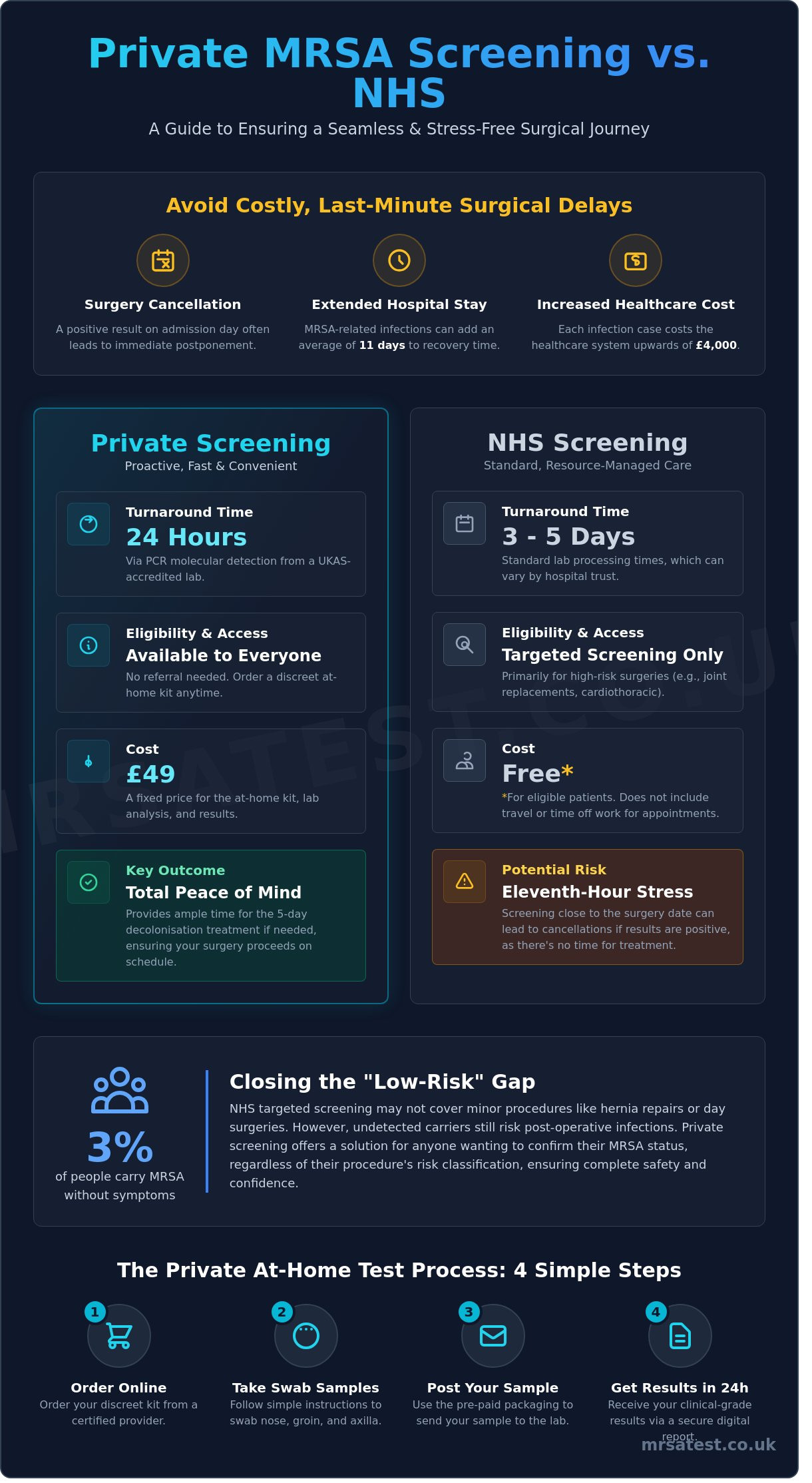
This guide provides a detailed comparison of private mrsa screening vs nhs options to help you decide which path ensures a seamless surgical journey. We’ll explore how private testing provides clinical results from a UKAS-accredited lab in as little as 24 hours, compared to the standard 3 to 5 day wait times often found in hospital settings. You’ll discover how a £49 at-home kit offers the discretion and speed needed to complete any required decolonisation before your admission date. We will examine the specific costs, eligibility criteria, and reliability of both methods so you can head into theatre with total peace of mind.
Key Takeaways
- Understand the vital role of MRSA screening in preventing post-operative wound infections and ensuring a safe recovery after your procedure.
- Learn how the NHS “targeted screening” policy works and whether your specific surgery meets the criteria for hospital-provided testing.
- Compare the benefits of private mrsa screening vs nhs protocols, specifically looking at the 24-hour turnaround of PCR molecular detection.
- Discover how to use a discreet, UKAS-accredited home test kit to secure your results without the need for additional hospital appointments.
- Address the critical question of hospital acceptance to ensure your private test results provide the clinical assurance required for your surgery.
Understanding MRSA Screening in the UK: The Pre-Admission Landscape
Hospitals across the UK prioritise MRSA management to maintain sterile environments and ensure patient safety. What is MRSA? It is a strain of bacteria resistant to several widely used antibiotics, making it difficult to treat if it enters the bloodstream. In the 2026 healthcare environment, patient-led monitoring has become a standard part of the surgical journey. Many individuals now take proactive steps to confirm their status before ever reaching the ward. This shift helps prevent the sudden cancellation of operations, which remains a common frustration in the elective surgery pathway.
The choice between private mrsa screening vs nhs services often depends on the required turnaround time. While the NHS provides mandatory screening for most high-risk procedures, the timing doesn’t always align with private surgical dates or short-notice NHS slots. UK health protocols require clear results to prevent post-operative wound infections and septicaemia, which can be life-threatening for vulnerable patients. Managing this risk early is the most effective way to ensure a smooth recovery.
Why Hospitals Require MRSA Clearance
Surgical site infections (SSIs) are a primary concern for clinical teams. Data from UK health agencies suggests that an MRSA-related infection can extend a hospital stay by an average of 11 days, costing the healthcare system upwards of £4,000 per patient. Screening ensures that:
- The risk of cross-contamination between patients in shared wards is minimised.
- Sterile environments in operating theatres remain protected from resistant strains.
- Surgery delays are avoided, as a positive result on the day of admission usually leads to an immediate postponement.
The Standard Swabbing Procedure
Testing is a fast and simple process. It involves taking samples from areas where the bacteria typically live, such as the nose, groin, and axilla (armpit). It’s important to distinguish between being a “carrier” and having an active infection. Most people who test positive are colonised, meaning the bacteria live harmlessly on their skin. However, surgery creates a “portal of entry” that allows these bacteria to cause internal harm. If you’re colonised, you’ll undergo a decolonisation programme. This typically involves using a specialised antiseptic body wash and a nasal ointment for five days before your procedure to clear the bacteria safely.
The NHS Approach to MRSA: Targeted Screening Explained
The NHS currently operates under a "targeted screening" framework, a policy refined in 2014 to ensure clinical resources are directed toward the most vulnerable patients. This means that, unlike a universal approach, the health service focuses its testing efforts on specific high-risk groups. When weighing up private mrsa screening vs nhs options, it’s vital to understand that the NHS model is designed for population-level resource management rather than individual preference. Screening usually takes place during a pre-operative assessment, often two to four weeks before a scheduled surgery, though the exact timing depends on the specific hospital trust.
Who Qualifies for NHS Screening?
Eligibility for a swab usually depends on the complexity of your upcoming procedure and your medical history. Patients undergoing high-risk surgeries, such as orthopaedic joint replacements or cardiothoracic operations, are almost always screened. These areas are prioritised because an infection in a prosthetic joint or the chest cavity can be life-threatening. Elective admissions often receive a screening appointment at a pre-operative clinic, while emergency admissions are typically swabbed upon arrival at the ward. Each of the 229 NHS Trusts in England may have slightly different protocols, meaning your experience can vary depending on your local hospital’s specific infection control policy.
Potential Drawbacks of the NHS Model
One primary concern with the targeted model is the “low-risk” gap. If you’re scheduled for a minor procedure, such as a simple hernia repair or certain day surgeries, you might not be screened at all. However, data suggests about 3% of the population carry MRSA on their skin without showing symptoms. If you’re an undetected carrier, you still risk developing a post-operative infection even during minor surgery. For a broader look at hospital protocols, you can consult NHS information on MRSA.
Timing is another hurdle. NHS screenings often happen quite close to the surgery date. A positive result at the eleventh hour frequently leads to stressful surgery cancellations because there isn’t enough time for the standard five-day decolonisation treatment. This lack of lead time is a key reason why many patients choose to order a private screening kit to secure their results and complete any necessary treatment well in advance of their hospital date.
Private MRSA Screening vs NHS: A Direct Comparison
Deciding between private mrsa screening vs nhs usually depends on your surgical timeline and your preference for clinical discretion. While the NHS provides a robust screening programme, the system often faces logistical pressures that can delay results during busy periods. Choosing a private route allows you to take control of the timeline, ensuring you have the necessary clearance well before you arrive at the hospital gates.
Timeline and Speed of Results
Speed is the most significant factor for many patients. Standard NHS culture tests rely on growing bacteria in a laboratory, a process that typically takes 48 to 72 hours. If a laboratory is backed up, this wait can grow longer. Private PCR molecular testing works differently by identifying the genetic material of the bacteria. This allows for accurate results within 24 hours of the lab receiving your kit. Accessing a “fast MRSA test” ensures that even if your surgery is scheduled at short notice, you won’t be held back by administrative delays.
Privacy and Confidentiality
Testing at home offers a level of discretion that a hospital visit cannot match. Your private results remain outside your permanent NHS record unless you choose to share them with your consultant. All kits arrive in plain, discreet packaging, so your health remains your business. This at-home approach also removes the stress of a clinical environment. You can collect your samples in a familiar, low-stress setting, which is often preferred by those feeling anxious about their upcoming operation.
Cost Considerations in the UK
While NHS testing is free at the point of use, the MRSA test cost UK for private options reflects the speed and convenience provided. A high-quality PCR kit generally ranges from £90 to £150. This fee is inclusive, covering:
- Sterile swabs and clear, step-by-step instructions
- Prepaid 24-hour tracked shipping to the laboratory
- Rapid analysis at a UKAS-accredited facility
- A secure, digital certificate of your results
It’s helpful to view this as an insurance policy. A cancelled private surgery, such as a hip replacement, can cost a patient over £12,000 in lost fees and rescheduling charges. Investing in a private test provides the peace of mind that your procedure will go ahead as planned. Ultimately, the private mrsa screening vs nhs choice often comes down to the value you place on time and certainty.
Once you receive your digital certificate, you can share it directly with your NHS surgical team. These results come from UKAS-accredited facilities, meaning they meet the strict clinical standards required by any hospital pre-assessment unit.
When Should You Consider a Private MRSA Test?
Deciding when to opt for a private test depends on your surgery’s urgency and your need for certainty. While the NHS provides screening for many, it often happens just days before your procedure. If you test positive at that late stage, your surgery is almost certainly postponed. Choosing private mrsa screening vs nhs gives you the advantage of time. You can test weeks in advance, ensuring any necessary treatment is finished before your hospital admission date.
The most common concern patients have is whether their hospital will accept a private result. Most UK hospitals and private surgical centres accept results from UKAS-accredited laboratories. These facilities follow the same rigorous standards as NHS labs. By presenting a formal certificate of clearance, you’re providing the clinical team with the documentation they need to proceed safely. It’s a proactive way to take control of your surgical timeline.
High-Stakes Elective Procedures
Patients undergoing elective procedures like hip replacements, heart valve surgery, or cosmetic enhancements often prefer independent testing. If you’re travelling abroad for medical tourism, a positive result upon arrival can lead to wasted flights and thousands of pounds in lost deposits. Screening at home ensures you’re clear before you board. It also protects your family. MRSA can spread to household members through shared items, so knowing your status helps you take precautions before you return home to recover.
Managing a Positive Result
Finding out you’re positive isn’t a disaster, but it requires a specific 5-day decolonisation protocol. This usually involves using a prescribed antiseptic body wash and nasal ointment. When comparing private mrsa screening vs nhs, the private route is superior for timing. You should ideally test at least 10 to 14 days before your surgery. This window allows you to complete the 5-day treatment and, if necessary, take a follow-up test to confirm the bacteria is gone. You can then hand your clearance certificate to your consultant with confidence.
Don’t risk a last-minute surgical cancellation. Order your professional MRSA home test kit today for fast, accredited results.
Secure Your Peace of Mind with mrsatest.co.uk
Deciding between private mrsa screening vs nhs often comes down to how quickly you need your results before a scheduled procedure. We work exclusively with a UKAS-accredited laboratory partner to guarantee clinical accuracy for every patient. This accreditation ensures our facility meets the ISO 15189 standards required for medical laboratories in the United Kingdom. By using our “nose and groin” self-collection kits, you can identify MRSA colonisation from your own home, avoiding the need for extra hospital appointments or travel.
While the NHS provides excellent care, the flexibility of private mrsa screening vs nhs allows you to test on your own schedule. This is particularly useful if your surgery date is approaching quickly or if you’ve been asked to provide a recent certificate of health. We provide the same level of clinical rigour found in a hospital setting but with the added convenience of a home-based service.
Our Testing Process
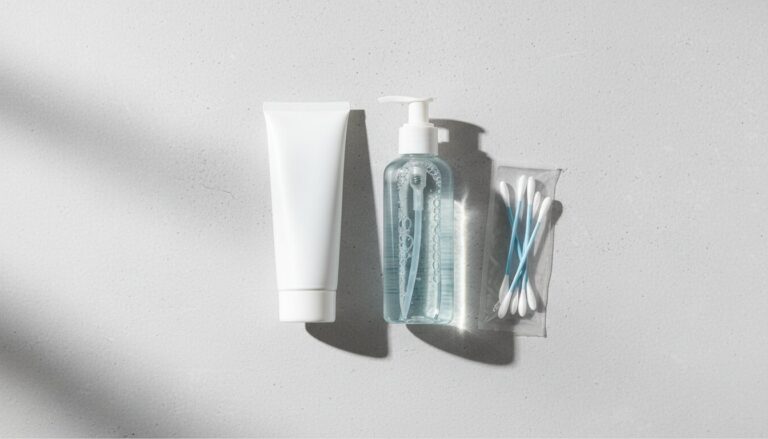
The steps are straightforward and designed for ease of use. You’ll receive a kit containing sterile swabs and a pre-paid return envelope. Simply follow the step-by-step guide to sample the required areas. We include free, discreet shipping and a return collection service with every order to ensure your samples reach the lab quickly. Once our UK-based lab receives your sample, we use advanced technology for results:
- MRSA Culture Test: This traditional method identifies live bacteria growth over 48 to 72 hours.
- Rapid PCR Test: This molecular detection method provides results in 24 hours by identifying MRSA DNA.
We send your results directly to a secure online portal. This keeps your medical journey private and ensures you have the documentation ready for your surgical team immediately.
Order Your Kit Today
Preparing for surgery is stressful, but your screening doesn’t have to be. You can view our range of pre-surgery screening kits to find the right fit for your specific hospital requirements. If you need assistance, our UK-based support team is available to explain the differences between our testing options. We’ve provided reliable screening for more than 15,000 UK patients, ensuring they meet their clinical deadlines without delay.
Every test is handled with 100% confidentiality by our expert team. We understand the importance of discretion when it comes to your health data. Don’t let a missed screening window or a backlog in the public system postpone your operation. Order your kit today and take control of your surgical safety from the comfort of your home.
Take Control of Your Pre-Admission Health
Choosing between private mrsa screening vs nhs often comes down to your personal timeline and the level of certainty you require before a procedure. While the NHS provides targeted screening based on specific risk factors, it doesn’t always cover every patient or offer the rapid turnaround needed for urgent private surgeries. Opting for a private route ensures you aren’t left waiting for results that could delay your operation or cause unnecessary stress.
Our service provides a 100% UK-based clinical pathway that prioritises your peace of mind and safety. Every sample undergoes UKAS-accredited laboratory analysis to ensure clinical precision at every stage. If you’re on a tight schedule, we offer results within 24 hours of the lab receiving your kit, giving you the data you need exactly when you need it. This efficiency allows you to focus on your recovery rather than worrying about administrative delays or potential colonisation.
Order your discreet MRSA home test kit today and prepare for your surgery with total confidence. You deserve a simple, professional process that fits around your life and protects your health.
Frequently Asked Questions
How much does a private MRSA test cost in the UK?
Private MRSA screening costs in the UK typically range from £79 for a standard culture test to £149 for a rapid PCR option. These prices usually include the testing kit, laboratory analysis in a UKAS-accredited facility, and secure delivery of your results. Choosing a private service often includes the cost of discreet shipping and pre-paid return postage to the lab, ensuring there are no hidden fees during your preparation.
Can I get an MRSA test on the NHS if I am not in a high-risk group?
You generally cannot get an MRSA test on the NHS unless you’re scheduled for specific high-risk elective surgeries or have clinical symptoms. NHS England guidelines prioritise screening for patients undergoing procedures like heart, brain, or orthopaedic surgery. If your procedure falls outside these 2014 clinical mandates, you may need to arrange a private MRSA screening vs NHS route to ensure your peace of mind before hospital admission.
How long does a private MRSA test take to give results?
Results for a private MRSA test are typically available within 24 to 72 hours of the laboratory receiving your samples. A rapid PCR (Polymerase Chain Reaction) test provides molecular detection in just 24 hours, while a traditional culture test takes about 3 days to allow for bacterial growth. This speed is a significant advantage when you’re working against a tight pre-operative deadline and need to confirm your status quickly.
Will my NHS surgeon accept a private MRSA test result?
Most NHS surgeons and hospitals accept private test results provided they come from a UKAS-accredited laboratory. You should present your digital or printed certificate during your pre-operative assessment to prove you’re clear of colonisation. Since 95% of UK hospitals require proof of a negative status before elective surgery, having a clear, professional report from a trusted partner laboratory helps prevent last-minute cancellations and ensures your surgery date remains secure.
What happens if I test positive for MRSA before my surgery?
If you test positive for MRSA colonisation, your surgery will likely be postponed while you complete a 5-day decolonisation treatment. This regime usually involves using a special antiseptic body wash and antibiotic nasal cream to clear the bacteria from your skin. Once the treatment is finished, you’ll need a follow-up screen to confirm the MRSA is gone before your procedure can safely proceed. This process reduces the risk of post-operative infection by 50%.
Is the private MRSA home test kit as accurate as a hospital test?
Yes, private home test kits are just as accurate as hospital tests because they use the same UKAS-accredited laboratory processes. The “at-home” element only refers to how you collect the swabs; the actual analysis uses professional PCR or culture methods. These tests provide a 99% accuracy rate for detecting MRSA colonisation when the sampling instructions are followed correctly. You get hospital-grade reliability from the comfort and privacy of your own home.
Do I need a GP referral to order a private MRSA screening kit?
You don’t need a GP referral or a doctor’s note to order a private MRSA screening kit. The service is designed for direct patient access, allowing you to take control of your pre-surgery preparation without waiting for a primary care appointment. This direct-to-consumer model saves time and ensures your results are handled with complete confidentiality. It’s an efficient way to meet hospital requirements without adding extra steps to your busy schedule.
Does a private MRSA test show up on my NHS medical records?
A private MRSA test result doesn’t automatically show up on your NHS medical records. Because the service is confidential and separate from the National Health Service, your data stays within the private laboratory’s secure system. You have full control over who sees your results, though you’ll need to share the negative certificate with your surgical team. This ensures your privacy is maintained while still meeting the clinical requirements for your upcoming operation.