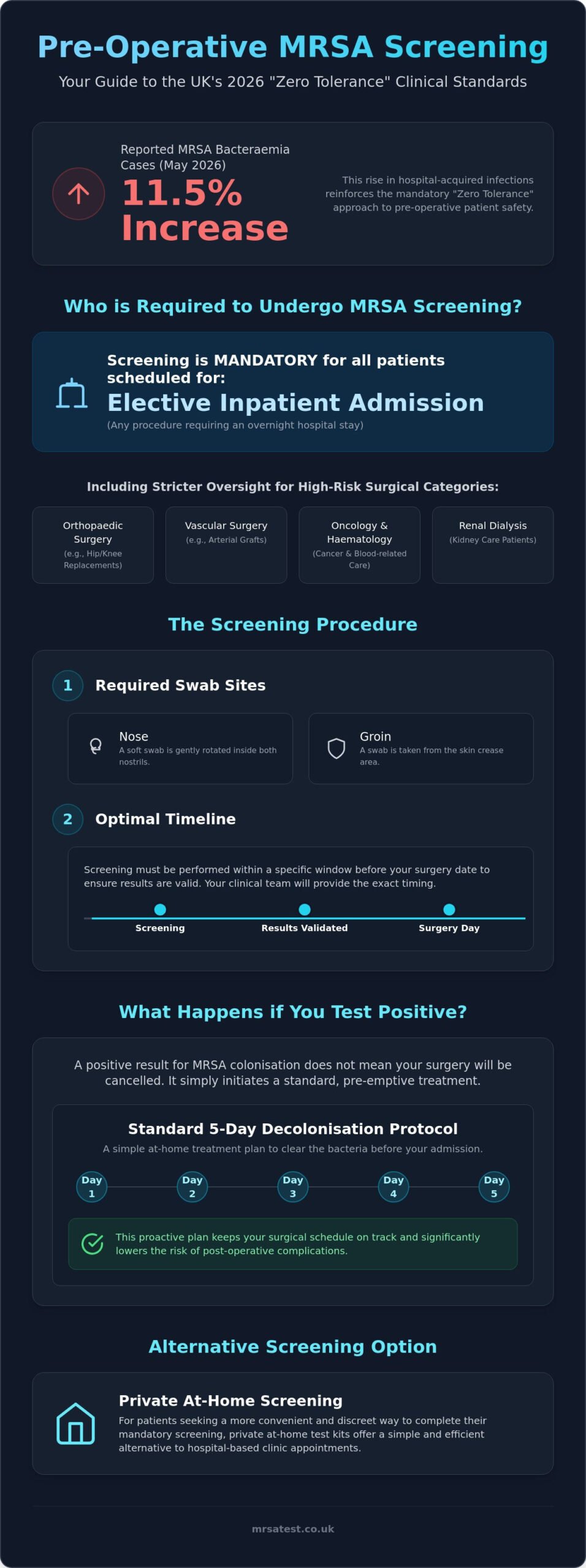
In May 2026, the UK recorded 107 reported cases of MRSA bacteraemia, an 11.5% increase that has reinforced the “Zero Tolerance” mandate for hospital-acquired infections. Because of these rising figures, staying informed about the current pre-operative mrsa screening guidelines uk is no longer just a recommendation; it’s a mandatory step for all elective inpatient admissions. Whether you’re preparing for a routine hip replacement or a complex cardiac procedure, your hospital needs to ensure you aren’t carrying these resistant bacteria into the theatre environment.
We understand that the lead-up to surgery is already stressful, and the thought of a positive test result causing a last-minute cancellation can feel overwhelming. It’s completely natural to feel anxious about the timing of your swabs or where exactly they’ll be taken. This guide provides a clear roadmap of the 2026 clinical standards to help you navigate the process with confidence. You’ll learn exactly how the screening is performed, how long your results remain valid, and the simple steps you can take if you require a decolonisation plan to keep your surgical schedule on track.
Key Takeaways
- Learn why the latest pre-operative mrsa screening guidelines uk mandate testing for all elective inpatient admissions to ensure patient safety.
- Identify the specific anatomical sites, such as the nose and groin, where swabs are required to detect colonisation accurately.
- Discover the optimal timeline for testing to ensure your results are valid and your surgical date remains secured.
- Understand the standard five-day decolonisation protocol used to clear the bacteria if your screening returns a positive result.
- Explore how private at-home screening options can provide a discreet and efficient alternative to hospital-based clinics.
Current Pre-Operative MRSA Screening Guidelines in the UK (2026)
The UK healthcare system has undergone a significant transformation in how it manages patient safety before surgery. As of July 2026, the pre-operative mrsa screening guidelines uk have been unified under a “Zero Tolerance” mandate. This shift ensures that every patient entering a hospital for elective surgery follows the same rigorous safety protocols, regardless of which NHS trust or private facility they visit. This standardisation was largely driven by the National Perioperative Collaborative to eliminate the confusion that previously existed when different hospitals maintained varying screening rules.
At the heart of these updates is the “Getting It Right First Time” (GIRFT) initiative. This program focuses on clinical excellence by identifying and removing variations in care that could lead to complications. By implementing a national standard, healthcare providers can better identify carriers of Methicillin-resistant Staphylococcus aureus (MRSA) before they ever reach the operating table. This proactive approach is essential for preventing surgical site infections (SSIs) and life-threatening bacteraemia, which saw an 11.5% increase in reported cases in May 2026 compared to the previous year.
The 2026 Standardised Approach
The 2026 GIRFT standards represent a move toward a patient-led, proactive screening pathway. Instead of waiting for a hospital appointment, patients are now encouraged to take an active role in their pre-operative preparation. This consistency across the board means that if you’re moving between a private provider and the NHS, your screening requirements remain identical. It simplifies the logistical burden on patients while ensuring that the hospital environment stays as sterile as possible for everyone. Hospitals now prioritise these results as a mandatory gatekeeper for elective admissions.
Why Clinical Guidelines Matter for Your Recovery
Adhering to these guidelines isn’t just about hospital paperwork; it’s about your personal recovery and long-term health. MRSA colonisation is the presence of bacteria without active infection symptoms. While colonisation might not make you feel ill today, it poses a significant risk once your skin’s natural barrier is breached during a surgical procedure.
When these bacteria enter a surgical wound, they can cause deep-seated infections that are difficult to treat with standard antibiotics. Following the pre-operative mrsa screening guidelines uk helps your clinical team identify this risk early. If you’re found to be a carrier, a simple decolonisation process can be completed before your surgery date. This prevents the trauma of last-minute cancellations and significantly lowers the chance of post-operative complications, allowing you to focus entirely on your rehabilitation.
Who is Required to Undergo MRSA Screening Before Surgery?
Understanding whether you need a test is the first step in your pre-surgical journey. According to the current pre-operative mrsa screening guidelines uk, all patients scheduled for an elective inpatient admission must undergo screening. This means if your procedure requires you to stay overnight in the hospital, a screen is mandatory. The primary goal is to identify carriers before they enter the clinical environment, which helps reduce the risk of cross-contamination between patients and protects those with weakened immune systems.
While the rules apply broadly to overnight stays, certain specialties are subject to even stricter oversight. These high-risk categories include vascular surgery, renal dialysis, oncology, and haematology. In these cases, the presence of MRSA poses a much higher threat to the patient’s recovery. You can find more detail on organising your timeline and medical paperwork in our Preparing for Surgery Checklist.
High-Risk Surgical Categories
Orthopaedic surgery is a major focus of the 2026 guidelines. When surgeons perform procedures involving prosthetic joints, such as hip or knee replacements, the risk of infection is a significant concern. Bacteria can easily adhere to non-living prosthetic materials, creating a “biofilm” that is incredibly difficult for antibiotics to penetrate. For a broader perspective on how these clinical rules are applied to keep you safe, this NHS patient guide to MRSA screening explains the rationale behind the testing process.
Cardiac and neurosurgery also operate under a zero-tolerance approach to colonisation. Because these surgeries involve the heart or the central nervous system, even a minor infection could lead to devastating complications. Screening ensures that any necessary decolonisation happens well before you ever reach the operating theatre.
Day-Case vs. Inpatient Screening Requirements
Day-case admissions follow slightly different rules under the pre-operative mrsa screening guidelines uk. If you’re coming in for a minor procedure and going home the same day, you might not always require a screen. However, the “metalwork rule” is a critical exception you should know. If your day-case surgery involves the insertion or removal of pins, plates, or screws, screening becomes mandatory. This also applies to procedures involving prosthetic mesh, such as certain hernia repairs.
Emergency admissions don’t follow the standard 2-to-4-week testing window. Instead, hospitals use “screen-and-treat” protocols where swabs are taken upon arrival and decolonisation starts immediately. If you’re planning an elective procedure and want to ensure your timeline remains secure, you can order a private screening kit to get your results processed by a verified laboratory before your hospital pre-assessment.
The Screening Procedure: Swab Sites and Testing Methods
The process of being tested for MRSA is straightforward and designed to cause minimal discomfort. According to the Official NHS MRSA Screening Guidance, the standard protocol requires samples from at least two sites, though three is becoming the preferred clinical norm in 2026. The primary locations are the nostrils, the groin (perineum), and the armpits (axilla). These areas are known as “hotspots” where the bacteria naturally thrive on the skin’s surface, even when you feel perfectly healthy.
Beyond these standard sites, clinical teams will examine any areas where your skin is broken. This includes surgical wounds from previous operations, skin lesions like eczema, or entry points for indwelling devices such as catheters. By adhering to the pre-operative mrsa screening guidelines uk, hospitals can ensure that every potential hiding spot for the bacteria is checked. Ideally, you should complete this screening between 2 and 4 weeks before your admission date. This window provides enough time for the laboratory to process the results and for you to complete a decolonisation course if needed without delaying your surgery.
How to Correctly Perform an MRSA Swab
Accuracy is vital for a valid result, especially if you are using an at-home kit. To ensure the sample is representative, follow these steps:
- Nose: Moisten the swab with sterile water if provided. Gently rotate the tip inside each nostril for about five seconds.
- Groin: Rub the swab firmly against the skin in the crease of the groin where the leg meets the torso.
- Axilla: Sweep the swab across the armpit area, ensuring good contact with the skin.
It’s essential to use a separate swab for each location to avoid cross-contaminating the samples. This helps the laboratory pinpoint exactly where the bacteria are located. Ensure you don’t touch the tip of the swab with your fingers or let it come into contact with other surfaces before placing it back into the transport tube.
PCR vs. Culture: Choosing the Right Test for Your Timeline
There are two primary ways laboratories identify MRSA, and your choice depends on how quickly you need your results. A standard MRSA Culture involves placing your sample in a controlled environment to see if bacteria grow. This method is reliable and cost-effective but typically takes 48 to 72 hours for a definitive result. It’s a solid choice if your surgery is still several weeks away.
If you’re on a tighter schedule, a Rapid PCR Test is the superior option. This method uses molecular technology to identify the specific DNA of the MRSA bacteria. Because it doesn’t rely on bacterial growth, results can be confirmed within 24 hours of the lab receiving the sample. PCR tests are optimal for patients with surgery scheduled in less than a week. Following the pre-operative mrsa screening guidelines uk often means choosing the test that best fits your specific surgical timeline to prevent avoidable delays.
What Happens if You Test Positive for MRSA Colonisation?
Receiving a positive result from your pre-operative screen can feel like a significant setback, but it isn’t a medical crisis. Most patients are surprised to learn they carry the bacteria, especially when they feel perfectly healthy. Under the current pre-operative mrsa screening guidelines uk, a positive result usually indicates colonisation rather than an active infection. This means the bacteria are simply living on your skin or inside your nose without causing harm. However, because surgery breaches the skin’s natural barrier, these bacteria must be cleared to prevent them from entering the surgical site.
It’s vital to distinguish between being a carrier and having an illness. If you’re colonised, you don’t need antibiotics that you’d take for a typical infection. Instead, you’ll follow a topical treatment plan designed to “decolonise” your skin. For a deeper look at how these bacteria behave and the risks they pose, you can read our guide on What is MRSA? Symptoms and Risks. Understanding this distinction helps alleviate the anxiety often associated with a positive test result.
The Decolonisation Protocol Explained
The standard decolonisation protocol in the UK is a rigorous five-day routine. It’s designed to be completed at home before you arrive for your surgery. To ensure the treatment is effective, you’ll typically be prescribed a combination of antiseptic products:
- Chlorhexidine (CHG) Body Wash: You’ll use this as a soap substitute and shampoo for the full five days. It’s essential to leave the lather on your skin for about a minute before rinsing.
- Nasal Ointment: A cream, usually Mupirocin or Naseptin, is applied to the inside of both nostrils three times a day. This targets the primary reservoir where the bacteria reside.
- Environmental Hygiene: To prevent re-colonisation, you must use fresh towels every day. You should also change your bed linens and nightwear daily during the treatment period.
Once you’ve completed the five-day course, your hospital may require “clearance swabs.” These are follow-up tests taken to confirm the bacteria are gone. If you want to check your status privately before your hospital pre-assessment, you can order an MRSA screening kit to ensure your decolonisation was successful.
Will My Surgery Be Cancelled?
A positive result doesn’t always lead to a cancellation. The decision depends on the type of surgery you’re having. For high-risk procedures involving prosthetic implants, such as a hip replacement, surgeons almost always postpone the operation until a clear screen is achieved. The risk of the bacteria adhering to the implant is simply too high. However, for urgent cases or lower-risk procedures, the clinical team might proceed with “suppression.” This involves starting the decolonisation treatment and using specific intravenous antibiotics during the surgery itself. Your surgical team will discuss the safest path forward based on your individual health needs and the urgency of the procedure.
Ensuring Your Surgery Stays on Schedule with At-Home Screening
Taking control of your surgical timeline is one of the most effective ways to reduce pre-operative anxiety. While the pre-operative mrsa screening guidelines uk are designed to keep you safe, the logistics of attending a hospital clinic for a simple swab can be a source of stress. Choosing an at-home screening kit allows you to bypass the waiting rooms and potential delays of a busy pre-assessment department. It puts the power back in your hands, ensuring your results are processed on a schedule that works for you rather than the hospital’s administrative capacity.
Our service focuses on speed and clinical accuracy without the need for a hospital appointment. By using at-home kits, you’re not just saving time; you’re also protecting yourself from unnecessary exposure to clinical environments before your procedure. Every sample is analysed by verified UK laboratory partners that meet the same stringent standards used by the NHS. This ensures that your results are reliable, professional, and ready to be presented to your surgical team during your final pre-operative check.
Why Patients Choose Private MRSA Testing
Privacy and peace of mind are the core reasons many patients opt for private testing. Knowing your MRSA status before the hospital does allows you to start any necessary decolonisation treatment immediately, rather than waiting for a phone call from a busy nurse. It’s a discreet process where results are delivered directly to a secure online portal. This level of flexibility is ideal for those with demanding schedules or for patients who find travelling to the hospital for multiple appointments difficult.
Ordering Your Pre-Op MRSA Kit
Selecting the right kit depends on your specific timeline. If your surgery is more than two weeks away, a standard Culture test is a reliable and cost-effective choice. However, if you’re on a tight deadline, our Rapid PCR kits can identify the bacteria’s DNA within 24 hours of the laboratory receiving your sample. The process is designed to be as simple as possible. Once your kit arrives, you’ll perform the swabs, place them in the provided tubes, and return them using the prepaid shipping label.
Order your confidential MRSA Rapid PCR Test Kit today to secure your surgery date and ensure you’re fully prepared for your admission.
Taking Control of Your Surgical Preparation
Staying ahead of hospital requirements is the best way to ensure your recovery begins on time. As we’ve explored, the current pre-operative mrsa screening guidelines uk focus on identifying carriers early to prevent serious surgical site infections. Whether you’re undergoing a high-risk orthopaedic procedure or a routine day case involving metalwork, understanding the swab process and the five-day decolonisation protocol gives you a clear advantage. Knowledge of these standards replaces uncertainty with a manageable plan for your admission.
You don’t have to wait for a hospital appointment to confirm your status. Choosing a private screening option gives you access to a confidential and discreet service that fits your life. Our UKAS accredited laboratory testing provides the clinical accuracy you need with the convenience of a non-clinical environment. With results available in as little as 24 hours, you can resolve any issues long before your official pre-assessment date. This proactive step ensures your timeline remains secure and your focus stays on your health.
Don’t let a last-minute positive result disrupt your surgical plans. Secure your surgery date with a private MRSA Rapid PCR Test Kit today and step into the hospital with total confidence. We’re here to support you through this simple, well-managed process so you can look forward to a successful procedure and a smooth recovery.
Frequently Asked Questions
Is MRSA screening mandatory for all UK surgeries?
Screening is mandatory for all elective inpatient admissions in the UK as part of a national “Zero Tolerance” mandate for hospital-acquired infections. This requirement includes any procedure where you’re expected to stay overnight or day cases involving the insertion or removal of metalwork and prosthetic materials. While emergency admissions follow different “screen-and-treat” protocols, elective surgical pathways require a clear result to ensure the theatre environment remains safe for all patients.
How long before my surgery should I be screened for MRSA?
You should ideally be screened between 2 and 4 weeks before your scheduled surgery date. This specific window follows the pre-operative mrsa screening guidelines uk to ensure there’s enough time for laboratory processing and any necessary follow-up. If you test positive, this timeframe allows you to complete the mandatory five-day decolonisation treatment without requiring a stressful last-minute postponement of your procedure.
Where exactly are the swabs taken for an MRSA screen?
Standard swabs are taken from at least two body sites, which are typically the nostrils and the groin or perineum. Many clinical protocols in 2026 also include the axilla (armpit) to ensure a more thorough screening process. If you have any open wounds, active skin lesions, or entry points for medical devices like catheters, these areas will also be swabbed as they’re common reservoirs for the bacteria.
Can I use an at-home MRSA test kit for my hospital pre-op?
Many hospitals accept results from private, UKAS-accredited laboratories, especially when provided during your pre-assessment appointment. Using an at-home kit is a discreet and efficient way to confirm your status before the hospital performs its own checks. It’s always a good idea to share your formal laboratory report with your surgical team to ensure it meets their specific local trust requirements for elective admission.
What happens if I test positive for MRSA just before my surgery?
If you test positive shortly before your operation, the procedure might be postponed to allow for a five-day decolonisation protocol. For high-risk surgeries involving implants, such as hip or heart surgery, a clear screen is almost always required before the surgeon will proceed. In some urgent or lower-risk cases, the clinical team may choose to move forward using “suppression” therapy, which involves starting treatment immediately alongside targeted intravenous antibiotics.
How long does it take to get MRSA screening results?
The time it takes to receive your results depends on the laboratory method used. A standard culture test typically takes between 48 and 72 hours as the lab must wait for any bacteria to grow. If you’re working within tight pre-operative mrsa screening guidelines uk timelines, a rapid PCR test is much faster. This molecular method can identify bacterial DNA and provide a definitive result within 24 hours of the lab receiving your sample.
Does a positive MRSA test mean I have an infection?
A positive result usually indicates that you’re “colonised,” which isn’t the same as having an active infection. Colonisation means the bacteria are living on your skin or in your nose without causing symptoms or making you feel unwell. The purpose of the screen is to identify this presence before surgery, as the bacteria can cause serious infections if they enter the body through a surgical incision.
Can I get decolonisation treatment privately if I test positive?