

Blog
Risks of Being an MRSA Carrier: A Comprehensive Guide to Colonisation

Jun
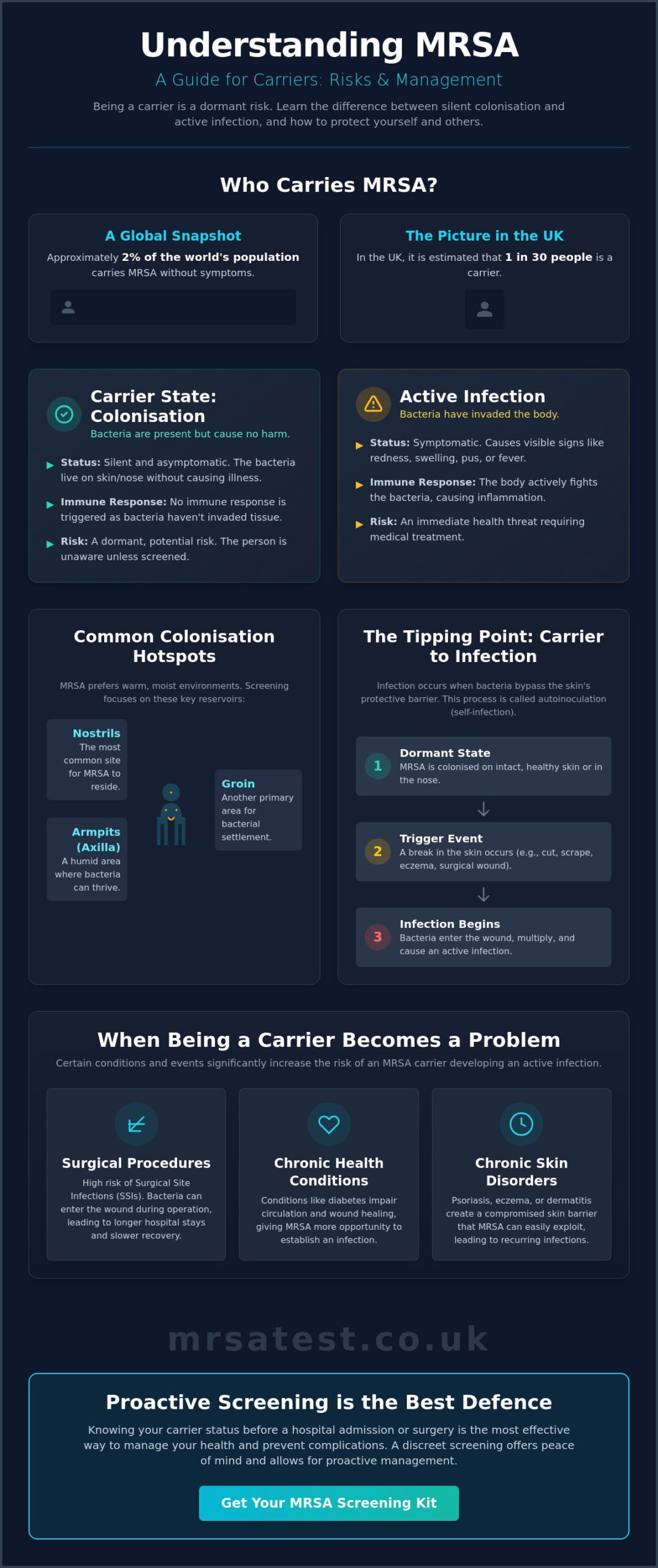
Did you know that approximately 2% of the global population carries MRSA on their skin or in their nose without ever showing symptoms? While being a carrier isn’t the same as having an active illness, understanding the risks of being an mrsa carrier is vital for your long-term health and the safety of those around you. It’s a state of colonisation, which acts as a dormant risk where the bacteria are present but not currently causing harm.
We understand that finding out you’re a carrier can feel overwhelming. You might worry about being infectious to your family or feel concerned that a scheduled surgery could be delayed. This guide provides a clear, clinical perspective to help alleviate those fears. You’ll learn exactly how to manage these risks, the specific steps to prevent a carrier state from becoming an infection, and how to maintain a safe environment at home. We will examine the latest 2026 data and medical best practices to give you total peace of mind and a clear path forward.
Key Takeaways
- Distinguish between colonisation and active infection to gain a clearer understanding of your clinical status.
- Identify the specific risks of being an mrsa carrier, particularly how minor skin injuries can lead to self-infection.
- Learn to protect your household by identifying high-touch reservoirs and implementing effective hygiene protocols.
- Discover the standard steps for decolonisation and why subsequent testing is essential for long-term management.
- Find out how proactive screening offers a discreet way to manage your health before hospital admissions or surgery.
What Does it Mean to be an MRSA Carrier? Colonisation Explained
Understanding What it Means to be an MRSA Carrier is the first step in managing your health proactively. In clinical terms, being a carrier means you’re “colonised” with the bacteria. This is a distinct state from having an active infection. While an infection causes visible symptoms like swelling, pus, or fever, colonisation is silent. The bacteria live on your skin or inside your nose without making you feel unwell. Because of this, most carriers remain entirely unaware of their status for years, often only discovering it through routine hospital screening.
In the UK, it’s estimated that about 1 in 30 people carry MRSA at any given time. These bacteria prefer warm, moist environments, which is why clinical screening focuses on specific reservoirs:
- The nostrils: The most common site for MRSA to reside.
- The armpits (axilla): A humid environment where bacteria can thrive.
- The groin: Another primary area for bacterial settlement.
One of the primary risks of being an mrsa carrier is that while the bacteria are harmless on healthy skin, they’re opportunistic. They wait for a break in your natural defences to cause trouble.
The Biology of MRSA Colonisation
MRSA is a version of Staphylococcus aureus that has evolved to survive common antibiotics. It’s a master of adaptation. On your skin, a complex ecosystem called the microbiome usually keeps these bacteria in check. Your “good” bacteria compete for space and nutrients, preventing MRSA from overgrowing. Colonisation is defined as the presence of bacteria without tissue invasion or a resulting immune response. As long as your skin remains intact and your immune system is robust, the MRSA stays on the “outside,” effectively dormant and invisible to your body’s internal defences.
Carrier vs. Infection: Identifying the Transition
The transition from carrier to patient happens at a specific “tipping point.” This usually occurs when the bacteria find a way past the skin barrier. If you’re colonised, a simple shaving cut, a patch of eczema, or a surgical incision can provide the entry point MRSA needs. Once the bacteria enter deep tissue or the bloodstream, they’re no longer just “hitchhiking” on your skin; they’re actively attacking your cells.
It’s vital to recognise the signs that a dormant state is shifting. If you notice a minor scratch becoming unusually red, painful, or warm, it may indicate that the bacteria have moved from colonisation to infection. You can find a full breakdown of these physical changes in our guide on what is MRSA. Recognising the risks of being an mrsa carrier allows you to monitor these minor skin changes with greater clinical awareness, ensuring you seek professional advice before a small issue becomes a serious health concern.
Personal Health Risks: When Being a Carrier Becomes a Problem
While colonisation is often silent, the transition to active illness is a significant health concern. One of the primary risks of being an mrsa carrier is the process of autoinoculation, or self-infection. This occurs when bacteria residing harmlessly in your nose or groin are transferred to a break in the skin elsewhere on your body. A simple scratch, a shaving nick, or a patch of inflamed eczema can act as a gateway. Once the bacteria bypass the skin’s surface, they can cause painful skin abscesses and recurring boils that are difficult to treat with standard antibiotics.
For individuals with chronic health conditions, the stakes are higher. Conditions like diabetes often result in poorer circulation and slower wound healing, which gives MRSA more time to establish an infection. Similarly, chronic skin disorders like psoriasis or dermatitis provide a compromised barrier that MRSA can easily exploit. Understanding the Personal Health Risks of MRSA helps you identify why these minor irritations can quickly escalate into deep tissue infections if your carrier status isn’t managed. If you struggle with recurring skin issues, an MRSA screening kit can provide the diagnostic clarity needed to break the cycle of infection.
Surgical and Invasive Procedure Risks
Carrying MRSA is a major risk factor for anyone undergoing medical procedures. There’s a direct clinical link between MRSA carriage and Surgical Site Infections (SSIs). If you’re a carrier, the bacteria on your skin can be introduced into the surgical wound during the operation. This often leads to significantly longer hospital stays, slower recovery times, and the need for intensive, high-strength antibiotic therapy. This is why hospitals prioritise pre-surgery screening to identify carriers and start decolonisation before the procedure begins. Knowing your status early allows you to take control of your recovery timeline.
Immune System Vulnerability
Your immune system is the primary force keeping MRSA in a dormant state. However, when your body is under stress from other illnesses, such as the flu or a severe viral infection, your defences can weaken. This vulnerability allows the bacteria to migrate to more dangerous areas, such as the lungs, leading to MRSA pneumonia. Carriers are their own primary source of infection during periods of physical stress. In some cases, the bacteria can even enter the urinary tract or the bloodstream, leading to systemic issues that require urgent clinical intervention. Proactive management of your carrier status is the best way to ensure these bacteria don’t turn an ordinary illness into a medical crisis.
Household and Social Risks: Can You Protect Your Family?
Discovering your carrier status often leads to immediate anxiety about the safety of your loved ones. It’s natural to worry about transmission, but colonisation doesn’t require social isolation or drastic changes to your lifestyle. One of the primary risks of being an mrsa carrier in a domestic setting is the unintentional spread of bacteria through skin-to-skin contact or shared personal items. However, with a clinical understanding of how these bacteria move, you can protect your household without disrupting your daily life. Knowledge replaces fear with quiet competence.
Transmission Dynamics in the Home
MRSA is remarkably resilient. Research indicates that these bacteria can survive on household surfaces, known as fomites, for several weeks or even months. High-touch items serve as reservoirs where the bacteria wait for a new host. To reduce the bacterial load in your home, you should focus on these key areas:
- Shared Linens: Towels and bedsheets should be laundered at high temperatures, ideally 60°C, and never shared between family members.
- Personal Grooming Tools: Razors, nail clippers, and toothbrushes must remain strictly personal to prevent direct transfer.
- Surface Disinfection: Focus cleaning efforts on “high-traffic” spots like door handles, light switches, and remote controls.
Regular hand hygiene remains your most effective barrier. By washing your hands frequently, especially after touching colonisation sites like the nose or groin, you significantly lower the chance of environmental contamination.
Protecting Vulnerable Household Members
While healthy adults rarely develop infections from contact with a carrier, certain groups are more susceptible. Infants have developing immune systems that aren’t yet equipped to handle resistant bacteria. Similarly, the elderly often have thinner skin and underlying health conditions that increase their vulnerability. If you live with someone who is immunocompromised or has open wounds, being proactive about your status is vital. Understanding the risks of being an mrsa carrier allows you to implement targeted hygiene measures that ensure their safety without creating a clinical or cold atmosphere at home.
Social and Workplace Implications
Managing the Risks: Decolonisation and Hygiene Protocols
Managing carrier status is about reducing the bacterial load to a level where the body can maintain a healthy balance. While the risks of being an mrsa carrier are manageable, they require a structured clinical approach to prevent the bacteria from migrating into wounds or onto vulnerable family members. The standard goal of decolonisation isn’t necessarily permanent eradication but rather a temporary clearance to ensure safety during high-risk periods, such as before a surgical procedure.
The standard UK protocol involves a dual-action treatment plan. This typically includes a prescribed nasal ointment, such as Mupirocin, applied three times a day, alongside a daily antiseptic body wash. This approach targets the bacteria in their primary reservoirs: the nostrils and the skin’s surface. However, many patients find that clearance is temporary. Bacteria can easily be reintroduced from the household environment, making re-testing a vital part of the process. If you’re preparing for a medical procedure, you can use an MRSA Rapid PCR Test to confirm your status privately and ensure your decolonisation was successful before you reach the hospital ward.
The Decolonisation Wash Programme
To ensure your decolonisation is effective, you must follow the wash programme with clinical precision. Many protocols fail because of simple, overlooked mistakes. For example, failing to wash your hair with the antiseptic solution or forgetting to change your bed linen and towels every single day during the five-day treatment cycle can lead to immediate re-colonisation. You should apply the solution to wet skin, leave it for several minutes to allow the active ingredients to work, and then rinse thoroughly. For a more detailed breakdown of this process, see our guide on the Chlorhexidine (CHG) wash protocol.
Long-term Management for Chronic Carriers
For some individuals, MRSA carriage is persistent or “chronic.” This means the bacteria return even after multiple rounds of treatment. In these cases, the focus shifts from eradication to high-vigilance management. You don’t need to stay on antiseptic washes indefinitely, but you should maintain a rigorous hygiene routine and monitor your skin closely for any signs of redness or inflammation. It’s also essential to inform your healthcare providers of your carrier status before any future dental work, injections, or minor surgeries. By being open about the risks of being an mrsa carrier, you allow medical professionals to take the necessary precautions to keep you safe during treatment.
Proactive Screening: Why Knowing Your Status is the Best Defence
Knowledge is the most effective tool in any clinical management plan. While we’ve explored the biological mechanisms and the household implications of colonisation, the foundation of safety remains diagnostic clarity. The risks of being an mrsa carrier are significantly higher when your status is unknown, as you cannot take the necessary precautions to protect yourself during periods of physical vulnerability. Proactive screening moves you from a state of uncertainty to one of quiet competence, allowing you to manage your health with precision and confidence.
Taking control of your health journey through confidential, laboratory-backed testing ensures that you aren’t caught off guard by a sudden infection or a last-minute medical complication. By identifying the presence of Staphylococcus aureus before a health crisis occurs, you can implement the decolonisation protocols discussed earlier in a stress-free, domestic environment. This proactive approach transforms a potential medical hurdle into a well-managed part of your personal health profile.
The Benefits of At-Home MRSA Testing
For many, the clinical environment of a hospital can be a source of significant anxiety. At-home screening allows you to perform self-collection in the privacy of your own home, avoiding the stress of hospital waiting rooms and pre-assessment clinics. These kits provide professional-grade accuracy, utilizing the same verified laboratory partners used by healthcare providers. One of the most practical advantages of early detection is the prevention of last-minute surgery cancellations. Hospitals often screen patients just days before a procedure; if you’re found to be a carrier then, your surgery may be delayed. Testing early gives you the window needed to complete decolonisation and arrive at the hospital surgery-ready.
Choosing the Right Test for Your Needs
Selecting the appropriate diagnostic method depends on your specific timeline and requirements. If you have an urgent pre-operative deadline, an MRSA Rapid PCR Test– Nose/Groin/Axilla is often the best choice. PCR technology identifies the DNA of the bacteria, providing results with remarkable speed and accuracy. For those conducting routine household screening or who have more time before a planned procedure, a standard MRSA Culture – Nose/Groin/Axilla is a reliable and cost-effective option. This method involves growing the bacteria in a controlled environment to confirm their presence.
Regardless of the method you choose, the goal is the same: to mitigate the risks of being an mrsa carrier through informed action. Order your confidential MRSA test kit today to ensure you have the peace of mind that comes with professional diagnostic results. By knowing your status, you protect not only your own recovery but also the health and safety of your entire household.
Empowering Your Health Through Informed Action
Managing the risks of being an mrsa carrier is a straightforward process when you have the right clinical information. You now understand that colonisation is a manageable state, but one that requires vigilance to prevent self-infection or transmission to vulnerable family members. By implementing standard hygiene protocols and confirming your status, you can navigate medical procedures and social interactions with total confidence. Proactive management ensures that these bacteria remain a minor health detail rather than a medical crisis.
Secure your peace of mind with a private MRSA home test kit. Our service provides accredited UK laboratory testing with discreet packaging and confidential results delivered directly to you. For those with urgent pre-operative requirements, we offer rapid 24-hour PCR options to ensure you’re fully prepared for hospital admission. Taking this small step today ensures you remain in control of your health journey. You’re supported by experts every step of the way, providing the diagnostic clarity you need for a safer, more certain future.
Frequently Asked Questions
Is being an MRSA carrier the same as having an infection?
No, being a carrier is fundamentally different from having an active infection. Colonisation means the bacteria are residing on your skin or in your nostrils without causing any symptoms or tissue damage. An infection only occurs if those bacteria bypass your skin barrier through a cut or surgical wound. Understanding the risks of being an mrsa carrier helps you distinguish between these two states and manage your health accordingly.
Can I pass MRSA to my pets or family members?
Yes, transmission is possible through direct skin-to-skin contact or by sharing personal items like towels and razors. While pets can occasionally carry the bacteria, they rarely become ill from it. You don’t need to isolate yourself, but maintaining good hand hygiene and avoiding the sharing of grooming tools are effective ways to protect your household. Most healthy family members won’t develop an infection even if they become colonised.
Will my surgery be cancelled if I am an MRSA carrier?
Your surgery may be postponed rather than cancelled. Hospitals usually require carriers to undergo a five-day decolonisation protocol before elective procedures to minimise the risk of a surgical site infection. If you discover your status early through private testing, you can complete this treatment at home. This ensures you’re clinically ready for your procedure and helps avoid the stress of a last-minute delay on the day of your admission.
How long does MRSA stay on the skin if you are a carrier?
MRSA can stay on your skin or in your nose indefinitely if it isn’t treated. It essentially becomes a resident part of your skin’s microbiome. Because the bacteria are dormant, you won’t feel their presence, and they don’t cause any discomfort. This persistent carriage is the reason why clinical screening is a standard precaution before major medical treatments, as it identifies the bacteria before they have a chance to cause trouble.
Can I get rid of MRSA permanently if I am a carrier?
Permanent clearance is often difficult to achieve because re-colonisation from your environment or social circle is common. While decolonisation treatments are highly effective at clearing the bacteria for a specific period, they don’t provide long-term immunity. This is why managing the risks of being an mrsa carrier often involves periodic re-testing, especially before high-risk events like surgery or when living with vulnerable individuals. Think of treatment as a “reset” for your skin health.
Do I need to tell my employer if I am an MRSA carrier?
Usually, you don’t need to disclose your carrier status to your employer. It’s a private health matter that doesn’t affect your ability to work in most settings. However, if you work in a high-risk clinical environment, such as an intensive care unit, or if you have an active skin infection with draining pus, you should follow your specific workplace health protocols. For most professional roles, basic personal hygiene is sufficient to prevent any workplace risk.
What happens if decolonisation treatment doesn’t work?
If the standard protocol of antiseptic washes and nasal ointments doesn’t clear the bacteria, you may be a chronic carrier. This isn’t a reason for anxiety, but it does mean you need to be more vigilant about skin health and hygiene. You should always inform your dentist or doctor about your status before any invasive procedure. They can then take extra precautions, such as using specific prophylactic antibiotics, to ensure you remain safe during your treatment.
Is it safe to go to the gym or swimming pool as an MRSA carrier?
Yes, it’s safe to use these facilities provided your skin is healthy and you have no open wounds or active infections. Chlorine in swimming pools is very effective at neutralising bacteria. When at the gym, you should always wipe down shared equipment with disinfectant before and after use and shower immediately after your session. These simple habits protect both you and other gym users while allowing you to maintain your normal fitness routine.
