
The Serious Consequences of Not Getting an MRSA Screen Before Surgery
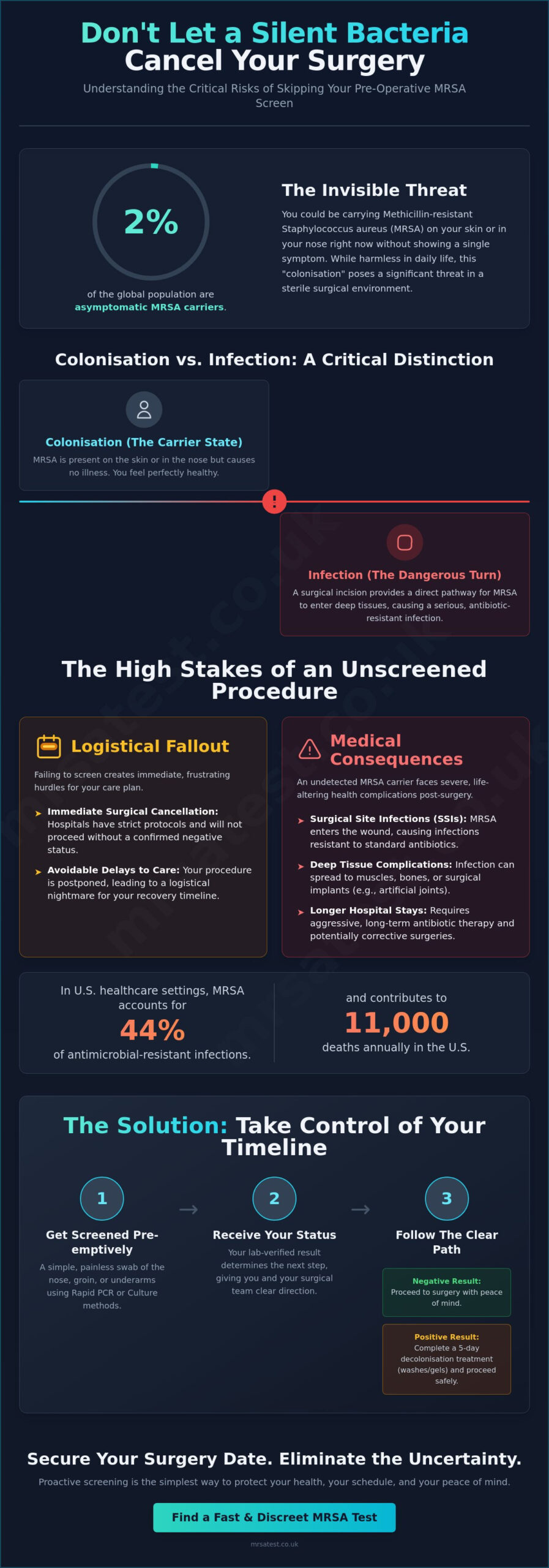
Did you know that approximately 2% of the global population carries MRSA on their skin or in their nose without showing a single symptom? While you focus on preparing for your upcoming procedure, this silent bacteria could be the very thing that stops your surgery before it even begins. One of the most frustrating consequences of not getting mrsa screen is the immediate cancellation of your operation. Hospitals often enforce strict protocols to prevent MRSA, which currently accounts for about 44% of antimicrobial-resistant infections in U.S. healthcare settings and contributes to 11,000 deaths annually.
It’s natural to feel anxious about hospital protocols or potential delays when you’re already managing the stress of a medical procedure. You deserve a clear, predictable path to your surgery without the fear of unexpected infections or logistical hurdles. This guide explains the medical, logistical, and financial risks of skipping your screening and how to protect your surgical schedule. We’ll explore why these tests are mandatory, the specific health risks involved, and how to find a fast, discreet screening option to keep your recovery on track.
Key Takeaways
- Learn the critical difference between MRSA colonisation and active infection to understand why healthy carriers still face surgical risks.
- Discover how the consequences of not getting mrsa screen often include immediate surgical cancellations and avoidable delays to your care.
- Identify the serious medical risks associated with unmanaged MRSA, such as deep tissue infections that are resistant to standard antibiotics.
- Explore how pre-emptive testing with Rapid PCR or Culture methods provides the peace of mind needed to secure your operation date.
- Understand the benefits of proactive screening to identify your carrier status early and avoid last-minute logistical hurdles at the hospital.
What is MRSA Screening and Why Do Hospitals Require It?
MRSA screening is a routine but vital diagnostic procedure used to identify the presence of methicillin-resistant Staphylococcus aureus on a patient’s body before they undergo surgery. This process typically involves a simple, painless swab of areas where the bacteria often live, such as the nose, groin, or underarms. The primary goal is to detect “colonisation,” a state where the bacteria are present on your skin or in your nostrils without causing any active symptoms or illness. While these bacteria might seem harmless in everyday life, they pose a significant threat in a clinical environment. Hospitals treat MRSA as a major safety risk because sterile operating theatres are highly vulnerable to drug-resistant pathogens. One of the most critical consequences of not getting mrsa screen is the high probability that your surgical team will unknowingly introduce these bacteria into a sterile incision, leading to complications that are difficult to treat with standard antibiotics.
Colonisation vs. Infection: The Invisible Risk
It’s easy to assume that if you feel healthy, you aren’t carrying any dangerous pathogens. However, research indicates that approximately 2% of the global population are asymptomatic carriers of MRSA. This is the core of the “invisible risk” that hospitals work hard to manage. When you’re colonised, the bacteria stay on the surface of your skin, but the moment a surgeon makes an incision, those bacteria gain a direct pathway into your bloodstream or deep tissues. This transition from harmless colonisation to a life-threatening infection can happen in seconds. Understanding What is MRSA and how it resists common treatments helps clarify why feeling “fine” isn’t a substitute for a laboratory-verified result. Without a screen, you’re essentially entering surgery with a hidden vulnerability that standard post-operative care may not be able to catch in time.
Standard UK Pre-Op Protocols
In the United Kingdom, the NHS and private healthcare providers follow strict mandates for screening before elective clinical procedures. These protocols ensure that the integrity of the operating theatre is maintained for every patient. If a screen returns a positive result for colonisation, it isn’t a cause for panic; instead, it allows clinicians to start a “decolonisation” process. This usually involves a five-day course of special antiseptic body washes and nasal gels to clear the bacteria before you arrive for your operation. For a more detailed breakdown of these risks, you can consult our What Is MRSA guide. Failing to follow these steps is a leading cause of last-minute cancellations. Hospitals simply won’t risk the safety of the facility or other vulnerable patients by proceeding without a confirmed negative status, making the consequences of not getting mrsa screen a logistical nightmare for your recovery timeline.
Medical Consequences: The Health Risks of Unmanaged MRSA
Skipping a pre-operative check might seem like a minor administrative oversight, but the medical consequences of not getting mrsa screen are often severe and life-altering. When MRSA is present on your skin during an invasive procedure, it can easily enter the body through the surgical incision. This leads to Surgical Site Infections (SSIs), which are the primary risk for unscreened carriers. Unlike standard infections, an MRSA-driven SSI is significantly harder to manage because the bacteria have evolved to resist the antibiotics typically used during and after surgery. This resistance can allow the infection to migrate from the surface of the wound into deeper tissues, muscles, and even bone, often requiring aggressive intervention and long-term antibiotic therapy.
The clinical impact of an unmanaged infection often results in a much longer hospital stay than originally planned. Patients may face multiple corrective surgeries to debride infected tissue or remove contaminated surgical implants, such as artificial joints or heart valves. Following the standard MRSA screening process is the most effective way to identify these risks early. By confirming your status before your procedure, you allow your medical team to implement a pre-emptive decolonisation plan, which significantly reduces the likelihood of these complications.
The Danger of Antibiotic Resistance
MRSA is notoriously difficult to treat compared to standard Staphylococcus aureus. While common infections often respond to penicillin-based treatments, MRSA is resistant to nearly all beta-lactam antibiotics. This leaves doctors with a very limited selection of “last-resort” medications, which can have more intense side effects and may require intravenous administration. Identifying a carrier status early through an MRSA Rapid PCR Test ensures that if bacteria are present, they are managed with targeted antiseptics rather than relying on heavy-duty antibiotics after an infection has already taken hold.
Life-Threatening Complications
If an MRSA infection is not caught early, it can lead to bacteraemia, which is the presence of bacteria in the blood. This condition carries a high mortality rate and can lead to secondary infections like pneumonia or endocarditis, an infection of the heart’s inner lining. These complications put immense strain on the body during the vulnerable post-operative recovery phase. Sepsis is the body’s extreme, life-threatening response to an MRSA infection. The physiological consequences of not getting mrsa screen extend far beyond the initial recovery period, potentially leading to chronic health issues or permanent damage to vital organs.
Logistical Fallout: How Skipping a Screen Delays Your Care
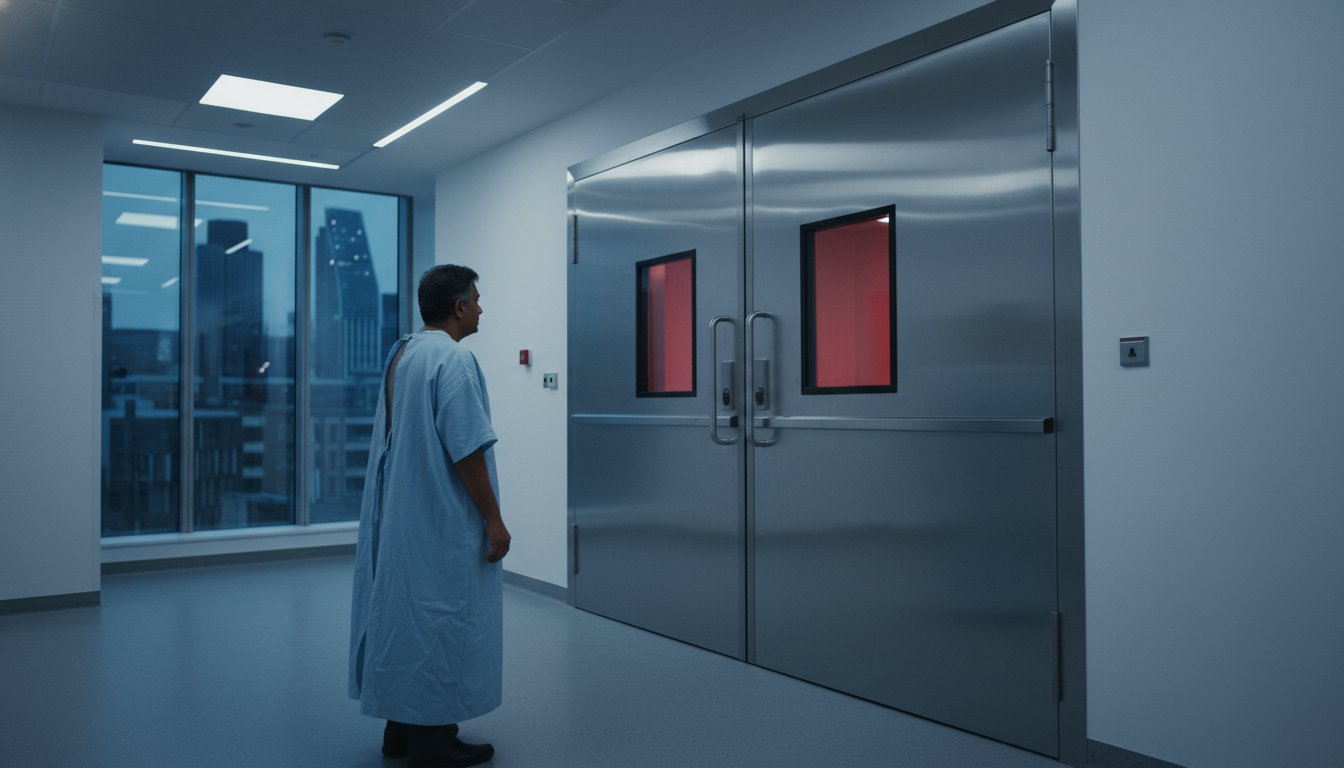
Imagine arriving at the hospital on the morning of your surgery, having fasted for hours and arranged time off work, only to be told your procedure is cancelled. This is one of the most immediate and frustrating logistical consequences of not getting mrsa screen. Hospitals operate under a strict “No Result, No Surgery” policy to maintain sterile environments. Without a verified negative result or a completed decolonisation plan, the clinical risk is deemed too high to proceed. Surgeons and anaesthetists cannot justify the risk of a preventable infection, meaning your slot is often reassigned to another patient within minutes of the decision.
The impact on surgical waiting lists can be devastating. Because theatre slots are scheduled weeks or months in advance, a missed screen doesn’t just result in a short delay. It often means you’re moved to the back of the queue, potentially adding significant time to your recovery journey. This logistical fallout creates a ripple effect, affecting hospital resources and other patients while leaving you in a state of medical limbo. The psychological toll of being mentally prepared for an operation only for it to be postponed can lead to increased anxiety and a loss of confidence in the surgical process.
Theatre Cancellations and Rescheduling
Surgeons cannot risk “opening” a patient without a confirmed MRSA status because the risk of a post-operative infection is too great. If you forget your screen or the results don’t arrive in time, the hospital must cancel your slot to protect the safety of the operating theatre. This delay typically lasts until a new slot becomes available, which in many UK trusts can take several months. To ensure your paperwork is in order, you can follow our Preparing for Surgery checklist to avoid these common pitfalls.
Private Healthcare and Insurance Barriers
For those using private medical insurance, the stakes are even higher. Insurance providers generally view MRSA screening as a mandatory safety check. If a procedure is postponed due to patient non-compliance with screening protocols, the insurer may refuse to cover the costs associated with the cancelled theatre time. You might also lose your hospital deposit, as private facilities often charge for late-stage cancellations that prevent them from filling the slot with another patient.
Beyond the financial loss, there’s a requirement for “clearance” before you can be re-admitted to a private facility. This means you’ll need to provide a fresh, negative result from a reliable source like an MRSA Rapid PCR Test before the hospital will even consider rescheduling. This administrative burden adds another layer of stress to an already difficult situation, highlighting why proactive testing is essential for a smooth surgical experience.
Pre-emptive Screening: Taking Control of Your Surgical Timeline
Taking a proactive approach to your health is the most effective way to ensure your surgical journey remains on track. While hospitals provide screening, waiting for their internal schedule often leaves you with very little time to react if a result comes back positive. One of the most significant consequences of not getting mrsa screen early is the loss of lead time. By testing weeks before your admission date, you gain the opportunity to address colonisation quietly and efficiently at home. If bacteria are detected, you can complete a standard five-day decolonisation therapy involving antiseptic body washes and nasal ointments before you even arrive at the hospital, ensuring your surgery proceeds as planned.
Knowing your carrier status in advance removes the element of surprise that often leads to theatre cancellations. It allows you to walk into your pre-operative assessment with a laboratory-certified result already in hand. This level of preparation demonstrates a commitment to your own safety and the safety of the clinical environment. It also provides peace of mind, replacing the anxiety of the unknown with a clear, manageable plan for your recovery.
The Advantage of Private At-Home Testing
Relying solely on hospital-led diagnostics can sometimes feel like a post-code lottery. Waiting times for NHS screening appointments vary significantly across the country, and a missed or delayed appointment can jeopardise your entire operation. Private testing offers a level of discretion and convenience that clinical settings often lack. You can perform the swab in the comfort of your own home, avoiding the stress of additional hospital visits. This streamlined process fast-tracks your results, giving you the documentation you need to satisfy hospital protocols well in advance of your deadline.
Steps to Take if You Suspect You Are a Carrier
If you work in healthcare, have recently stayed in a hospital, or simply want to be certain of your status, the process is straightforward. You can start by ordering a kit, such as an MRSA Rapid PCR Test, which provides fast and accurate detection. Once you perform the simple swab and return it to the lab, you’ll receive a certified report. For more information on choosing the right diagnostic tool, you can consult our At-Home Test Kits UK guide. If the result is positive, you can share the report with your GP or surgeon immediately to begin a decolonisation programme. This proactive step ensures that you aren’t just another statistic facing the consequences of not getting mrsa screen at the right time.
Don’t leave your surgical date to chance. You can order your MRSA screening kit today to secure your timeline and focus on a safe, successful recovery.
Secure Your Surgery Date with a Reliable MRSA Test
Securing a confirmed negative result is the final step in your pre-operative preparation. It provides the peace of mind you need to focus on your recovery rather than worrying about administrative delays. As we’ve explored, the consequences of not getting mrsa screen can range from last-minute cancellations to serious health complications. By choosing a professional screening service, you can eliminate these risks and ensure your hospital admission is as smooth as possible. mrsatest.co.uk offers UKAS-accredited laboratory testing with results delivered directly to you, providing the clinical accuracy surgeons require.
It’s vital to act before your surgical window closes. While hospital-led processes can be slow, a private screen puts you in control of the timeline. This proactive approach ensures that any potential issues are identified and managed long before you reach the operating theatre door. When you consider the stress of a postponed operation, the consequences of not getting mrsa screen are simply too high to leave to chance. A laboratory-verified status is your best defense against avoidable logistical hurdles.
Rapid PCR vs. Standard Culture
Choosing the right test depends on your surgical timeline. If your operation is imminent, the MRSA Rapid PCR Test is the most efficient choice. This method uses molecular diagnostics to detect bacterial DNA, providing results within 24 hours of the sample reaching our laboratory. For those with more time before their procedure, a standard MRSA Culture test is a reliable alternative. You can find more detail on which kit suits your needs in our MRSA Test guide. Regardless of the method you choose, both options provide the verified documentation needed for hospital clearance.
How to Order and Next Steps
The process is designed to be as straightforward and discreet as possible. Once you place an order online, your kit is dispatched in plain, unbranded packaging to protect your privacy. Each kit contains everything you need to perform a simple self-swab at home, along with clear instructions for the nose, groin, or axilla. After collecting your sample, you simply use the pre-paid return shipping to send it to our specialist UK laboratory. Results are processed quickly and sent to you securely. It’s important to remember that the cost of a proactive screen is a small fraction of the emotional and financial cost of a cancelled surgery. To protect your health and your schedule, order your pre-surgery MRSA screen today to ensure your operation goes ahead as planned.
Protecting Your Health and Your Surgical Schedule
Preparing for surgery is a significant commitment, and ensuring your body is ready is just as important as the procedure itself. We’ve explored how a simple swab can prevent life-threatening infections and save you from the immense frustration of a cancelled operation. The consequences of not getting mrsa screen are simply too great to ignore, especially when a proactive solution is readily available. By identifying your carrier status early, you can complete any necessary decolonisation and walk into the hospital with total confidence.
Our service provides the security and speed you need during this critical time. With UKAS-accredited laboratory testing and rapid 24-hour PCR results available, you won’t be left waiting. Our discreet at-home self-collection kits allow you to manage your health with complete privacy and professional accuracy. Don’t let a preventable delay stand in the way of your recovery. Order Your Confidential MRSA Pre-Op Test Kit Now and take the final step toward a safe and successful surgical outcome. You’re in safe hands, and we’re here to support your journey to health.
Frequently Asked Questions
What happens if I test positive for MRSA before my surgery?
If you test positive, your medical team will initiate a decolonisation protocol. This typically includes using a specialised antiseptic body wash and a nasal antibiotic gel for five days before your admission. Testing positive means you are a carrier, not necessarily infected. This proactive step ensures you are “clear” by the time you reach the operating theatre, allowing your surgery to proceed safely without the risk of bacteria entering a surgical wound.
Can I refuse an MRSA screen at the hospital?
You have the right to refuse any medical procedure, including an MRSA screen. However, hospitals have a duty of care to all patients and staff to maintain a sterile environment. If you refuse a mandatory screen, the hospital will likely postpone or cancel elective procedures. They cannot risk the safety of the facility or the health of other vulnerable patients without knowing your carrier status through a verified result.
How long does it take for MRSA screening results to come back?
The turnaround time depends on the testing method you choose. A standard MRSA Culture test usually takes between 48 and 72 hours as the laboratory needs time to grow the bacteria. In contrast, an MRSA Rapid PCR Test identifies bacterial DNA and can provide results within 24 hours of the sample arriving at the lab. This speed is essential for patients with imminent surgical dates who need a fast clearance.
Is an MRSA screen painful or invasive?
No, the screening process is entirely painless and non-invasive. It involves using a sterile cotton swab to gently wipe the surface of the skin in specific areas, such as the inside of the nostrils, the groin, or the armpits. There are no needles or internal examinations involved. The process takes only a few moments and can be performed easily by yourself at home or by a healthcare professional in a clinic.
Will my surgery be cancelled if I haven’t had an MRSA test?
Most hospitals will cancel elective operations if a valid MRSA result is missing. Maintaining a sterile operating theatre is a priority, and clinicians cannot proceed without knowing the risks. One of the most common logistical consequences of not getting mrsa screen is the immediate postponement of your care. This ensures that every patient entering the theatre meets the required safety standards to prevent avoidable hospital-acquired infections.
Do I need to be screened if I’ve had MRSA in the past?
Yes, you still need to be screened even if you have had MRSA previously. Carrying the bacteria in the past doesn’t mean you are currently clear, nor does it provide immunity against future colonisation. Because your status can change over time based on your environment and health, hospitals require a fresh result shortly before any new surgical procedure to ensure current safety protocols are met and your recovery is protected.
How much does a private MRSA screen cost in the UK?
Private screening costs vary depending on the speed and depth of the analysis required. While we don’t provide specific pricing here, a private test is a cost-effective way to avoid the much larger financial burden of a cancelled private operation. One of the hidden financial consequences of not getting mrsa screen is the potential loss of hospital deposits or theatre fees if your procedure is postponed due to missing results.
Can I get an MRSA infection from the screening process itself?
No, it’s impossible to contract an MRSA infection from the screening process itself. The swabs used are sterile and only touch the surface of your skin to collect existing bacteria. Screening is a diagnostic tool designed to detect a problem, not a procedure that introduces new pathogens. It’s a safe, simple, and essential part of modern surgical preparation that protects both you and the hospital environment from harm.