

Blog
When to Worry About a Surgical Wound: Signs of Infection and Post-Op Care
Apr
Imagine you are three days into your recovery at home after a successful procedure. You notice a slight pinkness around your incision and feel a pulse of heat. Is this part of the body’s natural healing process, or is it the first sign of a complication? Understanding when to worry about a surgical wound is a common challenge for the 15 million patients who undergo surgical procedures in the UK annually. It’s completely normal to feel a sense of unease when monitoring your recovery, especially with the persistent concern of hospital-acquired infections like MRSA.
We understand that the line between normal post-operative inflammation and a serious infection can feel incredibly thin. You deserve to recover with confidence rather than constant anxiety. This article will help you distinguish between routine healing and genuine medical red flags, ensuring you know exactly when to contact your GP or surgical team. We will provide a clear checklist of symptoms to monitor and explain how to identify MRSA colonization before it leads to a deeper infection. By the end of this guide, you’ll have a practical roadmap for a safe, informed, and discreet recovery at home.
Key Takeaways
- Distinguish between the normal inflammatory phase of healing and the early warning signs of a serious post-operative infection.
- Learn the five specific clinical symptoms, such as spreading redness or yellow pus, that indicate when to worry about a surgical wound.
- Understand the risks of MRSA colonisation and how this “silent” bacteria can compromise deep-tissue recovery after surgery.
- Follow practical, clinical steps for safe at-home wound management, including the essential “Golden Rule” of hand hygiene and sterile dressing changes.
- Explore how discreet, UK-based MRSA screening kits can provide fast peace of mind and protect your recovery without the need for long GP wait times.
Understanding the Normal Healing Process vs. Infection
Recovery after an operation follows a precise biological sequence. Your body immediately begins a complex repair mission that often looks alarming but is perfectly natural. Distinguishing between the typical inflammatory response and a Surgical site infection (SSI) is the first step in managing your post-operative care with confidence. Most patients feel anxious when they see redness or fluid, yet these are frequently signs that your immune system is working exactly as it should.
The Three Stages of Wound Healing
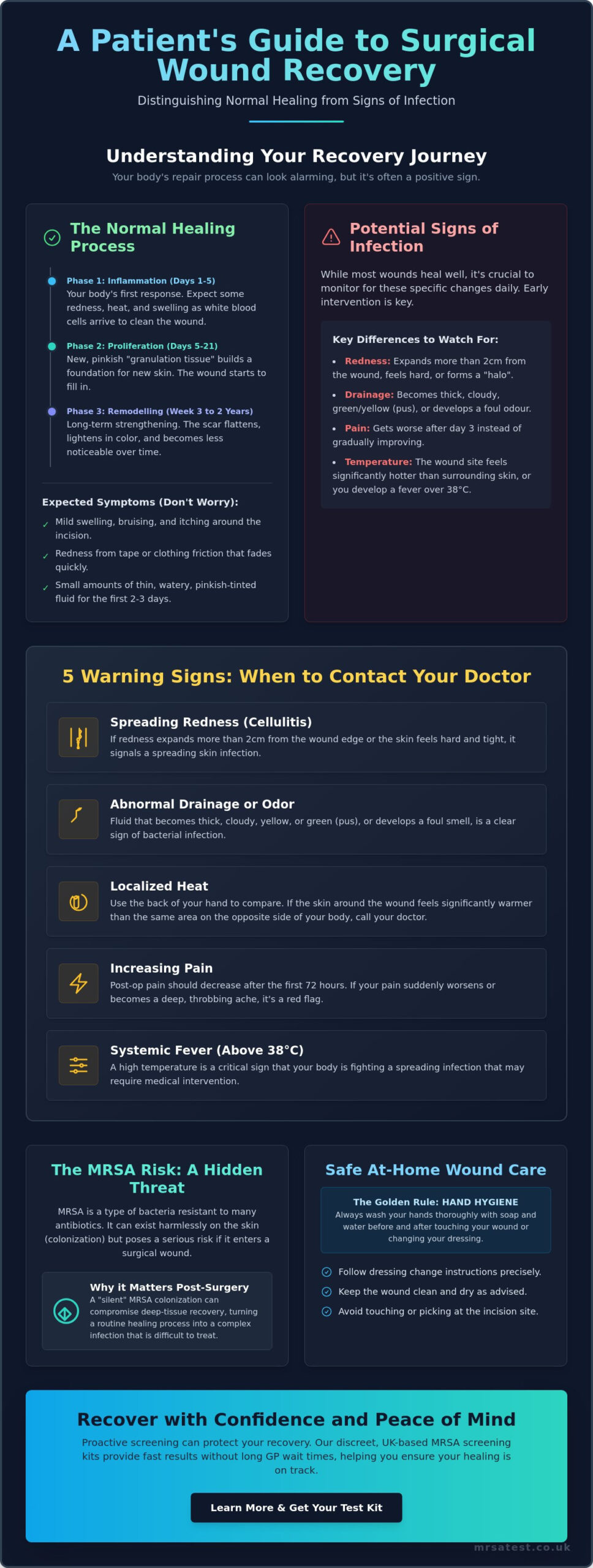
- Inflammation (Days 1-5): This is the body’s immediate reaction. Blood vessels dilate to allow white blood cells, growth factors, and nutrients to reach the area. You’ll likely see redness, some heat, and swelling. This “angry” appearance is a functional defense mechanism, not necessarily a sign of trouble.
- Proliferation (Days 5-21): During this phase, the body builds new tissue. You might notice “granulation tissue,” which is bumpy, pinkish-red, and moist. This tissue fills the wound bed and provides a foundation for new skin.
- Remodelling (Week 3 to 2 Years): This is the long-term strengthening phase. The initial scar tissue is replaced by stronger collagen. Over these months, the scar will transition from a dark pink or purple to a pale, flat line.
Normal Post-Op Symptoms You Should Not Worry About
It’s common to experience physical changes around the incision site that don’t require medical intervention. Mild swelling and bruising are standard, especially in the first 7 to 10 days as the underlying tissues recover from the trauma of the procedure. You might also feel a persistent itching sensation. This occurs because the skin edges are knitting back together and the nerves are regenerating. It’s a positive sign of progress.
Small amounts of “serosanguinous” drainage are also expected. This fluid is thin, watery, and has a pinkish tint. As long as the drainage isn’t thick, cloudy, or foul-smelling, it’s generally a byproduct of the early inflammatory phase. You’ll likely see this on your dressing for the first 48 to 72 hours before it tapers off.
Distinguishing between mechanical irritation and a true infection is vital for your peace of mind. Often, redness is caused by the friction of clothing, waistbands, or the adhesive from surgical tape. This type of irritation is usually confined to the surface of the skin and fades quickly once the pressure is removed. In contrast, an internal infection typically produces deep, throbbing pain and a spreading “halo” of redness that feels hot to the touch. Knowing these differences helps you identify exactly when to worry about a surgical wound and when to simply allow the natural healing process to continue its work.
5 Warning Signs: When to Contact Your Doctor or Hospital
Most surgical incisions heal without complication, but monitoring the site daily is essential for a safe recovery. Knowing exactly when to worry about a surgical wound depends on identifying specific deviations from the normal healing process. While some swelling and pinkness are expected in the first 48 hours, certain changes indicate that bacteria may have breached the site.
- Spreading redness (cellulitis): A thin pink border around the incision is normal. If the redness expands more than 2cm from the wound edge or feels hard and “tight” to the touch, it suggests cellulitis is developing.
- Changes in drainage: Healthy wounds produce serous fluid, which is thin, clear, or pale yellow. If this fluid becomes thick, opaque, or turns green, it has become purulent discharge, commonly known as pus.
- Localised heat: Use the back of your hand to feel the skin. The wound site shouldn’t feel significantly warmer than the skin on the opposite side of your body.
- Systemic fever: A body temperature exceeding 38°C is a critical red flag. This indicates the immune system is struggling to contain a localised infection.
- Increasing pain: Post-operative pain typically peaks within the first 72 hours. If your pain levels intensify after day 3 rather than improving, it’s a sign of underlying inflammation or infection.
Early intervention is the most effective way of preventing surgical site infections from becoming severe. If you notice these symptoms, contact your GP or the surgical ward where you had your procedure.
Identifying Abnormal Drainage and Odour
Distinguishing between healthy exudate and pus is vital for monitoring your recovery. Healthy fluid is watery and odourless. In contrast, purulent discharge is thick and often accompanied by a foul, “sickly” odour, which is a definitive sign of bacterial activity. You should also watch for wound dehiscence, which is when the wound edges begin to pull apart or the stitches fail. If the wound gaps open, cover it with a sterile dressing and seek immediate medical advice.
Systemic Red Flags: When the Infection Spreads
Sometimes the most dangerous signs aren’t just at the wound site. You might feel generally unwell, experience nausea, or feel shivery even if the room is warm. These symptoms of malaise suggest the infection is affecting your whole system. Check for swollen lymph nodes, or “glands,” in your armpit or groin area near the site of the surgery. Sepsis is a life-threatening emergency following surgery. If you’re concerned about potential bacterial colonisation before or after a procedure, you can order an MRSA home test kit for professional peace of mind.
Why MRSA is a Major Concern for Surgical Wound Healing
MRSA stands for Methicillin-resistant Staphylococcus aureus. It is a specific strain of bacteria that has developed a strong resistance to the antibiotics typically used to treat skin and tissue infections, such as flucloxacillin. In a clinical setting, MRSA is particularly dangerous because it bypasses the first line of defence provided by standard post-operative care. While many bacteria are easily managed with a routine course of tablets, MRSA requires more intensive, often intravenous, interventions.
The primary reason MRSA complicates recovery is its ability to hide. Many patients are “colonised,” meaning the bacteria live on their skin or inside their nostrils without causing any symptoms. However, the moment a surgeon makes an incision, that “silent” bacteria gains a gateway into the bloodstream or deep muscle tissue. This is exactly when to worry about a surgical wound. According to the UK Health Security Agency (UKHSA), surgical site infections (SSIs) account for roughly 16% of all healthcare-associated infections in UK hospitals. When MRSA is the culprit, the infection is significantly harder to eradicate, often leading to longer hospital stays and additional procedures.
The Link Between Colonisation and Infection
Most MRSA infections after surgery don’t come from a dirty hospital room. They often come from the patient’s own body. Bacteria frequently cluster in warm, moist areas like the nose, armpits, or groin. During the recovery phase at home, it’s easy to accidentally move these bacteria to the incision site through a process called autoinoculation. Touching your face and then adjusting a dressing can be enough to transplant the bacteria. You can learn more about how these bacteria behave by reading our guide on What Is MRSA?. Because the bacteria are already present on your skin, they can begin multiplying in the wound before you even notice the first signs of redness or swelling.
High-Risk Procedures and Patient Factors
Not every surgery carries the same level of MRSA risk. Procedures that involve “foreign material” are the highest stakes. This includes joint replacements, such as hip or knee surgeries, and cardiac procedures involving heart valves or pacemakers. Bacteria like MRSA can attach to these implants and create a protective layer called a biofilm. Once this happens, antibiotics often can’t reach the bacteria at all.
Individual health factors also play a massive role in when to worry about a surgical wound. Patients with diabetes often have slower circulation and higher blood sugar levels, which provide an ideal environment for MRSA to thrive. Similarly, if your immune system is weakened by age or medication, your body’s natural ability to suppress colonised bacteria is diminished. This is why preparing for surgery with a formal screening is so vital. Identifying MRSA colonisation before you go under the knife allows for “decolonisation” treatments, which significantly reduces the chance of a deep-tissue infection during your recovery.
Practical Steps to Manage Wound Care at Home Safely
Recovery doesn’t end when you leave the hospital. Most surgical site infections (SSIs) develop within 30 days of a procedure, making your home care routine the first line of defence. Understanding when to worry about a surgical wound involves more than just looking for redness; it requires a disciplined approach to hygiene and monitoring. By following clinical protocols, you reduce the risk of introducing pathogens like Staphylococcus aureus into the healing tissue.
Hand Hygiene and Sterile Technique
The golden rule of wound care is that you must never touch a dressing or the surrounding skin without performing a full clinical hand wash. Wash your hands for at least 20 seconds using warm water and liquid soap, ensuring you scrub between fingers and under fingernails. Once clean, don’t use a communal family towel or a damp flannel to dry your hands. These items often harbour bacteria that can easily transfer to your incision. Use a fresh piece of kitchen roll or a clean, single-use paper towel instead. In many UK hospitals, patients are advised to use chlorhexidine gluconate washes (such as Hibiscrub) before surgery; continuing to use these on the surrounding skin as directed by your surgeon can maintain a low bacterial count during the early stages of healing.
Managing Dressings and Stitches
It’s vital to leave your original dressing in place for the first 48 hours unless your surgical team gives different instructions. If the dressing becomes soaked with blood or fluid, it must be changed to prevent “maceration.” This occurs when the skin stays too wet for too long, causing it to turn white, wrinkled, and soft, which makes it easier for bacteria to penetrate. If you have Steri-Strips (small adhesive tapes) or staples, don’t pick at them. Steri-Strips usually curl at the edges and fall off naturally after 7 to 10 days. If they come loose earlier but the wound remains closed, leave them alone. However, if the wound edges begin to pull apart, this is a specific sign of when to worry about a surgical wound and requires immediate medical review.
To monitor your recovery effectively, use the “pen circle” method. If you notice a patch of redness around the incision, use a skin-safe pen to lightly draw a circle around the outer edge of the inflammation. Check the area every 4 to 6 hours. If the redness expands beyond your pen mark, it indicates a spreading infection that needs clinical intervention.
- Bathing: NHS guidelines typically recommend keeping the wound completely dry for the first 48 hours. After this period, you may take a brief shower, but avoid soaking the wound in a bath or swimming for at least 2 weeks.
- Drying: Always pat the wound dry with a clean, lint-free cloth. Never rub the incision.
- Products: Avoid applying antiseptic creams, powders, or lotions unless they were specifically prescribed, as these can interfere with the natural healing process.
If you feel anxious about the presence of bacteria or want to ensure your home environment is safe, you can order a discreet MRSA home test kit to check for colonization from the comfort of your own home.
Proactive Screening: How MRSA Testing Protects Your Recovery
Knowing your MRSA status is a vital part of a safe recovery. Most patients only consider infection risks after they see symptoms, but proactive screening allows you to act before a problem develops. If you’re wondering when to worry about a surgical wound, having a clear test result provides the clinical evidence needed to guide your care. Identifying colonization early means you can start decolonisation treatments before a surface bacteria has the chance to enter your incision site.
Understanding the diagnostic tools available is the first step toward safety. There are two primary methods used in UKAS-accredited facilities:
- MRSA Culture Test: This traditional method involves growing the bacteria in a controlled environment. It usually takes 48 to 72 hours to provide a definitive result.
- PCR Rapid Test: This molecular detection method identifies bacterial DNA. It is significantly faster, often providing results within 24 hours of the lab receiving your sample.
The Benefits of Private Home Testing
Private home testing bypasses the logistical hurdles often found in the NHS. You don’t have to wait for a GP appointment or navigate long clinical queues while you’re trying to recover. These at-home test kits in the UK are revolutionising patient-led care by putting professional-grade diagnostics in your hands. The process is designed to be simple and stress-free. You use a sterile swab to collect samples from the nose, groin, and axilla (underarms). These are the three most common areas where MRSA bacteria live on the skin. Once collected, your samples are sent in a pre-paid envelope to a trusted UK partner laboratory for analysis.
Taking Control of Your Post-Op Health
Proactive screening is one of the most effective ways to reduce the risk of hospital-acquired infections. If your result is negative, it provides peace of mind as you monitor your healing progress. If your test comes back positive, it isn’t a cause for panic. Instead, it’s a call to action. You should share your results with your surgical team or GP immediately. They can then prescribe a decolonisation protocol, which typically involves antibiotic nasal creams and antiseptic body washes, to clear the bacteria.
By identifying the presence of MRSA early, you prevent the bacteria from complicating your healing process. It removes the guesswork from the question of when to worry about a surgical wound because you already have a baseline for your bacterial health. Taking this step ensures your recovery remains on track and your surgical site stays protected from resistant pathogens.
Don’t leave your recovery to chance. Order your confidential MRSA screening kit for total peace of mind and clinical certainty today.</p.
Take Control of Your Post-Operative Recovery
Monitoring your healing process doesn’t have to be stressful. By recognizing early indicators like persistent heat or unusual discharge, you can act before a minor issue becomes a serious clinical complication. Understanding when to worry about a surgical wound allows you to distinguish between typical inflammatory responses and signs of a bacterial infection. Proactive steps help ensure your recovery stays on track.
If you’re concerned about MRSA colonization, professional screening provides the clinical certainty you need. Our service utilizes a UKAS-accredited laboratory to deliver precise results without the need for a hospital visit. You can choose an MRSA PCR rapid test option for molecular detection in 24 hours. We provide free UK shipping and use discreet packaging to protect your privacy throughout the entire process. Taking a simple test from the comfort of your own home removes the guesswork from your post-op care.
Ensure a safe recovery with a confidential MRSA Home Test Kit
You deserve peace of mind and a smooth path to full health.
Frequently Asked Questions
Is it normal for a surgical wound to be red around the edges?
Mild redness is a normal part of the inflammatory healing phase during the first 48 hours after your procedure. However, you should know when to worry about a surgical wound if that redness begins to spread further away from the incision. According to clinical guidelines, redness that extends more than 2cm from the wound edge or feels increasingly hot to the touch often indicates the start of an infection.
What does an infected surgical wound look like?
An infected wound typically appears angry, swollen, and may produce thick, cloudy discharge instead of clear fluid. You might notice the skin turning a deep red or purple colour, and the area often feels firm or hard. Public Health England data indicates that roughly 3% of surgical patients will experience these visible symptoms, which often include the presence of yellow or green pus and skin that stays warm for several days.
Can a surgical wound infection start 2 weeks after surgery?
Yes, surgical site infections can develop at any point up to 30 days after your operation. If your surgery involved a permanent implant, like a hip replacement, this window extends to one full year. While most infections appear between day 5 and day 10, a delayed onset at 14 days is a documented clinical risk. You must monitor your incision daily for the first month to catch these late-developing issues.
How can I tell the difference between a normal scar and an infection?
A normal scar will gradually fade from pink to a pale skin tone and shouldn’t produce any new pain or liquid. Infections behave differently because they get progressively worse rather than better. Knowing when to worry about a surgical wound involves spotting signs like a foul odour, skin that is pulling apart, or pain that increases after the first week. Healing scars shouldn’t cause systemic symptoms like a high temperature.
What should I do if my surgical wound starts leaking yellow fluid?
You should contact your GP or the surgical ward where you had your operation if you notice yellow fluid. While thin, straw-coloured fluid is often part of normal drainage, thick yellow or green pus is a primary sign of bacterial activity. Keep the area covered with a sterile dressing and avoid touching the site. Don’t apply any antiseptic creams until a medical professional has reviewed the wound and taken a swab if necessary.
Is MRSA common in surgical wounds after leaving the hospital?
MRSA is found in approximately 1% to 2% of surgical site infections in the UK. While hospitals screen patients regularly, colonisation can still lead to an infection once you return home. Using a UKAS-accredited home test kit is a discreet and fast way to check for MRSA colonisation from your own home. This provides peace of mind and allows for clinical intervention before a minor issue becomes a serious post-operative complication.
Can I treat a minor surgical wound infection at home?
You shouldn’t attempt to treat a suspected surgical infection yourself because it requires professional diagnosis and often specific antibiotics. Using over-the-counter ointments can sometimes trap bacteria inside the wound, making the situation worse. Your role at home is to follow the hygiene plan provided by your surgeon and keep the area dry. If an infection is confirmed, a doctor must prescribe the correct UK-regulated medication to ensure the bacteria is fully eradicated.
When is a surgical wound infection considered a medical emergency?
A wound infection is a medical emergency if you show symptoms of sepsis, such as a fever above 38°C, confusion, or a rapid heartbeat. You should visit an A&E department immediately if the wound opens significantly or if you see red streaks tracking away from the incision site. These are signs that the infection is spreading through your system and requires urgent treatment, often involving intravenous antibiotics and 24-hour clinical monitoring.
