

Blog
MRSA Screening Before Hip Replacement in the UK: A Patient’s Guide

Aug
What if a simple five-minute swab could be the only thing standing between you and a successful, infection-free hip recovery? With MRSA bacteraemia cases in England rising by 16.9 percent in the 2024/25 period, hospitals are more vigilant than ever about pre-operative safety. This is why mrsa screening before hip replacement uk is a mandatory step for every patient. Preparing for a major operation is naturally stressful, and you’ve likely spent months managing pain while worrying about potential last-minute cancellations.
It’s completely normal to feel concerned about hospital-acquired infections. This screening isn’t just another administrative box to tick; it’s a vital safeguard for your health. In this guide, you’ll learn exactly why this testing is essential, how the process works, and how you can manage your pre-op requirements privately from the comfort of your home. We will also explain the decolonisation process to ensure your surgery stays on track.
We will break down the differences between rapid PCR results and traditional culture tests to help you meet tight surgical deadlines. Our goal is to provide the clinical clarity you need to move toward your surgery date with total peace of mind. By taking a proactive approach to your screening, you can focus on what matters most: a safe recovery and a return to your active life.
Key Takeaways
- Understand why MRSA screening is a vital clinical safeguard to prevent deep-seated prosthetic joint infections that can complicate your recovery.
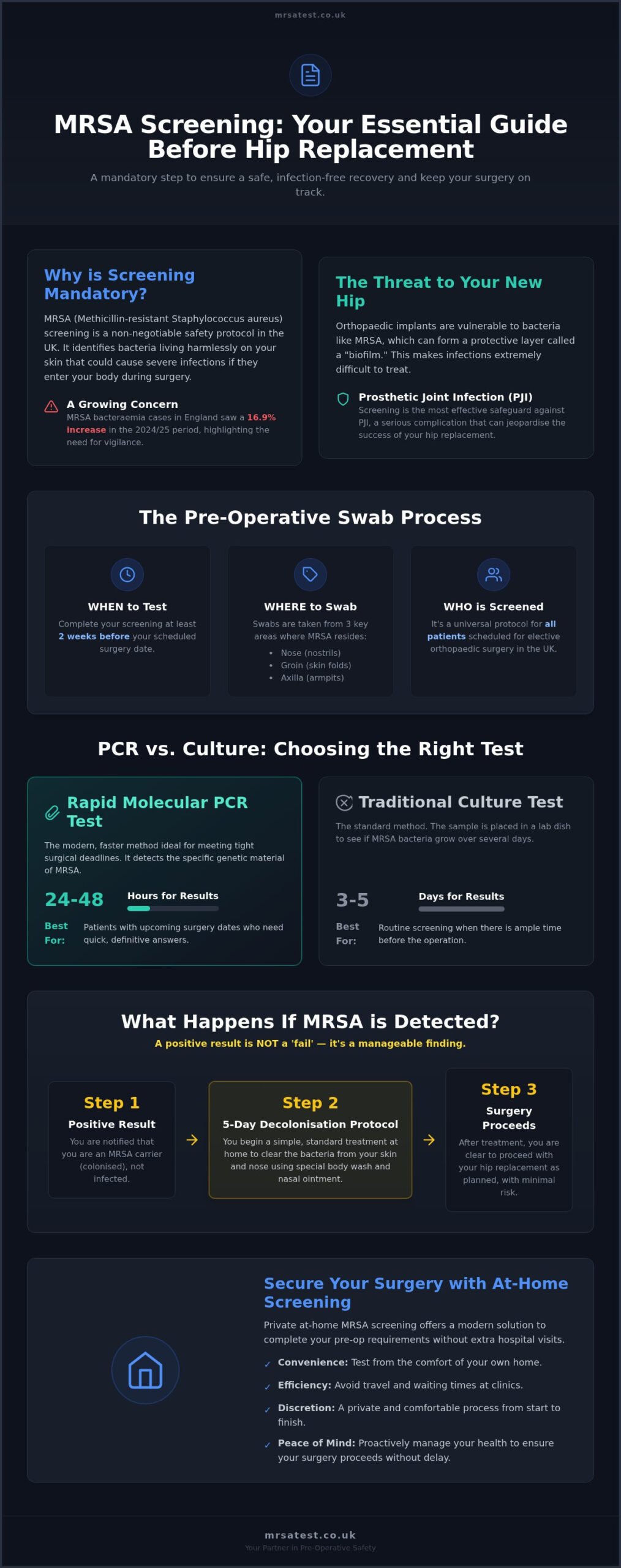
- Learn about the non-invasive swab process targeting the nose, groin, and axilla, which are the primary areas where bacteria reside.
- Compare traditional culture methods with rapid molecular PCR testing to choose the diagnostic timeline that best fits your upcoming surgery date.
- Find out why a positive MRSA result is not a ‘fail’ but a manageable clinical finding that is treated with a standard five-day decolonisation protocol.
- Explore how private at-home mrsa screening before hip replacement uk offers a discreet, efficient way to complete your pre-op requirements without extra hospital visits.
Why MRSA Screening is Mandatory for Hip Replacement Surgery in the UK
Before undergoing a major orthopaedic procedure, you’ll find that mrsa screening before hip replacement uk is a non-negotiable part of your pre-operative journey. This requirement exists because of Methicillin-resistant Staphylococcus aureus (MRSA), a specific type of staph bacteria that has developed resistance to many common antibiotics. While these bacteria often live harmlessly on the skin, they pose a significant threat if they enter the body during surgery.
National guidelines in the UK mandate this screening to protect both individual patients and the wider hospital environment. If MRSA is present on your skin when an incision is made, it can travel deep into the surgical site. Treating an infection after surgery is far more complex than preventing one beforehand. By identifying the presence of the bacteria early, clinical teams can implement a simple decolonisation protocol to clear it, ensuring you enter the operating theatre with the lowest possible risk.
The Impact of MRSA on Orthopaedic Success
Orthopaedic surgery involves the introduction of foreign materials, such as metal or ceramic hip components, into your body. Bacteria like MRSA have a unique ability to adhere to these surfaces. Once attached, they can form what is known as a “biofilm,” a protective layer that acts as a shield against your immune system and standard antibiotics. This can lead to a deep-seated prosthetic joint infection (PJI).
It’s vital to understand that having a positive test result doesn’t mean you’re “sick” or “infected.” Most people carry the bacteria without any symptoms; this is known as colonisation. However, in the context of a hip replacement, colonisation is the primary precursor to post-operative complications. Screening allows us to bridge the gap between being a carrier and being a safe candidate for surgery.
Who Needs to be Screened?
In the UK, screening is a standard protocol for all patients scheduled for elective orthopaedic surgery. This universal approach ensures that no carrier goes unnoticed, regardless of their perceived risk level. Certain groups may require even closer attention, including:
- Patients with a documented history of MRSA.
- Individuals who have had frequent hospital admissions or stay in care facilities.
- Those with chronic skin conditions or long-term wounds.
Managing these risks is part of a broader commitment to patient safety. For more information on how hospitals manage these challenges, you can read our guide on hospital-acquired infections. Proactive testing is the most effective tool we have to maintain the high success rates associated with modern hip replacements.
The Pre-Operative Swab Process: Where and How to Test
The process for mrsa screening before hip replacement uk is a simple, non-invasive procedure designed to identify where bacteria might be living on your skin. According to NHS guidance on MRSA, these screenings are usually performed during a pre-operative assessment. However, many patients now choose to complete these tests at home for greater convenience. The primary objective is to sample the areas of the body where MRSA is most likely to colonise: the nose, the groin, and the axilla (armpit).
These specific locations are known as reservoirs. Because MRSA thrives in warm, moist environments, the skin folds of the groin and the interior of the nostrils provide ideal conditions for the bacteria to reside without causing an active infection. Accurate sampling is essential; if the swab doesn’t make sufficient contact with these areas, the laboratory may return a false negative, which could lead to complications during your recovery. Timing is also a critical factor for mrsa screening before hip replacement uk. You should aim to complete your screening at least two weeks before your surgery. This window ensures that if a positive result is found, there’s enough time to complete a decolonisation treatment without postponing your operation.
Step-by-Step Guide to Self-Swabbing
Performing your own swab is a straightforward task when you follow a clinical protocol. Start by preparing your sterile swabs, ensuring you don’t touch the tip of the swab with your fingers or allow it to contact any non-test surfaces. This prevents cross-contamination that could skew your results.
- The Nostrils: Insert the tip of the swab into the front of the nostril (anterior nares). Gently rotate the swab against the inside surface five times. Repeat this process in the second nostril using the same swab.
- Skin Folds: Use a fresh swab for the groin and armpit areas. It’s important to rub the swab firmly against the skin in these folds to ensure a representative sample is collected.
Ensuring Sample Integrity
Once you’ve collected your samples, the focus shifts to laboratory logistics. Clear labelling is the most important step to avoid processing delays. Every sample must be matched to your details so the accredited UK lab can issue a secure report. In clinical terms, swab sites are the specific anatomical locations, such as the nose and groin, where samples are harvested for diagnostic analysis.
After labelling, place your swabs into the provided transport tubes. Using the prepaid return packaging effectively ensures your samples reach the lab quickly, which is vital for maintaining the viability of the bacteria for testing. If you’re working toward a tight surgical deadline, you can order a private screening kit to manage this process on your own schedule.
PCR vs. Culture: Which MRSA Test Fits Your Surgery Timeline?
When arranging your mrsa screening before hip replacement uk, you’ll encounter two primary laboratory methods: the traditional culture and the modern rapid PCR test. Both methods are highly accurate, but they operate on very different diagnostic schedules. Selecting the right one depends largely on how close you are to your scheduled surgery date. Understanding these differences helps you avoid the unnecessary stress of a last-minute postponement because results weren’t ready in time.
The traditional culture method involves growing bacteria in a controlled environment, while PCR uses molecular technology to find bacterial DNA. While both are reliable, the speed of delivery is the deciding factor for most patients. Rapid PCR offers a significantly faster “clearance” for surgery, which is essential when your pre-operative assessment is just days away.
When to Choose a Rapid PCR Test
Speed is the defining advantage of the PCR method. PCR, or Polymerase Chain Reaction, is a molecular detection technique that identifies the DNA of the MRSA bacteria directly from your swab samples. Because the laboratory doesn’t need to wait for bacterial colonies to physically grow in a petri dish, results are typically available within 24 hours of the lab receiving your kit. This efficiency makes it the ideal choice for patients with surgery dates less than a week away.
Choosing this method is a proactive way to reduce the “waiting anxiety” that often accompanies pre-operative testing. It provides a swift, definitive answer, allowing you to focus on your physical preparation for the hip replacement. If you’re working against a tight deadline, you can secure your results quickly by using a MRSA Rapid PCR test kit designed for at-home collection.
Understanding the Standard Culture Method
The culture method has been the clinical baseline for decades and remains a highly dependable diagnostic tool. In this process, the laboratory places your sample into a nutrient-rich medium to see if any bacteria grow over several days. This “enrichment” process is designed to detect even very low levels of colonisation that might otherwise be missed. However, because it relies on biological growth, it takes time. You can usually expect a result within 48 to 72 hours.
This is a cost-effective option for patients who have several weeks of lead time before their procedure. Following NHS guidance on MRSA screening, some hospitals may specifically request a culture test because it allows them to perform sensitivity testing. This secondary step identifies which specific antibiotics the bacteria are most vulnerable to, providing a tailored roadmap for treatment if needed. While slower, the culture method provides the deep clinical data that some surgical teams prefer for complex cases.
Understanding Your Results: What Happens if MRSA is Detected?
Receiving a positive result from your mrsa screening before hip replacement uk can feel like a setback, but it’s important to remember that this is a routine and manageable clinical finding. A positive result doesn’t mean you’re sick or that you have an active infection. It simply indicates that the bacteria are present on your skin or in your nasal passages. By identifying this early, your surgical team can take the necessary steps to eliminate the bacteria before your operation begins, which is a vital part of ensuring a safe recovery.
If you’ve chosen private testing, you’ll receive a secure laboratory report. You should share this document with your surgical team immediately. They will appreciate your proactive approach to safety. Most hospitals will then provide you with a standard treatment kit to clear the colonisation. In some instances, your surgeon may request a follow-up swab after you complete the treatment to confirm that the bacteria are no longer present.
The Decolonisation Protocol Explained
Decolonisation is a proactive skin-cleansing procedure designed to eliminate MRSA from the skin and nasal passages before surgery. This protocol typically lasts for five days and is designed to be completed at home. It usually involves using a prescribed antimicrobial body wash, such as Chlorhexidine, and a nasal ointment like Mupirocin.
- Apply the nasal ointment to the inside of each nostril three times a day using a cotton bud.
- Use the antimicrobial wash daily for your hair and body, focusing on the skin folds of the groin and armpits.
- Prevent re-contamination by using fresh towels and putting on clean clothes and bedding every day during the five-day course.
Will My Surgery Be Cancelled?
The fear of surgery cancellation is a common source of anxiety, but a positive MRSA screen rarely results in a full cancellation. In most cases, the procedure is simply postponed for five to ten days. This short delay allows you enough time to finish the decolonisation protocol, ensuring that your body is in the safest possible state for the operation.
Elective surgery is significantly safer when a patient is confirmed to be MRSA negative. This precaution protects your new hip implant from the risk of deep-seated infections that are difficult to treat later. For more advice on managing your pre-operative journey, you can review our surgery preparation checklist. If you need to verify your status after treatment, you can order a professional MRSA screening kit to secure your new surgery date with confidence.
Secure Your Surgery Date with Private At-Home MRSA Screening
Managing the weeks leading up to a major operation is a significant logistical challenge. Between physiotherapy sessions, pre-operative assessments, and work or family commitments, adding another hospital trip for a simple swab can feel overwhelming. Choosing private mrsa screening before hip replacement uk allows you to bypass the inconvenience of additional hospital visits and long waiting room stays. By managing this requirement from home, you maintain control over your schedule while ensuring your clinical data is ready for your surgical team.
Our service uses accredited UK laboratories to process every sample, ensuring your results are clinical-grade and meet the high standards required by orthopaedic departments. This professional approach provides the same level of accuracy you would expect in a hospital setting but with the added benefits of speed and discretion. Once you order your kit, it arrives in discreet packaging with everything you need for a successful collection. Returning your sample is just as simple, using our prepaid packaging to ensure it reaches the lab without delay.
Why Choose mrsatest.co.uk?
While general diagnostic labs handle hundreds of different tests, our specialist focus on MRSA allows for a more streamlined and efficient processing system. We understand that surgical deadlines are strict, so we’ve designed our workflow to deliver answers when they matter most. Whether you choose our rapid 24-hour PCR option or the traditional 48-72 hour culture test, you aren’t left waiting for general hospital administration to catch up.
- Confidentiality: Your results are delivered directly to a secure online portal, protecting your privacy at every stage.
- Expert Support: We provide professional guidance to help you understand your testing options and ensure your samples are collected correctly.
- Efficiency: Our domestic operations mean your samples don’t travel further than necessary, keeping turnaround times as short as possible.
Taking Control of Your Pre-Op Health
Empowering yourself to manage your own diagnostic timeline is one of the best ways to reduce pre-surgery anxiety. There’s a unique peace of mind that comes with knowing you are “clear” before you even set foot in the hospital for your admission. If your results do show colonisation, having that information early gives you the maximum amount of time to complete the decolonisation protocol, preventing any last-minute stress or the disappointment of a postponed surgery date.
Don’t let a missing test result stand in the way of your new hip and a pain-free life. By choosing a reliable, private partner for your screening, you’re taking a proactive step toward a safer recovery and a more predictable surgical journey. Order your pre-surgery MRSA test kit today and move forward with total confidence.
Take the Lead on Your Surgical Safety
Completing your mrsa screening before hip replacement uk is a vital step toward a complication-free recovery. By understanding the swab process and choosing a testing method that fits your schedule, you can ensure your surgery remains on track. Whether you require the speed of a 24-hour PCR test or the detailed data of a traditional culture, taking this proactive step protects your new joint from infection risks. Remember that a positive result is simply a manageable clinical finding that you can resolve through a standard five-day decolonisation protocol.
Managing your diagnostics privately gives you the freedom to focus on your physical preparation without unnecessary hospital visits. We provide accredited laboratory testing and fast UK delivery to help you meet your clinical requirements with ease. With results available in as little as 24 hours, you’ll have the definitive answers you need to move forward. Take control of your pre-op journey and ensure your hospital admission is as smooth as possible.
Order Your Pre-Surgery MRSA Test Kit Now
Your path to a pain-free life and a successful hip recovery starts with these essential safeguards. We are here to support you through a professional, discreet process every step of the way.
Frequently Asked Questions
How long before hip replacement surgery should I be tested for MRSA?
You should aim to be tested approximately two to four weeks before your scheduled procedure. This timeframe is essential because it provides a sufficient window for the laboratory to process your samples and for you to complete a five-day decolonisation treatment if the bacteria are detected. Having your mrsa screening before hip replacement uk done early ensures that any necessary clinical interventions are finished well before you arrive at the hospital for admission.
Can I do my pre-op MRSA swab at home instead of at the hospital?
Yes, you can choose to complete your pre-operative swabs at home using a private diagnostic kit. These kits are designed for self-collection and provide a convenient alternative to attending an extra hospital appointment. Once you’ve taken the samples from the required sites, you simply mail them to an accredited UK laboratory. This approach is particularly helpful for patients who want to manage their own diagnostic timeline while avoiding the stress of additional travel.
What happens if I test positive for MRSA before my hip replacement?
If you test positive, your surgical team will prescribe a five-day decolonisation protocol to clear the bacteria from your skin. This treatment typically involves using an antiseptic body wash and a specific nasal ointment. A positive result is a manageable clinical finding rather than a reason for alarm. It simply means your surgery might be postponed for a short period to ensure you’re clear of the bacteria before the incision is made.
How long does it take to get MRSA test results back in the UK?
The turnaround time depends on the testing method you select. A rapid PCR test can provide results within 24 hours of the laboratory receiving your sample. Traditional culture tests, which involve growing the bacteria in a petri dish, usually take between 48 and 72 hours. When you’re arranging mrsa screening before hip replacement uk, it’s important to choose the method that best aligns with your upcoming pre-operative assessment and surgery dates.
Is the at-home MRSA test as accurate as the one done in the NHS clinic?
At-home tests are just as accurate as clinic-based screenings provided they’re processed by a UKAS-accredited laboratory. These labs follow the same rigorous clinical standards as the NHS to ensure every result is reliable. The accuracy of the test also depends on following the self-swabbing instructions carefully to ensure a representative sample is collected. Using a professional at-home service gives you clinical-grade results with the added benefit of a non-clinical environment.
Will a positive MRSA test cancel my hip surgery indefinitely?
A positive result won’t cancel your surgery indefinitely. Instead, the procedure is typically postponed for about five to ten days to allow you to complete the necessary treatment. This short delay is a safety measure designed to protect your new hip implant from potential infection. Once you’ve finished the decolonisation course, your surgical team will usually proceed with the operation, knowing that your risk of post-operative complications has been significantly reduced.
What is the difference between an MRSA PCR test and a culture test?
The primary difference is the technology used to detect the bacteria and the speed of the results. A PCR test is a molecular method that identifies the DNA of MRSA directly, which allows for a 24-hour turnaround. A culture test involves placing the sample in a nutrient-rich environment to see if bacterial colonies grow, which takes longer. While PCR is faster, a culture test can provide additional data regarding which antibiotics the bacteria are resistant to.
Do I need to swab my groin and nose for a pre-surgery MRSA screen?
Yes, swabbing the nose and groin is a standard requirement for an effective screen. You may also be asked to swab your axilla, or armpit. These specific areas are known as reservoirs because they’re the most common places where MRSA lives on the human body. Sampling these sites ensures the most accurate diagnostic picture possible, allowing your clinical team to confirm you’re clear of the bacteria before your hip replacement begins.
