

What is a TSH Blood Test? A Clear Guide to Thyroid Function
Whether your GP has requested a blood test for your thyroid, or you are trying to make sense of a set of results you don’t understand, the medical terminology can feel overwhelming. Perhaps you are experiencing persistent fatigue, unexplained weight changes, or simply feeling ‘off’ and wondering if your thyroid is the cause. This is where a tsh blood analysis becomes a crucial first step in gaining clarity about your health. It is one of the most important and common tests for assessing how well this small but vital gland is functioning.
In this clear, straightforward guide, we will demystify the TSH test. We will explain exactly what Thyroid-Stimulating Hormone (TSH) is, why it is measured, and what high, low, or normal levels can indicate about your thyroid function. Our goal is to provide you with the confidence to understand your results, feel prepared for the test itself, and have an informed conversation with your doctor about the next steps for your health and well-being.
Key Takeaways
- Understand that TSH (Thyroid-Stimulating Hormone) is the primary signal used to assess the health of your thyroid gland, which regulates your body’s metabolism.
- A tsh blood analysis provides a clear number that indicates whether your thyroid is overactive, underactive, or functioning within the normal range.
- Learn what to expect during the test itself-a simple, safe, and quick blood draw that provides vital information about your thyroid health.
- Discover why a single TSH result is a starting point for a conversation with your doctor, who will interpret it in the context of your overall health.
What is a TSH Blood Test and Why is it Important?
When you feel persistently tired, notice unexplained weight changes, or experience shifts in your mood, your thyroid gland could be the cause. This small, butterfly-shaped gland at the base of your neck is your body’s master metabolism regulator, influencing everything from energy levels to heart rate. To investigate its function, the first and most common step is a tsh blood analysis. This simple test measures Thyroid-Stimulating Hormone (TSH), a key chemical messenger that provides a clear and reliable picture of your overall thyroid health. It is the cornerstone of thyroid function screening.
The Pituitary-Thyroid Feedback Loop Explained Simply
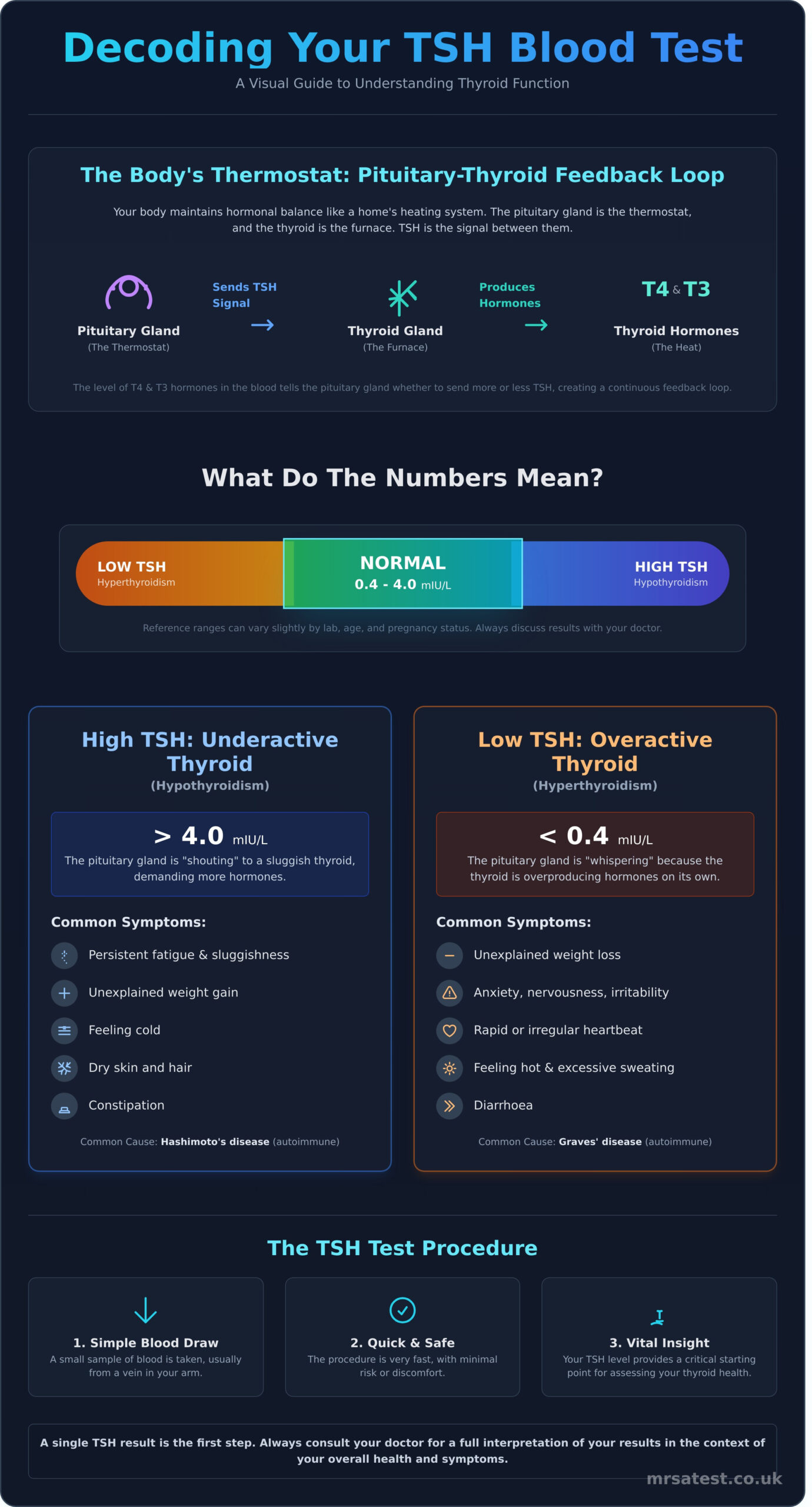
Think of your body’s hormone system like the central heating in your home. The pituitary gland, located at the base of your brain, acts as the thermostat, constantly monitoring the level of thyroid hormones in your blood. If it senses the levels are too low (the ‘room’ is too cold), it releases more TSH to signal the thyroid gland to produce more hormones and ‘turn up the heat’. Conversely, if hormone levels are too high, it reduces TSH production to ‘cool things down’. This delicate feedback system ensures your metabolism runs at the correct speed, and an abnormal TSH level is a strong indicator that this communication is out of balance.
TSH vs. Key Thyroid Hormones (T4 and T3)
While TSH is the signal, the hormones doing the actual work in your body are T4 (Thyroxine) and T3 (Triiodothyronine). The thyroid gland produces mainly T4, which acts as a storage hormone. This is then converted by the body into T3, the more potent, active form that directly influences the cells in your muscles, brain, and other organs.
Crucially, a TSH test does not measure your T4 or T3 levels directly. It measures the volume of the instruction being sent from your pituitary gland. The level of Thyroid-stimulating hormone is a highly sensitive marker; its levels can rise or fall even before your T4 and T3 levels go out of the standard range. This is why a comprehensive tsh blood analysis is such a vital diagnostic tool-it can detect a potential thyroid disorder at a very early stage.
Understanding Your TSH Test Results: What Do the Numbers Mean?
Once your test is complete, you will receive a result presented as a number. Thyroid-stimulating hormone is measured in micro-international units per millilitre (mIU/L). For most adults, a normal TSH level falls within a reference range of approximately 0.4 to 4.0 mIU/L.
However, it is crucial to understand that these ranges can vary slightly between different laboratories. Factors such as your age and whether you are pregnant can also influence the ‘normal’ range for you. Therefore, a professional interpretation of your tsh blood analysis is essential. Always discuss your specific results with your GP or a qualified healthcare professional who can place them in the context of your overall health and symptoms.
High TSH Levels (Indicating Hypothyroidism)
A TSH level above the normal range suggests that your thyroid gland is underactive, a condition known as hypothyroidism. This result means your pituitary gland is producing extra TSH in an attempt to stimulate your thyroid to produce more hormones. This is often accompanied by symptoms such as:
- Persistent fatigue and sluggishness
- Unexplained weight gain
- Feeling cold when others do not
- Dry skin and hair
- Constipation
One of the most common causes of hypothyroidism in the UK is Hashimoto’s disease, an autoimmune condition where the body’s immune system attacks the thyroid.
Low TSH Levels (Indicating Hyperthyroidism)
Conversely, a TSH level below the normal range often indicates an overactive thyroid, or hyperthyroidism. In this case, the thyroid is producing too much hormone on its own, which signals the pituitary gland to stop producing TSH. A comprehensive TSH (Thyroid-stimulating hormone) Test helps your doctor pinpoint this specific imbalance. Common symptoms include:
- Unexplained weight loss despite a normal appetite
- Anxiety, nervousness, or irritability
- A rapid or irregular heartbeat (palpitations)
- Feeling excessively hot or sweating more than usual
- Diarrhoea
Graves’ disease, another autoimmune disorder, is a frequent cause of hyperthyroidism.
Table: Hypothyroidism vs. Hyperthyroidism Symptoms at a Glance
This simple table provides a clear, side-by-side comparison of the contrasting symptoms that can result from an imbalanced tsh blood analysis.
| High TSH (Underactive Thyroid) | Low TSH (Overactive Thyroid) |
|---|---|
| Weight Gain | Weight Loss |
| Feeling Cold | Feeling Hot / Sweating |
| Fatigue / Sluggishness | Anxiety / Nervousness |
| Slow Heartbeat | Rapid or Irregular Heartbeat |
| Constipation | Diarrhoea |
Why Might a Doctor Order a TSH Test?
A doctor in the UK will typically order a Thyroid-Stimulating Hormone (TSH) test as a first-line diagnostic tool when assessing your thyroid health. Because the thyroid gland regulates your body’s metabolism, this simple blood test provides a clear and accurate snapshot of its function. A tsh blood analysis is fundamental for both diagnosing a new thyroid condition and for the ongoing management of a pre-existing one.
Furthermore, this test is often included in routine health screenings, especially if you have a family history of thyroid disease, and as part of pre-operative assessments to ensure you are fit for surgery.
Investigating Common Symptoms
Your GP may recommend a TSH test if you present with persistent and unexplained symptoms that suggest your thyroid might be overactive (hyperthyroidism) or underactive (hypothyroidism). These symptoms are often wide-ranging and can significantly impact your quality of life. Key indicators include:
- Unexplained changes in weight or energy: This could be sudden weight gain or loss despite no change in diet or exercise, or persistent fatigue and lethargy.
- Mood disturbances: Experiencing new or worsening anxiety, depression, irritability, or difficulty concentrating.
- Physical changes: Noticing hair loss or thinning, unusually dry skin, brittle nails, or changes to your menstrual cycle.
- Heart rate irregularities: Feeling heart palpitations (a fluttering or racing heart) or having a consistently fast or slow pulse.
Hormonal balance is complex, and while a TSH test is crucial for thyroid assessment, other factors can contribute to symptoms like mood swings and fatigue. For women seeking support with cyclical symptoms related to their menstrual cycle, specialized supplements from companies like Lilybalance can offer targeted relief.
Monitoring Existing Thyroid Conditions
For patients with a diagnosed thyroid disorder, regular TSH testing is a crucial part of effective long-term management. The results of a tsh blood analysis guide your doctor in making precise adjustments to your treatment. For example, if you are taking medication like levothyroxine for an underactive thyroid, the test ensures your dosage is correct-not too high or too low. Proper management is key, and understanding the nuances of interpreting TSH results helps clinicians maintain your hormonal balance. This monitoring is also standard practice following treatments such as thyroid surgery or radioactive iodine therapy.
Finally, the TSH test plays a vital role in preventative public health. In the UK, it is the standard method for screening all newborns for congenital hypothyroidism as part of the newborn blood spot (heel prick) test, allowing for immediate treatment to prevent developmental problems.
The TSH Test Procedure: What to Expect
Understanding what happens during a medical test can help ease any concerns. A TSH test is a very common, safe, and routine procedure performed across the UK. The entire process, from preparation to the blood draw itself, is simple and typically takes only a few minutes, providing a crucial insight into your thyroid health with minimal inconvenience.
How to Prepare for Your Test
In most cases, you do not need to fast (avoid food or drink) before a TSH test. However, if your GP has requested other tests to be performed on the same blood sample, they will provide specific instructions. For an accurate tsh blood analysis, it is vital to be transparent with your healthcare provider about your health and lifestyle.
- Inform your GP: Provide a complete list of all prescription medications, over-the-counter drugs, and vitamin or herbal supplements you are currently taking.
- Mention Biotin: High doses of biotin (Vitamin B7), a supplement often taken for hair and nail health, can interfere with the accuracy of thyroid tests. Your GP may advise you to stop taking it for several days before your blood is drawn.
During and After the Blood Draw
The blood draw is a quick and straightforward clinical procedure. A nurse or phlebotomist will clean an area of skin on your arm, usually on the inside of your elbow, with an antiseptic wipe. They will then gently insert a small, sterile needle into a vein to collect a sample of blood into a vial. The entire collection process typically takes less than a minute.
Once the sample is collected, the needle is removed, and a small piece of cotton or gauze is pressed onto the site to stop any bleeding. A plaster or small bandage is then applied. You may feel a slight pinch when the needle is inserted, and a small bruise can sometimes appear afterwards, but this is normal and will fade quickly. The risks associated with a blood test are extremely low.
The results of your tsh blood analysis are usually available from your GP within one to two working days, allowing for a swift and accurate assessment of your thyroid function.
What Happens After an Abnormal TSH Result?
Receiving an abnormal result from your TSH blood test can be concerning, but it is important to view this as a starting point, not a final diagnosis. Your GP will interpret the number in the full context of your symptoms, personal health history, and lifestyle. This initial tsh blood analysis is a crucial first step that guides the diagnostic process, ensuring the next steps are tailored specifically to you.
The goal is to understand why your TSH level is outside the normal range and determine the correct course of action.
Common Follow-Up Blood Tests
To build a complete picture of your thyroid function, your doctor will likely order additional blood tests. These provide more specific information than the TSH level alone. Common follow-up tests include:
- Free T4 (FT4): This test directly measures the main hormone produced by the thyroid gland (thyroxine) that is freely available for your body to use. It is a key indicator of whether your thyroid itself is overactive or underactive.
- T3 Tests (Total or Free): T3 (triiodothyronine) is the most potent and active thyroid hormone. Measuring its level can be particularly useful if your doctor suspects you have an overactive thyroid (hyperthyroidism), even if your T4 is normal.
- Thyroid Antibody Tests: These tests check for specific antibodies that mistakenly attack the thyroid gland. Their presence can confirm an autoimmune condition such as Hashimoto’s disease (the most common cause of hypothyroidism) or Graves’ disease (a leading cause of hyperthyroidism).
Other Diagnostic Tools
A comprehensive tsh blood analysis is often complemented by other methods. Your GP may perform a physical examination of your neck to feel for any enlargement of the thyroid gland (a goitre) or distinct lumps (nodules). If a nodule is found or suspected, you may be referred for a thyroid ultrasound. This simple, painless imaging test uses sound waves to create a detailed picture of your thyroid, allowing a clinician to assess its size, shape, and structure. These steps are always determined by your healthcare provider based on your individual results.
Discussing a Treatment Plan
Once a clear diagnosis is established, your doctor will discuss a suitable treatment plan. The right approach depends entirely on the underlying cause of the thyroid imbalance. For an underactive thyroid (hypothyroidism), treatment typically involves daily medication with levothyroxine to restore normal hormone levels. For an overactive thyroid, options might include different medications, radioiodine therapy, or in some cases, surgery.
While following your doctor’s prescribed treatment is essential, some people also seek complementary approaches to manage lingering symptoms and support their overall wellness. If you’re looking into holistic options, you can check out Battersea Park Clinic for therapies that can work alongside conventional care.
Your follow-up appointment is the ideal time to ask questions. Consider writing them down beforehand so you feel prepared and can fully understand your diagnosis and the proposed path forward.
Proactive Health: The Role of Screening Before Medical Procedures
Understanding your health metrics, whether through a routine tsh blood analysis or other diagnostic tests, is a key part of being an empowered and informed patient. This proactive mindset is never more important than when you are preparing for a planned medical procedure, such as surgery. Taking charge of your pre-operative health checks helps ensure your medical team has a complete picture, leading to a safer experience and a smoother recovery.
Why Pre-Surgery Health Checks are Crucial
Patient safety is the highest priority for any surgical team. A planned procedure requires a thorough assessment to identify any underlying health issues that could increase risks during or after the operation. An undiagnosed condition, such as a thyroid disorder or a hidden infection, can complicate anaesthesia, affect healing, and lead to post-operative problems. To mitigate these risks, UK hospitals conduct a series of pre-operative screenings, which typically include:
- Blood Tests: To check for anaemia, clotting issues, and kidney function.
- Health Questionnaires: To review your medical history, allergies, and current medications.
- Infection Screening: To identify the presence of harmful bacteria that could cause complications.
Preventing Complications with MRSA Screening
One of the most important pre-operative screenings is for MRSA (Methicillin-resistant Staphylococcus aureus). MRSA is a type of bacteria that is resistant to several common antibiotics and can cause serious infections in surgical wounds. Because of this risk, many hospitals require patients to be screened for MRSA before being admitted for surgery.
Just as a tsh blood analysis provides vital information about your metabolic health, an MRSA screening provides crucial data for preventing infection. Identifying MRSA colonisation beforehand allows medical staff to take specific precautions to protect you and other patients. Completing this simple step is another essential part of your proactive preparation for a successful outcome. For your convenience and peace of mind, you can manage this requirement from home. Learn about confidential at-home MRSA tests for pre-surgery screening.
Proactive Health: From Thyroid Insights to Pre-Procedure Safety
Understanding your thyroid function is a cornerstone of managing your overall well-being. As we’ve explored, a TSH test is a simple yet powerful tool that provides crucial insights into your metabolic health. A comprehensive tsh blood analysis empowers you to have more informed conversations with your healthcare provider and take control of your health journey.
This principle of proactive screening is vital, especially when preparing for medical procedures. Just as a TSH test provides essential internal data, other specific tests are necessary to ensure your safety. For those scheduled for surgery or a hospital stay, MRSA screening is a critical step in preventing infection and ensuring a smooth recovery.
For a trusted, simple, and confidential solution, you can test for MRSA from the comfort of your own home. Our kits are used by NHS professionals and processed in a 100% UK-based, UKAS-accredited laboratory. With discreet packaging and free shipping, your privacy and convenience are our priority. Order your confidential, UKAS-accredited MRSA Test Kit today.
Being informed is the first step towards better health. Take proactive steps today for peace of mind tomorrow.
Frequently Asked Questions
Can stress or diet affect my TSH levels?
Yes, both factors can influence your TSH levels. Severe or chronic stress can sometimes suppress TSH, while dietary deficiencies, particularly in iodine and selenium, can impair thyroid hormone production. Extreme calorie restriction may also lower TSH. It is important to discuss your lifestyle habits with your GP, as this context is valuable when interpreting the results of your TSH blood test and assessing your overall thyroid health.
What is subclinical hypothyroidism and is it serious?
Subclinical hypothyroidism is a mild form of underactive thyroid, diagnosed when TSH levels are elevated but the thyroid hormone (Free T4) level is still within the normal range. Many individuals have no symptoms. It is not always considered serious, and your GP may recommend a “watch and wait” approach, monitoring your levels over time. Treatment is usually only started if symptoms develop or if TSH levels continue to rise significantly.
How long does it take to get TSH blood test results back?
The turnaround time for TSH blood test results is generally quick. When conducted through an NHS GP, you can typically expect your results within 2 to 5 working days. Private clinics or at-home testing services that use UK-based accredited labs often provide faster results, sometimes within 24 to 48 hours of the sample being received by the laboratory. Your healthcare provider will advise on how you will be contacted with your results.
Can I test my thyroid function with an at-home kit?
Yes, at-home thyroid function tests are widely available in the UK. These kits allow you to collect a small blood sample, usually via a simple finger-prick, from the comfort of your home. You then post the sample to a certified laboratory for analysis. While they offer a convenient and confidential way to check your TSH levels, it is essential to discuss any abnormal results with your GP for a formal diagnosis and management plan.
Do TSH levels naturally change throughout the day?
Yes, TSH secretion follows a natural daily cycle, known as a diurnal rhythm. Levels are typically at their highest overnight and in the early morning, and at their lowest during the late afternoon. For this reason, doctors often recommend a morning blood test to ensure consistency and accuracy for your tsh blood analysis. This helps to make follow-up test results more easily comparable over time.
What’s the difference between a TSH test and a full thyroid panel?
A TSH test is a specific measurement of Thyroid-Stimulating Hormone, and it is the standard initial screening test for thyroid disorders. A full thyroid panel is more comprehensive. It includes the tsh blood analysis but also measures levels of key thyroid hormones directly, such as Free T4 (thyroxine) and sometimes Free T3 (triiodothyronine). This broader test provides a more detailed picture of your thyroid gland’s performance.